
Reviewed · OSAKA TEA CEREMONY & MATCHA EXPERIENCES
Premium Kimono Dressing, Tea Ceremony, Calligraphy, Samurai show
The sharpest part of this Osaka experience is the chance to do more than watch Japanese culture from the sidelines. At -michi-, you can dress in a kimono, prepare matcha, practice calligraphy, and see traditional music and samurai sword performances in one three-hour visit.
I like the careful kimono dressing, where each step is explained, and the way the tea ceremony and calligraphy turn culture into hands-on activities. The staff’s warm, attentive manner is another strong point, especially if you want clear explanations rather than a quick photo stop.
The main thing to check before you book is armor dressing. The description refers to samurai armor, but the inclusions specifically list armor dressing as not included, with a souvenir charge of ¥10,000 per person. Confirm the current arrangement if armor is your main reason for coming.
In This Review
- Key points at a glance
- A three-hour cultural session in Shinsaibashi
- Kimono dressing, with time for the details
- Tea ceremony: matcha you prepare yourself
- Calligraphy with a personal result
- Traditional music and the samurai show
- What the staff add to the experience
- Is $123.49 a fair price?
- Who will enjoy this most?
- Booking and cancellation advice
- Should you book this Osaka experience?
- FAQ
- Where does the experience take place?
- How long does the experience last?
- How much does it cost?
- Is a mobile ticket available?
- What activities are included?
- Is kimono dressing available for men?
- Is armor dressing included?
- Can most people participate?
- What is the cancellation policy?
Key points at a glance
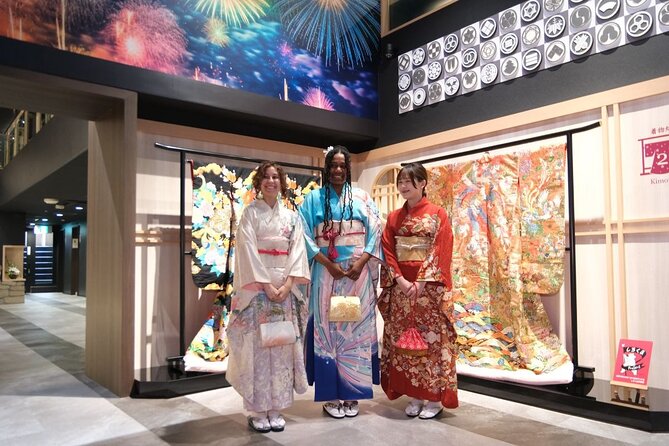
- Kimono dressing for women: A detailed dressing session gives you time to understand the clothing, not simply put it on for a photograph.
- Tea ceremony participation: You make your own matcha and learn the meaning behind the steps.
- Calligraphy to take home: You create your own Japanese calligraphy, with one participant planning to frame the finished work.
- Live cultural performances: Traditional music and a samurai sword performance add movement and drama to the quieter activities.
- Central Osaka setting: The meeting point is Shinsaibashi ARTY Inn, near public transportation.
- Three hours and a mobile ticket: The schedule is long enough for several activities without taking a full day from your Osaka plans.
A three-hour cultural session in Shinsaibashi
This experience is built for travelers who want a compact introduction to several Japanese traditions. You meet at Shinsaibashi ARTY Inn, a convenient Osaka location near public transportation, then spend about three hours moving through clothing, tea, calligraphy, music, and samurai performance.
That combination matters. A kimono session alone can feel like a costume appointment. A tea ceremony alone can be quiet and formal. Here, the activities give you different ways to connect with the culture. You see, listen, move, write, and taste.
The format also suits a first visit to Japan. You do not need prior experience with calligraphy, tea preparation, or Japanese customs. The staff explain each event and the meaning behind the actions, which helps you understand what you are doing instead of copying gestures without context.
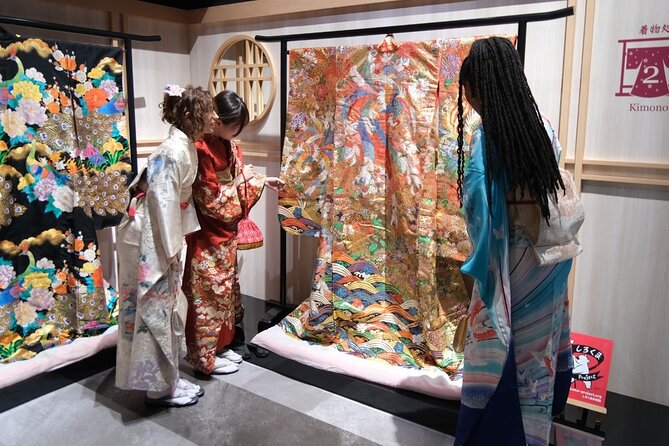
The setting includes a serene courtyard and a historical gallery. Those spaces give you a change of mood between activities and create useful photo opportunities. Bring a phone with enough battery, since the clothing and courtyard portions are especially photo-friendly.
More tea ceremonies and matcha sessions:
- Osaka: Tea Ceremony Experience
★ 4.9 · 1,426 reviews - Tea Ceremony Experience in Osaka Doutonbori
★ 5.0 · 754 reviews - Matcha Making Class in Osaka with Authentic Japanese Sweets Set
★ 5.0 · 509 reviews
Kimono dressing, with time for the details
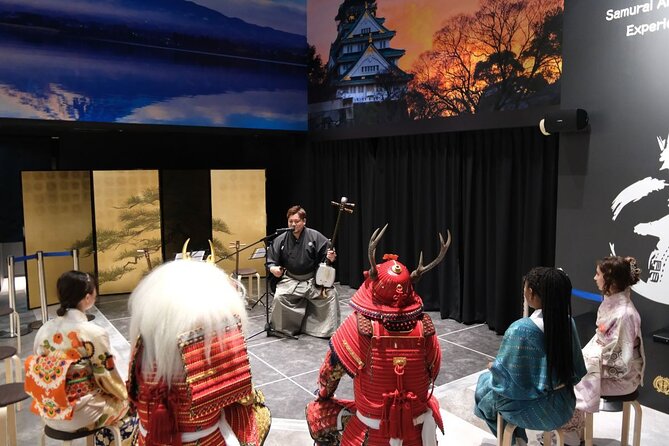
The kimono portion is for women, according to the stated inclusions. You are dressed by staff in a beautifully tailored kimono, with the process explained as it happens. That explanation is important because Japanese clothing has many layers, adjustments, and conventions that are easy to miss when you only see the final result.
I like this part because it treats dressing as a cultural activity, not just a costume rental. You learn about the various steps while the staff work, and the finished clothing gives the rest of the session a stronger sense of occasion.
Expect the dressing process to be more structured than putting on a robe at a hotel. The clothing is adjusted carefully, and you may need to remain patient while the staff complete each stage. That is part of the value, but it also means this is not the fastest option if you only want a quick photograph.
Once dressed, you can use the courtyard and historical gallery as backdrops for photographs. The calm setting should appeal to anyone who wants something more polished than a busy street photo. Keep in mind that the available information does not provide a specific kimono color selection, clothing size range, or changing-room policy, so ask the provider if those details matter to you.
Men should pay particular attention to the wording before booking. The included kimono dressing is listed for women only. The program is connected to samurai culture, but that does not automatically mean armor dressing is part of the standard price.
Tea ceremony: matcha you prepare yourself
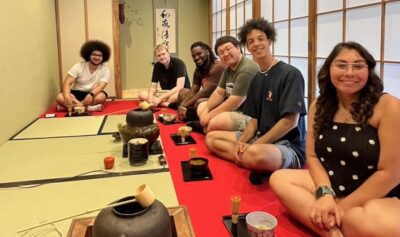
The tea ceremony gives the session a slower rhythm. Rather than simply being served a cup of tea, you take part in making your own matcha. The staff explain the meaning behind the steps, so the activity becomes an introduction to manners, movement, and attention.
For many people, this will be the most reflective section of the visit. The tea ceremony is not built around speed. Small actions matter, and the formal approach can feel very different from ordering a drink in a café.
The practical benefit is that you leave with a better sense of why the ceremony is arranged as it is. You are not expected to arrive with specialist knowledge. The teaching is designed for visitors, and the warm approach described by the provider should make it easier to ask questions or admit that a step is unfamiliar.
You should also know that this is a cultural lesson, not a full tea school course. Three hours covers several activities, so the tea portion is one part of a larger program. If you want a long, highly formal tea ceremony with extended historical instruction, you may prefer a dedicated tea-focused experience. If you want tea paired with clothing, calligraphy, and performances, the broader format makes good sense.
Calligraphy with a personal result
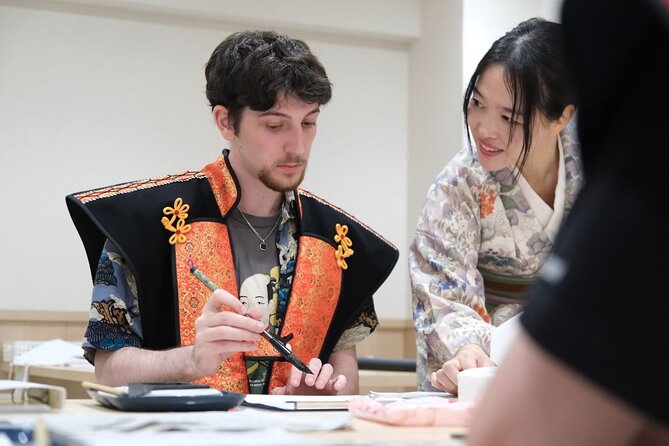
Japanese calligraphy is another hands-on section. You practice writing with guidance and create your own work, rather than watching an instructor write everything for you. That gives the activity a clear souvenir value without requiring you to buy something from the shop.
Calligraphy can look simple until you try to control the brush. The position, pressure, and order of the strokes all affect the result. A patient teacher can make the difference between a frustrating exercise and a satisfying one, and the staff are described as clear in their explanations.
I especially like that your amateur effort can become a personal keepsake. One participant planned to have the finished calligraphy framed, which is a better memory than a mass-produced souvenir. Your writing will not look like a professional master’s work, of course. That is part of the charm. It records your own first attempt.
Ask about drying, carrying, or packaging if you plan to continue sightseeing after the session. Those specific arrangements are not provided, so it is sensible to avoid folding or damaging the work until you know how it is prepared for transport.
More samurai and ninja experiences:
- Samurai Training Experience KENDO in Osaka
★ 5.0 · 515 reviews - OSAKA NIGHT FUSION Japanese Taiko Kabuki Samurai Dance Show
★ 4.8 · 155 reviews - Osaka: Samurai Training Experience KENDO in Osaka
★ 5.0 · 111 reviews - Osaka: A Modern Samurai, Kabuki, Taiko, & Dance Show
★ 4.5 · 66 reviews
Traditional music and the samurai show
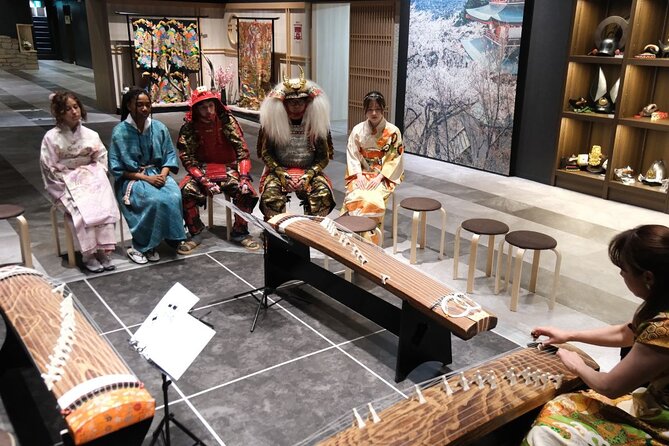
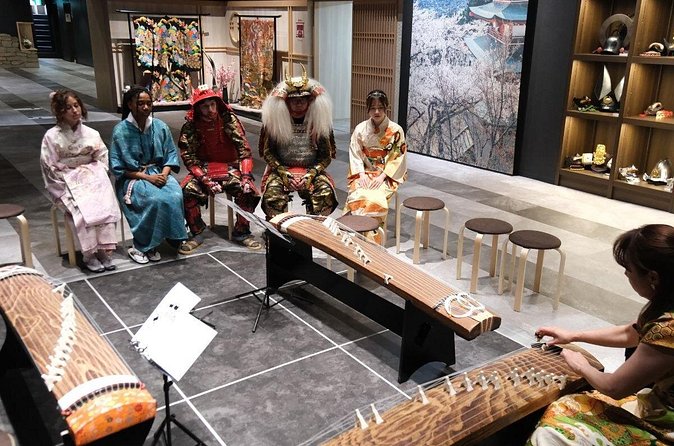
The performance portion adds energy to the visit. You can watch traditional Japanese music and take part in elements of the performance program, while the samurai section brings sword demonstrations into the cultural setting.
This contrast works well. The tea ceremony and calligraphy ask you to slow down and concentrate. Music and sword performance give you a more theatrical look at Japanese tradition. The result is a session with several moods rather than three hours of similar activity.
The samurai theme also helps connect the clothing and gallery setting. You can feel the difference between wearing a kimono for a formal cultural activity and seeing the martial side of Japan presented through sword performance.
Descriptions of the experience also refer to trying real armor and learning about it. At the same time, the stated inclusions exclude armor dressing and list a ¥10,000 per-person souvenir charge. That is an important practical wrinkle. Do not assume armor is part of the $123.49 admission price. Ask -michi- exactly what the ¥10,000 covers and whether armor dressing is available as an optional purchase on your date.
The available information does not give the length of the sword performance, the number of performers, or the level of audience participation. I would treat this as a cultural show within a larger program, not as a full stage production.
What the staff add to the experience
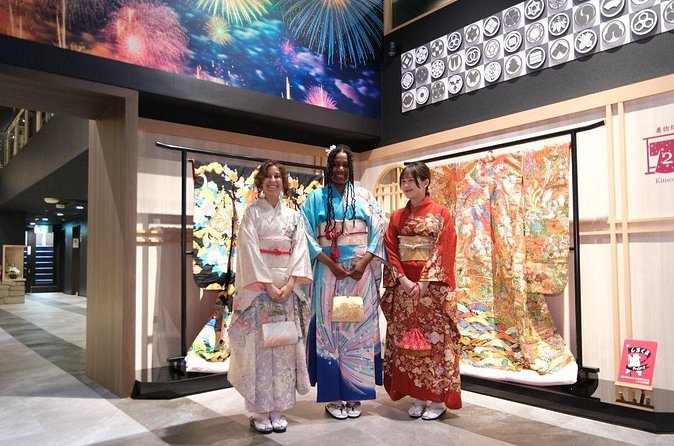
The staff are central to the value here. Several specific strengths come through: warmth, attentiveness, clear explanations, and an ability to explain the meaning behind each event.
That matters especially for visitors who are new to Japan. Cultural activities can feel intimidating when you do not know the proper order of actions or the reason for a custom. Friendly instruction lowers that barrier. You can enjoy the ceremony without worrying that one small mistake has ruined it.
The staff also appear to create a boutique-style atmosphere. That suggests a more personal feel than a large sightseeing attraction, although no group size is provided. You should not assume private instruction or a guaranteed small group. The experience is highly rated, but the exact staffing and group arrangements can vary.
No individual guide names are provided, so I cannot tell you to request a particular instructor. The useful point is the teaching style: expect staff-led explanations throughout the session, not a self-guided visit.
Is $123.49 a fair price?
At $123.49 per person, this is not the cheapest way to try on a kimono or drink matcha in Osaka. The price makes more sense when you count the program as a package of several guided activities: kimono dressing, tea ceremony, calligraphy, traditional music, samurai performance, and access to the courtyard and gallery.
I see the strongest value for someone who would otherwise book several separate cultural activities. You get a structured three-hour block, a mobile ticket, and a personal calligraphy result. The staff guidance also matters because the experience is designed to teach, not simply provide props.
The value is weaker if you only want one element. A visitor interested solely in tea may find the full package more than necessary. Someone focused mainly on samurai armor should confirm the extra charge first, since armor dressing is not listed among the standard inclusions.
Admission is listed as free at the stop, which appears to mean there is no separate entry ticket for that location beyond the booked experience. The price information remains $123.49 per person, so treat that as the amount to compare with other Osaka activities.
Who will enjoy this most?
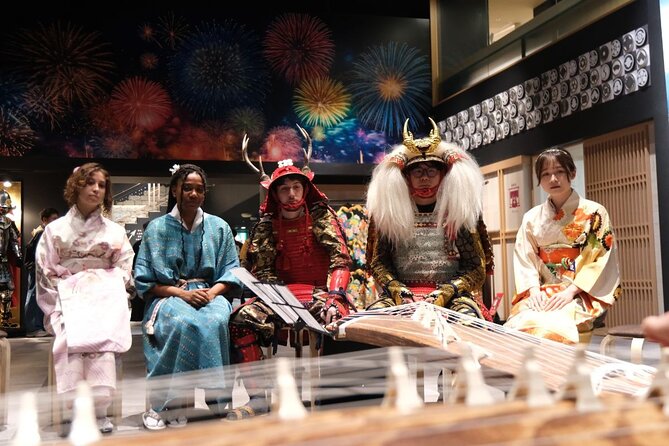
I would recommend this for a first-time Japan visitor who wants several cultural experiences in one sitting. It also fits couples, families, and solo visitors who enjoy guided participation and want photographs without spending a full day outside central Osaka.
Calligraphy makes it particularly appealing if you want a tangible memory to carry home. The tea ceremony suits anyone curious about Japanese etiquette and ritual. The music and sword performance help keep the session lively for people who might find a purely formal ceremony too quiet.
It may be less suitable if you dislike dressing sessions, careful instruction, or activities that move at a traditional pace. The kimono is for women only as listed, and the armor details need clarification. Visitors seeking a deep specialist lesson in tea, calligraphy, or sword arts should also recognize that this is a sampler covering several subjects.
Most travelers can participate, and the venue is near public transportation. The provided details do not state wheelchair access, age limits, clothing restrictions, or language arrangements, so contact the provider if any of those affect your plans.
Booking and cancellation advice
The experience is commonly booked about 42 days ahead. That does not guarantee every date sells out, but it tells you to reserve early if your Osaka schedule is fixed or you want a particular day.
You receive confirmation at booking and can use a mobile ticket. The meeting point is Shinsaibashi ARTY Inn, so allow enough time to reach the location and find the correct entrance.
Cancellation is free up to 24 hours before the local start time. Cancel at least 24 hours ahead for a full refund. Inside that window, you receive no refund, and changes are not accepted. This is a useful policy for a fixed itinerary, but set a reminder before the cutoff if your Japan plans are still shifting.
Should you book this Osaka experience?
Book it if you want a friendly, well-organized introduction to Japanese culture with real participation. The strongest reasons are the careful kimono dressing, the chance to prepare matcha, the personal calligraphy, and the mix of quiet tradition with music and samurai performance.
I would pause only if your main goal is armor dressing. The supplied information is not consistent enough to assume that it comes with the standard booking, and the ¥10,000 per-person charge needs clarification.
For most first-time visitors, the package offers a useful three-hour cultural break in Osaka. You get more than a photograph, but less than an intensive course. That middle ground is exactly why this experience should work well for many people.
FAQ
Where does the experience take place?
The meeting point is Shinsaibashi ARTY Inn in Osaka.
How long does the experience last?
The experience lasts approximately three hours.
How much does it cost?
The listed price is $123.49 per person.
Is a mobile ticket available?
Yes. The experience includes a mobile ticket.
What activities are included?
The included activities are women’s kimono dressing, a tea ceremony, calligraphy, and a Japanese traditional music performance. The program also refers to samurai sword performances.
Is kimono dressing available for men?
The included kimono dressing is listed for women only.
Is armor dressing included?
Armor dressing is listed as not included. The information also gives a ¥10,000 per-person souvenir charge, so confirm with the provider what that charge covers and whether armor dressing is available separately.
Can most people participate?
Yes. The additional information states that most travelers can participate.
What is the cancellation policy?
You can cancel at least 24 hours before the local start time for a full refund. Cancellations or changes made within 24 hours are not accepted, and no refund is provided.
More Traditional Craft Workshops
- 1.5〜2 Hours Traditional Kintsugi Work Shop in Namba Osaka
★ 5.0 · 75 reviews - Osaka: Private Japanese Calligraphy Experience
★ 5.0 · 66 reviews - From Osaka: Sakai Knife Maker or Blacksmith Walking Tour
★ 4.9 · 64 reviews - Osaka: Traditional Japanese Ceramics Private Experience
★ 5.0 · 57 reviews
More Kimono and Yukata Experiences
- Osaka: Sumo Show & Experience w/ Optional Kimono & Hot Pot
★ 4.5 · 609 reviews - Learning Zen of Japanese Calligraphy in kimono near Osaka Castle
★ 4.5 · 53 reviews - Osaka: Kimono or Yukata Rental &Photos Service Options
★ 4.9 · 25 reviews - Kimono photoshoot-Includes 100 photo data
★ 5.0 · 21 reviews
Just added around Osaka
- Nara Day Trip from Osaka with a Licensed Guide★ 5.0 · 3 reviews
- Osaka Early Morning Osaka Castle Tour Avoid Crowds★ 5.0 · 3 reviews
- Guided Tour of Some Attractions in Osaka by Private Car★ 5.0 · 3 reviews
- Shared Arrival Transfer: Osaka Itami Airport to Osaka City★ 5.0 · 3 reviews
- Private Transfer Between Kyoto and Kansai Airport KIX★ 5.0 · 3 reviews
- Osaka: Sushi Making Class and Dotonbori Food Tour★ 4.7 · 3 reviews
- Osaka Night Photography Workshop★ 5.0 · 3 reviews
- Kyoto Full day Tour Kinkakuji, Kiyomizu-dera and Fushimi Inari★ 4.5 · 3 reviews
Osaka Tea Ceremony & Matcha Experiences, compared.

Matcha Making Class in Osaka with Authentic Japanese Sweets Set
Read our review →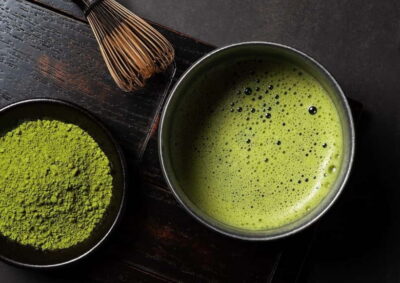
Japanese Traditional Sweets Making and Tea Ceremony
Read our review →
Osaka Temple Cool Foot Bath & Matcha Experience〈45min〉
Read our review →
Samurai Show, Tea Ceremony, Japanese Traditional Activities
Read our review →
Browse the lists this tour appears in