
Reviewed · OSAKA TEA CEREMONY & MATCHA EXPERIENCES
Osaka: Matcha Making Experience with Japanese Sweets
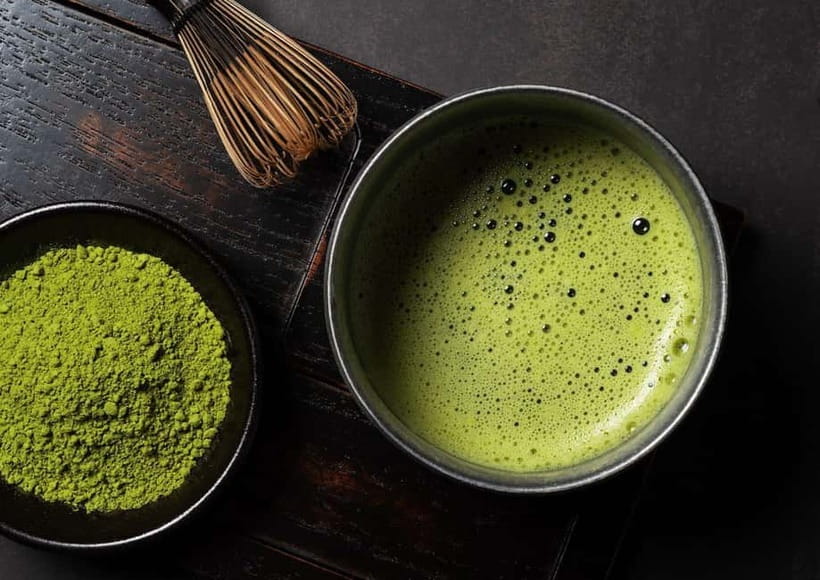
The best part of this one-hour Osaka activity is that you do not just watch someone prepare matcha. You learn the background, handle the bamboo whisk, make your own bowl, and then sit down with Japanese sweets to taste the result. The hands-on format makes the tea tradition easy to understand, even if matcha is completely new to you.
I like two things in particular: the small maximum of six people, which gives instructors time to help each person, and the friendly English instruction. Guides including Fujiko, Reika, Yui, Serin, Matty, Shota, and Takara are praised for making the lesson clear, funny, and welcoming. The main consideration is that this is a compact introduction, not a full meal or a long formal tea ceremony. You get a small serving of tea and sweets, so book it for the cultural experience rather than your appetite.
In This Review
- Key points at a glance
- What the Osaka matcha class is really like
- The opening quiz makes matcha history easy to follow
- Making your own bowl with a bamboo whisk
- Matcha and Japanese sweets at the end
- Why the small group matters
- The instructors set the tone
- Location near Shinsaibashi and Dotonbori
- Is $22 a fair price?
- Who should book this Osaka experience?
- Final verdict: a useful one-hour pause in Osaka
- FAQ
- How long does the matcha-making experience last?
- How much does the experience cost?
- Where does the class meet?
- Is the class near Dotonbori?
- Is English instruction available?
- How many people can join the class?
- Are matcha ingredients and sweets included?
- Is hotel transportation included?
- Can I cancel for a full refund?
- Do I need previous matcha-making experience?
Key points at a glance
- A six-person class: The small group keeps the lesson personal and makes it easier to ask questions.
- A quiz before the whisking: You learn matcha history in a light, interactive way instead of sitting through a stiff lecture.
- Traditional tools, beginner-friendly teaching: You prepare your own matcha with the equipment used for the familiar whisking method.
- Japanese sweets included: A small sweet pairing gives you a useful taste comparison with the tea.
- A convenient central location: The class is five minutes from Shinsaibashi Station, close to Dotonbori and Shinsaibashi shopping streets.
- A comfortable traditional setting: The low-style table has a traditional feel, but you do not need to kneel on the floor.
What the Osaka matcha class is really like
This is a short cultural lesson built around a simple idea: learn what matcha is, prepare it yourself, and enjoy it with a sweet. That structure works well in Osaka, where much of the sightseeing centers on food but not every food experience gives you much cultural context.
You meet the instructor at the Galleria Acca Building, on the third floor. The location is in central Osaka, about a five-minute walk from Shinsaibashi Station and within easy reach of Dotonbori. One useful tip is to allow a little extra time for the building. The entrance can be easy to miss, and one class member specifically advised going up the stairs once you find it.
Once inside, expect a tidy room arranged for a small class. The seating has a traditional look, but the table is designed so you can sit normally rather than kneeling on the floor. That small detail matters if you are not used to formal Japanese seating, or if you simply want to stay comfortable during the lesson.
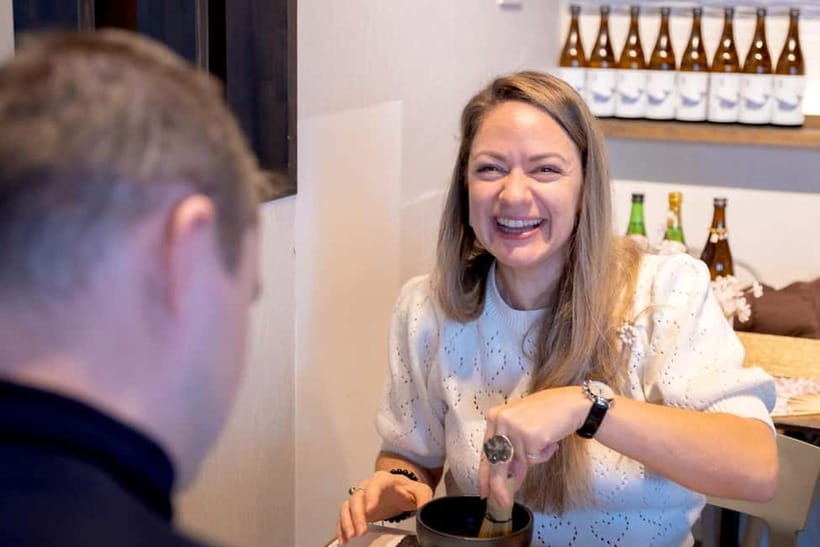
The class is taught in English. The instructors use an informal, social style, with plenty of room for questions. Names that appear often in the teaching team include Fujiko, Reika, Yui, Serin, Matty, Shota, and Takara. Your instructor will depend on the session, but the teaching approach is consistent: friendly, clear, and aimed at first-time matcha makers.
More tea ceremonies and matcha sessions:
- Osaka: Tea Ceremony Experience
★ 4.9 · 1,426 reviews - Tea Ceremony Experience in Osaka Doutonbori
★ 5.0 · 754 reviews - Matcha Making Class in Osaka with Authentic Japanese Sweets Set
★ 5.0 · 509 reviews
The opening quiz makes matcha history easy to follow
The lesson begins with an interactive look at matcha and its place in Japanese culture. Rather than giving you a long speech packed with dates and unfamiliar terms, the instructor uses a light quiz to get the group involved.
This is a smart choice for a one-hour class. You learn the basic story of matcha while thinking, guessing, and discussing the answers. It also gives you an easy way to ask questions without feeling as if you are interrupting a formal presentation.
The history section is brief, but it adds value. Without it, whisking green powder into hot water can feel like a pleasant craft activity with no context. With it, you begin to understand why the tools, preparation method, and way of drinking matter.
The instructors also explain tea culture in practical terms. You get background on the origin of matcha and an introduction to the customary way of preparing and tasting it. Several teachers are also happy to answer questions about matcha beyond the exact steps in the class.
I would especially recommend paying attention here if this is your first time drinking matcha. The flavor can be unfamiliar, and the introduction helps you understand what you are tasting instead of judging it only as sweet or bitter.
Making your own bowl with a bamboo whisk
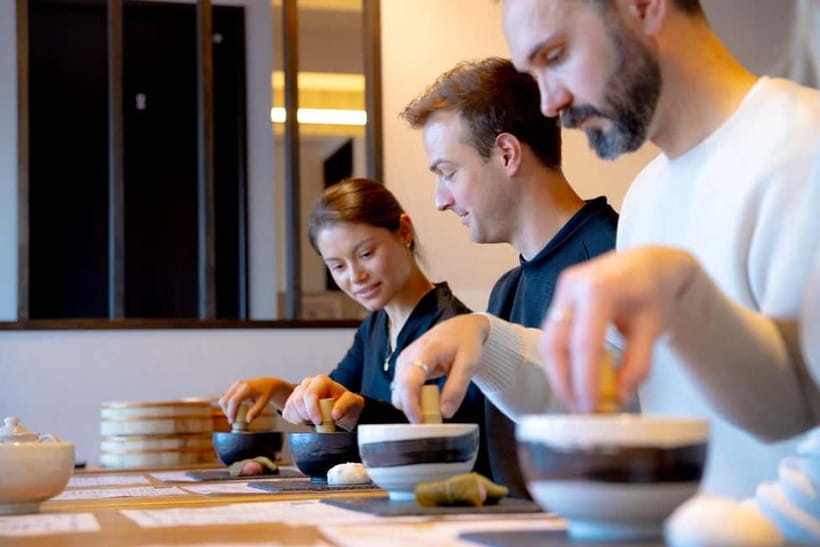
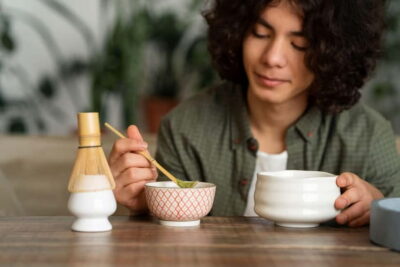
The hands-on section is the heart of the experience. You use traditional tools, including the familiar bamboo whisk, and prepare your own matcha with guidance from the instructor.
You are not expected to know the technique in advance. The instructor demonstrates the process, then watches as you try it yourself. If your whisking needs work, you receive direct help rather than being left to guess. That makes the session suitable for beginners, children, and adults who simply want a relaxed introduction.
The process is relatively simple, but the small details make a difference. You learn how to combine the powder and water properly, create a smoother drink, and handle the whisk in the traditional manner. The goal is not to turn you into a tea practitioner in an hour. It is to give you enough understanding and practice to repeat the basic method at home.
That practical result is one of the strongest reasons to book. You do not just take a photo and move on. You leave with a technique you can try again, provided you can find the matcha powder and a suitable whisk.
The class also gives you a better sense of why matcha preparation is slower and more deliberate than stirring an ordinary tea bag. The whisking is part of the pleasure. It asks you to focus on one small task, which creates a welcome pause in the middle of Osaka’s busy shopping and food districts.
Matcha and Japanese sweets at the end
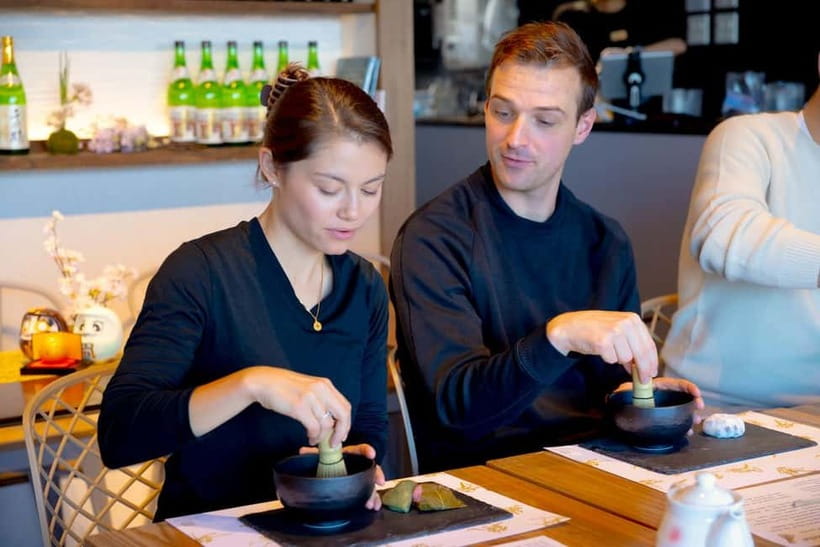
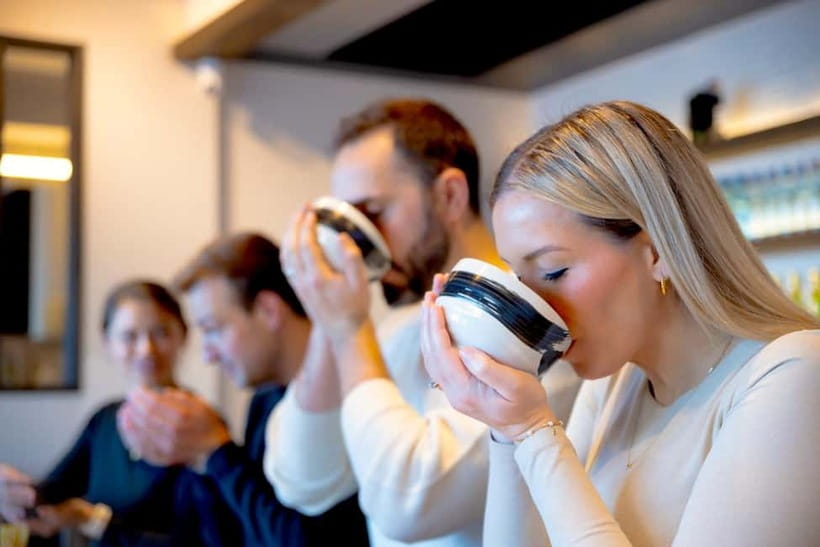
After making the tea, you sit down to drink it with Japanese sweets. The pairing is small, so think of it as a tasting rather than a snack break or dessert course.
The sweet is important because it changes how the matcha tastes. Japanese sweets traditionally provide a gentle contrast to the tea’s earthy, savory, and sometimes bitter notes. Even if you already drink matcha at home, tasting it alongside a sweet gives you a more complete picture of the custom.
The matcha itself is prepared by you, but the instructor remains available to help. This makes the final cup feel like a result, not just a demonstration. You can compare your technique with the instructor’s preparation and ask about texture, flavor, or the steps you found difficult.
A few practical expectations are worth noting. The portions of tea and sweets are not large, and the class does not replace lunch. If you arrive hungry, eat beforehand or plan a meal nearby. The reward is the act of making and tasting matcha, not the amount of food.
The final sitting also gives the class a calmer finish. One participant wished for a little more time with the tea, and that is a fair point. At one hour, the schedule keeps moving. You should enjoy the conversation and tasting, but do not expect an extended tea-room gathering.
A few more Osaka tours and experiences worth a look
- Osaka: Japanese Traditional Sweets Making and Tea Ceremony
★ 4.7 · 118 reviews - Japanese Traditional Sweets “Nerikiri” making
★ 4.2 · 5 reviews
Why the small group matters
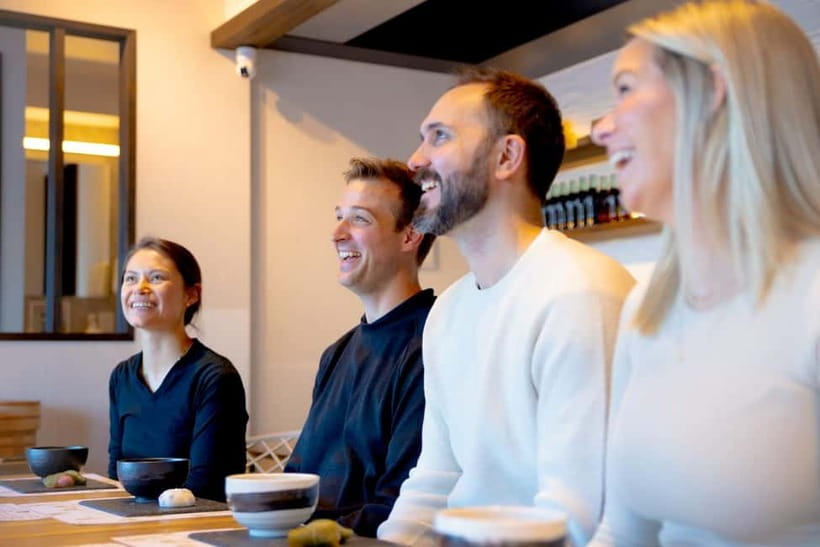
The class accepts no more than six people. That limit is more than a marketing detail. It shapes the quality of the lesson.
A large demonstration can show you how to whisk matcha, but it cannot easily correct your technique. In a six-person class, the instructor can move around the table, answer individual questions, and make sure each person gets a turn with the tools.
The group size also works well for solo visitors. You do not need to bring a large party to make the activity worthwhile. The shared task gives everyone an easy topic of conversation, and the setting is intimate without requiring formal behavior.
Families can also fit comfortably into the format. Parents have taken part with children, including an eight-year-old and a nine-month-old. That does not mean every child will enjoy a quiet tea lesson, but the quiz, hands-on whisking, and sweets give younger participants several ways to stay involved.
The small room may feel less private if you want a completely personal ceremony. It is a shared class, not a one-to-one appointment. For most people, though, the limited number makes the social atmosphere more useful than distracting.
The instructors set the tone
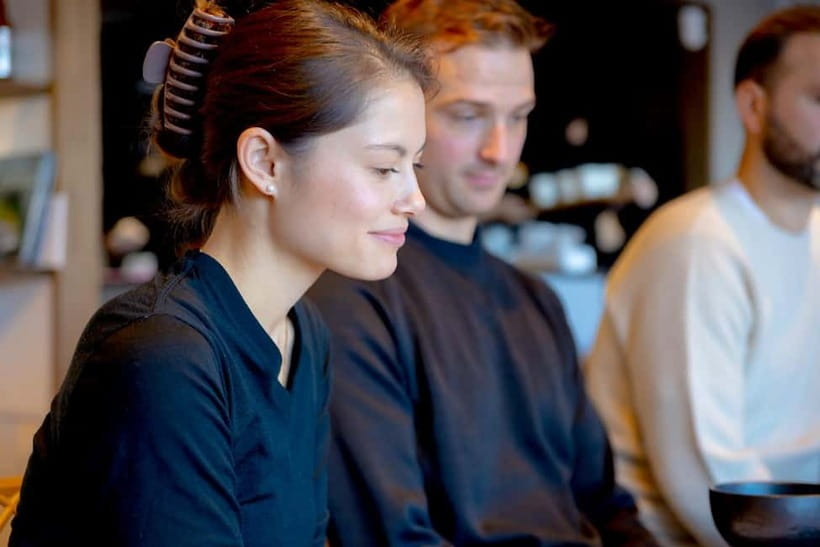
The teaching staff is a major part of the experience. English is the working language, and the instructors are expected to guide you through each stage without requiring prior knowledge of Japanese tea.
Fujiko receives repeated praise for clear English, humor, and an easygoing teaching style. Reika is described as warm and encouraging, while Yui is noted for explaining tea in a clear, organized way and offering helpful suggestions for the rest of an Osaka visit. Serin is praised for being interactive and kind, and Matty is a popular choice for families because he keeps the lesson lively and understandable.
Other instructors named in the class feedback include Shota, Takara, Harita, Lala, Moe, Mayuho, and Hinata. The exact instructor is not guaranteed, but the range of positive comments suggests that the activity relies heavily on a welcoming team rather than one single personality.
I like that the teaching seems to balance respect for the tradition with a casual mood. You learn the proper method, but you are not expected to behave as if you have entered a strict ceremonial school. That balance makes the class approachable for people who want cultural insight without a formal performance.
Some instructors also share local restaurant suggestions or ideas for the rest of your Osaka visit. Treat these as useful extras, not a promised part of the itinerary.
Location near Shinsaibashi and Dotonbori
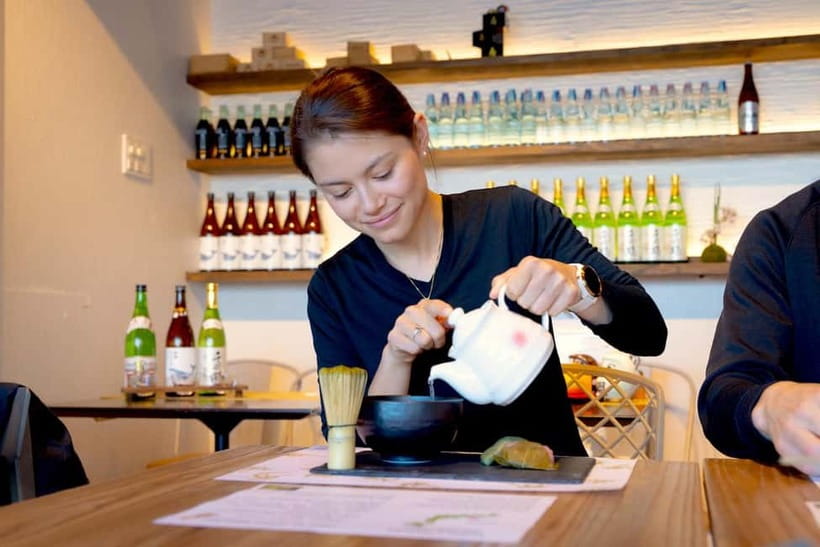
The location is one of the easiest reasons to fit this into an Osaka plan. The Galleria Acca Building is close to Shinsaibashi Station and near Dotonbori, two of the city’s best-known areas for shopping, nightlife, and food.
That makes the activity useful as a break between larger Osaka sights. You can schedule it before an evening around the Dotonbori canal, after shopping in Shinsaibashi, or during the hottest part of the afternoon. Several people specifically liked having an hour indoors and away from the crowds or summer heat.
There is no hotel pickup or drop-off. You make your own way to the building, but the central location means the activity is better suited to a self-guided Osaka itinerary than to someone seeking door-to-door transport.
The meeting point is on the third floor. Check the building name and floor before setting out, and do not assume the class is at street level. If you are using a map application, the listed coordinates are 34.6723159, 135.5024459.
Is $22 a fair price?
At $22 per person, this is good value for a one-hour cultural activity, particularly if you want more than a quick matcha drink at a café. The price covers the cooking class, ingredients, instructor, matcha preparation, and Japanese sweets.
The value comes from participation. You handle the tools, learn the method, and receive explanations in English. A café visit may cost less, but it will not normally teach you how to prepare the tea or explain the customs around it.
The price is less compelling if you are mainly looking for food. The servings are modest, and the session is short. You are paying for instruction and cultural context, with the tea and sweet serving as part of the lesson.
There may also be optional shopping opportunities, such as a chawan bowl. One person bought a one-of-a-kind bowl after the class. Since the provided details do not specify prices or stock, consider this an optional souvenir rather than a promised inclusion.
The ability to reserve now and pay later adds useful flexibility, and cancellation is free up to 24 hours before the activity for a full refund. Those terms matter when you are arranging a Japan itinerary with changing train plans or weather-sensitive days.
Who should book this Osaka experience?
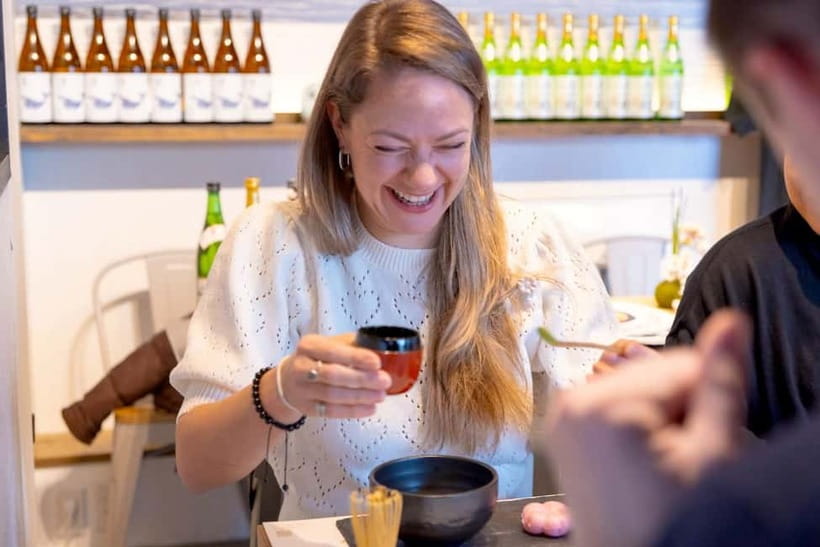
I would recommend it most strongly to first-time matcha drinkers, food-focused visitors, families with older children, and anyone who wants a short indoor activity near the main Osaka shopping districts.
It also suits people who enjoy learning by doing. If you like leaving an activity with a skill you can repeat at home, the whisking practice is a real benefit. Solo visitors can join comfortably, and couples or small groups get enough instructor attention to make the lesson feel personal.
This is less suitable if you want a full tea ceremony, a large meal, or a long, quiet meditation session. The tone is cheerful and interactive. The class teaches traditional preparation, but it is not presented as an extended formal ceremony.
You should also keep your schedule realistic. The lesson lasts one hour, but you need to allow time to find the third-floor meeting point. Since Dotonbori and Shinsaibashi are close by, pair the class with nearby sightseeing rather than crossing Osaka just for the appointment.
Final verdict: a useful one-hour pause in Osaka
I would book this matcha class if you want a friendly, practical introduction to Japanese tea culture without committing half a day. The six-person limit, English instruction, central location, and hands-on preparation give it a strong mix of convenience and substance.
The main limitation is scale. You will not receive a large serving of food or spend a long time sitting with the tea. But for $22, you get a clear lesson, traditional tools, a sweet pairing, and a skill you can try again at home.
Choose it especially if you are new to matcha, traveling with children, or need an indoor break near Shinsaibashi. Skip it only if you are looking for an advanced ceremony or a substantial food activity. For most visitors, this is an easy way to add a thoughtful cultural hour to an Osaka day.
FAQ
How long does the matcha-making experience last?
The activity lasts one hour.
How much does the experience cost?
The listed price is $22 per person.
Where does the class meet?
The class meets on the third floor of the Galleria Acca Building, about a five-minute walk from Shinsaibashi Station. The coordinates are 34.6723159, 135.5024459.
Is the class near Dotonbori?
Yes. The meeting point is in central Osaka, near both Dotonbori and Shinsaibashi.
Is English instruction available?
Yes. The instructor teaches in English, and English-speaking local staff guide you through the class.
How many people can join the class?
The class is limited to six participants.
Are matcha ingredients and sweets included?
The class includes ingredients, and the experience includes matcha and Japanese sweets to enjoy after preparation.
Is hotel transportation included?
No. Hotel pickup and drop-off are not included.
Can I cancel for a full refund?
Yes. You can cancel up to 24 hours in advance for a full refund.
Do I need previous matcha-making experience?
No. The class is designed for beginners, and the instructor demonstrates and guides you through the process.
Just added around Osaka
- Nara Day Trip from Osaka with a Licensed Guide★ 5.0 · 3 reviews
- Osaka Early Morning Osaka Castle Tour Avoid Crowds★ 5.0 · 3 reviews
- Guided Tour of Some Attractions in Osaka by Private Car★ 5.0 · 3 reviews
- Private Transfer Between Kyoto and Kansai Airport KIX★ 5.0 · 3 reviews
- Shared Arrival Transfer: Osaka Itami Airport to Osaka City★ 5.0 · 3 reviews
- Osaka: Sushi Making Class and Dotonbori Food Tour★ 4.7 · 3 reviews
- Osaka Night Photography Workshop★ 5.0 · 3 reviews
- Kyoto Full day Tour Kinkakuji, Kiyomizu-dera and Fushimi Inari★ 4.5 · 3 reviews
Osaka Tea Ceremony & Matcha Experiences, compared.
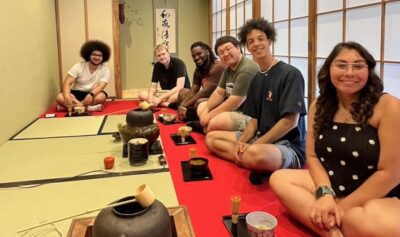

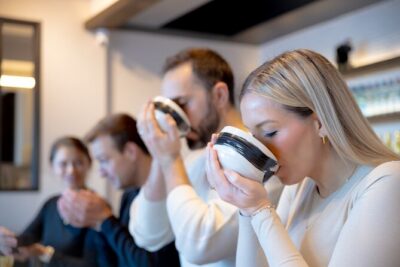
Matcha Making Class in Osaka with Authentic Japanese Sweets Set
Read our review →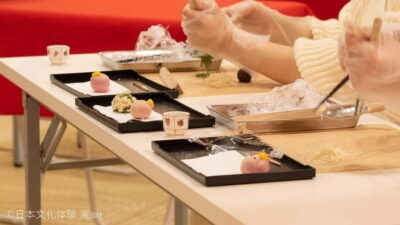
Japanese Traditional Sweets Making and Tea Ceremony
Read our review →
Osaka Temple Cool Foot Bath & Matcha Experience〈45min〉
Read our review →
Samurai Show, Tea Ceremony, Japanese Traditional Activities
Read our review →
Osaka; Japanese Tea ceremony experience, Macha and Sencha
Read our review →Browse the lists this tour appears in