
Reviewed · OSAKA TEA CEREMONY & MATCHA EXPERIENCES
Osaka: Private Tea Ceremony and Calligraphy Experience
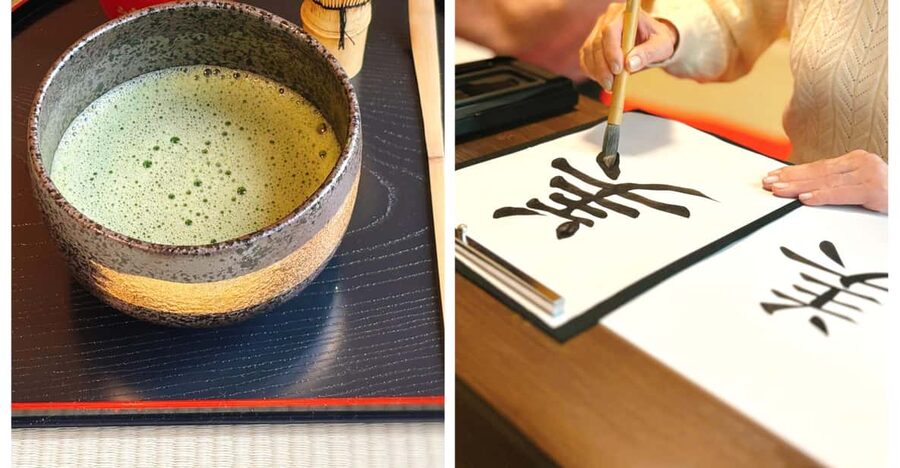
A tea ceremony can be easy to watch and hard to understand. This private Osaka experience lets you take part instead. You learn the meaning behind the movements, make your own matcha, taste Japanese sweets, and finish with a piece of calligraphy built around your own name or chosen theme.
I like the personal pace. You can ask questions, take photos, or slow things down for children without holding up another group. I also like the souvenir: your kanji artwork is something you make yourself, not a mass-produced trinket. The main consideration is that this is a seated cultural lesson, not a fast-moving sightseeing tour, and the studio is not suitable for wheelchair users.
In This Review
- Key Points
- A Quiet Cultural Break in Central Osaka
- Finding the Studio Near Shinsaibashi
- First Lesson: Understanding the Tea Ceremony
- Making Your Own Matcha
- Choosing Kanji That Fits You
- Learning the Brush Strokes
- Creating the Artwork You Take Home
- Why the Private Format Matters
- Is $64 Per Person a Good Deal?
- Who Should Book This Osaka Experience?
- Practical Tips for a Better Visit
- Should You Book WA NO MA?
- FAQ
- Where does the Osaka tea ceremony and calligraphy experience take place?
- What is the meeting point?
- How will I identify the instructor?
- How long does the experience last?
- Is the activity private?
- Which languages are available?
- What is included in the price?
- What should I bring?
- Is the experience suitable for wheelchair users?
Key Points
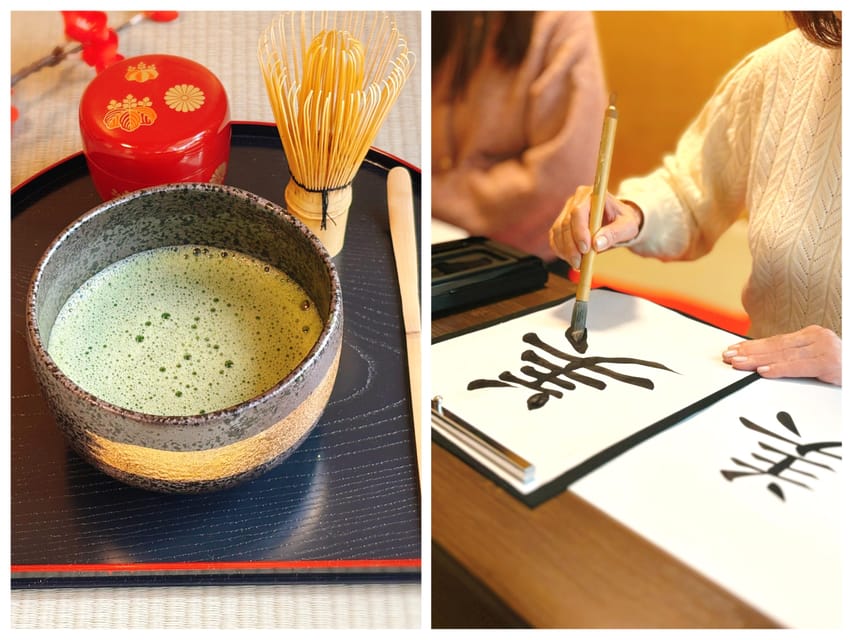
- Your name becomes a personal kanji design: The instructor helps choose Japanese characters that fit your personality or express your chosen theme.
- You make the matcha yourself: After learning the tea-making steps, you whisk and taste your own bowl.
- Two sweet moments add variety: Japanese sweets are served during the tea lesson, with different types offered twice.
- A fully private group: The instructor can adjust the pace, make room for photos, and give children extra help.
- A useful Namba location: The studio is near Shinsaibashi-suji shopping street and easy to reach from central Osaka.
- A practical handmade souvenir: Colored paper, ink, brushwork, your name, and a personal stamp come together in one finished piece.
A Quiet Cultural Break in Central Osaka
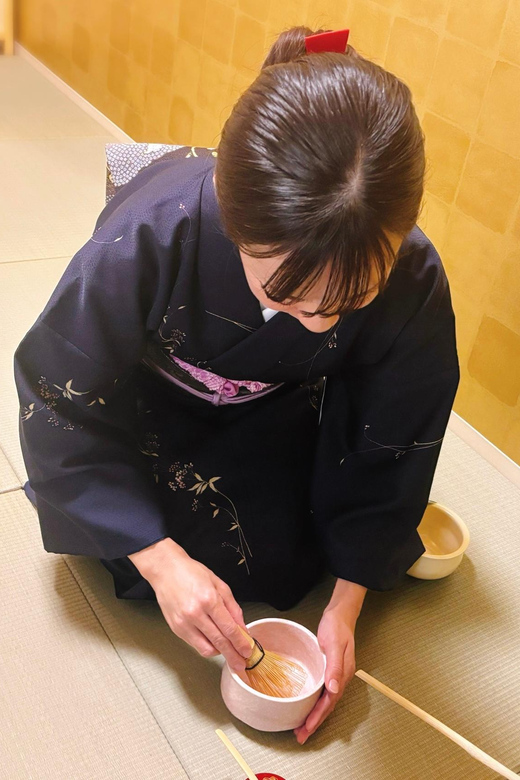
WA NO MA offers a welcome change from Osaka’s bright signs, packed shopping streets, and busy food districts. The studio is in Namba, close to Shinsaibashi-suji, yet the class itself is built around quiet attention: sitting, watching, listening, whisking tea, and guiding a brush across paper.
The experience lasts 135 minutes, long enough to give both subjects proper time. You are not simply shown a tea bowl and handed a brush for a quick photo. The instructor explains the basic customs, then gives you a chance to try them.
The group is private, which matters here. A tea ceremony has small movements that are easy to miss in a large class. With your own instructor, you can ask why something is done, repeat a step, or pause for a picture. The guide can also adjust the rhythm for children. One family found the instructor especially effective with a 10-year-old and a teenager with ADHD, keeping both involved throughout the class.
The instructor is called Wanoma in the supplied experience details, and the studio name is WA NO MA. She teaches in English and Japanese. Her approach, based on the many strong comments about the class, combines careful instruction with a relaxed sense of humor. That is useful because both tea preparation and calligraphy involve unfamiliar motions, and nobody gets everything right on the first try.
More tea ceremonies and matcha sessions:
- Osaka: Tea Ceremony Experience
★ 4.9 · 1,426 reviews - Tea Ceremony Experience in Osaka Doutonbori
★ 5.0 · 754 reviews - Matcha Making Class in Osaka with Authentic Japanese Sweets Set
★ 5.0 · 509 reviews
Finding the Studio Near Shinsaibashi
Your meeting point is the entrance of New Osaka Hotel Shinsaibashi. From there, walk west for about 30 seconds. Look for a blue vending machine near the entrance.
The instructor waits outside the main entrance five minutes before your booked time and wears a kimono, making her fairly easy to identify. This short meeting-point walk is convenient, but you should still allow a few extra minutes to find the hotel entrance in central Osaka.
The location works well as part of a Namba or Shinsaibashi day. You can combine the class with shopping on Shinsaibashi-suji, a meal in Namba, or an evening walk through the surrounding entertainment district. The lesson itself provides a calm pause between those activities.
Wear comfortable clothing that allows you to sit and move your arms freely. Bring socks, since they are specifically required. Smoking is not allowed, and the studio is not suitable for wheelchair users.
First Lesson: Understanding the Tea Ceremony
The tea portion begins with an explanation of Japanese tea ceremony customs. You learn how the ritual is arranged and how to approach the tea and sweets with attention rather than simply drinking a green beverage.
This background gives the activity its value. Matcha is easy to order in Japan, but its preparation can seem mysterious when you only see the finished bowl. Here, you are shown the steps before trying them yourself. The lesson turns a familiar tourist activity into a short introduction to the care, order, and seasonal thinking behind tea culture.
The sweets are part of the lesson, not an afterthought. You taste different Japanese sweets twice during the tea ceremony. The exact sweets can vary, and the experience information connects them with the seasons. That detail gives you a useful way to understand Japanese food culture: sweetness, shape, color, and ingredients can change with the time of year.
One useful point from the class is that dietary needs may be manageable, but you should ask the instructor directly before booking if you have an allergy or strict restriction. One participant specifically noted that the sweets served to them were lactose-free. That does not guarantee the same selection for every session, so clear communication is sensible.
The tea ceremony is often described as calming, and the format explains why. You are given time to watch each action, listen to the explanation, and taste slowly. The private setting also means you do not need to worry about keeping up with strangers.
Making Your Own Matcha
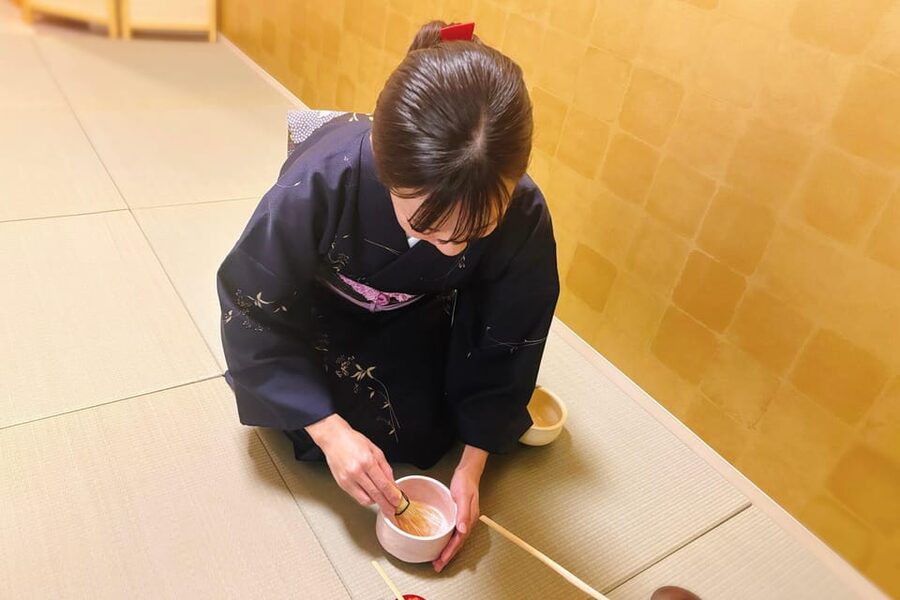
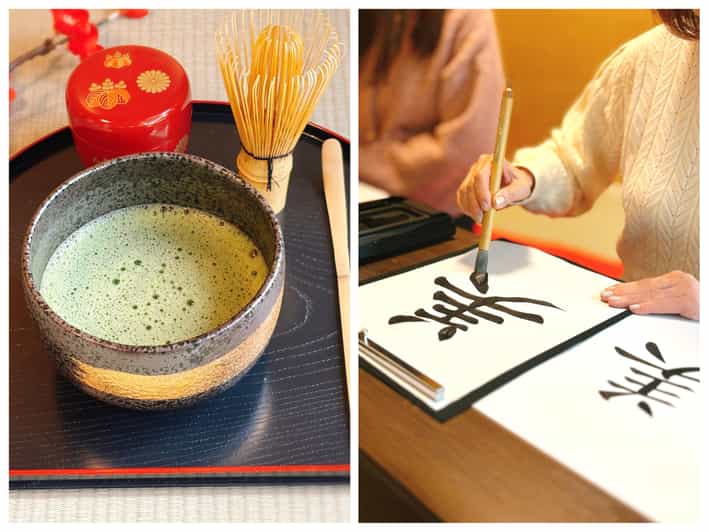
After watching the demonstration, you prepare matcha yourself. You learn how to make the tea, then try the process with the instructor nearby to guide you.
This hands-on part is the heart of the tea lesson for many people. You get a better sense of matcha when you have whisked it yourself. The result may not look exactly like the instructor’s, but that is part of the fun. You are learning the movement, not training for a formal tea-school examination.
You can also choose a tea bowl that expresses how you feel that day from several attractive options. That small choice gives the activity a personal touch. The bowl is not just a prop in a demonstration. It becomes part of your own tea-making moment.
The instructor explains how to taste the tea and enjoy it with the sweets. If you have never had matcha before, you can expect a flavor that is grassy, concentrated, and more savory than a typical sweetened tea. The sweets help balance it.
You should not expect a full religious or historical study of every tea school in Japan. This is an accessible cultural lesson for visitors, with practical instruction and explanation. For a 135-minute experience that also includes calligraphy, the balance is sensible.
More traditional craft workshops:
- 1.5〜2 Hours Traditional Kintsugi Work Shop in Namba Osaka
★ 5.0 · 75 reviews - Osaka: Private Japanese Calligraphy Experience
★ 5.0 · 66 reviews - From Osaka: Sakai Knife Maker or Blacksmith Walking Tour
★ 4.9 · 64 reviews - Calligraphy Workshop in Namba, Dotonbori
★ 5.0 · 57 reviews
Choosing Kanji That Fits You
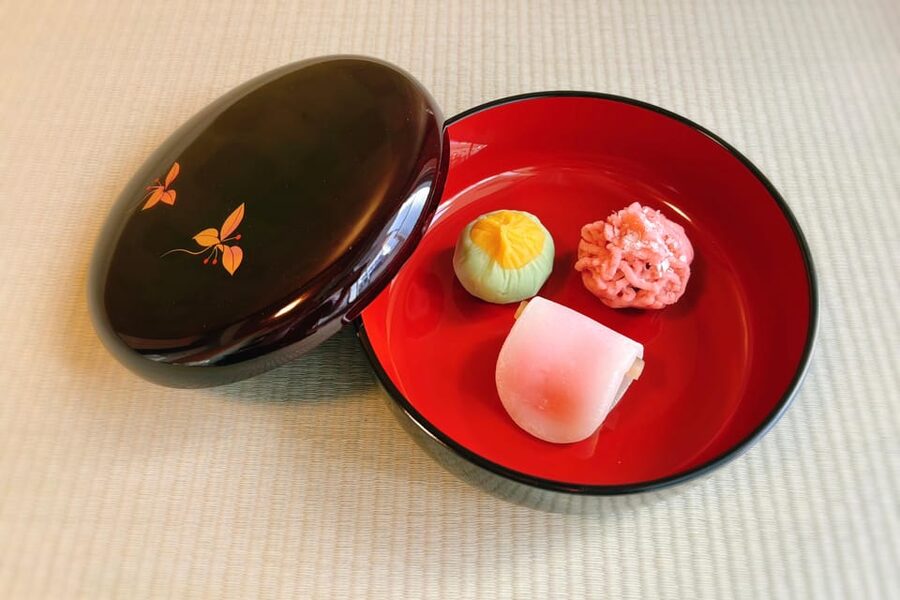
The calligraphy lesson begins by asking what you want to write. You can suggest a favorite letter, word, or theme, and the instructor can recommend kanji that express your personality or the feeling you want to convey.
This is more interesting than simply copying a random Japanese character. Your chosen kanji might represent a quality, hope, name, or idea. The instructor also helps you choose from different levels of difficulty, which is important for first-time brush writers.
You may also have your name converted into Japanese characters. This became a favorite detail for several people because it creates a souvenir tied directly to the trip. The instructor can explain the selected characters and help you write your name in Japanese.
Do keep one thing in mind: a name written in kanji is not always a direct translation in the way a name appears in a Japanese passport. It is a creative, meaningful rendering based on sound, meaning, or personality. That is precisely what makes it a personal artwork, but it is worth understanding before you treat it as an official Japanese name.
Learning the Brush Strokes
Before you create the final piece, the instructor gives a detailed lesson in basic calligraphy practice. You learn how to handle the brush and follow the order and direction of the strokes.
Calligraphy can look effortless when an experienced writer makes a character in one smooth movement. Your own first attempt may be less graceful. The instructor’s patient corrections help, and the private setting gives you room to practice without feeling watched by a large class.
Several skill levels are available, so you can choose something manageable or take on a more complex character. Families benefit from this flexibility. Younger children can use water calligraphy, which avoids dirty hands and clothing. That option makes the class more practical for families with small children.
The lesson is not only about producing a pretty final sheet. It teaches you why the strokes are made in a certain order and how pressure changes the line. You leave with a better understanding of the discipline behind Japanese writing, even if your brushwork remains charmingly imperfect.
Creating the Artwork You Take Home
For the final piece, you select a favorite sheet of colored paper from several types. You then write your chosen kanji, add your name in Japanese characters, and stamp your initials.
This is where the two parts of the experience come together. The tea ceremony focuses on careful movement and presence. Calligraphy asks for the same patience, but gives you a visible result to carry home.
The finished work is a strong souvenir because it records your choices. You selected the word or theme, picked the paper, practiced the brush strokes, and added your own stamp. It has more personal value than buying a calligraphy print from a shop.
You should not expect museum-quality calligraphy after one lesson. The appeal is the process and the story attached to the finished paper. If your brush lines wobble a little, they will remind you that you made it in Osaka.
The artwork is also easy to pack compared with ceramics or larger handicrafts. Use care with it during the rest of your trip, especially if you plan to place it in a crowded day bag.
Why the Private Format Matters
The private setup is the clearest reason to choose this experience over a cheaper group demonstration. The instructor can focus on your questions and adjust the lesson to your pace.
You can request more photos, proceed slowly, or ask for extra explanation. Parents can ask for a child-friendly rhythm, and beginners can repeat a step without worrying that a dozen other people are waiting.
The format also helps with cultural etiquette. Tea ceremony movements can feel formal at first. A friendly teacher who lets you laugh at small mistakes keeps the lesson from becoming stiff. At the same time, the experience preserves enough structure to show why the ceremony matters.
Couples and solo visitors may especially appreciate the quiet attention. Families can also make good use of the format, provided everyone is comfortable sitting and taking part in a focused lesson.
The tradeoff is simple: the class is intimate, but it is not a large social event. If you want to meet other visitors, share a room with a group, or move through several Osaka sights, this is not the right activity.
Is $64 Per Person a Good Deal?
At $64 per person, the price is reasonable for a private 135-minute session that includes an instructor, all fees and taxes, matcha, Japanese sweets, the matcha-making activity, and materials for your calligraphy artwork.
The value improves if you are traveling with a partner or small family group and would otherwise pay separately for several short cultural activities. You get two substantial activities in one sitting, plus a handmade souvenir.
I would not compare the price with a simple cup of matcha or a brief calligraphy photo stop. Those cheaper options may be fine if you only want a quick taste. This class gives you instruction, context, practice, food, and personal attention.
The best value comes when you take advantage of the private format. Ask questions about the ceremony, request help with your kanji choice, and take time with the brushwork. If you rush through it, you lose much of what you are paying for.
Free cancellation is available up to 24 hours before the scheduled time, and you can reserve now and pay later. Check the available start times when booking, since the 135-minute duration needs a solid block in your day.
Who Should Book This Osaka Experience?
I would recommend it to first-time visitors who want more than photographs of Japanese culture. It gives you a basic understanding of tea ceremony customs and calligraphy without requiring prior knowledge.
It is also a good match for:
- Couples seeking a quiet shared activity
- Families with children who can sit through a guided lesson
- Solo visitors who want focused instruction
- Anyone interested in Japanese writing or personalized souvenirs
- Visitors staying around Namba or Shinsaibashi
- People looking for an indoor activity during a hot, rainy, or tiring day
Children can take part, and water calligraphy is available for young ones. Still, the activity is not suitable for wheelchair users, and you should bring socks.
I would think twice if you dislike matcha, Japanese sweets, seated activities, or careful repetition. The tea ceremony is not designed as a quick performance, and calligraphy takes patience. You may enjoy it less if you want loud entertainment or constant movement.
Practical Tips for a Better Visit
Arrive at the meeting point a little early. The instructor waits outside five minutes before the start, wearing a kimono, but central Osaka can be confusing around hotels and shopping streets.
Bring socks and avoid smoking before or during the activity. Ask about your food needs ahead of time if you have allergies or dietary restrictions.
Think about a word or idea before you arrive. It could be a quality you value, a travel wish, a favorite letter, or a theme connected to your family. You can also ask the instructor for suggestions, but arriving with a few ideas makes the kanji selection more personal.
Leave enough room in your day after the class. The lesson itself takes 135 minutes, and you may want time to photograph your artwork, shop in Shinsaibashi, or stop for a meal in Namba.
Should You Book WA NO MA?
Book this experience if you want a calm, private introduction to two important Japanese arts and like the idea of making something you can take home. The combination works well: tea teaches you to observe and follow a ritual, while calligraphy lets you create a personal keepsake.
I especially like the class for first-time visitors, couples, and families who value patient teaching over spectacle. At $64 per person, it offers solid value because the price covers both lessons, refreshments, materials, and personal guidance.
Skip it if you need wheelchair access, dislike seated cultural activities, or only want a short demonstration. For everyone else, this is a thoughtful way to slow down in central Osaka and leave with more than a souvenir photo.
FAQ
Where does the Osaka tea ceremony and calligraphy experience take place?
It takes place at the Japanese Culture Experience WA NO MA studio in Namba, central Osaka, near Shinsaibashi-suji shopping street.
What is the meeting point?
Meet at the entrance of New Osaka Hotel Shinsaibashi. Walk west for about 30 seconds and look for a blue vending machine near the entrance.
How will I identify the instructor?
The instructor waits outside the main entrance five minutes before your scheduled booking time and wears a kimono.
How long does the experience last?
The experience lasts 135 minutes. Starting times depend on availability.
Is the activity private?
Yes. It is a private group experience, so the instructor can adjust the pace, answer questions, and allow time for photos.
Which languages are available?
The instructor provides the experience in English and Japanese.
What is included in the price?
The price includes all fees and taxes, the instructor, colored paper for the calligraphy artwork, matcha, various Japanese sweets, and the matcha-making experience.
What should I bring?
Bring socks. Smoking is not allowed during the activity.
Is the experience suitable for wheelchair users?
No. The activity is listed as not suitable for wheelchair users.
Just added around Osaka
- Nara Day Trip from Osaka with a Licensed Guide★ 5.0 · 3 reviews
- Osaka Early Morning Osaka Castle Tour Avoid Crowds★ 5.0 · 3 reviews
- Guided Tour of Some Attractions in Osaka by Private Car★ 5.0 · 3 reviews
- Private Transfer Between Kyoto and Kansai Airport KIX★ 5.0 · 3 reviews
- Shared Arrival Transfer: Osaka Itami Airport to Osaka City★ 5.0 · 3 reviews
- Osaka: Sushi Making Class and Dotonbori Food Tour★ 4.7 · 3 reviews
- Osaka Night Photography Workshop★ 5.0 · 3 reviews
- Kyoto Full day Tour Kinkakuji, Kiyomizu-dera and Fushimi Inari★ 4.5 · 3 reviews
Osaka Tea Ceremony & Matcha Experiences, compared.

Matcha Making Class in Osaka with Authentic Japanese Sweets Set
Read our review →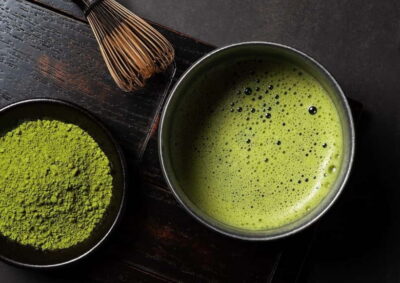
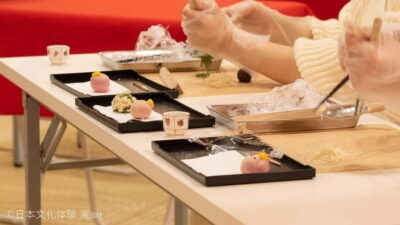
Japanese Traditional Sweets Making and Tea Ceremony
Read our review →
Osaka Temple Cool Foot Bath & Matcha Experience〈45min〉
Read our review →
Samurai Show, Tea Ceremony, Japanese Traditional Activities
Read our review →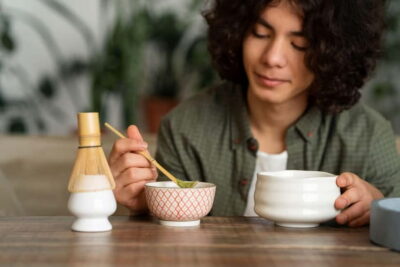
Osaka; Japanese Tea ceremony experience, Macha and Sencha
Read our review →Browse the lists this tour appears in