
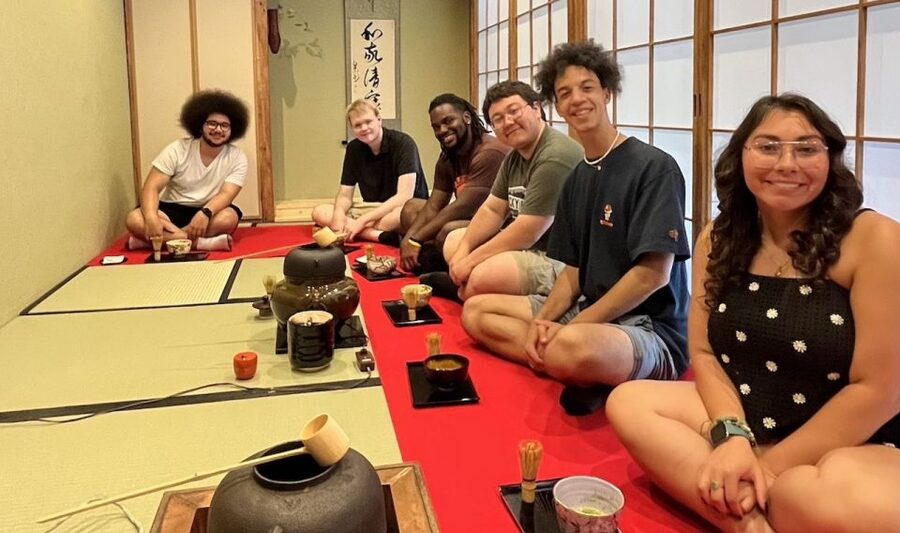
Reviewed · OSAKA TEA CEREMONY & MATCHA EXPERIENCES
Osaka: Tea Ceremony Experience
The most appealing part of this Osaka tea ceremony is that you do not just watch. After a calm introduction and a demonstration in a tatami room, you handle the bamboo whisk and make your own bowl of matcha. Instructors such as Yuki, Kazu, Akiko, and Mayumi are praised for clear English and patient teaching.
I like the thoughtful mix of culture and participation. You learn why each movement matters, then taste a seasonal sweet with the tea. At $25, it is also an easy cultural stop to fit between Dotonbori sights. The main drawback is practical: you sit on the floor, the address can be tricky to find, and there is no place to wait if you arrive far too early.
In This Review
- Key points at a glance
- Why this short Osaka tea ceremony works so well
- Entering the tatami room near Dotonbori
- The welcome explains more than tea
- Watching the kimono-clad demonstration
- Making matcha with traditional tools
- Seasonal sweets make the tea easier to appreciate
- What $25 gets you in Osaka
- Who should book this experience
- Timing, cancellation, and other practical details
- How this compares with a standard Osaka sightseeing stop
- Should you book it?
- FAQ
- Where does the Osaka tea ceremony take place?
- How long does the tea ceremony last?
- How much does the experience cost?
- Is the activity conducted in English?
- What is included in the price?
- Do I get to make my own matcha?
- Can children participate?
- Can I cancel the booking?
Key points at a glance
- You make your own matcha: Use traditional tea tools after watching the instructor prepare a bowl.
- English instruction is central: Japanese instructors explain the ceremony, manners, history, and symbolism in clear English.
- The setting is calm: A traditional tatami room offers a quiet break from the busy streets around Dotonbori.
- Seasonal sweets are included: The small Japanese confections are served with matcha and are a highlight for many people.
- It is short and affordable: The scheduled experience lasts 45 minutes and costs $25 per person.
- Plan your arrival carefully: Search Google Maps for tea ceremony osaka the osaka and go to the second floor at 5-26 Dotonbori 1-chome Higashi.
Why this short Osaka tea ceremony works so well
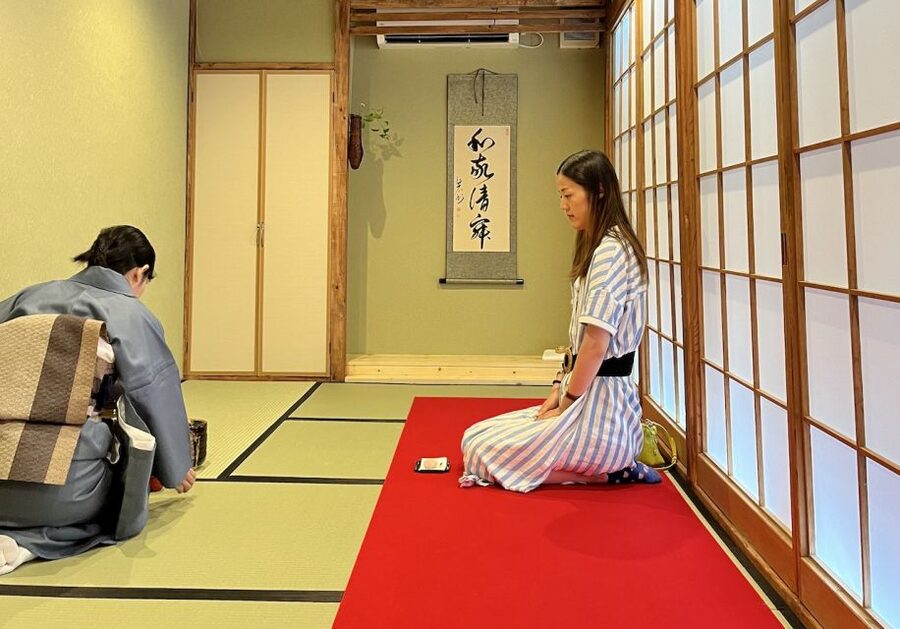
Osaka is famous for food, shopping, neon, and quick movement. This experience gives you a quiet change of pace without taking half a day from your sightseeing plan. In 45 minutes, you get a simple introduction to one of Japan’s most carefully structured cultural traditions.
I would not treat it as a full study of tea ceremony. Traditional tea practice can take years to learn, and this is designed for first-time visitors. That is its strength. The instructor keeps the customs understandable, shows the basic manners, and lets you take part without expecting you to know the rules in advance.
The tone is welcoming rather than severe. Instructors wear kimono, speak English, and have more than 10 years of tea ceremony experience. Names can vary by session, but English-language feedback has singled out Yuki, Kazu, Akiko, Mayumi, Kana, and other hosts for gentle explanations and patient guidance.
More tea ceremonies and matcha sessions:
- Tea Ceremony Experience in Osaka Doutonbori
★ 5.0 · 754 reviews - Matcha Making Class in Osaka with Authentic Japanese Sweets Set
★ 5.0 · 509 reviews - Osaka: Matcha Making Experience with Japanese Sweets
★ 5.0 · 146 reviews
Entering the tatami room near Dotonbori
The meeting point is at 5-26 Dotonbori 1-chome Higashi, Osaka, on the second floor. The supplied coordinates are 34.6688508, 135.5063291. Since the location can be hard to spot, use Google Maps and search for tea ceremony osaka the osaka rather than relying only on the English wording in your booking.
Give yourself extra time. One practical comment described the awkward balance well: you need to arrive early because the place is not always easy to find, but arriving too early is not ideal because there is nowhere to sit while waiting. I would aim to arrive with enough time for a careful walk from the nearby Dotonbori area, but not so early that you are left standing outside.
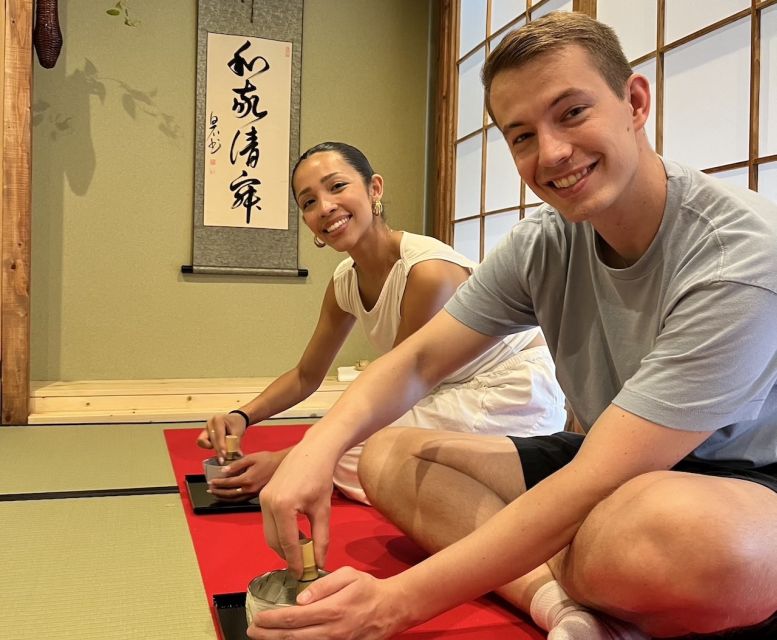
Once inside, you enter a traditional Japanese room with tatami flooring. The room is part of the experience, not just a backdrop. Removing the noise and visual clutter of central Osaka helps you pay attention to small gestures, the tea bowls, the sweets, and the sound of the whisk.
You will sit on the floor for much of the session. One person described sitting for about an hour, although the stated duration is 45 minutes. If floor sitting is difficult for you, this is worth considering before booking. The activity also does not allow baby strollers or baby carriages.
The welcome explains more than tea
The first section is a welcome and introduction. Your instructor explains the meaning and history of the tea ceremony, along with the basic idea behind serving tea with care and attention.
This background matters because the ceremony can otherwise look like a series of precise movements with no obvious purpose. The explanation gives you a way to read what you are seeing. You learn that the serving of tea involves manners, timing, presentation, and respect, not simply the preparation of a powdered drink.
The English instruction is one of the activity’s strongest points. The guides explain the process directly, answer questions, and keep the lesson accessible to people who know little about Japanese culture. Several sessions were described as informative without becoming dry, with enough detail to make the ritual meaningful during a short visit.
You should feel free to ask questions during the introduction. The teaching style appears warm and encouraging, especially with first-time participants. That makes this a better choice for a mixed group than a formal demonstration where you are expected to sit silently and simply observe.
Watching the kimono-clad demonstration
Next, the instructor performs a live tea ceremony demonstration. The kimono, traditional utensils, and quiet room give the presentation a sense of occasion, but the guide also explains what is happening as the movements unfold.
Pay attention to the small details. The instructor shows how the tools are handled and explains basic manners for serving and receiving tea. You may also hear about the meaning of particular actions and tea bowls. Kazu, for example, was praised for explaining the purpose behind each part of the ceremony, including the significance of the bowls.
This is the most peaceful section of the activity. The deliberate pace may feel very different from a standard Osaka attraction. If you have just spent the morning crossing crowded streets and navigating shops, the quiet can be surprisingly useful.
The demonstration also sets you up for the hands-on portion. You see the correct order before picking up the tools yourself. That reduces the worry of doing something wrong, which is important because Japanese etiquette can seem intimidating from the outside.
A completely different way to spend a day in Osaka:
- Osaka Go Karting Tour with Funny Costume
★ 5.0 · 2,658 reviews - Osaka Castle: Museum and Tower Entry Ticket
★ 4.5 · 2,380 reviews - Osaka: Shinsekai Food Tour with 13-15 Dishes at 5 Eateries
★ 4.8 · 2,204 reviews - Osaka Food Tour: 13 Dishes at 5 Local Eateries
★ 5.0 · 2,149 reviews
Making matcha with traditional tools
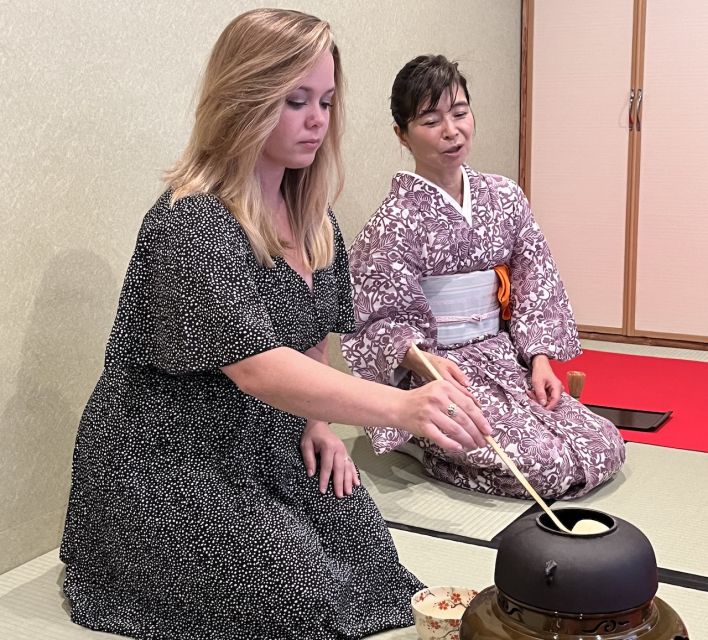
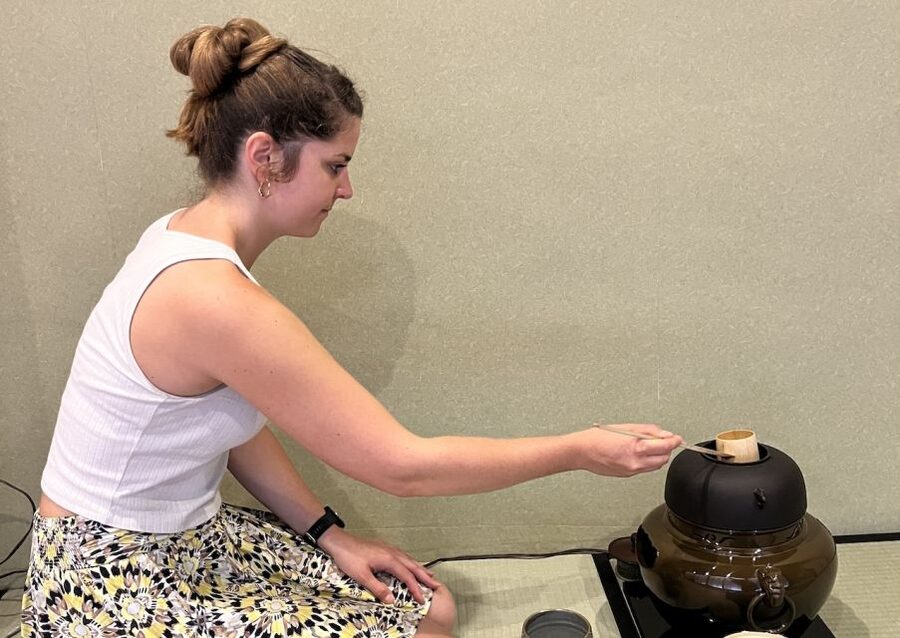
After the demonstration, you prepare your own bowl of matcha. The instructor guides you through the basic method and shows you how to use the traditional tools. This is the part that turns the session from a cultural talk into a personal activity.
You are not expected to become a tea master in one lesson. Instead, you get a feel for the work involved in making matcha and the care given to each stage. The process is simple enough for beginners, and the instructors are there to correct or encourage you as needed.
There is also a useful lesson here about matcha itself. Many people know matcha as a modern café flavor, but whisking powdered green tea by hand gives you a closer look at the drink as part of Japanese custom. The taste is distinctive and may not suit everyone. One instructor described the session as worthwhile even for someone who was not fully converted to matcha.
Once your bowl is ready, you drink it yourself. Some sessions may include more than one tasting, but the standard description promises your own prepared bowl and the included matcha. The experience gives you enough context to understand the drink rather than treating it as a quick sample.
Seasonal sweets make the tea easier to appreciate
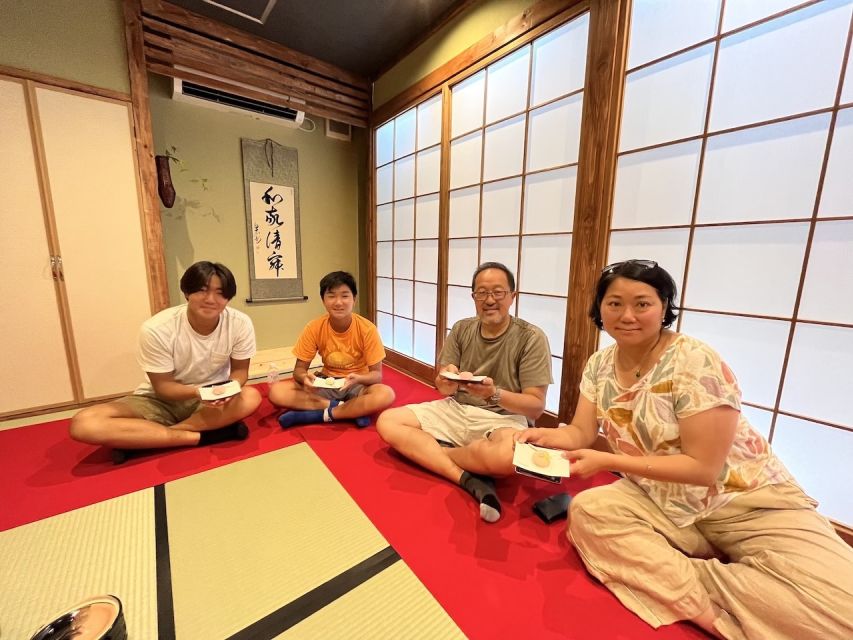
Traditional Japanese confections are served with the matcha. They are small, seasonal sweets, and they provide a pleasant contrast to the tea’s earthy, slightly bitter flavor.
Do not expect a large snack or meal. Food is not allowed in the activity area, but the included confections are part of the planned tasting. Their role is to complement the matcha and add another piece of Japanese food culture to the session.
The sweets received unusually strong praise in the available comments. They were described as delicate, delicious, and even divine. That may sound like a small detail, but the pairing is important. The sweet helps balance the matcha and gives the tasting a more complete structure.
If you have food allergies or dietary restrictions, the supplied details do not specify ingredients or substitutions. Ask the provider before booking if that matters to you. Do not bring your own food into the room.
What $25 gets you in Osaka
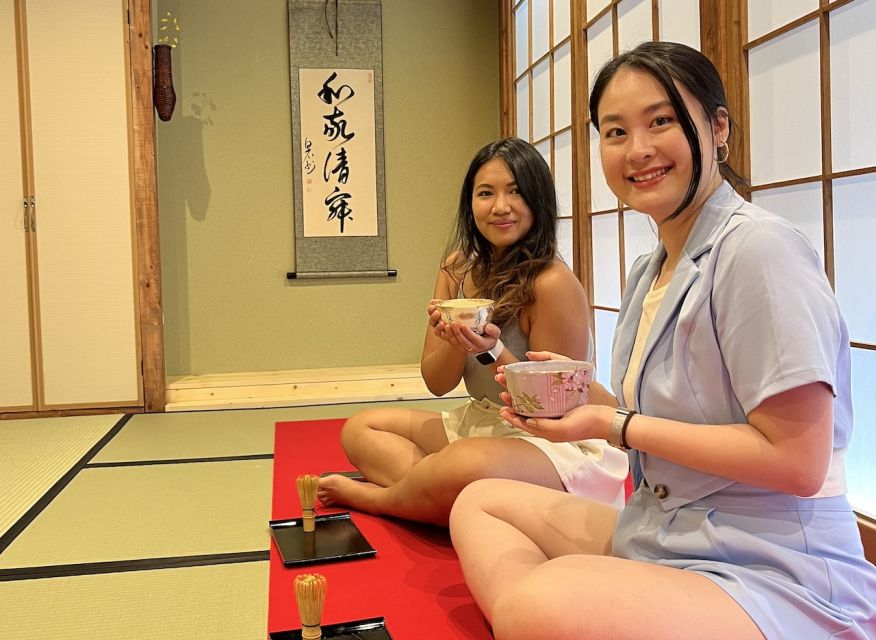
At $25 per person, this is good value if you want a guided cultural activity rather than a quick photo opportunity. The price includes entrance, matcha, and confections. You also receive an English-language explanation, a demonstration, access to traditional utensils, and time to prepare the tea yourself.
The value comes from the personal instruction. You could buy a matcha drink elsewhere for less, but that would not include the cultural context, etiquette lesson, kimono-clad demonstration, or chance to use the tools. For a first visit to Japan, those details make the fee reasonable.
The 45-minute length also helps. You can place the session into a day of sightseeing without giving up a major block of time. The Dotonbori location makes it especially practical as a pause during an exploration of central Osaka.
There are limits. This is a brief introduction, not an advanced ceremony or a long private lesson. The room may be less comfortable if you dislike floor seating, and the venue’s location requires careful navigation. Still, for the cost and time, the activity offers more substance than many short city-center attractions.
Who should book this experience
I would recommend it most strongly to first-time visitors who want a clear, low-pressure introduction to Japanese culture. You do not need prior knowledge of tea ceremony, Japanese etiquette, or matcha preparation.
It also suits:
- Couples looking for a quiet break from Osaka sightseeing
- Families with eligible children who can sit calmly on tatami
- Solo visitors who enjoy hands-on cultural activities
- Small groups who want an activity everyone can try
- Anyone curious about matcha beyond the café version
The activity may be less suitable for very young children or anyone who cannot sit on the floor. The rules say children over 5-years old cannot participate, while also stating that children aged 5 and above need their own ticket. That wording is inconsistent, so families should confirm the age policy directly before booking. Children under 5 are not allowed to enter according to the supplied information, and anyone accompanied by a child under 4 is asked to contact the provider in advance.
The no-noise rule is also worth noting. This is a quiet cultural lesson, not a drop-in show where children can move around freely. Baby strollers and baby carriages are not allowed.
Timing, cancellation, and other practical details
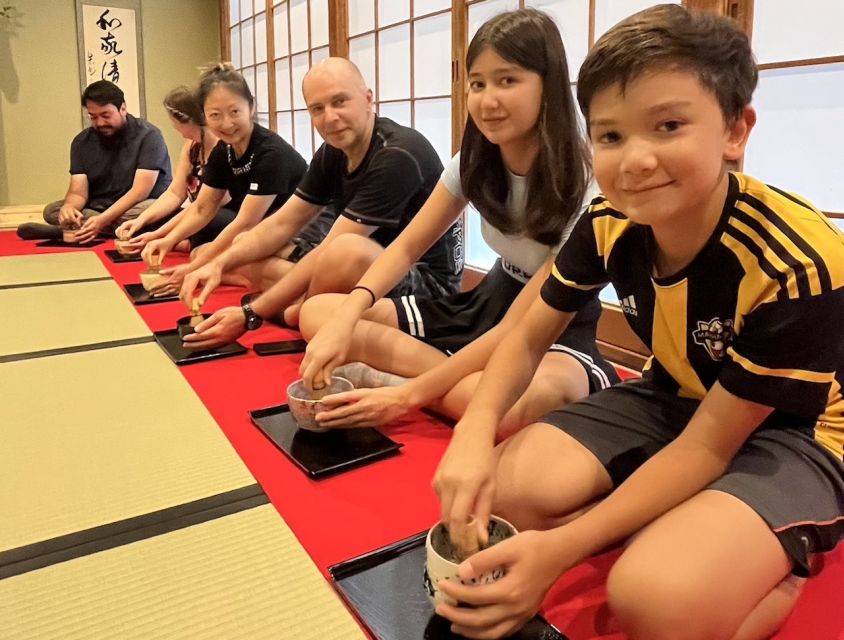
The activity lasts 45 minutes, with starting times available according to the booking calendar. English is the listed language, and an English host or greeter is provided. An English audio guide is also included in the activity information.
You can cancel up to 24 hours in advance for a full refund. The reserve-now, pay-later option is useful if your Osaka schedule may change. It lets you hold a place without paying immediately.
Arrive with time to spare, but do not turn up extremely early expecting a lounge or waiting area. Keep the address and coordinates saved, and check the map before leaving your hotel. The provider warns that people occasionally miss the start, so navigation is not a minor detail here.
Wear something that allows comfortable floor sitting. The supplied rules prohibit jumping, loud noise, food, baby strollers, and baby carriages. Following those limits helps preserve the calm setting for everyone.
How this compares with a standard Osaka sightseeing stop
A tea ceremony is not a substitute for Osaka’s food markets, castles, or neighborhood walks. It gives you a different kind of experience. Instead of moving through a place and collecting facts, you spend a short period watching, listening, and repeating a carefully taught process.
That makes it a useful middle-of-the-day activity. The Dotonbori area can be noisy and crowded, and the tea room provides a clear contrast. You leave with practical knowledge of how matcha is prepared and a better sense of why the ritual is performed so carefully.
The strongest teaching seems to come from guides who explain meaning as well as procedure. Akiko was praised for her gracious, attentive manner, while Yuki was described as kind and pleasant. Mayumi received praise for explaining the process thoroughly and gently. These comments suggest a consistently warm teaching approach, although your instructor will depend on the schedule.
Should you book it?
Book this Osaka tea ceremony if you want an affordable, English-language introduction to Japanese culture with real participation. The demonstration, hands-on matcha preparation, seasonal sweets, and traditional room create a well-shaped experience in less than an hour.
I would skip it if you cannot sit on the floor, need a child-friendly free-form activity, or want an advanced and lengthy tea ceremony. For most first-time visitors, though, the $25 price is fair, the short duration is convenient, and the chance to make matcha yourself gives the experience a personal finish. Just confirm the child-age rule, use Google Maps carefully, and arrive prepared for a quiet session on tatami.
FAQ
Where does the Osaka tea ceremony take place?
It takes place at 5-26 Dotonbori 1-chome Higashi, Chuo Ward, Osaka, on the second floor. The coordinates are 34.6688508, 135.5063291.
How long does the tea ceremony last?
The stated duration is 45 minutes. One piece of practical feedback refers to sitting for about an hour, so allow a little extra time around the scheduled start and finish.
How much does the experience cost?
The price is $25 per person.
Is the activity conducted in English?
Yes. The instructors, host or greeter, and audio guide are listed as English-language services.
What is included in the price?
Entrance, matcha powdered green tea, and traditional confections are included.
Do I get to make my own matcha?
Yes. After watching a demonstration, you use traditional tea tools to prepare your own bowl of matcha, then drink it with a seasonal sweet.
Can children participate?
The supplied information says children over 5-years old cannot participate, while also saying that children aged 5 and above must have their own ticket. Because these statements conflict, confirm the age policy before booking. Children under 5 are not allowed to enter, and families with a child under 4 should contact the provider in advance.
Can I cancel the booking?
You can cancel up to 24 hours in advance for a full refund. A reserve-now, pay-later option is also available.
Just added around Osaka
- Guided Tour of Some Attractions in Osaka by Private Car★ 5.0 · 3 reviews
- Nara Day Trip from Osaka with a Licensed Guide★ 5.0 · 3 reviews
- Osaka Early Morning Osaka Castle Tour Avoid Crowds★ 5.0 · 3 reviews
- Private Transfer Between Kyoto and Kansai Airport KIX★ 5.0 · 3 reviews
- Shared Arrival Transfer: Osaka Itami Airport to Osaka City★ 5.0 · 3 reviews
- Osaka: Sushi Making Class and Dotonbori Food Tour★ 4.7 · 3 reviews
- Osaka Night Photography Workshop★ 5.0 · 3 reviews
- Kyoto Full day Tour Kinkakuji, Kiyomizu-dera and Fushimi Inari★ 4.5 · 3 reviews
Osaka Tea Ceremony & Matcha Experiences, compared.

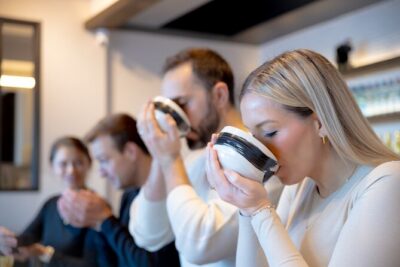
Matcha Making Class in Osaka with Authentic Japanese Sweets Set
Read our review →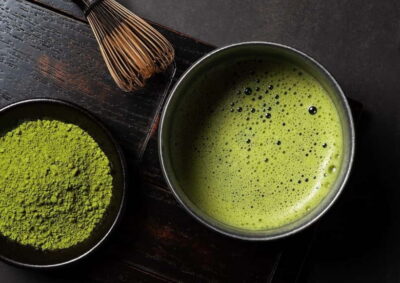
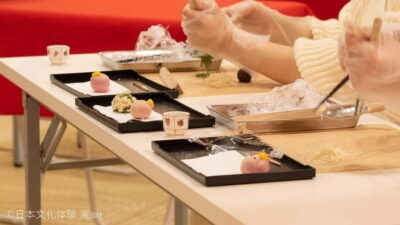
Japanese Traditional Sweets Making and Tea Ceremony
Read our review →
Osaka Temple Cool Foot Bath & Matcha Experience〈45min〉
Read our review →
Samurai Show, Tea Ceremony, Japanese Traditional Activities
Read our review →
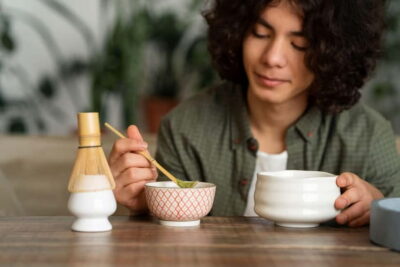
Osaka; Japanese Tea ceremony experience, Macha and Sencha
Read our review →Browse the lists this tour appears in