
Reviewed · OSAKA TEA CEREMONY & MATCHA EXPERIENCES
Osaka: Japanese Traditional Sweets Making and Tea Ceremony
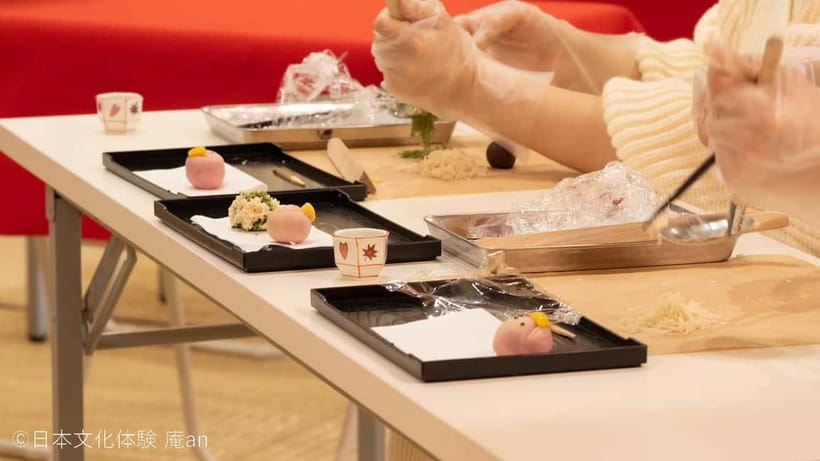
Making a flower-shaped nerikiri from Kyoto bean paste, then eating it with matcha you prepare yourself, gives this Osaka class its charm. I like the two-part format: you get a hands-on craft session and a calm tea lesson, rather than simply watching a ceremony. I also like the seasonal designs, which turn a sweet into a small edible piece of Japanese culture.
The main consideration is language. The instructor teaches in Japanese, with English translation provided as much as possible, so contact the provider ahead of time if you need English support. You also need to climb stairs, and late arrivals cannot be accommodated.
In This Review
- Key Points to Know Before Booking
- Why Making Nerikiri Is the Heart of the Class
- A Clear 55-Minute Making Session
- The Matcha Break Explains More Than a Cup of Tea
- Why the Sweets and Matcha Work Together
- The Teaching Style and English Question
- A Convenient Osaka Meeting Point
- What the $18 Price Really Includes
- Who Will Enjoy This Experience Most
- Should You Book the Nerikiri and Tea Ceremony Class?
- FAQ
- How long does the Osaka sweets and tea ceremony experience last?
- How many Japanese sweets will I make?
- What ingredients are used for the sweets?
- Is matcha included?
- Is the experience taught in English?
- Where does the activity meet?
- Is the building accessible by elevator?
- Can I take my sweets home?
Key Points to Know Before Booking
- Make two seasonal sweets: Shape a flower-style nerikiri and a second kinton nerikiri using white and red bean paste from long-established Kyoto shops.
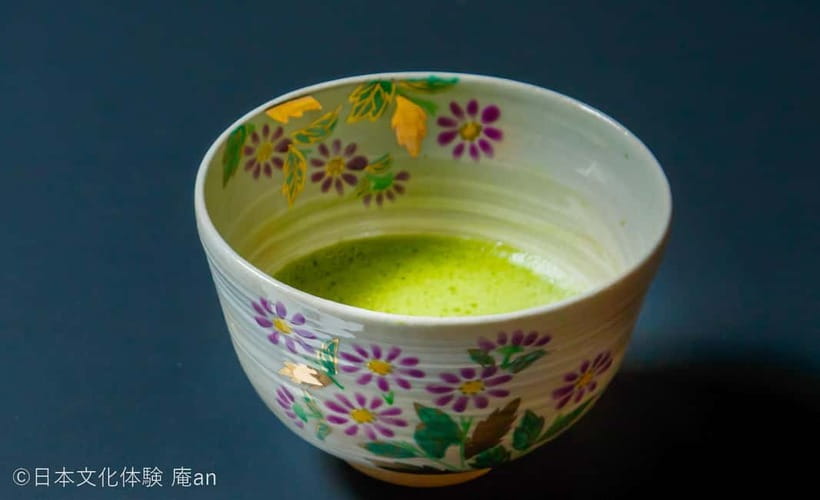
- Prepare your own matcha: A grinding demonstration and hands-on tea preparation help explain what is in your bowl, not just how to drink it.
- Expect a relaxed 95-minute class: The timetable leaves room for making, learning, photographs, and eating your sweets with tea.
- Central Osaka location: Higobashi Station is only a one-minute walk from the meeting point, with several other stations within walking distance.
- English help is available by request: Several instructors have taught successfully in both Japanese and English, but you should ask before arriving.
- Good value at $18: Required tools and the class are included, while a take-out box costs 100 JPY and a completion certificate costs 300 JPY.
Why Making Nerikiri Is the Heart of the Class
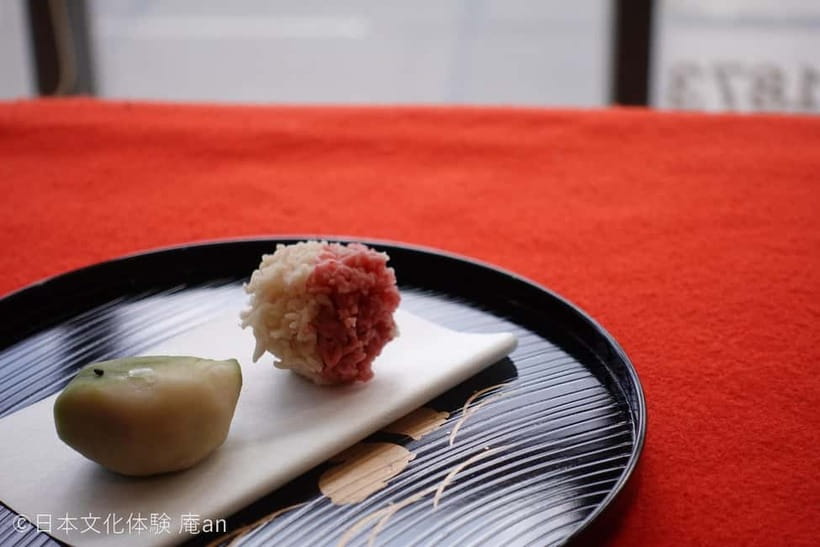
Nerikiri is a high-grade Japanese sweet made from colored white bean paste, shaped to resemble seasonal flowers or fruit. It is delicate, precise work, but you do not need to arrive with artistic talent. The point is to learn how the paste is colored and handled, then give it a form that reflects the season.
You begin with the coloring process. This matters because the sweet is not just a lump of bean paste with decoration added later. Color, shape, and season work together. A flower design may call for gentle layers and careful pinching, while another form may need a different arrangement of colors.
The first sweet is a flower-shaped nerikiri. The second is a kinton nerikiri, a style known for its fine, threadlike appearance. Making both gives you useful contrast. One focuses on shaping a smooth exterior, while the other calls for a more textured finish.
I like this setup because it offers enough guidance without turning the class into a passive demonstration. You work with the same kind of white and red bean paste produced by long-established Kyoto shops, so the activity has a real connection to Japanese confectionery rather than using a generic craft material.
The sweets are matched to the season, too. That makes the designs change over the year and gives a repeat visitor a reason to return. It also reflects an important part of Japanese food culture: the calendar appears not only in festivals and scenery, but in the shape and appearance of what you eat.
More tea ceremonies and matcha sessions:
- Osaka: Tea Ceremony Experience
★ 4.9 · 1,426 reviews - Tea Ceremony Experience in Osaka Doutonbori
★ 5.0 · 754 reviews - Matcha Making Class in Osaka with Authentic Japanese Sweets Set
★ 5.0 · 509 reviews
A Clear 55-Minute Making Session
The first 55 minutes focus on the sweets. The instructor explains the ingredients and process before you begin, then guides you through the flower-shaped nerikiri and kinton nerikiri.
The pace should suit first-time makers. You are not expected to know the correct tools or techniques in advance, and the required equipment is supplied. Several instructors have been praised for patience and clear demonstrations, including Maiko, Jun, and Mihiko. The exact instructor depends on your session, but the teaching style appears friendly and attentive.
This portion is especially suitable for families with older children. A class attended by children aged 10 and 12 worked well, and both children enjoyed making the sweets. Young children who sit on a parent’s lap are free only if they are under two years old, but anyone who participates must book and pay according to the activity’s rules.
You should expect small, careful movements rather than a fast cooking lesson. Nerikiri is about finesse and attention to detail. If you rush, the paste may lose its clean shape. If you take your time, the process becomes a quiet creative exercise, even in the middle of Osaka.
One practical note: the class does not appear to include a take-home container. If you want to carry your sweets away rather than eat them during the session, a box costs 100 JPY. Eating them fresh with matcha is part of the planned experience, so the box is useful mainly if you want a souvenir or need to save one for later.
The Matcha Break Explains More Than a Cup of Tea
After the sweets are made, there is a short break before the tea portion. The timetable places this around the 55-minute mark, with tea explanations beginning at about 65 minutes.
The matcha used here is single-origin Uji matcha. Uji, near Kyoto, is one of Japan’s best-known tea-producing areas, so this choice adds useful context to the class. You are not simply handed a bowl of green tea. You see how matcha becomes powder and learn why the drink tastes so different from ordinary steeped tea.
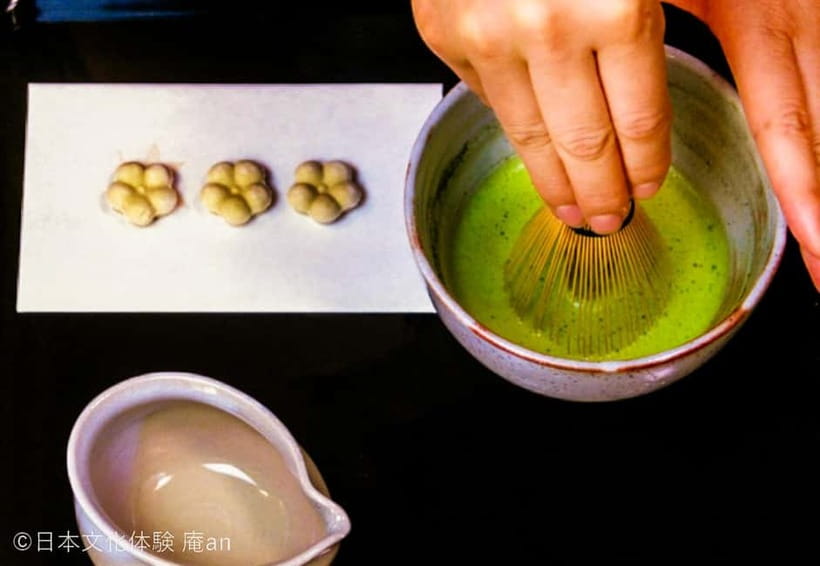
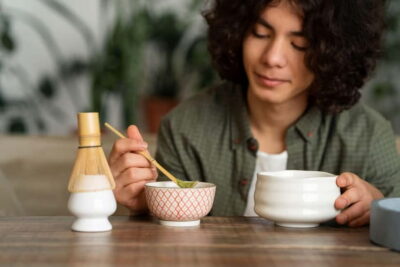
The grinding demonstration is a particularly nice touch. It gives you a direct look at the powder used in the bowl and helps explain the fine texture of matcha. Then you prepare your own tea as part of the tea ceremony experience.
The class also covers the proper way to drink tea and express appreciation in Japanese culture. That may be the most useful part for a first-time visitor. Tea ceremony has gestures and customs that can feel mysterious if you only watch from the side, but practicing them in a class makes the etiquette easier to remember.
This is a casual tea ceremony experience, not a long formal ceremony. That distinction matters. If you want a strict, highly ceremonial performance in a traditional setting, this may feel too light. If you want to understand the basic flow, prepare matcha, and ask questions, the relaxed approach is likely a better fit.
One person who attended a private class found that the teacher explained the ceremony and answered questions, but did not require the participant to practice every ceremony movement. That suggests the exact balance between demonstration, explanation, and practice can vary. You should book this for cultural instruction and participation, not for a full formal tea-school training session.
Why the Sweets and Matcha Work Together
The final tasting is more than a reward for finishing the craft. Traditional Japanese sweets are often served with matcha because their sweetness balances the tea’s grassy, slightly bitter taste.
The high-quality bean paste gives the sweets a smooth, concentrated sweetness. Matcha provides a stronger, earthy flavor. Together, they make more sense than either item would on its own. The sweet prepares your palate for the tea, while the tea keeps the confection from becoming cloying.
You eat and drink at the end of the experience, after the tea-ceremony portion and picture time. The timetable lists the formal activity ending around 85 minutes, followed by eating and drinking until about 95 minutes. That gives you a little breathing room rather than forcing an immediate departure after the last instruction.
The picture time is also useful. Your finished sweets are small and easy to damage, so photographing them before eating is sensible. If you have made a particularly neat flower or kinton design, this is your chance to keep a record of it.
A few more Osaka tours and experiences worth a look
- Osaka: Matcha Making Experience with Japanese Sweets
★ 5.0 · 146 reviews - Japanese Traditional Sweets “Nerikiri” making
★ 4.2 · 5 reviews
The Teaching Style and English Question
The official language is Japanese, but English translation is provided as much as possible. You should contact the provider when booking if you want English assistance, especially if detailed explanations matter to you.
The available teaching experience in English seems to vary by instructor and session. Some instructors have moved comfortably between Japanese and English, while one participant noted that the written instructions were in Japanese and would have been easier with English support. Another class worked well despite the instructor describing their English as limited.
The practical answer is simple: request English translation in advance and arrive ready to watch demonstrations closely. The activity is hands-on, so you can often follow the physical steps even if you miss a word. Still, the cultural explanations about wagashi, tea etiquette, and expressions of appreciation are a major part of the value, so language planning is worth the small effort.
The teaching style has often been patient, cheerful, and inclusive. Instructors have been described as having good energy, a sense of humor, and a willingness to answer questions. That helps in a class where precision matters and where a small language gap could otherwise make the process feel stiff.
A Convenient Osaka Meeting Point
The class is in central Osaka, close to several train stations. The easiest route is a one-minute walk from Exit 10 of Higobashi Station on the Osaka Metro Yotsubashi Line.
You can also walk five minutes from Exit 7 of Watanabebashi Station on the Keihan Nakanoshima Line, or seven minutes from Exit 10 of Yodoyabashi Station on the Osaka Metro and Keihan lines. Kitashinchi Station is about 10 minutes away, while Osaka Station is about a 15-minute walk from the South Central Gate.
This location makes the experience easy to fit between sightseeing plans. You do not need to spend half a day reaching a remote tea house. The activity runs between 10:00 and 17:00, with starting times depending on availability.
Give yourself extra time to find the building. One person had trouble locating the gray building because the map pin was not obvious. The supplied coordinates are 34.6911523, 135.4958628, and checking the Google Maps link before you leave your hotel is a wise move.
If you drive, use nearby coin-operated parking. Parking is not included.
There is no elevator, so you need to use stairs to reach the venue. This is important for anyone with mobility concerns, a stroller, or heavy luggage. Those who do not take part in the experience cannot enter, so an accompanying nonparticipant should not assume they can wait inside.
What the $18 Price Really Includes
At $18 per person, this is a strong-value cultural activity. You receive 95 minutes of instruction, all required tools, two sweets to make, a matcha grinding demonstration, tea preparation, and a final tasting.
The price works because it combines a craft workshop and a tea experience in one booking. Separate activities could easily take more time and cost more, while this format gives you a clear introduction without asking for a full afternoon.
The value is strongest if you participate fully. You are not paying just to watch someone shape sweets or whisk tea. You color the paste, form two designs, prepare matcha, and eat what you make.
There are two small extras. A sweets take-out box costs 100 JPY, and an experience completion certificate costs 300 JPY. Neither is needed to enjoy the class. I would choose the box only if you want to save your sweets, and the certificate only if you collect activity souvenirs.
Free cancellation is available up to 24 hours before the experience for a full refund. You can also reserve now and pay later, which is useful when you are arranging a busy Osaka schedule. Do not cut your arrival close, though. The class will not wait for late arrivals, and travel expenses are not compensated if you miss the start.
Who Will Enjoy This Experience Most
I would recommend this class to first-time visitors who want a manageable introduction to Japanese sweets and tea culture. It is also a good choice for couples, families with school-age children, and anyone who wants a quiet activity between Osaka’s larger attractions.
You will get the most from it if you enjoy making things with your hands and asking questions. The work is small-scale and careful, so it suits people who like a calm pace rather than a loud, fast cooking class.
The activity may not suit you if you want a fully formal tea ceremony conducted entirely in English. The class is taught in Japanese, and the ceremony is casual. It also is not the best fit if stairs are difficult or if you need a fully accessible venue.
At $18, the risk is low. Even if your flower does not look quite like the instructor’s, you still leave with a better understanding of nerikiri, matcha, and the customs around serving tea.
Should You Book the Nerikiri and Tea Ceremony Class?
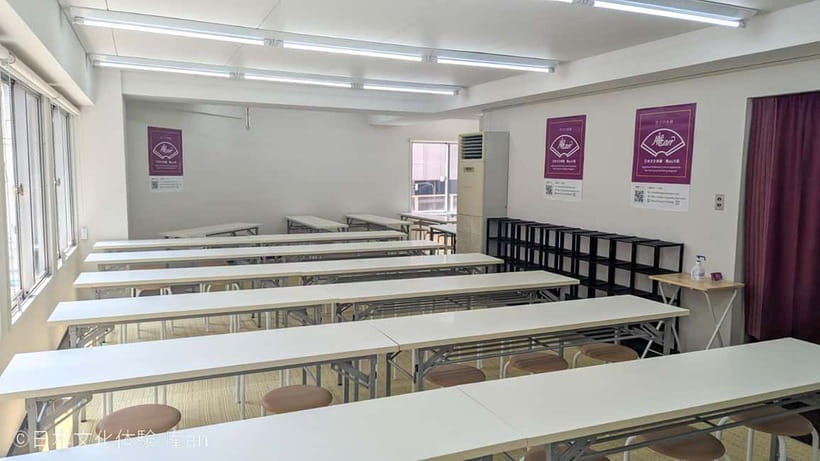
Book it if you want hands-on Japanese culture in under two hours. The combination of Kyoto bean paste, seasonal designs, Uji matcha, and a central Osaka location gives the class more substance than a simple sweet-making workshop.
Request English help ahead of time, check the building location, and allow time for the stairs. If you want a formal, traditional tea-school ceremony, choose a more specialized experience. For a friendly, affordable introduction that lets you make, taste, and ask questions, this is an easy choice.
FAQ
How long does the Osaka sweets and tea ceremony experience last?
The full experience lasts 95 minutes. The sweets-making portion takes about 55 minutes, tea explanations begin around the 65-minute mark, and the final eating and drinking period runs until about 95 minutes.
How many Japanese sweets will I make?
You will make two seasonal sweets. One is a flower-shaped nerikiri, and the other is a kinton nerikiri.
What ingredients are used for the sweets?
The class uses white and red bean paste produced by long-established shops in Kyoto. The paste is colored and shaped into seasonal designs.
Is matcha included?
Yes. The experience includes single-origin Uji matcha, a matcha grinding demonstration, tea preparation, and the chance to drink your tea with the sweets you made.
Is the experience taught in English?
The listed language is Japanese, and English translation is provided as much as possible. Contact the provider in advance if you would like English assistance.
Where does the activity meet?
The meeting point is one minute from Exit 10 of Higobashi Station on the Osaka Metro Yotsubashi Line. It is also within walking distance of Watanabebashi, Yodoyabashi, Kitashinchi, and Osaka stations.
Is the building accessible by elevator?
No. There is no elevator, and you must use stairs to reach the venue.
Can I take my sweets home?
A sweets take-out box is available for 100 JPY. The box is not included in the activity price.
Just added around Osaka
- Nara Day Trip from Osaka with a Licensed Guide★ 5.0 · 3 reviews
- Osaka Early Morning Osaka Castle Tour Avoid Crowds★ 5.0 · 3 reviews
- Guided Tour of Some Attractions in Osaka by Private Car★ 5.0 · 3 reviews
- Private Transfer Between Kyoto and Kansai Airport KIX★ 5.0 · 3 reviews
- Shared Arrival Transfer: Osaka Itami Airport to Osaka City★ 5.0 · 3 reviews
- Osaka: Sushi Making Class and Dotonbori Food Tour★ 4.7 · 3 reviews
- Osaka Night Photography Workshop★ 5.0 · 3 reviews
- Kyoto Full day Tour Kinkakuji, Kiyomizu-dera and Fushimi Inari★ 4.5 · 3 reviews
Osaka Tea Ceremony & Matcha Experiences, compared.
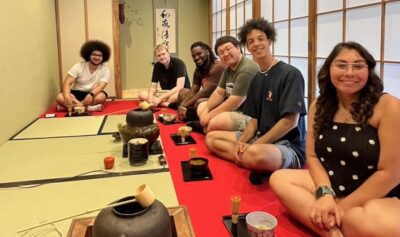

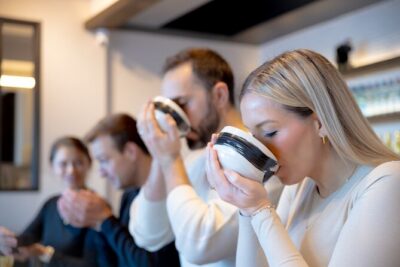
Matcha Making Class in Osaka with Authentic Japanese Sweets Set
Read our review →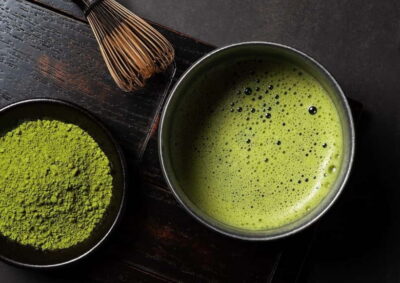

Osaka Temple Cool Foot Bath & Matcha Experience〈45min〉
Read our review →
Samurai Show, Tea Ceremony, Japanese Traditional Activities
Read our review →
Osaka; Japanese Tea ceremony experience, Macha and Sencha
Read our review →Browse the lists this tour appears in