
Reviewed · OSAKA CRAFT WORKSHOPS
From Osaka: Sakai Knife Maker or Blacksmith Walking Tour
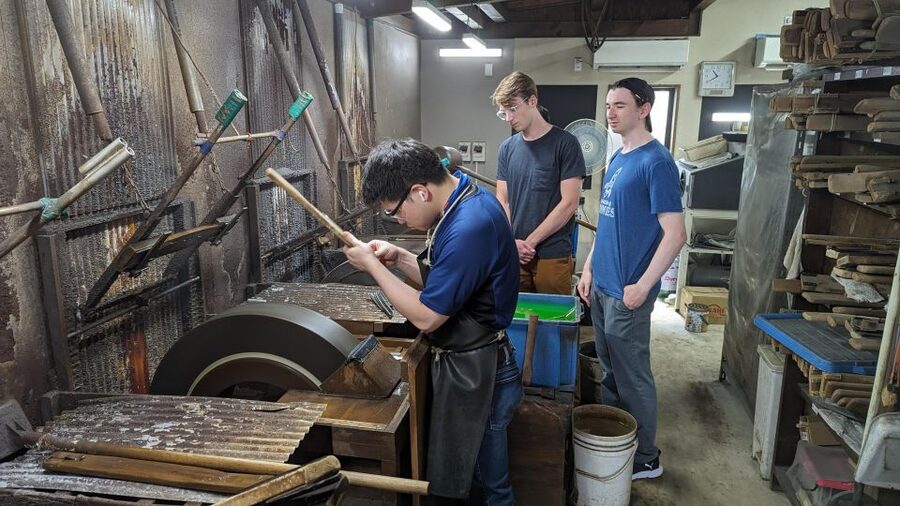
Sakai’s knife trade is the star here, but the best part is seeing it in its working setting rather than in a polished Osaka showroom. You visit a century-old knife maker or a small blacksmith forge, then get close enough to watch blades being sharpened, shaped, or forged.
I like the old sweet shop stop and the hands-on sharpening lesson. I also like the way guides such as Remy, Scott, and Jean-Yves add local stories to the walk, so Sakai feels like a real town rather than just a stop on a shopping route.
The main thing to check is the day you book. Tuesdays and Thursdays focus on Yamawaki Hamono, while Wednesdays visit the De Sakai blacksmith. The museum can also close on the third Tuesday of the month, and French cannot be guaranteed on a shared tour.
In This Review
- Key points at a glance
- Why Sakai makes a better knife stop than a quick Osaka shop
- Start with mochi and local stories at Yao Gen Raikodo
- See knife history at the Sakai Traditional Crafts Museum
- Tuesdays and Thursdays: behind the doors at Yamawaki Hamono
- Wednesdays: hammering hot steel at De Sakai
- What the walking route feels like
- The guides make a practical difference
- Who gets the most from the $64 price
- Useful booking details before you commit
- Should you book the Sakai knife tour?
- FAQ
- Where does the tour start?
- How long does the experience last?
- Which days visit the knife maker?
- Which day visits the blacksmith?
- What happens from March 6 through April 6, 2026?
- Is a sweet included?
- Can I order a custom knife?
- Is French guaranteed?
- Can one person book the tour?
Key points at a glance
- Choose your craft day: Visit Yamawaki Hamono on Tuesdays and Thursdays, or the De Sakai forge on Wednesdays.
- Try Sakai sweets: One traditional sweet is included at Yao Gen Raikodo, an old-fashioned shop.
- See working knife production: The knife-maker option includes access to the sharpening station and main office.
- Learn an old skill: Practice traditional Japanese knife sharpening with a trained guide.
- Order a personal blade: Customizable knives can be ordered and, in some cases, watched as they are made.
- Walk beyond central Osaka: Sakai is about 25 minutes from Osaka Namba Station, followed by a three-and-a-half-hour town walk.
Why Sakai makes a better knife stop than a quick Osaka shop
Sakai is south of Osaka in Osaka Prefecture, but it has its own craft identity. The town is especially known for handmade cooking knives, and this tour gives you the background needed to understand why a Japanese kitchen knife costs what it does.
You begin at Nankai Sakai Station and spend most of the experience on foot. The route is not a long sightseeing march, but you should expect several walking sections, including a 15-minute opening walk and a 15-minute return walk. Shorter five-minute walks connect the sweet shop, museum, and craft stops.
That pace works well for me because the town itself becomes part of the lesson. You are not simply transported from one attraction to the next. Your guide can point out local details and explain how Sakai’s trade developed as you move through ordinary streets.
The tour lasts 210 minutes, or three and a half hours. At $64 per person, I see the price as fair if you care about craft, food culture, or buying a serious kitchen tool. A museum visit alone would cost less, but it would not give you access to a working factory or forge, a sharpening lesson, and help with selecting a knife.
More traditional craft workshops:
- 1.5〜2 Hours Traditional Kintsugi Work Shop in Namba Osaka
★ 5.0 · 75 reviews - Osaka: Private Japanese Calligraphy Experience
★ 5.0 · 66 reviews - Osaka: Traditional Japanese Ceramics Private Experience
★ 5.0 · 57 reviews
Start with mochi and local stories at Yao Gen Raikodo
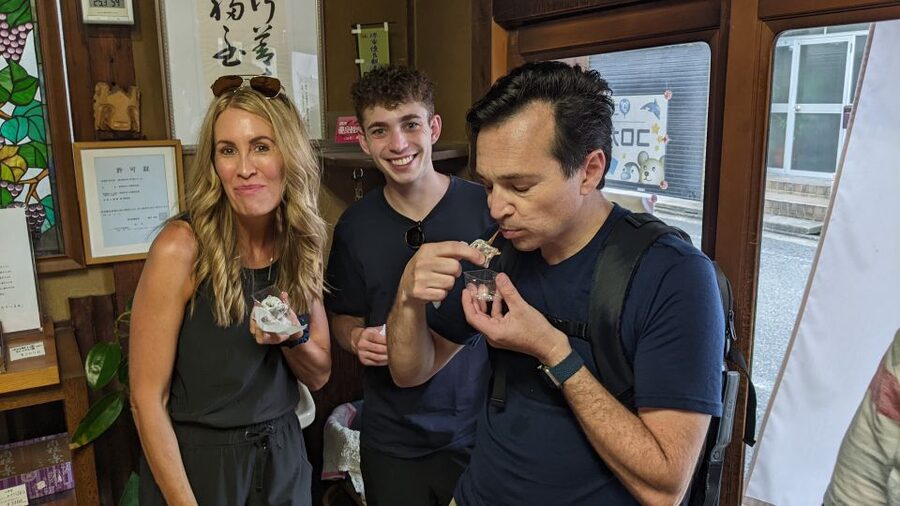
After meeting your guide at Sakai Station, you walk for about 15 minutes to Yao Gen Raikodo, a traditional sweet shop. One sweet is included, and the stop lasts around 20 minutes.
This is a smart opening. It gives you a gentle start before the technical part of the day, and it introduces a piece of Sakai culture that is easy to miss if you come only to shop for knives. The sweets described by visitors include poppyseed mochi and cinnamon mochi, so you may get something with a very different flavor from the usual tourist snack.
The shop also helps put the town in context. Guides have used this stop to explain local stories, trade, and Sakai’s connections with overseas contact, including Portuguese influence. You can ask about the sweet, the shop, and the neighborhood without feeling rushed.
One practical point: one sweet is included, but extra food and drinks are not. If you want more to eat, budget separately. The stop is a tasting and cultural visit, not a full breakfast or lunch.
See knife history at the Sakai Traditional Crafts Museum
A five-minute walk brings you to the Sakai Traditional Crafts Museum and Knife Shop. You spend about 30 minutes here on a visit that is mainly self-guided.
The museum gives you the vocabulary for the rest of the tour. You begin to see the difference between a raw blade, forging, sharpening, finishing, and the final kitchen knife. That matters because the factory or forge visit is much easier to follow once you understand the basic sequence.
The museum also helps if you are shopping. A knife can look simple in a display case, but its price reflects the work done at several stages. The museum provides a useful bridge between Sakai’s past craft traditions and the knives being made now.
There is one clear scheduling warning. On the third Tuesday of every month, the museum may close for inventory, sometimes without notice. If that happens, the guide takes you directly to the knife company and explains the cutlery story during the walk and at the office. You lose the museum visit, but the tour still includes the central craft experience.
Tuesdays and Thursdays: behind the doors at Yamawaki Hamono
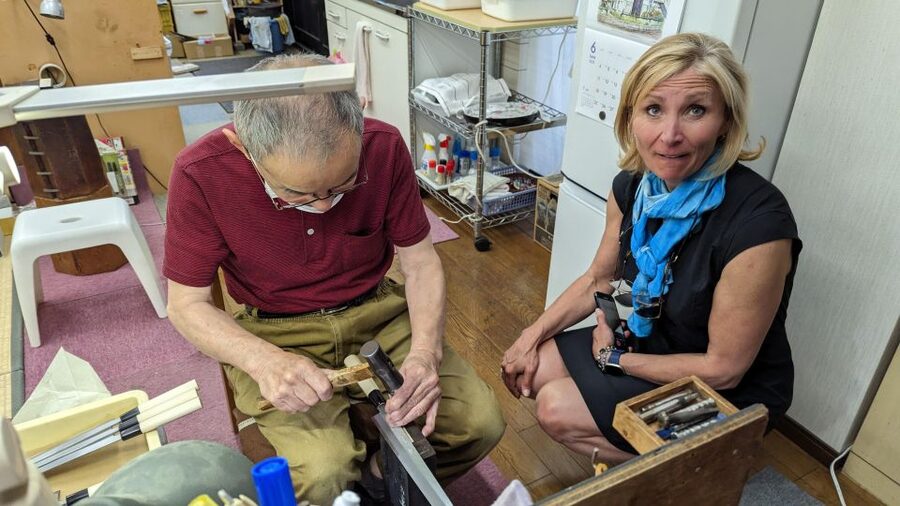
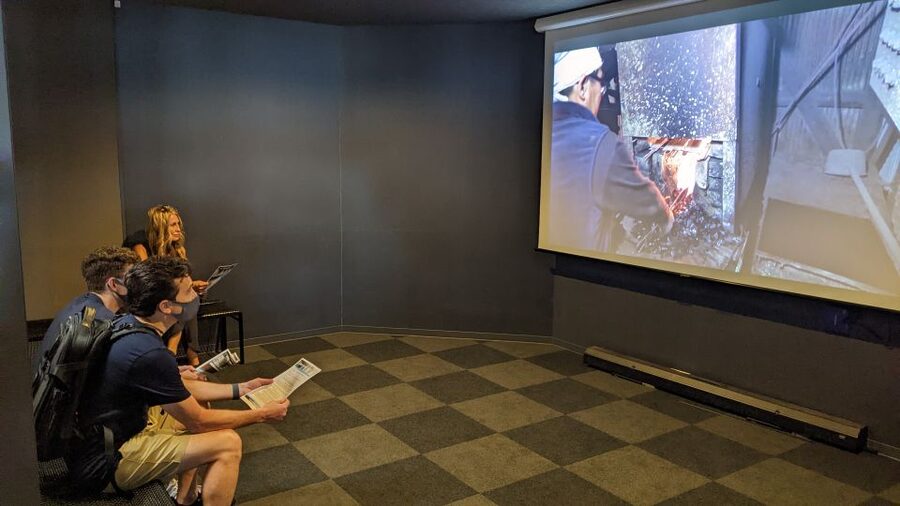
On Tuesdays and Thursdays, the tour visits Yamawaki Hamono, a knife-making company with more than 100 years of history. The visit lasts about an hour and a half, making it the longer of the two craft options.
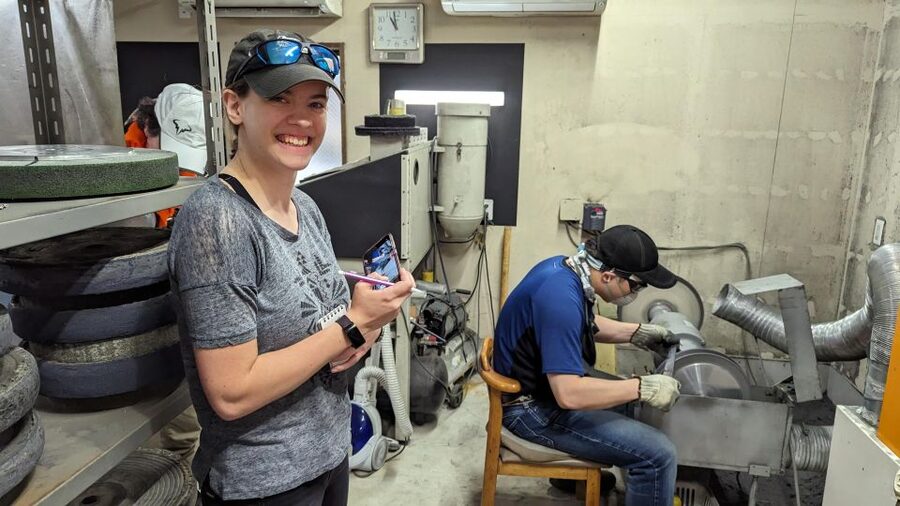
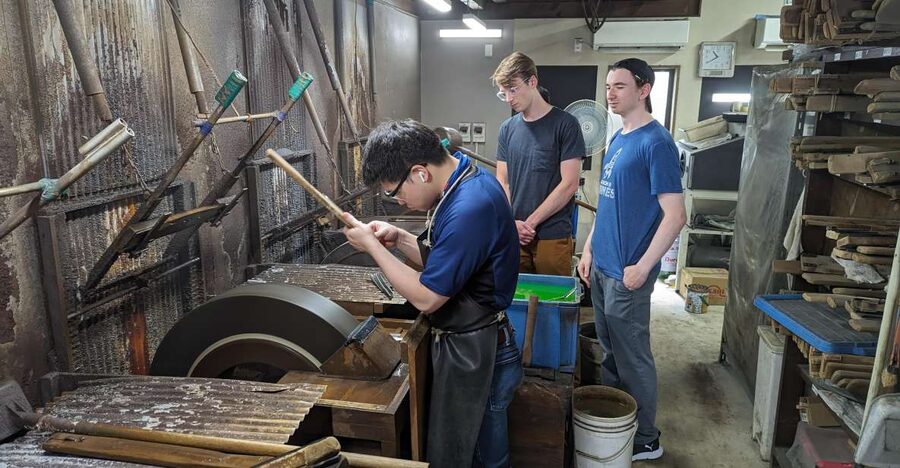
This is the best choice if you want to understand how a blade becomes a finished cooking knife. Raw blades arrive from the blacksmith, then workers carry out the next stages at the company. You can visit the sharpening station and the main office, observe the work, and see how a plain blade is turned into a proper handmade kitchen tool.
The access is valuable because knife making is often hidden from shoppers. In a shop, you see rows of polished products. Here, you see the labor behind them. You may watch sharpening, finishing, engraving demonstrations, and other steps involved in preparing a knife for use.
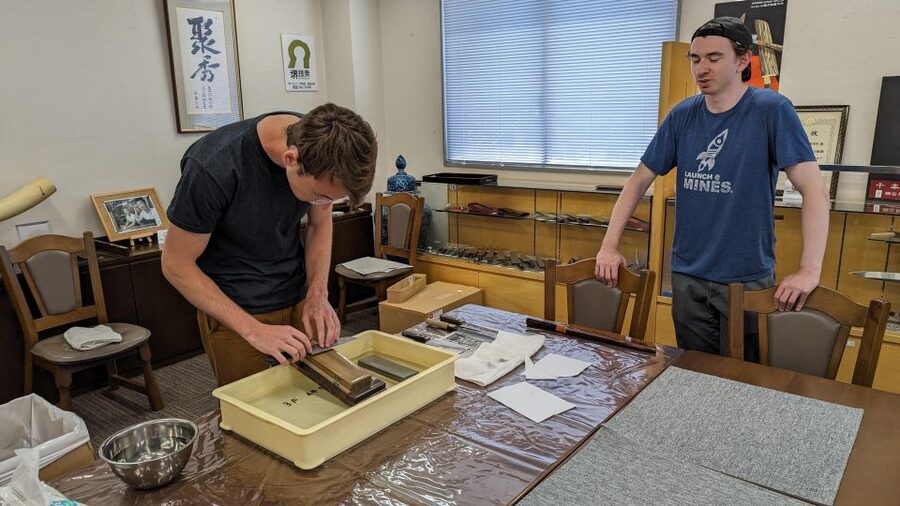
The sharpening lesson is one of the most useful parts of this option. Your guide teaches the traditional Japanese technique and lets you practice. This is not just a show for a camera. You leave with a better sense of how to maintain the knife you may buy, though you should still follow the maker’s own care advice.
You can also order a customizable knife. The exact choices and final price depend on the knife and the options you select, and the purchase is not included in the tour price. The benefit of ordering here is that you can discuss the blade with people who work in the trade, rather than guessing from a display.
Guides can also help with the purchase. One visitor appreciated having the guide translate and supervise the shopping process. That is useful if you want to ask detailed questions about the blade, handle, sharpening, or engraving.
This option is aimed at kitchen-knife buyers. If you are looking for hunting knives, pocket knives, or general outdoor blades, check your expectations first. The focus is handmade Japanese cooking knives.
More guided walks on foot:
- Deep Backstreet Osaka Tours (Option to add Dinner)
★ 5.0 · 1,290 reviews - Osaka Local Foodie Walking Tour in Dotonbori and Shinsekai
★ 5.0 · 985 reviews - Osaka: Deep Backstreets Walking Tour with Dinner Option
★ 4.9 · 902 reviews - Ultimate Osaka Walking Tour: Castle, Dotonbori & Hidden Gems
★ 5.0 · 862 reviews
Wednesdays: hammering hot steel at De Sakai
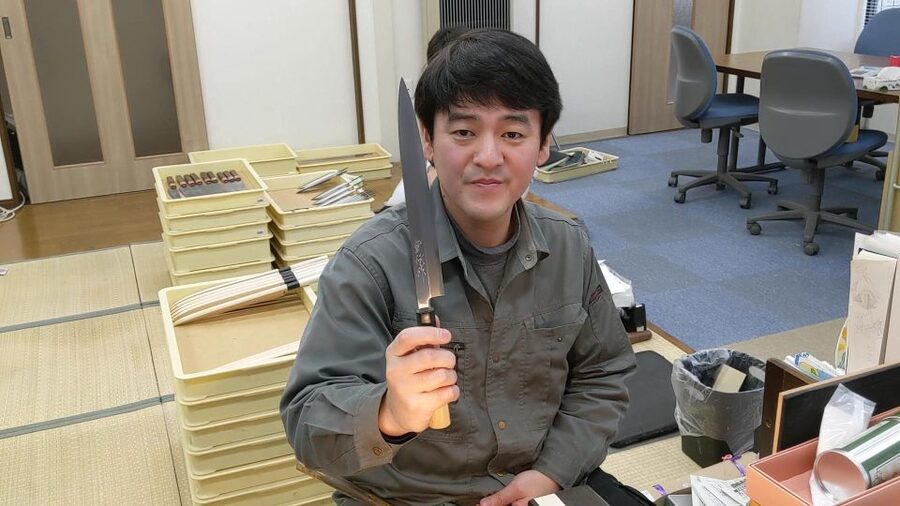
On Wednesdays, the tour goes to the De Sakai blacksmith forge. The visit lasts about an hour and gives you a different view of knife making.
Instead of seeing the later stages of production, you learn how the blade begins. The blacksmith explains forging techniques directly, with detailed instructions in English and, when available, French. The workshop is described as a small, old-style space, which makes the visit feel close and personal.
The most memorable activity is the chance to hammer glowing steel under the artisan’s direction. This is a rare kind of participation: you are not making a finished knife in one hour, but you get a physical sense of the force, timing, and heat involved in the first stage.
This choice is particularly good for anyone interested in traditional metalwork. It also works well for couples or families with older children and teenagers, since the visit includes something to watch and something to do.
The blacksmith option can cost more than the knife-maker version on some booking dates. From March 6 through April 6, 2026, only the blacksmith visit is available. During that period, Tuesdays and Wednesdays are offered at the knife-maker rate, which makes those dates a useful bargain if the forge is your preferred stop.
Because the two options show different stages, do not assume that one is simply a shorter version of the other. Yamawaki Hamono shows the transformation of prepared blades into kitchen knives. De Sakai focuses on forging and the artisan’s traditional methods.
What the walking route feels like
The route is compact, but this is still a walking tour. From the station, you walk to the sweet shop, then five minutes to the museum, then another five minutes to the craft stop. After the workshop, the return walk to Sakai Station takes about 15 minutes.
The walking is part of the value. You see a quieter side of the Osaka area and get local context between formal stops. Several people who enjoyed the tour also appreciated the chance to get away from major sightseeing crowds and see Sakai’s suburban streets.
Wear comfortable shoes. The tour is listed as wheelchair accessible, but you should confirm the exact route and workshop access for your needs before booking, especially because the experience involves older craft premises and movement between several sites.
The tour ends at Sakai Station, with the same station listed as the drop-off point. That makes it easy to continue exploring Sakai or return toward Osaka after lunch.
The guides make a practical difference
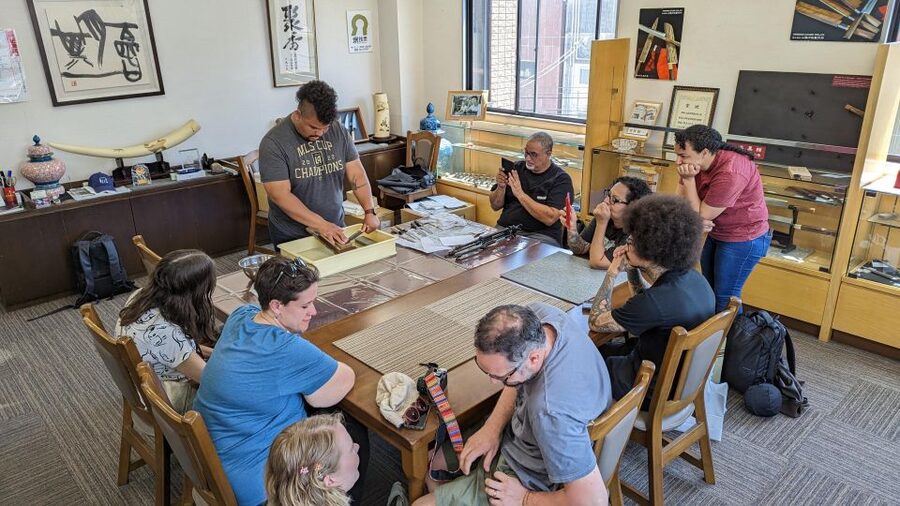
The experience is led by a bilingual local guide, with English available on every tour. Guides named in past bookings include Remy or Rémy, Scott, and Jean-Yves. The strongest descriptions of the experience point to guides who explain Sakai’s local past, keep a mixed group involved, and translate during knife shopping.
Remy has lived in Japan for more than 15 years and has guided visitors through both the local history and knife industry. Scott has been praised for knowing the area and local shops, as well as for giving useful restaurant suggestions at the end of the walk. Jean-Yves has been described as especially enthusiastic when explaining the knife-making process.
French is more complicated. Some guides can speak French, but a shared tour cannot guarantee a French-speaking guide. The guide may alternate between English and French if needed. Contact the provider before booking if French is important to you.
A small-group or private format is available. Group size can shape the experience, especially in a small workshop where everyone needs to see the demonstration and hear the artisan. If you want more time for technical questions or knife shopping, a private option may be worth considering.
Who gets the most from the $64 price
I would recommend this tour most strongly to:
- Cooks who want a handmade Japanese kitchen knife
- People interested in blacksmithing, sharpening, or traditional craft
- Couples looking for a half-day activity outside central Osaka
- Families with older children or teenagers who enjoy hands-on demonstrations
- Visitors who want local food and town history alongside a specialist subject
The price includes the guide, one sweet, the museum and workshop access, shopping time, and the sharpening lesson on the knife-maker route. A custom knife, extra sweets, drinks, and other purchases cost more.
That last point matters. The tour is not a cheap shopping trip, and you should not feel obliged to order a knife. You can learn how the craft works, ask questions, and leave without buying anything. If you do purchase, treat the $64 as the cost of getting expert context before spending more on the blade itself.
The experience is less suitable if you want a broad Osaka sightseeing tour, a full meal, or a large museum with many exhibits. It is also not the right match if your main interest is in non-kitchen knives.
Useful booking details before you commit
You need a passport or another form of identification. Free cancellation is available up to 24 hours before the tour, and you can reserve now and pay later, which helps if your Osaka plans are still shifting.
Single visitors can book, but the tour requires at least two people for the session to operate. If only one person is booked, the provider may cancel and offer a new date or a full refund. This is worth checking before you build your day around the experience.
The meeting point can vary by the option you choose, so read the booking confirmation carefully. Both listed starting choices are at Sakai Station, but the exact meeting instructions still matter.
The overall rating is 4.9 from 64 ratings, with particularly strong praise for the guides, the sweet shop, the museum context, the behind-the-scenes craft access, and the chance to try sharpening or hammering hot steel. One booking had confusion caused by two tours running at the same time, so allow a little patience if the operation is busy.
Should you book the Sakai knife tour?
Book it if you want to understand what makes a Sakai kitchen knife different and you enjoy seeing skilled work at close range. Choose Tuesdays or Thursdays for Yamawaki Hamono and the sharpening lesson. Choose Wednesday for the more physical blacksmith visit and the chance to hammer glowing steel.
I especially like this experience for first-time knife buyers. You get enough background to make a sensible purchase, and the guide can help bridge any language gap. The sweets stop and local walking also keep the tour from becoming a narrow factory visit.
Skip it if you want only famous Osaka sights, dislike walking, or are shopping for outdoor and hunting knives. For everyone else, $64 is a reasonable price for three and a half hours of local history, sweets, craft access, and practical knife education.
FAQ
Where does the tour start?
The tour starts at Nankai Sakai Station, south of Osaka. The exact meeting point can vary depending on the option booked, so check your booking details.
How long does the experience last?
The tour lasts 210 minutes, or three and a half hours.
Which days visit the knife maker?
The Yamawaki Hamono knife-maker visit is available on Tuesdays and Thursdays.
Which day visits the blacksmith?
The De Sakai blacksmith workshop is visited on Wednesdays.
What happens from March 6 through April 6, 2026?
Only the blacksmith option is available during this period. Tuesdays and Wednesdays are offered at the knife-maker rate.
Is a sweet included?
Yes. One traditional sweet is included at Yao Gen Raikodo. Extra food and drinks are not included.
Can I order a custom knife?
Yes. A customizable knife order is available as an option, but the knife and any added features are not included in the tour price.
Is French guaranteed?
No. All guides can speak English, while some can also speak French. French is not guaranteed on a shared tour, so contact the provider before booking if you need a French-speaking guide.
Can one person book the tour?
A single person can book, but at least two guests are required for the tour to operate. If the minimum is not met, the provider may offer rescheduling or a full refund.
Just added around Osaka
- Nara Day Trip from Osaka with a Licensed Guide★ 5.0 · 3 reviews
- Osaka Early Morning Osaka Castle Tour Avoid Crowds★ 5.0 · 3 reviews
- Guided Tour of Some Attractions in Osaka by Private Car★ 5.0 · 3 reviews
- Private Transfer Between Kyoto and Kansai Airport KIX★ 5.0 · 3 reviews
- Shared Arrival Transfer: Osaka Itami Airport to Osaka City★ 5.0 · 3 reviews
- Osaka: Sushi Making Class and Dotonbori Food Tour★ 4.7 · 3 reviews
- Osaka Night Photography Workshop★ 5.0 · 3 reviews
- Kyoto Full day Tour Kinkakuji, Kiyomizu-dera and Fushimi Inari★ 4.5 · 3 reviews
Osaka Craft Workshops, compared.
1.5〜2 Hours Traditional Kintsugi Work Shop in Namba Osaka
Read our review →
Traditional Japanese Ceramics Private Experience
Read our review →

Learning Zen of Japanese Calligraphy in kimono near Osaka Castle
Read our review →
Osaka Daruma Workshop — Paint Your Own Good-Luck Daruma
Read our review →
Browse the lists this tour appears in