
Reviewed · OSAKA TEA CEREMONY & MATCHA EXPERIENCES
Osaka Temple Cool Foot Bath & Matcha Experience〈45min〉
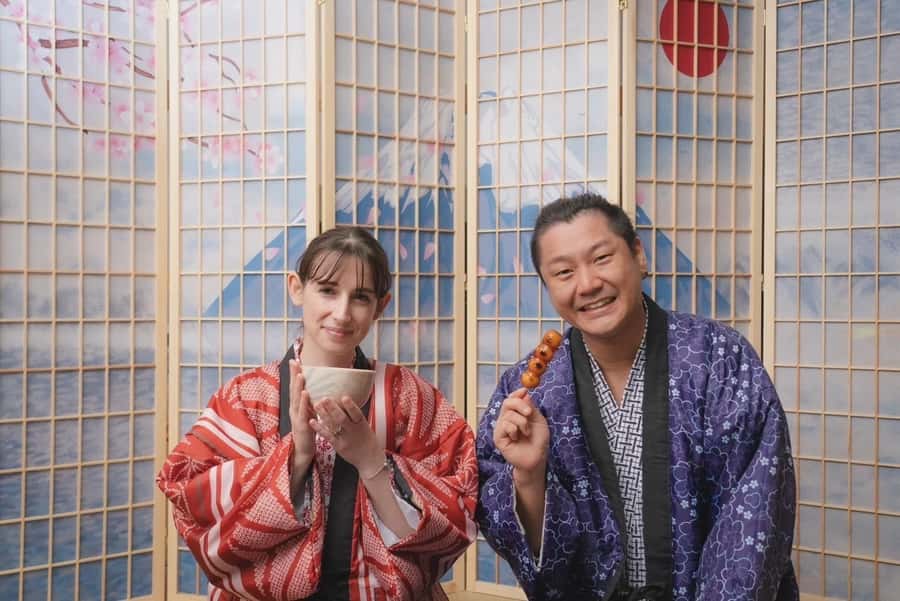
Osaka’s 45-minute temple experience combines three fine travel remedies: a quiet place, a warm foot bath, and a bowl of matcha. You’ll learn how to offer incense, handle kneaded incense, prepare tea, and enjoy wagashi and matcha ice cream. I like the gentle pace and the fact that the hosts take photos with your phone, so you can stay present instead of fussing with your camera. I also like the yukata photo, a small but memorable touch.
The main consideration is time. Forty-five minutes goes quickly, especially if you want to ask questions, take photos, and enjoy each step without rushing. The meeting point can also vary by the option you book, so check your confirmation carefully.
In This Review
- Key points at a glance
- A quiet temple pause in the middle of Osaka
- Worship, incense, and a moment of stillness
- The cooling foot bath and scrub massage
- Matcha, wagashi, and matcha ice cream
- Wearing a yukata and taking home photographs
- The hosts and the feel of the 45 minutes
- Is $34 a fair price?
- Who should book this temple experience?
- Practical details before you go
- Should you book it?
- FAQ
- How long does the Osaka Temple Cool Foot Bath and Matcha Experience last?
- What is included in the price?
- Will I make matcha myself?
- Can I wear a yukata during the experience?
- Are the photos taken with my phone?
- What languages are available?
Key points at a glance
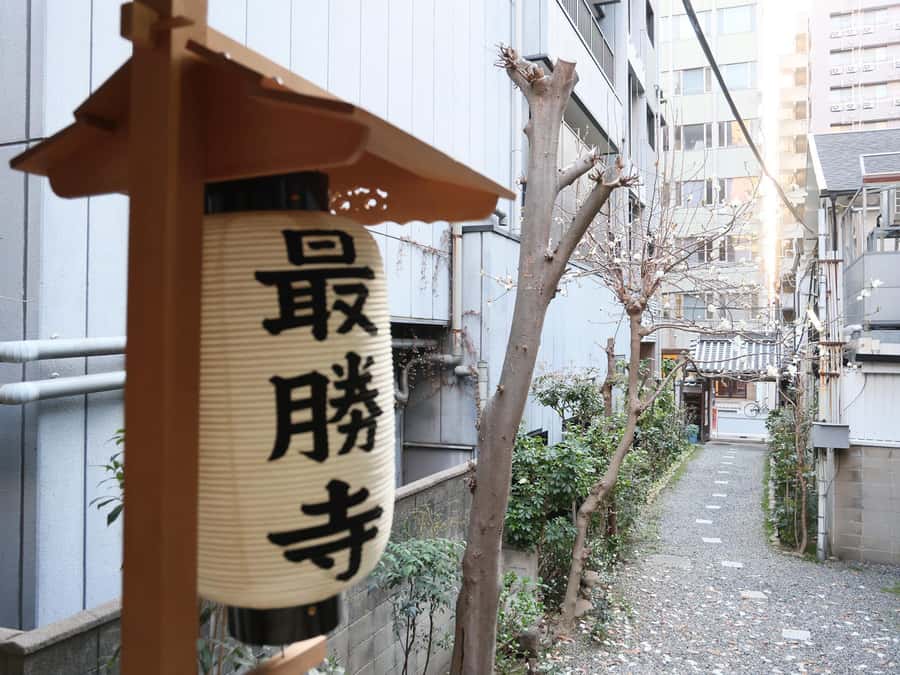
- Temple worship comes first: Learn about incense offering, kneaded incense, and meditation before the tea and foot bath.
- The foot bath is more than a prop: A cooling soak includes a scrub massage and light foot massage, useful after a long day on Osaka’s streets.
- Matcha is hands-on: You do not just drink tea. You learn how to make it, then pair it with wagashi and matcha ice cream.
- Yukata photos add a keepsake: The staff help you wear a traditional robe and take commemorative photos with your smartphone.
- Friendly hosts guide the pace: Yuiitsumuni, Yumi, and Vanesa are mentioned by name in the experience feedback, with English and Japanese offered.
- Good value at $34: The price covers tea, sweets, foot care, cultural instruction, and photos in one compact visit.
A quiet temple pause in the middle of Osaka
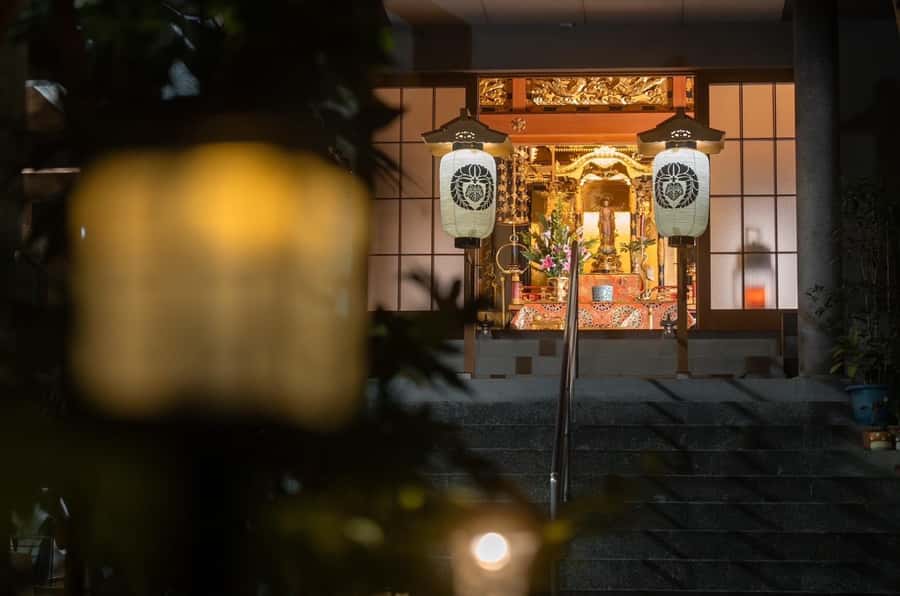
Osaka is famous for bright signs, packed trains, shopping arcades, and serious eating. This experience gives you a different side of the city. Inside a traditional temple setting, you get time to lower your voice, slow your hands, and pay attention to small rituals.
That change of pace is the real point. The tea ceremony is not treated as a grand stage show. It is part cultural lesson, part guided practice, and part rest stop. You’ll be shown how worship works, why incense is offered, and how meditation fits into the setting.
I especially like the way the activity joins spiritual customs with simple comfort. You might begin by focusing on incense and end with your feet in water while sipping tea. That combination makes sense after a full sightseeing day, when your mind is crowded and your feet have had enough.
The temple setting also gives the matcha some context. Instead of learning tea as an isolated cooking demonstration, you see it alongside worship, quiet attention, sweets, and traditional clothing. That makes the 45 minutes feel more connected to Japanese culture.
More tea ceremonies and matcha sessions:
- Osaka: Tea Ceremony Experience
★ 4.9 · 1,426 reviews - Tea Ceremony Experience in Osaka Doutonbori
★ 5.0 · 754 reviews - Matcha Making Class in Osaka with Authentic Japanese Sweets Set
★ 5.0 · 509 reviews
Worship, incense, and a moment of stillness
The cultural portion begins with worship and an incense offering. The staff explain the basic actions rather than expecting you to know what to do. That matters, since many first-time visitors worry about making a mistake at a religious site.
You’ll also try applying kneaded incense and taking part in meditation. Kneaded incense has a different feel from simply lighting an incense stick. The hands-on step gives you something concrete to focus on, while the meditation adds a short pause before the more social parts of the visit.
I would not book this expecting a long religious lecture. The activity is short, and the focus is practical. You receive enough explanation to understand the actions and their place in the temple, then move on to the tea and foot bath.
That short format works well for most visitors. You get an introduction without giving up half a day. The tradeoff is that anyone hoping for detailed study of Buddhism, temple architecture, or Japanese religious history may want a longer guided visit elsewhere.
Still, this is a useful way to approach worship respectfully. You are not simply walking through a temple, snapping a picture, and leaving. You learn a few actions, perform them with guidance, and take a quiet breath before continuing.
The cooling foot bath and scrub massage
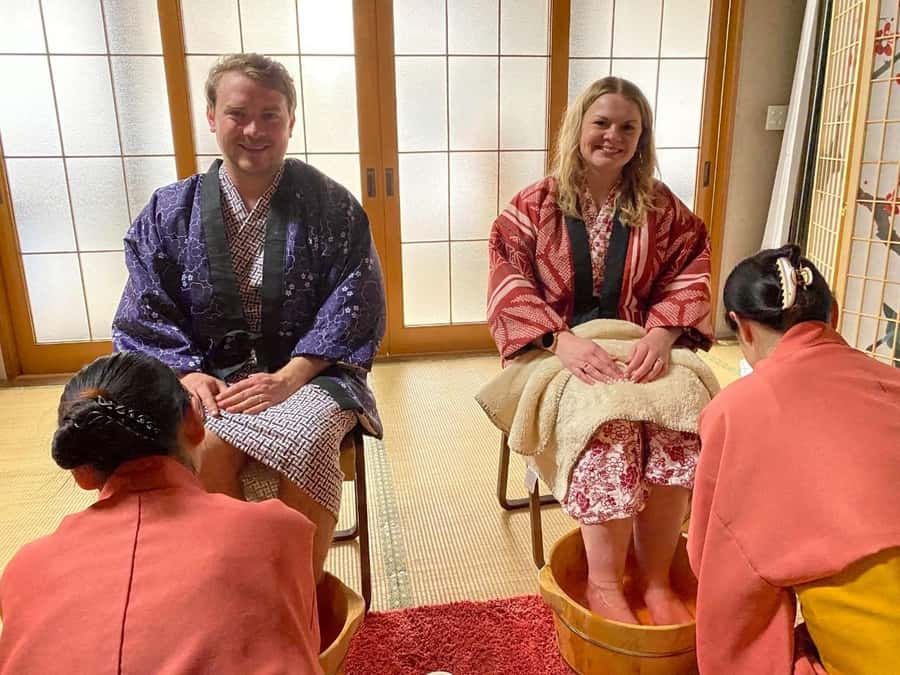
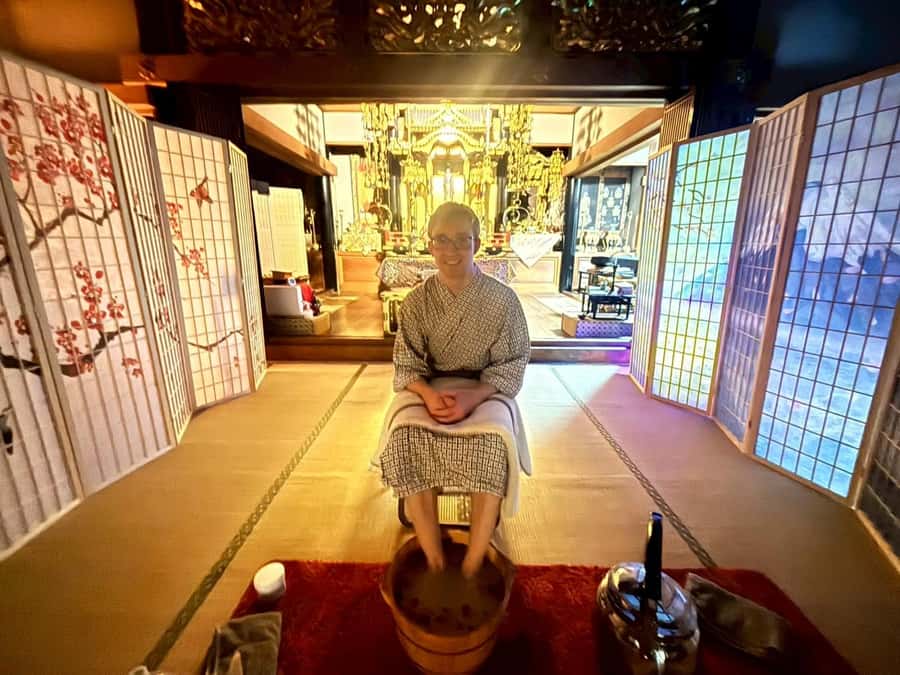
The foot bath is the activity’s most practical feature. After walking around Osaka, a cooling soak can feel like a small reset. The experience includes a scrub massage and a little foot massage, not a full spa treatment, so keep your expectations in the right place.
The massage is light and soothing. It is designed to help you relax rather than provide intensive bodywork. That makes it suitable for someone who wants a pleasant break, though it may not satisfy you if you are seeking a long professional massage.
The foot bath also changes the mood of the session. Tea ceremonies can feel formal to visitors who have never tried one. Sitting with your feet in water makes the setting more relaxed and gives your hands a chance to rest.
I like that the foot care is tied to the day’s rhythm. You can schedule this after sightseeing and use it as a recovery stop, or book it near the end of your first day in Osaka. Several people singled out the foot massage as especially calming, and that makes sense after a 20,000-step day.
The listing calls it a cooling foot bath, so do not expect a hot spring-style soak. The point is refreshment, not bathing. Since the activity takes place at a temple, you should also follow the staff’s instructions about posture, cleanliness, and the order of activities.
Matcha, wagashi, and matcha ice cream
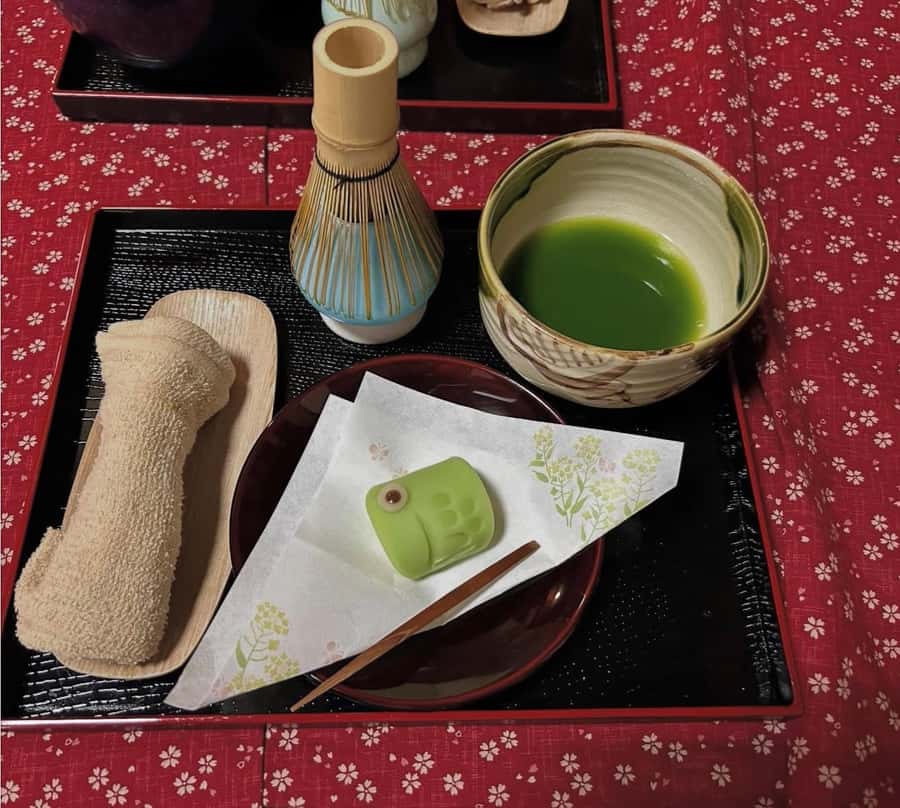
The tea portion gives you more than a finished cup. You’ll learn how to make matcha yourself, with the hosts explaining the process and guiding your technique. That hands-on part is more memorable than simply watching someone whisk tea.
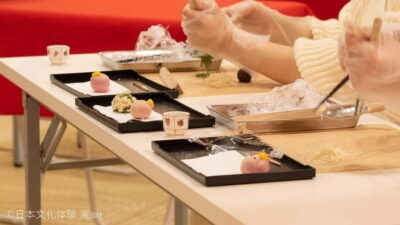
Matcha has a strong, grassy flavor that can surprise first-time drinkers. Wagashi, the small traditional Japanese sweets served with tea, provide a gentle counterpoint. The sweet is not just a snack on the side. It helps balance the tea and gives you a taste of how Japanese tea service pairs bitterness with delicate sweetness.
You also receive matcha ice cream. That adds a familiar dessert form to the experience, which can be helpful if the tea itself feels intense. The combination of wagashi, matcha, and ice cream gives the session a clear food element without turning it into a full meal.
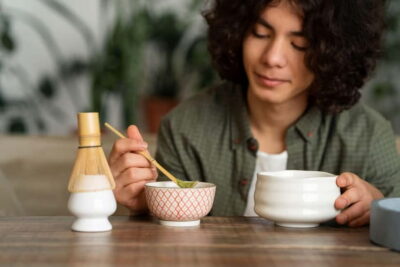
Pay attention to the cup and tools. One person praised the attractive cup, and this is the sort of small detail that makes the tea lesson feel special. The vessel, the whisking motion, the sound of preparation, and the sweet served alongside it all help you understand why matcha is treated as a careful ritual.
There is one amusing practical point: whisking matcha takes a little practice. One comment wished the whisking had been faster, which is a fair reminder that this is a guided cultural activity, not a quick drink stop. Let the host show you the motion, and enjoy the process rather than trying to finish first.
More onsen and spa afternoons:
- From Osaka: Himeji Castle, Arima Onsen & Mt. Rokko Day Tour
★ 4.6 · 339 reviews - Osaka: Solaniwa Onsen Hot Spring Visit
★ 4.6 · 51 reviews - Osaka: Mind & Spirit Balance Temple Reiki Healing
★ 5.0 · 41 reviews - Himeji Castle, Arima Onsen & Mt. Rokko: 1-Day Bus Tour from Osaka
★ 4.0 · 28 reviews
Wearing a yukata and taking home photographs
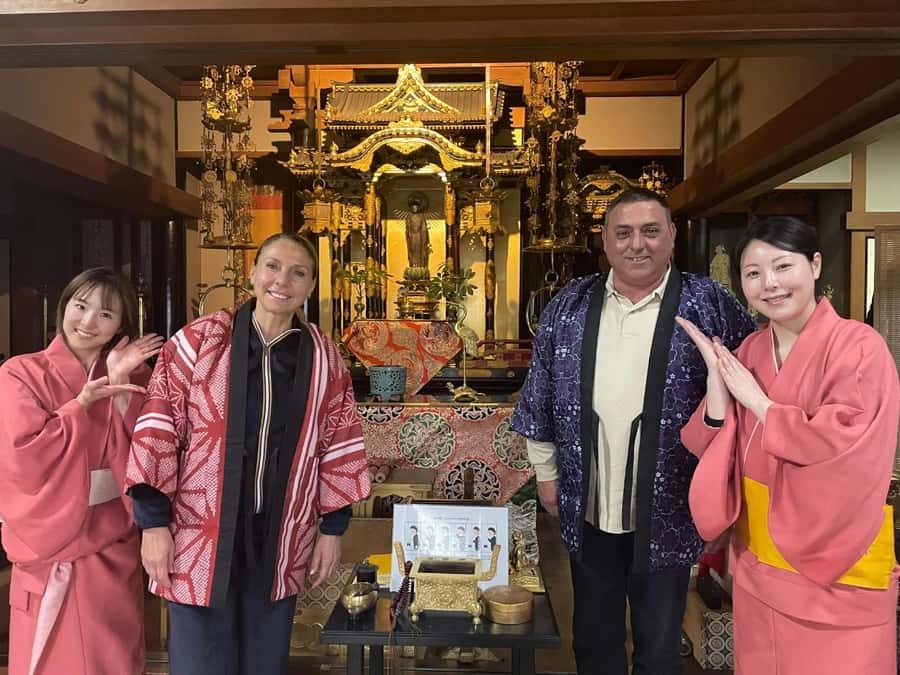
The yukata photo is a strong reason to bring a phone with some storage space available. Staff help you wear a traditional robe, then take a commemorative photo using your smartphone.
This is not a full kimono dressing service based on the information provided, so think of it as a short yukata photo opportunity within the temple experience. Even so, it gives the visit a visual memory that a standard tea tasting would not.
The staff also take photos during the activity and give them to you. That is useful because you can join the ceremony instead of trying to photograph every movement yourself. You do not have to choose between paying attention and documenting the moment.
I would still bring your own phone rather than rely on a camera supplied by the venue. The experience specifically says photos are taken with your smartphone. Make sure it is charged, and tell the staff if you have a preferred angle or want a photo of a particular step.
The photographs are part of the value, but they should not be the only reason you book. If dressing up is your main goal, a dedicated photo studio may offer more time and more costume choices. Here, the yukata works best as the final accent to the temple, tea, and foot bath.
The hosts and the feel of the 45 minutes
The hosts are central to this activity. Yuiitsumuni is praised for guiding the full experience in a friendly way. Yumi is described as especially warm, and Vanesa is mentioned in connection with the matcha whisking.
Names matter here because the session depends on personal instruction. You are not wandering through a self-guided display. Someone explains each part, helps you with the robe, demonstrates the tea, and takes your photos.
English and Japanese are available. That should make the cultural steps easier to follow, though the depth of English explanation may depend on the host and the group. The experience is built around simple actions, so you do not need advanced language skills to take part.
There may also be a shrine stamp available for collectors. It is a minor detail, but if you keep a stamp book during your Japan trip, ask about it during your visit.
The short length keeps the activity easy to fit into an Osaka plan. You can use it as a first-day introduction, a break after shopping, or a calm final stop before dinner. The drawback is that each section has to share the clock. If you linger over the incense, the tea lesson, or the photographs, the remaining parts may feel brisk.
Is $34 a fair price?
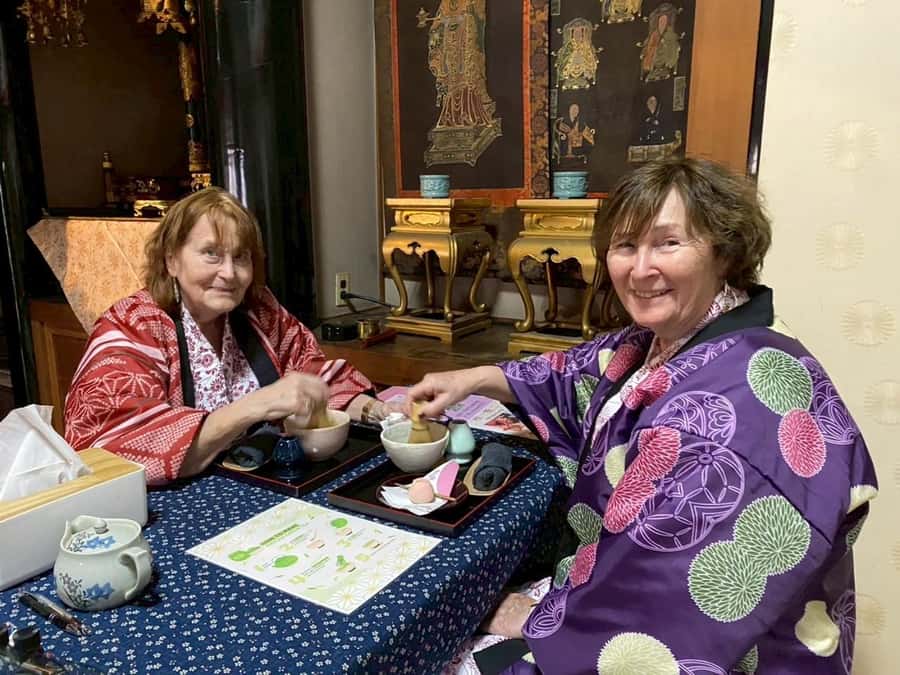
At $34 per person, the value is good if you want several small experiences in one stop. The fee includes matcha, wagashi, matcha ice cream, the foot bath, a light foot massage, cultural instruction, smartphone photos, and a yukata photograph.
You are not paying only for a cup of tea. You are paying for the setting, the guidance, the care taken with the rituals, and the chance to participate. Separate activities for tea, foot care, and traditional dress could easily take more time and planning.
The price is less compelling if you want a long tea ceremony or a serious massage. The foot massage is described as light, and the whole session lasts just 45 minutes. Think of it as a compact cultural break with wellness touches, not a half-day retreat.
The included photos also add practical value. A staff member handling your phone means you can keep both hands available for the tea and incense. For couples, families, and friends, that can be worth more than another ordinary selfie.
You can reserve now and pay later, which helps if your Osaka schedule is still changing. Cancellation is allowed up to 24 hours before the activity for a full refund. Those terms make it easier to place the experience into a busy itinerary without committing too early.
Who should book this temple experience?
I would recommend it most strongly to first-time visitors who want a gentle introduction to Japanese customs. You get enough structure to feel guided, but not so much ceremony that the session becomes difficult for a beginner.
It also suits anyone with tired feet. If your day includes a lot of walking, the foot bath and light massage provide a clear physical benefit. Schedule it after a long outing, but allow enough time to reach the meeting point since the location may vary by the option selected.
Couples should find the yukata photos and shared tea preparation appealing. Families may enjoy the sweets, ice cream, and dress-up element, though the meditation and worship steps require a little quiet attention from children.
It is also a good choice for solo visitors. The hosts handle photos, explain each action, and create a setting where you do not need to organize every detail yourself.
You may want to skip it if you dislike guided cultural activities, have no interest in matcha, or want an extended spa treatment. The activity asks you to follow a set order and take part in traditions rather than simply observe them.
Practical details before you go
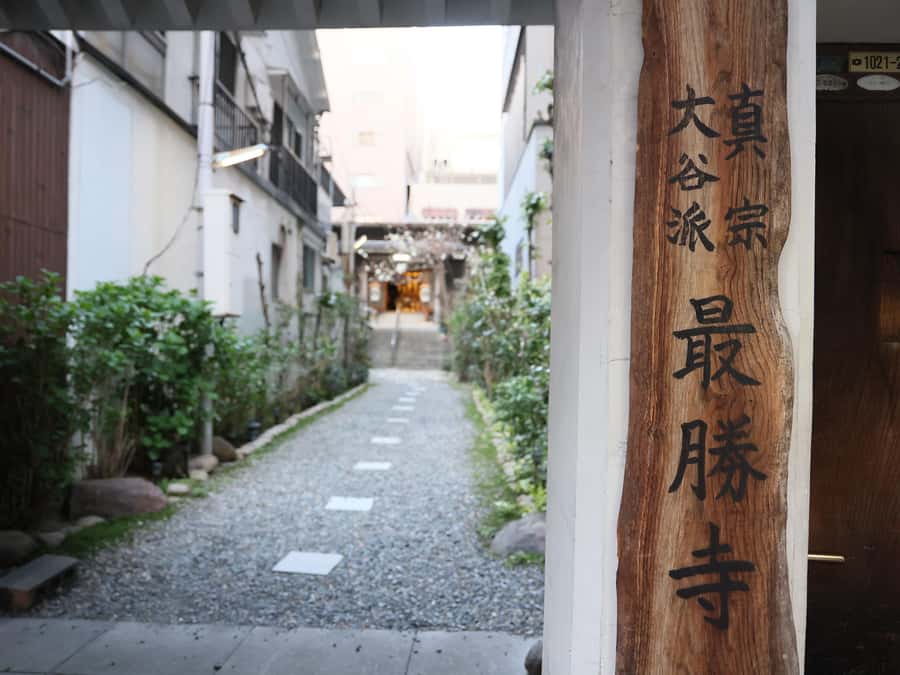
The experience is in Osaka on Honshu, and it ends back at the meeting point. Since the exact meeting point can vary by the option booked, read the booking details closely before setting out.
The activity is offered in Japanese and English. Wear something that makes it easy to take part in the foot bath and change into a yukata. The provided information does not specify clothing rules, so follow the staff’s instructions on arrival.
Bring your smartphone for the photos. Charge it beforehand, and clear a little space if your phone is nearly full. You may also want to keep your schedule flexible after the activity, since the 45-minute length covers several separate steps.
The 4.9 rating from 82 ratings reflects a very strong response to the atmosphere, hospitality, foot massage, and tea instruction. I would place the greatest weight on those repeated themes rather than on the photo opportunity alone. The heart of the experience is the calm, personal guidance.
Should you book it?
Book this if you want a short, affordable cultural experience that combines temple customs, matcha, Japanese sweets, a cooling foot bath, light massage, and a yukata photo. It is particularly well suited to a first day in Osaka or to the end of a long walking day.
Do not book it expecting a long formal tea ceremony, a full massage, or detailed academic teaching. At 45 minutes, this is a sampler. But it is a thoughtful one, with enough hands-on practice and quiet time to make the culture feel personal rather than distant.
For $34, the mix is hard to beat. You leave with a better sense of incense and tea, refreshed feet, a taste of wagashi and matcha ice cream, and photos that record the visit. That is a useful little pause in a city that rarely stops moving.
FAQ
How long does the Osaka Temple Cool Foot Bath and Matcha Experience last?
The experience lasts 45 minutes.
What is included in the price?
The price includes matcha, wagashi, matcha ice cream, a foot bath, a light foot massage, worship and incense activities, and photos taken with your smartphone.
Will I make matcha myself?
Yes. The experience includes a hands-on matcha activity, with the hosts explaining and guiding the tea-making process.
Can I wear a yukata during the experience?
Yes. A commemorative photo wearing a yukata is included, and the staff help you wear the traditional robe.
Are the photos taken with my phone?
Yes. The staff take photos using your smartphone and provide the photos to you.
What languages are available?
The experience is offered in Japanese and English.
More Temples and Shrines Worth the Walk
- Osaka: Minoh, Katsuoji Temple, & Minoh Falls Full-day Tour
★ 4.9 · 172 reviews - Sagano Romantic Train & Arashiyama, Kiyomizudera, Fushimi Inari Taisha Day Tour
★ 4.5 · 171 reviews - Full Day Kyoto Tour : Bamboo Forest, Golden Temple, Fushimi Inari
★ 5.0 · 84 reviews - Katsuo-ji Temple, Arashiyama Forest, & Nara Park
★ 4.0 · 37 reviews
Just added around Osaka
- Nara Day Trip from Osaka with a Licensed Guide★ 5.0 · 3 reviews
- Osaka Early Morning Osaka Castle Tour Avoid Crowds★ 5.0 · 3 reviews
- Guided Tour of Some Attractions in Osaka by Private Car★ 5.0 · 3 reviews
- Private Transfer Between Kyoto and Kansai Airport KIX★ 5.0 · 3 reviews
- Shared Arrival Transfer: Osaka Itami Airport to Osaka City★ 5.0 · 3 reviews
- Osaka: Sushi Making Class and Dotonbori Food Tour★ 4.7 · 3 reviews
- Osaka Night Photography Workshop★ 5.0 · 3 reviews
- Kyoto Full day Tour Kinkakuji, Kiyomizu-dera and Fushimi Inari★ 4.5 · 3 reviews
Osaka Tea Ceremony & Matcha Experiences, compared.

Matcha Making Class in Osaka with Authentic Japanese Sweets Set
Read our review →
Japanese Traditional Sweets Making and Tea Ceremony
Read our review →
Samurai Show, Tea Ceremony, Japanese Traditional Activities
Read our review →
Osaka; Japanese Tea ceremony experience, Macha and Sencha
Read our review →Browse the lists this tour appears in