
Reviewed · OSAKA CASTLE TOURS
Learning Zen of Japanese Calligraphy in kimono near Osaka Castle
The most memorable part of this Osaka activity comes before the first brushstroke: you change into a traditional kimono, sit on tatami, and learn why Japanese shodo is more than pretty handwriting. I especially like the chance to choose a kanji character with personal meaning, then practice it slowly enough to produce a final piece you can keep.
I also like that the class combines calligraphy and cultural dress in one compact session. The patient instruction, help with brush technique, and digital photographs make it friendly for first-timers and children. The main drawback is the meeting point: it is a small storefront that can be easy to miss, so you should arrive early and allow time to find it.
In This Review
- Key points to know
- Kimono, tatami, and a calm start near Osaka Castle
- What Japanese shodo means beyond decorative writing
- Picking a kanji with a meaning you can explain
- Practice sheets lead to a final work of art
- A kanji name tag makes the souvenir personal
- The photo session is part of the value
- Why this works well after Osaka Castle
- Who should book this calligraphy class
- Practical value at $43.59
- My verdict on the kimono and shodo experience
- FAQ
- How long does the Japanese calligraphy experience last?
- How much does the experience cost?
- Is the kimono included?
- Is the class suitable for beginners and children?
- What will I learn during the lesson?
- Can I choose my own kanji?
- Do I receive photographs?
- Is the activity taught in English?
- Where does the activity begin and end?
- Can I cancel for a refund?
Key points to know
- Kimono comes first: You change into traditional clothing before learning the brush basics.
- Choose your own kanji: The teacher explains the meaning and stroke order of the character you select.
- Beginner-friendly instruction: You practice tome, hane, and harai, the basic stopping, flicking, and sweeping brush movements.
- A personal souvenir is included: Your foreign name is translated into kanji and written on a wooden tag.
- Photos are sent digitally: Staff photograph your kimono, calligraphy, and finished work, then send the data to your designated email address.
- Find the storefront carefully: The address is in Osaka’s Joto Ward, near public transportation and Osaka Castle, but the entrance may not be obvious.
Kimono, tatami, and a calm start near Osaka Castle
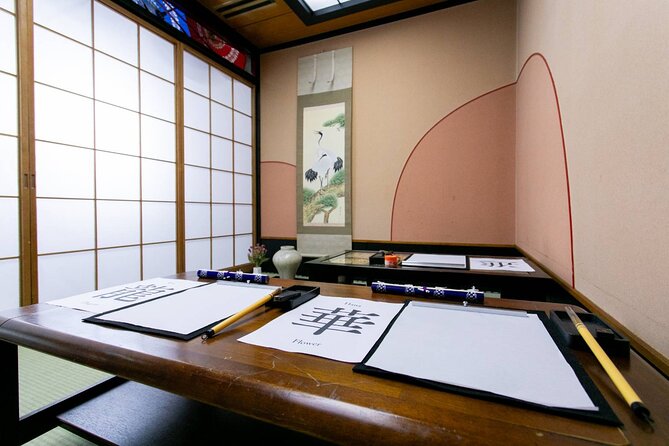
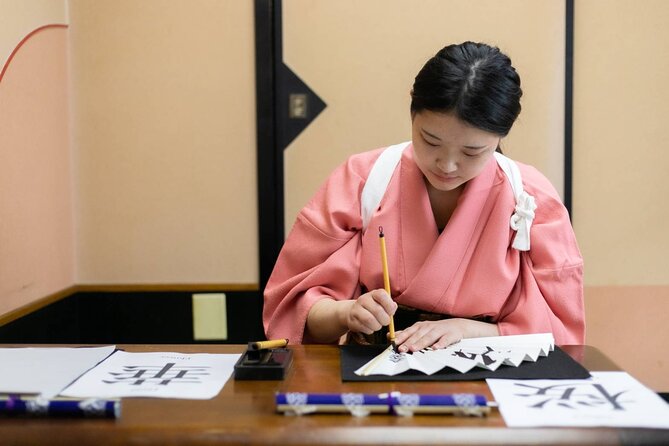
This is a short cultural class with a clear visual appeal. You arrive at Samurai Honor, change into a kimono or another traditional outfit such as hakama, and settle into the setting before touching the ink.
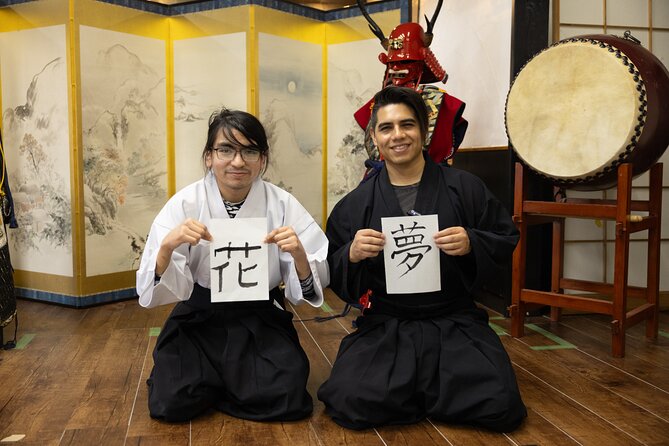
Getting dressed is part of the activity, not a quick costume change. One account describes roughly a dozen separate pieces, so you should not expect to be changed in seconds. The staff help you through the process, and the finished outfit gives the lesson a sense of occasion. It also makes the photographs far more special than ordinary snapshots at a craft table.
You are asked to use the restroom before dressing. That is practical advice, since traditional clothing can feel snug and restrictive once fastened. The information also warns that you may sweat while wearing hakama or armor, although armor and sword practice belong to other activities offered by the same operator rather than this calligraphy class.
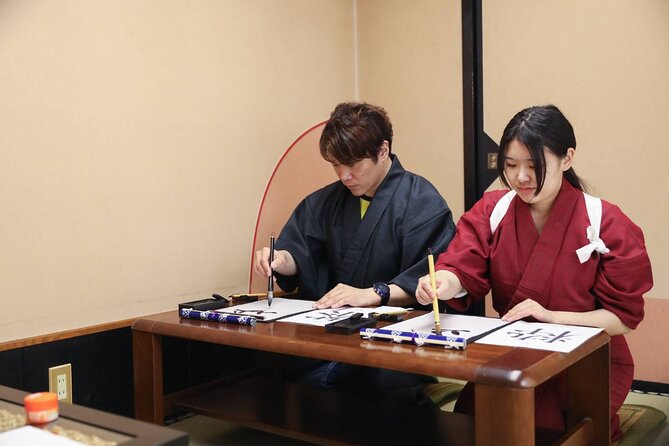
The class takes place on tatami, which adds to the traditional feel. If sitting on the floor is difficult, take the physical warnings seriously. The experience is not recommended for people with back problems or heart conditions, and it is not stroller accessible.
More tours of Osaka Castle and its grounds:
- Osaka Castle: Museum and Tower Entry Ticket
★ 4.5 · 2,380 reviews - Osaka Castle Walking Tour and Castle Tower Admission
★ 5.0 · 561 reviews - 5-Hour Osaka Bike Tour to the Neighborhood of Osaka Castle
★ 5.0 · 319 reviews
What Japanese shodo means beyond decorative writing
The opening lesson explains the difference between Japanese shodo and calligraphy as decorative writing in other countries. That distinction matters. You are not simply copying a Japanese symbol because it looks attractive. You learn that brush pressure, speed, spacing, and the order of each stroke affect the character.
The teacher introduces the tools and shows you how to hold the brush. Beginners often grip a brush too tightly, especially when trying to control an unfamiliar script. Here, the aim is to loosen your hand and let each movement have a beginning, a direction, and a finish.
The basic movements are called tome, hane, and harai. Tome is the controlled stop at the end of a stroke. Hane is a lift or flick, while harai is a sweeping finish. These simple actions are the building blocks of the characters you later write.
I like this part because it gives you something concrete to work on. You do not need to know Japanese, and you do not need artistic training. The teacher demonstrates the movement, then gives you time to repeat it on practice paper.
The default teaching language is English. English-Japanese or Chinese-Japanese translation support may be available, and other languages listed by the operator include Italian, Spanish, French, Thai, and Indonesian. Still, language support depends on staff availability, so English is the safest choice when booking.
Picking a kanji with a meaning you can explain
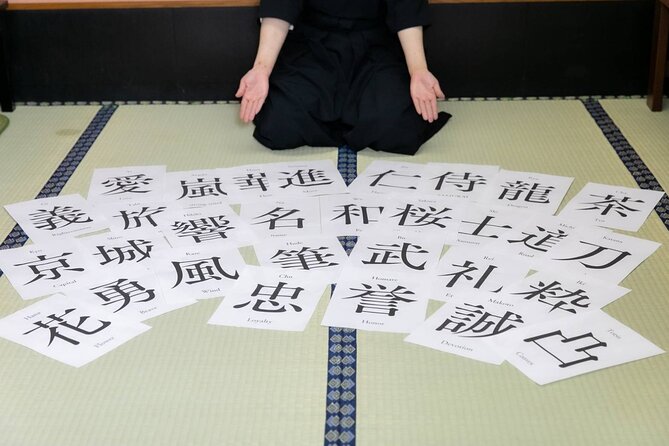
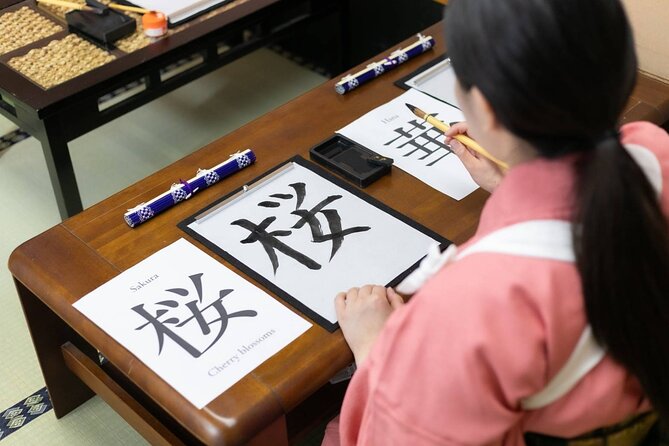
Once you understand the brush, you choose a kanji character to study. Kanji are not letters in the same way as the Roman alphabet. A single character can carry a word, an idea, or several related meanings depending on its use and context.
That makes the choice personal, but it also calls for care. Ask the teacher about the meaning of your selection and how it is used. The class is a good place to learn that a character that looks elegant may not mean exactly what you first expect.
You then study the stroke order. This is not just a memory exercise. The order helps shape the character properly and keeps the brush moving in a natural sequence. The teacher guides you through the individual strokes before you attempt the complete form.
You will produce several practice attempts. That is important because the first version may be uneven, and that is perfectly normal. The lesson is built around improvement rather than instant perfection. One of the strongest features of the class is the amount of practice time and hands-on help before the final piece.
Practice sheets lead to a final work of art
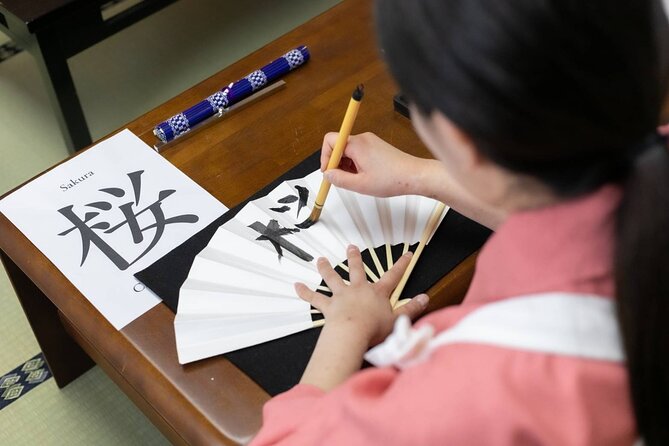
After the basic demonstration, you work through your selected kanji again and again. The teacher watches your brush movement and corrects your technique. You learn to pay attention to the shape of each stroke instead of rushing toward a finished character.
The experience lasts about one hour, so this is an introduction rather than professional training. You will not master Japanese calligraphy in a single session. You will, however, leave with a useful sense of how brush calligraphy works and why concentration, posture, and controlled movement matter.
Some accounts describe a final character written on a fan, a scroll, or another decorative surface. The exact final item can vary by session, so it is best to treat the finished calligraphy as the included keepsake and confirm any specific display piece when you arrive. Practice sheets may also be gathered into a bag or packet to take home.
The pace appears friendly rather than hurried. That is good for families, older children, and adults who want to try something creative without committing half a day. It also means you should not book this expecting a long lecture on every Japanese writing system. One participant found the background on the different alphabets a little limited, and that is a fair expectation to set.
The focus here is shodo technique and a personal kanji character, not a full academic survey of hiragana, katakana, and kanji.
More kimono and yukata experiences:
- Osaka: Sumo Show & Experience w/ Optional Kimono & Hot Pot
★ 4.5 · 609 reviews - Osaka: Kimono or Yukata Rental &Photos Service Options
★ 4.9 · 25 reviews - Kimono photoshoot-Includes 100 photo data
★ 5.0 · 21 reviews - Premium Kimono Dressing, Tea Ceremony, Calligraphy, Samurai show
★ 5.0 · 18 reviews
A kanji name tag makes the souvenir personal
A particularly nice surprise comes when the teacher writes your foreign name on a wooden tag using kanji characters. The result is not a literal alphabetic spelling, since Japanese names from abroad need to be represented through Japanese writing choices. The teacher selects characters that can express the sound or a suitable meaning.
This gives you a small cultural lesson as well as a souvenir. Ask what each character means. The operator places value on explaining the ideas behind the writing, and understanding the meaning makes the tag more than a decorative object.
The name tag is also easier to pack than a large wall hanging. If you want a larger decorative piece, some sessions have offered an optional wall hanging for an extra fee. The supplied price does not include that add-on, so ask about the current cost before agreeing to buy anything.
The photo session is part of the value
At the end, staff photograph you in your kimono with your calligraphy. Personal smartphone photography is allowed, but you may not take selfies or photograph other participants. Fixed tripods and video recording are discouraged because they can disturb the class.
The included photography is useful because kimono is awkward to photograph alone. Staff can capture the clothing, your posture at the writing table, and the final artwork while you focus on the activity. The digital files are sent to the email address you provide.
The photographs also help justify the price. At $43.59 per person, you are paying for more than a one-hour brush lesson. The package includes the traditional attire, instruction, kanji name tag, photography, taxes, and gratuities. You still need to consider your time and transport, but it is a reasonable price for a combined dressing, craft, and photo experience in Osaka.
The optional wagami package, which includes collected hair and kanzashi, costs ¥3,300 per person. It is not included, and you should not assume it is needed for the standard kimono experience.
Why this works well after Osaka Castle
The activity is a natural pairing with Osaka Castle Park. After walking the castle grounds, you can trade open paths and large stone walls for a quiet hour on tatami. The change of pace is welcome, especially if your morning has involved a lot of walking.
The operator describes the venue as close to Osaka Castle Park Station, with one response calling it about a one-minute walk from the station. The listed meeting address is Japan, 536-0014 Osaka, Joto Ward, Shiginonishi, 2-chōme 3-19, Excellence Takayama. Because the venue can look like a modest storefront and not an obvious tourist attraction, use the map carefully and leave extra time.
There are two serious warnings in the available information. Two bookings were affected by a temporary operator closure in June 2025, with customers reporting difficulty finding the venue or reaching staff. The operator later stated that management and staff arrangements had changed and promised full refunds for those affected reservations. Since a failed meeting is especially costly on a short Osaka schedule, confirm the current meeting instructions and contact details shortly before you go.
The experience has a maximum of 10 participants. That is small enough for personal help without promising a private lesson. If you have a strict schedule, remember that arriving more than 30 minutes late can result in refused entry, even if you contact the operator.
Who should book this calligraphy class
I would recommend it to you if you want a hands-on cultural activity and like bringing home something you made. The class suits first-time visitors, families with children, couples, and solo participants who want a structured hour rather than another sightseeing stop.
It is especially good for people who enjoy learning the meaning behind an object. Choosing a kanji, hearing its explanation, practicing the stroke order, and receiving your name on a wooden tag gives the activity a personal thread from beginning to end.
You should think twice if you need an accessible venue, cannot sit comfortably on tatami, or want a long, detailed lesson about all Japanese scripts. The class is introductory. Its strength is the friendly practice session, not advanced instruction.
The translator arrangement also deserves attention. English is the default, and the operator may not be able to honor every language request. If you need a language other than English, ask before booking rather than counting on a translator being available.
Practical value at $43.59
The price is strongest when you value the whole package. A plain calligraphy lesson might cost less, but it would not necessarily include kimono dressing, a teacher-created kanji name tag, staff photographs, and a finished piece to take home.
You should also factor in the short duration. One hour is convenient, but transport to the venue and the time spent finding the entrance add to the total. Pairing it with Osaka Castle makes the outing more efficient. You can turn a single cultural class into part of a larger half-day plan without adding a long transfer.
The included gratuities and taxes keep the quoted price easy to understand. Personal spending, transportation, and the ¥3,300 hair and kanzashi option are extra. Free cancellation is available when you cancel at least 24 hours before the local start time. Cancellations or changes inside that window are not refunded or accepted.
My verdict on the kimono and shodo experience
Book this class if you want a compact, personal introduction to Japanese culture near Osaka Castle. The best parts are the patient brush coaching, the chance to choose a meaningful kanji, the traditional clothing, and the included photographs. You get a souvenir with a story, not just a purchased trinket.
I would book it with two precautions: confirm the current venue details and arrive well before the start time. If you do that, this is a good-value choice for a relaxed cultural hour, particularly for families and beginners. Skip it only if your main goal is advanced calligraphy, a fully accessible venue, or a detailed study of every Japanese writing system.
FAQ
How long does the Japanese calligraphy experience last?
The scheduled activity lasts approximately one hour.
How much does the experience cost?
The listed price is $43.59 per person. Optional wagami, including collected hair and kanzashi, costs ¥3,300 per person.
Is the kimono included?
Yes. Traditional Japanese attire such as kimono and hakama is included.
Is the class suitable for beginners and children?
Yes. The class is open to all skill levels, and children can participate.
What will I learn during the lesson?
You will learn how to hold the brush, use the calligraphy tools, practice tome, hane, and harai movements, and follow the stroke order of a selected kanji character.
Can I choose my own kanji?
Yes. You choose a favorite Japanese kanji to practice, and the teacher explains its meaning and stroke order.
Do I receive photographs?
Yes. Photography is included, and the digital data is sent to the email address you designate.
Is the activity taught in English?
English is the default language. English-Japanese or Chinese-Japanese translation support may be available, and other language requests should be made in advance because staffing is limited.
Where does the activity begin and end?
It begins and ends at Japan, 536-0014 Osaka, Joto Ward, Shiginonishi, 2-chōme 3-19, Excellence Takayama. The activity returns to the meeting point.
Can I cancel for a refund?
You can receive a full refund if you cancel at least 24 hours before the experience start time. Cancellations and changes made less than 24 hours in advance are not accepted or refunded.
More Traditional Craft Workshops
- 1.5〜2 Hours Traditional Kintsugi Work Shop in Namba Osaka
★ 5.0 · 75 reviews - Osaka: Private Japanese Calligraphy Experience
★ 5.0 · 66 reviews - From Osaka: Sakai Knife Maker or Blacksmith Walking Tour
★ 4.9 · 64 reviews - Calligraphy Workshop in Namba, Dotonbori
★ 5.0 · 57 reviews
Just added around Osaka
- Nara Day Trip from Osaka with a Licensed Guide★ 5.0 · 3 reviews
- Osaka Early Morning Osaka Castle Tour Avoid Crowds★ 5.0 · 3 reviews
- Guided Tour of Some Attractions in Osaka by Private Car★ 5.0 · 3 reviews
- Private Transfer Between Kyoto and Kansai Airport KIX★ 5.0 · 3 reviews
- Shared Arrival Transfer: Osaka Itami Airport to Osaka City★ 5.0 · 3 reviews
- Osaka: Sushi Making Class and Dotonbori Food Tour★ 4.7 · 3 reviews
- Osaka Night Photography Workshop★ 5.0 · 3 reviews
- Kyoto Full day Tour Kinkakuji, Kiyomizu-dera and Fushimi Inari★ 4.5 · 3 reviews
Osaka Castle Tours, compared.
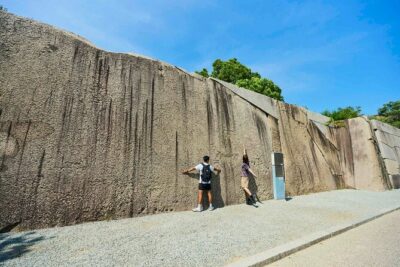
Osaka Castle Walking Tour and Castle Tower Admission
Read our review →
5-Hour Osaka Bike Tour to the Neighborhood of Osaka Castle
Read our review →
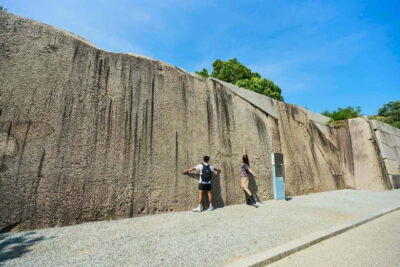
Castle History Walking Tour / Castle Tower Admission
Read our review →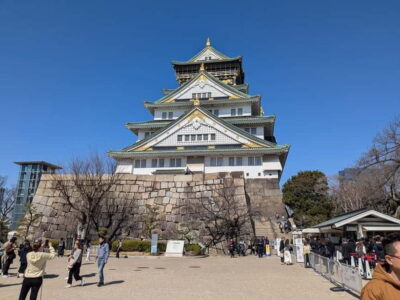

PRIVATE 6hr, Food tour from Osaka Castle, Kuromon, Dotonbori.
Read our review →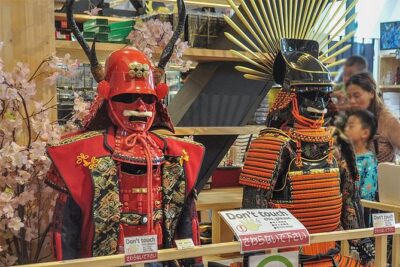
A Tour to Explore the Symbol of Osaka: Osaka Castle
Read our review →Browse the lists this tour appears in