
Reviewed · OSAKA SAMURAI & NINJA EXPERIENCES
Samurai Training Experience KENDO in Osaka
In a real Osaka dojo, you do more than pose with a bamboo sword. You learn how to stand, move, strike, and show the formal respect that gives kendo its structure. The two-hour session moves from samurai history to hands-on practice, protective armor, and a supervised match.
I like the small maximum group of 12, since the instructors can correct your stance and footwork instead of leaving you to copy a demonstration from the back of a crowded room. I also like the practical extras: changing rooms, showers, air conditioning, and digital photos and videos that arrive after the session.
The main consideration is physical effort. Kendo can be gentle and relaxed for beginners, but repeated strikes, footwork, and armor make it a workout. At $131.32 per person, this is not a cheap photo stop, so you should book it for the teaching and practice, not only for the costume pictures.
In This Review
- Key points before you book
- Entering the dojo in Honjōhigashi
- A short introduction to samurai culture and Bushidō
- Changing into a kendo uniform
- Learning stance, footwork, and basic strikes
- The supervised match at the end
- Photos, videos, snacks, and the human touch
- Is $131.32 a fair price?
- Who will enjoy this Osaka kendo class?
- Practical advice for a smoother visit
- Should you book Samurai Training Experience Kendo in Osaka?
- FAQ
- Where does the kendo experience meet?
- How long does the experience last?
- Do I need previous kendo or martial arts experience?
- What equipment is provided?
- Are photos and videos included?
- Can young children participate?
Key points before you book
- Train in a real dojo: The facility is used for kendo practice and also displays samurai artifacts and memorabilia.
- Learn, then spar: The lesson covers basic form, footwork, strikes, combinations, and match etiquette before a safe practice bout.
- Guidance in English: Toshi leads the instruction with help from an English-speaking assistant.
- Small-group attention: The group can include no more than 12 people, with one-on-one instruction possible when bookings are light.
- Photos and video included: The team records much of the session and sends digital souvenirs after the class.
- Central Osaka setting: Meet at 1-chōme-18-2 Honjōhigashi in Kita Ward, near public transportation.
Entering the dojo in Honjōhigashi
The meeting point is at 1-chōme-18-2 Honjōhigashi, in Osaka’s Kita Ward, postal code 531-0074. It is near public transportation, so you will not need to arrange a special transfer or travel to a remote training compound.
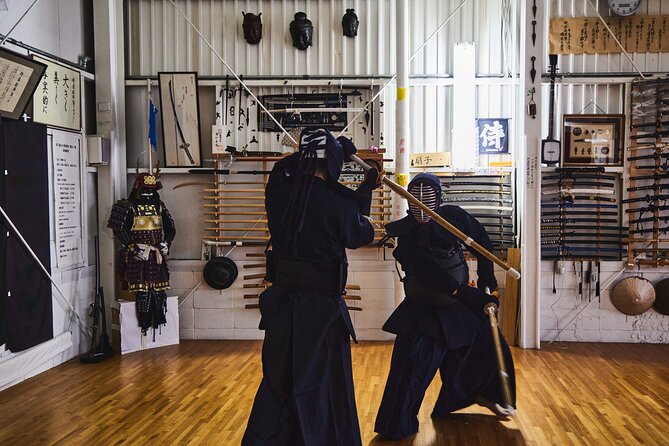
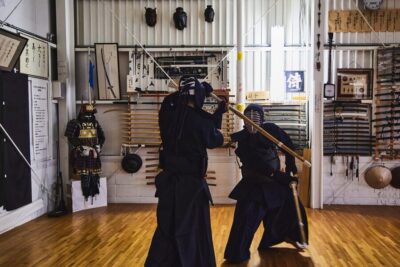
The venue matters. This is not simply a rented studio dressed up for tourists. The dojo is maintained as a working martial arts space, with samurai objects and memorabilia on display. You get a cultural setting before the lesson even begins, and the artifacts give the introduction to samurai life a physical backdrop.
You return to the same location at the end. That makes the timing simple for a busy Osaka day, though you should allow a little extra time to locate the entrance and arrive ready to change.
The facility has air conditioning and heating, which is useful in Osaka’s humid summers or chilly winter months. Changing rooms and showers also make this easier to fit into a full sightseeing schedule. If you plan to continue walking around Osaka afterward, you can freshen up instead of spending the rest of the day in a damp uniform.
More samurai and ninja experiences:
- OSAKA NIGHT FUSION Japanese Taiko Kabuki Samurai Dance Show
★ 4.8 · 155 reviews - Osaka: Samurai Training Experience KENDO in Osaka
★ 5.0 · 111 reviews - Osaka: A Modern Samurai, Kabuki, Taiko, & Dance Show
★ 4.5 · 66 reviews
A short introduction to samurai culture and Bushidō
The class begins with an explanation of kendo, samurai culture, and Bushidō. This opening is brief but important. Without it, the activity could feel like swinging a bamboo sword in costume. With it, you get a clearer sense of why posture, discipline, focus, and manners matter so much in the practice.
Kendo descends from older Japanese fighting methods associated with the samurai. Modern kendo is a controlled martial art, not a lesson in historical battlefield combat, and that distinction is worth keeping in mind. You are learning the principles and movements of kendo in a safe modern setting.
Toshi and his assistant explain the background in English. The teaching style is patient and friendly, but the class still treats the practice seriously. That balance works well for first-time visitors. You can ask questions, enjoy the humor, and still learn that correct behavior before and after a bout is part of the art.
I particularly value this section for families and people who know little about Japanese martial arts. Children may arrive expecting a sword fight. The introduction gives them a better idea of why the exercise involves discipline, respect, and controlled technique rather than wild swinging.
Changing into a kendo uniform
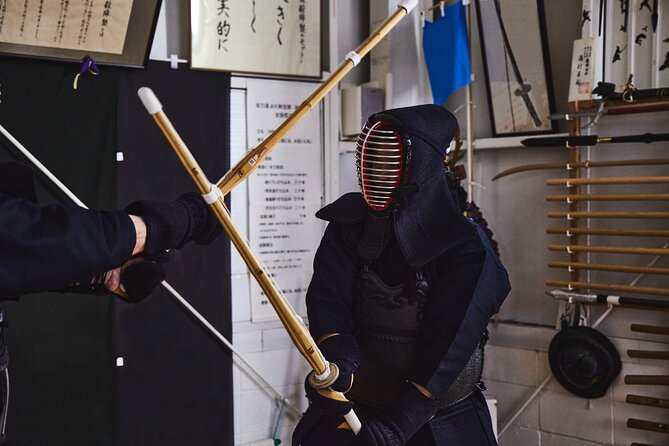
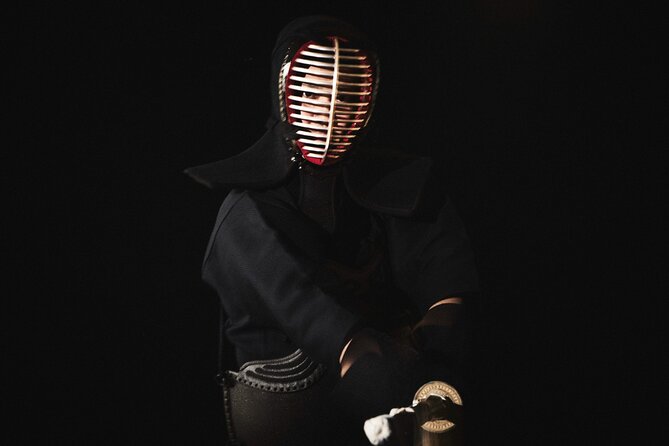
After the introduction, you change into a kendo uniform and protective equipment. The clothing gives you a more genuine sense of the activity, while the armor allows you to practice strikes with much less worry about accidental contact.
The class provides the necessary equipment, including the uniform, armor, and shinai, the bamboo sword used in kendo practice. You do not need prior martial arts experience. The staff guide you through the process, which is helpful because the gear can feel unfamiliar and restrictive at first.
This is one of the more memorable parts of the session, and the team takes photos and videos while you are dressed for practice. You get the visual souvenir without the activity being reduced to a photo session. One useful distinction: the pictures support the lesson, but the lesson comes first.
The armor also changes how you move. You may feel heavier, warmer, and less agile than expected. That is part of the experience, but it explains why comfortable clothing underneath and a willingness to sweat are sensible choices.
For children ages 3 to 5, the focus is different. They can wear the uniform and armor and take photos safely, rather than taking part in the full physical training. This makes the experience more flexible for families with very young children.
Learning stance, footwork, and basic strikes
The instruction starts slowly. You learn how to hold the shinai, position your body, and move with the correct footwork. The lesson then builds toward basic strikes and combinations.
This gradual order is a strength. A sword activity can look easy until you try to coordinate your feet, hands, posture, and timing. The instructors break it into manageable steps, then adjust the pace to your ability. Beginners can stay relaxed, while people with martial arts experience may be able to work at a faster rhythm.
The lesson is not only about hitting a target. You practice the preparation and recovery around each movement. That attention to form helps explain why kendo is a discipline rather than a casual sword demonstration.
Several parts of the session can be physically demanding. Repeated strikes and footwork raise your heart rate, and the armor adds heat. The experience can also be kept relatively relaxed if you prefer. Tell the instructors your comfort level, and expect them to adjust the work accordingly.
You may practice basic combinations and counters as the lesson advances. These movements make the class feel like genuine training, but they are introduced at a beginner level. The aim is to give you a real taste of kendo within two hours, not to turn you into a trained practitioner.
A completely different way to spend a day in Osaka:
- Osaka Go Karting Tour with Funny Costume
★ 5.0 · 2,658 reviews - Osaka Castle: Museum and Tower Entry Ticket
★ 4.5 · 2,380 reviews - Osaka: Shinsekai Food Tour with 13-15 Dishes at 5 Eateries
★ 4.8 · 2,204 reviews - Osaka Food Tour: 13 Dishes at 5 Local Eateries
★ 5.0 · 2,149 reviews
The supervised match at the end
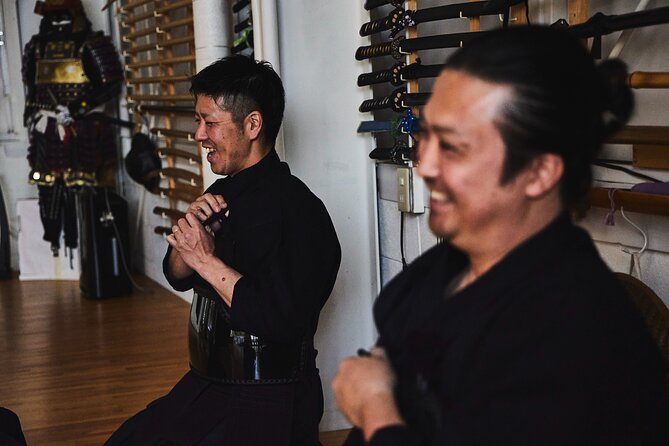
The final match is the part many people look forward to, but it works because the class prepares you first. You learn how to engage safely, how to use the techniques, and how to behave before and after the bout.
You may face a friend, family member, or another participant. The team records much of the action, so you can concentrate on the match instead of trying to film it yourself. In some sessions, the instructor also challenges participants to a match. That can be a fun way to see how much speed and timing a trained practitioner brings to the same movements.
Do not expect a full-contact competition. This is a guided practice match designed for beginners. The instructor controls the pace and keeps the activity safe. You can still work up a sweat and feel the excitement of trying to land a clean strike.
For children and cautious beginners, the match can remain light. For people who want a harder workout, the instructors can increase the intensity within the limits of the class. The best approach is to be honest about your comfort level before the bout begins.
This final section gives the lesson a clear payoff. You learn a technique, then try to use it under pressure. Even if your footwork falls apart, you will understand why the basics matter.
Photos, videos, snacks, and the human touch
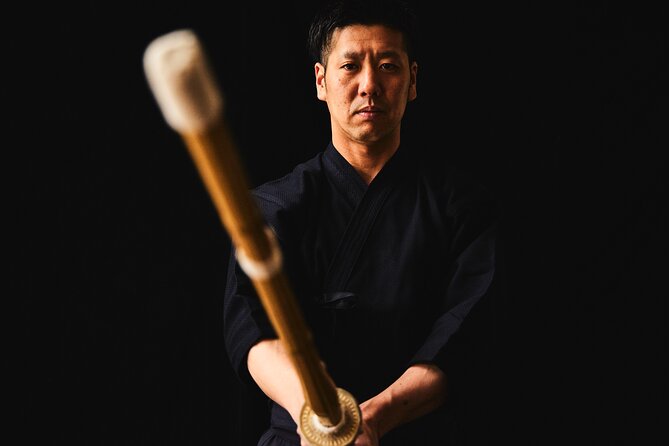
Digital photos and videos are included as part of the experience. The team records the training and match, then sends the files afterward. Some people receive them within about 24 hours, though the precise delivery timing is not stated as a formal guarantee.
That is a useful inclusion at this price. You leave with a record of the armor, the dojo, and the match without paying a separate photography fee. It also lets you focus on listening and practicing during the class.
The hosts may offer water during the session and Japanese snacks and drinks afterward. These small touches help you cool down and make the visit feel more personal. The experience is run by a husband-and-wife team, with Toshi as the main instructor and English assistance available through the staff.
The personal teaching is especially useful for solo participants. With a light booking, you might receive one-on-one instruction rather than joining a full group. A larger group can still contain no more than 12 people, so the class should not feel like a stadium demonstration, but the exact amount of personal attention depends on attendance.
Is $131.32 a fair price?
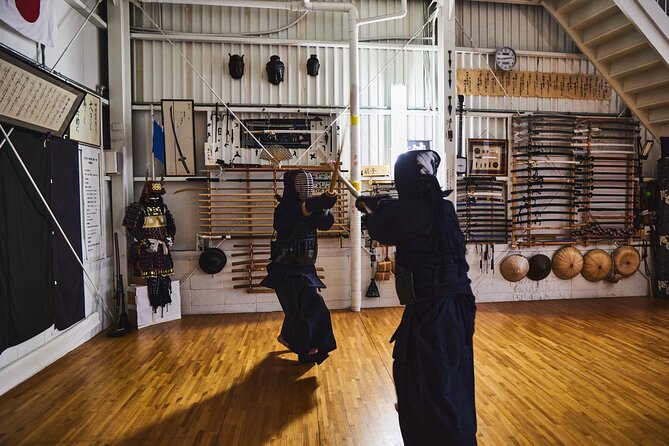
At $131.32 per person, this costs more than a basic cultural workshop or a short costume rental. The value depends on what you want from Osaka.
You receive roughly two hours of instruction, the uniform and protective armor, access to a real dojo, historical and cultural background, supervised practice, and digital photos and videos. The facility also has showers, changing rooms, and climate control. Taken together, those details make the price easier to justify than a simple samurai-themed photo experience.
The strongest value comes from the teaching. You are not only handed a prop and told to pose. You learn proper form, basic strikes, combinations, and match etiquette, then use them in a controlled bout.
I would consider the price good for martial arts fans, families seeking a special activity, and anyone who places a high value on hands-on cultural experiences. It is less attractive if your main goal is a quick photograph in armor or if you are trying to keep every Osaka activity inexpensive.
The five-star rating and 100 percent recommendation attached to the experience suggest very strong satisfaction, but you should still match the activity to your interests. A two-hour physical lesson requires more effort than a museum visit, and the armor may be hot.
Who will enjoy this Osaka kendo class?
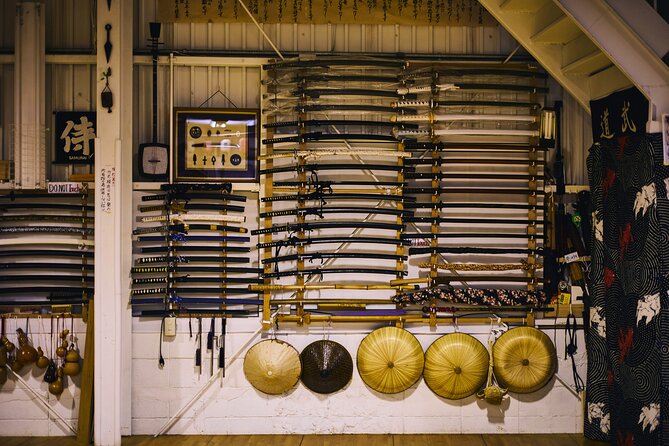
This experience suits first-time visitors who want to participate rather than simply observe. You do not need kendo experience, Japanese language skills, or a background in martial arts.
Families are a particularly good fit. Children can learn simple techniques, put on the gear, and take part in the final match. Very young children ages 3 to 5 are limited to wearing the uniform and armor and taking photos, which keeps the activity suitable for a wider age range.
Martial arts fans will appreciate the attention to stance, footwork, strikes, and counters. History fans will enjoy the discussion of samurai culture and Bushidō, along with the artifacts displayed in the dojo.
Solo visitors should not feel out of place. If attendance is low, the format can become highly personal. Couples and friends can also train together and face each other in the closing match.
You should think twice if you dislike changing clothes, physical activity, or structured instruction. This is not a passive cultural talk. You will be asked to listen, repeat movements, wear equipment, and take part.
Practical advice for a smoother visit
Book a time that leaves you room to cool down afterward. Even a relaxed lesson can become warm once you are wearing protective armor, especially in summer.
Wear simple, comfortable clothes that are easy to change out of. The facility has changing rooms, and showers are available, but the supplied information does not specify every clothing rule, so follow the staff’s instructions at the dojo.
Bring water if you prefer having your own, though water is available during the activity. If you have an injury or concern about exertion, mention it before training so the instructor can adjust the pace.
Arrive at the stated meeting point in Kita Ward with your mobile ticket ready. Confirmation is provided when you book, and the experience ends back at the starting location. Service animals are allowed, and the venue is near public transportation.
Cancellation is free if you cancel at least 24 hours before the local start time. A cancellation or change made less than 24 hours before the start is not accepted for a refund, so check your Osaka schedule before committing.
Should you book Samurai Training Experience Kendo in Osaka?
I would book this if you want a hands-on Japanese cultural activity with real instruction, not just a costume photograph. The combination of samurai context, a working dojo, protective armor, supervised sparring, and digital photos gives the two-hour visit a clear shape and good practical value.
Families, solo visitors, couples, and martial arts fans all have a reason to consider it. Toshi and his English-speaking team provide the patient guidance beginners need, while the option to raise the intensity gives the session some room for more active participants.
Skip it if you want a quiet indoor attraction or a very low-cost activity. For everyone else, especially those with an interest in Japanese tradition, kendo, or samurai culture, this is one of the more memorable ways to spend two hours in Osaka.
FAQ
Where does the kendo experience meet?
The meeting point is 1-chōme-18-2 Honjōhigashi, Kita Ward, Osaka, 531-0074, Japan. The location is near public transportation.
How long does the experience last?
The activity lasts approximately two hours and ends back at the meeting point.
Do I need previous kendo or martial arts experience?
No. The class is beginner-friendly, conducted in English, and teaches basic kendo movements during the session.
What equipment is provided?
You change into a kendo uniform and protective armor and practice with a shinai, the bamboo sword used in kendo.
Are photos and videos included?
Yes. Digital photos and videos of the experience are provided as souvenirs after the session.
Can young children participate?
Children ages 3 to 5 focus on wearing the uniform and armor and taking photos safely. The activity has a maximum of 12 participants, and most travelers can participate.
Just added around Osaka
- Nara Day Trip from Osaka with a Licensed Guide★ 5.0 · 3 reviews
- Osaka Early Morning Osaka Castle Tour Avoid Crowds★ 5.0 · 3 reviews
- Guided Tour of Some Attractions in Osaka by Private Car★ 5.0 · 3 reviews
- Private Transfer Between Kyoto and Kansai Airport KIX★ 5.0 · 3 reviews
- Shared Arrival Transfer: Osaka Itami Airport to Osaka City★ 5.0 · 3 reviews
- Osaka: Sushi Making Class and Dotonbori Food Tour★ 4.7 · 3 reviews
- Osaka Night Photography Workshop★ 5.0 · 3 reviews
- Kyoto Full day Tour Kinkakuji, Kiyomizu-dera and Fushimi Inari★ 4.5 · 3 reviews
Osaka Samurai & Ninja Experiences, compared.

Osaka 2-Hour Genuine Kendo / Samurai Experience In Japan
Read our review →
Learn Bushido – Trial Slashing with Samurai Sword
Read our review →
Samurai Show, Tea Ceremony, Japanese Traditional Activities
Read our review →
Private Samurai Experience – Train with Sword Master
Read our review →
Honor – Experience Samurai & traditional Culture to the fullest
Read our review →
Browse the lists this tour appears in