
Reviewed · NARA DAY TRIPS FROM OSAKA
Nara Day Trip from Osaka with a Licensed Guide
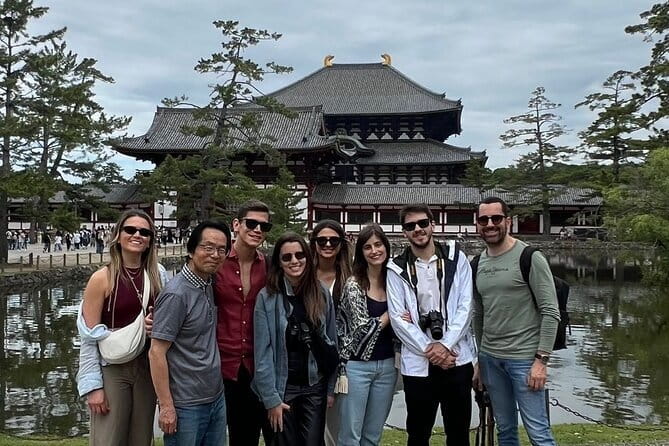
Nara’s appeal is wonderfully simple: you can feed sacred deer in a broad park, walk through enormous temple gates, see one of Japan’s great Buddha halls, and finish among quiet garden paths, all in one day from Osaka. I especially like the private format, which lets your guide shape the pace, and the licensed local guide, who can turn a grand old site into something easier to understand. Guides named Aki and Mark have been praised for patience, care, and useful facts.
The main drawback is the price: $319 per person is a serious outlay, especially for a single day. You also need a moderate level of fitness, since the day combines train travel, walking, temple grounds, shrine paths, and outdoor time that can feel tough in hot weather.
In This Review
- Key points at a glance
- Why Nara makes a strong day from Osaka
- From your Osaka hotel to Nara by train
- Nara Park and the deer
- Nandai Gate and Todai-ji Temple
- Kasuga Grand Shrine and its sacred setting
- Isuien Garden and borrowed scenery
- What the $319 price really covers
- Who will enjoy this day most
- Practical details before you book
- Should you book the Nara day trip?
- FAQ
- How long does the Nara day trip from Osaka last?
- Where does the tour begin?
- Is transportation included?
- Is this a private tour?
- What sights are included?
- Are admission fees included?
- Is lunch included?
- Can dietary restrictions be accommodated?
Key points at a glance
- Train travel from Osaka: Meet at your hotel, then use public transportation with the fare included.
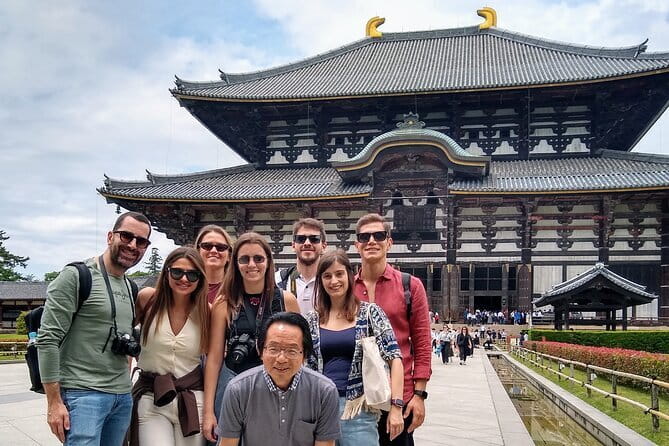
- Private eight-hour outing: Your group participates alone, with room to request changes to the sample route.
- Nara’s sacred deer: Feed the free-roaming deer in Nara Park with special crackers bought on site.
- Japan’s great temple sight: Visit Todai-ji, including its huge Nandai Gate and famous main temple.
- A quieter finish: Kasuga Grand Shrine and Isuien Garden add sacred woods, lanterns, and garden scenery.
- Useful family flexibility: Dietary requests can be accommodated, and the tour suits families, children, and people seeking a guided day outside Osaka.
Why Nara makes a strong day from Osaka
Nara feels different from Osaka, Kyoto, and Tokyo. Osaka is a modern city with a quick urban rhythm. Kyoto is filled with major temples and carefully preserved districts. Nara offers a more open, old-fashioned setting, where deer wander through public paths and sacred sites occupy a large stretch of green space.
That contrast is the chief reason to make the trip. You are not simply checking another temple off a list. The day moves between nature, Buddhist architecture, Shinto worship, and a traditional garden. Each stop has a different mood.
This experience is also a good choice if you want context rather than just directions. A National Licensed Guide Interpreter can explain what you are seeing, answer questions, and adjust the day around your interests. The guides who have led this outing include Aki and Mark. Aki was noted for patience and fun facts, while Mark helped make a very hot day more manageable through care and flexibility.
The tour is private, so you do not have to match the pace of a large bus group. That matters in Nara, where you may want extra time with the deer, a slower look inside Todai-ji, or a quiet pause in the garden. The sample route is not presented as rigid, and you can share your interests when booking.
More day trips over to Nara:
- Ancient Capital Tour: Kyoto and Nara Highlights from Kyoto/Osaka
★ 4.5 · 332 reviews - Kyoto and Nara Day Trip from Osaka
★ 4.0 · 175 reviews - Discover Himeji, Kobe and Nara from Osaka
★ 5.0 · 101 reviews
From your Osaka hotel to Nara by train
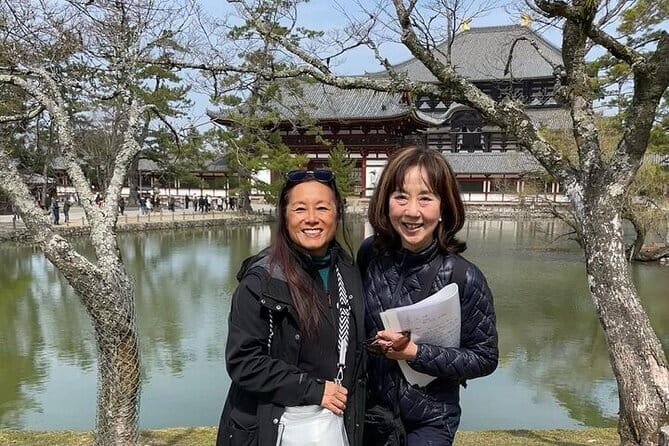
The day begins with hotel pickup in Osaka. You meet the guide, then travel to Osaka Station and take a train toward Nara. Public transportation fees are included, which removes one common worry in Japan: working out the correct fare while trying to stay on schedule.
The transportation portion is listed at about two hours. That makes up a meaningful part of an eight-hour day, but it is also what keeps the excursion practical and authentic. You are using the same rail system that connects the region, rather than spending the whole day inside a tour vehicle.
Your guide should be particularly useful here. Train travel is easy once you know the system, but station navigation and timing can still take attention away from the day. With a private guide handling the route, you can focus on Nara rather than tickets and transfers.
The exact meeting time and route should be confirmed when you book. The tour is usually confirmed at booking, but reservations made within seven days of departure receive confirmation within 48 hours, subject to availability.
Nara Park and the deer
Nara Park covers about 660 hectares, so do not think of it as a small fenced enclosure. It is a large public area linked to temples, shrines, wooded paths, and open spaces. The free-roaming deer are its most famous residents.
You can buy special crackers and feed them. This sounds like a small activity, but it gives the park an immediate sense of place. The deer are not an added attraction brought in for a tour. They are part of Nara’s long-standing identity and its connection with Kasuga Grand Shrine.
Use common sense around the animals. Keep the crackers under control, follow your guide’s instructions, and pay attention to children. The deer can be eager once they see food. The experience is family-friendly, but young children should stay close to an adult.
The park stop is scheduled for about one hour. That is enough for an introduction and some feeding, but it may feel short if your family wants extensive time with the deer or if you prefer slow photography. Since the route is private and adjustable, it is worth telling the guide if this is your top priority.
The outdoor setting also makes weather important. One past outing took place on a very hot day, yet the day remained memorable. Still, you should prepare for sun and heat because much of Nara involves walking outside. The schedule may change because of weather or other conditions.
Nandai Gate and Todai-ji Temple
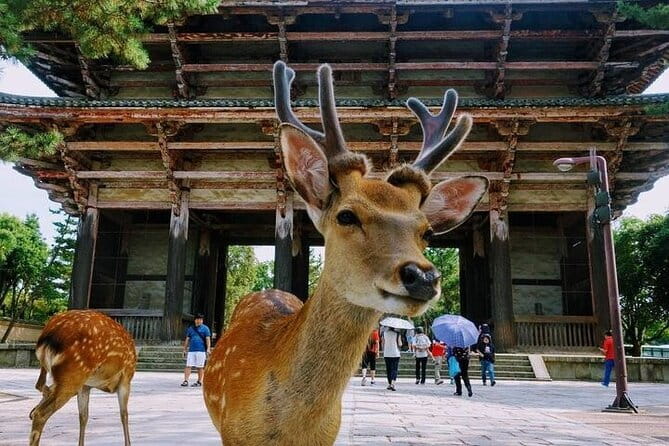
The approach to Todai-ji begins at Nandai Gate, a 25-meter-high structure that gives you an immediate sense of the temple’s scale. Two guardian kings stand in dark alcoves on either side. They are not subtle figures, and the gate makes a strong first impression before you even reach the main hall.
This short stop is scheduled for about 30 minutes. That is a sensible amount of time for looking up at the gate, examining the guardians, and hearing the basic story of the complex. A guide can help you notice details that are easy to miss when you are simply passing through.
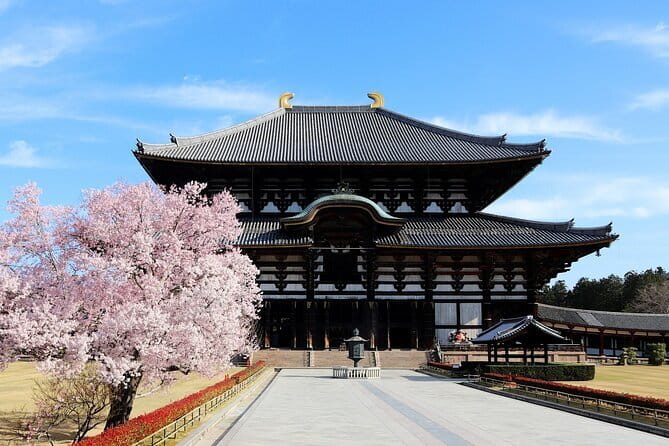
Todai-ji itself is one of Japan’s most important Buddhist temples. It was built in 752 as the head temple of Buddhist temples throughout Japan and later became powerful enough to influence public life. The complex is not just an attractive old building. It represents the close relationship between religion and government in early Japanese history.
The temple visit lasts about 90 minutes and admission is included. That gives you time to take in the main building, hear the explanation, and walk through the grounds without rushing every moment. Todai-ji is a major stop, so the schedule gives it the attention it deserves.
The scale can be almost overwhelming. This is not the quietest part of the day, and the main temple is a major draw. If you prefer small, empty religious sites, Todai-ji may feel busy or grand rather than intimate. Its size is exactly the point, though, and a good guide can put that size into perspective.
A few more Osaka tours and experiences worth a look
- Hiroshima & Miyajima 1 Day Bus Tour with Bullet Train Tickets
★ 4.5 · 105 reviews - From Osaka: Hiroshima and Miyajima Day Trip by Bullet Train
★ 4.6 · 83 reviews - Amanohashidate & Ine Funaya Sightseeing Full Day Trip from Kyoto
★ 4.5 · 62 reviews - Kyoto 1 Day Tour from Osaka
★ 4.0 · 54 reviews
Kasuga Grand Shrine and its sacred setting
Kasuga Taisha is considered one of Japan’s most sacred Shinto shrines. It is dedicated to numerous gods and draws people seeking a major Shinto experience, not just an old building to photograph.
The scheduled two-hour visit makes this the longest sightseeing stop. That is useful because Kasuga is best approached slowly. The shrine area offers a different feeling from Todai-ji. Instead of a giant Buddhist hall, you encounter a sacred Shinto site with paths, trees, and traditional religious details.
This change in mood is one of the strongest parts of the day. You move from deer-filled parkland to Buddhist grandeur, then into a shrine setting with a more reflective pace. The guide can explain the difference between Buddhist and Shinto traditions and point out why Kasuga matters.
Admission is included. You should expect walking on shrine and park paths, so comfortable footwear is important. The day does not require athletic ability, but it is not a sit-down sightseeing experience. The stated moderate fitness level is worth taking seriously, particularly in warm weather.
Kasuga can also be the part of the route that feels most personal. Todai-ji gives you a great national monument. Kasuga gives you a place where religious practice still shapes the atmosphere. I would ask the guide for extra explanation here if you are interested in Japanese beliefs, shrine customs, or architecture.
Isuien Garden and borrowed scenery
Isuien Garden is a compact final stop, scheduled for about 30 minutes. It is known for shakkei, the Japanese garden technique of using distant scenery as part of the composition. Mt. Wakakusa is incorporated into the garden view, so the setting reaches beyond the garden’s own paths and planting.
This is a smart closing stop. After the deer, the giant gate, the temple hall, and the shrine, Isuien offers a quieter visual pause. You can slow down and pay attention to shape, water, plants, and the way the surrounding view is framed.
Thirty minutes is enough to appreciate the garden, but it is not a long visit. If gardens are your main interest, you may want to ask before the day begins if the schedule can give Isuien more time. The tour can be arranged around your requests, though changes may affect other stops.
Admission is included, as it is for Todai-ji and Kasuga Grand Shrine. That helps keep the day’s costs more predictable. Lunch is not included, and you should budget about $10 to $20 per person. Dietary needs such as vegetarian, vegan, and gluten-free meals can be accommodated if you note them in the special requirements when booking.
What the $319 price really covers
At $319 per person, this is not a budget rail outing. You are paying for a private day, hotel pickup, a National Licensed English Speaking Guide, public transportation, and admissions. The value depends heavily on how much you want personal guidance and how many people are in your group.
For one person or a couple, the cost may be difficult to justify if you are comfortable planning trains and visiting Nara independently. Nara Park and several major sights can be reached without a private tour, and an independent visit gives you more control over how long you stay.
For a family or a small group, the calculation can look better, especially if a group discount applies. A private guide also reduces the mental work of coordinating transport, admissions, and a full day of sightseeing. Parents may value the ability to adjust the pace, stop for food, and explain the deer and temples to children as the day unfolds.
The strongest value is not simply convenience. It is the chance to connect several major Nara sights in one organized route while receiving explanation from a licensed guide. If you want a fuller understanding of what you see, that can make the premium worthwhile.
The weaker value is for people who want maximum free time. The route has several scheduled stops, and the train journey takes part of the day. Tell the operator what matters most to you so the private format works in your favor.
Who will enjoy this day most
I would recommend this tour most strongly to families, first-time visitors to Nara, and people who want help with the rail journey from Osaka. It also suits anyone who enjoys asking questions and prefers a human explanation of religious sites rather than reading signs alone.
The outing works well for people with varied interests. You get animals, scenery, temples, a shrine, and a garden. That mix explains why it can satisfy a family group in which one person wants photographs, another wants history, and a child mainly wants to see deer.
It may be less suitable if you have very limited walking ability, dislike outdoor heat, or want a slow day at one site. The stated requirement is moderate physical fitness, and the itinerary covers several areas. It is also not the right pick if your only goal is the lowest possible price.
The private arrangement helps with dietary needs and personal interests. Service animals are allowed, and the experience is near public transportation. You should still state any requirements at booking rather than waiting until the morning of the tour.
Practical details before you book
The tour lasts about eight hours. Hotel pickup is offered in Osaka, and the group travels by public transportation. The guide is an English-speaking National Licensed Guide Interpreter, though other languages can be requested.
Admission fees are included for the paid sights. Lunch and personal expenses are not. Plan on roughly $10 to $20 per person for lunch, and keep extra money available for deer crackers or other purchases.
The route may change because of weather or other reasons. That is especially relevant during hot periods, since Nara involves outdoor walking. Wear comfortable shoes, carry water, and let the guide know if heat or walking speed is a concern.
Free cancellation is available up to 24 hours before the start time for a full refund. Cancellations or changes made less than 24 hours before the start are not accepted for a refund, with cut-off times based on local time.
Should you book the Nara day trip?
Book it if you want Nara explained and organized without joining a large group. The mix of deer, Todai-ji, Kasuga Grand Shrine, and Isuien Garden gives you a well-rounded day, while the private format lets you ask for adjustments.
I would be especially inclined to book for a family or small group that values ease and personal attention. Aki and Mark are examples of the warm, patient guiding style you can expect from the operator, though your assigned guide may be different.
Skip it if $319 feels too high or if you are happy arranging your own train ride and temple visits. Nara is possible independently. But if your time in Japan is limited and you want a licensed guide to connect the sights into one clear day, this is a practical, well-planned choice.
FAQ
How long does the Nara day trip from Osaka last?
The experience lasts approximately eight hours.
Where does the tour begin?
The guide meets you at your hotel in Osaka before you travel to Osaka Station and continue to Nara by train.
Is transportation included?
Yes. Public transportation fees are included in the tour price.
Is this a private tour?
Yes. Only your group participates in the activity.
What sights are included?
The route includes Nara Park, Todai-ji Temple Nandai Gate, Todai-ji Temple, Kasuga Grand Shrine, and Isuien Garden.
Are admission fees included?
Yes. Admission fees for the included paid attractions are covered.
Is lunch included?
No. Lunch is not included. The expected cost is approximately $10 to $20 per person.
Can dietary restrictions be accommodated?
Yes. Vegetarian, vegan, gluten-free, and other dietary requests can be accommodated if you provide the details when booking.
Just added around Osaka
- Osaka Early Morning Osaka Castle Tour Avoid Crowds★ 5.0 · 3 reviews
- Guided Tour of Some Attractions in Osaka by Private Car★ 5.0 · 3 reviews
- Private Transfer Between Kyoto and Kansai Airport KIX★ 5.0 · 3 reviews
- Shared Arrival Transfer: Osaka Itami Airport to Osaka City★ 5.0 · 3 reviews
- Osaka: Sushi Making Class and Dotonbori Food Tour★ 4.7 · 3 reviews
- Osaka Night Photography Workshop★ 5.0 · 3 reviews
- Kyoto Full day Tour Kinkakuji, Kiyomizu-dera and Fushimi Inari★ 4.5 · 3 reviews
- Osaka: Koji Kinutani Tenku Art Museum Entry Ticket★ 3.1 · 3 reviews
Nara Day Trips from Osaka, compared.

Ancient Capital Tour: Kyoto and Nara Highlights from Kyoto/Osaka
Read our review →

Kyoto & Nara Private customized tour with English speaking Guide
Read our review →
Kyoto and Nara UNESCO Highlights Full-day Tour From Osaka
Read our review →
Kyoto & Nara & Uji: Full Day Sightseeing Tour from Osaka or Kyoto
Read our review →Browse the lists this tour appears in