
Reviewed · OSAKA TEA CEREMONY & MATCHA EXPERIENCES
Osaka: Castle, Tea Ceremony, Calligraphy, and Samurai Armor!
Osaka Castle gives this tour its strongest opening: you enter one of Japan’s best-known landmarks, see its museum, and connect the city’s past with hands-on customs such as tea and calligraphy. I like the mix of major sight and small cultural lessons, rather than spending the whole day inside a museum. I also like that you can add samurai armor, a kimono, or traditional instruments if you want more time in costume and performance.
The main thing to consider is that the advertised price of $135 does not include the samurai armor or women’s kimono option. Each costs ¥4,820, and the tour may not suit anyone with back problems or anyone over 70. The meeting point is underground in Namba, so give yourself time to find it.
In This Review
- Key points at a glance
- Why this Osaka tour works for first-time visitors
- Starting underground at Namba Walk
- Entering Osaka Castle and its museum
- Tea ceremony and calligraphy in one cultural session
- Samurai show, armor, and traditional instruments
- Riding Osaka’s local train system
- Ending among the lights and food of Dōtonbori
- What the $135 price really covers
- Who should book this experience
- Booking tips for a smoother day
- Should you book the Osaka Castle and samurai tour?
- FAQ
- Where does the tour meet?
- Where does the activity end?
- Is the tour offered in English?
- Is samurai armor included in the $135 price?
- Is kimono wearing included?
- What activities are included?
- What should I bring?
- Who should not take this activity?
Key points at a glance
- Osaka Castle comes first: Enter the castle and visit its museum before moving on to cultural activities.
- Tea and calligraphy are hands-on: You do more than look at Japanese customs from the sidelines.
- Samurai fun is partly optional: A samurai show and traditional instruments are included, while armor and kimono rental cost extra.
- Dōtonbori finishes the day: Save room for street food, shopping, neon-lit photos, and local specialties.
- The tour uses Osaka’s local transport: One itinerary account describes traveling by train between major parts of the day.
- Meet in Namba: Find the Osaka JOINER base on B1 of Namba Walk, close to Exit B23.
Why this Osaka tour works for first-time visitors
This is a useful choice if you want several classic Osaka activities in one day without planning every train ride and ticket yourself. The route links a famous landmark, traditional arts, costume play, and one of the city’s best-known food districts.
I especially like the balance between looking and doing. Osaka Castle gives you the grand historical setting. The tea ceremony and calligraphy session slow the pace and give you a chance to handle the customs yourself. The samurai show adds a more theatrical note, while Dōtonbori brings you back to modern Osaka, with its food stalls, shops, and bright signs.
It is not a quiet, specialist tour focused on one subject. Instead, it is a broad introduction to Osaka culture. That makes it a good fit for a first visit, families, and anyone who wants photographs as well as background. If you already know Osaka well or prefer long, unhurried time at one site, the day may feel packed.
The tour is offered in English. The supplied feedback gives it a perfect five-star rating from four reviews, with special praise for the friendly guide, the fun atmosphere, Osaka Castle, and the chance to learn about Japanese culture. That is a small sample, but it points to the tour’s main strength: variety delivered in a personable way.
More tea ceremonies and matcha sessions:
- Osaka: Tea Ceremony Experience
★ 4.9 · 1,426 reviews - Tea Ceremony Experience in Osaka Doutonbori
★ 5.0 · 754 reviews - Matcha Making Class in Osaka with Authentic Japanese Sweets Set
★ 5.0 · 509 reviews
Starting underground at Namba Walk
The meeting point is the Osaka JOINER base on the B1 floor of Namba Walk, an underground shopping street. Look near Exit B23, between the Mizuno shop and Docomo Shop. If you are coming from the Starbucks, head to the other side.
This is practical, central Osaka, but underground shopping areas can be confusing. I would arrive early and use the shop names as landmarks instead of relying only on the exit number. Keep your phone charged and carry the meeting information with you.
You need cash for the day. The supplied details do not specify exactly when or where you will need it, so cash is worth having for food, optional extras, or small purchases. Smoking is not allowed indoors.
The activity returns to this same meeting point at the end. That makes the finish simple, especially if you are staying in the Namba area or want to continue into the evening nearby.
Entering Osaka Castle and its museum
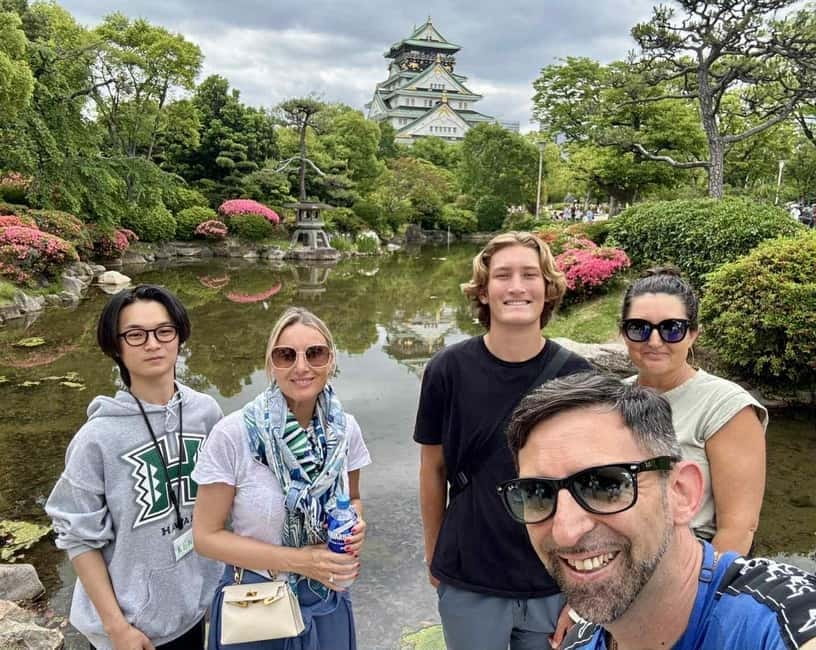
Osaka Castle is the anchor of the tour. You enter the landmark and visit its museum, giving you a strong visual introduction to Osaka before the hands-on activities begin.
The castle is closely tied to the military history of Osaka, and the samurai theme later in the day makes more sense after seeing this setting. You are not simply checking off a famous building for a photograph. The castle provides context for the armor, performances, and stories that follow.
The museum is a useful part of the visit because it adds objects and displays to the large-scale exterior. One practical point: the tour information does not give a fixed length for the castle stop, the exact route inside, or the number of people in the group. Your time there may therefore depend on the day’s pace and the guide’s schedule.
I would bring a camera, but do not let the photo stop replace the museum. The castle is one of the places where a short explanation can make the view more meaningful. The tour is designed to keep moving, so if you want a very detailed museum visit, you may need a separate return visit.
Tea ceremony and calligraphy in one cultural session
After Osaka Castle, the tour turns from sightseeing to participation. You take part in a Japanese tea ceremony and a calligraphy session.
The tea ceremony is valuable because it shows the care given to simple actions: preparing, presenting, and drinking tea in a formal setting. You do not need to be an expert to enjoy it. The point is to notice the rhythm and etiquette, then understand that Japanese culture includes quiet, careful rituals alongside Osaka’s loud food streets.
Calligraphy adds a more active element. You get to practice writing rather than only watch someone else do it. This is a good section for families because it gives children a clear task, and it also produces a personal souvenir of the day, depending on how the session is handled.
The exact words or characters you will write are not specified, so I would not book this expecting a formal language lesson. Think of it as an introduction to brush writing and the visual style of Japanese characters. The value comes from trying the technique and seeing how much control it takes.
These activities also provide a change of pace after the castle. Osaka Castle can feel imposing and museum-focused. Tea and calligraphy bring you closer to everyday customs and make the day less dependent on simply looking at attractions.
More samurai and ninja experiences:
- Samurai Training Experience KENDO in Osaka
★ 5.0 · 515 reviews - OSAKA NIGHT FUSION Japanese Taiko Kabuki Samurai Dance Show
★ 4.8 · 155 reviews - Osaka: Samurai Training Experience KENDO in Osaka
★ 5.0 · 111 reviews - Osaka: A Modern Samurai, Kabuki, Taiko, & Dance Show
★ 4.5 · 66 reviews
Samurai show, armor, and traditional instruments
A samurai show is included, and the program also includes playing traditional instruments. The named instruments are the shamisen, koto, and shinobue. These add sound and performance to a day that already includes visual arts and ceremony.
The samurai show gives the day a lively centerpiece. It is best understood as a cultural performance rather than a complete history lesson. You can enjoy the costumes, movements, and stage presentation, then connect them with what you saw at Osaka Castle.
Trying on samurai armor is optional and costs an additional ¥4,820. Children can join this part with specially designed armor, which makes the add-on more practical for families. Women can choose a kimono-wearing option for the same additional fee, ¥4,820, according to the supplied details.
The extra fee matters when you compare the total cost. At $135, the basic tour already includes Osaka Castle, the tea ceremony, calligraphy, the samurai show, and traditional instruments. Add armor or a kimono, and your final spend rises. The information says the ¥4,820 price applies until the end of August, so confirm the current price if you are booking after that period.
You can tell the guide on the day if you want the costume option, or contact the operator through WhatsApp in advance. I would arrange it ahead of time if the photographs are important to you. That removes uncertainty and makes it easier for the operator to prepare the right option.
The armor section is also the part most likely to involve standing, dressing, or holding a pose. Since the activity is not recommended for people with back problems, take that warning seriously.
Riding Osaka’s local train system
One detailed account of the day describes traveling on Osaka’s local train system between the castle and the cultural activities. That is a useful part of the experience because you get a look at how the city connects its major neighborhoods, rather than staying inside one attraction zone.
It also means you should wear comfortable shoes and expect some walking through stations and underground passages. Exact train times, transfers, and the total amount of walking are not provided, so I would not treat this as a completely effortless coach tour.
The meeting point’s location in Namba helps put the route in context. Namba is one of Osaka’s main entertainment and shopping areas, and it connects naturally with the final stop at Dōtonbori. If you are nervous about navigating Osaka rail stations, having an English-speaking guide can make this format much easier than handling the route alone.
Ending among the lights and food of Dōtonbori
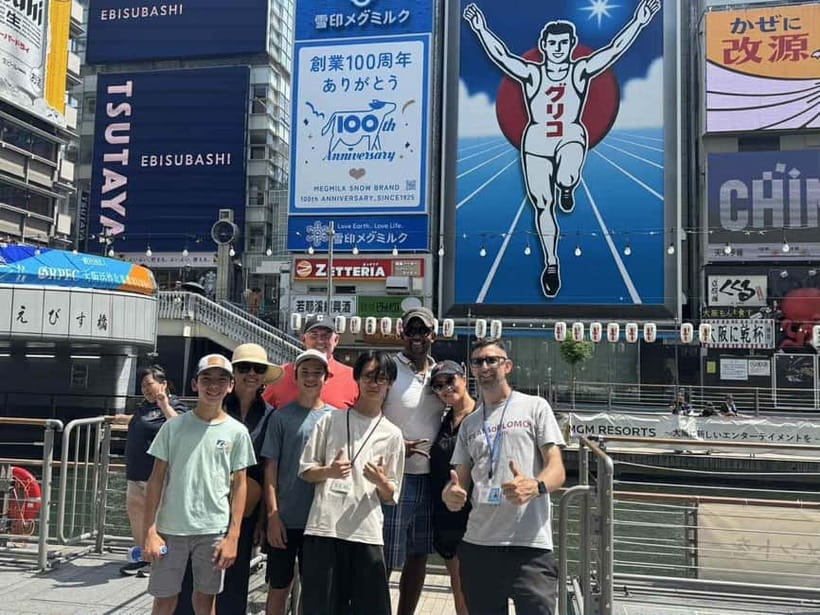
Dōtonbori is the day’s modern finale. This is Osaka’s famous entertainment and street food district, and it is a natural place to end a culture tour.
You have time here for photographs, shopping, and tasting local delicacies. The district is known for its eye-catching signs and busy streets, so it gives you a very different picture of Osaka than the castle and tea ceremony did. I like that contrast. The city is not presented as only temples, castles, and old customs.
Food is not listed as included, so plan to pay for anything you eat. Bring cash, as requested in the practical information, and treat Dōtonbori as a chance to choose your own snack or meal rather than part of the tour price.
The exact amount of free time in Dōtonbori is not stated. If you have a particular restaurant or shopping stop in mind, ask the guide how much time you will have. The activity ends back at the Osaka JOINER base, so Dōtonbori is part of the route rather than the final drop-off point.
What the $135 price really covers
The $135 price is reasonable if you want a full cultural sampler with a guide, castle entry, a tea ceremony, calligraphy, a samurai show, traditional instruments, and a visit to Dōtonbori. You are paying for range and organization, not just admission to Osaka Castle.
The value is strongest for first-time visitors who would otherwise buy several separate activities. It is also useful if you want an English-speaking guide to connect the stops and help with the local train system.
The price is less attractive if your main goal is only Osaka Castle. You could spend less by visiting the castle alone and exploring Dōtonbori independently. The tour earns its cost through the cultural sessions and the performance.
Remember that armor and kimono are not part of the base price. The extra ¥4,820 can be worthwhile if you want a portrait in costume or a special family photograph, but it is not necessary to enjoy the core program. The women’s kimono option is specifically listed for women, while the samurai armor option includes children’s sizes.
Who should book this experience
I would suggest this tour to you if you want a single day that covers several sides of Osaka:
- First-time visitors who want a planned introduction
- Families interested in samurai armor and hands-on activities
- Couples or friends looking for distinctive photographs
- People who want a tea ceremony and calligraphy without arranging separate bookings
- Visitors comfortable using local trains and walking between activities
It is less suitable if you have back problems, are over 70, or want a slow, highly specialized historical tour. The supplied information gives no duration or group size, so you should ask before booking if those details affect your comfort.
The tour also works best when you are open to a broad cultural day. You will see a castle museum, take part in a formal tea custom, practice calligraphy, watch a samurai show, handle traditional instruments, and end with Osaka food culture. None of these sections is presented as an exhaustive course, but together they give you a useful first taste.
Booking tips for a smoother day
Arrive early at the Osaka JOINER base. Namba Walk is underground, and the shop landmarks are more useful than rushing around looking for Exit B23.
Carry cash and comfortable shoes. You may want money for food in Dōtonbori or the costume add-on, and the train-based route can involve station walking.
If you want samurai armor or a kimono, tell the guide on the day or contact Osaka JOINER through WhatsApp beforehand. Since the price is listed as valid until the end of August, confirm the fee before paying.
The activity allows cancellation up to 24 hours in advance for a full refund. It also offers reserve and pay later, which is useful if your Osaka schedule may change.
Should you book the Osaka Castle and samurai tour?
Book it if you want variety, practical guidance, and a day that mixes Osaka’s major landmark with tea, calligraphy, performance, instruments, and street food. The strongest praise centers on the friendly, professional guiding, the fun atmosphere, Osaka Castle, and the amount of Japanese culture packed into one outing.
Skip it if you prefer to set your own pace, spend hours inside the castle museum, or avoid optional costume fees and public transport. For most first-time visitors, though, the $135 base price buys a well-rounded introduction. Add the armor only if the photographs and hands-on costume experience are central to your plans.
FAQ
Where does the tour meet?
Meet at the Osaka JOINER base on the B1 floor of Namba Walk, near Exit B23. The shop is between Mizuno and Docomo. If you are coming from Starbucks, go to the other side.
Where does the activity end?
The tour ends back at the Osaka JOINER meeting point.
Is the tour offered in English?
Yes. English is the listed tour language.
Is samurai armor included in the $135 price?
No. Samurai armor is an optional extra costing ¥4,820 according to the supplied information.
Is kimono wearing included?
No. Women can choose kimono wearing as an optional extra for ¥4,820.
What activities are included?
The included activities are a visit to Osaka Castle, a Japanese tea ceremony, Japanese calligraphy, a samurai show, playing traditional instruments, and taking photos in samurai armor when that option is selected.
What should I bring?
Bring cash. Smoking is not allowed indoors.
Who should not take this activity?
The activity is not suitable for people with back problems or people over 70. Children can take part in the samurai experience using specially designed armor.
More Traditional Craft Workshops
- 1.5〜2 Hours Traditional Kintsugi Work Shop in Namba Osaka
★ 5.0 · 75 reviews - Osaka: Private Japanese Calligraphy Experience
★ 5.0 · 66 reviews - From Osaka: Sakai Knife Maker or Blacksmith Walking Tour
★ 4.9 · 64 reviews - Osaka: Traditional Japanese Ceramics Private Experience
★ 5.0 · 57 reviews
Just added around Osaka
- Nara Day Trip from Osaka with a Licensed Guide★ 5.0 · 3 reviews
- Osaka Early Morning Osaka Castle Tour Avoid Crowds★ 5.0 · 3 reviews
- Guided Tour of Some Attractions in Osaka by Private Car★ 5.0 · 3 reviews
- Private Transfer Between Kyoto and Kansai Airport KIX★ 5.0 · 3 reviews
- Shared Arrival Transfer: Osaka Itami Airport to Osaka City★ 5.0 · 3 reviews
- Osaka: Sushi Making Class and Dotonbori Food Tour★ 4.7 · 3 reviews
- Osaka Night Photography Workshop★ 5.0 · 3 reviews
- Kyoto Full day Tour Kinkakuji, Kiyomizu-dera and Fushimi Inari★ 4.5 · 3 reviews
Osaka Tea Ceremony & Matcha Experiences, compared.


Matcha Making Class in Osaka with Authentic Japanese Sweets Set
Read our review →
Japanese Traditional Sweets Making and Tea Ceremony
Read our review →
Osaka Temple Cool Foot Bath & Matcha Experience〈45min〉
Read our review →
Samurai Show, Tea Ceremony, Japanese Traditional Activities
Read our review →
Browse the lists this tour appears in