
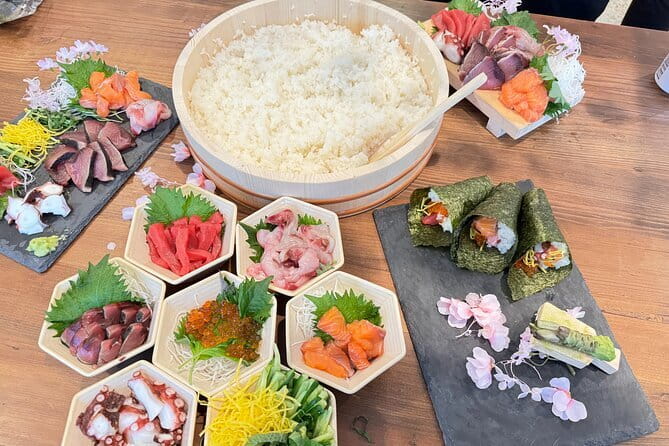
Reviewed · OSAKA SUSHI MAKING CLASSES
Osaka Sushi Cooking Class “Learn here and make it at home”
Making sushi at home can look harder than it is. This Osaka class breaks it into two friendly projects: rolling maki sushi and shaping neat temari sushi with plastic wrap. You spend 90 minutes cooking, then sit down with your food and drinks.
I like the small maximum of eight people, which gives the instructor room to help. I also like the central location, just five minutes from Shinsaibashi and Honmachi stations, yet set in a quiet neighborhood. The main consideration is that the class costs $70, so it makes the most sense if you value a skill you can repeat at home, not just a meal.
In This Review
- Key points
- Making Maki and Temari Sushi in Osaka
- The First 30 Minutes: Orientation and Preparation
- The 90-Minute Cooking Session
- Why Two Sushi Styles Work Better Than One
- The One-Hour Tasting With Sake, Beer, and Soft Drinks
- A Quiet Kitchen Near Shinsaibashi and Honmachi
- Group Size, Language, and Personal Attention
- Food Preferences and Allergy Planning
- Is $70 a Fair Price for Three Hours?
- Who Will Enjoy This Osaka Sushi Class?
- Practical Details Before You Book
- Should You Book It?
- FAQ
- How long does the Osaka sushi cooking class last?
- What types of sushi will I make?
- Is the class taught in English?
- Are ingredients and cooking tools provided?
- Are drinks included?
- Where does the class meet?
- Can I request vegetarian or allergy-friendly options?
Key points
- Two sushi styles in one class: Make seaweed-wrapped maki rolls and small, round temari sushi.
- A real hands-on format: After 30 minutes of orientation, you get 90 minutes with the ingredients and tools.
- Drinks are part of the meal: Sake, beer, and soft drinks are included, with alcohol served only to people aged 20 and over.
- Easy central access: The kitchen is a five-minute walk from both Shinsaibashi and Honmachi stations.
- Small group size: The class accepts a maximum of eight people, useful when you need help with rolling or shaping.
- Useful for home cooks: You leave with methods for two approachable Japanese dishes, rather than only watching a demonstration.
Making Maki and Temari Sushi in Osaka
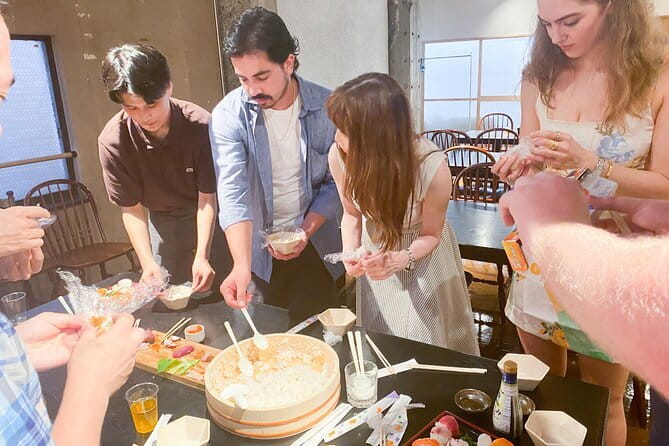
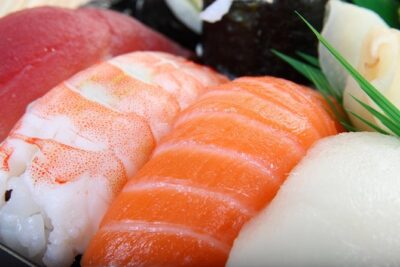
The appeal here is simple: you are not only eating sushi in Osaka, you are learning two styles that can be made in an ordinary home kitchen. Maki sushi is the familiar roll, with rice, fish, and vegetables wrapped in seaweed. Temari sushi is smaller and rounder, with toppings placed over compact balls of rice.
That difference gives the class a nice balance. Maki teaches you the basic rhythm of spreading rice, arranging fillings, and rolling. Temari is less dependent on a perfect roll and uses plastic wrap to form the rice into a tidy ball. If you find the bamboo mat intimidating, temari sushi offers a forgiving way to get started.
The class is led by instructors who speak English, with Spanish and Japanese available on request. The instructor names are not provided, so you should not book expecting a particular teacher. You can expect step-by-step guidance rather than a technical chef’s seminar.
More sushi making classes:
- Sushi Making Osaka Roll and Authentic Japanese Sushi Class
★ 5.0 · 1,220 reviews - Osaka Sushi Making Experience
★ 5.0 · 400 reviews - Osaka: Roll and Authentic Sushi Making Class in Dotonbori
★ 4.9 · 239 reviews
The First 30 Minutes: Orientation and Preparation
The class begins with about 30 minutes of orientation and preparation. This time matters because sushi has several small steps that are easy to miss when you are hungry and eager to start. You will get settled, learn what you are making, and prepare to work with the supplied ingredients and kitchen tools.
All the practical equipment is provided. That includes kitchen tools, aprons, disposable plastic gloves, ingredients, and the supplies needed for the class. You do not need to bring cooking equipment or prepare anything beforehand.
The orientation should also help you understand the difference between the two finished dishes. Maki sushi depends on forming a roll that holds together when sliced. Temari sushi depends on creating an even rice ball and placing the topping so the result looks clean and attractive.
This part is short enough not to feel like a lecture. Still, you should allow the full three-hour window. The program is organized around 30 minutes of preparation, 90 minutes of cooking, and one hour for tasting and drinks.
The 90-Minute Cooking Session
The main cooking period lasts about an hour and a half. This is the part that gives the class its value. You are expected to make the sushi yourself, with the instructors guiding you through each stage.
For maki sushi, you work with rice, seaweed, fish, and vegetables. The final roll is sliced into individual pieces, so the process has both a practical and visual side. A roll that is slightly uneven can still taste good, but you will learn why rice distribution and filling placement affect the shape.
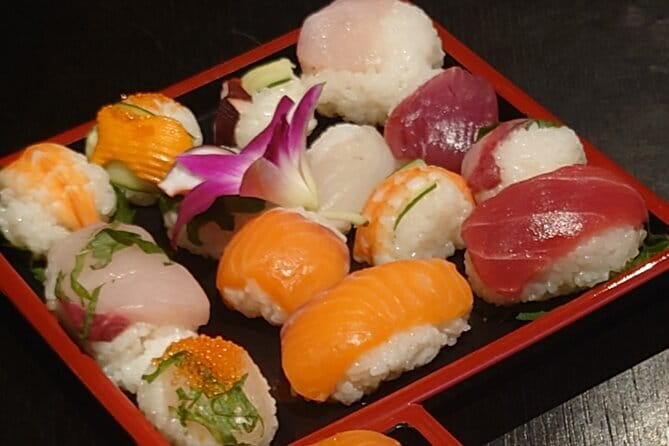
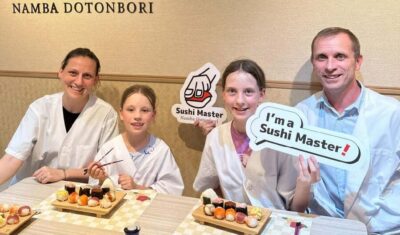
Temari sushi takes a different approach. You make small rice balls and top them with fish or vegetables. The plastic-wrap method is especially useful for home cooks because it does not require advanced knife work or special shaping equipment. It is also a good choice for families, since the round pieces are easy to handle and have a playful look.
One useful tip is to pay close attention to how much rice you use. Too much makes rolling and shaping harder. The instructor can correct this while you are working, which is one reason a maximum of eight people is a welcome limit.
The class has received strong praise for its family appeal and easy-to-follow temari method. Children enjoyed making the small sushi pieces, and a souvenir was included for at least one family group. Since the exact souvenir is not specified as part of the standard inclusions, treat it as a possible extra rather than a guaranteed feature.
The food itself is another major part of the experience. Fresh ingredients are provided, and the class gives you time to taste as you work. You are not simply assembling a decorative plate for photographs. You are learning a basic homemade approach that can be repeated after you leave Osaka.
Why Two Sushi Styles Work Better Than One
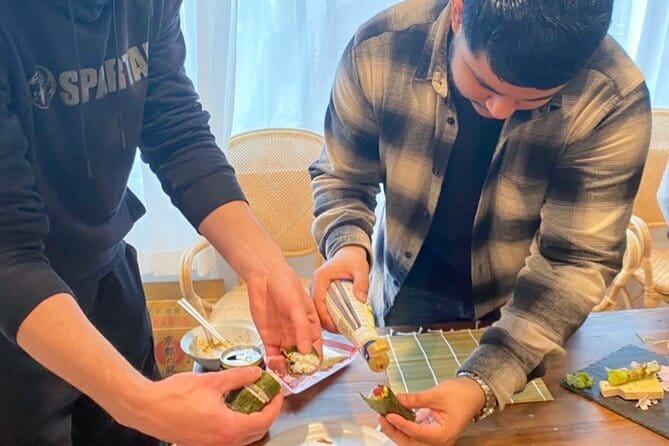
A class devoted to only one sushi style might offer more technical detail, but this format gives you two ways to succeed. Maki sushi is the classic choice and probably the reason many people book. It also requires more control, since you need to roll the ingredients firmly and keep the shape intact.
Temari sushi is more relaxed. The pieces are bite-sized, round, and easy to customize with fish or vegetables. The plastic-wrap technique is a particularly practical takeaway. You can try it at home without buying a specialized mold.
I see this as a good design for mixed groups. One person may enjoy the neat challenge of maki rolls, while another may prefer the simpler shaping process of temari sushi. Families can divide tasks, and friends can compare different results without turning the class into a competition.
The two styles also show how Japanese home cooking can be both attractive and practical. Sushi is often treated as restaurant food, but these dishes offer a more approachable home version. You learn a method, eat what you make, and gain an idea of what to try in your own kitchen.
More Japanese home cooking classes:
- Osaka: Ramen and Gyoza Cooking Class in Dotonbori
★ 5.0 · 378 reviews - Osaka: Sumo Stage Show with Bento or Snack + Fight & Photo
★ 4.3 · 364 reviews - Osaka: Traditional Mochi Pounding Experience with Tasting
★ 4.9 · 306 reviews - Osaka Cooking Class: Okonomiyaki &Japanese cuisines experience
★ 5.0 · 261 reviews
The One-Hour Tasting With Sake, Beer, and Soft Drinks
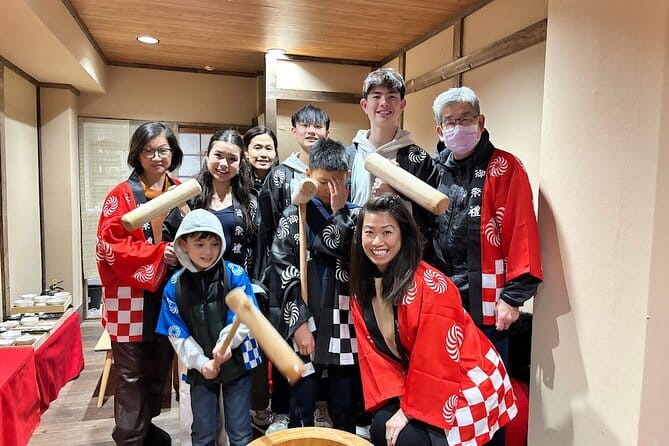
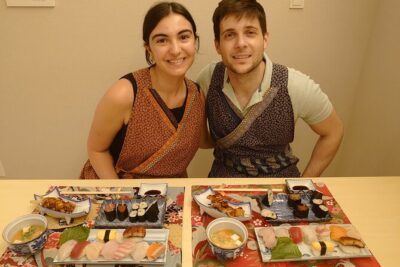
After cooking, you have about an hour to sit down and eat your sushi. Drinks are included, which turns the final portion into a relaxed meal rather than a quick sample.
The drink choices include Japanese sake, beer, and soft drinks. Alcohol is served only to people aged 20 and over. Anyone under 20 receives non-alcoholic drinks, so families can take part without needing to arrange separate beverages.
This final hour gives you time to look at the finished pieces and enjoy the food at an unhurried pace. It is also a useful moment to ask last questions about the preparation methods while the steps are still fresh.
The drinks add value to the $70 price, but I would not book this class mainly for the alcohol. The stronger reason is the combination of instruction, ingredients, equipment, and a full tasting period. If you only want a cheap lunch, this is not the right comparison. If you want an activity that includes a meal and leaves you with skills, the price is easier to justify.
A Quiet Kitchen Near Shinsaibashi and Honmachi
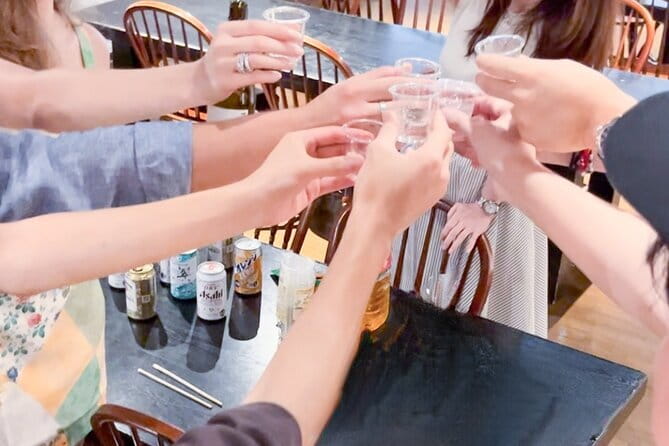
The meeting point is at Minamisenba Collet, 4-chōme-3-1 Bakurōmachi, Chuo Ward, Osaka, 541-0059. The kitchen is about a five-minute walk from both Shinsaibashi Station and Honmachi Station on the Osaka Metro.
That location works well in a sightseeing schedule. Shinsaibashi is a major shopping area, while Honmachi is another central part of Osaka. You can reach the class by public transportation without arranging a private transfer, then return to the same meeting point when the activity ends.
The setting is described as central but quiet. That is a useful contrast to Osaka’s busier shopping streets. You should still allow time to find the exact entrance, especially since the meeting point includes a building and room number. The activity does not include private transportation, but none should be needed if you are already staying or sightseeing in central Osaka.
Because the class begins and ends at the same location, planning is straightforward. You do not need to work out a separate pickup or final drop-off point.
Group Size, Language, and Personal Attention
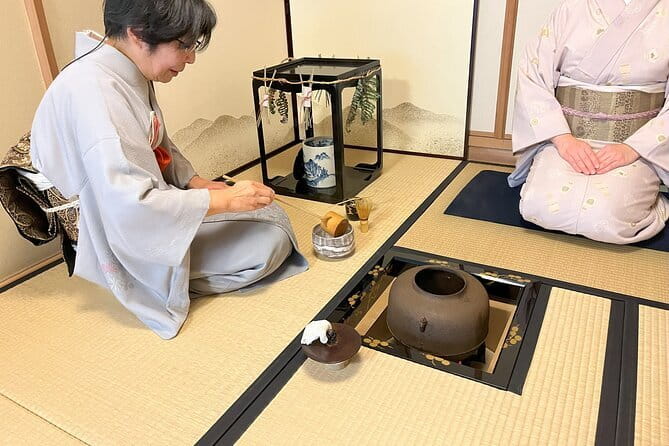
The maximum group size is eight people. That is small enough for a practical cooking class, particularly when several people are learning to roll and shape sushi at the same time.
English instruction is included. Spanish and Japanese instruction are available on request, so you should make that request after booking if needed. The language support is one of the strongest practical features for international visitors, since small cooking details are easier to follow when the instructions are clear.
A small class does not guarantee private instruction. You will still share the kitchen and cooking time with other people. But compared with a large demonstration, eight people gives you a better chance to receive corrections and ask questions.
The friendly tone is also important for beginners. You do not need prior sushi-making experience, and all ingredients and tools are supplied. Bring yourself, an appetite, and a willingness to make a few imperfect rolls.
Food Preferences and Allergy Planning
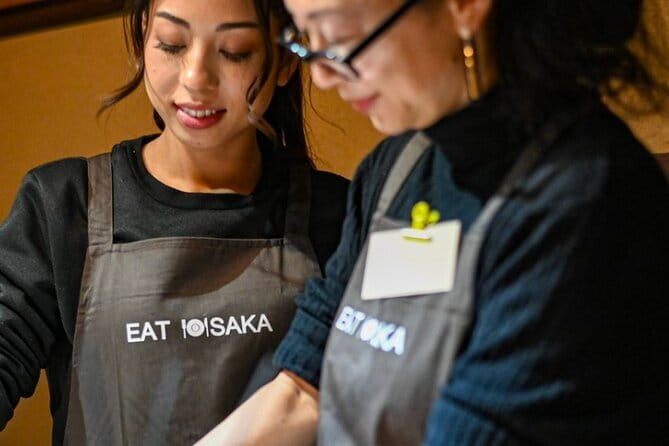
Vegetarian and food allergy options are possible, but you need to contact the provider. The instructions say you can send a message after booking, so do not wait until you arrive in Osaka to raise an allergy or dietary concern.
The standard class includes fish and vegetables as part of the sushi preparation. Since the exact substitutions are not listed, you should ask what can be changed before relying on the class for a strict dietary requirement.
This is also a good reason to book early enough to receive a clear answer. Confirmation is normally provided at booking, though bookings made within two days of the activity may take up to 48 hours and remain subject to availability.
Is $70 a Fair Price for Three Hours?
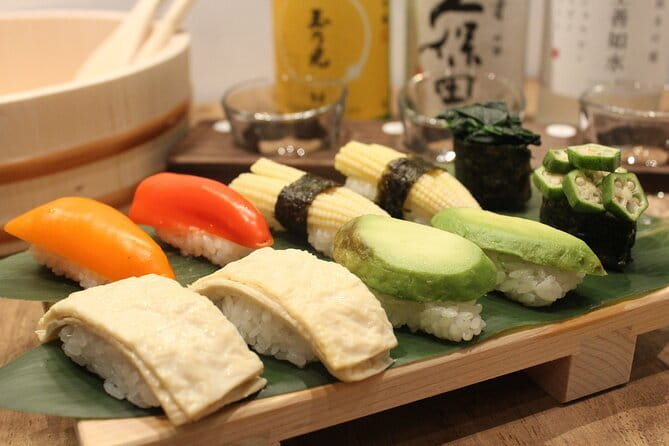
At $70 per person, this is not a bargain meal. It is a three-hour cooking activity with instruction, ingredients, tools, apron, gloves, a full tasting period, and drinks. Those inclusions make the price reasonable if you want more than a restaurant visit.
The value depends on how you travel. If your Osaka plans are packed with temples, shopping, and museums, you may prefer spending $70 on a different attraction. If you enjoy food and want a useful activity during your stay, the class offers a clear return: you learn two dishes and eat what you prepare.
The small group limit also matters. You are paying for access to a guided kitchen session, not only for ingredients. The English instruction and central location reduce the friction of joining the class, especially if you are unfamiliar with Japanese cooking techniques.
I would view the class as good value for families, food-focused visitors, and anyone who likes bringing a practical memory home. It is less appealing if you are seeking an advanced sushi course or a formal lesson in professional knife skills. The focus here is homemade sushi that you can attempt again.
Who Will Enjoy This Osaka Sushi Class?
This activity suits families particularly well. Temari sushi is easy to shape with plastic wrap, and the small pieces give children a clear task. The class also includes soft drinks for minors, and one family experience included a souvenir for the children.
It works for couples and friends, too. You can cook side by side, compare your maki rolls, and share the final meal. The hands-on format gives you something to do together, rather than sitting across from one another at another restaurant.
Food-focused visitors will appreciate the chance to move beyond eating sushi and learn how two homemade versions come together. The class is also useful for people who want an activity that travels well in memory: the techniques do not depend entirely on a particular Osaka setting.
I would be more cautious about booking if you have very limited time, strict dietary needs that have not been confirmed, or little interest in alcohol and group dining. The class remains worthwhile without drinking, but the included beverages are part of the overall value.
Practical Details Before You Book
The activity lasts approximately three hours and returns you to the original meeting point. It is near public transportation, with Shinsaibashi and Honmachi stations both about five minutes away.
You do not need to bring tools, ingredients, an apron, or gloves. Vegetarian and allergy requests require advance contact. Spanish or Japanese instruction also needs to be requested if that is important to you.
The activity has a free-cancellation policy up to 24 hours before the start time. Cancellations made less than 24 hours before the start are not refunded, and late changes are not accepted. The policy also says the experience requires good weather. If poor weather causes cancellation, you are offered another date or a full refund.
The class is mobile-ticket friendly, so you can keep the booking on your phone. Check the meeting point carefully before leaving your hotel, and give yourself enough time to find the correct building.
Should You Book It?
Book this Osaka sushi class if you want a friendly, practical food activity with a small group and clear English instruction. The strongest reasons are the two different sushi styles, the easy temari technique, the included meal and drinks, and the central station access.
I especially recommend it for families and first-time sushi makers. You will not need special equipment, and the methods are simple enough to try again at home. The class also gives you a useful break from sightseeing without taking an entire day.
Skip it if you want an advanced professional lesson, a private class, or the lowest-cost way to eat sushi in Osaka. At $70, the point is the three-hour experience and the skills you take with you, not just the food on the plate.
FAQ
How long does the Osaka sushi cooking class last?
The class lasts approximately three hours. It includes 30 minutes of orientation and preparation, 1 hour and 30 minutes of cooking, and 1 hour of sushi tasting with drinks.
What types of sushi will I make?
You will make maki sushi, which is a seaweed-wrapped sushi roll, and temari sushi, which is a small ball of rice topped with fish or vegetables.
Is the class taught in English?
Yes. An English-speaking instructor is included. Spanish and Japanese instructors are available upon request.
Are ingredients and cooking tools provided?
Yes. All ingredients and kitchen tools are provided. Aprons and disposable plastic gloves are also included.
Are drinks included?
Yes. The tasting includes Japanese sake, beer, and soft drinks. Alcohol is served only to people aged 20 and over. Minors receive non-alcoholic drinks.
Where does the class meet?
The meeting point is Minamisenba Collet, 4-chōme-3-1 Bakurōmachi, Chuo Ward, Osaka, 541-0059, Japan. The kitchen is about a five-minute walk from Shinsaibashi and Honmachi stations.
Can I request vegetarian or allergy-friendly options?
Yes, but you need to contact the provider about vegetarian or food allergy options. You can send a message after completing your booking.
Just added around Osaka
- Nara Day Trip from Osaka with a Licensed Guide★ 5.0 · 3 reviews
- Osaka Early Morning Osaka Castle Tour Avoid Crowds★ 5.0 · 3 reviews
- Guided Tour of Some Attractions in Osaka by Private Car★ 5.0 · 3 reviews
- Private Transfer Between Kyoto and Kansai Airport KIX★ 5.0 · 3 reviews
- Shared Arrival Transfer: Osaka Itami Airport to Osaka City★ 5.0 · 3 reviews
- Osaka: Sushi Making Class and Dotonbori Food Tour★ 4.7 · 3 reviews
- Osaka Night Photography Workshop★ 5.0 · 3 reviews
- Kyoto Full day Tour Kinkakuji, Kiyomizu-dera and Fushimi Inari★ 4.5 · 3 reviews
Osaka Sushi Making Classes, compared.
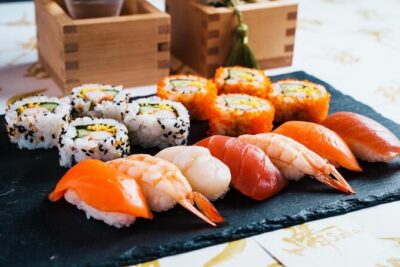
Sushi Making Osaka Roll and Authentic Japanese Sushi Class
Read our review →
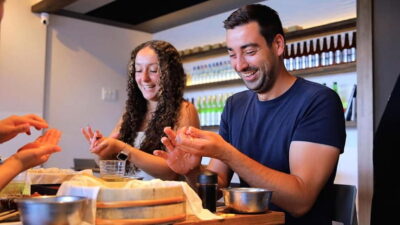
Roll and Authentic Sushi Making Class in Dotonbori
Read our review →

Browse the lists this tour appears in