
Reviewed · DOTONBORI & NAMBA TOURS
Osaka: Sushi Class in Dotonbori
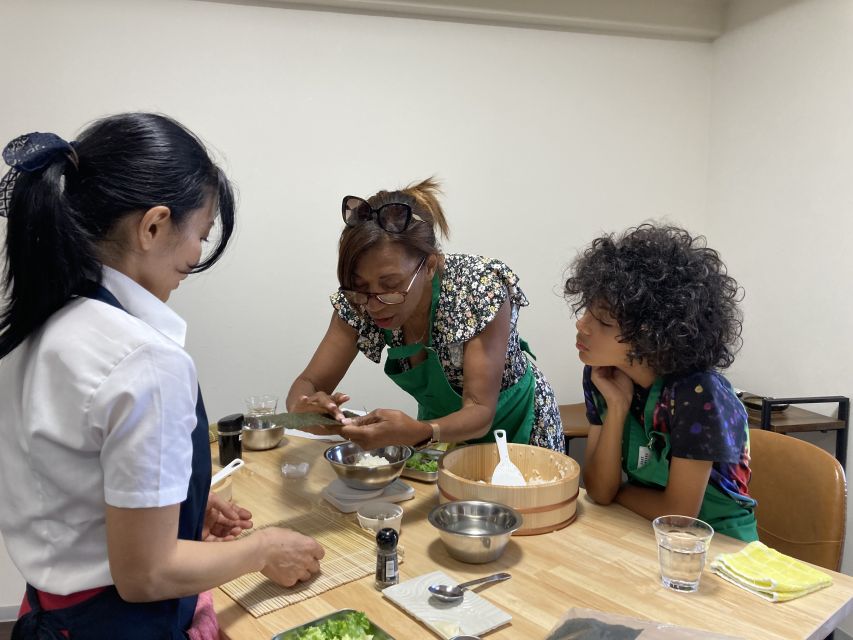
Osaka’s sushi story is bigger than raw fish. In this three-hour Dotonbori cooking class, you make three different styles, including pressed oshizushi, the square Kansai specialty many visitors never try. You finish by eating what you prepared, and the portions are substantial enough to count as a proper meal.
I like the small groups of up to eight, which give the instructor time to correct your technique. I also like the mix of practical cooking and food culture: past instructors such as Yoshi and Yoko have explained dashi, pickling, preservation, local ingredients, and Japanese dining customs while teaching.
The main thing to consider is that this is a preparation class, not a fish-cutting workshop. You make the sushi, but one participant specifically wished for more hands-on fish slicing, so serious sushi students may want a more advanced class.
In This Review
- Key points to know before booking
- Why three sushi styles make this class worthwhile
- Starting at Cooking Sun Osaka near Dotonbori
- Salad rolls: an easy start with plenty of color
- Nigiri: small pieces, careful technique
- Oshizushi brings Osaka into the kitchen
- The teaching style and the food culture behind it
- What you eat and how much you get
- Is $67 good value for three hours?
- Who will enjoy this class most?
- My practical verdict
- FAQ
- How long does the Osaka sushi class last?
- What types of sushi will I make?
- Is the class taught in English?
- How many people can join the class?
- Are vegetarian or gluten-free options available?
- Where is the meeting point?
Key points to know before booking
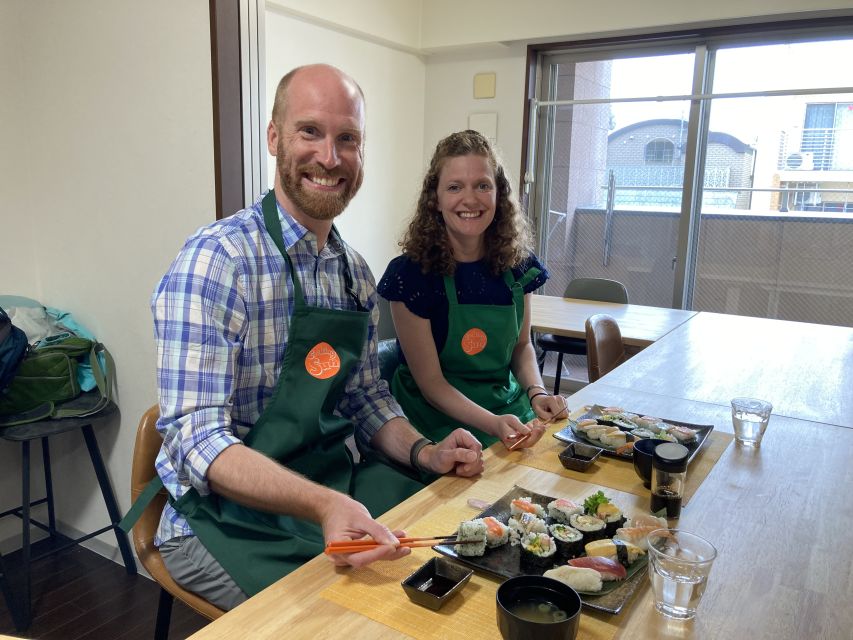
- Three sushi styles in one class: Make salad rolls, hand-shaped nigiri, and Osaka’s pressed oshizushi.
- A generous meal at the end: You eat the sushi you prepare, along with other food made during the lesson.
- English instruction: Guides explain each step clearly and make room for questions about Japanese food and culture.
- Small-group setting: The class is limited to eight people, with some sessions forming groups of only four.
- Central but slightly tricky meeting point: Cooking Sun Osaka is in room 202. At the entrance, press 202, then press the 呼出 call button.
- Good value at $67: Three hours, all sushi-making ingredients, instruction, and a filling meal make this more than a quick tourist demonstration.
Why three sushi styles make this class worthwhile
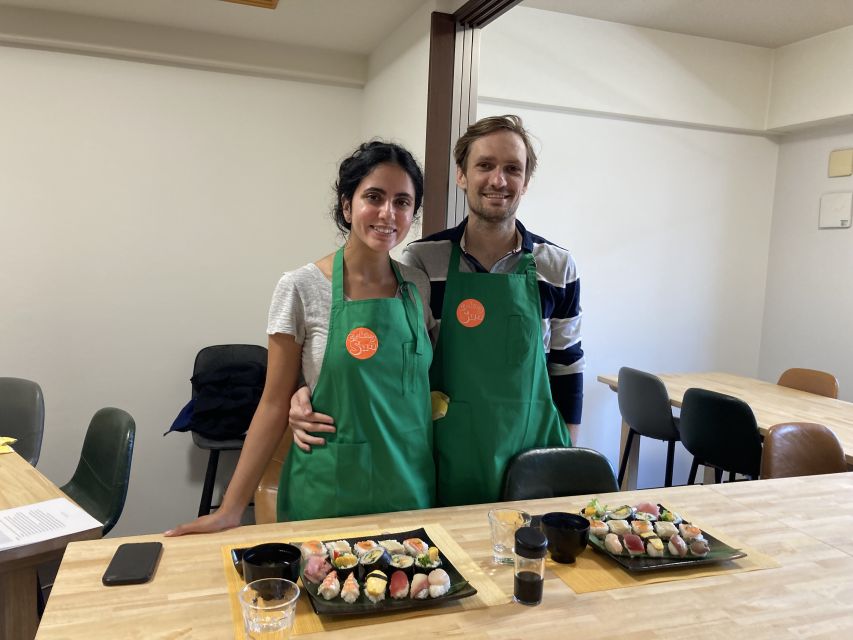
Many sushi lessons focus on one familiar form, usually a maki roll. This class gives you a better introduction to regional and everyday technique by moving through three distinct styles.
The first is a salad roll, a nori-wrapped roll filled with crab-flavored kamaboko, lettuce, cucumber, tuna mixed with mayonnaise, and a core of tamagoyaki, or Japanese egg roll. It is approachable, colorful, and useful for anyone who prefers cooked or vegetable ingredients to raw seafood.
Next comes nigiri, the sushi most people picture first. You place toppings such as fish, shellfish, or omelet on a bite-sized mound of vinegared rice. This looks simple, but getting the rice size, shape, and pressure right takes more care than it appears to from across a restaurant counter.
The third style is oshizushi, also called box sushi. You fill a square wooden mold with sushi rice and toppings, then press everything together so the rice holds its shape. The finished block is cut into pieces before eating, giving you a direct connection to Osaka and the wider Kansai region.
That sequence matters. You start with a roll, practice working with rice and toppings through nigiri, then use a mold and pressure to create a regional specialty. The lesson is not just three versions of the same dish. It shows how shape, texture, and method change the way sushi is made and eaten.
More of Dotonbori and Namba after dark:
- Osaka Local Foodie Walking Tour in Dotonbori and Shinsekai
★ 5.0 · 985 reviews - Osaka: Dotonbori District River Cruise with Drink Discount
★ 4.2 · 876 reviews - Ultimate Osaka Walking Tour: Castle, Dotonbori & Hidden Gems
★ 5.0 · 862 reviews
Starting at Cooking Sun Osaka near Dotonbori
The class meets at Cooking Sun Osaka, room 202. The arrival instructions are specific: at the entrance, press 202 and then press the 呼出 call button.
Give yourself time to find the building. One participant had trouble locating it, and a cab driver also struggled. The tree in front of the building is an identifying feature once you see it, but the entrance can be easy to miss while you are walking along the street.
This is a useful place to put your phone away only after you have found the address. Save the meeting details before leaving your hotel, and arrive with enough time to look for the entrance rather than assuming a large cooking-school sign will guide you from the street.
The setting itself is practical. The kitchen has been described as modern, clean, and equipped with the needed appliances. That matters in a hands-on class because you spend your time preparing food instead of waiting for shared tools or trying to work around a cramped demonstration area.
The location also fits neatly into an Osaka sightseeing day. You can arrange the class around time in Dotonbori, though the sushi lesson is a three-hour commitment. If you have a tightly packed schedule, treat it as one of the main activities of the day rather than a quick stop between attractions.
Salad rolls: an easy start with plenty of color
The salad roll is a friendly way to begin. You work with nori seaweed, fresh vegetables, tuna mayonnaise, kamaboko, and tamagoyaki. The ingredients give you several textures and make the finished roll look rewarding even if your first attempt is not perfectly tight.
For a beginner, this part is less intimidating than nigiri. The filling gives you a clear center to work around, and the roll format lets you focus on spreading rice and keeping the ingredients together. You will also see why cutting matters. A roll that looks tidy on the outside can still fall apart if it has too much filling or uneven pressure.
I like this portion for families and mixed groups. Someone who does not eat raw fish can still take part in the central technique, and the vegetables add a fresh contrast to the rice and mayonnaise. The activity information also asks you to leave a note when booking if you need a vegetarian or gluten-free option, so do not wait until class begins to raise a dietary concern.
The salad roll is not presented as a substitute for every kind of sushi. It is one part of a broader lesson, and it gives you a comfortable opening before the more precise work begins.
Nigiri: small pieces, careful technique
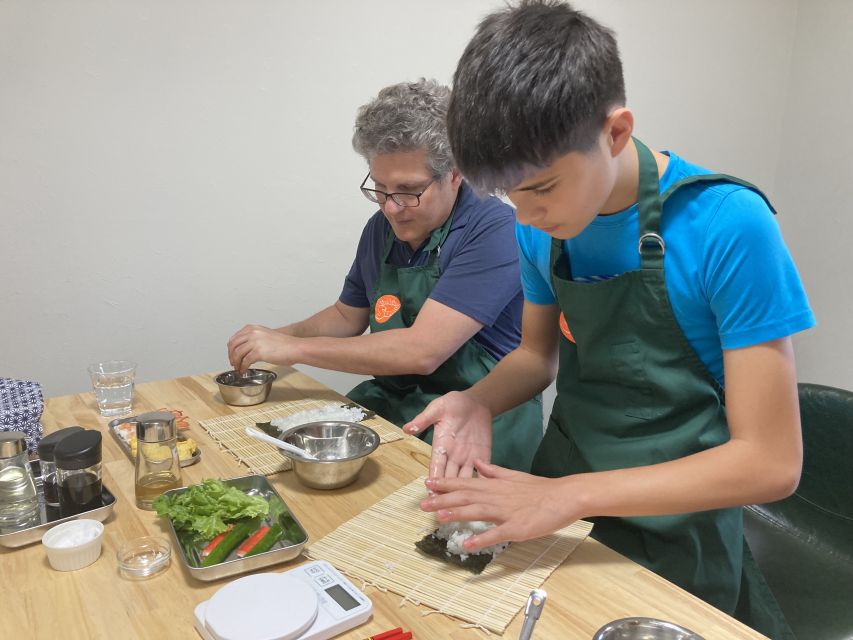
Nigiri is the class’s most recognizable form, but it is also where you may discover that sushi rice is not easy to handle. The rice must hold together without being crushed, while the topping needs to sit neatly on top.
The instructor demonstrates the process and guides you step by step. Several instructors, including Yoshi, Yoko, and Ami, have been praised for clear English and patient explanations. That is important here, since a quick visual demonstration can leave a beginner unsure about how much rice to use or how firmly to shape it.
You should expect guidance rather than a formal chef’s examination. The aim is to help you make good sushi and understand the method, not to produce restaurant-counter perfection on your first try. The small class size helps because the teacher can watch your hands and offer corrections as you work.
The ingredients are supplied, and the food is prepared for you to eat at the end. Freshness has been a repeated strength of the class, but remember that the experience is built around assembly and shaping. You should not book it expecting to select a whole fish or learn professional knife work.
That limitation is worth noting for experienced home cooks. One participant who had taken other cooking classes in Japan specifically wanted the chance to slice the fish. If that is the skill you care about most, check the class format carefully before paying. If your goal is to understand sushi construction and make a satisfying plate yourself, nigiri fits the bill.
More sushi making classes:
- Sushi Making Osaka Roll and Authentic Japanese Sushi Class
★ 5.0 · 1,220 reviews - Osaka Sushi Making Experience
★ 5.0 · 400 reviews - Osaka: Roll and Authentic Sushi Making Class in Dotonbori
★ 4.9 · 239 reviews - Osaka Dotonbori: Sushi Making Experience
★ 4.9 · 122 reviews
Oshizushi brings Osaka into the kitchen
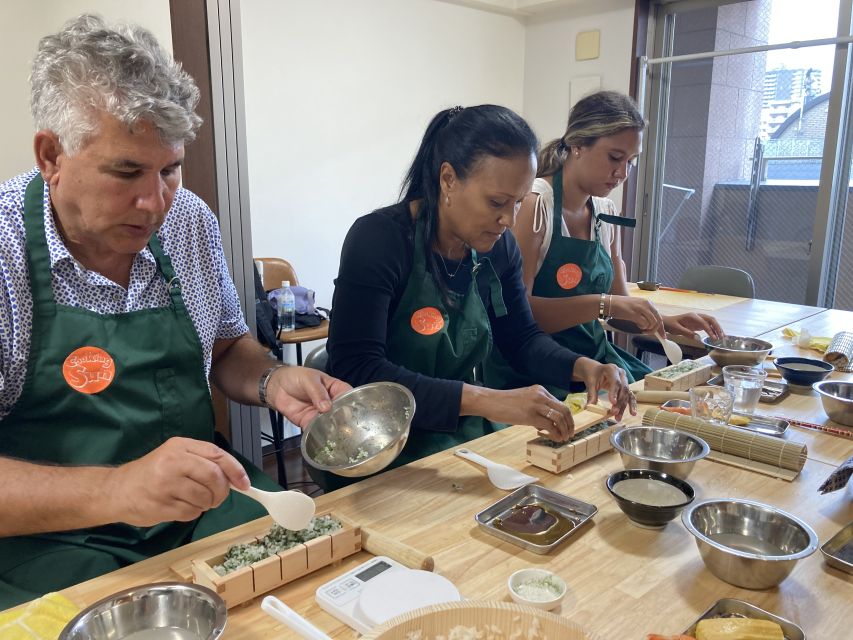
Oshizushi is the most distinctive part of the lesson. It is associated with Kansai and Osaka, where it is also known as box sushi. Instead of shaping each piece by hand, you fill a square wooden frame with sushi rice and toppings, then press the contents together.
This method reflects an older practical side of sushi. The mold creates a firm block that can be cut into portions, and the pressure helps the rice and topping hold together. You will cut the finished square just before eating, so the shape changes from one solid block into neat pieces for the table.
For me, this is the part that gives the class a strong local reason to exist in Osaka. Nigiri is famous around the world, and salad rolls are easy to recognize. Oshizushi tells you something about regional food traditions and gives you a technique you may not encounter in a standard sushi restaurant.
The mold also makes the activity less dependent on delicate hand movements. That does not mean it is automatic. You still need to distribute the rice and toppings evenly, and too much pressure can affect the texture. But the square frame gives you a clear structure and a memorable finished product.
Past participants have also prepared dashi and miso soup in some sessions, though the listed core lesson centers on the three sushi styles. The exact supporting dishes can vary, so think of them as possible additions rather than a guaranteed part of the published three-item program.
The teaching style and the food culture behind it
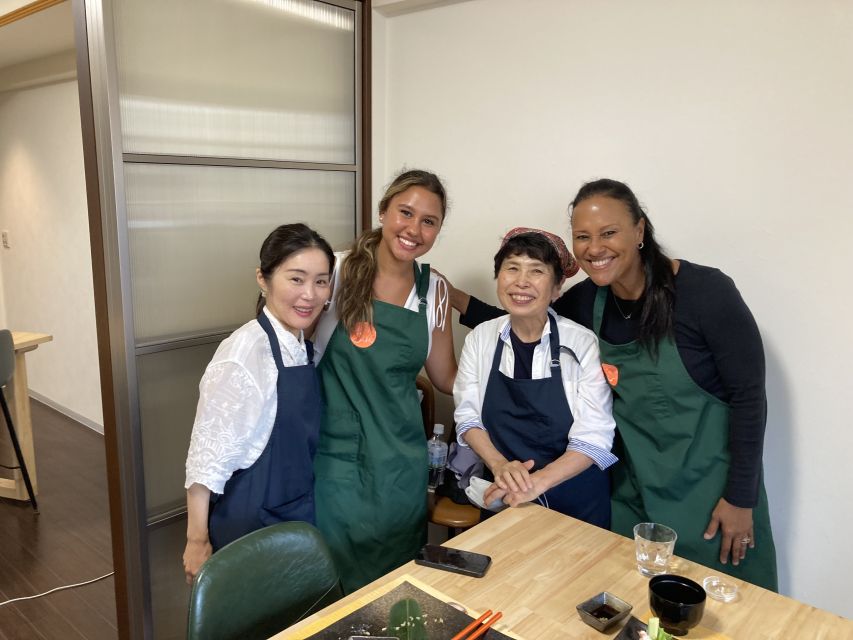
The strongest part of this experience is the way cooking instruction opens into Japanese food culture. The lesson can include explanations of preservation, pickling, dashi, local ingredients, and the meaning behind different foods.
This is not a lecture that keeps you away from the workbench. You learn while preparing the food, and the instructors make time for questions. Past classes have been led by Yoshi, Yoko, Ami, Eriko, Naomi, and Amy, with English used throughout. The individual instructor may depend on the date, so do not book on the assumption that one particular teacher will lead your session unless the provider confirms it.
I especially value the practical advice reported by participants, such as how to buy ingredients locally and how to recreate the dishes at home. That turns the class into something more useful than a meal you enjoy once and forget. You leave with a better sense of what to look for in Japanese markets and food shops.
The tone appears friendly and interactive. Instructors may ask about your Osaka plans and suggest places to go or foods to try. That informal exchange can be useful, but it is not a separate city tour. Book the class for cooking first, with local conversation as a welcome extra.
What you eat and how much you get
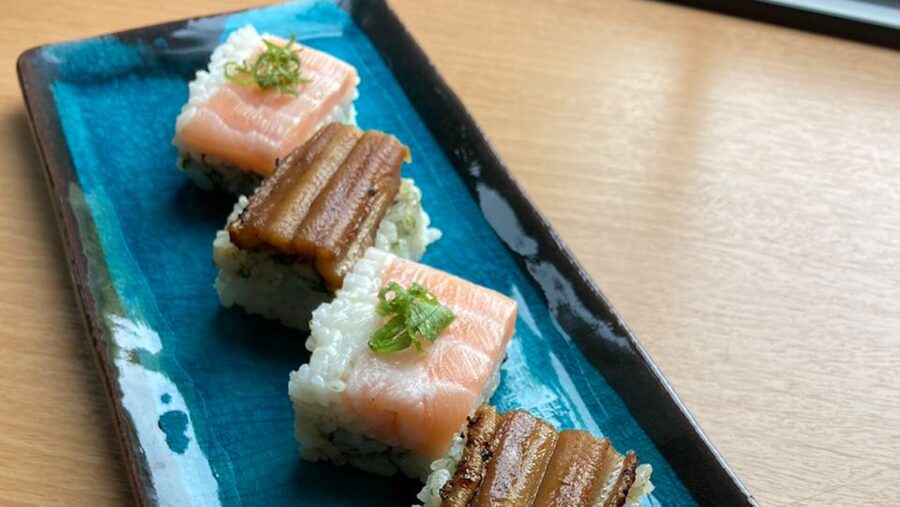
Come hungry. The food you make is eaten at the end, and the portions have been described as generous enough to feed people with large appetites. The class includes all the ingredients needed for sushi making, so the $67 price covers more than instruction alone.
The meal is also part of the learning. You get to see whether your rice was shaped correctly, how the roll holds together, and how the pressed sushi feels compared with nigiri. Eating your own work makes the techniques easier to remember.
The menu includes ingredients such as fish, shellfish, omelet, tuna, kamaboko, vegetables, nori, and vinegared rice, though the exact toppings may depend on the session. If you have food allergies, vegetarian needs, or gluten concerns, leave a note at booking. The information specifically allows vegetarian and gluten-free requests, but you should not assume every substitution is automatic without advance notice.
The class is not aimed at people seeking a tiny tasting menu. You are doing enough preparation to produce a filling amount of food. For lunch or an early dinner, that makes the price easier to justify, especially in central Osaka where a three-hour guided activity can otherwise cost much more without giving you a skill to take home.
Is $67 good value for three hours?
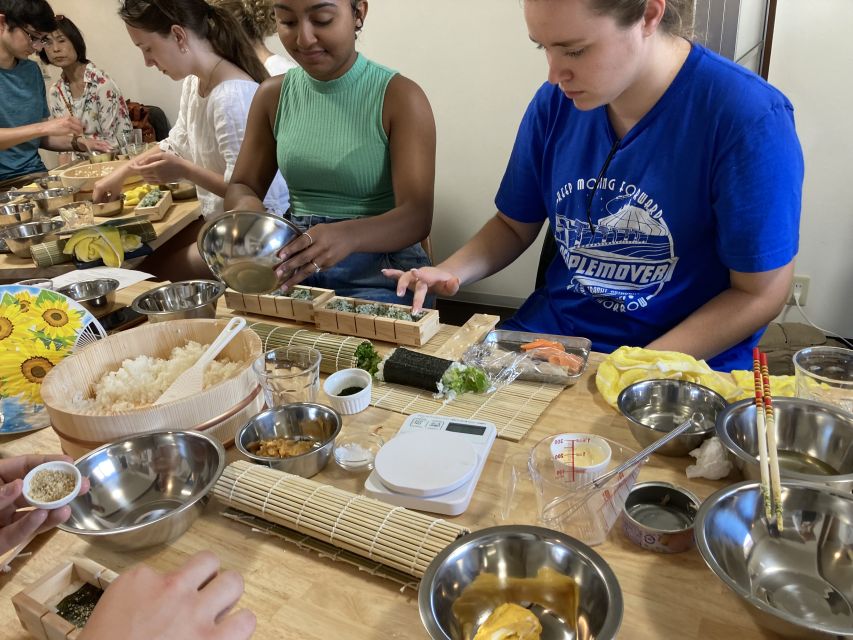
At $67 per person, this is a fair price for a small, English-language class with all ingredients included. You get three hours of instruction, three sushi techniques, cultural context, and a meal at the end.
The value improves when your group is small. The maximum is eight people, and some sessions have had only four participants. A smaller group gives you more access to the instructor and reduces the chance that you will spend the lesson watching from the back.
The price is less compelling if you only want to eat sushi. Osaka has plenty of restaurants, and a restaurant meal requires far less time. You are paying for participation, patient instruction, and the chance to repeat the methods at home.
I would also compare it honestly with specialist cooking courses. If you want professional knife skills, fish breakdown, or advanced restaurant techniques, this class may feel introductory. If you want a clear first lesson that balances food, culture, and a generous meal, it offers good value.
Flexible booking helps the decision. You can reserve now and pay later, and cancellation is free up to 24 hours in advance for a full refund. Wheelchair access is available, though you should still confirm any personal access needs when booking.
Who will enjoy this class most?
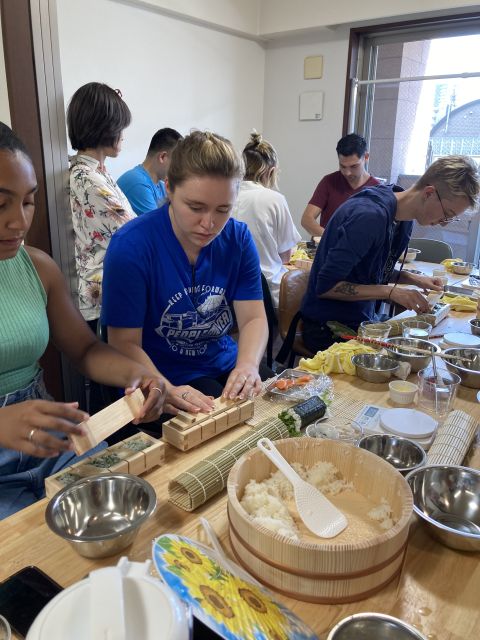
This is a strong choice for first-time sushi makers, couples, families, and food-focused visitors who want something more active than a restaurant meal. It also suits people who enjoy Japanese culture but do not yet know the difference between nigiri, rolls, and pressed sushi.
You do not need to arrive with cooking experience. The instruction is designed for beginners, and the English-speaking teachers demonstrate each stage clearly. The small format gives you a better chance to ask for help when your rice refuses to cooperate.
Vegetarians and people who need gluten-free food should contact the provider through the booking note. The class can offer those options, but advance notice is important.
Children may enjoy the colorful ingredients and hands-on shaping, but the supplied information does not give a minimum age. If you are booking for a child, confirm the age policy first rather than guessing.
This is less suited to a visitor who dislikes structured activities or wants to spend the afternoon moving between Dotonbori sights. Three hours is long enough to require attention, though the cooking and meal break up the time well.
My practical verdict
I would book this class if I wanted one Osaka activity that combined food, instruction, and local context. The pressed sushi lesson gives it a regional angle, while the salad roll and nigiri make the experience accessible to beginners.
Book it with a little extra time for finding room 202, and leave a dietary note in advance if needed. Arrive ready to work, not simply watch. You will handle sushi rice, nori, fillings, toppings, and the oshizushi mold, then sit down to eat the results.
Skip it if your main goal is fish slicing or advanced sushi-chef training. For everyone else, especially first-time makers and hungry food lovers, $67 buys a personal lesson, a substantial meal, and three techniques that are easy to remember after you leave Osaka.
FAQ
How long does the Osaka sushi class last?
The class lasts three hours. Starting times vary, so check availability for the date you want.
What types of sushi will I make?
You will make a salad roll, nigiri, and oshizushi, also called pressed or box sushi. Oshizushi is a traditional Kansai style associated with Osaka.
Is the class taught in English?
Yes. English instruction is provided throughout the activity.
How many people can join the class?
The group is limited to eight participants. Some sessions may be smaller.
Are vegetarian or gluten-free options available?
Vegetarian and gluten-free options can be requested. Leave a note when booking so the provider can prepare for your needs.
Where is the meeting point?
Meet at Cooking Sun Osaka, room 202. At the entrance, press 202 and then press the 呼出 call button.
Just added around Osaka
- Nara Day Trip from Osaka with a Licensed Guide★ 5.0 · 3 reviews
- Osaka Early Morning Osaka Castle Tour Avoid Crowds★ 5.0 · 3 reviews
- Guided Tour of Some Attractions in Osaka by Private Car★ 5.0 · 3 reviews
- Private Transfer Between Kyoto and Kansai Airport KIX★ 5.0 · 3 reviews
- Shared Arrival Transfer: Osaka Itami Airport to Osaka City★ 5.0 · 3 reviews
- Osaka: Sushi Making Class and Dotonbori Food Tour★ 4.7 · 3 reviews
- Osaka Night Photography Workshop★ 5.0 · 3 reviews
- Kyoto Full day Tour Kinkakuji, Kiyomizu-dera and Fushimi Inari★ 4.5 · 3 reviews
Dotonbori & Namba Tours, compared.

Osaka Local Foodie Walking Tour in Dotonbori and Shinsekai
Read our review →
Dotonbori District River Cruise with Drink Discount
Read our review →
Ultimate Osaka Walking Tour: Castle, Dotonbori & Hidden Gems
Read our review →


Dotonbori River Cruise with Glico Sign & Neon Views
Read our review →
Browse the lists this tour appears in