
Reviewed · OSAKA SUSHI MAKING CLASSES
Authentic SUSHI Course Cooking Class
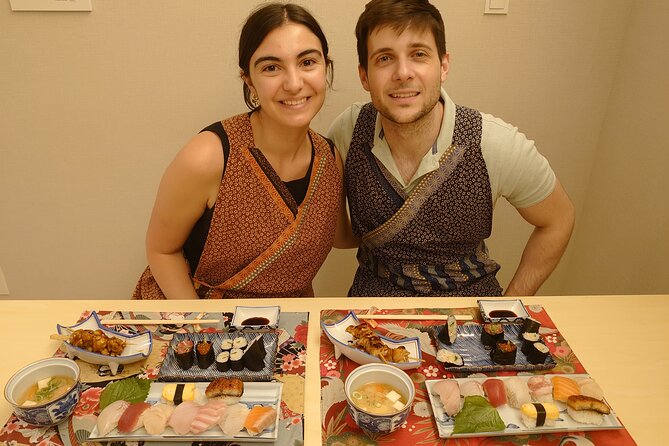
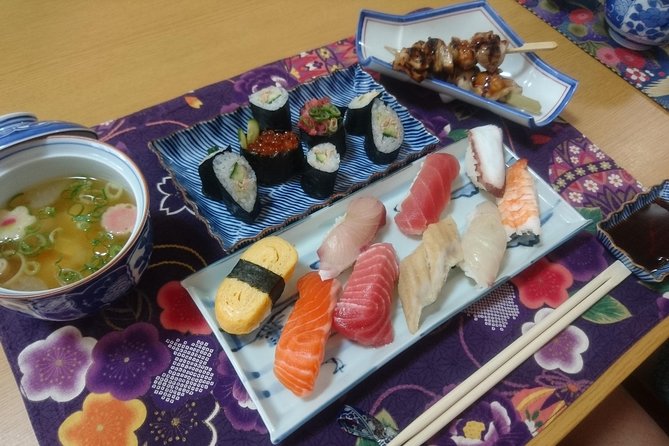
This Osaka class turns sushi from something you simply order into something you can actually make. You season rice in your own wooden tub, shape nine nigiri, two gunkan-maki, and one rolled sushi, then add tamagoyaki, miso soup, and yakitori to the meal.
I like the small-group format, which gives Fumi or Sakura time to correct your technique and keep everyone involved. I also like the full meal: you do not spend two hours making one roll and leave hungry. The main consideration is the price, $99.08 per person, which is fair for a full dinner and instruction but more than a simple sushi demonstration.
In This Review
- Key points to know before you book
- Making sushi from rice to finished plate
- Tamagoyaki gives you a real kitchen lesson
- Dashi and miso soup add Japanese cooking basics
- Three types of sushi keep the class busy
- Yakitori makes this a full Japanese meal
- Sitting down to eat your own work
- What the instructors add to the experience
- Is $99.08 a fair price in Osaka?
- Timing, meeting point, and practical details
- Who will enjoy this Osaka sushi class?
- Small drawbacks to keep in mind
- Should you book it?
- FAQ
- Where does the sushi cooking class take place?
- How long does the class last?
- What time does the class start?
- What dishes will I make?
- Are ingredients included?
- Who teaches the class?
- How many people can join the class?
- Can I cancel for a refund?
Key points to know before you book
- You make your own sushi rice: Each participant works with a wooden tub and paddle, rather than watching an instructor prepare everything.
- The menu goes well beyond sushi: You also prepare tamagoyaki, dashi, tofu miso soup, and chicken yakitori.
- Fumi and Sakura teach the class: Fumi is especially noted for patient, friendly instruction and cultural explanations.
- You eat a full meal at the end: The finished dishes are served with chopsticks, a seasonal dessert, and an itadakimasu before eating.
- The class lasts about 2 hours 30 minutes: The listed evening start is 5:30 pm, making this a useful dinner activity in Osaka.
- The group is intended to be small: The information gives both a maximum of 14 and a maximum of 8, so confirm the final group size when booking.
Making sushi from rice to finished plate
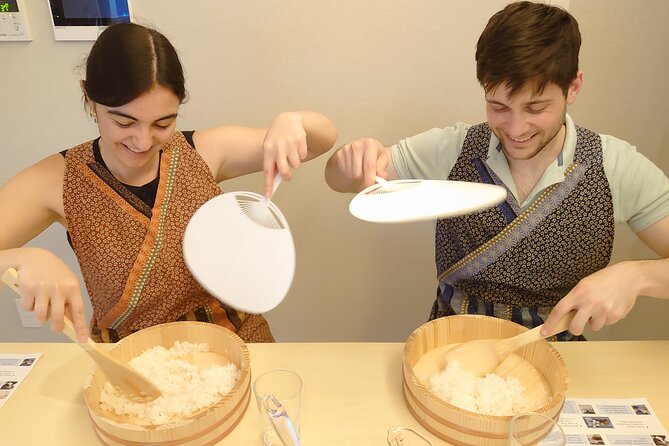
The best part of this class is that you start at the foundation. Before shaping fish or rolling seaweed, you prepare sushi rice yourself.
Each person receives a wooden tub and paddle. That matters because sushi rice is not simply ordinary rice with vinegar poured over it. You get a feel for the seasoning and mixing process, and you learn how the rice should be handled before it reaches your hands.
This is also where the class feels more useful than a quick food activity. You are not only copying a shape. You are learning one of the basic steps you would need to repeat the meal at home.
The instructors guide you through the process rather than expecting you to know the tricks already. Fumi, in particular, is described as patient and attentive, with a knack for helping each person succeed. That is useful if your first rice portions look less like restaurant sushi and more like small edible sculptures.
More sushi making classes:
- Sushi Making Osaka Roll and Authentic Japanese Sushi Class
★ 5.0 · 1,220 reviews - Osaka Sushi Making Experience
★ 5.0 · 400 reviews - Osaka: Roll and Authentic Sushi Making Class in Dotonbori
★ 4.9 · 239 reviews
Tamagoyaki gives you a real kitchen lesson
Next comes the rolled egg for egg sushi, known as tamagoyaki. You use a small rectangular frying pan, the shape commonly associated with this Japanese omelet.
This part adds a proper cooking skill to the class. Tamagoyaki is made in layers, with the egg folded and rolled repeatedly until it forms a neat rectangle. The pan helps with the shape, but it does not do the work for you. You still need to control the cooking and rolling.
I like this step because it breaks up the sushi preparation. You move from seasoning rice to handling heat, timing, and presentation. If you have ever tried to make tamagoyaki alone, you will understand why an instructor is helpful here. A demonstration makes the rolling motion much easier to follow.
The finished egg becomes part of your sushi course. You are not preparing an unrelated side dish, but one of the fillings and toppings that make the final plate look varied.
Dashi and miso soup add Japanese cooking basics
The class then moves to dashi, the traditional Japanese broth. From there, you make miso soup with tofu and vegetables cut into decorative shapes.
This is a small but valuable lesson in Japanese cooking. Dashi gives the soup its savory base, often described through the idea of umami. The class also introduces ingredients such as bonito, which may be unfamiliar if your home cooking is mostly based on Western stocks.
You get more than a packet of instant miso soup. The process shows you how broth, miso, tofu, and vegetables work together. Several participants found this part especially worthwhile, and one home cook later recreated the soup successfully.
The fancy vegetable shapes are a nice touch, though they may take extra time if you are new to Japanese knife work. Do not expect a professional garnish on your first try. The point is to learn the method and enjoy the process, not produce a perfect restaurant bowl.
Three types of sushi keep the class busy
The main event is a set of three sushi styles:
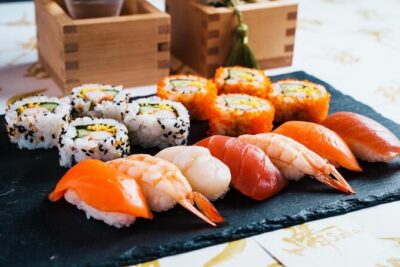
- Nine pieces of nigiri sushi
- Two gunkan-maki
- One rolled sushi
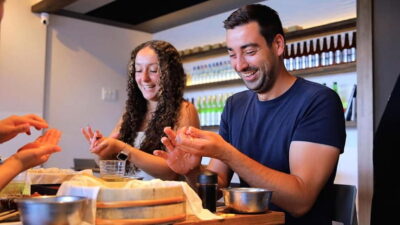
Nigiri gives you practice with hand shaping. You season and handle the rice, then form it into compact pieces suitable for topping. The number of pieces is generous enough to let you repeat the motion and improve as you go.
Gunkan-maki has a different structure. The seaweed forms a small boat around the rice and filling, so you learn another way to use nori. Rolled sushi then adds a separate skill, with the seaweed and rice arranged before being rolled into a finished cylinder.
The class does not treat sushi as one single technique. That is a big reason the price can make sense. You leave with a basic understanding of several forms instead of learning only one restaurant-style roll.
You should also expect to use your bare hands for parts of the process. That is normal for sushi preparation, and the instructor explains how to season and roll the rice properly. If you have dietary requirements, tell the provider at booking so the kitchen can advise what is possible.
More Japanese home cooking classes:
- Osaka: Ramen and Gyoza Cooking Class in Dotonbori
★ 5.0 · 378 reviews - Osaka: Sumo Stage Show with Bento or Snack + Fight & Photo
★ 4.3 · 364 reviews - Osaka: Traditional Mochi Pounding Experience with Tasting
★ 4.9 · 306 reviews - Osaka Cooking Class: Okonomiyaki &Japanese cuisines experience
★ 5.0 · 261 reviews
Yakitori makes this a full Japanese meal
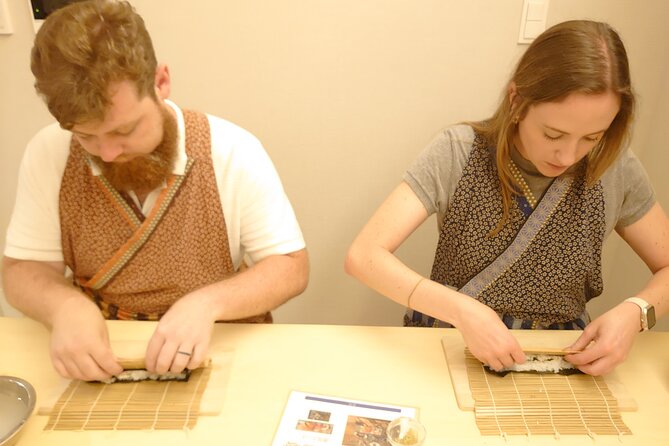
While the sushi receives top billing, the chicken yakitori helps turn the class into a complete dinner. You skewer the chicken, prepare it, and cook it as yakitori.
This gives you another practical skill: portioning and arranging food on skewers before grilling. It also adds a warm, savory dish to a menu that could otherwise be mostly rice and seafood.
The supplied information also describes the chicken as being marinated. One participant referred to it as teppanyaki chicken, while the main menu calls it yakitori, so the exact cooking method may vary slightly with the class setup. The important point is that you prepare the chicken yourself rather than receiving it as a ready-made side.
The combination works well. You make cold or room-temperature sushi, hot soup, egg, and grilled chicken. By the time you sit down, you have assembled something close to a full Japanese meal.
Sitting down to eat your own work
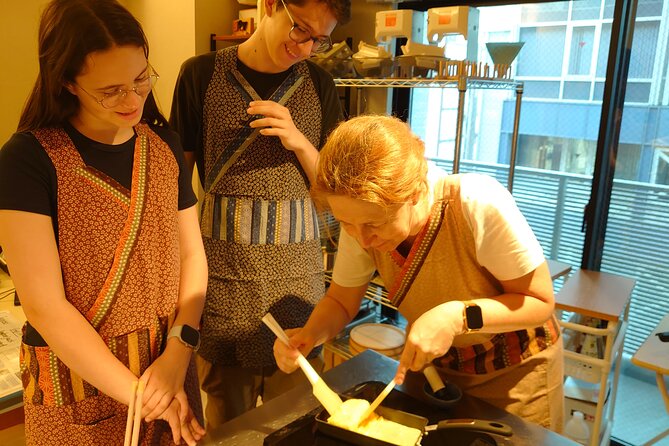
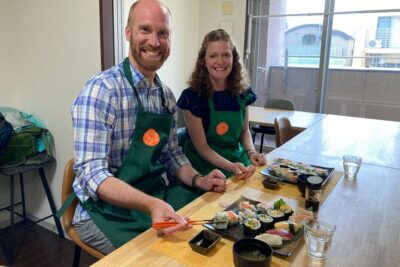
At the end, you arrange the dishes with chopsticks and sit down to eat. The class includes the ingredients, so you are not paying extra for the food you prepared.
The meal is often the most satisfying part of a cooking class. You have handled every stage, from rice to soup to skewers, and now you can see how the separate pieces fit together. The instructors say itadakimasu, and you begin eating the course you made.
A seasonal dessert follows. It is not the reason to book the class, but it is a pleasant finish, especially after a substantial dinner. One participant even enjoyed the dessert later while traveling home, though you should not assume every dessert is suitable for travel.
Expect to leave full. The menu includes nine nigiri, two gunkan-maki, a rolled sushi, soup, egg, chicken, and sweets. If you are booking this as a dinner replacement, it should provide much more food than a light tasting.
What the instructors add to the experience
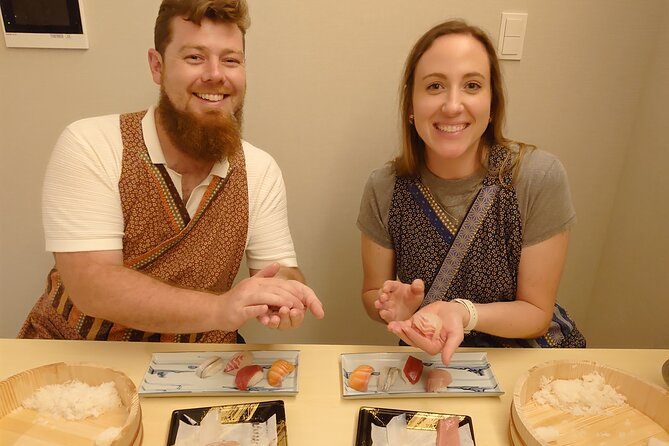
The teacher matters a lot in a hands-on class, and Fumi receives especially strong praise for her clear, calm approach. She makes sure each person takes part and adds cultural background about the dishes and ingredients.
That background can include explanations of umami, bonito, and the role of dashi. These details give context to what you are cooking without turning the class into a lecture.
Sakura is also named as an instructor, and the teaching is described as friendly and clear. If you are nervous about attending alone, this class can still work well. One person attended solo and ended up having an individual session, which made the experience feel more personal.
The exact group size is worth checking. One part of the booking information says the class can take up to 14 people, while another says the maximum is 8. Either way, it is intended to be a small class, but the difference could matter if you want close attention or are booking around a busy date.
Is $99.08 a fair price in Osaka?
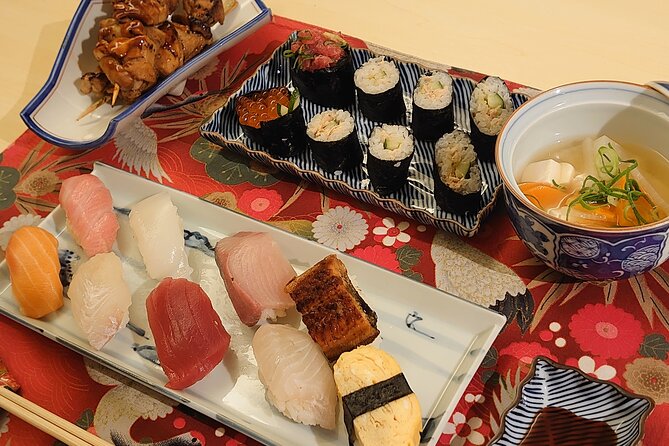
At $99.08 per person, this is not a bargain cooking demonstration. The value comes from the amount of food and the number of techniques covered.
You are not just making a sushi roll. You prepare rice, three sushi styles, tamagoyaki, dashi, miso soup, decorative vegetables, tofu, and yakitori. Ingredients, dessert, instruction, and the sit-down meal are included.
I would consider it good value if you want an activity that replaces dinner and teaches skills you can repeat at home. It is less compelling if you only want a quick introduction to sushi or prefer to spend $99 on several restaurant meals.
The included guidance also matters. Sushi is difficult to master alone, especially when rice texture, shaping, and rolling are all new. A patient instructor can save you from buying ingredients and struggling through unclear instructions at home.
Timing, meeting point, and practical details
The class meets at Banix in Kitahorie, at 3-chome 6-2, Systema Gallery, Nishi Ward, Osaka, postal code 550-0014. It is near public transportation, and the activity returns to the same meeting point.
The listed start time is 5:30 pm, with a duration of about two and a half hours. That makes it a natural evening plan, but the description also refers to a choice of lunch or dinner class. Since the available time options are not fully consistent in the supplied details, check the exact slot shown for your date before arranging the rest of your day.
You receive a mobile ticket, and confirmation is sent within 48 hours of booking if space is available. Children must be accompanied by an adult.
Free cancellation is available if you cancel at least 24 hours before the local start time. Changes or cancellations made inside that window are not accepted for a refund.
Who will enjoy this Osaka sushi class?
I would recommend it most to people who want to do more than eat their way through Osaka. You get an activity, a meal, and a set of techniques to take home.
It suits:
- Families with older children and teenagers
- Couples looking for a dinner activity
- Solo visitors who want a structured evening
- First-time sushi makers
- Home cooks interested in dashi, miso soup, and tamagoyaki
- Anyone who wants a filling meal with hands-on instruction
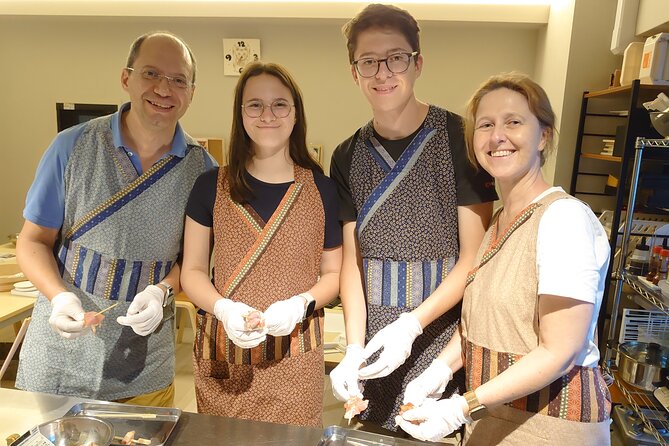
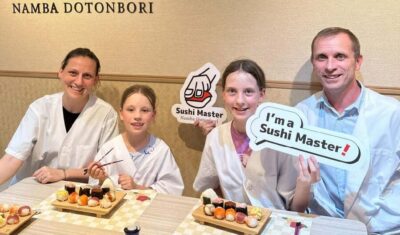
The class also works well for mixed groups. A family with two parents and two teenagers found that everyone had a role, and the format kept the meal active without being rushed.
It may not suit you if you dislike seafood, have strict dietary limits, or want an advanced sushi course focused on knife skills and premium fish. The class is built around fundamentals and a broad Japanese menu, not specialist chef training.
Small drawbacks to keep in mind
The class covers a lot in 2 hours 30 minutes. That is good value, but it also means some techniques receive only a short lesson. You will learn the basic motions, not become a sushi chef in one evening.
The recipe handout may also be brief. One participant felt that the written steps did not fully explain every part of the process. Pay close attention during the class and take your own notes if you want to recreate the dishes later.
The maximum group size needs clarification because the details mention both 8 and 14 participants. A group of 8 should feel quite personal, while 14 could be livelier and offer less one-to-one correction.
Finally, the $99.08 price is a commitment. The full menu helps justify it, but budget-conscious visitors may prefer a cheaper market visit or a regular sushi dinner.
Should you book it?
Book this class if you want a generous dinner, direct instruction, and a practical introduction to several Japanese dishes. The strongest reasons are the patient teaching from Fumi or Sakura, the hands-on rice preparation, and the chance to make a complete meal rather than a single sushi roll.
I would especially choose it for a first visit to Osaka when you want an evening that feels social but still useful. Confirm the class time, group size, and any dietary needs before paying. If those details work for you, this is a well-rounded way to learn sushi and leave Osaka with skills you can use at home.
FAQ
Where does the sushi cooking class take place?
The class meets at Banix in Kitahorie, Osaka, at 3-chōme 6-2, Systema Gallery, Nishi Ward, postal code 550-0014.
How long does the class last?
The activity lasts approximately 2 hours 30 minutes.
What time does the class start?
The listed start time is 5:30 pm. The description also refers to lunch and dinner options, so confirm the available time for your chosen date.
What dishes will I make?
You make sushi rice, nine nigiri sushi, two gunkan-maki, one rolled sushi, tamagoyaki, dashi, tofu miso soup, and chicken yakitori. A seasonal dessert is included at the end.
Are ingredients included?
Yes. All ingredients for the class are included, along with the dessert.
Who teaches the class?
The named instructors are Fumi and Sakura. Fumi leads some sessions and provides cooking instruction and cultural background about the dishes and ingredients.
How many people can join the class?
The information gives two different maximum group sizes, 14 in one description and 8 in another. Confirm the final group size when booking.
Can I cancel for a refund?
Yes. You can cancel for a full refund up to 24 hours before the experience start time. Cancellations or changes made less than 24 hours before the start are not refunded or accepted.
Just added around Osaka
- Nara Day Trip from Osaka with a Licensed Guide★ 5.0 · 3 reviews
- Osaka Early Morning Osaka Castle Tour Avoid Crowds★ 5.0 · 3 reviews
- Guided Tour of Some Attractions in Osaka by Private Car★ 5.0 · 3 reviews
- Private Transfer Between Kyoto and Kansai Airport KIX★ 5.0 · 3 reviews
- Shared Arrival Transfer: Osaka Itami Airport to Osaka City★ 5.0 · 3 reviews
- Osaka: Sushi Making Class and Dotonbori Food Tour★ 4.7 · 3 reviews
- Osaka Night Photography Workshop★ 5.0 · 3 reviews
- Kyoto Full day Tour Kinkakuji, Kiyomizu-dera and Fushimi Inari★ 4.5 · 3 reviews
Osaka Sushi Making Classes, compared.
Sushi Making Osaka Roll and Authentic Japanese Sushi Class
Read our review →
Roll and Authentic Sushi Making Class in Dotonbori
Read our review →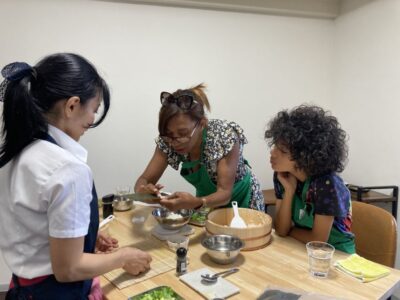
Browse the lists this tour appears in