
Reviewed · OSAKA SUSHI MAKING CLASSES
Sushi Making Osaka Roll and Authentic Japanese Sushi Class
The best part of this Osaka class is that you do not simply watch a chef work. You shape your own maki roll and nigiri, then sit down and eat the results. English-speaking instructors, including Reika, Fuko, Aina, and Yui, keep the lesson light, clear, and friendly for first-time cooks.
I like the central location near Dotonbori and Shinsaibashi, and I like that the ingredients are prepared before you arrive, so your time goes into learning and making sushi rather than chopping vegetables. The main caution is timing: the class can feel brisk, especially if you want long photo breaks or a slow meal afterward.
In This Review
- Key points to know
- Making sushi instead of simply ordering it
- Finding the Higashishinsaibashi meeting point
- What happens during the 1-hour-40-minute class
- Maki and nigiri give you two different skills
- Food, portions, and dietary planning
- A good family activity, with a few small-room limits
- How the price compares with an Osaka meal
- What could be improved
- Who should book this Osaka sushi class?
- Should you book it?
- FAQ
- Where does the sushi class meet?
- Where does the activity finish?
- How long does the class last?
- Is the class taught in English?
- Do I need cooking experience?
- What sushi will I make?
- Is food included?
- Can I cancel for a full refund?
Key points to know
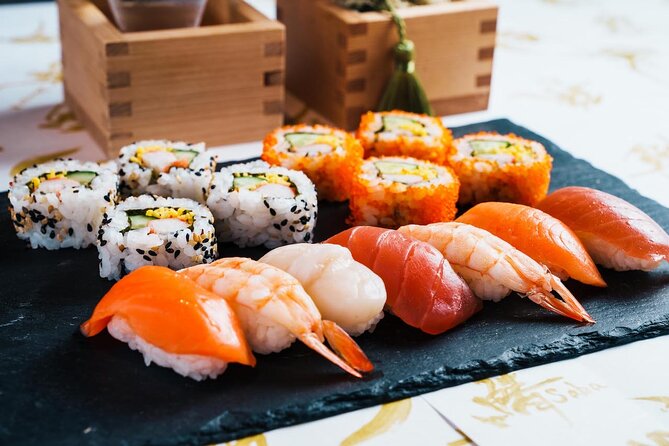
- You make both maki and nigiri: Expect one rolled sushi and roughly four to eight pieces of nigiri, depending on your pace.
- The class suits beginners: No cooking experience is needed, and instructors offer patient help around the table.
- It is near Osaka’s main food district: The meeting point is on Higashishinsaibashi, close to Dotonbori and Shinsaibashi.
- You eat what you prepare: The finished sushi provides a substantial snack or light meal for many people.
- Family groups fit well: Children and teenagers can take part, though the class moves at a steady pace.
- Plan dietary needs ahead: Vegetarian and fish options are available, but changes such as replacing shrimp should be noted during booking.
Making sushi instead of simply ordering it
Osaka is an easy place to eat well. You can find sushi at department-store food halls, small counters, market stalls, and restaurants around nearly every major station. That makes a sushi-making class worthwhile only if it gives you something a restaurant cannot: a chance to understand the hands-on work behind the finished plate.
This class does that without asking you to commit half a day. In about 1 hour and 40 minutes, you learn basic techniques, hear some background about sushi in Japan, prepare your food, and eat it. I see it as a useful break from sightseeing, especially after a morning spent walking through central Osaka.
The lesson is built for beginners. You do not need knife skills or prior cooking practice. Your ingredients are prepared in advance, which keeps the session focused and helps a family or mixed-ability group work at the same table without anyone feeling left behind.
The atmosphere is also part of the appeal. Instructors use humor, demonstrations, and individual help to keep the group moving. Fuko, Reika, Aina, Arisa, Matty, Yui, and other staff members are singled out in feedback for being patient, energetic, and easy to follow. Your particular instructor will depend on the class time, but English support is part of the experience.
More sushi making classes:
- Osaka Sushi Making Experience
★ 5.0 · 400 reviews - Osaka: Roll and Authentic Sushi Making Class in Dotonbori
★ 4.9 · 239 reviews - Osaka: Sushi Class in Dotonbori
★ 4.9 · 160 reviews
Finding the Higashishinsaibashi meeting point
The class begins at Sushi Making Osaka, at 1-chōme-16-20 Higashishinsaibashi, Chuo Ward. It is close to Dotonbori and Shinsaibashi, which makes it simple to add before or after shopping, sightseeing, or dinner in the area.
The location is central, but the entrance can be a little hard to spot. Give yourself extra time rather than arriving at the last minute. The class is held in a small room on an upper floor, described by one participant as being on the third floor and about one block from Dotonbori’s shopping street.
That setting has two effects. First, you are right in the middle of Osaka’s most convenient food-and-entertainment zone. Second, you should not expect a large cooking school with lots of open space. A room designed for a group class can feel lively and close, particularly when as many as 20 people are booked.
The experience ends where it starts. There is no hotel pickup or drop-off, so you are responsible for reaching Higashishinsaibashi and returning to your own plans afterward. The mobile ticket makes entry simple, but I would still save the address and allow time to find the building.
What happens during the 1-hour-40-minute class
The class starts with an introduction to sushi and a look at the ingredients and tools in front of you. You receive a short explanation of sushi’s development and the difference between the forms you will prepare. This cultural background gives the food more meaning, though the amount of history may feel longer than necessary if your main goal is to start rolling immediately.
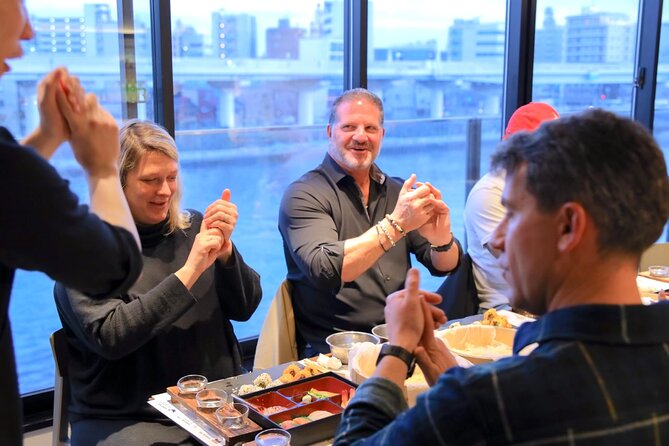
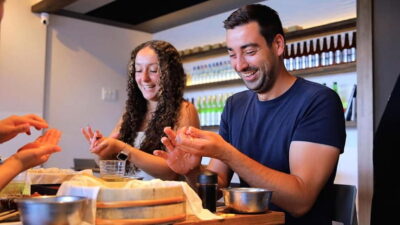
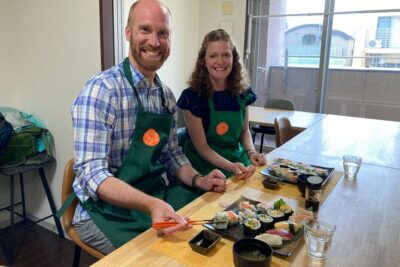
Next comes the practical work. The instructor demonstrates the steps, then you copy them at your place. You learn how to handle the rice, arrange fillings, form a roll, and cut it into pieces. Maki is visually simple, but getting a firm, even roll takes more care than it appears to require. That small struggle is part of the fun.
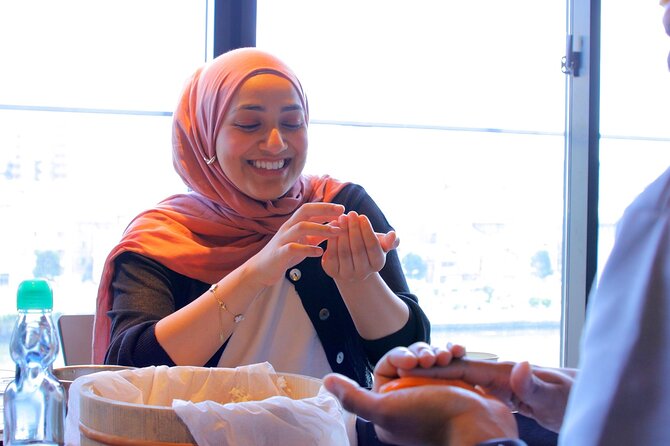
The second main task is nigiri. You shape rice into compact portions and place toppings on top. The finished pieces will not have the exact uniform look of a professional sushi counter, but the process helps you understand how much pressure to use and how the rice should hold together.
The instructors circulate and help with technique. This matters more than a long demonstration because small adjustments can change the result. A few people have specifically praised the staff for helping children and for taking time with anyone who needed another explanation.
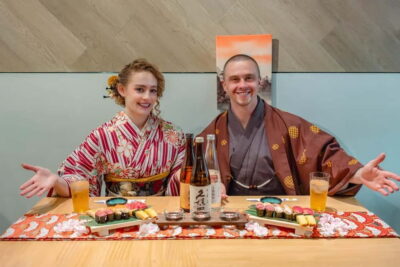
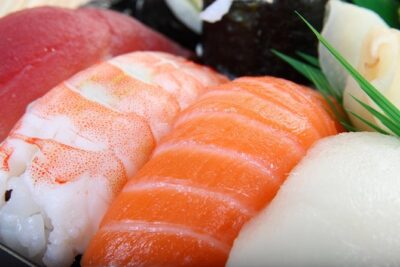
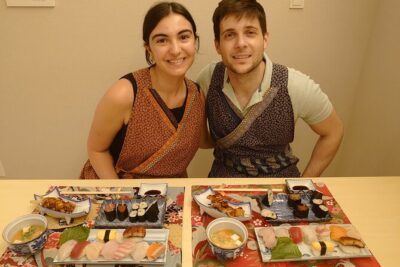
You then arrange your sushi and eat it. Depending on your speed, the portion may include one maki roll and around four to eight pieces of nigiri. That is enough to make the class function as a light lunch or early dinner for many people, rather than just a tiny tasting.
The schedule includes time to learn, practice, and eat, but it is not built for a leisurely meal. One participant felt the session should have lasted two hours and found cleanup beginning before the meal was fully finished. If you want to photograph every step, film a short cooking video, or linger over the plate, you may feel pressed.
Maki and nigiri give you two different skills
The class is more useful than a roll-only workshop because you work with two familiar sushi styles.
Maki teaches structure. You learn to spread and arrange ingredients, use the rolling mat, and create a shape that can be sliced. It is the kind of sushi most people try first at home because the ingredients can be arranged before the roll is closed.
Nigiri teaches restraint. There is no seaweed wrap around the outside to hold everything together. You need to form rice that is compact but not crushed, then place the topping neatly. This is where the lesson feels closest to the work of a sushi chef, even though your pieces will be made at a beginner level.
The instructors also share practical tips for making sushi at home. You may not leave ready to run a sushi counter, but you will understand the basic sequence and the difference between assembling food and forming it correctly.
That distinction gives the class real value. You are not just copying a decorative dish for a photograph. You are learning why the rice, shape, and toppings need to work together. The short history segment adds useful context, though the balance leans toward a friendly introduction rather than a detailed culinary lecture.
A completely different way to spend a day in Osaka:
- Osaka Go Karting Tour with Funny Costume
★ 5.0 · 2,658 reviews - Osaka Castle: Museum and Tower Entry Ticket
★ 4.5 · 2,380 reviews - Osaka: Shinsekai Food Tour with 13-15 Dishes at 5 Eateries
★ 4.8 · 2,204 reviews - Osaka Food Tour: 13 Dishes at 5 Local Eateries
★ 5.0 · 2,149 reviews
Food, portions, and dietary planning
All class ingredients are prepared before you arrive. That is convenient, especially for families and anyone who wants a clean, simple lesson. It also means the class can begin quickly and keep a group of up to 20 people on the same schedule.
Fish and vegetarian options are available, and the vegetarian sushi has been well received. If you do not eat shrimp or have another dietary preference, note it when you book. A substitution may not be possible if the request is made at the last moment.
The food portion is one of the strongest points for the price. You prepare a complete plate rather than receiving one sample piece. The amount varies with your pace, but four to eight nigiri plus a maki roll can be enough for a light meal. I would still avoid arriving ravenous if you are expecting a large restaurant dinner, since portion sizes and toppings can vary.
There is no mention of sake or beer being included. If you picture a relaxed drinking session with sushi-making on the side, adjust that expectation. This is a practical cooking class first.
Food handling is worth keeping in mind. Because the activity lasts around 1 hour and 40 minutes, some fish may remain on the worktable during the lesson. One participant specifically wished the fish had been kept over ice. The class received overwhelmingly strong marks overall, but if temperature control is a major concern for you, ask the provider about the day’s setup before booking.
A good family activity, with a few small-room limits
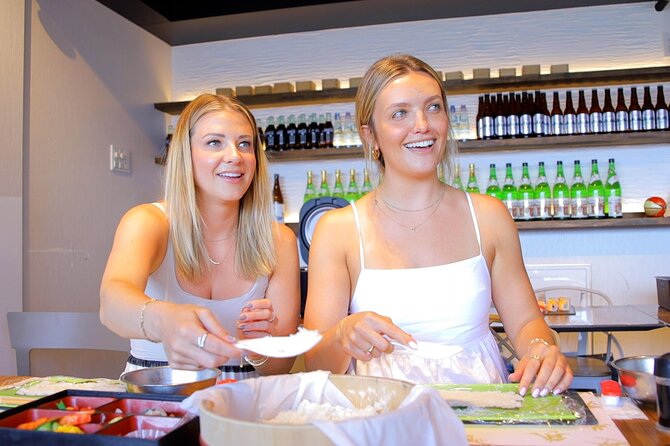
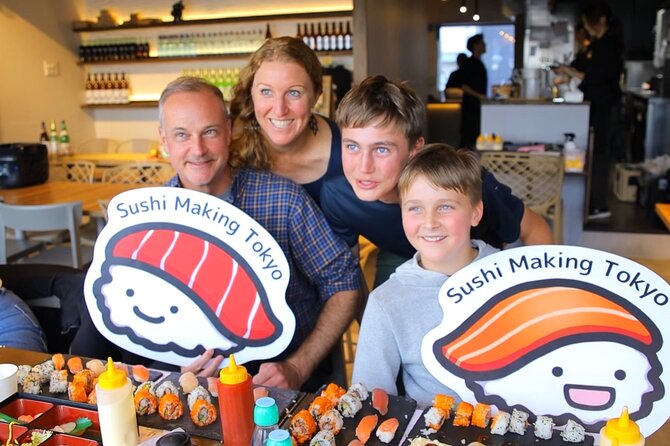
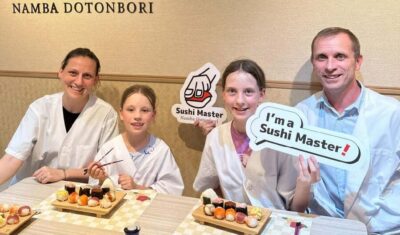
Families are one of the best matches for this class. Children can spread rice, add fillings, roll maki, and shape nigiri with help from the instructors. The work is tactile and immediate, which makes it easier to hold a young person’s attention than a long museum visit.
Teenagers also have enough independence to enjoy the activity. They can make the food themselves, take photos, and eat the result. The class gives a family a shared task rather than placing children on the sidelines while adults listen.
The group format helps create a social mood, but it also means you will not receive private instruction at every moment. With a maximum of 20 people, the teacher must divide attention around the room. The staff are praised for being patient, yet the pace still depends on the whole group.
The room’s lighting may not be ideal for photographs. One participant found the light too dim and noticed shadows in the pictures. If documenting the experience matters to you, take a few photos early, while the ingredients and work area are arranged, rather than waiting until the end.
How the price compares with an Osaka meal
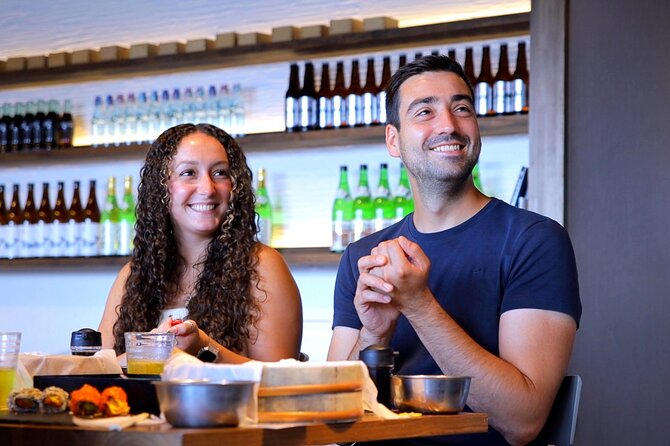
At $31.01 per person, this is not the cheapest way to eat sushi in Osaka. You can certainly find a quick meal for less, and a good restaurant gives you food prepared by someone with years of practice.
The comparison changes when you count what is included. You receive an English-speaking instructor, prepared ingredients, a hands-on lesson, cultural background, and the meal you make. You also save the time and effort of shopping for ingredients and setting up a kitchen during a short visit.
I consider the price fair for a central, beginner-friendly activity that combines food and instruction. It offers better value for someone who wants a shared memory with family or friends than for someone who only wants the most sushi for the least money.
The class also works well as a planned meal. Book a morning session before an afternoon around Shinsaibashi, or choose an afternoon or evening time when you want a break from sightseeing. The available morning, afternoon, and evening classes make it easier to fit into an Osaka schedule.
What could be improved
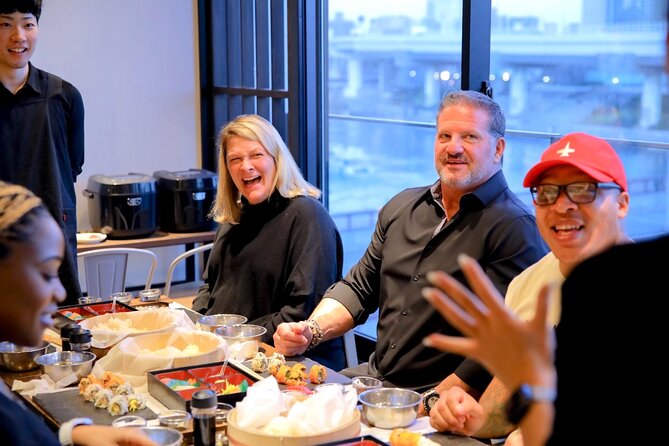
The main weakness is the tight schedule. The listed duration is approximately 1 hour and 40 minutes, but the actual experience can feel shorter if you are still eating while staff begin cleaning and preparing for the next group.
That matters because the social side is a major reason to book. You want time to compare your rolls, take a family photo, and enjoy the plate you made. I would treat this as a structured class with a meal at the end, not as an open-ended food party.
The history lesson may also be more than some people want. One person preferred less explanation and more making and eating time. I see the background as useful, but if you already know sushi culture well, you may wish the practical portion began sooner.
The small room and lighting are minor drawbacks, not deal-breakers. The fish-handling concern and dietary planning deserve more attention. Note food restrictions at booking, arrive early, and keep your expectations realistic about the time available for photos.
Who should book this Osaka sushi class?
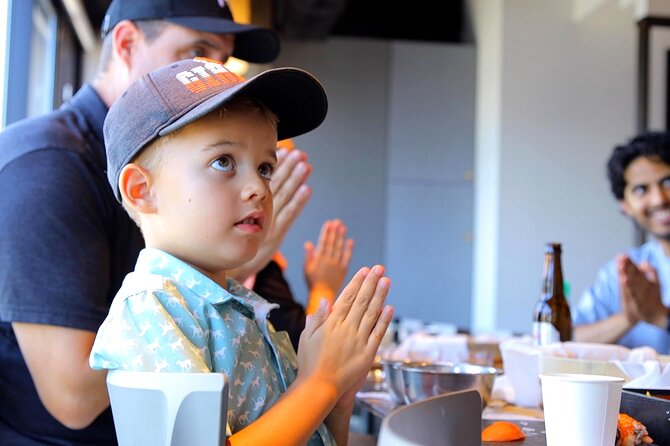
I would choose this class for first-time sushi makers, families, couples, and friends who want a shared activity near the center of Osaka. It is especially handy if you are staying or sightseeing around Dotonbori and Shinsaibashi and want something more active than another restaurant meal.
You will get the most from it if you enjoy learning by doing and do not mind a group setting. The English-speaking staff, ready-to-use ingredients, and patient demonstrations remove most of the barriers for beginners.
I would hesitate if you want a private chef lesson, a long cultural lecture, a full two-hour meal, or a drinks-focused food experience. I would also contact the provider first if you have strict seafood or allergy requirements.
With a 5.0 rating from 1,224 reviews and 100 percent recommendation, the class has a very strong record. The praise centers on friendly instructors, easy directions during the cooking, generous portions, and the simple pleasure of eating your own work. Those are the qualities that make the $31.01 price sensible.
Should you book it?
Yes, if you want an affordable, central Osaka activity that combines food, culture, and hands-on fun. Book it as a lively introduction to sushi, not as professional chef training or a slow restaurant meal.
Arrive early because the building can be tricky to find, record dietary needs when reserving, and leave a little time afterward if you want to enjoy your sushi without feeling rushed. For families and first-time cooks, this is a strong addition to an Osaka itinerary.
FAQ
Where does the sushi class meet?
The class begins at Sushi Making Osaka, at 1-chōme-16-20 Higashishinsaibashi, Chuo Ward, Osaka, 542-0083, Japan.
Where does the activity finish?
The activity ends back at the meeting point.
How long does the class last?
The experience lasts approximately 1 hour and 40 minutes.
Is the class taught in English?
Yes. An English-speaking instructor leads the class.
Do I need cooking experience?
No. The class is designed for beginners, and no cooking experience is required.
What sushi will I make?
You will learn to make sushi rolls, including maki, and authentic nigiri.
Is food included?
Yes. The ingredients for the class and the meal you prepare are included.
Can I cancel for a full refund?
Yes. You can receive a full refund if you cancel at least 24 hours before the experience start time. Cancellations or changes made less than 24 hours in advance are not accepted for a refund.
Just added around Osaka
- Nara Day Trip from Osaka with a Licensed Guide★ 5.0 · 3 reviews
- Osaka Early Morning Osaka Castle Tour Avoid Crowds★ 5.0 · 3 reviews
- Guided Tour of Some Attractions in Osaka by Private Car★ 5.0 · 3 reviews
- Private Transfer Between Kyoto and Kansai Airport KIX★ 5.0 · 3 reviews
- Shared Arrival Transfer: Osaka Itami Airport to Osaka City★ 5.0 · 3 reviews
- Osaka: Sushi Making Class and Dotonbori Food Tour★ 4.7 · 3 reviews
- Osaka Night Photography Workshop★ 5.0 · 3 reviews
- Kyoto Full day Tour Kinkakuji, Kiyomizu-dera and Fushimi Inari★ 4.5 · 3 reviews
Osaka Sushi Making Classes, compared.

Roll and Authentic Sushi Making Class in Dotonbori
Read our review →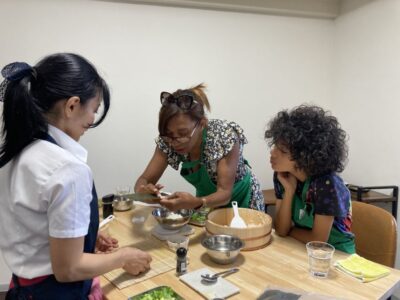
Browse the lists this tour appears in