
Reviewed · OKONOMIYAKI & TAKOYAKI CLASSES
Osaka Cooking Class: Okonomiyaki &Japanese cuisines experience
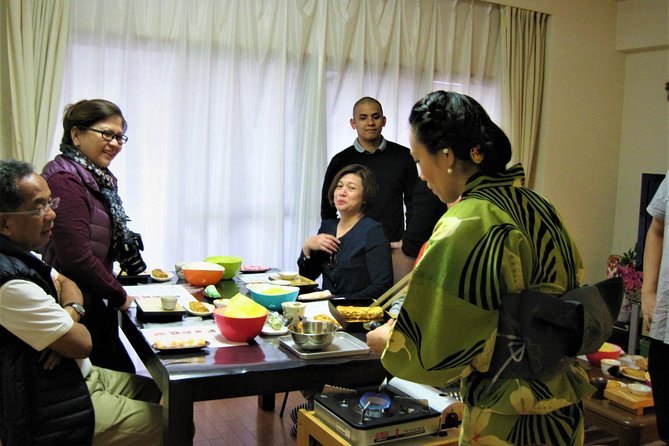
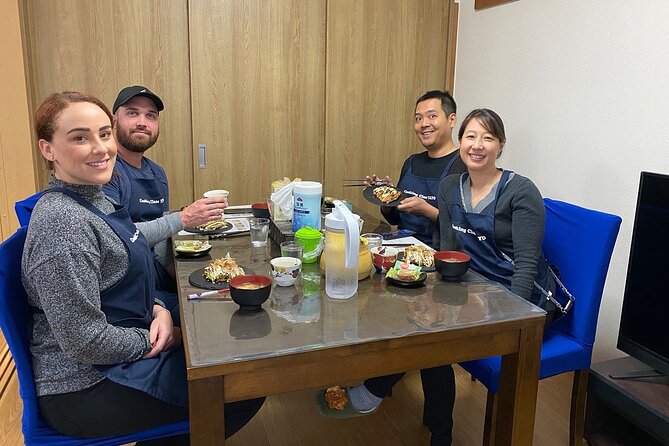
Osaka’s favorite foods make the best cooking lesson here: okonomiyaki, takoyaki, and miso soup. In Yayo’s own home, you do more than watch a chef work. You mix, shape, turn, season, and sit down to eat what you made.
I like the small maximum of eight people, which leaves room for hands-on help and questions. I also like the personal touch: Yayo explains the background of each dish, shares family cooking ideas, and has been known to provide printed recipes and thoughtful parting gifts. The one consideration is the setting. This is a small home studio, not a large commercial kitchen, so arrive on time and expect close quarters.
In This Review
- Key things to know before booking
- Why Osaka is the right place to learn these dishes
- Meeting Yayo near Noda Station
- Inside the small home kitchen
- Starting with miso soup and Japanese basics
- Making takoyaki without losing the plot
- Building an okonomiyaki lunch or dinner
- Finishing with taiyaki and matcha
- Optional sake and beer pairing
- What the $104.13 price gets you
- Who will enjoy this class most
- Dietary needs, timing, and practical details
- Should you book Cooking Class YAYO?
- FAQ
- Where does the Osaka cooking class meet?
- How long does the cooking class last?
- What dishes will I prepare?
- Is the class taught in English?
- How many people can join?
- Are vegetarian and pescatarian options available?
- Is sake included?
- What happens if I arrive late?
Key things to know before booking
- You cook Osaka’s signature dishes: Prepare okonomiyaki, takoyaki, and miso soup, with other items such as Japanese omelet, taiyaki, matcha, and snacks sometimes included.
- Yayo teaches in her own home: The setting feels personal and informal, but the kitchen is small and only confirmed participants can join.
- The meal is substantial: Plan to eat what you prepare, and do not schedule a large lunch or dinner right afterward.
- The class lasts about two and a half hours: It begins near Noda Station and ends back at the meeting point.
- A sake and beer pairing is optional: You can add local drinks, or simply enjoy the food without the pairing.
- Dietary requests need advance notice: Vegetarian and pescatarian versions are available if requested when booking.
Why Osaka is the right place to learn these dishes
Osaka is often called one of Japan’s best food cities, and this class focuses on dishes that fit the city’s easygoing food culture. Okonomiyaki is a savory pancake built around cabbage, egg, flour, pork, and dried bonito flakes. The name suggests cooking according to what you like, and the dish is flexible enough to recreate at home.
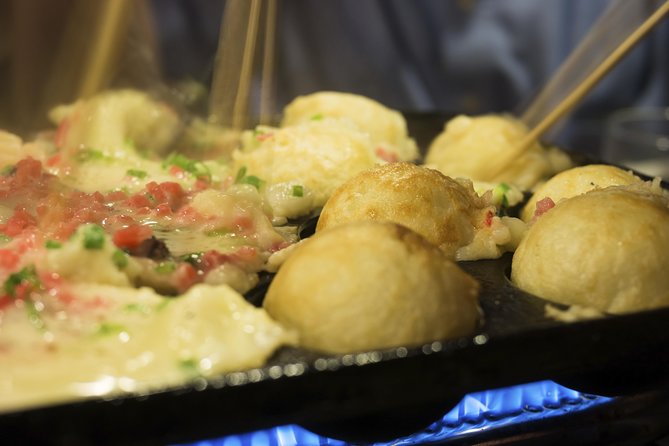
Takoyaki takes more practice. The wheat-flour batter is poured into a special pan, then filled with octopus and turned as it cooks. The round shape looks simple, but getting neat, evenly cooked balls takes a bit of timing. This is where hands-on instruction matters. You can watch the technique closely, then try it yourself with Yayo nearby.
Miso soup seems modest beside the two headline dishes, yet it is an excellent lesson in Japanese cooking. Small changes in stock, seasoning, and timing affect the final taste. The class uses this simple soup to show how Japanese food often depends on balance rather than a long ingredient list.
More okonomiyaki and takoyaki classes:
- Osaka Sake Tasting with Takoyaki Cooking
★ 5.0 · 156 reviews - Osaka Sake Tasting & Takoyaki Cooking Experience
★ 5.0 · 149 reviews - Cooking Ramen&Gyoza/KatsuCurry/Bento/Okonomiyaki+Store Tour@Osaka
★ 5.0 · 138 reviews
Meeting Yayo near Noda Station
The class begins outside Noda Station in Osaka’s Fukushima Ward. You then continue to the cooking studio, which is Yayo’s home. The meeting point is near public transportation, but you should still allow extra time to find the exact spot and identify your instructor.
The punctuality rule matters here. If you arrive more than 10 minutes late, participation is not guaranteed, and there is no refund. That is stricter than some casual food activities, but it makes sense for a small home kitchen where the cooking starts as a group.
There is no hotel pickup or drop-off. You handle your own way to and from the station. The activity ends back at the meeting point, so it is easy to plan another Osaka activity afterward.
Inside the small home kitchen
The home setting is the heart of the experience. Instead of standing in a large demonstration room with a crowd, you cook in a personal space where conversation comes naturally. The group limit is eight, and some dates may have only a few participants. A solo visitor could even end up with an especially private lesson if demand is light.
That intimacy comes with a practical tradeoff. Space is limited, so this is not the place for people who want to spread out or move at their own pace. Only people with confirmed bookings can join, and you should treat the home as someone’s personal space rather than a standard restaurant classroom.
Yayo’s teaching style is one of the strongest reasons to choose this class. She speaks English, explains the steps clearly, and answers questions about ingredients and daily cooking in Japan. The lesson is structured enough for beginners, but it also gives experienced cooks useful tips for making the dishes at home.
You do not need advanced cooking skills. Ingredients and utensils are supplied, and the class combines demonstrations with manageable tasks. The setup is prepared for efficiency, so you get to participate without waiting through every small preparation step.
Starting with miso soup and Japanese basics
The lesson begins with miso soup, a smart choice because it introduces the building blocks of Japanese home cooking. You learn how stock and miso work together, and why gentle handling matters. The dish may look easy, but the class shows how technique changes the result.
Some sessions have also included dashimaki tamago, a rolled Japanese omelet. This adds another useful lesson in texture and control. Japanese omelet is not just scrambled egg folded into a roll. The method requires attention, but the instructor helps make it approachable.
One benefit of learning these dishes in a home is the context. Yayo can explain how ingredients relate to Japanese cooking and how versions differ from one part of the country to another. You leave with more than a list of steps. You gain a better sense of what to look for when you eat these foods elsewhere in Osaka.
More Japanese home cooking classes:
- Osaka: Ramen and Gyoza Cooking Class in Dotonbori
★ 5.0 · 378 reviews - Osaka: Sumo Stage Show with Bento or Snack + Fight & Photo
★ 4.3 · 364 reviews - Osaka: Traditional Mochi Pounding Experience with Tasting
★ 4.9 · 306 reviews - Ramen and Gyoza Cooking Class in Osaka
★ 5.0 · 202 reviews
Making takoyaki without losing the plot
Takoyaki is the most playful part of the class. The batter goes into the round wells of a takoyaki pan, with octopus tucked into the center. As the outside cooks, you turn each piece until it forms a ball.
At first, the process can feel awkward. The batter is not a firm dough, and the pieces need to be turned at the right time. That is exactly why it works well in a class. Yayo can demonstrate the motion and correct you before a small mistake becomes a pan full of uneven pieces.
The result is also satisfying because takoyaki is closely tied to Osaka’s food identity. You are learning a snack you will see throughout the city, but you are also learning the mechanics behind it. If you enjoy practical lessons that let you handle the food rather than simply observe, this part will likely be a highlight.
Building an okonomiyaki lunch or dinner
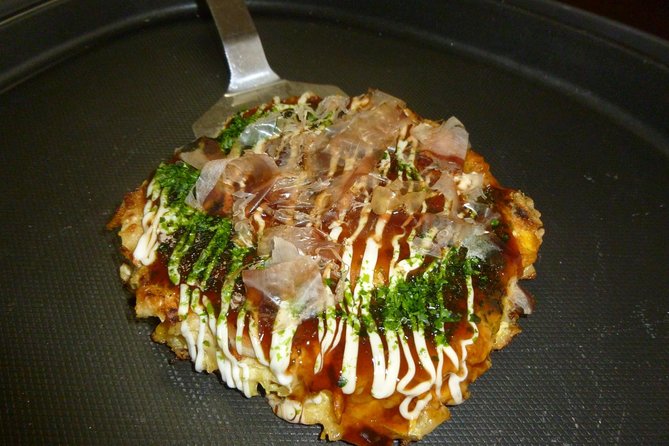
Okonomiyaki is the main event for many people. You combine cabbage, egg, flour, and other ingredients, then cook the mixture as a thick savory pancake. Pork and dried bonito flakes are part of the standard description, though dietary alternatives can be arranged for vegetarian and pescatarian participants if requested at booking.
This is a useful dish for home cooks because it is filling, forgiving, and adaptable. You learn the basic balance of batter and cabbage, then see how toppings and cooking time affect the final result. It is also a good reminder that Japanese food is not limited to delicate sushi or elaborate restaurant dishes.
The class includes lunch or dinner, meaning you eat the food you prepare. The portions appear generous. Plan to arrive hungry, especially if the session includes the omelet, snacks, and sweets mentioned in the class experience. Some people may have food left over, so do not treat this as a light tasting menu.
Finishing with taiyaki and matcha
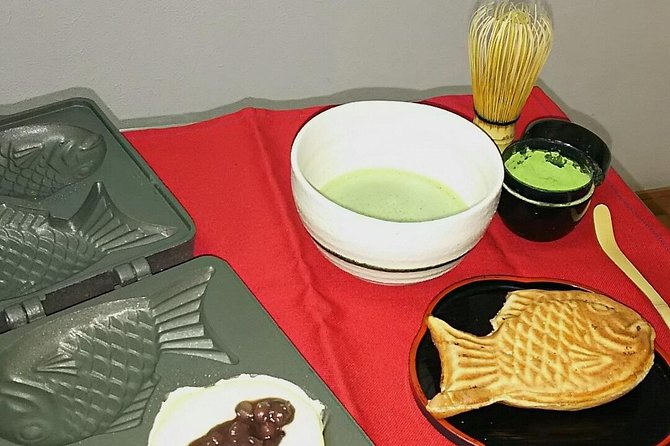
After the savory dishes, you finish with taiyaki, the fish-shaped cake, and matcha tea. Taiyaki gives the class a sweet ending and adds another familiar Japanese food to your home-cooking list.
Matcha provides a quieter final note after the work at the stove. It also makes the meal feel complete rather than simply ending when the main dishes are eaten. Depending on the session, you may also receive snacks or small homemade treats.
The thoughtful extras are a recurring part of Yayo’s hosting style. Past participants have received items such as chopsticks, recipes in their native language, homemade goodies, and paper cranes made with colors linked to their home countries. These are not the reason to book, but they add warmth to an already personal visit.
Optional sake and beer pairing
You can add a local sake and beer tasting to the meal. This is optional, so you can keep the class focused on cooking if you do not drink or simply prefer a lower price.
The pairing may appeal to visitors who want food context as well as cooking practice. Sake works naturally with the savory dishes, while beer is a familiar match for Osaka-style street food. Still, remember that extra drinks are not included unless you select the pairing, and any additional food or beverages beyond the stated experience are your responsibility.
What the $104.13 price gets you
At $104.13 per person, this is not the cheapest way to eat okonomiyaki in Osaka. You can find the dishes at casual restaurants and street-food counters for much less. The value here comes from the instruction, the meal, the ingredients, the utensils, the English-language guidance, and the chance to enter a local home.
The small group also changes the calculation. A large cooking school may offer a lower rate, but you may spend more time watching than cooking. With a maximum of eight participants, you have a better chance to receive direct help, ask about ingredients, and repeat a technique until it makes sense.
The price is strongest for people who will use what they learn. If you return home and make okonomiyaki or miso soup for friends, the class keeps paying you back in practical know-how. It is less compelling if you only want a quick meal or a short food sample.
Group discounts may be available, making the class more attractive for couples, families, or small groups. Adult pricing applies to all participants except children age two and under.
Who will enjoy this class most
I would recommend this experience to first-time visitors who want a friendly introduction to everyday Japanese food. It works especially well for couples, families, solo visitors, and people who like meeting local hosts rather than attending a formal school.
It is also a good choice for the person in your group who does not usually cook. The steps are guided, the atmosphere is relaxed, and the class is designed so you can take part without needing professional ability. A birthday outing or first-night activity can work well because the meal is filling and the format encourages conversation.
Food-focused visitors will get the most from the cultural explanations. You learn why ingredients matter, how dishes fit into Japanese life, and how to make familiar Osaka foods at home.
You may want to choose another activity if you dislike close quarters, cannot arrive exactly on time, or want a highly technical chef-led course. This is a warm home lesson, not a professional kitchen certification program.
Dietary needs, timing, and practical details
Vegetarian and pescatarian options are available, but you must request them when booking. The standard dishes include pork and octopus, so do not assume that a suitable alternative can be arranged at the door.
The duration is about two hours and 30 minutes. That includes instruction, cooking, eating, the optional drink pairing if selected, and the final taiyaki and matcha. Since the meal can be large, leave room in your schedule and appetite.
Confirmation is provided at booking. Mobile tickets are available, and the location is near public transportation. Gratuities are optional and not included.
Free cancellation is available up to 24 hours before the local start time for a full refund. Cancellations or changes made less than 24 hours before the start are not accepted for a refund.
Should you book Cooking Class YAYO?
Book it if you want a personal Osaka food experience with real participation, a generous meal, and recipes you can use later. Yayo’s home setting, clear English instruction, and care with small details give the class a character that a standard restaurant meal cannot match.
The strongest reasons to go are the small group, the mix of savory and sweet dishes, and the chance to learn techniques for okonomiyaki, takoyaki, and miso soup in one sitting. Just arrive early, request dietary changes in advance, and keep your evening free of a large meal afterward.
At $104.13, you are paying for time, teaching, and hospitality as much as food. For a visitor who wants to cook like a local and leave Osaka with a full stomach and useful skills, this is a very good use of an afternoon or evening.
FAQ
Where does the Osaka cooking class meet?
The class begins outside Noda Station at 1 Chome-1 Ohiraki, Fukushima Ward, Osaka, 553-0007, Japan. The activity ends back at the meeting point.
How long does the cooking class last?
The experience lasts approximately two hours and 30 minutes.
What dishes will I prepare?
The class focuses on miso soup, takoyaki, and okonomiyaki. The experience may also include Japanese omelet, taiyaki, matcha, and other snacks.
Is the class taught in English?
Yes. An English-speaking instructor leads the class.
How many people can join?
The class has a maximum of eight participants. Only people with confirmed bookings can attend because the cooking studio is small.
Are vegetarian and pescatarian options available?
Yes. Vegetarian and pescatarian options are available if you request them at the time of booking.
Is sake included?
A local sake tasting and beer pairing are optional add-ons. Extra food and drinks are not included unless specified by your booking.
What happens if I arrive late?
You should arrive on time. Participation cannot be guaranteed if you arrive more than 10 minutes late, and no refund is provided in that case.
Just added around Osaka
- Nara Day Trip from Osaka with a Licensed Guide★ 5.0 · 3 reviews
- Osaka Early Morning Osaka Castle Tour Avoid Crowds★ 5.0 · 3 reviews
- Guided Tour of Some Attractions in Osaka by Private Car★ 5.0 · 3 reviews
- Private Transfer Between Kyoto and Kansai Airport KIX★ 5.0 · 3 reviews
- Shared Arrival Transfer: Osaka Itami Airport to Osaka City★ 5.0 · 3 reviews
- Osaka: Sushi Making Class and Dotonbori Food Tour★ 4.7 · 3 reviews
- Osaka Night Photography Workshop★ 5.0 · 3 reviews
- Kyoto Full day Tour Kinkakuji, Kiyomizu-dera and Fushimi Inari★ 4.5 · 3 reviews
Okonomiyaki & Takoyaki Classes, compared.


Osaka Sake Tasting & Takoyaki Cooking Experience
Read our review →
Cooking Ramen&Gyoza/KatsuCurry/Bento/Okonomiyaki+Store Tour@Osaka
Read our review →
Cooking Class Okonomiyaki & Takoyaki course in Nanba
Read our review →
Osaka Okonomiyaki Cooking Class “Learn here and make it at home”
Read our review →
Osaka Street Food Festival :Takoyaki&Okonomiyaki for Families
Read our review →
Okonomiyaki or Ramen&Gyoza Class with Local Shop Tour
Read our review →Browse the lists this tour appears in