
Reviewed · OSAKA SUSHI MAKING CLASSES
Osaka Sushi Making Experience
The most fun part of this Osaka sushi class is that you do not simply sit down to eat. You measure, shape, and assemble 12 pieces yourself, learning both nigiri and gunkan sushi in a compact 90-minute session. The class takes place in Dōtonbori, so it is easy to pair with an evening stroll and dinner plans.
I like the hands-on format and the friendly, patient teaching style. I also like that the class works for families, couples, solo visitors, and beginners, with guidance available in English, Chinese, and Korean. One thing to consider: the location can be difficult to find, and the quick, commercial feel may not suit you if you want a slow, traditional cooking lesson.
In This Review
- Key points at a glance
- Making sushi in the heart of Dōtonbori
- The first lesson: sushi types and ingredients
- Shaping 12 pieces with personal guidance
- Eating what you prepare
- A friendly class for families and first-timers
- Dietary requests and what to confirm
- Afternoon or evening timing in Osaka
- What the $29.85 price really buys
- The teaching style and possible drawbacks
- Who should book this sushi class?
- Should you book the Osaka Sushi Making Experience?
- FAQ
- Where does the Osaka Sushi Making Experience take place?
- How long does the sushi class last?
- How many pieces of sushi will I make?
- Is the class available in English?
- Are vegetarian, vegan, and halal menus available?
- What is included in the price?
Key points at a glance
- Make 12 pieces yourself: Practice two sushi styles, nigiri and gunkan, rather than watching a demonstration only.
- Learn useful home techniques: Staff explain rice portions, shaping, ingredients, and the difference between common sushi forms.
- Choose your timing: Afternoon and evening sessions let you fit the class around sightseeing and meals.
- Ask for dietary menus early: Vegetarian, vegan, and halal sushi can be arranged by request.
- Expect a small class: The maximum group size is 16 people, though some sessions may feel much smaller.
- Finish with your own meal: The sushi you prepare is served for you to eat at the meeting point.
Making sushi in the heart of Dōtonbori
The class begins at Sushi Making Experience Namba1A, at 2-6-11 Nishishinsaibashi in Osaka’s Chūō Ward. This puts you close to Dōtonbori and Namba, a useful location if your Osaka plans already include the canal, shopping streets, neon signs, or nearby restaurants.
I would allow extra time to find the entrance. The address is central, but the precise meeting spot has caused confusion for some people. Keep the booking confirmation open on your phone, and do not assume that being near Dōtonbori means the door will be obvious.
Once inside, you can expect a friendly, informal setting rather than a formal culinary school. The staff greet you, explain the plan, and get you ready to make sushi. Some sessions are led by instructors such as Mika and Kosei, Yui and Mako, or Toshiki and Hana. The teaching style is upbeat and personal, with plenty of help at your station.
The class is conducted in English, Chinese, and Korean. That matters here because sushi making depends on small hand movements. A clear demonstration of how to press rice or shape a topping is more useful than a long talk translated word by word.
More sushi making classes:
- Sushi Making Osaka Roll and Authentic Japanese Sushi Class
★ 5.0 · 1,220 reviews - Osaka: Roll and Authentic Sushi Making Class in Dotonbori
★ 4.9 · 239 reviews - Osaka: Sushi Class in Dotonbori
★ 4.9 · 160 reviews
The first lesson: sushi types and ingredients
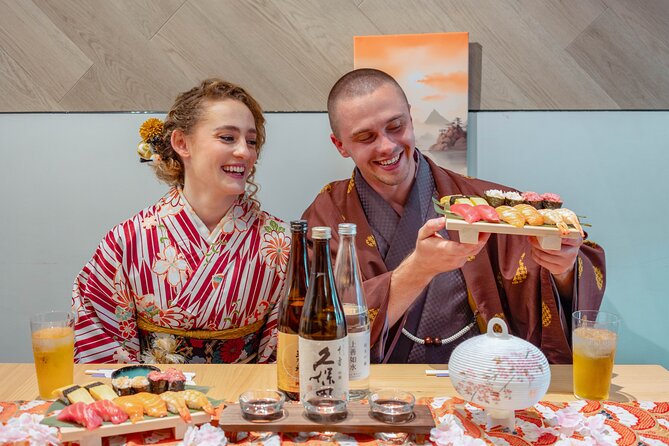
The class introduces the ingredients needed to make sushi at home. You learn the basic difference between nigiri and gunkan sushi, two forms that look simple but require a little care.
Nigiri is the familiar hand-shaped sushi with rice beneath a topping. Gunkan, sometimes called battleship sushi, has a strip of seaweed wrapped around the rice to hold a topping in place. Practicing both gives you a better sense of how sushi structure changes depending on the ingredient.
The instructors also explain proportions. One especially useful technique is using about 10 grams of rice for a piece, which helps keep the rice-to-topping balance under control. That is the kind of small tip you can use later at home, even if your first pieces are not perfectly shaped.
This is not a professional chef certification course, and you will not leave ready to run a sushi counter. You will, however, understand why sushi rice needs careful handling and why a small, neat portion works better than a large handful.
The class also covers the ingredients required for home preparation. The focus is practical rather than abstract: how much rice to use, how to form it, and how to assemble the different styles. The aim is to give you enough confidence to try again in your own kitchen.
Shaping 12 pieces with personal guidance
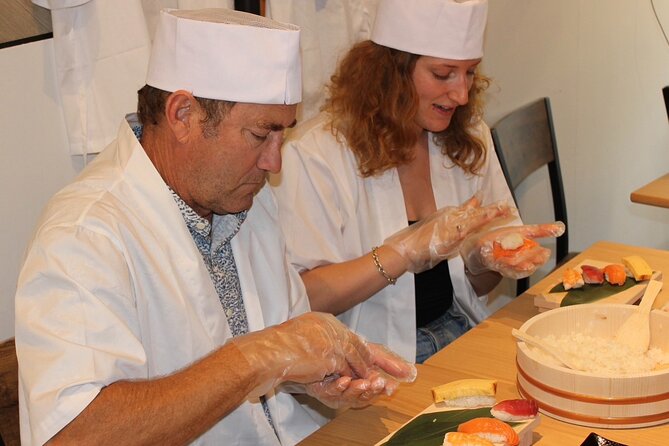
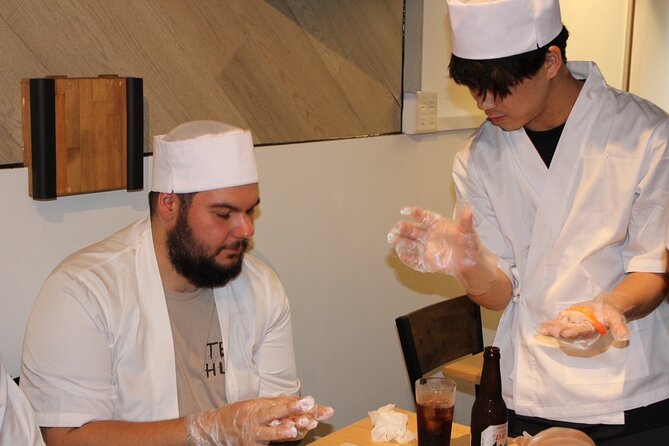
The main part of the experience is making 12 pieces of sushi. You work through the steps with the instructors rather than preparing a full meal from scratch.
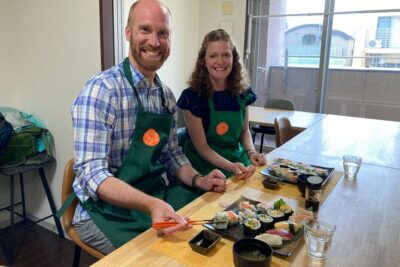
This is a good setup for beginners. You can watch a technique, copy it, and then ask for a correction before moving on. The staff are described as patient and encouraging, which helps when your rice sticks to your fingers or your first piece comes out too thick.
The class may feel lively and highly managed. That keeps the 90-minute schedule moving, but it can also make the experience feel commercial. One person found the presentation overdone and felt rushed toward the end. If you want a quiet, leisurely lesson with long explanations, this may not be your ideal choice.
For most people, the brisk pace is a fair trade. You have a clear goal, a limited number of pieces, and enough time to practice without spending half a day in a kitchen. I like that balance for an Osaka sightseeing schedule.
The class may include three types of sushi in practice, even though the main description emphasizes two styles, nigiri and gunkan. The exact arrangement can vary, so you should think of the experience as a guided introduction to several basic forms, not a fixed advanced menu.
Eating what you prepare
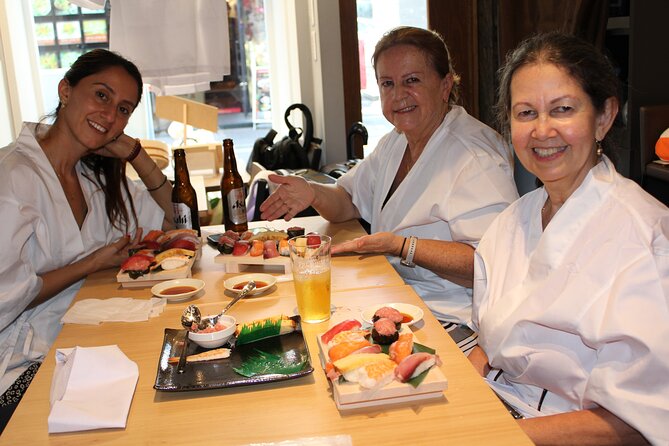
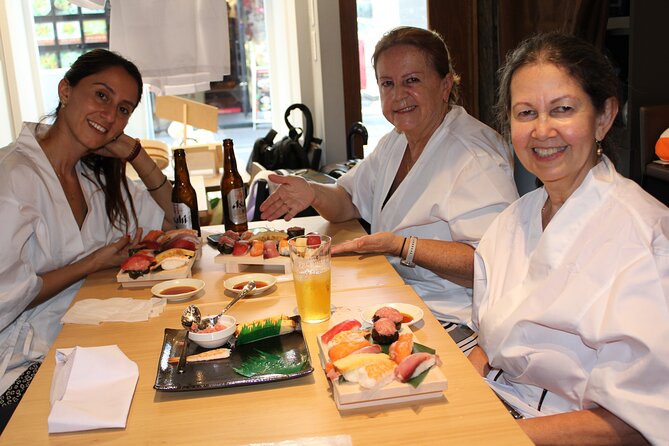
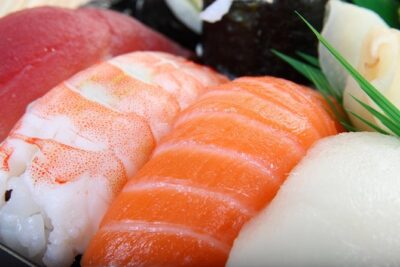
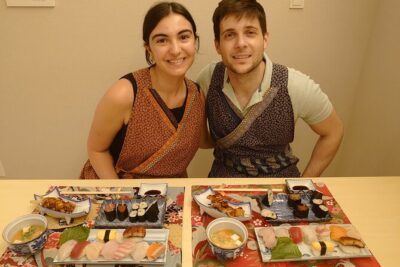
After shaping the sushi, you eat the 12 pieces at the meeting point. This is the reward, but it is also part of the lesson. You can see how portion size, shape, and topping placement affect the finished piece.
The food is described as fresh and tasty, though the experience is not designed as a substitute for a top Osaka sushi dinner. You are paying for instruction, participation, and the chance to make your own meal. That makes the price of about $29.85 per person reasonable for visitors who want an activity as well as something to eat.
The booking details list 12 pieces of sushi and snacks as included, with fees and taxes covered. They also mention sake and beer in the experience description, while the inclusions separately state that alcoholic beverages are not included. I would confirm the drink arrangement before booking if alcohol is important to you.
The food quantity should be enough for a light meal or a substantial snack, but you may still want dinner later. That is easy to arrange in Dōtonbori, where you are surrounded by places to eat. An afternoon class followed by dinner works well, while an evening class can serve as a playful start to your night.
A completely different way to spend a day in Osaka:
- Osaka Go Karting Tour with Funny Costume
★ 5.0 · 2,658 reviews - Osaka Castle: Museum and Tower Entry Ticket
★ 4.5 · 2,380 reviews - Osaka: Shinsekai Food Tour with 13-15 Dishes at 5 Eateries
★ 4.8 · 2,204 reviews - Osaka Food Tour: 13 Dishes at 5 Local Eateries
★ 5.0 · 2,149 reviews
A friendly class for families and first-timers
This experience suits people who want to do something rather than simply take photographs of food. Families can join, and the short length works well for children who might lose interest during a long cooking session.
The activity is also a good fit for couples. You can compare your shapes, help each other, and eat the results together. Solo visitors are not left out either, since the instructors provide direct help and conversation.
The atmosphere is relaxed and social. Staff may chat about Osaka, Japanese writing, and local customs while you work. Some participants also receive a certificate with their name written in Kanji, along with a photo. These extras are not the main reason to book, but they make a pleasant souvenir.
The class is not only for people who already love sushi. It works particularly well if you enjoy sushi but have never understood how the rice is formed or how gunkan differs from nigiri. You will leave with a better idea of what goes into a piece that looks effortless at a restaurant.
Dietary requests and what to confirm
Vegetarian, vegan, and halal sushi are available by request. This is important, but you should make the request before the class rather than waiting until you arrive.
The vegetarian and vegan versions use vegetables instead of the seafood options. One participant felt that the plant-based menu offered fewer choices than the standard menu and questioned the price difference. That is a fair point to consider. If you follow a plant-based diet, ask what fillings and toppings will be provided so you know exactly what to expect.
The supplied information confirms vegetarian sushi, vegan sushi, and halal options by request. It does not provide a detailed ingredient list, so people with allergies should ask directly before booking. The same applies if you need to avoid particular sauces or ingredients.
Service animals are allowed, and the meeting point is near public transportation. The maximum group size is 16 people. A group of that size will feel more like a scheduled activity than a private lesson, while a quieter session may offer more personal attention.
Afternoon or evening timing in Osaka
The class lasts about 1 hour and 30 minutes. That is long enough to learn, prepare, and eat without taking over your day.
I like having afternoon and evening options. An afternoon session can break up sightseeing and leave the rest of the night free. An evening session is handy if you want a planned activity before exploring Dōtonbori after dark.
Because the activity ends where it begins, you do not need to arrange a separate return transfer. That makes it easy to continue on foot toward Namba, Dōtonbori, or nearby dining areas.
Give yourself a buffer before the start time. The class has a fixed schedule, and arriving late could mean missing the opening instructions. The address is in a busy central area, but finding the exact location may take longer than expected.
What the $29.85 price really buys
At about $29.85 per person, this is priced as an accessible food activity rather than a high-end cooking course. The fee includes the sushi you make, instruction, and taxes. You are also paying for the location and the chance to learn a skill you can repeat at home.
The value is strongest if you are curious about Japanese food and want a structured activity. A restaurant meal might cost a similar amount, but it would not teach you how sushi is shaped or give you a certificate and class memory to take away.
The value is weaker if you only want a large meal or expect a serious chef training session. Twelve pieces is a set portion, and the class is short. You might still want another meal afterward, especially after a full day of sightseeing.
I see this as a good mid-trip activity. Early in your Osaka stay, it gives you food knowledge you can use during later meals. Near the end, it offers a cheerful final taste of Japan without requiring a full-day commitment.
The teaching style and possible drawbacks
The strongest part of the experience is the staff. Instructors including Mika, Kosei, Yui, Mako, Toshiki, Hana, Shiori, and others are described as warm, clear, and easy to work with. Their role is not just to demonstrate the steps, but to correct your technique and keep the mood light.
That friendliness can make the class feel more like a social workshop than a traditional Japanese cooking lesson. Many people will enjoy that. If you prefer a quiet room and a formal explanation of sushi culture, the energetic approach may feel a little forced.
The class also has a tourist-friendly structure. Instructions are available in several languages, the session is short, and the certificate and photo add a souvenir element. That accessibility is useful, but it means the experience is designed for visitors, not for an intimate look at professional sushi preparation.
I would not treat that as a flaw by itself. Osaka has plenty of serious food experiences, but a beginner class should be easy to follow. The key is to book this for fun, useful instruction, and a meal you make yourself, not for a behind-the-counter look at the work of an elite sushi chef.
Who should book this sushi class?
I would recommend it to:
- First-time sushi makers who want clear instruction
- Families looking for a short, hands-on Osaka activity
- Couples who enjoy food-based experiences
- Solo visitors who like meeting friendly instructors
- People who want to learn basic techniques they can repeat at home
- Visitors staying near Namba, Shinsaibashi, or Dōtonbori
I would think twice if you want a large meal, a slow traditional cooking session, or a highly technical course. I would also ask detailed questions before booking if you have strict dietary needs, since the menu options must be requested in advance.
The activity has a maximum of 16 participants, and confirmation is provided at booking. Free cancellation is available up to 24 hours before the start time. Changes or cancellations inside that window are not accepted, so keep the local start time in mind when planning.
Should you book the Osaka Sushi Making Experience?
Book it if you want a cheerful, practical introduction to sushi in a central Osaka location. The 90-minute format, modest price, multilingual guidance, and 12-piece meal make it easy to fit into a busy itinerary.
The main reasons to choose it are the patient instruction, the chance to practice both nigiri and gunkan, and the personal touches such as a certificate or photo. Just allow time to find the entrance, request any special menu early, and keep your expectations focused on a fun beginner class rather than a formal chef course.
For most visitors, this is a good-value way to spend part of an afternoon or evening in Osaka. You eat what you make, learn a few techniques worth repeating, and leave with a better understanding of why simple-looking sushi takes careful hands.
FAQ
Where does the Osaka Sushi Making Experience take place?
The meeting point is Sushi Making Experience Namba1A, 2-6-11 Nishishinsaibashi, Chūō Ward, Osaka, Japan. The class is located near Dōtonbori and ends back at the same meeting point.
How long does the sushi class last?
The experience lasts approximately 1 hour and 30 minutes.
How many pieces of sushi will I make?
You will make 12 pieces of sushi. The class includes practice with nigiri and gunkan sushi, and may cover three sushi types during the session.
Is the class available in English?
Yes. Guidance is available in English, Chinese, and Korean.
Are vegetarian, vegan, and halal menus available?
Yes. Vegetarian, vegan, and halal sushi are available by request. Make your dietary request before the class.
What is included in the price?
The price includes the 12 pieces of sushi and snacks, along with all fees and taxes. Alcoholic beverages are not included in the booking details.
Just added around Osaka
- Nara Day Trip from Osaka with a Licensed Guide★ 5.0 · 3 reviews
- Osaka Early Morning Osaka Castle Tour Avoid Crowds★ 5.0 · 3 reviews
- Guided Tour of Some Attractions in Osaka by Private Car★ 5.0 · 3 reviews
- Private Transfer Between Kyoto and Kansai Airport KIX★ 5.0 · 3 reviews
- Shared Arrival Transfer: Osaka Itami Airport to Osaka City★ 5.0 · 3 reviews
- Osaka: Sushi Making Class and Dotonbori Food Tour★ 4.7 · 3 reviews
- Osaka Night Photography Workshop★ 5.0 · 3 reviews
- Kyoto Full day Tour Kinkakuji, Kiyomizu-dera and Fushimi Inari★ 4.5 · 3 reviews
Osaka Sushi Making Classes, compared.
Sushi Making Osaka Roll and Authentic Japanese Sushi Class
Read our review →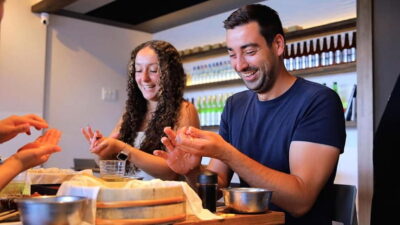
Roll and Authentic Sushi Making Class in Dotonbori
Read our review →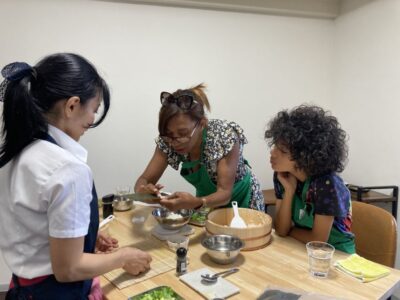
Browse the lists this tour appears in