
Reviewed · DOTONBORI & NAMBA TOURS
Osaka Dotonbori: Sushi Making Experience
Making sushi here is less about fancy knife work and more about getting your hands on a basic Japanese skill. In 90 minutes, you prepare 12 pieces of sushi, taste Japanese sake, and learn why rice, vinegar, toppings, and hand pressure all matter. Instructors including Mako, Mika, Saki, and Yumiko keep the lesson in English and make it easy for beginners.
I like the mix of food and culture, especially the simple lesson on sushi rice and the chance to wear sushi cosplay for photos. I also like the practical value: you eat what you make, receive a sushi master certificate, and can ask about Osaka and Japanese customs along the way. The main cautions are that the Dotonbori meeting point can be hard to find, and one recent participant found the seafood good but not exceptionally fresh.
In This Review
- Key points to know before booking
- Why a sushi class works so well in Dotonbori
- The 90-minute lesson, from rice to finished sushi
- What you eat, and how much you receive
- Sake, sushi cosplay, and the fun extras
- The instructors make the difference
- What makes the class culturally useful
- Price, timing, and practical value
- Who will enjoy this most
- Should you book the Dotonbori sushi class?
- FAQ
- Where does the sushi-making experience take place?
- How long does the class last?
- How much does it cost?
- How many pieces of sushi do I make?
- Is Japanese sake included?
- Is the class taught in English?
- Are vegan and halal sushi options available?
- Is the activity wheelchair accessible?
- What else is included besides the sushi ingredients?
- Can I cancel for a full refund?
Key points to know before booking
- You make 12 sushi pieces yourself, from seasoning the rice to shaping the finished pieces.
- English-speaking instructors explain every step, including sushi ingredients, technique, and some Japanese culture.
- Japanese sake is part of the experience, giving the class a small tasting element as well as a meal.
- Sushi cosplay, photos, and a certificate add a playful souvenir element for families and couples.
- Vegan and halal sushi are available, and gluten-free soy sauce has been provided when requested.
- The class lasts 90 minutes and costs $45 per person, with free cancellation up to 24 hours before the start time.
Why a sushi class works so well in Dotonbori
Dotonbori is Osaka’s best-known food district, packed with restaurants, neon signs, and visitors moving between the canal and nearby shopping streets. A sushi lesson gives you something different from simply sitting down for another meal. You still eat, but you also learn how the food is put together.
I particularly like this kind of activity for a first visit to Japan. Sushi is familiar around the world, yet the class shows you the small details that are easy to miss at a restaurant. You learn what shari means, how sushi rice is seasoned, and how the topping, or neta, is placed and shaped with the rice.
The setting also makes the class easy to add to a day in central Osaka. You can plan it around time in Dotonbori, Shinsaibashi, or Namba without giving up an entire afternoon. The 90-minute length is long enough to feel like a real activity but short enough to fit between sightseeing plans.
More of Dotonbori and Namba after dark:
- Osaka Local Foodie Walking Tour in Dotonbori and Shinsekai
★ 5.0 · 985 reviews - Osaka: Dotonbori District River Cruise with Drink Discount
★ 4.2 · 876 reviews - Ultimate Osaka Walking Tour: Castle, Dotonbori & Hidden Gems
★ 5.0 · 862 reviews
The 90-minute lesson, from rice to finished sushi
The class begins with an introduction to sushi, its ingredients, and the basic method used during the session. The instructors explain the process in English, and the teaching style is aimed at people who have never made sushi before.
The first technical step is preparing shari, or sushi rice. You pour sushi vinegar over the rice and work it through carefully. This may sound simple, but the rice is the foundation of the dish. Too much vinegar can overpower the topping, while poor shaping can make the sushi fall apart before it reaches your plate.
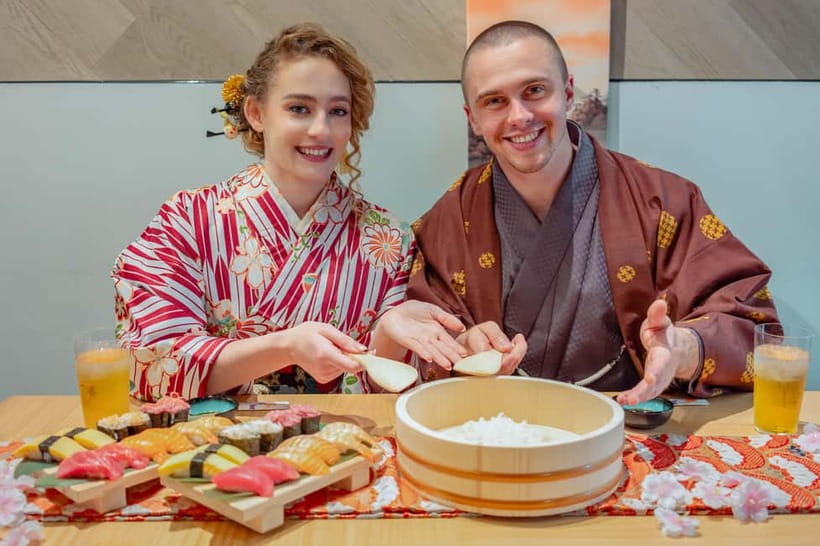
Next, you shape the rice. You form a small rice ball and work it into the right size and shape. The instructors demonstrate the hand position, then help you follow along. You are not expected to arrive with restaurant-level technique, and that is part of the appeal. The process gives you a clear task without turning the class into a stressful cooking exam.
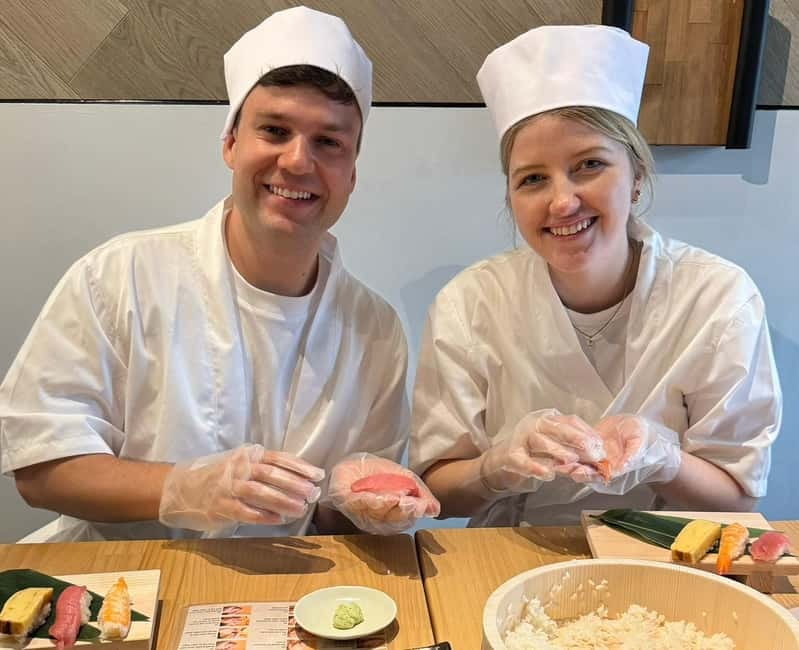
After that comes the topping. You place wasabi on the neta, then bring the topping and rice together. The final shaping is done with your fingers. The instructors explain how to hold the piece, how much pressure to use, and how to keep the sushi neat.
The class is built around repetition, so the first piece may feel awkward and the later pieces should feel more natural. That makes the 12-piece portion useful. You have enough sushi to practice rather than simply making one piece for a photograph.
What you eat, and how much you receive
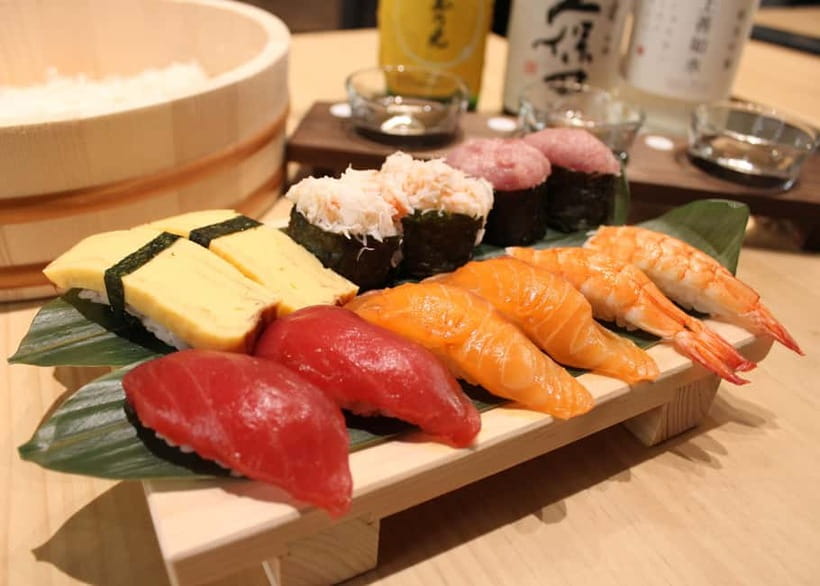
All ingredients for 12 pieces are included in the $45 price. At the end, you eat the sushi you have made, so the fee covers both a hands-on lesson and a light meal.
The portion is not intended to replace a large Osaka dinner, but it is a satisfying lunch or afternoon snack for many people. Several participants especially enjoyed the taste of the finished sushi, including Japanese omelette sushi. One person who does not usually like fish still found the meal enjoyable, which suggests the selection may work for cautious eaters as well as sushi fans.
Ingredient quality is important in a class like this. The experience has been praised for using ingredients bought from the markets daily, though you should keep expectations sensible. One recent assessment found the seafood good but not especially fresh. That is a useful warning if your main goal is a high-end sushi meal. If you want the finest possible fish in Osaka, book an excellent sushi restaurant separately. If you want to learn, participate, and eat something you shaped yourself, this class offers better value.
Dietary needs are addressed more flexibly than many short food activities. Vegan and halal sushi are available. Gluten-free soy sauce has also been provided for a participant with a gluten allergy. Still, I would state your needs clearly when booking or before the class begins, since the exact ingredients and substitutions are not specified.
Sake, sushi cosplay, and the fun extras
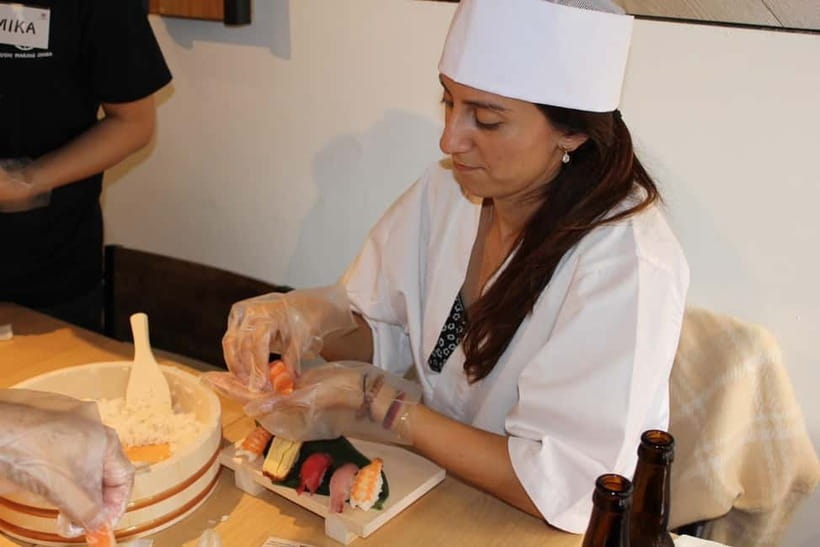
The sushi lesson includes Japanese sake, which adds a small tasting experience to the meal. You can learn about traditional sake while making your sushi, then enjoy the two together. This is not presented as a full brewery visit or a serious sake seminar, so you should see it as a pleasant introduction rather than an expert tasting.
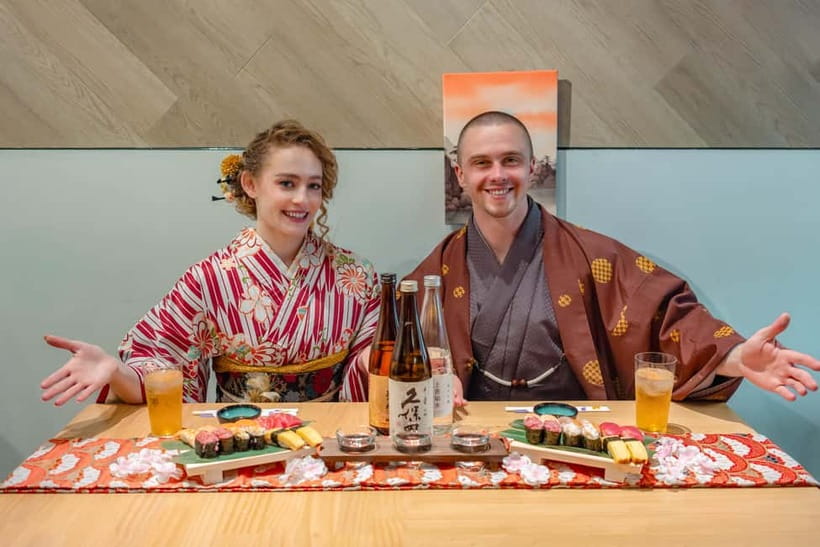
The sushi cosplay is the most playful part of the activity. You can put on sushi-themed costumes and take photographs during the session. This works particularly well for families, couples, and groups of friends who want a souvenir with more personality than another food photograph.
There is also a special gift and a certificate identifying you as a sushi master. The certificate is lighthearted, of course, but it gives children and first-time cooks something physical to take home. A 15-year-old participant joined a family group and found the activity suitable for all three people, making this a good choice when different ages need to share one experience.
More sushi making classes:
- Sushi Making Osaka Roll and Authentic Japanese Sushi Class
★ 5.0 · 1,220 reviews - Osaka Sushi Making Experience
★ 5.0 · 400 reviews - Osaka: Roll and Authentic Sushi Making Class in Dotonbori
★ 4.9 · 239 reviews - Osaka: Sushi Class in Dotonbori
★ 4.9 · 160 reviews
The instructors make the difference
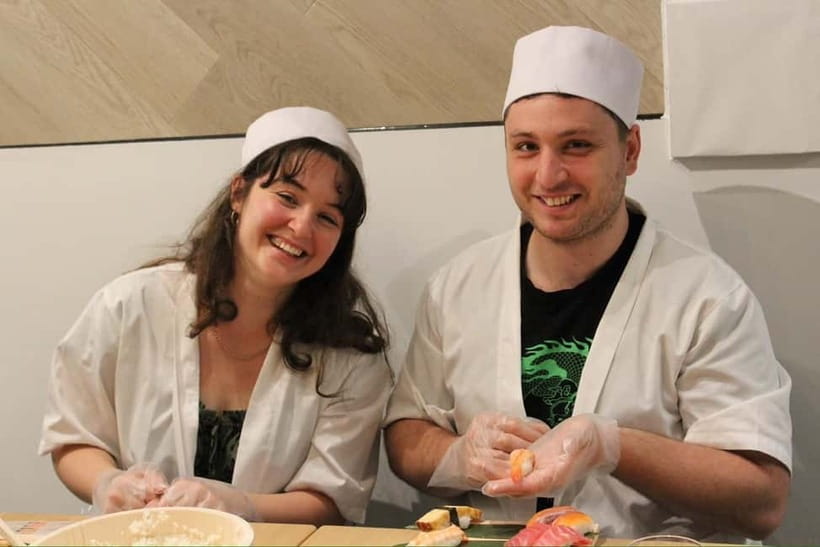
The class depends heavily on its instructors, and this is where the experience earns much of its strong reputation. Names that come up during the sessions include Mako, Mika, Saki, Yumiko, Kosei, Toshiki, Anri, Yui, and Makoto. You may not have all of them at your particular time, but the consistent pattern is clear: the staff are friendly, cheerful, and comfortable teaching beginners in English.
Mako is described as leading some sessions with a lively style and offering facts about sushi, Japan, and Osaka. Mika and Anri have been praised for making the lesson fun while keeping the group on track. Kosei has been noted for explaining proper technique and showing what a correctly made piece should look like. Yumiko has also been praised for clear instruction and a warm manner.
That variety matters because sushi shaping is hands-on. A good teacher can spot when your rice is too loose, when the topping is sitting unevenly, or when you are pressing too hard. One participant suggested that the instructors could pay closer attention to each person’s technique and correct mistakes more often. I would keep that in mind if you want close, chef-school-style instruction rather than a relaxed group activity.
Some sessions may have very few bookings. One person had what felt like a private lesson because no one else had reserved that time. That can be a bonus, giving you more conversation and personal help, but it may also mean the atmosphere changes from one time slot to another.
What makes the class culturally useful
The best part is not simply learning how to put fish on rice. You get a small lesson in how a familiar Japanese food developed and how it is eaten. The instructors explain sushi terms, ingredients, and the original way sushi was consumed. You can also pick up simple Japanese phrases and receive help with chopsticks.
The cultural portion is brief, so you should not expect a full history lecture. One participant wanted more facts about sushi, which is fair. The class gives you a starting point, not a specialist course. I see that as a good balance for a 90-minute food activity, especially if your group includes people who would lose interest during a long talk.
The conversations about Osaka can be just as useful as the formal lesson. Staff have offered local advice and suggestions, and in one case helped participants who had transport trouble get to their next destination. That kind of personal help is valuable when you are visiting a city for only a few days.
Price, timing, and practical value
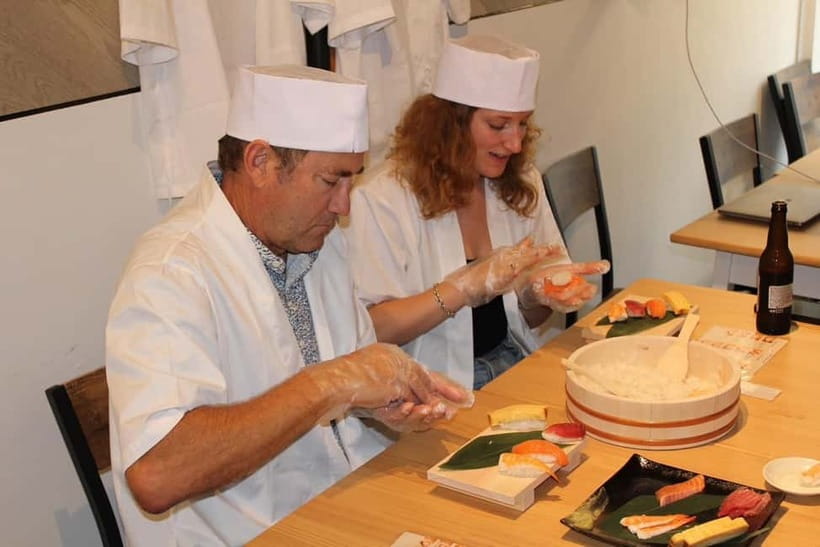
At $45 per person, this class is not the cheapest way to eat sushi in Osaka. You can buy a quick sushi meal for less. But you are paying for instruction, 12 pieces of sushi, sake, costumes, photographs, a gift, and a certificate. For a visitor who wants an activity rather than another restaurant stop, the price is reasonable.
The 90-minute duration keeps the commitment manageable. You can use it as a midday meal, an afternoon break, or an early evening activity before exploring Dotonbori after dark. Check the available starting times before arranging other plans, since the exact schedule is not fixed.
The experience is wheelchair accessible, and the instructor language is English. Free cancellation is available up to 24 hours before the activity for a full refund. You can also reserve now and pay later, which helps if your Osaka schedule is still changing.
The biggest practical issue is finding the place. One participant called the location hard to navigate, and another specifically suggested fixing the Google Maps position. Give yourself extra time and check the meeting details carefully. Dotonbori’s crowded streets and nearby signs can make a short final walk more confusing than expected.
Who will enjoy this most
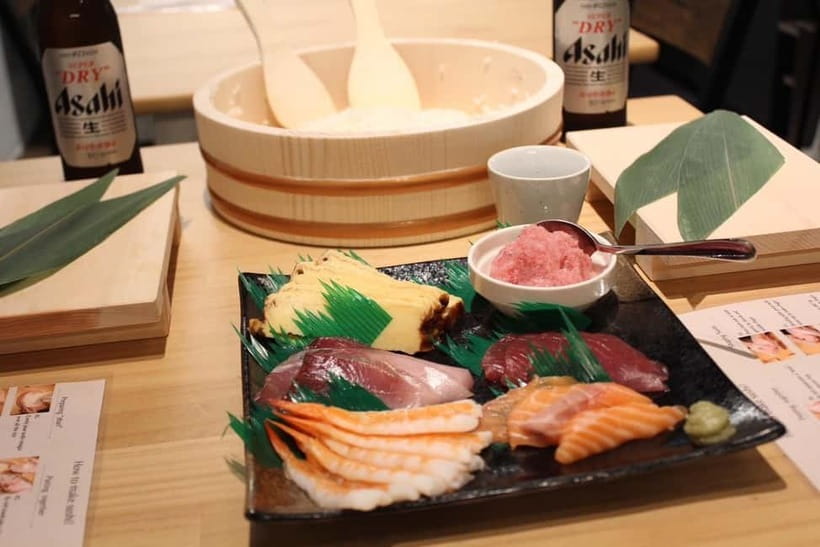
I would recommend the class to first-time sushi makers, families with older children, couples, and friends who want a shared activity with food at the center. It is also useful for people who like sushi but want to understand the basic craft rather than simply order a plate.
It suits cautious eaters because you can take part in the preparation and learn about the ingredients before eating. The vegan and halal options make it more practical for mixed groups, though you should communicate dietary needs clearly.
This is less suitable if you want a quiet, formal meal, a premium omakase experience, or advanced knife skills. The mood is social and playful. You will handle rice and toppings, take photographs, and may spend as much time chatting as concentrating on perfect sushi form.
Should you book the Dotonbori sushi class?
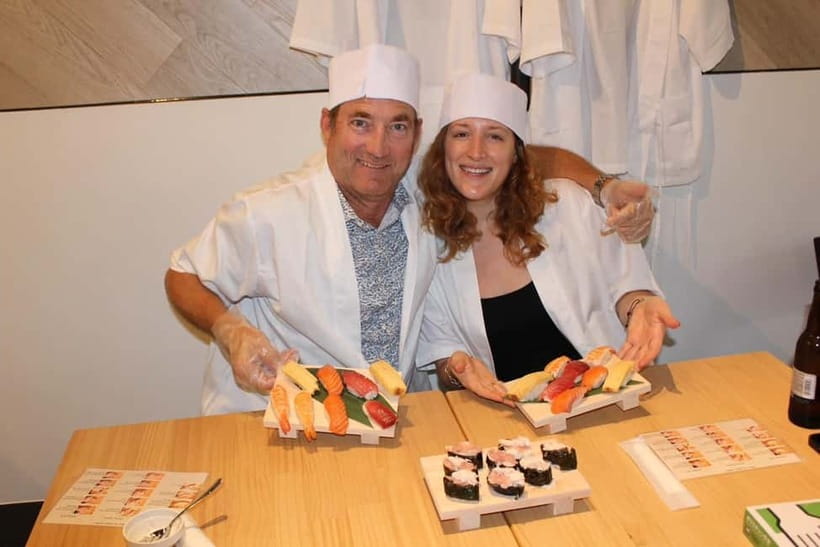
Book it if you want a friendly, practical introduction to sushi and a memorable break from ordinary sightseeing. The strongest reasons are the clear English instruction, the 12 pieces you make and eat, the sake tasting, and the warm teaching style associated with instructors such as Mako, Mika, Saki, and Yumiko.
Skip it if your priority is the freshest possible seafood or a serious culinary qualification. The class is about participation, culture, and fun, not elite sushi dining. If you can allow extra time to find the meeting point and accept that the seafood may be good rather than exceptional, $45 buys a useful and entertaining Osaka experience.
FAQ
Where does the sushi-making experience take place?
It takes place in Dotonbori, Osaka, on Honshu, Japan.
How long does the class last?
The activity lasts 90 minutes.
How much does it cost?
The listed price is $45 per person.
How many pieces of sushi do I make?
You make 12 pieces of sushi during the class.
Is Japanese sake included?
Yes. The experience includes Japanese sake to enjoy with the sushi.
Is the class taught in English?
Yes. English-speaking instructors lead the class.
Are vegan and halal sushi options available?
Yes. Vegan and halal sushi are available.
Is the activity wheelchair accessible?
Yes. The activity is listed as wheelchair accessible.
What else is included besides the sushi ingredients?
The experience includes sushi cosplay, a photo session, a special gift, and a certificate identifying you as a sushi master.
Can I cancel for a full refund?
Yes. You can cancel up to 24 hours in advance for a full refund.
Just added around Osaka
- Nara Day Trip from Osaka with a Licensed Guide★ 5.0 · 3 reviews
- Osaka Early Morning Osaka Castle Tour Avoid Crowds★ 5.0 · 3 reviews
- Guided Tour of Some Attractions in Osaka by Private Car★ 5.0 · 3 reviews
- Shared Arrival Transfer: Osaka Itami Airport to Osaka City★ 5.0 · 3 reviews
- Private Transfer Between Kyoto and Kansai Airport KIX★ 5.0 · 3 reviews
- Osaka: Sushi Making Class and Dotonbori Food Tour★ 4.7 · 3 reviews
- Osaka Night Photography Workshop★ 5.0 · 3 reviews
- Kyoto Full day Tour Kinkakuji, Kiyomizu-dera and Fushimi Inari★ 4.5 · 3 reviews
Dotonbori & Namba Tours, compared.

Osaka Local Foodie Walking Tour in Dotonbori and Shinsekai
Read our review →
Dotonbori District River Cruise with Drink Discount
Read our review →
Ultimate Osaka Walking Tour: Castle, Dotonbori & Hidden Gems
Read our review →


Dotonbori River Cruise with Glico Sign & Neon Views
Read our review →
Browse the lists this tour appears in