
Reviewed · OSAKA COOKING CLASSES
Osaka: Traditional Mochi Pounding Experience with Tasting
Mochi starts as steamed glutinous rice, then becomes a soft, stretchy sweet through steady pounding with a wooden pestle. This hands-on process is the reason to book: you do not just sample a Japanese treat, you help turn rice into it. I like the short cultural introduction and the friendly English-speaking guidance, which keeps the hour useful without turning it into a lecture.
I also like the small group limit of four and the generous tasting session, with kinako, sweet red bean paste, nori, and sweet soy sauce. The main consideration is physical effort: pounding mochi takes more stamina than it looks, and the sticky dough makes this a work-first, tidy-later activity.
In This Review
- Key points to know before booking
- Why this one-hour Osaka activity works
- Finding the meeting point near Dotonbori
- The first 10 minutes: mochi beyond a dessert
- From steamed rice to stretchy mochi
- Shaping the mochi and making it your own
- Tasting with four classic flavor choices
- What the guides add to the experience
- Who should book the Adult Experience
- Who should choose the Family Experience
- The practical limits of a one-hour workshop
- Is $31 a good value?
- Should you book the Osaka mochi pounding experience?
- FAQ
- How long does the mochi pounding experience last?
- How much does the experience cost?
- What toppings are included with the mochi?
- Is the activity suitable for children?
- What is the age limit for the Adult Experience?
- What languages do the instructors speak?
- How many people are in each group?
- Is transportation included?
Key points to know before booking
- You pound the rice yourself: The process includes mashing, pounding, and shaping the mochi with traditional tools.
- The cultural introduction lasts about 10 minutes: You learn why mochi matters before getting to work.
- Toppings turn tasting into a full snack: Try kinako, red bean paste, nori, sweet soy sauce, and tea.
- The group is very small: The activity is limited to four participants, allowing plenty of guided participation.
- Two plans cover different ages: Choose the Adult Experience for ages 13 and up, or the Family Experience for children and adults.
- Find the entrance carefully: The activity is near the Dotonbori riverfront, but the entrance may be on the canal side rather than the main street.
Why this one-hour Osaka activity works
Osaka has no shortage of food stops, but many are built around eating something someone else prepared. This experience gives you a clear job. You start with steamed glutinous rice and help work it into mochi, then eat the result while it is fresh.
That simple change matters. You notice the texture, the effort, and the timing in a way you do not when buying packaged mochi from a shop. The activity also gives you a cultural frame, so the treat is not just a sweet snack with a chewy bite.
The price is $31 per person. I consider that fair for a one-hour session when the fee includes the guide, ingredients, equipment, instruction, tasting, toppings, and tea. It is more than the price of buying mochi at a convenience store, of course, but the point here is participation rather than a simple food purchase.
The value is strongest for families, couples, and solo visitors who want an activity with a beginning, middle, and end. You learn, work, shape, taste, and leave with a story to tell. If you only want to eat mochi, a shop will cost less and take less time.
More Japanese home cooking classes:
- Osaka: Ramen and Gyoza Cooking Class in Dotonbori
★ 5.0 · 378 reviews - Osaka: Sumo Stage Show with Bento or Snack + Fight & Photo
★ 4.3 · 364 reviews - Osaka Cooking Class: Okonomiyaki &Japanese cuisines experience
★ 5.0 · 261 reviews
Finding the meeting point near Dotonbori
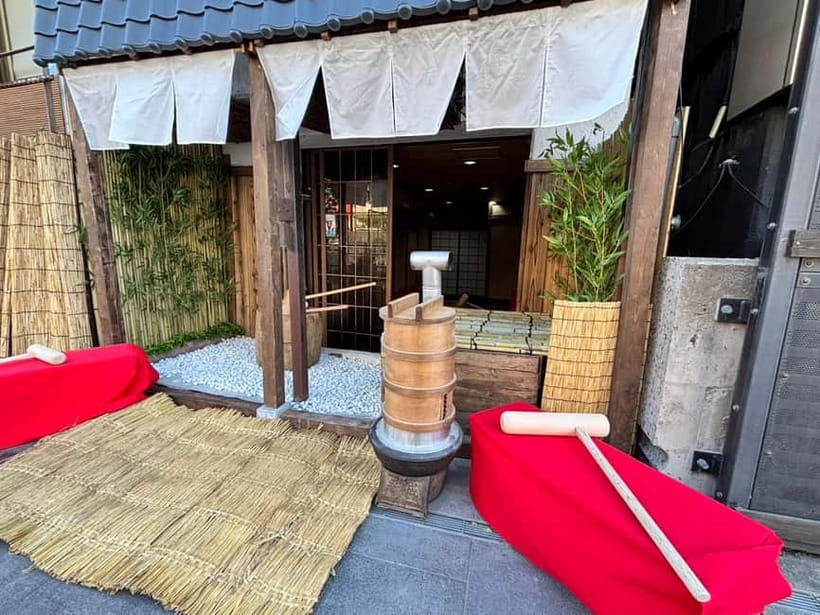
The meeting point can vary according to the plan you choose, so check the booking details carefully. The activity is described as central and close to the Dotonbori riverfront, which makes it easy to pair with sightseeing in the area.
Do not assume the entrance is directly on the main Dotonbori street. The entrance may be on the canal side, and one sign can be easy to miss. A handwritten sign at the entrance of a hotel on a parallel street has helped some people find the right place.
I would allow a little extra time to get your bearings. Dotonbori is dense, and a short walk can feel longer when you are searching above shopfronts and along the river. Keep the canal-side entrance in mind, rather than looking only along the bright main road.
Transportation to and from the activity is not included. You make your own way there, so this is easiest when you are already planning to spend time around Dotonbori.
The first 10 minutes: mochi beyond a dessert
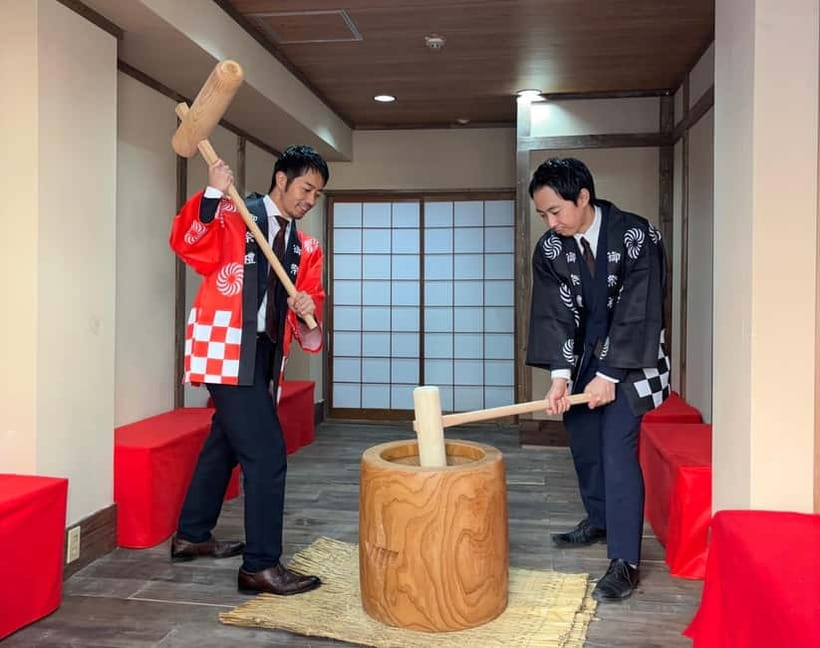
The session begins with a short introduction of about 10 minutes. You learn about the origins and cultural importance of mochi, along with the basic process used to make it.
This opening is brief enough to hold a child’s attention and useful enough for adults. Several comments about the activity praise the balance: there is enough background to give the food meaning, but most of the hour remains practical and social.
Mochi is often linked with Japanese celebrations and traditional food customs, and this introduction helps explain why the pounding process matters. You are not simply watching a kitchen trick. You are taking part in an old method of preparing rice for eating and sharing.
Guides speak English and Chinese. Names associated with the sessions include Seina, Taka, Misaki, Moe, Grace, and Aiko. The teaching style is lively and encouraging, with help offered throughout the process. That matters when you are unsure how hard to strike, how to handle the sticky dough, or how to shape it without making a mess.
From steamed rice to stretchy mochi
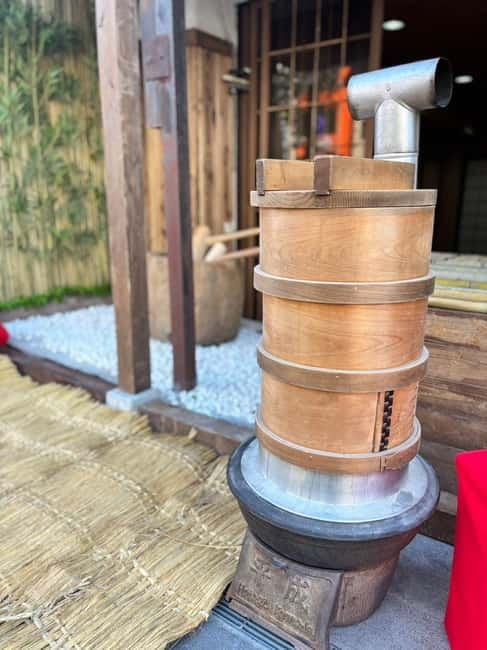
After the introduction, the practical work begins. Steamed glutinous rice is placed in a traditional mortar, and you help mash it before the main pounding starts.
The change is gradual. At first, the rice still looks like separate grains. With continued working, it becomes a sticky mass. The guide helps keep the process moving and shows you when to pound, when to pause, and when the rice needs more attention.
You use a pestle to pound the mixture. This is the part children often find exciting, but adults should not treat it as effortless. The work requires repeated motion and some stamina. One useful tip is to wear comfortable clothing and arrive ready to participate, not just pose for a picture.
Safety and timing depend on following the instructor’s rhythm. Traditional mochi pounding is a coordinated task, so you should wait for the guide’s direction rather than swinging whenever you like. The hands-on format keeps everyone involved while the staff manages the process.
The small group limit of four is a real advantage here. Everyone gets a turn, and the guide can watch how each person handles the tools. In a larger class, you might spend much of the hour waiting. Here, the activity is built around shared participation.
A completely different way to spend a day in Osaka:
- Osaka Go Karting Tour with Funny Costume
★ 5.0 · 2,658 reviews - Osaka Castle: Museum and Tower Entry Ticket
★ 4.5 · 2,380 reviews - Osaka: Shinsekai Food Tour with 13-15 Dishes at 5 Eateries
★ 4.8 · 2,204 reviews - Osaka Food Tour: 13 Dishes at 5 Local Eateries
★ 5.0 · 2,149 reviews
Shaping the mochi and making it your own
Once the rice has reached the right consistency, you move on to forming the mochi. The dough is sticky by nature, so this is not a neat pastry class. Expect soft pieces that cling to your fingers and require a little patience.
That texture is part of the lesson. Fresh mochi has a softness and stretch that can be quite different from packaged versions. You see the final food take shape in front of you, then get to eat it soon after making it.
The shaping stage also works well for mixed-age groups. Younger children can take part with close guidance, while older children and adults may enjoy trying to create more uniform pieces. The family plan is designed for all ages, while the Adult Experience is for participants aged 13 and up and offers a more focused cultural session.
The staff also helps with pictures and videos. This is especially useful if you are traveling alone. You can take part without having to choose between making mochi and documenting the moment.
Tasting with four classic flavor choices
The tasting is more than a single sample. You try the freshly made mochi with several traditional seasonings and toppings, served with tea.
Kinako, a roasted soybean flour, adds a dry, nutty coating. It contrasts nicely with the damp, chewy dough. Sweet red bean paste gives you the classic Japanese combination of soft mochi and smooth bean filling. If red bean is not your usual choice, pairing it with cream is one combination worth trying if it is available in your session.
Nori brings a savory, slightly salty note. Sweet soy sauce adds a glossy, salty-sweet finish. These choices show how flexible mochi can be. The same base can taste dessert-like, earthy, salty, or sweet depending on what you add.
Plan your appetite accordingly. The tasting can be surprisingly filling, especially after the physical work. You may want to avoid scheduling a large meal immediately before the session. At the same time, this is not a full meal replacement, so keep your wider Osaka food plans in place.
Tea helps round out the tasting and gives you a short pause after the activity. The final stage is relaxed, social, and well suited to comparing favorite toppings with the rest of your group.
What the guides add to the experience
The guides are a major part of the activity. The strongest feature is not only that they explain the steps, but that they keep the room moving and make sure each person takes part.
English and Chinese instruction makes the session accessible to many international visitors. You should still expect the activity to be visual and physical, which helps even if your language level is limited. The tools, motions, and food provide clear demonstrations.
The staff also adapts the session for mixed groups. A family with young children and a couple can share the same hour, with everyone given a chance to participate. That flexibility is useful if your group includes grandparents, teenagers, and younger children.
The room is small, which supports the four-person format but may feel close if you prefer lots of space. Cleanliness is important during a food activity, and the space has been described as comfortable and sanitary. Still, comfortable clothing is the sensible choice because sticky rice and toppings are part of the work.
Who should book the Adult Experience
The Adult Experience is for ages 13 and up. It suits older children, couples, friends, and solo visitors who want more attention on the cultural background and the traditional method.
I would choose this plan if your group is made up entirely of teenagers and adults. You can focus on the details of the rice, the tools, and the different ways to eat mochi without needing the session shaped around very young children.
Solo visitors also fit well. The small group setting makes it easier to meet the other participants, and the guides can take photos for you. You are not left standing at the edge while families take over the activity.
This is also a good choice if you like food experiences that require effort. The actual pounding gives the hour some energy and makes the tasting feel earned. If you have a sore arm or dislike sticky food, you may prefer a calmer cooking demonstration.
Who should choose the Family Experience
The Family Experience welcomes all ages. It is the better choice for a group with children, especially if you want something educational that does not require a long attention span.
The 10-minute introduction is short, then children can take part in the physical process. They can help mash the rice, pound with guidance, shape the dough, and choose toppings. Adults can join rather than simply supervise.
The activity also suits a multigenerational group. Teenagers, parents, and grandparents can all participate in the same food-making task. The guides pay attention to children and help keep the mood light.
Keep the physical element in mind. Young children should follow the instructor closely around the traditional tools, and every participant should wear clothes suitable for hands-on work. The exact meeting point can vary by plan, so check that detail before setting off with your family.
The practical limits of a one-hour workshop
One hour is a good length for this activity. You get the cultural background, the full preparation, and the tasting without giving up half a day in Osaka.
The tradeoff is that the session is focused. You are learning one traditional food process, not taking a broad Japanese cooking course. There is no transportation, and the available information does not promise a wider meal or a take-home package.
The small group size improves the quality of participation, but it also means spaces can fill quickly. The booking terms allow free cancellation up to 24 hours ahead for a full refund, and you can reserve now and pay later. Those policies help if your Osaka schedule is still changing.
The activity runs year-round. Starting times depend on availability, so check the date and time before booking. Comfortable clothing is recommended, and I would avoid anything that makes arm movement difficult.
Is $31 a good value?
At $31, this is not the cheapest way to try mochi. You can buy prepared pieces for much less. The price makes sense if you value instruction, local food context, and the chance to make the treat yourself.
The included elements are solid: an experienced guide, all materials and ingredients, hands-on use of traditional tools, several toppings, and tea. The group limit of four adds value because your time is active rather than mostly observational.
I would call it good value for a first-time visitor who wants a compact cultural activity near central Osaka. It is also useful on a rainy day because the experience takes place indoors, though the supplied information does not specify the exact room or building for every booking option.
For a large group, the cost can add up. For a solo visitor or small family, the personal attention helps justify it. Compare this with the price of another paid attraction and ask what you want from the hour. If your answer is a memorable activity and a filling snack, the fee is reasonable.
Should you book the Osaka mochi pounding experience?
I would book this if you want food, culture, and participation in one short session. The strongest reasons are the small group, the friendly multilingual guides, the chance to handle traditional tools, and the range of toppings at the end.
Families should choose the all-ages plan. Adults and older children should consider the 13-and-up option. Solo visitors can book with confidence if they want a social activity and help taking photos.
Skip it if you only want a quick dessert, have no interest in physical participation, or want a long cooking class with several dishes. Also check the entrance details carefully, since the canal-side location can be easy to miss.
For most people with an hour near Dotonbori, this is a smart, compact choice. You leave with a better sense of how mochi is made, a full stomach, and a story that a shop-bought sweet cannot provide.
FAQ
How long does the mochi pounding experience last?
The activity lasts one hour. It includes a short introduction, preparation and pounding of the rice, shaping the mochi, and a tasting session with tea.
How much does the experience cost?
The price is $31 per person.
What toppings are included with the mochi?
The tasting includes kinako, sweet red bean paste, nori, and sweet soy sauce. Tea is also served.
Is the activity suitable for children?
Yes. Choose the Family Experience, which welcomes all ages and is designed to include both children and adults.
What is the age limit for the Adult Experience?
The Adult Experience is for participants aged 13 and up.
What languages do the instructors speak?
Instruction is available in English and Chinese.
How many people are in each group?
The activity is offered in a small group limited to four participants.
Is transportation included?
No. You are responsible for getting to and from the activity location. The meeting point may vary by option, and the entrance may be on the canal side near Dotonbori rather than directly on the main street.
Just added around Osaka
- Nara Day Trip from Osaka with a Licensed Guide★ 5.0 · 3 reviews
- Osaka Early Morning Osaka Castle Tour Avoid Crowds★ 5.0 · 3 reviews
- Guided Tour of Some Attractions in Osaka by Private Car★ 5.0 · 3 reviews
- Private Transfer Between Kyoto and Kansai Airport KIX★ 5.0 · 3 reviews
- Shared Arrival Transfer: Osaka Itami Airport to Osaka City★ 5.0 · 3 reviews
- Osaka: Sushi Making Class and Dotonbori Food Tour★ 4.7 · 3 reviews
- Osaka Night Photography Workshop★ 5.0 · 3 reviews
- Kyoto Full day Tour Kinkakuji, Kiyomizu-dera and Fushimi Inari★ 4.5 · 3 reviews
Osaka Cooking Classes, compared.


Sumo Stage Show with Bento or Snack + Fight & Photo
Read our review →
Osaka Cooking Class: Okonomiyaki &Japanese cuisines experience
Read our review →


Osaka Sake Tasting & Takoyaki Cooking Experience
Read our review →
Cooking Ramen&Gyoza/KatsuCurry/Bento/Okonomiyaki+Store Tour@Osaka
Read our review →
Browse the lists this tour appears in