
Reviewed · DOTONBORI & NAMBA TOURS
Sushi Class in Osaka Dotonbori
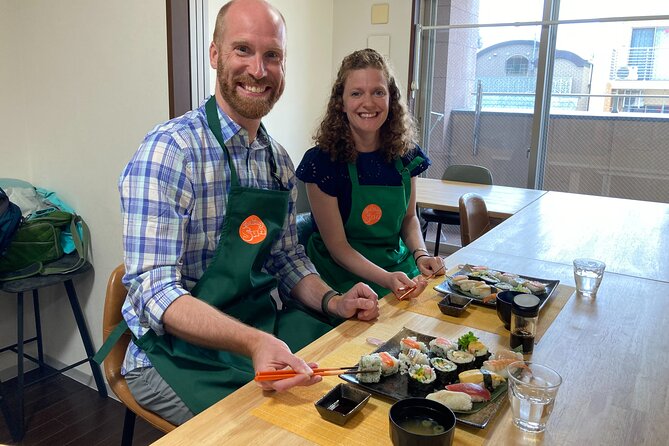
Osaka’s sushi tradition gets a hands-on introduction in this small Cooking Sun class. You’ll make three distinct styles of sushi, including box-shaped oshizushi, then sit down to eat your work with miso soup. It is part cooking lesson, part cultural introduction, and a useful break from restaurant meals.
I like the small maximum of eight people, which gives the instructors time to correct your technique and answer questions. I also like that the rice and main ingredients are prepared ahead of time, so you can focus on shaping, rolling, and learning instead of spending the whole morning chopping.
The main drawback is the meeting point. The class is inside Masters Residence Dotonbori I, and map apps have sent some people to the building across the street. Give yourself extra time to find Room 807, especially for the 9:30 am start.
In This Review
- Key Points Before You Book
- What This Dotonbori Sushi Class Is Really Like
- Finding Masters Residence Dotonbori I at 9:30 am
- First Lesson: Salad Roll With Egg and Nori
- Second Lesson: Shaping Nigiri-Zushi
- Third Lesson: Osaka’s Pressed Oshizushi
- Miso Soup and the Best Part of the Morning
- Teaching Style and Language
- Vegetarian and Gluten-Free Choices
- Is $71.16 Good Value for Three Hours?
- Who Should Book This Class?
- Practical Details That Matter
- Should You Book the Dotonbori Sushi Class?
- FAQ
- Where does the sushi class take place?
- What time does the class start?
- How long does the experience last?
- How many people can join the class?
- What kinds of sushi will I make?
- Is a vegetarian option available?
- Is a gluten-free option available?
- Are ingredients and an apron provided?
- What is the cancellation policy?
Key Points Before You Book
- Make three regional sushi styles: salad roll, nigiri, and Kansai-style oshizushi.
- Small class of up to eight: Expect close help rather than a large demonstration.
- Prepared ingredients and aprons provided: You get straight to the practical work.
- A full meal is included: Eat your finished sushi with miso soup at the end.
- Vegetarian and gluten-free options are available: Request them when booking.
- Allow time to find Room 807: Press 807, then the 呼出 call button at the entrance.
What This Dotonbori Sushi Class Is Really Like
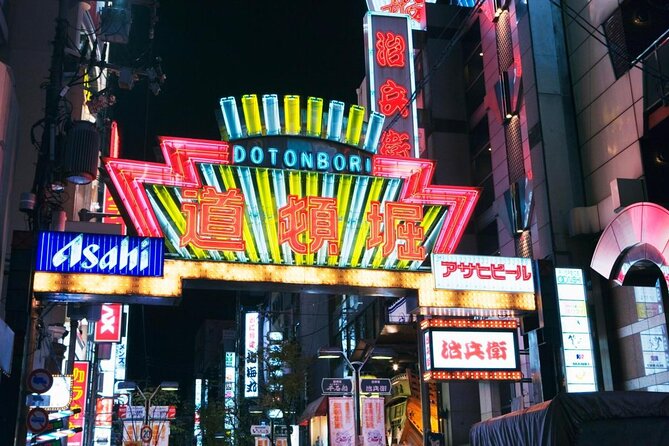
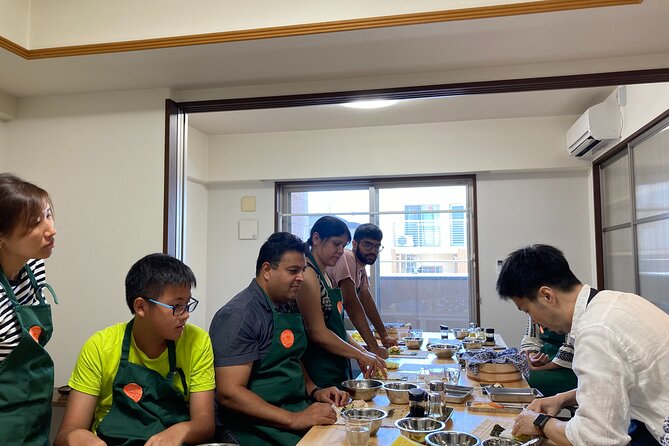
This is a three-hour morning class in Osaka’s Dotonbori area, beginning at 9:30 am and ending back at the same location. The setting is a private room in an apartment-style building rather than a restaurant dining room, which explains both the intimate feel and the slightly tricky arrival.
The class is designed for beginners. You do not need sushi-making experience, and the instructors demonstrate each stage before you try it. The teaching is in English, and the class format leaves room for questions. Several people specifically appreciated the slow, clear explanations, while one experienced home cook received more detailed answers beyond the basics.
You will wear an apron supplied by the school. The ingredients are prepared for you, including cooked sushi rice and fillings, so the class stays focused on technique. That is a good choice for a short workshop. You learn how sushi is assembled without turning the session into a long kitchen-preparation course.
The food is not just decorative. At the end, you eat the sushi you made, along with miso soup. The portions can make this a proper breakfast or early lunch, so you may want to avoid arriving after a large meal.
More of Dotonbori and Namba after dark:
- Osaka Local Foodie Walking Tour in Dotonbori and Shinsekai
★ 5.0 · 985 reviews - Osaka: Dotonbori District River Cruise with Drink Discount
★ 4.2 · 876 reviews - Ultimate Osaka Walking Tour: Castle, Dotonbori & Hidden Gems
★ 5.0 · 862 reviews
Finding Masters Residence Dotonbori I at 9:30 am
The official meeting point is Cooking Sun, at Masters Residence Dotonbori I, 2-chome 9-14 Shimanouchi, Chuo Ward, Osaka, postal code 542-0082. The class takes place in Room 807.
This is the part of the visit where a little planning pays off. The building can be hard to spot, and map directions have occasionally pointed to the property directly across the street. Look for the placard identifying Masters Residence Dotonbori I rather than relying only on the map pin.
At the entrance, press 807 and then the 呼出 call button. Someone will open the door. Since the start time is fixed and the class begins with introductions and demonstrations, I would arrive early rather than cutting it close.
The location is near public transportation, making it practical from central Osaka. Still, the final approach may take longer than expected if you are unfamiliar with Japanese apartment buildings. Save the address and building name before leaving your hotel.
First Lesson: Salad Roll With Egg and Nori
The first sushi is a salad roll, a friendly starting point because it involves several familiar fillings and teaches the basic rolling motion.
You will work with crab-flavored kamaboko, lettuce, cucumber, avocado, and tuna mixed with mayonnaise. A core of tamagoyaki, or Japanese rolled omelet, gives the roll a sweet egg center. The ingredients are placed with nori and rolled into a compact cylinder.
This part is useful for learning proportion. Too much filling makes the roll difficult to close, while too little leaves a loose, disappointing center. The instructor shows you how to arrange the fillings and apply enough pressure to hold the shape without crushing it.
The salad roll also offers a helpful introduction to Japanese ingredients. Kamaboko is a processed fish cake with a smooth texture, while tamagoyaki is a staple in many Japanese meals. You are not simply copying a restaurant menu item. You are learning how contrasting textures and mild flavors work together.
For children and first-time cooks, this is likely the most approachable of the three preparations. One family used the class as a shared activity with a 12-year-old, who was able to take part and learn how to make the egg roll. The hands-on format works better than a demonstration alone because you get to handle the ingredients yourself.
Second Lesson: Shaping Nigiri-Zushi
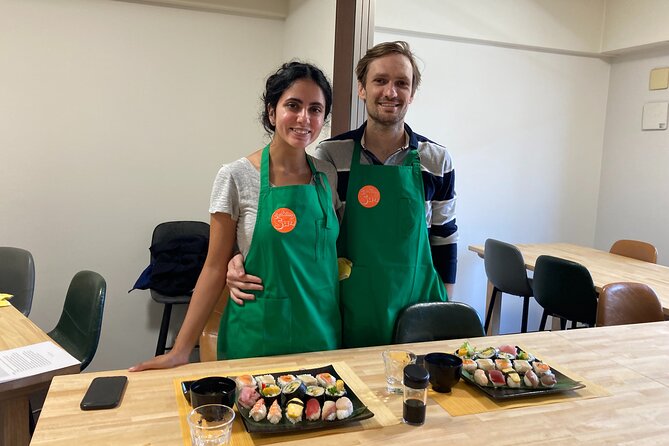
Nigiri is the sushi most people picture first: a small piece of vinegared rice topped with fish, shellfish, or omelet. In this class, you learn the basic idea of shaping a bite-sized rice portion and placing the topping neatly on top.
Nigiri looks simple, but the shape matters. The rice needs to hold together while remaining light enough to eat comfortably. Your instructor guides you through the amount of rice, the hand position, and the placement of the topping.
This is where individual help matters most. A large group can leave beginners watching from the back, but a class capped at eight allows the teacher to check your hands and offer corrections. You should still expect to make imperfect pieces at first. That is part of the lesson, not a problem.
The class also explains how nigiri fits into Japanese food culture and how sushi styles differ. One instructor was praised for sharing background about sushi, traditional foods, and regional differences in Japan. Those short explanations add context without turning the class into a lecture.
If you already make sushi at home, nigiri gives you a chance to ask more specific questions. If you are new to it, the instructor’s demonstration makes the task much less mysterious.
More sushi making classes:
- Sushi Making Osaka Roll and Authentic Japanese Sushi Class
★ 5.0 · 1,220 reviews - Osaka Sushi Making Experience
★ 5.0 · 400 reviews - Osaka: Roll and Authentic Sushi Making Class in Dotonbori
★ 4.9 · 239 reviews - Osaka: Sushi Class in Dotonbori
★ 4.9 · 160 reviews
Third Lesson: Osaka’s Pressed Oshizushi
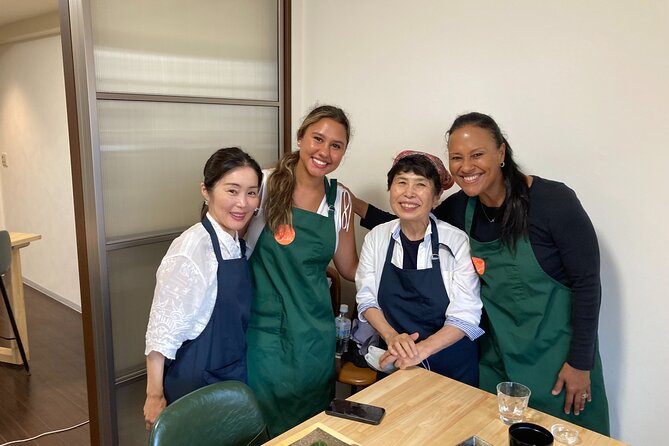
Oshizushi is the most distinctive preparation in the class. Instead of rolling the ingredients in nori or shaping each piece by hand, you fill a square wooden mold with sushi rice and toppings, then press it into a firm block.
This style is closely linked with the Kansai region and is also called box sushi in Osaka. Once the rice and toppings are pressed together, the finished block is cut into neat pieces just before eating.
The mold gives the sushi a clean square shape, but it does not remove the need for care. You need to distribute the rice evenly and press with enough force to make the layers hold. Your instructor demonstrates the process, then helps you judge the texture and shape.
Oshizushi gives the class a clear Osaka identity. A generic sushi workshop could take place almost anywhere, but pressed sushi connects the lesson to the local food tradition. It also shows you that Japanese sushi is not one single dish. It includes several techniques shaped by local ingredients and customs.
For me, this is the most worthwhile part of the class for anyone who has already tried rolling sushi. Salad rolls and nigiri are familiar worldwide, while Osaka-style pressed sushi is less likely to appear in an ordinary home kitchen.
Miso Soup and the Best Part of the Morning
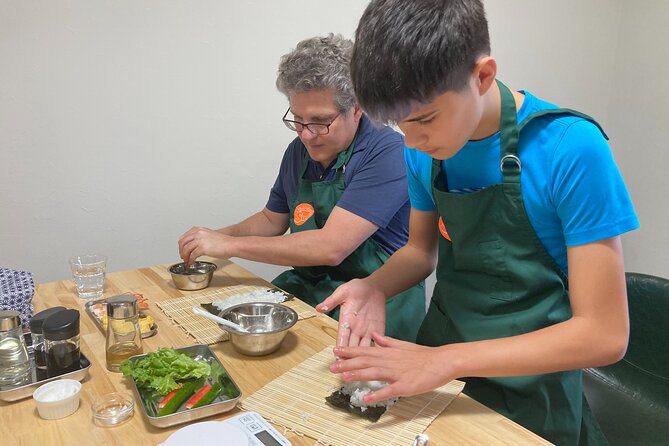
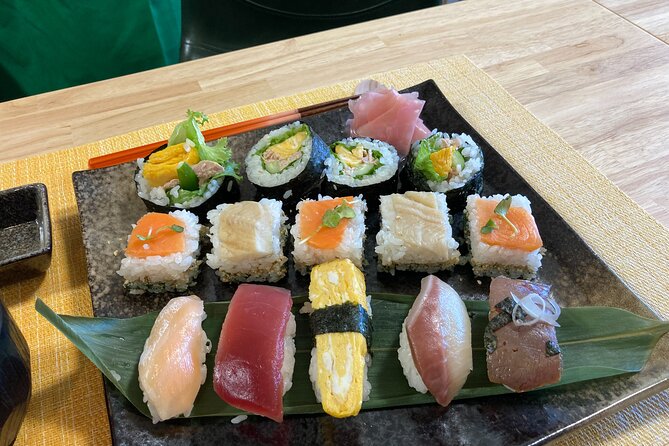
After the three sushi preparations, you eat what you made. The meal comes with miso soup, giving the session a satisfying finish rather than leaving you to find lunch immediately afterward.
Eating your own work changes the mood of the class. You notice the texture of the rice, the balance of the fillings, and the difference between a roll, a hand-shaped piece, and pressed sushi. You also get a chance to compare the three styles side by side.
The class is not only about getting a plate of food. You leave with techniques you can repeat at home, plus ideas for combining fillings. One participant was inspired enough to visit Osaka’s Kitchen Street afterward to buy ingredients. That is a good sign for anyone who wants a practical souvenir rather than another small object in a suitcase.
Expect a generous meal. Several people found the sushi and miso soup filling, so schedule the class with your day’s meals in mind.
Teaching Style and Language
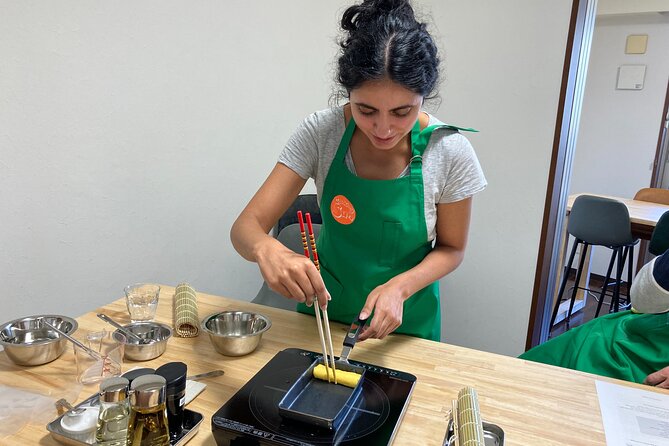
Cooking Sun’s instructors are patient and willing to explain. The class works well for beginners because the process is broken into small steps, with a demonstration before each task.
English communication has been a strong point. Instructors have been described as clear English speakers who talk slowly and explain Japanese food traditions as they go. Names connected with individual classes include Yoshi, Ami, and Jaimi, though the instructor you meet depends on the date.
The tone is warm rather than formal. You can ask questions, take photos, and work at a manageable pace. One class included a participant with physical difficulties, and the instructor took extra care to help. That suggests a useful level of patience, though you should still tell the provider about any specific needs before booking.
Not every teacher will have a high-energy presentation style. One account found the hosts kind and helpful but not especially dynamic. If you want a fast, theatrical cooking show, this may feel quiet. If you prefer clear instruction and time to practice, that slower pace is a benefit.
Vegetarian and Gluten-Free Choices
Vegetarian versions are available, with a choice involving eggs or no eggs. You must request the option when booking, rather than waiting until you arrive.
A gluten-free option is also available by request. Since sushi ingredients and sauces can vary, make the request early and explain your needs clearly. The supplied information confirms that these options exist, but it does not specify the exact replacement ingredients.
This flexibility makes the class suitable for mixed groups. A vegetarian can participate while others make the standard version. Just remember that a request at booking is part of the planning.
Is $71.16 Good Value for Three Hours?
At $71.16 per person, this is more expensive than simply ordering sushi in Osaka. That comparison misses the point, though. The price includes a three-hour lesson, prepared ingredients, an apron, instruction in three techniques, miso soup, and the meal you make.
I see the value in the small group size. With no more than eight people, you are paying for access to the instructor, not just a seat at a demonstration. The class also gives you skills you can use after the trip, from making tamagoyaki-centered rolls to pressing oshizushi in a mold.
The value is strongest if you want an activity, not just food. A restaurant meal may cost less, but it will not explain why Osaka is associated with box sushi or show you how to form nigiri. For families, couples, solo visitors, and anyone interested in Japanese cooking, the added instruction makes the price easier to justify.
The value is weaker if you are short on time, dislike structured activities, or mainly want to eat high-end sushi. This is a beginner cooking class, not a sushi-chef training course or a market-to-table lesson.
Who Should Book This Class?
I would recommend it for first-time sushi makers, families with older children, couples, solo visitors, and food-focused visitors who want more than a meal. The small format also suits anyone who likes asking questions and learning at a calm pace.
It is especially good for people curious about regional Japanese food. Oshizushi gives the class a clear Osaka connection, while the explanations about ingredients and regional traditions add useful context.
Children can take part, as shown by a family whose 12-year-old made sushi alongside the adults. The supplied information does not give a minimum age, so confirm that point if you are booking for a younger child.
You can also book as a solo participant. One person ended up working alone with the staff and described it as a very good experience. Group size varies, but the class maximum is eight.
You may want to choose another activity if you need a highly polished show, want to prepare every ingredient from scratch, or prefer a tasting tour. Here, the focus is on assembly, shaping, and eating your finished sushi.
Practical Details That Matter
Confirmation is provided when you book, and the ticket is mobile, so you do not need a printed voucher. The activity starts at 9:30 am, lasts about three hours, and finishes at the meeting point.
Free cancellation is available if you cancel at least 24 hours before the local start time. Cancellations or changes made inside that window are not accepted for a refund.
The class is near public transportation, but the apartment-building entrance remains the main practical challenge. Save the Japanese building name, allow extra time, and remember the Room 807 call procedure.
The class has a maximum of eight people. That limit is worth noting because it shapes the entire experience. You will have more opportunity to receive help than in a large cooking school, though the energy may depend on the instructor and the mix of people in your group.
Should You Book the Dotonbori Sushi Class?
Book it if you want to make, eat, and understand sushi in one compact Osaka activity. The combination of salad roll, nigiri, and Kansai-style oshizushi gives you real variety, while the small group and patient English instruction make the class friendly to beginners.
I would book ahead, especially since this experience is commonly reserved well in advance. Put in your dietary request at the same time, and arrive early enough to locate Masters Residence Dotonbori I without stress.
Skip it if your main goal is premium restaurant sushi or a full professional kitchen session. For most food-focused visitors, though, $71.16 buys a useful skill, a filling meal, and a closer look at an Osaka specialty you might otherwise overlook.
FAQ
Where does the sushi class take place?
The class takes place at Cooking Sun in Masters Residence Dotonbori I, Room 807, at 2-chome 9-14 Shimanouchi, Chuo Ward, Osaka, postal code 542-0082.
What time does the class start?
The class starts at 9:30 am.
How long does the experience last?
The activity lasts approximately three hours.
How many people can join the class?
The maximum group size is eight people.
What kinds of sushi will I make?
You will make a salad roll, nigiri-zushi, and oshizushi, also known as pressed or box sushi.
Is a vegetarian option available?
Yes. Vegetarian options are available with eggs or without eggs. Request your preference when booking.
Is a gluten-free option available?
Yes. A gluten-free option is available by request. Make the request when booking.
Are ingredients and an apron provided?
Yes. Ingredients are prepared for you, and an apron is provided.
What is the cancellation policy?
You can cancel for a full refund up to 24 hours before the experience start time. Cancellations or changes made less than 24 hours before the start time are not accepted for a refund.
Just added around Osaka
- Nara Day Trip from Osaka with a Licensed Guide★ 5.0 · 3 reviews
- Osaka Early Morning Osaka Castle Tour Avoid Crowds★ 5.0 · 3 reviews
- Guided Tour of Some Attractions in Osaka by Private Car★ 5.0 · 3 reviews
- Private Transfer Between Kyoto and Kansai Airport KIX★ 5.0 · 3 reviews
- Shared Arrival Transfer: Osaka Itami Airport to Osaka City★ 5.0 · 3 reviews
- Osaka: Sushi Making Class and Dotonbori Food Tour★ 4.7 · 3 reviews
- Osaka Night Photography Workshop★ 5.0 · 3 reviews
- Kyoto Full day Tour Kinkakuji, Kiyomizu-dera and Fushimi Inari★ 4.5 · 3 reviews
Dotonbori & Namba Tours, compared.

Osaka Local Foodie Walking Tour in Dotonbori and Shinsekai
Read our review →
Dotonbori District River Cruise with Drink Discount
Read our review →
Ultimate Osaka Walking Tour: Castle, Dotonbori & Hidden Gems
Read our review →


Dotonbori River Cruise with Glico Sign & Neon Views
Read our review →
Browse the lists this tour appears in