
Reviewed · OSAKA SUSHI MAKING CLASSES
【Private】Sushi Making Osaka! Omakase Cooking Class in Japan!
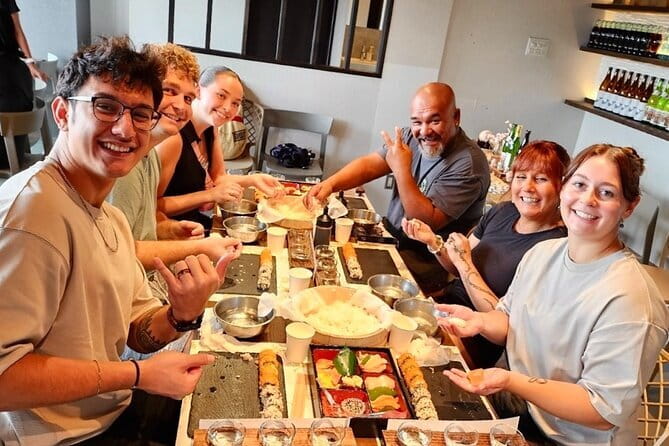
Making sushi here means more than pressing rice into a shape and calling it lunch. In about 90 minutes, you learn the basics of nigiri and maki sushi, hear how sushi developed, then eat what you make. I like the clear English instruction and the relaxed teaching style associated with Momoka, Momo, and Hiro. I also like that the activity is private, so your group can learn at its own pace.
The main catch is the $848.74 group price. It can be good value for a full group of ten, but it is expensive for one or two people. Also, the class is advertised in Osaka, while some provider wording refers to Tokyo, so check your confirmation carefully before setting out.
In This Review
- Key points to know before booking
- Starting in Higashishinsaibashi
- A short lesson on sushi before you start
- Making nigiri, the classic hand-shaped sushi
- Rolling maki without losing the filling
- Eating what you make in the second half
- Private format and the price question
- Menu choices and food restrictions
- Teaching style and the human side of the class
- Who should book this Osaka activity
- Booking details that matter
- Should you book Sushi Making Osaka?
- FAQ
- Where does the sushi class take place?
- How long does the activity last?
- What types of sushi will I learn to make?
- Is the class private?
- How many people can join one booking?
- Is an English-speaking instructor included?
- Is the food included?
- Are vegetarian or vegan menus available?
- Can I request a special menu on the day?
- Can I cancel for a full refund?
Key points to know before booking
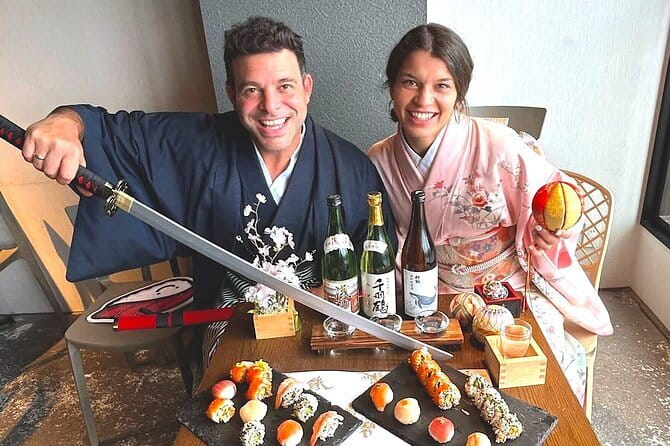
- Two sushi styles in 90 minutes: You learn both nigiri, the classic hand-shaped style, and maki, the rolled style.
- Private booking for up to 10 people: Your group takes part together rather than joining a public class.
- English-speaking instruction: The class is designed for international visitors, with clear explanations and active help from the staff.
- Flexible food options: Standard, gluten-free, vegan, vegetarian, halal, and certain allergy menus are available if requested in advance.
- Central Osaka meeting point: The class begins and ends at 1-chōme-16-20 Higashishinsaibashi, in Chuo Ward.
- A hands-on meal is included: Ingredients, instruction, and the sushi you prepare are part of the booking.
Starting in Higashishinsaibashi
The class meets at 1-chōme-16-20 Higashishinsaibashi, Chuo Ward, Osaka, 542-0083. The activity ends at the same place, and hotel transportation is not included, so you will need to make your own way there and back.
That fixed meeting point makes the class easy to fit into a day in central Osaka. You can schedule it before or after sightseeing in the city, then continue exploring historic sites once the food lesson is over. Still, the supplied information does not name a nearby station or give walking directions, so I would use the exact address in your booking confirmation and allow time to find the entrance.
The location is in the heart of Osaka, a useful setting for a food class. Sushi is one of the clearest ways to connect with Japanese culture through an ordinary meal, and this activity gives you something practical to do rather than simply watching a chef work.
Because the class lasts only about an hour and a half, you do not lose an entire afternoon. That matters in Osaka, where you may want time for markets, temples, shopping, or historic sights. The short format also suits families and mixed-age groups that may not want a long cooking course.
More sushi making classes:
- Sushi Making Osaka Roll and Authentic Japanese Sushi Class
★ 5.0 · 1,220 reviews - Osaka Sushi Making Experience
★ 5.0 · 400 reviews - Osaka: Roll and Authentic Sushi Making Class in Dotonbori
★ 4.9 · 239 reviews
A short lesson on sushi before you start
The first half begins with an introduction to sushi history and basic preparation. The class presents sushi as a central part of Japanese food culture, then moves quickly into making it yourself.
That order is useful. You understand what you are shaping before you start handling rice and ingredients, and the history gives the meal a little more meaning. You are not just copying hand movements. You are learning why two familiar forms of sushi look and feel different.
The instructors speak English and are described as clear, energetic presenters. Momoka is noted for being funny and patient, while Momo and Hiro are associated with an enthusiastic, helpful teaching style. Those details matter in a hands-on class. Sushi rice can be sticky, the portions can be awkward at first, and small instructions are easier to follow when the teacher keeps the mood light.
I would expect the class to favor participation over a formal chef demonstration. You are there to make sushi, not to sit quietly while someone else prepares it. The staff help you through the process, which is especially useful if this is your first attempt.
The class is also designed as entertainment. That can be a strength for families, couples, and groups of friends. If you are looking for advanced knife skills, fish sourcing, or professional restaurant training, this is probably not the right format. It is an introductory cultural activity with food at its center.
Making nigiri, the classic hand-shaped sushi
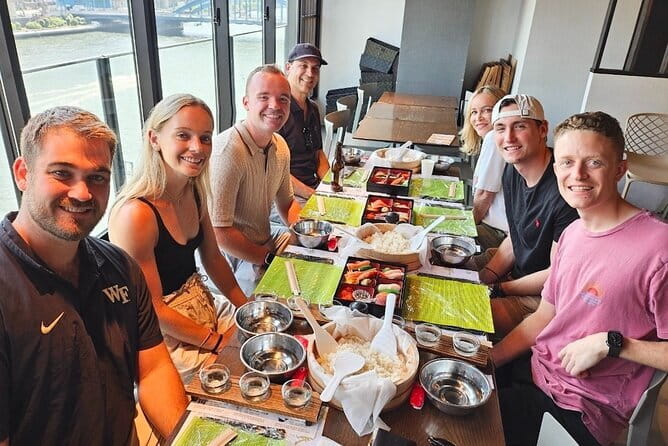
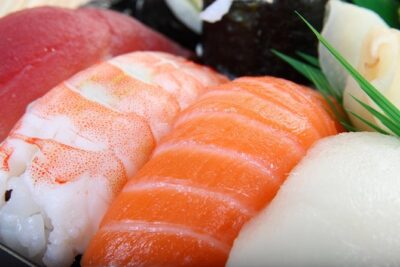
Nigiri is the first sushi style taught. It is the familiar piece made with a small mound of rice and a topping placed over it, and the class presents it as the most popular and standard sushi style in Japan.
For you, nigiri is the part that may look simple but requires a gentle touch. The rice must hold together without becoming a hard ball. The finished piece should be neat enough to eat comfortably, but the point is learning the basic shape rather than producing restaurant-perfect work.
The class lets you make as many pieces as you like during the preparation period, according to the supplied schedule. That gives you room to repeat the movement instead of making one piece and immediately moving on. Repetition is valuable here, since the first attempt may be more compact or uneven than you expect.
I like nigiri as a teaching choice because it shows the connection between rice, topping, and hand technique. You get a direct sense of how much rice is needed and how lightly it should be handled. It also gives you a useful vocabulary for Japanese food when you order sushi later in your trip.
The available information does not specify the fish, toppings, or number of pieces. Do not book this expecting a named seafood menu or a tasting list. The focus is on learning the form and eating the sushi you prepare.
Rolling maki without losing the filling
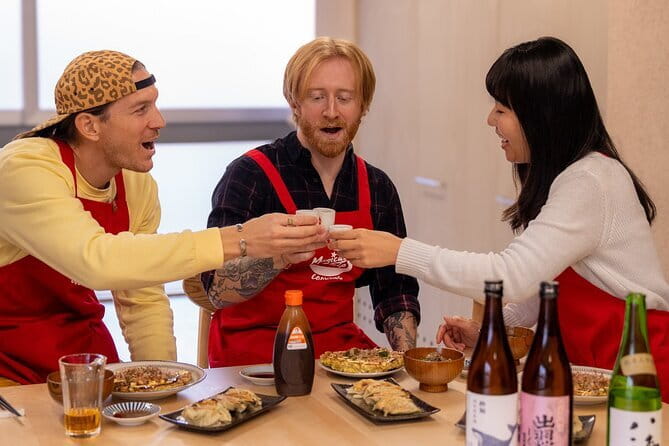
The second style is maki, also called roll sushi. This is the form many people outside Japan know best, with ingredients enclosed in rice and rolled into a cylinder.
Maki is a good contrast to nigiri. Instead of shaping one piece at a time, you work with a larger sheet and several ingredients, then try to keep the roll firm as you form it. The result is familiar, but the method gives you a different kind of challenge.
The class describes maki as popular around the world, making it an approachable option for first-time participants. You may already have eaten rolls, but making one yourself helps explain why the rice needs to be spread evenly and why the filling must be placed with some restraint. Too much filling makes a roll difficult to close. That is a small lesson, but a useful one.
The instructors’ patient approach is important during this part. A roll that opens up is not a disaster, and the class is built around trying again and enjoying the result. The tone appears playful rather than strict, which is one reason the activity works for people with different levels of cooking experience.
As with nigiri, the precise ingredients are not listed. If you have a firm preference about seafood or other fillings, contact the provider before booking. The class does not accept ingredient specifications, so special requests have limits.
More Japanese home cooking classes:
- Osaka: Ramen and Gyoza Cooking Class in Dotonbori
★ 5.0 · 378 reviews - Osaka: Sumo Stage Show with Bento or Snack + Fight & Photo
★ 4.3 · 364 reviews - Osaka: Traditional Mochi Pounding Experience with Tasting
★ 4.9 · 306 reviews - Osaka Cooking Class: Okonomiyaki &Japanese cuisines experience
★ 5.0 · 261 reviews
Eating what you make in the second half
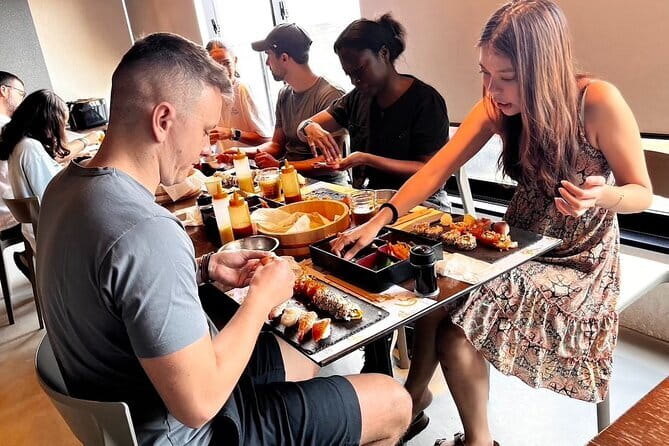
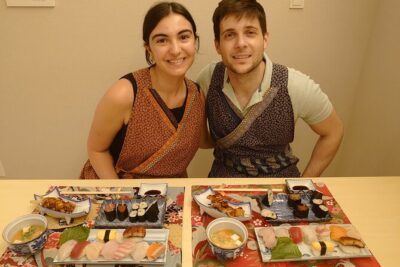
After the hands-on portion, you eat the sushi you have prepared. This creates a clear payoff: your meal is connected to the work you just completed.
I like this structure more than a class that rushes through cooking and leaves no time to sit down. The final meal gives you a chance to look at the different shapes, compare your nigiri and maki, and enjoy the food without hurrying through the last few minutes.
The class includes the ingredients and the meal. Drinks, extra food, and other purchases are not listed as included, so you should not assume they are part of the price.
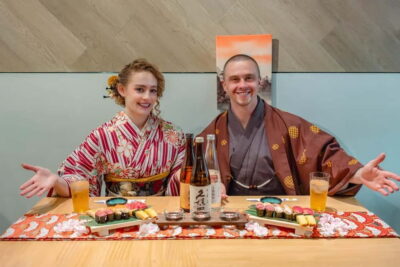
The food will not be judged like a restaurant plate. The value is in the process, the instruction, and the shared memory of making lunch or dinner together. If you are hoping for a high-end omakase meal served by a sushi chef, note the difference between the title and the actual format. This is an omakase-themed cooking experience, but the main event is your own preparation.
Private format and the price question
The booking costs $848.74 per group, with up to ten people included. At the maximum size, that works out to about $84.87 per person. For a full family group, several couples, or a group of friends, the price becomes easier to justify because everyone shares the private session.
For two people, the calculation looks very different. You are paying the full group rate for a 90-minute class, ingredients, an English-speaking instructor, and the meal. I would compare it with other private food experiences in Osaka before booking if your group is small.
The private setup has real value. You do not have to worry about strangers slowing down your group, and the staff can focus on your participants. One piece of feedback describes concern about being placed with other people, followed by a positive experience meeting others. That comment relates to the social side of cooking activities generally, but this booking is specifically described as private, so your reservation should be organized around your own group.
The price may also make sense for a special occasion. A birthday, family outing, or group celebration benefits from having a shared activity with a clear beginning and end. The class is short enough to combine with a full day in Osaka, but substantial enough to feel like more than a quick photo stop.
I would not choose it mainly for budget dining. You can eat sushi for less elsewhere. Choose it for the lesson, the shared activity, and the chance to make your own meal.
Menu choices and food restrictions
Several menu formats are available:
- Standard
- Gluten-free
- Vegan
- Vegetarian
- Halal
- Allergy menu
The allergy option has important limits. The class says meat, nuts, fruits, and dairy are not used for that menu, but it does not accept individual ingredient specifications. If you have a serious allergy, contact the provider before reserving and explain your needs clearly.
You must request a menu change when you make the reservation. The staff cannot respond to changes made on the day, and last-minute requests are not accepted. This is one of the most important practical points in the whole booking.
The menu information does not identify every ingredient used in the standard class. A vegetarian or vegan option is available, but you should still ask for confirmation if you need to avoid a particular item. Halal diners should also arrange the correct menu ahead of time rather than relying on a same-day conversation.
These choices make the class suitable for a wider range of groups, but the lack of ingredient-level customization means it is not ideal for every dietary situation. Plan ahead and treat the menu request as part of booking, not as a small note to handle later.
Teaching style and the human side of the class
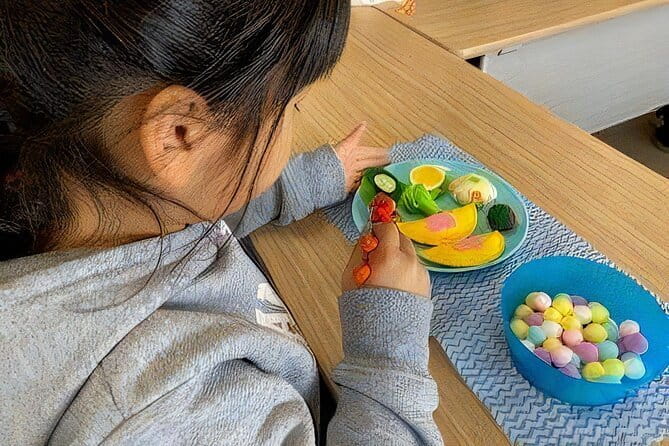
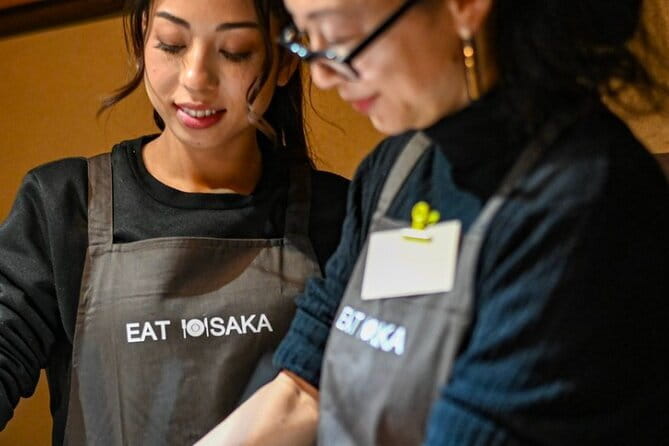
The strongest part of this activity is likely to be the staff. The class is led in English, and the instructors are described as friendly, funny, patient, and enthusiastic.
Momoka is specifically associated with a lively and patient teaching style. Momo and Hiro are also named as welcoming hosts who help participants feel comfortable. Instructor names can change, so I would not assume a particular person will lead your scheduled class, but these examples give you a sense of the intended atmosphere.
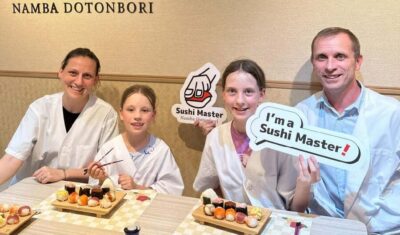
That warmth matters because cooking in front of other people can feel awkward. You may worry about making a crooked roll or mishandling the rice. A relaxed teacher keeps the focus on learning and makes it easier for children and first-time cooks to join in.
The class has received a 4.8 rating from nine published ratings, with four and five-star feedback emphasizing the clear English, sushi history, patience, food, and fun. The sample feedback is positive, but the number of ratings is small. I would treat it as encouraging rather than conclusive.
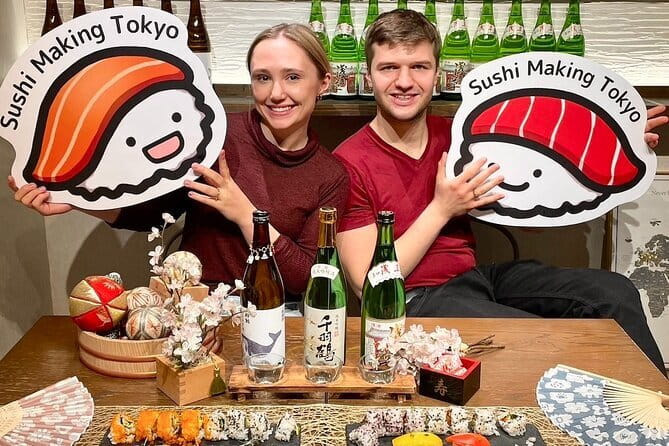
One detail deserves attention: the provider is called Sushi Making Tokyo, and some staff responses use the phrase Sushi Making Tokyo, even though this experience meets in Osaka. That may reflect the provider’s branding or an older template. It is not necessarily a problem, but I would confirm the Osaka address, date, and meeting instructions before leaving your hotel.
Who should book this Osaka activity
I would recommend the class most strongly to:
- Families wanting a hands-on activity that does not take all day
- Couples and friends looking for a shared food experience
- First-time visitors who want cultural context with their meal
- Groups that can divide the private price among several people
- Diners who need vegan, vegetarian, halal, gluten-free, or allergy menu options and can plan ahead
It may be less suitable for you if you want a serious culinary course, a long chef-led lesson, or a luxury sushi dinner. The session is designed for fun, basic technique, and cultural introduction.
It also may not suit a very small group on a tight budget. The private price is fixed per group, so the value improves as your party gets larger.
Booking details that matter
Your confirmation is issued at the time of booking, and the activity uses a mobile ticket. Service animals are allowed, and the meeting point is near public transportation, though the provided details do not identify the exact route.
Free cancellation is available up to 24 hours before the local start time for a full refund. Changes made less than 24 hours ahead are not accepted, and cancellations inside that window are not refunded. The experience also requires a minimum number of participants. If the provider cancels because that minimum is not met, you are offered another date or experience, or a full refund.
I would book the food option at the same time as the class and save the mobile ticket before heading out. Since the activity ends at the meeting point, you can plan your next Osaka stop without arranging a pickup.
Should you book Sushi Making Osaka?
Book it if you want a friendly, short, hands-on introduction to sushi and can share the private fee with a group. The two-style format, English instruction, flexible menu choices, and meal at the end give the class a clear purpose.
I would hesitate if you are booking for only one or two people and care mainly about the food cost. In that case, a regular sushi meal may be better value. Before paying, confirm the Osaka location, your dietary menu, and the class date, especially because the provider’s Tokyo branding appears in some of the wording.
For a family or group of friends, this is a practical way to spend 90 minutes in central Osaka. You leave with a basic understanding of nigiri and maki, a meal you helped prepare, and a story that is more personal than simply ordering sushi at a counter.
FAQ
Where does the sushi class take place?
The meeting point is 1-chōme-16-20 Higashishinsaibashi, Chuo Ward, Osaka, 542-0083, Japan.
How long does the activity last?
The class lasts approximately 1 hour and 30 minutes.
What types of sushi will I learn to make?
You learn to make nigiri sushi and maki sushi, also known as roll sushi.
Is the class private?
Yes. This is a private activity, and only your group participates.
How many people can join one booking?
The price covers a group of up to ten people.
Is an English-speaking instructor included?
Yes. An English-speaking instructor is included, and the class is presented in clear English.
Is the food included?
Yes. The ingredients used in the cooking class and the meal are included.
Are vegetarian or vegan menus available?
Yes. Vegan and vegetarian menus are available, along with standard, gluten-free, halal, and allergy menus.
Can I request a special menu on the day?
No. Menu changes must be requested when you make the reservation. The provider cannot respond to changes made on the day and does not accept individual ingredient specifications.
Can I cancel for a full refund?
Yes, if you cancel at least 24 hours before the experience start time. Cancellations made less than 24 hours ahead are not refunded.
Just added around Osaka
- Guided Tour of Some Attractions in Osaka by Private Car★ 5.0 · 3 reviews
- Nara Day Trip from Osaka with a Licensed Guide★ 5.0 · 3 reviews
- Osaka Early Morning Osaka Castle Tour Avoid Crowds★ 5.0 · 3 reviews
- Private Transfer Between Kyoto and Kansai Airport KIX★ 5.0 · 3 reviews
- Shared Arrival Transfer: Osaka Itami Airport to Osaka City★ 5.0 · 3 reviews
- Osaka: Sushi Making Class and Dotonbori Food Tour★ 4.7 · 3 reviews
- Osaka Night Photography Workshop★ 5.0 · 3 reviews
- Kyoto Full day Tour Kinkakuji, Kiyomizu-dera and Fushimi Inari★ 4.5 · 3 reviews
Osaka Sushi Making Classes, compared.
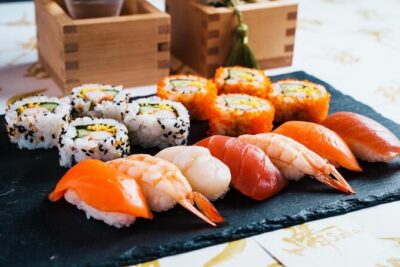
Sushi Making Osaka Roll and Authentic Japanese Sushi Class
Read our review →
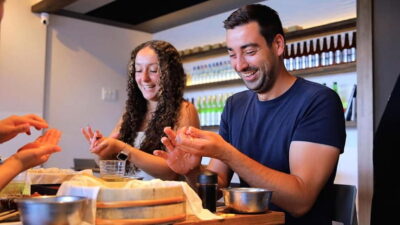
Roll and Authentic Sushi Making Class in Dotonbori
Read our review →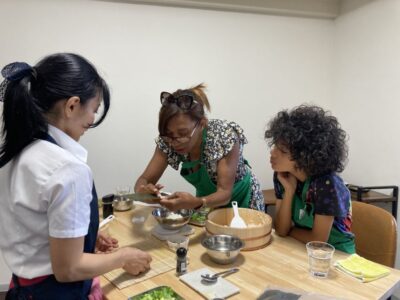
Browse the lists this tour appears in