
Reviewed · OSAKA SAMURAI & NINJA EXPERIENCES
Samurai Calligraphy:Final brushstrokes of a lifetime before a War
The most unusual part of this Osaka activity is its farewell-to-war theme. You choose one kanji to represent your life, practice its form, then create a large final character with a brush more than five times the normal size. It turns calligraphy into a personal ritual, not just a handwriting lesson.
I like the thoughtful choice of a single character and the chance to work with teacher Kaori, who also writes names in kanji and helps select suitable symbols. I also like the powerful closing performance, with a bold circle painted to the beat of taiko drums. The main drawback is that 90 minutes goes quickly, and the $64.38 price may feel high if you want only a basic calligraphy lesson.
In This Review
- Key points to know before booking
- Choosing one kanji for your last words
- Sixty minutes of Japanese shodo with teacher Kaori
- Why the empty paper is part of the art
- Hakama, kimono pieces, and the samurai setting
- The 30-minute oversized-brush performance
- What the $64.38 price includes
- Getting to the meeting point in Osaka
- Who will enjoy this most
- Booking, timing, and cancellation details
- Should you book Samurai Calligraphy?
- FAQ
- Where does the activity take place?
- How long does the activity last?
- How is the 90 minutes divided?
- What will I learn during the shodo lesson?
- Do I choose my own final kanji?
- What happens during the samurai calligraphy section?
- Are costumes and calligraphy supplies included?
- Is photography included?
- Can I cancel for a refund?
Key points to know before booking
- Your final kanji has a personal meaning: You reflect on your life and choose the character you want to leave behind.
- The oversized brush changes the whole activity: You use your body to guide a brush more than five times larger than a normal calligraphy brush.
- The lesson has two distinct parts: Expect 60 minutes of Japanese shodo followed by 30 minutes of samurai calligraphy.
- The blank paper matters: The open space around the character is treated as part of the artwork, not wasted room.
- You receive costume and tools: Samurai clothing, hakama and kimono pieces, shodo supplies, and a professional photographer are included.
- The group is capped at eight: That keeps the session fairly small, though the activity still runs on a fixed schedule.
Choosing one kanji for your last words
This activity begins with a serious question: if you were preparing to go to war during Japan’s Warring States Period, what single character would you leave behind?
The word used for this farewell is resignation, meaning the final words a person writes before death. You are not simply copying a decorative symbol. You are asked to think about your life, the people and feelings you want to leave behind, and the story your character should suggest.
That idea gives the lesson more weight than a standard souvenir workshop. You might choose a character connected to strength, peace, love, family, hope, or another value. The supplied information does not name a fixed list of kanji, so the useful question is not which character is most impressive? It is which meaning feels right to you?
The choice can also be the hardest part. If you are unfamiliar with kanji, a symbol may look beautiful while carrying a meaning you did not intend. Teacher Kaori can help with the selection, and she has written visitors’ names and chosen symbols for them during the lesson. Take advantage of that help rather than making a quick choice from a phone translation.
More samurai and ninja experiences:
- Samurai Training Experience KENDO in Osaka
★ 5.0 · 515 reviews - OSAKA NIGHT FUSION Japanese Taiko Kabuki Samurai Dance Show
★ 4.8 · 155 reviews - Osaka: Samurai Training Experience KENDO in Osaka
★ 5.0 · 111 reviews
Sixty minutes of Japanese shodo with teacher Kaori
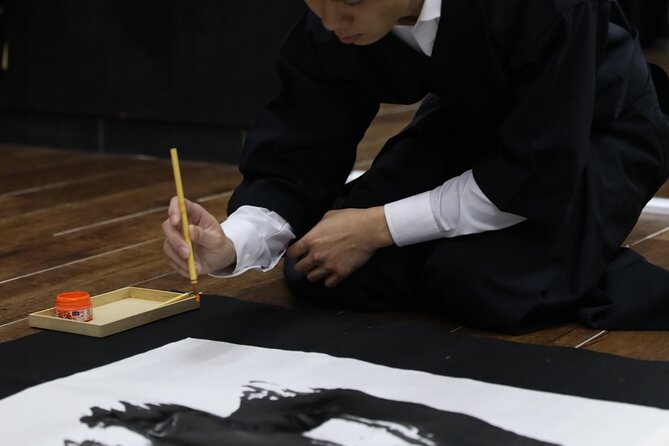
The first hour is devoted to Japanese shodo, the art of brush calligraphy. You learn the basic strokes and the correct stroke order for your chosen kanji. That order matters because the character is built through a set sequence, not by tracing a picture until it looks close enough.
You begin with normal-size tools, giving you a chance to feel how the brush moves and how ink responds to pressure. The early practice is useful even if your final goal is the dramatic samurai piece. It helps you understand where a stroke starts, how it changes direction, and how much ink a brush can carry.
The session is listed as a 60-minute lesson, so you should expect focused practice rather than a full study of Japanese calligraphy. You will not become a calligrapher in one hour. You can, however, leave with a better sense of why a simple-looking character takes control and patience.
One especially nice touch is the help with names. Kaori has written names in kanji and selected symbols for participants, which gives the lesson a personal angle beyond the main character. If you want a name rendered in Japanese, ask about it early so it fits naturally into the session.
The activity has an English or Chinese-speaking assistant. That is important because the meaning of a character, the order of its strokes, and the ideas behind blank space are difficult to communicate through gestures alone. Still, language support can vary by session, so bring your questions clearly and do not hesitate to ask for the meaning and pronunciation of anything you receive.
Why the empty paper is part of the art
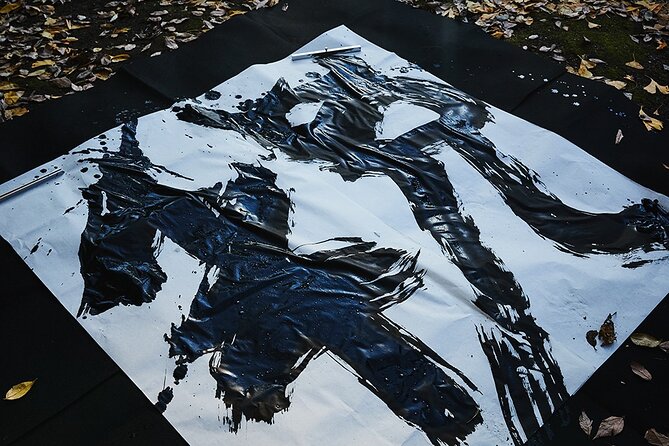
Japanese calligraphy is not only about the inked character. The open paper around it is also considered beautiful. This sense of beauty in the margins means that a small amount of writing on a large sheet can be deliberate and balanced rather than unfinished.
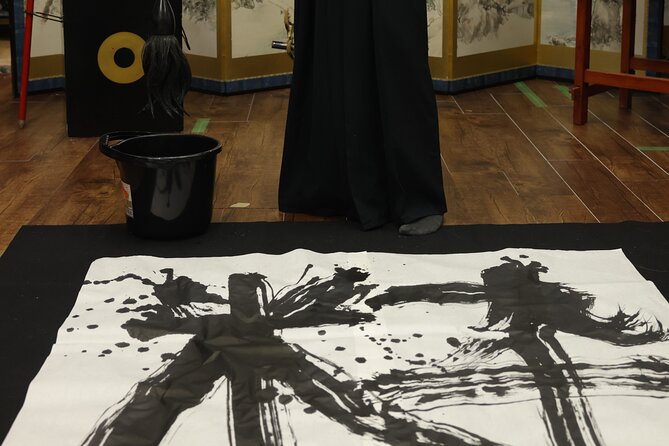
That idea becomes especially clear during the final performance. The character occupies only part of a 150-by-150-centimeter sheet, while the remaining paper gives it room to breathe. A beginner may feel tempted to fill empty space, but here the blank area helps show the scale and confidence of the mark.
This is one reason the activity works well for people who want a cultural lesson rather than a quick photo in costume. You are introduced to an artistic idea that may be unfamiliar to many Western visitors: absence can carry as much visual force as the written form.
The lesson also has a calm side. One participant described the calligraphy as meditative, and that makes sense. Repeating basic strokes, watching the ink spread, and focusing on one symbol can slow the pace of an Osaka sightseeing day. The samurai theme adds drama, but the preparation is quiet and deliberate.
Hakama, kimono pieces, and the samurai setting
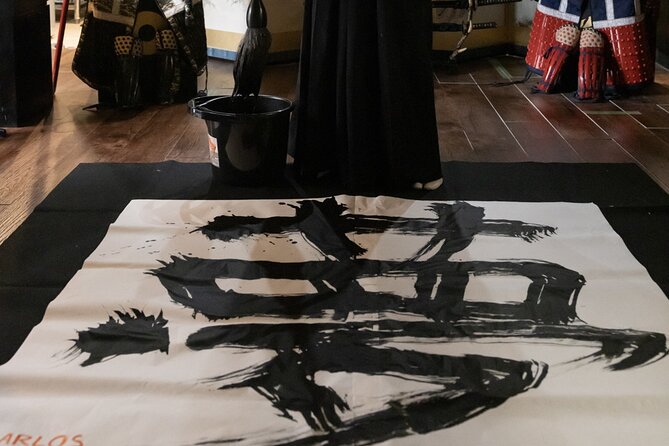
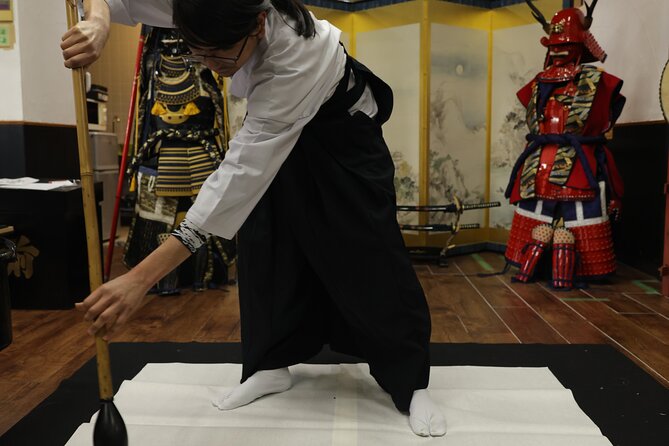
The package includes a samurai outfit, hakama, and kimono pieces. It is important to read that correctly: this is not a full kimono dressing service. You receive clothing suitable for the activity and photographs, but you should not book it expecting a complete formal kimono transformation.
The clothing helps mark the change from practice lesson to performance. It also gives the final artwork a stronger visual setting, especially when the oversized brush is brought out. A professional photographer is included, so you do not need to rely entirely on a phone while handling a large brush.
The costume is best viewed as part of the theatrical presentation, not as the main reason to book. If your top priority is formal Japanese dress, another specialist activity may suit you better. If you want to connect clothing, martial imagery, music, and calligraphy in one short session, this combination has real appeal.
A paid movie-shooting option is available for ¥11,000 per person. That is separate from the included photography, so check the cost before adding it. A paid wagami option, using collected hair and kanzashi, costs ¥3,300 per person. These extras may interest visitors building a more elaborate visual keepsake, but they are not needed for the core lesson.
More traditional craft workshops:
- 1.5〜2 Hours Traditional Kintsugi Work Shop in Namba Osaka
★ 5.0 · 75 reviews - Osaka: Private Japanese Calligraphy Experience
★ 5.0 · 66 reviews - From Osaka: Sakai Knife Maker or Blacksmith Walking Tour
★ 4.9 · 64 reviews - Osaka: Traditional Japanese Ceramics Private Experience
★ 5.0 · 57 reviews
The 30-minute oversized-brush performance
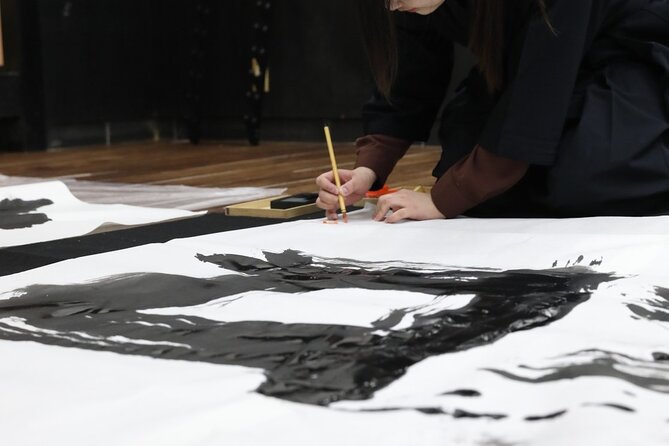
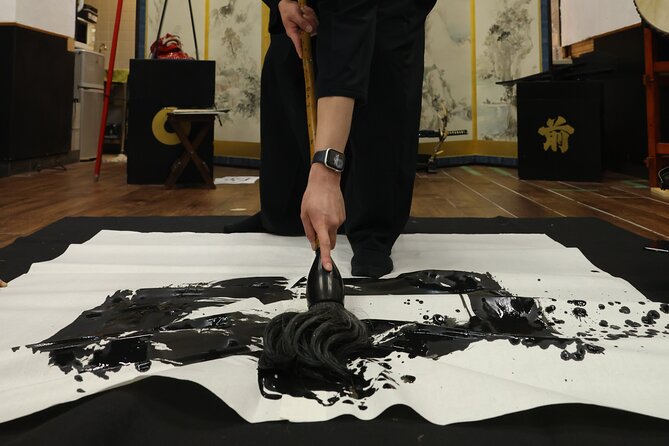
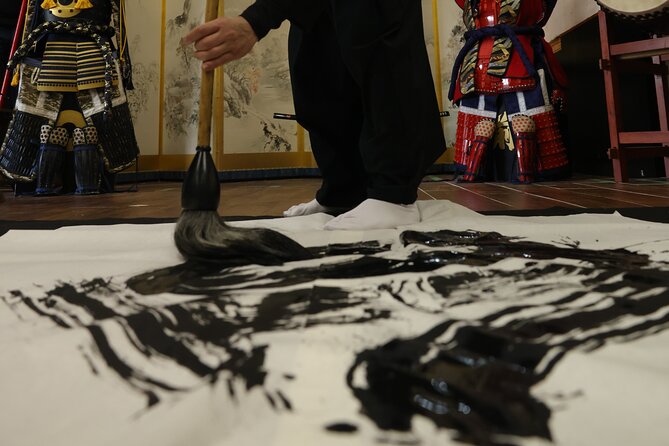
The second part lasts about 30 minutes and centers on one large character. The artist uses a brush more than five times larger than a normal calligraphy brush, working on the huge square sheet with broad movements.
This is not a scaled-up version of ordinary handwriting. A brush that large cannot be guided only with the fingers. The artist uses the whole body to control its direction, pressure, and speed. That physical movement gives the piece a sense of force, but the result is also described as fragile and beautiful. The ink mark is strong because it is committed, yet it cannot easily be corrected.
You can expect the performance to focus on one character rather than a long written passage. That narrow focus is a strength. The activity builds toward a single visual statement, so the meaning you considered during the first hour has a clear ending.
The closing circle, or ◯, is painted boldly to the beat of taiko drums. The circle is a simple form, but the combination of sound, movement, costume, and brush makes it a memorable finale. If you prefer quiet museums and small-scale craft, this part may feel theatrical. If you enjoy live cultural demonstrations, it adds the energy that a normal calligraphy class lacks.
The exact role of each participant in the performance is not fully specified. You should expect instruction and a dramatic presentation, but do not assume that you will independently produce the entire large artwork without guidance. The description says the artist creates the powerful single character, while you learn and practice beforehand.
What the $64.38 price includes
At $64.38 per person, the price is reasonable for a 90-minute activity that combines instruction, costumes, tools, photography, language help, and a live-style performance. It is not a low-cost brush lesson, but you are paying for several connected parts rather than one classroom hour.
The value is strongest if you want a finished memory with a story behind it. You choose the character, learn enough about its form to appreciate it, dress for the setting, and see an oversized version made with music. The professional photographer also saves you from choosing between participating and taking pictures.
The price is less attractive if you mainly want to practice calligraphy for a long time. Sixty minutes of standard shodo is the main teaching block, and the final 30 minutes are devoted to samurai calligraphy and performance. You should also budget for the optional filming or wagami additions if those appeal to you.
The group maximum is eight people. That is small enough to keep the workshop from feeling like a large stage show, though the level of one-to-one help will depend on how many people attend. The activity is booked, on average, 48 days ahead, so it is wise to reserve before your Osaka dates are fixed in stone.
Getting to the meeting point in Osaka
The meeting point is at Japan, 536-0014 Osaka, Joto Ward, Shiginonishi, 2-chōme 3-19, Excellence Takayama. The activity ends back at this same meeting point.
Public and private transportation are not included. The location is near public transportation, but you need to arrange your own route and allow time to find the building. Use the exact address in your navigation app and arrive with a little spare time, especially if you are unfamiliar with Osaka’s neighborhood streets.
Because the activity returns to its starting point, it is easier to plan around than a one-way sightseeing tour. You can leave with the same transport options you used to arrive. The mobile ticket is useful for keeping confirmation on your phone, but it does not replace the need to check your route.
Most people can participate, and the group limit is eight. No special physical requirements are listed. Still, the oversized-brush segment involves broad body movement, so wear clothing that allows you to move comfortably under the costume.
Who will enjoy this most
I would recommend this activity to you if you like cultural workshops with a clear theme and a personal result. It suits visitors who want more than a quick demonstration, but who do not want to spend half a day in a formal calligraphy school.
It is also a good fit for couples, families with older children, and small groups who enjoy making photos part of the memory. The choice of a final kanji gives each person a different focus, while the costume and taiko ending give the group a shared event.
You may want to skip it if you dislike theatrical presentations, have no interest in Japanese writing, or want a fully formal kimono dressing session. The war and deathbed framing is central to the activity, too, so it may feel heavier than a lighthearted craft class.
The activity can also work for solo visitors. The group is limited to eight, the teacher provides direction, and the included photographer helps with the visual record. Just remember that the final symbol is personal. Give yourself time to think before the lesson rather than choosing a character at the last second.
Booking, timing, and cancellation details
The session lasts approximately 90 minutes: 60 minutes of Japanese shodo and 30 minutes of samurai calligraphy. Confirmation is provided at booking, and the mobile ticket makes entry simple.
Free cancellation is available if you cancel at least 24 hours before the local start time. Cancellations made within 24 hours are not refunded, and changes inside that period are not accepted. That policy is fairly flexible for a scheduled small-group activity, but Osaka plans can change quickly, so check your transport and other bookings before the cut-off.
Should you book Samurai Calligraphy?
Book it if you want an intimate cultural activity that combines personal reflection, Japanese writing, costume, photography, and live performance in one compact visit. The best part is not simply painting a kanji. It is deciding what that character means, then seeing the idea expanded into a forceful final brushstroke.
At $64.38, I see good value for the full package, especially if you would otherwise pay separately for a class, costume rental, photography, and a cultural show. I would book early because the activity is often reserved well ahead and only eight places are available.
Think twice if your goal is serious calligraphy training, a complete kimono experience, or a quiet lesson with no theatrical ending. For everyone else, this offers a memorable way to connect with shodo and samurai imagery without giving up an entire day in Osaka.
FAQ
Where does the activity take place?
It takes place in Osaka at Japan, 536-0014 Osaka, Joto Ward, Shiginonishi, 2-chōme 3-19, Excellence Takayama.
How long does the activity last?
The total duration is approximately 90 minutes.
How is the 90 minutes divided?
Japanese shodo takes about 60 minutes, followed by about 30 minutes of samurai calligraphy.
What will I learn during the shodo lesson?
You will practice basic brush strokes and the correct stroke order for the kanji you choose.
Do I choose my own final kanji?
Yes. You reflect on your life and select one character whose meaning represents what you want to leave behind.
What happens during the samurai calligraphy section?
An oversized brush is used to create one powerful character on a 150-by-150-centimeter sheet of paper. A bold circle is also written to the beat of taiko drums.
Are costumes and calligraphy supplies included?
Yes. Samurai clothing, hakama and kimono pieces, and shodo tools are included. The clothing is not a complete kimono set.
Is photography included?
A professional photographer is included. Movie shooting is available for an additional ¥11,000 per person.
Can I cancel for a refund?
You can receive a full refund if you cancel at least 24 hours before the local start time. Cancellations or changes made within 24 hours are not accepted for a refund.
Just added around Osaka
- Nara Day Trip from Osaka with a Licensed Guide★ 5.0 · 3 reviews
- Osaka Early Morning Osaka Castle Tour Avoid Crowds★ 5.0 · 3 reviews
- Guided Tour of Some Attractions in Osaka by Private Car★ 5.0 · 3 reviews
- Private Transfer Between Kyoto and Kansai Airport KIX★ 5.0 · 3 reviews
- Shared Arrival Transfer: Osaka Itami Airport to Osaka City★ 5.0 · 3 reviews
- Osaka: Sushi Making Class and Dotonbori Food Tour★ 4.7 · 3 reviews
- Osaka Night Photography Workshop★ 5.0 · 3 reviews
- Kyoto Full day Tour Kinkakuji, Kiyomizu-dera and Fushimi Inari★ 4.5 · 3 reviews
Osaka Samurai & Ninja Experiences, compared.
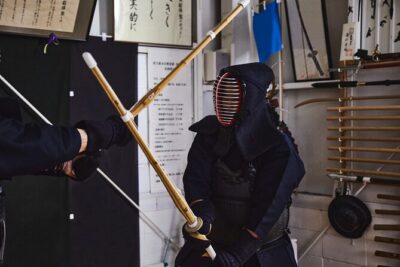
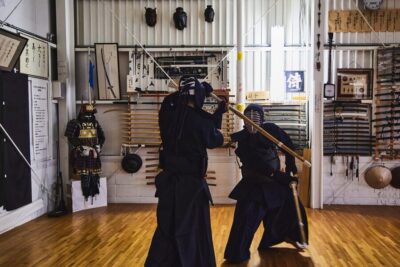
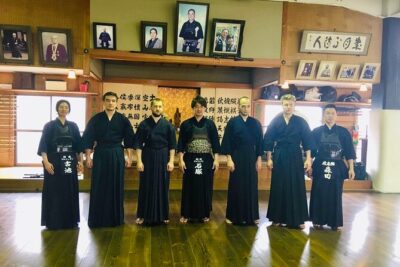
Osaka 2-Hour Genuine Kendo / Samurai Experience In Japan
Read our review →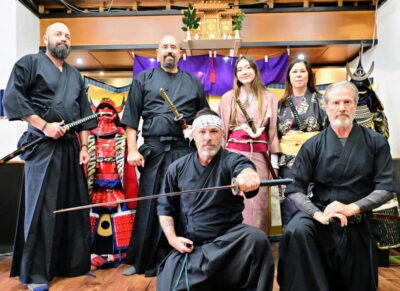
Learn Bushido – Trial Slashing with Samurai Sword
Read our review →
Samurai Show, Tea Ceremony, Japanese Traditional Activities
Read our review →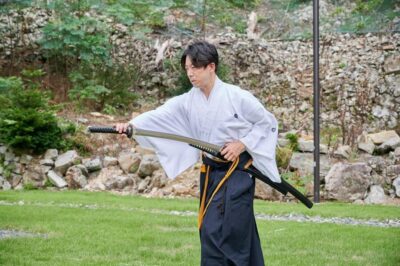
Private Samurai Experience – Train with Sword Master
Read our review →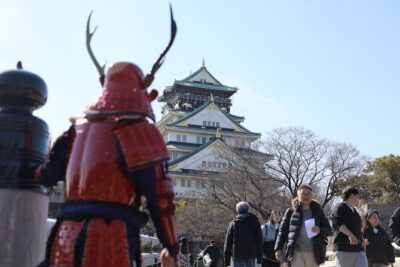
Honor – Experience Samurai & traditional Culture to the fullest
Read our review →Browse the lists this tour appears in