
Reviewed · OSAKA SAMURAI & NINJA EXPERIENCES
Osaka: Private Samurai Experience – Train with Sword Master
The unusual part of this Osaka outing is the setting: you train with sword master Tatsuya Watanabe inside a restricted area of Ryuan-ji or Saiko-ji Temple, a place normally closed to the public. You learn basic sword movements, watch a private performance, and hear how classical Japanese swordsmanship connects the body, mind, and spirit.
I like the small private-group format, which gives the instructor room to correct your posture and strikes. I also like the walk from Minoh Station, where your guide explains the temple and surrounding area before you reach the training grounds. The main consideration is language: Watanabe-san speaks Japanese, so you will rely on an interpreter for much of the instruction.
In This Review
- Key points
- From Minoh Station to a Private Temple Grounds
- Entering Ryuan-ji or Saiko-ji Temple
- Watching Watanabe-san’s Sword Performance
- Learning the Basic Sword Movements
- Why the Interpreter Matters
- A Cultural Lesson, Not a Samurai Costume Photo
- Is the $158 Price Worth It?
- Timing, Group Size, and Practical Planning
- Who Should Book This Experience
- Should You Book It?
- FAQ
- Where does the samurai experience begin?
- Where does the training take place?
- How long does the experience last?
- Who teaches the swordsmanship?
- What languages are available?
- Is this a private activity?
- Will I use a real sword?
- Is a sword performance included?
- What is included in the price?
- Can I cancel for a refund?
Key points
- Train in a restricted temple area: The private grounds provide a quiet, historic setting unavailable during a normal temple visit.
- Meet a genuine sword-school headmaster: Tatsuya Watanabe inherited the position of soke, or headmaster, of Suishin-ryu while still in his twenties.
- Watch a special sword performance: The demonstration shows the control, timing, and discipline behind the movements you later practice.
- Practice with a wooden sword: The session teaches basic holding, posture, strikes, and cuts in a supervised setting.
- Enjoy more than a martial-arts class: The program includes temple background, samurai philosophy, sword culture, and a look at historic weapons.
- Build in about three hours: Meet at Minoh Station, walk to the temple, train for roughly 1.5 hours, and return to the station.
From Minoh Station to a Private Temple Grounds
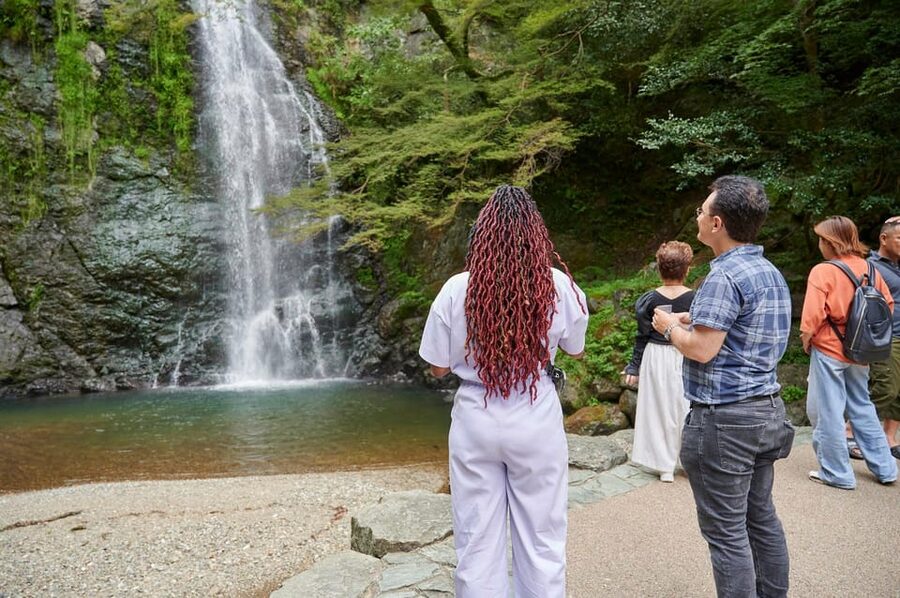
Your meeting point is easy to identify: stand in front of Minoh Station and look for the guide holding a yellow DeepExperience sign. The guide leads you toward the temple and explains the area along the way, turning what could be a simple transfer into part of the program.
Minoh is outside central Osaka, so this is not a quick activity squeezed between visits in the Namba or Dotonbori districts. You need to allow time to reach Minoh Station, then set aside about three hours for the full experience. That extra effort is part of the appeal. You leave the city’s busy sightseeing circuit and arrive at a quieter religious site with a very different mood.
The walk also helps you understand the transition from ordinary town life to the temple grounds. Guides have included Benoit, Claire, and Aimu, with English, French, and Japanese support available depending on the scheduled guide. If you do not speak Japanese, the interpreter matters, especially once the technical practice begins.
More samurai and ninja experiences:
- Samurai Training Experience KENDO in Osaka
★ 5.0 · 515 reviews - OSAKA NIGHT FUSION Japanese Taiko Kabuki Samurai Dance Show
★ 4.8 · 155 reviews - Osaka: Samurai Training Experience KENDO in Osaka
★ 5.0 · 111 reviews
Entering Ryuan-ji or Saiko-ji Temple
The program takes place at Ryuan-ji Temple in Minoh, or at Saiko-ji Temple according to the specific arrangement. The key point is private access. The training area is normally closed to the public, so you are not simply joining a standard demonstration in an open courtyard.
That restricted setting changes the feel of the visit. You are not standing behind a rope while a performer works at a distance. You enter a quiet part of the temple grounds and use the space for instruction. The setting is not a stage decoration. It provides the calm, formality, and sense of history that suit traditional sword practice.
Your guide gives background on the temple and the surrounding area. This is useful because the program is not only about holding a sword. You learn why the site matters and how spiritual discipline fits into the old martial tradition.
The temple portion is also a good reason to choose this activity over a generic sword show. A performance alone can be impressive, but it tells you little about the place or the habits behind the art. Here, the temple visit gives the sword work a physical and cultural setting.
Watching Watanabe-san’s Sword Performance
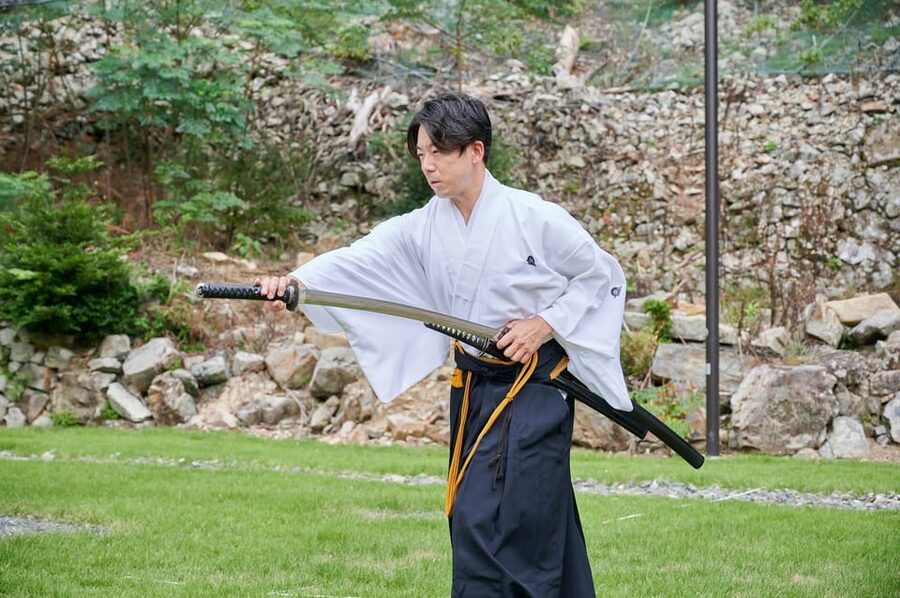
Before you begin, Tatsuya Watanabe gives a special sword performance reserved for this program. This is one of the strongest parts of the experience because it lets you see the finished skill before attempting the basic movements yourself.
His background is serious. He began kendo as a teenager, then studied Yagyū Shinkage-ryu, one of Japan’s established classical schools of kenjutsu, while at university. He later trained in several lineages and became soke, or headmaster, of Suishin-ryu in his twenties.
That title means more than being an accomplished practitioner. Watanabe-san is responsible for preserving the school’s methods, philosophy, spirit, and visual style. His work also includes presenting traditional sword culture through performances and cultural programs outside Japan.
The demonstration gives you a practical sense of what that training produces. You see precision, controlled movement, posture, timing, and restraint. The point is not wild movie-style action. The art depends on economy and focus.
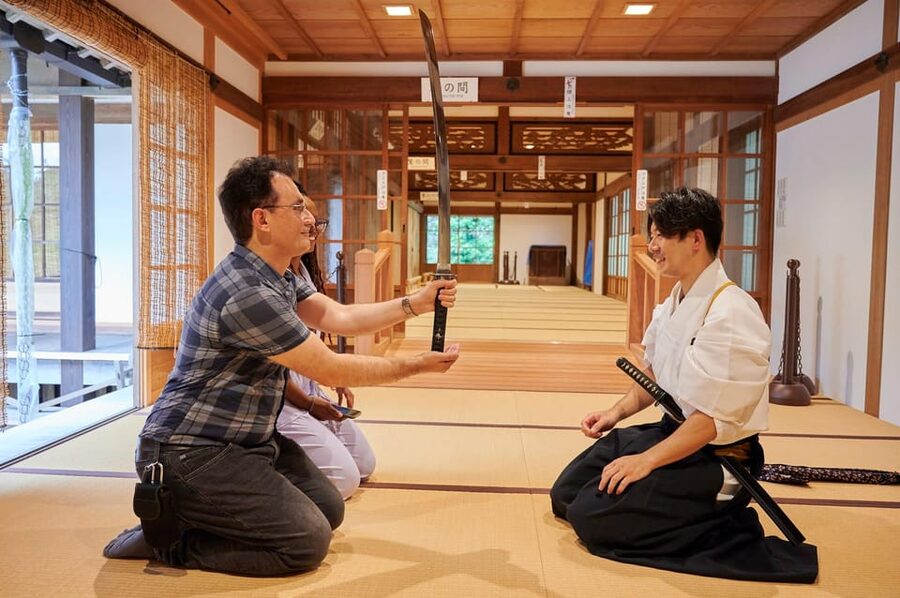
You might also see historic weapons during the temple visit. The program has included Watanabe-san’s personal sword collection, including a sword dating from 1370. Access to actual swords is unusual, but the handling is supervised and depends on the instruction given on the day. Treat every object with care and follow the guide’s directions closely.
Learning the Basic Sword Movements
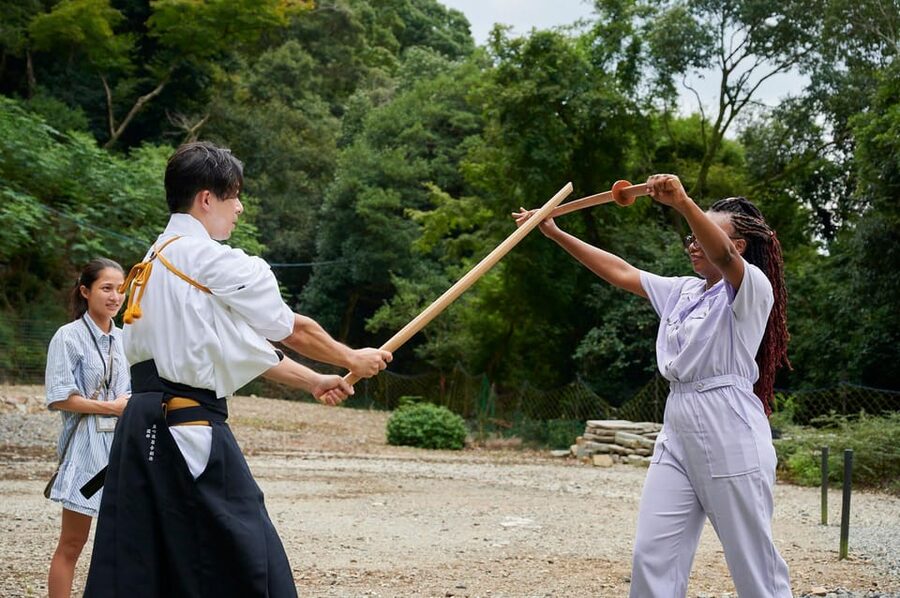
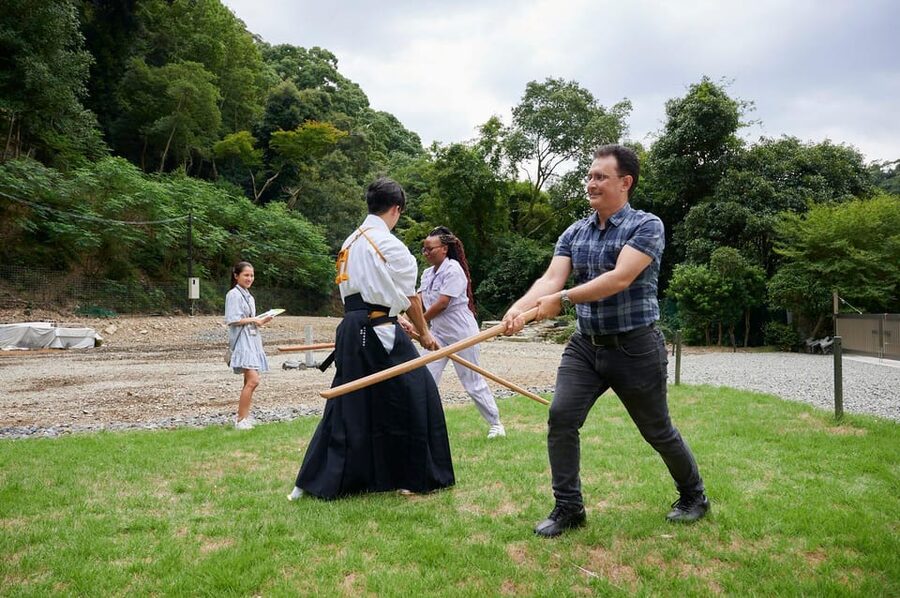
The practical lesson lasts about 1.5 hours within the overall three-hour program. You begin with a wooden sword, or bokken, and learn the foundations of the practice. The instruction includes how to hold the sword, how to stand, and how to make basic strikes and cuts.
This is not enough time to become a swordsman. It is enough time to understand that the movement is more demanding than it appears. Watanabe-san focuses on fluidity, posture, control, and the meditative quality of each action. You are not merely swinging a prop. You are learning how small changes in balance and alignment affect the movement.
The private format helps here. In a large class, an instructor cannot give much individual attention. In this setting, the teacher can offer specific advice about your stance, strike, or hand position. Translation takes a little extra time, but the direct corrections make the lesson feel personal.
Expect the class to require concentration rather than athletic power. The emphasis is on discipline and clean movement. You do not need prior martial-arts training to take part, but you should be ready to listen carefully and repeat the same action until it feels more natural.
Some sessions may progress from wooden swords to real swords for carefully controlled tasks, such as cutting paper. The exact sequence can vary, so do not assume you will handle a live blade. The wooden sword portion is the dependable core of the class, and it provides the basic training without turning the program into a risky stunt.
A few more Osaka tours and experiences worth a look
- Sagano Romantic Train & Arashiyama, Kiyomizudera, Fushimi Inari Taisha Day Tour
★ 4.5 · 171 reviews - Full Day Hiroshima and Miyajima Tour by Bullet Train from Osaka
★ 4.5 · 117 reviews - Hiroshima & Miyajima 1 Day Bus Tour with Bullet Train Tickets
★ 4.5 · 105 reviews - From Osaka: Hiroshima and Miyajima Day Trip by Bullet Train
★ 4.6 · 83 reviews
Why the Interpreter Matters
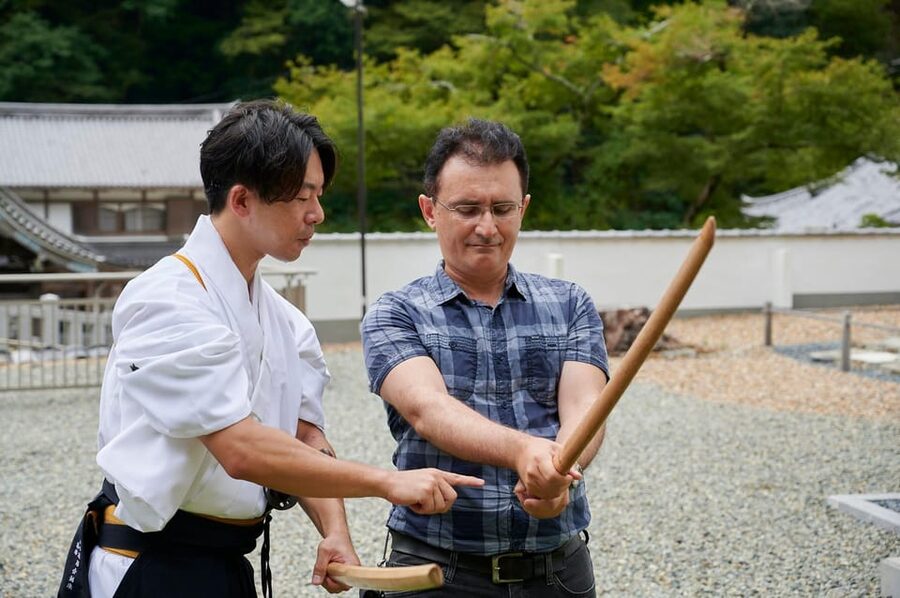
Watanabe-san speaks Japanese, while the program offers English, French, and Japanese guiding. The interpreter is not just there to translate a few historical facts. During practice, the guide explains the sword master’s corrections, timing, and ideas about the movements.
Benoit has been praised for explaining the area, temple, and instruction clearly in English. Other sessions have included Claire and Aimu. Your guide may differ, but the language options are listed as English, Japanese, and French.
You should expect a slight pause between instruction and translation. That is normal and not a flaw in the experience. The benefit is that you receive access to a teacher whose first language and specialist vocabulary are Japanese, while still understanding what you are being asked to do.
If you are especially interested in the philosophy behind the techniques, listen closely during these translated sections. The lesson is about more than how to make a strike. Watanabe-san presents swordsmanship as a daily practice involving purpose, discipline, and mental control.
A Cultural Lesson, Not a Samurai Costume Photo
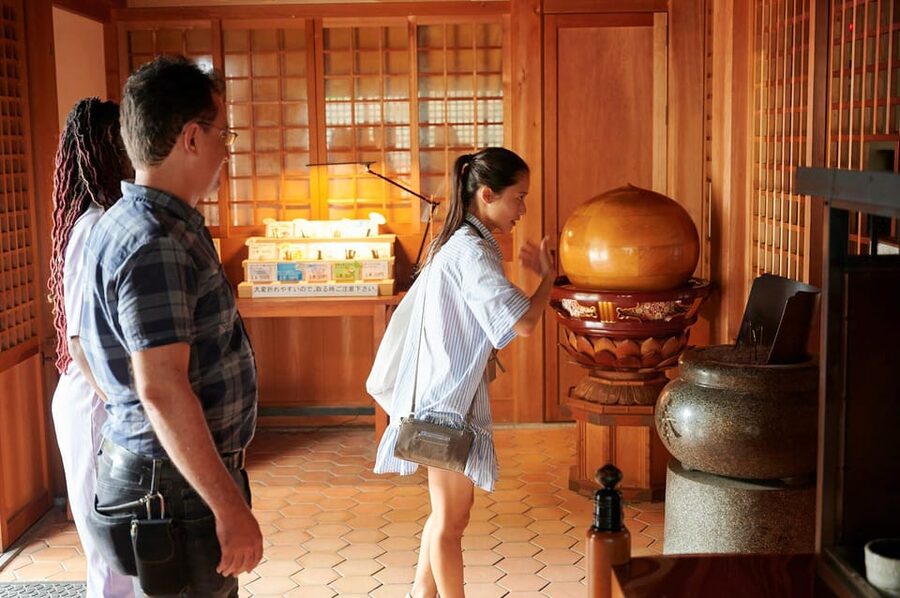
This activity is best understood as a traditional sword-culture program rather than a themed photo opportunity. The focus is on technique, history, and the values connected with old warrior schools.
You learn about Watanabe-san’s path from kendo to classical kenjutsu and about his role in preserving Suishin-ryu. You also see how a sword tradition can continue in modern Japan through teaching, performance, and cultural education.
That makes the experience meaningful for people who have already visited temples and shrines in Osaka. Instead of only looking at architecture, you gain access to a practice connected with discipline and spiritual training. The temple setting also encourages a quieter kind of attention than you might give to a typical sightseeing stop.
The program does not present samurai life as a simple fantasy. It shows the work behind the image: daily practice, controlled motion, patience, and responsibility to a school. I find that more valuable than a quick lesson built around theatrical sword flourishes.
Is the $158 Price Worth It?
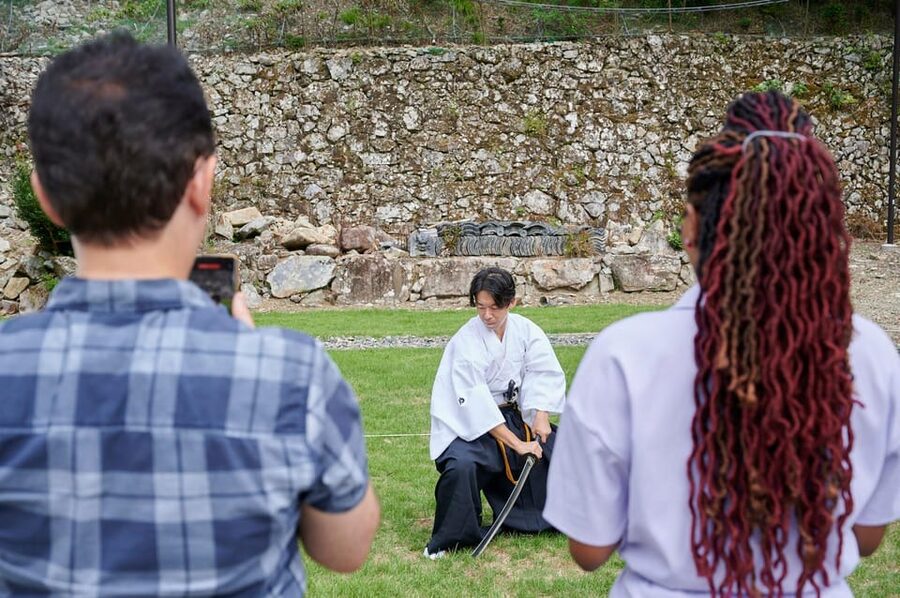
At $158 per person, this is not a budget activity. You are paying for a private group, a guide and interpreter, access to a normally restricted temple area, instruction from a sword-school headmaster, and a special performance.
The value depends on what you want from Osaka. If your goal is the lowest-cost introduction to Japanese martial arts, you can find less expensive classes. If you want a private cultural encounter with a senior practitioner in a historic setting, the price is easier to justify.
The private access is important. A normal temple visit gives you the public grounds, while this program adds a restricted training area and direct instruction. The guide also handles the cultural explanation and language support, which would be difficult to arrange independently.
The experience has received a 5.0 rating from 36 bookings, with repeated praise for Watanabe-san’s teaching, the interpreters, the temple setting, and the chance to handle historic swords. That pattern points to consistent strengths rather than one isolated highlight.
Families can find this especially memorable. A parent and child have described it as the best part of their time in Japan, and the class works well for beginners because it focuses on basic movements. Still, young children must be able to follow careful instructions around wooden and possibly real swords. The supplied information does not specify a minimum age, so check before booking for a child.
Timing, Group Size, and Practical Planning
The experience is listed as three hours, with the duration also shown as 270 minutes. The route begins and ends at Minoh Station. Plan your day around that fixed meeting point rather than treating the activity as a short stop near Osaka Castle or central Osaka.
Arrive on time at the station. Some sessions have accommodated late arrivals, but you should not count on that. A late start can reduce the time available for temple explanation or practice, and the route to the private grounds is part of the experience.
The group is private, which means the booking is for your own party rather than a large shared class. That is useful for families, couples, or friends who want to ask questions without feeling self-conscious. It also allows the instructor to adjust attention among participants.
Wear something that lets you move comfortably. The activity involves standing and repeated sword motions, although the supplied details do not state a formal dress code or physical requirement. Follow the guide’s directions about handling weapons and moving through the temple.
Cancellation is flexible: you can cancel up to 24 hours before the start for a full refund. You can also reserve now and pay later, which helps if your Osaka schedule is still shifting.
Who Should Book This Experience

I would choose this for anyone with a serious interest in Japanese history, martial arts, traditional culture, or unusual temple visits. It is also a strong pick if you have already seen Osaka’s main sights and want something more personal and less commercial.
It suits beginners better than experienced martial artists. You will not complete a full school curriculum in 1.5 hours, but you will gain a clear first lesson in posture, movement, and discipline. If you already practice kendo or kenjutsu, you may appreciate the chance to observe Watanabe-san’s approach and ask more focused questions.
Families with older children can enjoy it, especially if the child is fascinated by samurai history. Couples and small private groups benefit from the quiet setting and direct attention.
You should think twice if you want a fast, flashy attraction or a guaranteed chance to cut with a real sword. The heart of the experience is careful practice with a wooden sword and a cultural explanation. The performance and historic weapons add drama, but the class is grounded in patience and control.
Should You Book It?
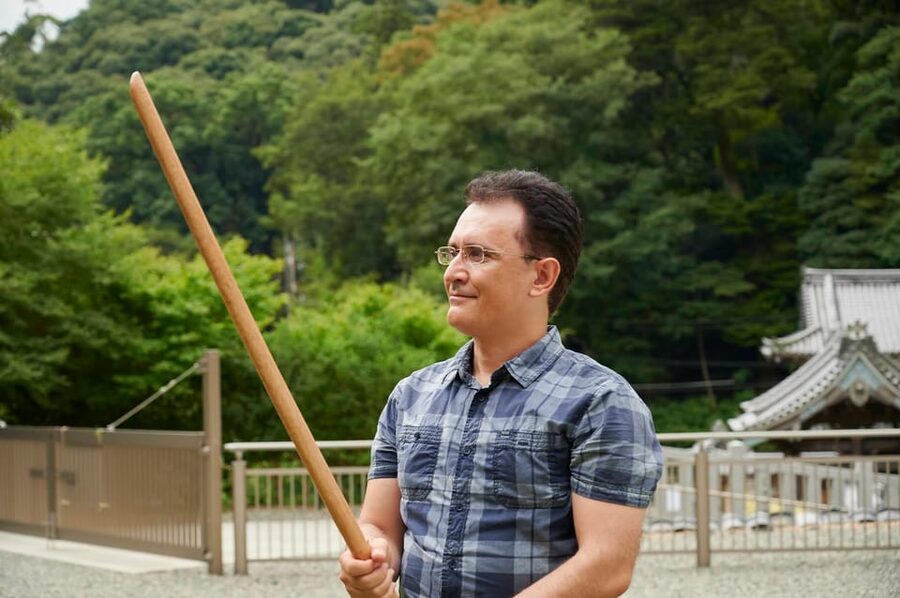
Book this private Osaka samurai experience if you value access, instruction, and cultural context more than convenience or a low price. The combination of Minoh, a restricted temple area, Watanabe-san’s performance, and translated hands-on training is difficult to duplicate with a standard sightseeing tour.
I would make it a half-day priority for a return visit to Osaka, a martial-arts enthusiast, or anyone seeking a thoughtful experience beyond the city’s headline sights. The only real caution is the language process and the premium price. If both are acceptable, this gives you a rare chance to meet a practicing keeper of a classical sword tradition and learn its basic movements in the setting where that tradition feels most at home.
FAQ
Where does the samurai experience begin?
Meet your guide in front of Minoh Station. The guide will hold a yellow sign with the DeepExperience logo.
Where does the training take place?
Training takes place in a private area of Ryuan-ji or Saiko-ji Temple. These secluded grounds are normally closed to the public for this type of access.
How long does the experience last?
The activity is listed as three hours, with the duration also shown as 270 minutes. The practical sword training takes about 1.5 hours within the overall program.
Who teaches the swordsmanship?
Sword master Tatsuya Watanabe leads the sword instruction. He studied kendo, Yagyū Shinkage-ryu, and other classical lineages, and he became soke, or headmaster, of Suishin-ryu in his twenties.
What languages are available?
Guiding and translation are available in English, Japanese, and French.
Is this a private activity?
Yes. The group type is listed as a private group.
Will I use a real sword?
The main practice uses a wooden sword. Some sessions have included supervised handling of real swords and cutting paper, but the supplied details do not guarantee that this will happen in every session.
Is a sword performance included?
Yes. The program includes a special sword performance by Watanabe-san.
What is included in the price?
The price includes the sword experience fee and the guide fee. It does not list transportation to Minoh Station or any other separate costs.
Can I cancel for a refund?
You can cancel up to 24 hours in advance for a full refund. The activity also offers reserve-now, pay-later booking.
Just added around Osaka
- Nara Day Trip from Osaka with a Licensed Guide★ 5.0 · 3 reviews
- Osaka Early Morning Osaka Castle Tour Avoid Crowds★ 5.0 · 3 reviews
- Guided Tour of Some Attractions in Osaka by Private Car★ 5.0 · 3 reviews
- Private Transfer Between Kyoto and Kansai Airport KIX★ 5.0 · 3 reviews
- Shared Arrival Transfer: Osaka Itami Airport to Osaka City★ 5.0 · 3 reviews
- Osaka: Sushi Making Class and Dotonbori Food Tour★ 4.7 · 3 reviews
- Osaka Night Photography Workshop★ 5.0 · 3 reviews
- Kyoto Full day Tour Kinkakuji, Kiyomizu-dera and Fushimi Inari★ 4.5 · 3 reviews
Osaka Samurai & Ninja Experiences, compared.

Osaka 2-Hour Genuine Kendo / Samurai Experience In Japan
Read our review →
Learn Bushido – Trial Slashing with Samurai Sword
Read our review →
Samurai Show, Tea Ceremony, Japanese Traditional Activities
Read our review →
Honor – Experience Samurai & traditional Culture to the fullest
Read our review →
Browse the lists this tour appears in