
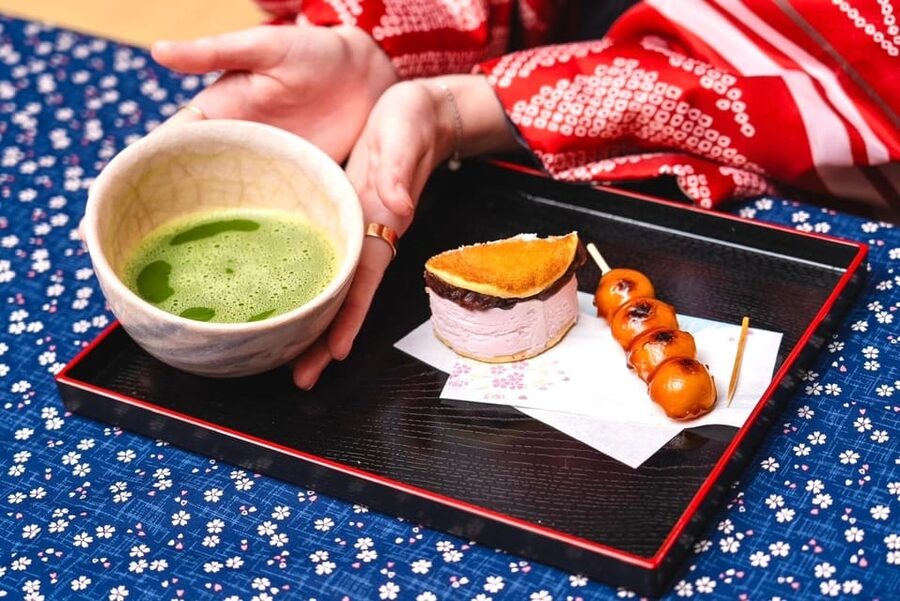
Reviewed · OSAKA TEA CEREMONY & MATCHA EXPERIENCES
Osaka Temple Head Spa &Matcha Facial – Refresh & Glow〈90min〉
The unusual part comes first in spirit: this is not simply a spa appointment. You move through a gentle Japanese temple ritual, then settle into a head spa and matcha facial with a revered Buddha in view. The foot bath in front of the Buddha is the experience’s most distinctive touch, pairing warm water, scent, and quiet with a setting you will not find at an ordinary beauty salon.
I like the mix of hands-on relaxation and cultural explanation, especially the incense offering, bell meditation, and tea ceremony. I also like the small group limit of three, which should keep the visit calm and personal. The main consideration is that the tea ceremony may be shared with other people, even though your treatment itself is individual.
In This Review
- Key points at a glance
- A temple ritual before the spa begins
- The Buddha-view foot bath
- Head spa and matcha facial treatment
- A traditional tea ceremony with a practical cultural lesson
- The yukata photograph is part of the keepsake
- Why the two-hour timing matters
- The meeting point requires care
- Is $141 a fair price?
- Who will enjoy this most?
- Booking advice and cancellation flexibility
- Should you book the Osaka Temple Head Spa?
- FAQ
- Where does the Osaka Temple Head Spa take place?
- How long does the experience last?
- What treatments are included?
- Is a tea ceremony included?
- Is the treatment private?
- Is a yukata provided?
- What should I enter into Google Maps?
- How many people are in the group?
- What is the cancellation policy?
Key points at a glance
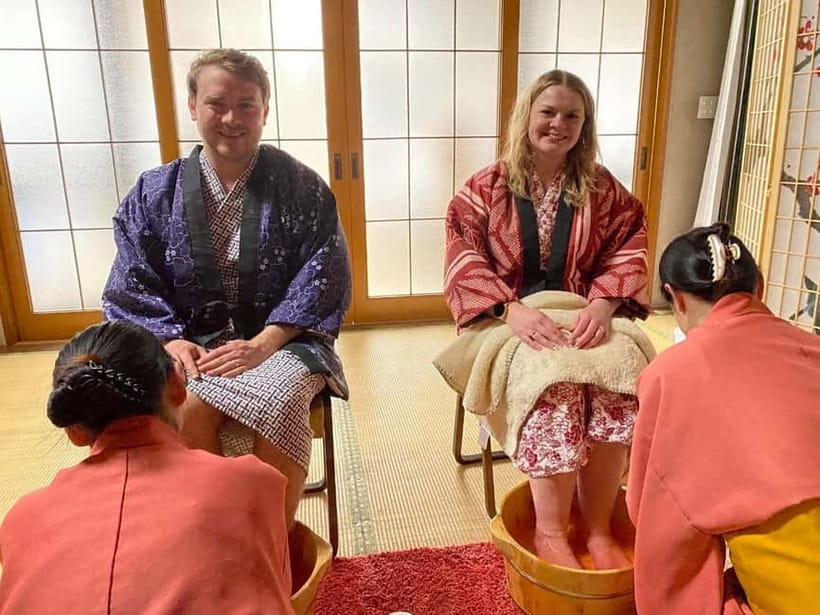
- A temple setting shapes the whole visit: You learn about worship customs and temple history before the relaxing treatments begin.
- The Buddha-view foot bath is the signature moment: Warm water, a scrub massage, and a tranquil religious setting make this more than a standard foot soak.
- The 90-minute course sits inside a roughly two-hour visit: Allow time for arrival, changing into a yukata, rituals, photographs, and tea.
- The treatment combines scalp and skin care: A head spa provides scalp massage, while the matcha facial pack is intended to nourish the skin.
- Tea is part of the cultural lesson: The ceremony includes an explanation of Japanese tea customs and history.
- Keep directions precise: Search Google Maps for Japanese Massage -the one&only-, not the temple name.
A temple ritual before the spa begins
You begin with a welcome drink and a change into a yukata. This immediately gives the appointment a ceremonial feel, though you should remember that the yukata is also part of the photo opportunity later.
The temple visit includes an incense offering and an introduction to the temple’s history and Japanese worship culture. That context matters. Without it, incense and bells can feel like attractive decoration. With a little explanation, they become part of a living religious practice, and you can take part with more care.
You then meditate with a bell and prepare kneaded incense. The pace is deliberately unhurried. This is not a sightseeing stop where you rush from one object to the next. The rituals help you leave Osaka’s city noise behind before the body treatments start.
I especially like this opening because it gives the spa work a clear setting. You are not just paying for a massage in a room with Japanese-style decorations. The visit begins with worship customs, quiet attention, and a temple atmosphere.
Still, this part may not suit someone who wants a fast massage and little conversation. The experience asks you to listen, follow simple rituals, and allow time for explanation. If your ideal spa appointment begins the moment you walk through the door, this may feel slower than expected.
More tea ceremonies and matcha sessions:
- Osaka: Tea Ceremony Experience
★ 4.9 · 1,426 reviews - Tea Ceremony Experience in Osaka Doutonbori
★ 5.0 · 754 reviews - Matcha Making Class in Osaka with Authentic Japanese Sweets Set
★ 5.0 · 509 reviews
The Buddha-view foot bath
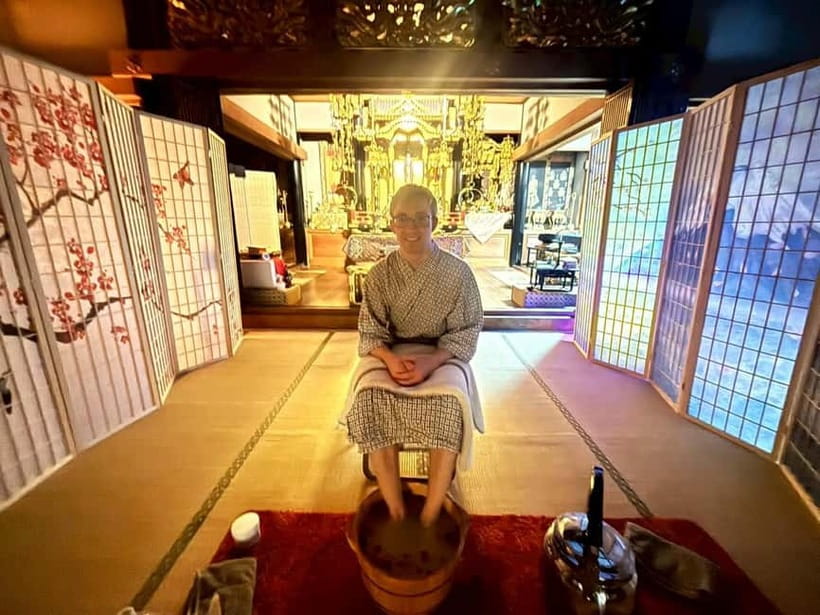
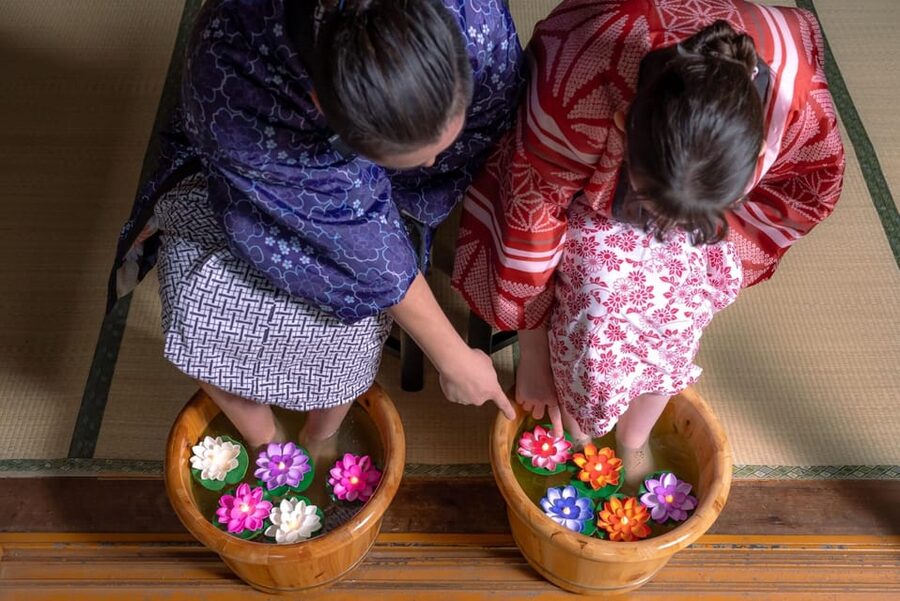
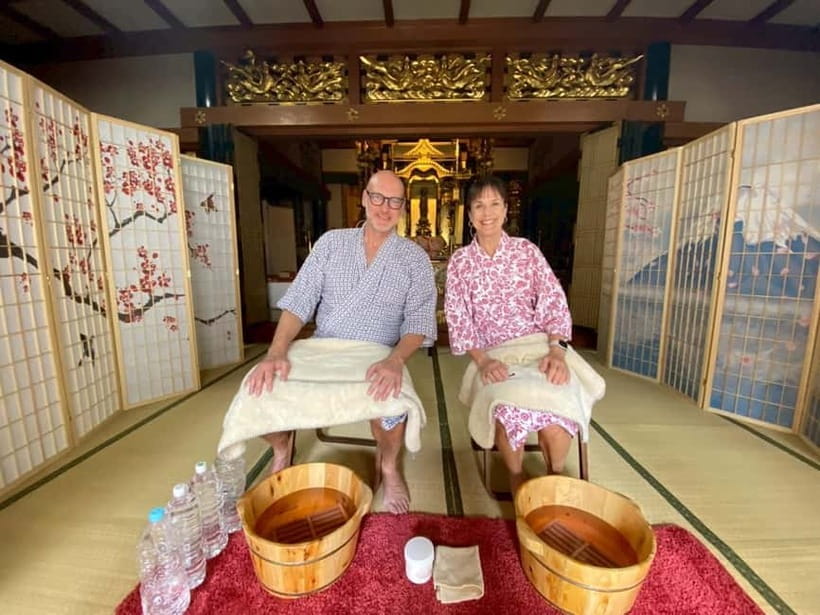
The foot bath is the most unusual portion of the course. It takes place directly in front of the temple’s revered Buddha, rather than in a private spa room. A scrub massage is included, so your feet receive more attention than they would during a simple soak.
The setting does much of the work. Warm water is pleasant anywhere, but here it is joined by the scent of the ritual space and a view connected to the temple. That combination gives you a short pause before the head treatment, and it is likely to be one of the details you remember most clearly.
I would not book this expecting a medical foot treatment or an intense reflexology session. The supplied details describe a relaxing foot bath and scrub massage, not a specialist therapy. Think of it as a sensory reset and a cultural experience.
The foot bath also shows why the visit costs more than a basic scalp massage. You are paying for a sequence of elements in a distinctive location, not just minutes on a treatment table. If you value atmosphere and Japanese customs, this adds real value. If you only want the strongest possible massage, some of the price goes toward the setting and activities around it.
Head spa and matcha facial treatment
After the foot bath, the course turns to its main relaxation work: a head spa with scalp massage and a matcha facial pack. The head spa is aimed at scalp relaxation, while the facial treatment is intended to nourish the skin.
The appeal is easy to understand after a busy day in Osaka. A scalp massage can feel especially calming because it focuses on an area that often holds tension, and the matcha facial adds a distinctly Japanese ingredient to the treatment. You are not simply receiving a generic facial with a local label attached. Matcha is part of the experience’s identity, alongside the temple and tea ceremony.
The information provided does not specify the exact products, pressure level, or whether you should arrive without makeup. I would ask the staff about those points if they matter to you, especially if you have sensitive skin or prefer a firm or gentle scalp massage.
The treatment is individual, which is useful if you book with a friend or family member but want personal attention during the spa portion. One mother and daughter booked together and found the experience relaxing, and the format also suits friends looking for a quiet shared outing without having to talk throughout the treatment.
Language may require patience. One person found that a staff member spoke little English, but a translation app worked well. That is worth knowing in advance. The visit includes explanations of worship and tea culture, so translation may be part of the rhythm. On the other hand, the massage itself requires little conversation, and you can simply relax during much of it.
A traditional tea ceremony with a practical cultural lesson
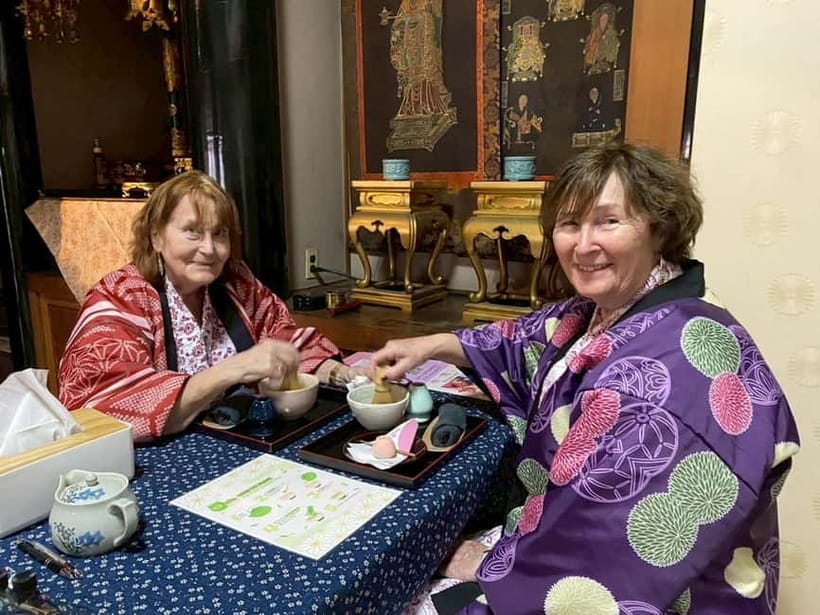
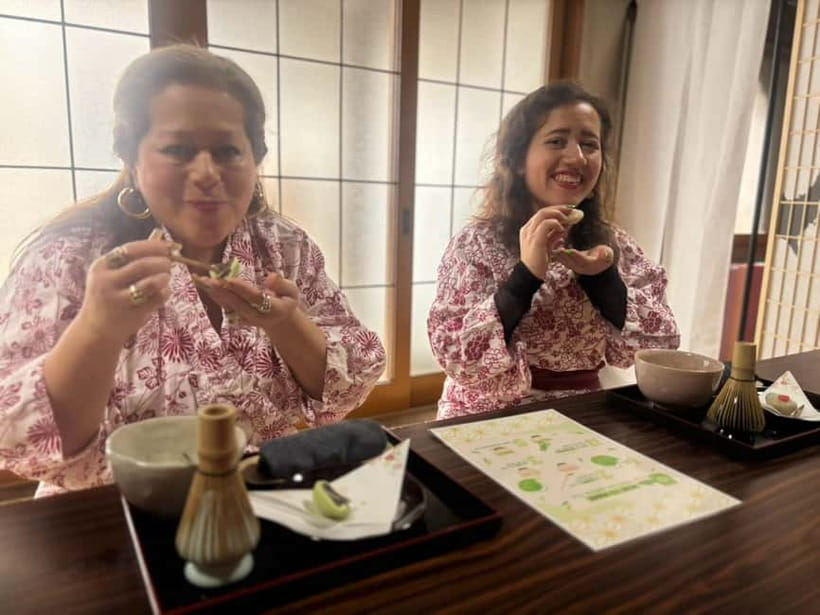
The tea ceremony follows the treatments or forms part of the later visit, with cultural and historical explanation included. This gives the appointment a proper finish: after physical relaxation, you sit with a drink and learn why tea matters in Japanese social and religious life.
The tea ceremony may be shared with other people. That is the one clear privacy limitation in an otherwise small-group experience. The group is limited to three participants, but the tea portion may include people outside your own booking. If you want every part of the appointment to be private, contact the provider before reserving.
I like the fact that the tea is explained rather than served as a quick refreshment. A ceremony can seem formal or mysterious if no one tells you what is happening. A cultural explanation helps you notice the gestures, timing, and etiquette without worrying about getting every movement perfect.
Do not expect a long formal performance based on the information available. It is described as a traditional tea ceremony with cultural and historical explanation, not as a full-day tea-school lesson. That makes it a good fit for a first introduction, especially if you want something more meaningful than a photo stop.
More onsen and spa afternoons:
- From Osaka: Himeji Castle, Arima Onsen & Mt. Rokko Day Tour
★ 4.6 · 339 reviews - Osaka Temple Cool Foot Bath & Matcha Experience〈45min〉
★ 4.9 · 82 reviews - Osaka: Solaniwa Onsen Hot Spring Visit
★ 4.6 · 51 reviews - Osaka: Mind & Spirit Balance Temple Reiki Healing
★ 5.0 · 41 reviews
The yukata photograph is part of the keepsake
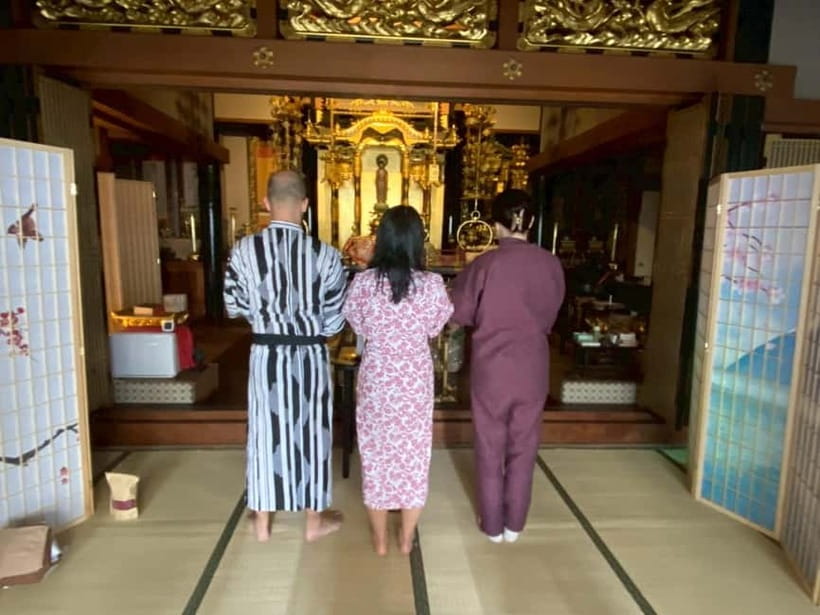
You receive complimentary smartphone photos while wearing the yukata. These are taken in the temple, giving you a simple record of the visit without requiring you to arrange a separate photographer.
This is a small inclusion, but it affects the value. Many cultural activities charge extra for costume photos, or leave you to ask another participant to take pictures. Here, the photo is built into the visit and serves as a keepsake of the rituals, foot bath, and tea experience.
Keep your expectations sensible. The details promise smartphone photos, not a professional portrait session or edited images. The value is convenience and memory rather than studio quality.
The yukata also helps connect the different parts of the appointment. You start by changing into it, take part in the temple setting, and finish with photos. The clothing is not just a costume placed on you for five minutes. It frames the experience from beginning to end.
Why the two-hour timing matters
The booking is described as a two-hour activity, while the listed course is marked as 90 minutes. The practical reading is that the main treatment course lasts about 90 minutes, with the full visit taking roughly two hours once you include the welcome drink, changing, temple visit, meditation, photos, and tea.
Allow the full two hours in your day. Do not schedule a train, meal reservation, or major attraction immediately afterward with no margin. The pace is part of the experience, and rushing away would undercut the calm you came for.
The small group limit of three is another useful detail. It is not a large coach-style activity, and the setting should feel more personal. You can book alone, with a friend, or with family. If you are arranging a private celebration or want no other participants at tea, ask ahead, since the tea ceremony can be shared.
The meeting point requires care
The meeting instructions are unusually important. When using Google Maps, enter Japanese Massage -the one&only-. Do not enter only the temple’s name, because that may take you to the back entrance and leave you searching.
A second landmark is the restaurant Tossa de coracao. The meeting point is right next to it. I would save both the exact search name and the restaurant before leaving your hotel, particularly if you are arriving during a busy part of the day.
This is not a minor technicality. A temple complex can have several entrances, and the wrong pin can turn a peaceful appointment into a last-minute hunt. Build in a few extra minutes and rely on the named business rather than the temple label.
Is $141 a fair price?
At $141 per person, this is not a budget foot bath or a quick massage. The price makes more sense when you count the full package: a welcome drink, yukata change, incense offering, temple introduction, bell meditation, kneaded incense, foot scrub, head spa, matcha facial pack, tea ceremony, and smartphone photos.
I see the value in the combination. You get both a wellness treatment and a cultural activity, which means you do not need to book a separate temple visit and separate spa session to create a similar day. The setting in front of the Buddha is also difficult to compare with a standard hotel spa.
The price is strongest for you if you want a special Osaka memory and care about Japanese ritual, not just treatment length. It is weaker value if your only goal is a long, powerful massage. In that case, a dedicated spa may give you more treatment time for less money.
The included photos and yukata help justify the cost for first-time visitors who want a clear memento. Families, couples, and friends may also find the package easier to enjoy together than a silent appointment at separate salons.
Who will enjoy this most?
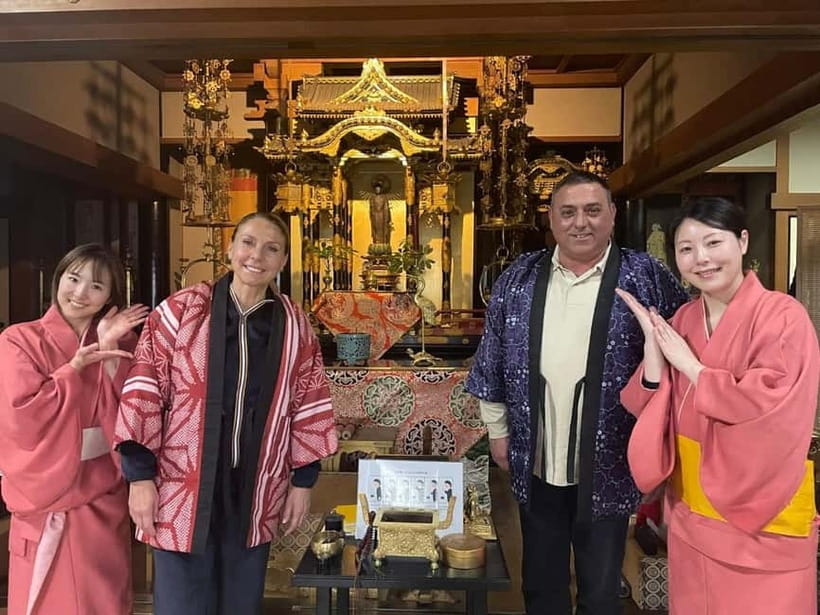
I would recommend this to you if you want a calm break from sightseeing and prefer an experience with a cultural frame. It fits people who enjoy learning why a ritual is done, then relaxing without a packed schedule.
It also suits:
- First-time visitors seeking an introduction to Japanese worship customs and tea culture
- Friends or family members who want to book a small-group activity together
- People who enjoy scalp massage and gentle facial care
- Anyone looking for a quieter Osaka activity away from the usual food and shopping stops
- Visitors who like wearing a yukata and taking a few informal keepsake photos
You may want to choose something else if you dislike ceremonial steps, have very limited time, or require a fully private tea ceremony without contacting the provider first. The treatment is individual, but the tea portion is not guaranteed to be private.
The language point is manageable but real. Staff are described as welcoming and accommodating, and a translation app can help when English is limited. You should be comfortable with some pauses, gestures, and simple explanations rather than expecting every part to be conducted in fluent English.
Booking advice and cancellation flexibility
The activity allows free cancellation up to 24 hours in advance for a full refund. You can also reserve now and pay later, which is useful when your Osaka schedule is still moving around.
I would book this for a day when you can slow down. Placing it after a hectic morning of sightseeing makes sense, but avoid squeezing it between two fixed appointments. The full visit lasts about two hours, and the value comes from letting each part breathe.
Should you book the Osaka Temple Head Spa?
I think you should book it if you want relaxation tied to a real cultural setting. The head spa and matcha facial provide the body-care element, while the incense, meditation, foot bath, tea, and yukata photos give you a fuller Japanese experience.
The strongest reasons to choose it are the foot bath before the Buddha, the individual treatment, the three-person limit, and the unusual blend of temple customs with spa care. The main cautions are the $141 price, the possible shared tea ceremony, the occasional need for translation help, and the slightly confusing difference between the 90-minute course and the two-hour total visit.
Save the correct meeting-point name, allow the full two hours, and contact the provider if privacy at tea matters to you. With those details handled, this is a thoughtful choice for a quiet Osaka afternoon rather than another rushed attraction.
FAQ
Where does the Osaka Temple Head Spa take place?
It takes place at a traditional Japanese temple in Osaka on Honshu, Japan. The foot bath is performed directly in front of the temple’s revered Buddha.
How long does the experience last?
The activity duration is about two hours. The included course is listed as 90 minutes, with additional time for the welcome drink, yukata change, temple activities, tea ceremony, and photos.
What treatments are included?
The experience includes a head spa with scalp massage, a matcha facial pack, a relaxing foot bath, and a scrub massage for the feet.
Is a tea ceremony included?
Yes. A traditional Japanese tea ceremony is included, along with cultural and historical explanation. The tea ceremony may be shared with other people.
Is the treatment private?
The individual treatments are provided individually. The tea ceremony may be shared, so contact the provider if you want a completely private experience.
Is a yukata provided?
The experience includes changing into a yukata. Complimentary smartphone photos wearing the yukata are also included.
What should I enter into Google Maps?
Enter Japanese Massage -the one&only- in Google Maps. Using only the temple’s name may direct you to the back entrance. The business is next to the restaurant Tossa de coracao.
How many people are in the group?
The activity is limited to three participants. The tea ceremony may still be shared with other people, even with the small group format.
What is the cancellation policy?
You can cancel up to 24 hours in advance for a full refund. The activity also offers a reserve-now, pay-later option.
More Temples and Shrines Worth the Walk
- Osaka: Minoh, Katsuoji Temple, & Minoh Falls Full-day Tour
★ 4.9 · 172 reviews - Sagano Romantic Train & Arashiyama, Kiyomizudera, Fushimi Inari Taisha Day Tour
★ 4.5 · 171 reviews - Full Day Kyoto Tour : Bamboo Forest, Golden Temple, Fushimi Inari
★ 5.0 · 84 reviews - Katsuo-ji Temple, Arashiyama Forest, & Nara Park
★ 4.0 · 37 reviews
Just added around Osaka
- Nara Day Trip from Osaka with a Licensed Guide★ 5.0 · 3 reviews
- Osaka Early Morning Osaka Castle Tour Avoid Crowds★ 5.0 · 3 reviews
- Guided Tour of Some Attractions in Osaka by Private Car★ 5.0 · 3 reviews
- Private Transfer Between Kyoto and Kansai Airport KIX★ 5.0 · 3 reviews
- Shared Arrival Transfer: Osaka Itami Airport to Osaka City★ 5.0 · 3 reviews
- Osaka: Sushi Making Class and Dotonbori Food Tour★ 4.7 · 3 reviews
- Osaka Night Photography Workshop★ 5.0 · 3 reviews
- Kyoto Full day Tour Kinkakuji, Kiyomizu-dera and Fushimi Inari★ 4.5 · 3 reviews
Osaka Tea Ceremony & Matcha Experiences, compared.

Matcha Making Class in Osaka with Authentic Japanese Sweets Set
Read our review →
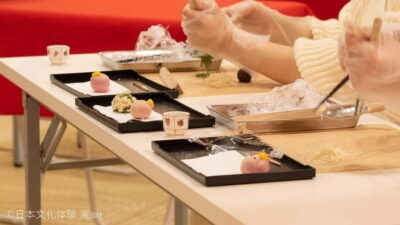
Japanese Traditional Sweets Making and Tea Ceremony
Read our review →
Osaka Temple Cool Foot Bath & Matcha Experience〈45min〉
Read our review →
Samurai Show, Tea Ceremony, Japanese Traditional Activities
Read our review →
Browse the lists this tour appears in