
Reviewed · OSAKA TEMPLE & SHRINE TOURS
Osaka: Mind & Spirit Balance Temple Reiki Healing
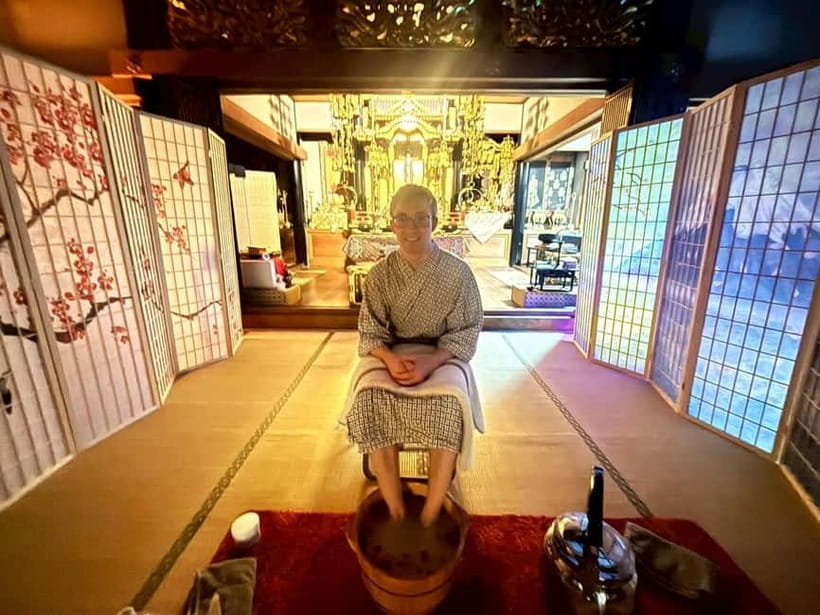
Osaka’s most unusual wellness break takes place inside a small working temple, where a foot bath, oil massage, Reiki, incense, and matcha tea form one calm two-hour visit. The setting gives the treatment more character than a standard spa appointment, with a short introduction to Japanese worship and temple customs.
I like the mix of hands-on massage and non-contact Reiki, so you can enjoy both physical relief and quiet rest. I also like the yukata photo and tea ceremony, which turn a spa treatment into a small cultural experience. The main consideration is privacy: your treatment is individual, but the tea ceremony may be shared with other participants.
In This Review
- Key points to know before booking
- A temple visit with a wellness purpose
- What happens during the 120-minute visit
- Why the massage and Reiki pairing works
- The temple atmosphere matters
- Matcha, wagashi, and a small cultural lesson
- The yukata photo is a modest but useful extra
- A practical look at the $161 price
- Who will enjoy this most
- Finding the meeting point without a wrong turn
- My booking advice
- FAQ
- How long does the Osaka temple Reiki experience last?
- How much does the experience cost?
- What treatments are included?
- Is Reiki hands-on?
- Is the tea ceremony included?
- Can I wear a yukata?
- Are photos included?
- Is the whole experience private?
- How many people can join?
- Where should I go for the meeting point?
Key points to know before booking
- Temple setting: You receive the treatment in a small temple in central Osaka, with incense, bells, and an introduction to local worship customs.
- Two types of relaxation: The full-body oil massage offers direct physical care, while Reiki uses no physical contact and focuses on stillness and relaxation.
- Japanese tea finish: Matcha and wagashi come with an explanation of the ceremony’s cultural and historical background.
- Very small group: The activity is limited to three participants, though the tea portion may not be private.
- Yukata keepsake: You change into a yukata and receive complimentary smartphone photos inside the temple.
- Meeting point warning: Search Google Maps for Japanese Massage -the one&only- or the nearby restaurant Tossa de coracao, not the temple name.
A temple visit with a wellness purpose
I like that this experience does not treat the temple as a decorative backdrop. You begin with a visit that includes incense offering, a short explanation of the temple’s history, and an introduction to Japanese worship culture. That gives you a little context before the relaxing part begins.
This is not a full sightseeing tour of Osaka, and the temple visit is only one part of the schedule. Still, it adds meaning to the appointment. You are not simply walking into a city spa, changing clothes, and lying down. The incense, bell, and kneaded incense create a clear break from the noise of the city.
You also change into a yukata at the start. A yukata is a light, informal Japanese robe, and here it serves two purposes. It makes the session feel connected to local culture, and it gives you a simple photo to take home. The photos are taken with a smartphone and are complimentary, so you do not need to arrange a separate photo package.
More onsen and spa afternoons:
- From Osaka: Himeji Castle, Arima Onsen & Mt. Rokko Day Tour
★ 4.6 · 339 reviews - Osaka Temple Cool Foot Bath & Matcha Experience〈45min〉
★ 4.9 · 82 reviews - Osaka: Solaniwa Onsen Hot Spring Visit
★ 4.6 · 51 reviews
What happens during the 120-minute visit
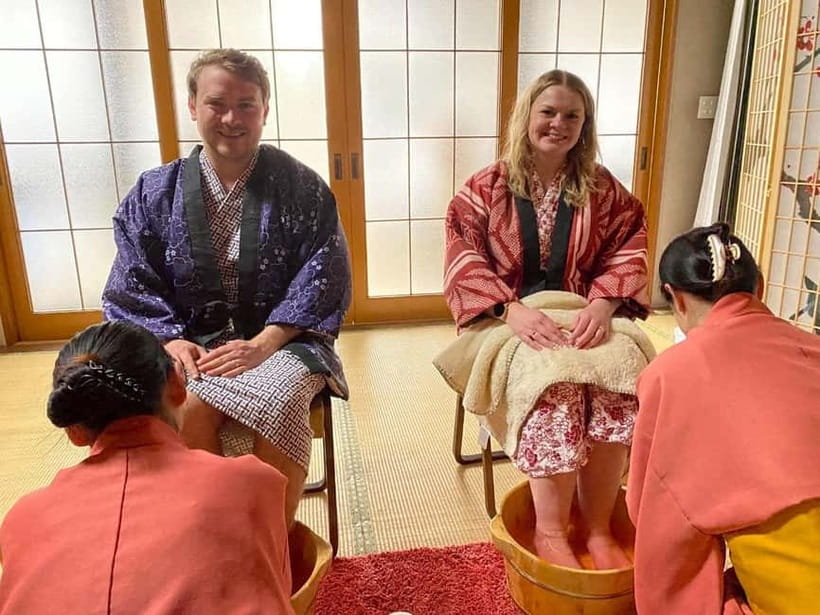
The full experience lasts two hours, so the schedule is compact. You get several short cultural and wellness elements rather than one long massage. That variety is the appeal, but it also means the massage itself is not likely to fill the entire two-hour period.
You begin with a welcome drink and change into a yukata. From there, the guide introduces the temple and explains the incense offering. The session then moves into meditation with a bell and kneaded incense. These details help mark the change from ordinary sightseeing to a quieter state of mind.
Next comes the foot bath and scrub massage. This is a useful transition because it lets you settle in gradually. A foot bath can feel especially welcome after a day of walking around Osaka, though the supplied information does not give the exact length of this part.
The main treatment includes Reiki and a full-body oil massage with essential oils. Reiki is described here as a non-contact Japanese energy healing method intended to encourage relaxation and emotional balance. I would approach it as a quiet wellness practice rather than a medical treatment or a replacement for clinical care.
The oil massage provides the more familiar physical element. The available descriptions point to a full-body treatment, and the strongest praise focuses on the massage’s relaxing quality, the therapist’s professional manner, and the feeling of leaving refreshed. Arisa is named in one account, while Naomi and Arisa are both mentioned in another, so you may meet either practitioner depending on the day and staffing.
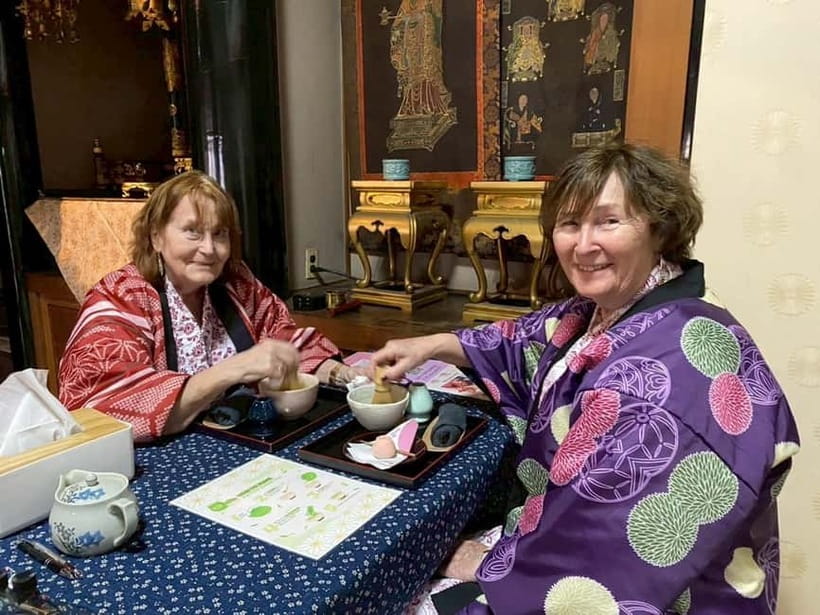
The final stage is the traditional tea ceremony. You receive matcha and wagashi, the small Japanese sweets served with tea, while the guide explains the ceremony’s cultural and historical background. It is a gentle ending, and I prefer this kind of finish to being rushed straight back onto the street after a massage.
Why the massage and Reiki pairing works
The treatment combines two approaches that feel quite different. The oil massage uses touch and movement, while Reiki does not involve physical contact. You can therefore enjoy a conventional massage without losing the quieter, more reflective part of the experience.
The Reiki portion is described as supporting deep relaxation and emotional balance. Those claims should be understood in a wellness sense. The activity is suitable for stress relief and personal quiet time, but the information provided does not present Reiki as a medical cure.
I would choose this experience if I wanted a softer afternoon after several busy sightseeing days. It also suits someone who is curious about Japanese spiritual customs but does not want a long formal temple tour. The meditation, incense, bell, and tea ceremony give you a taste of those traditions without requiring a full day of study.
If your main goal is a long, intensive massage, check the treatment details before you book. The total appointment is 120 minutes, but that time includes changing, temple customs, meditation, the foot bath, Reiki, tea, and photos.
The temple atmosphere matters
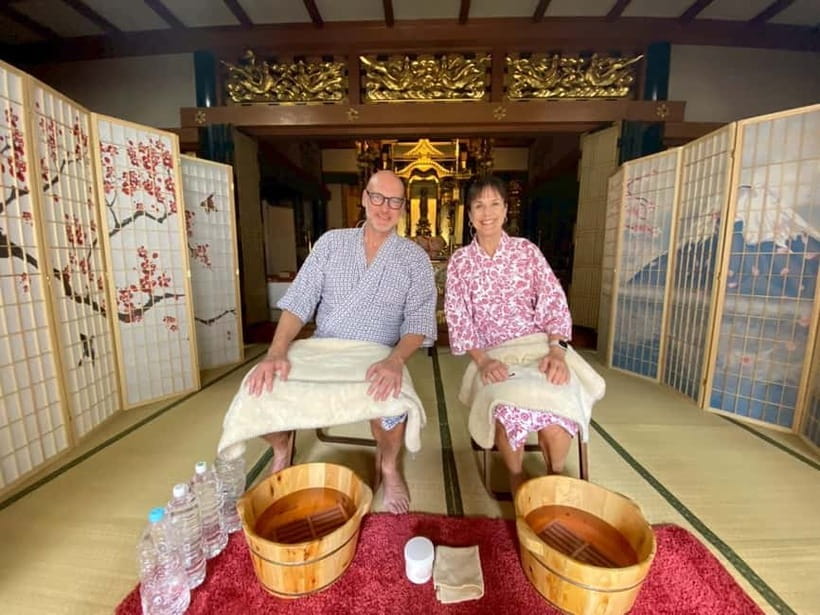
The setting is one of the experience’s strongest features. The temple is described as a peaceful place in the middle of Osaka, which creates a useful contrast with the city outside. You get a sense of traditional surroundings without leaving the urban center.
A small temple also means this is a more personal visit than a large attraction. The group limit is three participants, and the treatment itself is individual. That small scale helps the guide explain the ritual steps and keeps the appointment from feeling like a crowded class.
Still, do not assume every part will be private. The tea ceremony may be shared with other participants, even though your massage and Reiki treatment are individual. If complete privacy is important to you, contact the provider before booking and ask about arranging a private experience.
I also like the way the visit uses simple sensory details. Incense gives the temple introduction a distinct scent. The bell creates a clear beginning for meditation. The foot bath helps you relax physically, and the tea and sweets offer a calm close. None of these elements requires a long explanation, but together they make the appointment feel carefully shaped.
More temples and shrines worth the walk:
- Osaka: Minoh, Katsuoji Temple, & Minoh Falls Full-day Tour
★ 4.9 · 172 reviews - Sagano Romantic Train & Arashiyama, Kiyomizudera, Fushimi Inari Taisha Day Tour
★ 4.5 · 171 reviews - Full Day Kyoto Tour : Bamboo Forest, Golden Temple, Fushimi Inari
★ 5.0 · 84 reviews - Katsuo-ji Temple, Arashiyama Forest, & Nara Park
★ 4.0 · 37 reviews
Matcha, wagashi, and a small cultural lesson
The tea ceremony is more than a drink at the end of a massage. You receive matcha and wagashi while learning about Japanese tea customs and their background. For someone new to Japan, this can be a friendly introduction to a tradition that might otherwise seem formal or difficult to understand.
The ceremony may be shared, so think of it as a small group cultural activity rather than a private tea master appointment. That arrangement can be a drawback if you want complete silence after the treatment. On the other hand, it may suit solo participants who enjoy a little conversation and do not want the entire visit to feel solitary.
The tea ceremony also changes the pace of the afternoon. After the physical treatment, you have time to sit, drink tea, and take in what you have just experienced. I find that kind of pause useful. It keeps the appointment from becoming a quick massage followed by an abrupt return to Osaka’s streets.
The yukata photo is a modest but useful extra
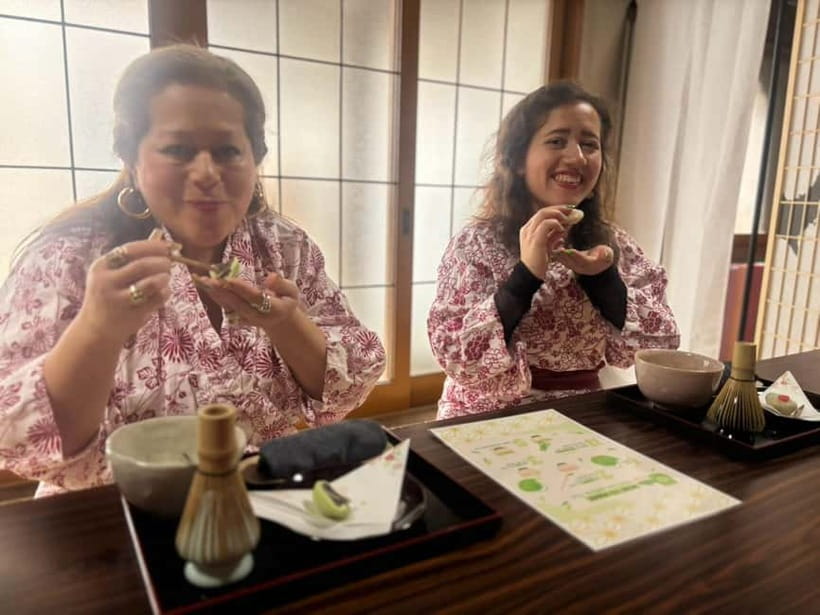
The yukata wearing experience is not presented as a full dressing lesson or a professional photo shoot. You change into the garment as part of the visit and receive complimentary smartphone photos inside the temple.
That is a nice value add, especially if you are traveling light and do not want to arrange a separate rental. The photos give you a keepsake tied to the setting, rather than a generic spa photograph. The available information does not specify how many photos you receive or how they are delivered, so ask the provider if those details matter to you.
I would see this as a pleasant extra, not the main reason to book. The treatment, temple setting, and tea ceremony are the core of the experience. The yukata simply helps you remember the occasion.
A practical look at the $161 price
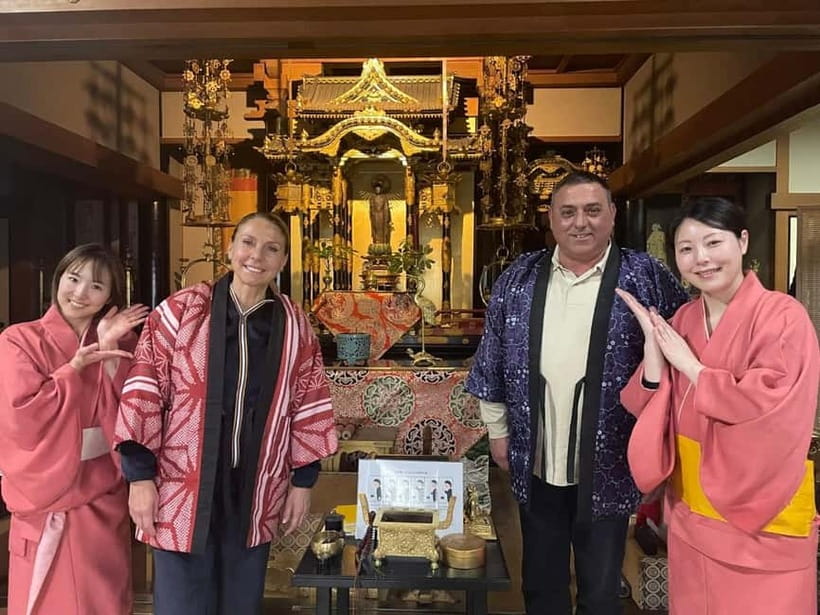
At $161 per person, this costs more than a basic foot massage or standard city spa treatment. The price makes more sense when you count the complete package: a full-body oil massage, Reiki, foot bath, temple visit, meditation, incense, tea ceremony with wagashi, yukata, and smartphone photos.
You are also paying for a small-group format limited to three participants. That is important in a busy city such as Osaka. A large wellness class could offer some of the same activities at a lower price, but it would not provide the same individual treatment structure.
The value depends on what you want. If you mainly want a long massage, you may find a dedicated massage shop more cost-effective. If you want massage plus a compact cultural experience in a traditional setting, the price is easier to justify.
The strongest praise focuses on the massage and the care shown by the practitioners. The setting is also repeatedly described as peaceful and spiritually uplifting. That combination is the reason I would consider this a special-occasion booking, particularly at the end of a long Japan itinerary.
Who will enjoy this most
I would recommend the experience to someone who wants a calm break without giving up cultural content. It works well for a solo visitor, a couple, a parent and adult child, or a small group of friends. One account specifically describes a mother and daughter enjoying the temple traditions, tea, massage, and Reiki together.
It is also a good choice for people who have spent several days walking, shopping, and sightseeing. The foot bath and oil massage address the physical side of a busy trip, while the meditation and tea ceremony slow things down.
The experience may not suit you if you dislike spiritual practices, do not want to change into a yukata, or prefer a strictly private appointment from start to finish. Reiki is non-contact, and its value is subjective. Go with an open mind, but do not book it expecting medical treatment.
The small-group format is useful for first-time visitors who want explanations. You can ask questions about the incense, temple customs, tea, and Reiki rather than trying to work out each step alone.
Finding the meeting point without a wrong turn
The meeting instructions deserve careful attention. When using Google Maps, enter Japanese Massage -the one&only-. Do not search only for the temple name, because that may take you to the back entrance and leave you lost.
If the location does not appear clearly, search for the restaurant Tossa de coracao. The meeting point is right next to it. I would save both search terms before leaving your hotel and allow extra time, especially if you are arriving for a fixed start time.
The provider is Japanese Massage 唯一無二 -the one&only-. A live guide leads the activity, and the session is limited to three participants. Free cancellation is available up to 24 hours in advance for a full refund, and you can reserve now and pay later, which helps if your Osaka schedule is still shifting.
My booking advice
I would book this experience if you want more than a massage and less than a full cultural tour. The combination of temple customs, meditation, foot care, oil massage, Reiki, matcha, wagashi, and a yukata photo gives you a well-rounded two-hour pause in Osaka.
The best reason to choose it is the setting and structure. You get individual treatment in a small group, then finish with a traditional tea ceremony. Just remember that the tea portion may be shared, the massage occupies only part of the two hours, and Reiki is a relaxation practice rather than medical care.
For a peaceful end to a Japan trip, this is a strong choice. If you prefer a long private massage with no cultural elements, spend the $161 on a dedicated spa instead.
FAQ
How long does the Osaka temple Reiki experience last?
The experience lasts 120 minutes, or two hours.
How much does the experience cost?
The listed price is $161 per person.
What treatments are included?
The experience includes Reiki healing, a full-body oil massage with essential oils, a foot bath, and a scrub massage.
Is Reiki hands-on?
No. Reiki is described as a non-contact Japanese energy healing method intended to promote relaxation and emotional balance.
Is the tea ceremony included?
Yes. The experience includes a traditional Japanese tea ceremony with matcha, wagashi, and an explanation of its cultural and historical background.
Can I wear a yukata?
Yes. You are welcomed with a drink and change into a yukata as part of the experience.
Are photos included?
Yes. Complimentary smartphone photos are provided as a keepsake of your temple and yukata experience.
Is the whole experience private?
The treatments are individual, but the tea ceremony may be shared with other participants. You can contact the provider if you prefer a completely private experience.
How many people can join?
The activity is limited to three participants.
Where should I go for the meeting point?
Search Google Maps for Japanese Massage -the one&only-. Searching only for the temple name may direct you to the back entrance. You can also search for the restaurant Tossa de coracao, which is right next to the meeting point.
Just added around Osaka
- Nara Day Trip from Osaka with a Licensed Guide★ 5.0 · 3 reviews
- Osaka Early Morning Osaka Castle Tour Avoid Crowds★ 5.0 · 3 reviews
- Guided Tour of Some Attractions in Osaka by Private Car★ 5.0 · 3 reviews
- Private Transfer Between Kyoto and Kansai Airport KIX★ 5.0 · 3 reviews
- Shared Arrival Transfer: Osaka Itami Airport to Osaka City★ 5.0 · 3 reviews
- Osaka: Sushi Making Class and Dotonbori Food Tour★ 4.7 · 3 reviews
- Osaka Night Photography Workshop★ 5.0 · 3 reviews
- Kyoto Full day Tour Kinkakuji, Kiyomizu-dera and Fushimi Inari★ 4.5 · 3 reviews
Osaka Temple & Shrine Tours, compared.
Minoh, Katsuoji Temple, & Minoh Falls Full-day Tour
Read our review →
Sagano Romantic Train & Arashiyama, Kiyomizudera, Fushimi Inari Taisha Day Tour
Read our review →Full Day Kyoto Tour : Bamboo Forest, Golden Temple, Fushimi Inari
Read our review →
Osaka Temple Cool Foot Bath & Matcha Experience〈45min〉
Read our review →
Katsuo-ji Temple, Arashiyama Forest, & Nara Park
Read our review →
Minoh Waterfall & Katsuo-ji Temple Half-Day Tour
Read our review →
Osaka Half-day E-bike Adventure: Minoh Falls & Katsuoji Temple
Read our review →
Browse the lists this tour appears in