
Reviewed · DOTONBORI & NAMBA TOURS
Osaka Local Foodie Walking Tour in Dotonbori and Shinsekai
Osaka’s famous food districts make the most sense on foot, with a plate in front of you and a local guide explaining what you are eating. This three-hour walk links the old-fashioned streets around Shinsekai with the neon lanes of Dotonbori, stopping for kushikatsu, okonomiyaki, takoyaki, drinks, shrines, and photo spots.
I like the small group size, capped at seven, and the way guides such as Aika, Yuma, Michiko, and Justin add practical local advice. I also like the route’s contrast: Shinsekai feels rough-edged and nostalgic, while Dotonbori is Osaka at full volume.
The main caution is value. At $111.42 per person, you are paying for guidance and neighborhood context as much as for food. Some people found the meal stops too limited or the walking pace uneven, so serious food hunters may want a tour with more venues and smaller tastings.
In This Review
- Key points to know before booking
- From a FamilyMart meeting point to old Osaka
- Tsutenkaku and the kushikatsu streets of Shinsekai
- Jan-Jan Yokocho and the old Shinsekai mood
- Dōguya-suji and the practical side of Japanese food
- Hozen-ji Temple and the lanes near Namba
- Okonomiyaki and the famous Glico photograph
- What the food package is really worth
- Dietary rules, weather, and walking comfort
- Who should book this Osaka food walk?
- FAQ
- How long does the Osaka Local Foodie Walking Tour last?
- What food is included?
- Are alcoholic drinks included?
- Where does the tour start and finish?
- Can vegetarian, vegan, or gluten-free meals be provided?
- What happens if I arrive late or need to cancel?
- Should you book it?
Key points to know before booking
- Six kushikatsu skewers give you a proper taste of Osaka’s fried-skewer tradition in Shinsekai.
- One serving each of okonomiyaki and takoyaki fills out the city’s best-known street-food trio.
- Three drinks are included, with alcoholic and non-alcoholic choices available.
- A group of up to seven allows for more personal attention than a large coach tour.
- The route ends at the Glico Sign, making it easy to continue exploring Dotonbori afterward.
- Vegetarian requests must be made by the day before, and gluten-free and vegan meals cannot be accommodated.
From a FamilyMart meeting point to old Osaka
The tour starts outside FamilyMart in Sanno, in the Nishinari Ward. This is not the most obvious meeting point for a first-time visitor, so give yourself extra time and check the map carefully before setting out. The tour begins on time, and a late arrival means you cannot join, reschedule, or receive a refund.
From the start, expect a walking tour rather than a sit-down food class. The route uses public transport between parts of Osaka, with a stated transportation fee of 190 yen not included in the price. The exact movement between areas can vary, but the heart of the route takes you from Shinsekai toward Namba and Dotonbori.
The group limit matters here. Osaka’s best-known food streets can be crowded, and a group of seven is far easier to keep together than a large party. Guides can also answer questions, take photographs, and adjust their explanations to the people in front of them.
Guide quality is an important part of the value. Aika has been praised for her lively explanations, food suggestions, and willingness to send photographs after the tour. Yuma is described as warm, clear in English, and good at explaining how dishes are made. Justin has also helped people find their way through Osaka’s complicated subway system after the walk.
That personal touch can make this especially useful on your first night in Osaka. You get a practical introduction to two major neighborhoods, then finish with enough orientation to continue on your own.
More of retro Shinsekai and the backstreets:
- Osaka: Shinsekai Food Tour with 13-15 Dishes at 5 Eateries
★ 4.8 · 2,204 reviews - Osaka: Tsutenkaku Tower Entry Ticket
★ 3.8 · 125 reviews - Osaka: Local Foodie Tour in Dotonbori and Shinsekai
★ 4.7 · 95 reviews
Tsutenkaku and the kushikatsu streets of Shinsekai
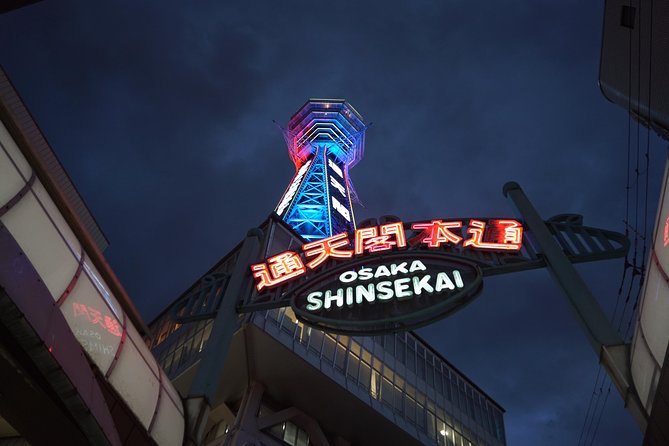
The first main stop is Tsutenkaku, Shinsekai’s bright landmark tower. Around it, the Jan-Jan Yokocho alley offers a close look at the district’s older entertainment culture, with narrow lanes, small eateries, signs, and a more worn-in feel than polished central Osaka.
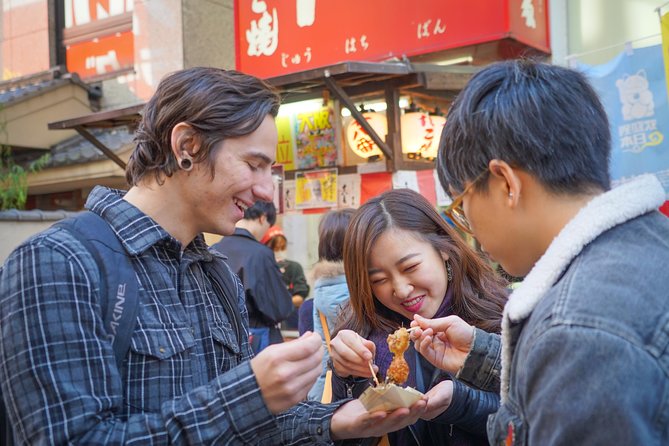
This is where you eat the tour’s six pieces of kushikatsu. These are meat and vegetable skewers coated and deep-fried, then served with dipping sauce. Kushikatsu is strongly associated with Shinsekai, and the dish gives you a useful first taste of Osaka’s fondness for bold, filling comfort food.
Your guide should explain what you are eating and how the dish fits into Osaka life. The best guides go beyond naming ingredients. They explain local habits, the difference between a casual neighborhood meal and a tourist stop, and why Shinsekai became known for this kind of cooking.
The stop is listed at about 30 minutes, so do not expect a long restaurant meal. Six skewers and a drink make a decent opening course, but people with large appetites may still want breakfast or a light snack beforehand.
Three drinks are included across the tour, and both alcoholic and non-alcoholic options are available. The drinks help make the price feel more reasonable, though some people may not want two drinks at the first food stop. If you do not drink alcohol, the non-alcoholic option keeps the arrangement simple.
Jan-Jan Yokocho and the old Shinsekai mood
The tour then continues through the Shinsekai Market area, past Tsutenkaku and the Billiken statue. Billiken is a familiar symbol of the district, and guides often use this stretch to explain how Osaka’s entertainment quarters changed over time.
One unusual feature is an alley presented almost like a preserved slice of Osaka from more than 80 years ago. It is not a grand museum with lengthy exhibits. Its value comes from the street setting, the old shopfront feel, and the chance to see how a commercial district can hold on to its earlier character.
This section is short, around 20 minutes, but it gives the food stops some context. You are not simply moving from restaurant to restaurant. You are seeing the neighborhood where kushikatsu became part of the local identity.
Still, manage your expectations about the phrase hidden alleys. Shinsekai and Dotonbori are famous areas, not secret corners unknown to most visitors. You will see less obvious side streets and tucked-away lanes, but the route remains within well-known sightseeing districts.
Walking speed can also vary by guide. One person found the pace too fast, while another felt the tour moved too slowly. If you walk slowly or need regular pauses, say so early. A small group makes that request easier to handle.
Dōguya-suji and the practical side of Japanese food
The route moves toward Dōguya-suji, also called Sennichimae Doguyasuji Shopping Street. This is a useful stop for anyone interested in Japanese cooking because the shops sell kitchen tools, restaurant supplies, food displays, dishes, and knives.
The schedule includes a visit near the Namba Grand Kagetsu area and, on daytime tours, souvenir shopping around Dōguya-suji. A knife shop called Hōchō-ya is specifically noted. At night, the shopping portion may focus more on the area around Namba Grand Kagetsu than on a full daytime browse.
This is one of the tour’s most useful non-food sections. You can see the tools behind the dishes you are eating, and you may find practical souvenirs that are more meaningful than a generic Osaka magnet. If you plan to buy a knife, remember that you will need to follow airline and baggage rules.
The stop is listed at about 15 minutes, so it is more of an introduction than a dedicated shopping session. You will not have unlimited time to compare products or make a careful kitchen purchase. Treat it as a quick look, then return later if you want to shop seriously.
More of Dotonbori and Namba after dark:
- Osaka: Dotonbori District River Cruise with Drink Discount
★ 4.2 · 876 reviews - Ultimate Osaka Walking Tour: Castle, Dotonbori & Hidden Gems
★ 5.0 · 862 reviews - Tea Ceremony Experience in Osaka Doutonbori
★ 5.0 · 754 reviews - Osaka: Namba Pub Bar Crawl with a Local Guide
★ 4.9 · 424 reviews
Hozen-ji Temple and the lanes near Namba
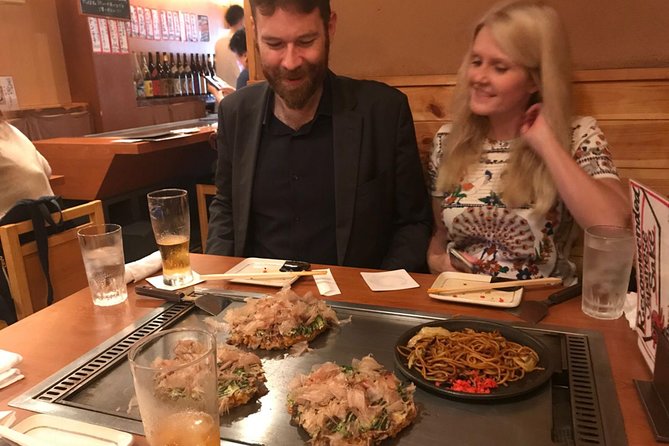
Hozen-ji Temple provides a quiet change of pace. The small temple is reached through narrow Ukiyo-koji, also called Ukiyo Alley, where the atmosphere feels far removed from Dotonbori’s bright signs.
The temple is known for its moss-covered Fudo Myoo statue. The route information does not promise a long religious explanation, so the quality of this stop depends on how much your guide chooses to share. The stronger guides connect the temple to daily customs and local life instead of treating it as a quick photo stop.
Timing matters. On an evening tour, the temple and alley may be dim. One person found the visit less satisfying because it was dark, while another enjoyed the shrine and temple stops as part of the walk. If you want detailed architectural viewing and clear photographs, daytime is the safer choice.
The tour also includes a snack allowance of approximately 500 yen for takoyaki, sweets, and similar food. The included takoyaki is described as one box, made with batter, tender octopus, and other ingredients. Depending on the venue and group arrangement, this may be a shared tasting rather than a large individual meal.
Takoyaki is a key Osaka food, but it is very hot inside. Take your time with the first piece. The texture is soft and creamy in the center, with a crisp outside, and it can be a surprise if you expect a firm dumpling.
Okonomiyaki and the famous Glico photograph
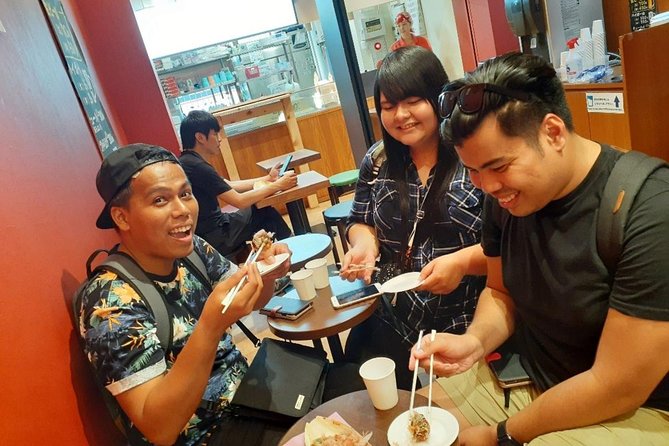
The final food stop centers on okonomiyaki, Osaka’s savory pancake. The name combines the ideas of as you like and grilled, which reflects the dish’s flexible mix of batter, cabbage, toppings, and sauce.
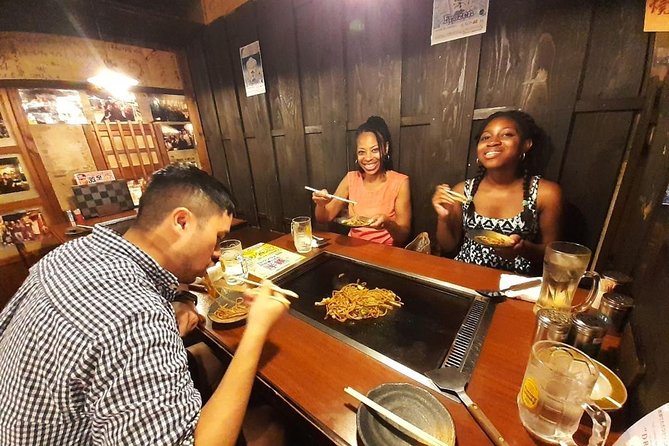
You receive one piece of okonomiyaki. At some venues, you may grill it yourself, an engaging touch that turns the meal into an activity rather than a plate simply placed in front of you. Aika’s group especially enjoyed this part, and it can be one of the tour’s more memorable food moments.
The portion is not enormous, especially if you have already eaten six skewers and takoyaki. That is useful if you want to keep exploring Dotonbori afterward, but it can feel light for the price if you expected a full progressive dinner.
Some guides have taken groups to an okonomiyaki restaurant that felt more tourist-oriented than the first kushikatsu stop. That is not automatically a problem. Tourist-friendly restaurants can be easier for a mixed-language group and may offer a smoother cooking setup. But if you are seeking obscure neighborhood food above all else, this tour may not go far enough off the main route.
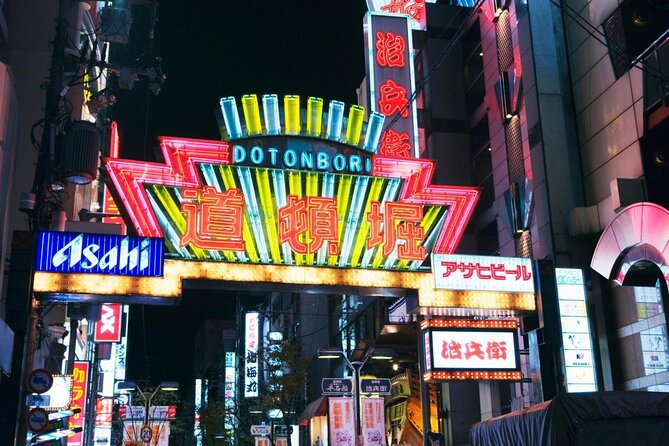
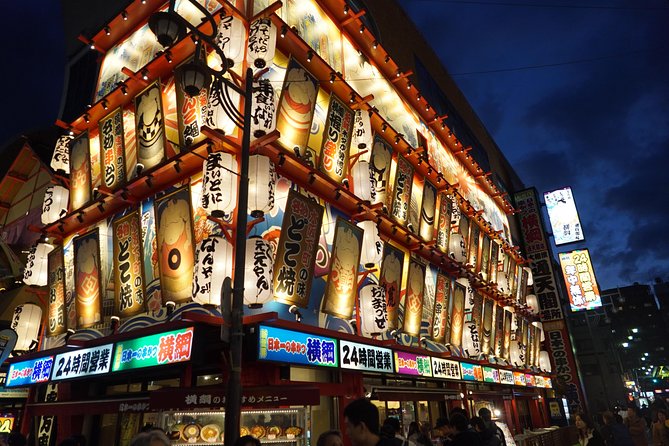
The walk finishes at the Glico Sign in Dotonbori. The giant running-man image is one of Osaka’s standard photographs, and the guide helps you get the classic picture. The end point is practical: from there, you can continue along the canal, browse nearby restaurants, or make your own way back to your hotel.
What the food package is really worth
The $111.42 price includes six kushikatsu pieces, one okonomiyaki, one box of takoyaki, and three drinks. It also covers the small-group guide service and the neighborhood walk. Transportation costs an additional 190 yen.
If you compare the tour with buying the same foods yourself, the ingredients alone may not justify the full price. Osaka’s food streets offer many inexpensive meals, and an independent visitor can order kushikatsu, takoyaki, and okonomiyaki without paying for a guide.
The added value is supposed to come from explanation, ordering help, route planning, and access to a few places without having to work out the details yourself. A strong guide can connect the food to Osaka customs, point out places you might miss, and help you feel at ease in busy streets.
That value is not identical on every departure. Aika, Yuma, Michiko, Kent, Emi, Naru, and Justin have all been praised for combining food explanations with local stories and useful suggestions. Other experiences were less satisfying because the guide offered information only when asked, moved too quickly between stops, or provided less detail than expected.
The food format is also important. This is not a crawl through six or seven tiny stalls. It is closer to a guided neighborhood walk with several substantial tastings. If you want maximum restaurant count and many small portions, look for a tour built around more venues.
Dietary rules, weather, and walking comfort
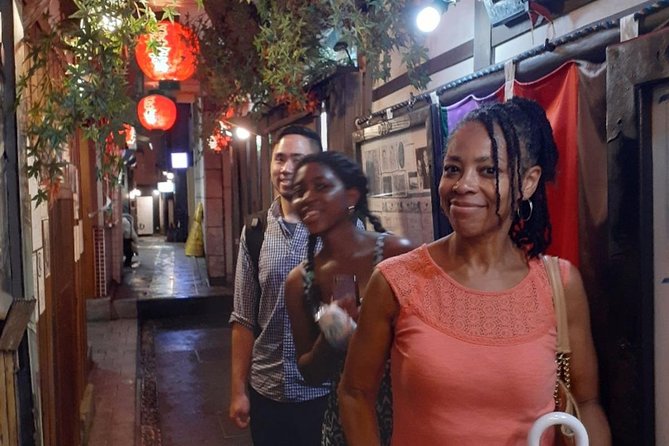
Gluten-free and vegan diets cannot be accommodated. Vegetarian food is possible only if you choose the vegetarian option when booking or request it by the previous day.
There is a further catch: the kushikatsu restaurant uses dashi made with pork broth even for vegetarian skewers. If you cannot eat pork-based dashi, tell the operator in advance so another vegetarian dish can be prepared. Same-day requests cannot be handled.
Allergies must also be reported at least one day before the tour. The operator cannot guarantee allergy-free meals or substitutions because the food is prepared in kitchens it does not control.
Dress for Osaka’s weather. Summer temperatures can reach 40°C, while winter lows can drop to -5°C. The route uses city streets, alleys, and crowded commercial areas, so comfortable shoes, water in hot weather, and warm layers in winter will make a real difference.
The tour welcomes all ages, and most people can take part, but it is still a three-hour city walk with periods of standing and movement. Tell the guide if the group needs a slower pace or a short pause.
Who should book this Osaka food walk?
I would choose this tour if you want an easy first look at Osaka’s best-known food neighborhoods, especially early in your stay. It gives you the basic local vocabulary of kushikatsu, takoyaki, and okonomiyaki, plus a route through Shinsekai, Hozen-ji, Dōguya-suji, and Dotonbori.
It also suits families and small groups. One family of six ended up with what felt like a private tour, and the seven-person maximum keeps the outing personal. A local guide can also help you decide where to eat next, what snacks to take home, and how to manage the subway.
I would hesitate if you already know Osaka’s food scene or call yourself a serious food hunter. The route stays in popular districts, the tastings are limited, and some stops may feel more visitor-friendly than local. The price makes the guide’s storytelling central, so I would book only if you value orientation and conversation as much as the food itself.
FAQ
How long does the Osaka Local Foodie Walking Tour last?
The tour lasts approximately three hours.
What food is included?
The tour includes six kushikatsu skewers, one piece of okonomiyaki, one box of takoyaki, and three drinks.
Are alcoholic drinks included?
Yes. The three included drinks can be alcoholic or non-alcoholic.
Where does the tour start and finish?
The tour starts at the FamilyMart in Sanno, Nishinari Ward. It finishes at the Glico Sign in Dotonbori.
Can vegetarian, vegan, or gluten-free meals be provided?
Vegetarian meals can be arranged if requested by the day before, but the vegetarian kushikatsu may still use pork-based dashi. Vegan and gluten-free diets cannot be accommodated.
What happens if I arrive late or need to cancel?
The tour starts on time, and a late arrival means you cannot join, reschedule, or receive a refund. You can cancel for a full refund up to 24 hours before the start time. Changes or cancellations made less than 24 hours ahead are not accepted.
Should you book it?
Book this walk for local orientation, classic Osaka foods, and a small group, not as an all-out food marathon. The best version of the tour comes with a guide who explains the dishes, shares useful neighborhood tips, and makes the busy route feel manageable.
The $111.42 cost is fair only if those guiding services matter to you. If you want many tiny tastings at a lower food-focused price, keep searching. If you want a friendly introduction to Shinsekai and Dotonbori, with the city’s three signature foods and a few useful cultural stops along the way, this is a practical first-night choice.
More Guided Walks on Foot
- Deep Backstreet Osaka Tours (Option to add Dinner)
★ 5.0 · 1,290 reviews - Osaka: Deep Backstreets Walking Tour with Dinner Option
★ 4.9 · 902 reviews - Osaka: Main Sights and Hidden Spots Guided Walking Tour
★ 4.9 · 702 reviews - Private Osaka Walking Tour: Highlights & Hidden Gems
★ 5.0 · 569 reviews
More Street Food Walks and Tastings
- Osaka Food Tour: 13 Dishes at 5 Local Eateries
★ 5.0 · 2,149 reviews - Hungry Osaka Street Food Tour:15 Tastings & 3 Drinks with a Local
★ 5.0 · 1,727 reviews - Hungry Osaka Street Food Tour: 15 Dishes & 3 Drinks
★ 4.9 · 694 reviews - Kuromon Market Food Walking Tour in Osaka (6 stops, 6 tastes)
★ 5.0 · 550 reviews
Just added around Osaka
- Nara Day Trip from Osaka with a Licensed Guide★ 5.0 · 3 reviews
- Osaka Early Morning Osaka Castle Tour Avoid Crowds★ 5.0 · 3 reviews
- Guided Tour of Some Attractions in Osaka by Private Car★ 5.0 · 3 reviews
- Private Transfer Between Kyoto and Kansai Airport KIX★ 5.0 · 3 reviews
- Shared Arrival Transfer: Osaka Itami Airport to Osaka City★ 5.0 · 3 reviews
- Osaka: Sushi Making Class and Dotonbori Food Tour★ 4.7 · 3 reviews
- Osaka Night Photography Workshop★ 5.0 · 3 reviews
- Kyoto Full day Tour Kinkakuji, Kiyomizu-dera and Fushimi Inari★ 4.5 · 3 reviews
Dotonbori & Namba Tours, compared.

Dotonbori District River Cruise with Drink Discount
Read our review →
Ultimate Osaka Walking Tour: Castle, Dotonbori & Hidden Gems
Read our review →


Dotonbori River Cruise with Glico Sign & Neon Views
Read our review →
Roll and Authentic Sushi Making Class in Dotonbori
Read our review →Browse the lists this tour appears in