
Reviewed · OSAKA STREET FOOD TOURS
Hungry Osaka Street Food Tour:15 Tastings & 3 Drinks with a Local
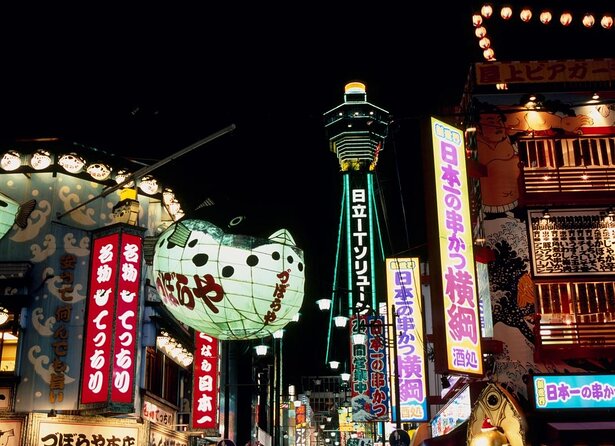
Osaka’s best food lesson may happen in Shinsekai, where neon signs, old arcades, tiny bars, and family-run eateries crowd the streets around Tsutenkaku Tower. This tour turns that slightly rough-around-the-edges neighborhood into a three-hour dinner crawl, with 15 or more tastings at five different stops.
I like two things right away: the food range is unusually broad, from fried chicken and skewered meat to noodles, oden, takoyaki, kushikatsu, and dessert; and the guides bring the neighborhood to life while you walk. Guides including Andy, Anna, Adam, Tim, Scott, and Kenzo are praised for humor, local knowledge, and easy conversation. The main drawback is pacing: one stop may feel quick while another lingers, and the tour cannot handle gluten-free, vegan, or vegetarian diets.
In This Review
- Key points to know before booking
- Why Shinsekai is the right setting for an Osaka food tour
- Meeting at Ebisucho Station and entering Shinsekai
- Five stops, fifteen dishes, and a proper Osaka dinner
- Karaage, yakitori, and izakaya flavors
- Takoyaki and the pleasures of Osaka street food
- Udon and oden bring contrast
- Kushikatsu, Shinsekai’s signature bite
- Dessert closes the crawl
- Three drinks and the social side of the evening
- What the guides add beyond the food
- Pacing, group size, and practical limits
- Is $73.29 a fair price?
- Who should book this Shinsekai food crawl?
- Should you book it?
- FAQ
- How long does the Hungry Osaka Street Food Tour last?
- Where does the tour begin?
- Where does the tour end?
- How many food tastings are included?
- Which foods can I expect to try?
- Are drinks included?
- Can the tour accommodate vegetarian, vegan, or gluten-free diets?
- How many people can join the tour?
Key points to know before booking
- Fifteen or more tastings: You sample a full spread of Osaka favorites rather than building a meal around one dish.
- Five different eateries: The route includes izakayas, restaurants, a food stall, and a bar, giving you several views of local dining.
- Shinsekai after dark: You walk past Tsutenkaku and through streets designed more than a century ago to give Osaka a Western feel.
- Three drinks included: Alcoholic and nonalcoholic choices are included, though extra drinks cost more.
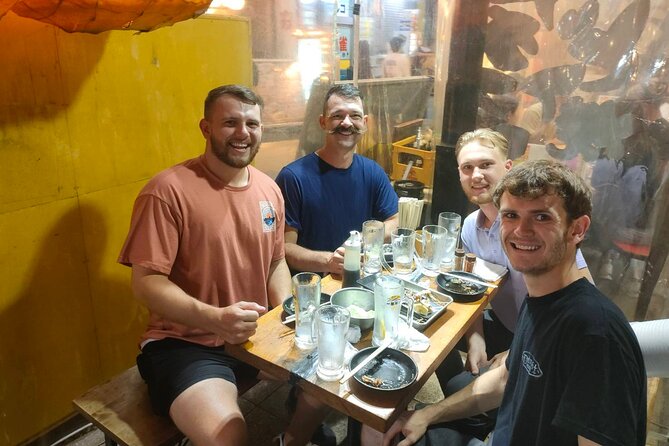
- Small group format: The maximum group size is nine, which suits conversation and tight restaurant seating.
- Convenient finish: The guide can leave you at Dobutsuen-Mae Station, served by the Midosuji and Sakaisuji subway lines.
Why Shinsekai is the right setting for an Osaka food tour
Osaka calls itself Japan’s Kitchen for good reason. The city has a strong eating culture built around inexpensive, social, satisfying food. Shinsekai shows a less polished side of that culture than the bright shopping streets around Dotonbori.
The area centers on Tsutenkaku, the landmark tower you pass during the walk. Its surrounding streets are closely tied to kushikatsu, Osaka’s famous fried skewers. Shinsekai also carries layers of urban history. More than a century ago, parts of the district were designed to give Osaka a Western flavor, and the older arcades and side streets still make the neighborhood feel distinct.
I like this setting because the food and the surroundings explain each other. You are not simply moved from restaurant to restaurant in a generic downtown district. The guide points out the tower, explains where kushikatsu began, and fills the walks between meals with facts about Osaka, local customs, and the area’s changing character.
The route is also useful early in an Osaka visit. You get a practical introduction to a district you might otherwise skip, along with a list of dishes and eating places to revisit later. If you are staying near Namba or Tennoji, Shinsekai is easy to reach by train, but the tour itself does not include transportation to the starting station.
More street food walks and tastings:
- Osaka: Shinsekai Food Tour with 13-15 Dishes at 5 Eateries
★ 4.8 · 2,204 reviews - Osaka Food Tour: 13 Dishes at 5 Local Eateries
★ 5.0 · 2,149 reviews - Osaka Local Foodie Walking Tour in Dotonbori and Shinsekai
★ 5.0 · 985 reviews
Meeting at Ebisucho Station and entering Shinsekai
The tour begins at Ebisucho Station, at 5 Chome-13 Nipponbashi in Naniwa Ward. Arrive with enough time to find the meeting point, since the first part of the experience depends on the group starting together.
From there, the route moves into Shinsekai. Depending on time, the guide takes a short walk around the neighborhood before or between food stops. This is more than a transfer from one meal to the next. The streets provide context for what you are eating, especially the connection between Shinsekai and kushikatsu.
You pass Tsutenkaku, the tower that acts as the visual anchor for the district. You also walk through arcades and side alleys where small businesses and compact restaurants create a very different mood from Osaka’s large department stores.
The route is not a formal sightseeing tour with admission tickets. Its value comes from the guide’s narration and access to places that can be hard to choose on your own. Andy, Anna, Adam, Tim, Scott, and Kenzo have each been singled out for bringing humor and personal insight to the walk. Guide assignments can vary, so do not book solely for one named person unless the operator confirms who will lead your date.
Five stops, fifteen dishes, and a proper Osaka dinner
The central promise is a lot of food in a short period. You visit five unique establishments and try at least 15 dishes, with the exact order and selection likely shaped by the evening’s route and restaurant availability.
That format works well if you want variety. Instead of ordering one large plate and hoping it suits you, you can try small portions of several Osaka standards. It also gives you a better sense of how different types of eateries operate.
Karaage, yakitori, and izakaya flavors
Early stops include dishes such as karaage and yakitori. Karaage is Japanese-style fried chicken, usually crisp outside and juicy inside. Yakitori places pieces of chicken on skewers and grills them, often with a savory sauce or seasoning.
These foods are especially useful at the start of a crawl because they are familiar enough for cautious eaters but still show the difference between home-style expectations and Japanese pub food. An izakaya setting adds the social side of eating in Osaka, where food arrives in shared portions and drinks help set the pace.
The tour is not designed for someone who wants to sit through a long, quiet meal at each stop. You move on after tasting enough to understand the dish. That keeps the evening varied, but it can also make some stops feel short.
A completely different way to spend a day in Osaka:
- Osaka Go Karting Tour with Funny Costume
★ 5.0 · 2,658 reviews - Osaka Castle: Museum and Tower Entry Ticket
★ 4.5 · 2,380 reviews - Osaka: Tea Ceremony Experience
★ 4.9 · 1,426 reviews - Osaka Kickstart: Hotspots & Hidden Gems Tour
★ 5.0 · 1,306 reviews
Takoyaki and the pleasures of Osaka street food
Takoyaki is one of Osaka’s signature foods: round batter-based bites cooked with octopus and finished with sauces and toppings. It is a street-food classic, and eating it in Osaka gives the dish a sense of place that you do not get from a generic Japanese menu elsewhere.
This part of the tour is also a good reminder that Osaka food is not fussy. The appeal comes from heat, texture, sauce, and the pleasure of eating something made for sharing. If you have never tried takoyaki, the guide can help explain what to expect and how it fits into Osaka’s food culture.
Udon and oden bring contrast
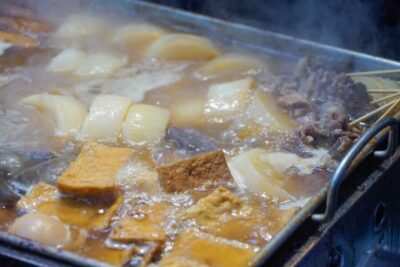
Udon adds a softer, more filling course to the evening. The thick wheat noodles offer a change from fried foods and skewers, while oden brings another type of comfort food to the table. Oden is a simmered dish made from assorted ingredients served in broth.
The inclusion of both dishes matters. A food crawl can easily become a parade of fried snacks, but noodles and simmered food give the meal a better rhythm. They also make the total quantity feel like dinner rather than a long series of samples.
Kushikatsu, Shinsekai’s signature bite
Kushikatsu is the dish most closely tied to this neighborhood. It consists of ingredients placed on skewers, coated, fried, and served hot. The tour takes you to the area associated with where the style began, making this stop both a food tasting and a local history lesson.
The experience is strongest when the guide explains the customs around the dish as well as the ingredients themselves. This is the sort of detail that helps you return to a kushikatsu restaurant later without feeling lost.
Because the tour includes 15 or more dishes, you should expect samples rather than full portions of every item. Still, the overall amount is intended to fill you up. Several families and couples describe finishing the evening satisfied, not hungry.
Dessert closes the crawl
Dessert provides a useful final change of pace. The supplied information does not specify the exact sweet, so you should treat it as part of the tasting sequence rather than plan around one particular item.
I appreciate having a sweet finish after savory food. It gives the evening a clear ending and prevents the last memory from being another fried skewer or bowl of noodles.
Three drinks and the social side of the evening
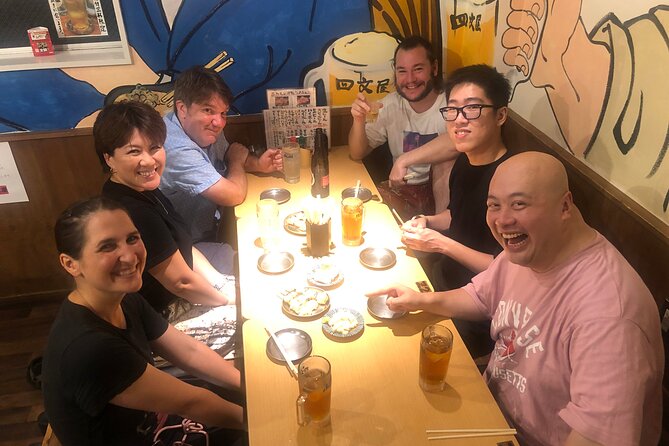
The tour includes three drinks, with alcoholic and nonalcoholic options. That is a strong part of the price, especially in a small-group food tour where you are sampling at several establishments.
The information describes the tour as including three drinks, although one overview refers to two. I would confirm the drink count when booking, but the title and inclusion details both indicate three. Drinks outside the designated selections are not covered, so budget for extras if you want more.
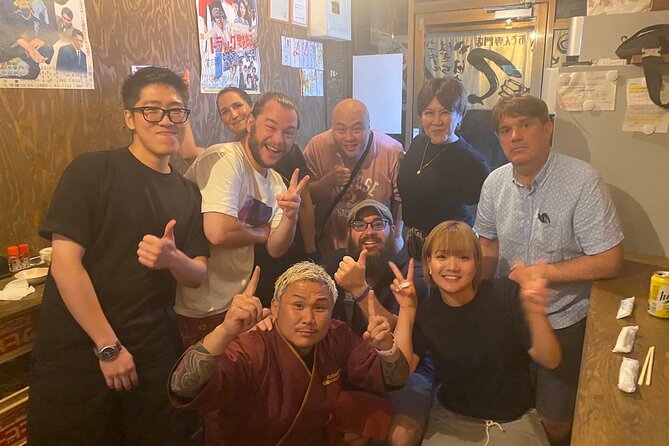
This is not a tasting where you quietly eat and leave. The food comes with conversation, jokes, and time to compare impressions with the group. Guides are repeatedly praised for making people who arrived as strangers feel comfortable together. Andy is noted for an especially comic style, Anna for energy and warmth, Adam for combining food knowledge with history, and Kenzo for an entertaining perspective as an Australian-Japanese guide.
The small maximum of nine people helps. It is easier to hear the guide, easier to fit into small restaurants, and easier to talk without splitting into separate tables. Tiny eateries may have only around a dozen seats, so do not expect wide tables or much personal space at every stop.
What the guides add beyond the food
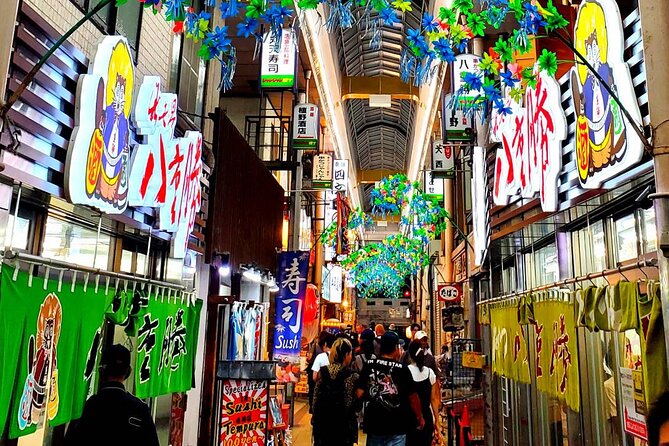
The guide is the difference between a list of dishes and a useful Osaka evening. During the walks, you hear about Shinsekai, Osaka’s past, local customs, and the way people eat and socialize.
Adam is praised for explaining Japanese history, food, and customs in a clear and entertaining way. Scott is noted for connecting food with history and practical recommendations. Andy brings direct opinions about Osaka nightlife and food, along with stories about the city’s feudal past and postwar years. Anna is recognized for making the area feel welcoming while sharing its background.
That range suggests the tone depends partly on the individual guide. The common thread is an informal approach rather than a lecture. You can ask questions about life in Japan, food habits, and the neighborhood, and several guides are described as willing to give straightforward answers.
The tour also gives you a chance to meet local people in the places you visit. You should not expect a formal cultural exchange at every stop, but eating in family-run spots and compact bars gives the evening a more local feel than a restaurant chosen only for tourists.
Pacing, group size, and practical limits
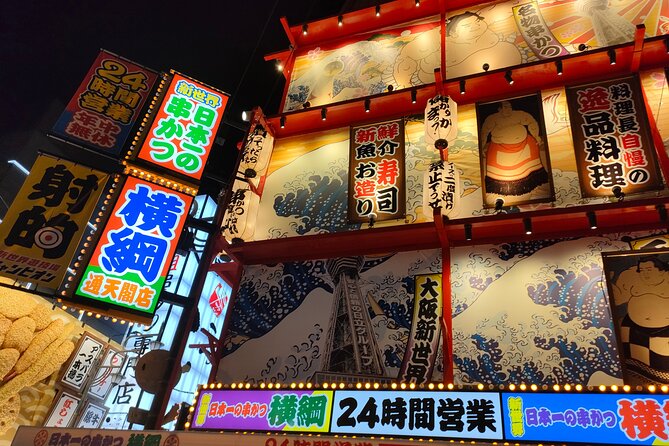
Three hours is enough time for five food stops without making the night exhausting. The walking between places creates a natural break, but you should still wear comfortable shoes. Exact walking distances are not provided, so anyone with mobility concerns should ask the operator for route details before booking.
The group maximum is nine. Most people can participate, and the tour is near public transportation, but the tight seating and frequent transitions may not suit someone who wants a slow dinner with plenty of room.
One useful detail is the ending. The guide can drop you at Dobutsuen-Mae Station, where both the Midosuji and Sakaisuji subway lines run. That makes it easier to continue your evening or return to your accommodation. The tour does not include transportation to Ebisucho Station, so you handle the trip to the starting point yourself.
Children under seven cannot join. The food and drink format is best for older children, teenagers, and adults who enjoy trying several dishes in one night. The tour is also not suitable for gluten-free, vegan, or vegetarian diets. The operator specifically says it cannot cater to those requirements, so do not rely on substitutions.
Filming is not permitted. You can ask about ordinary photography, but the supplied details only specifically prohibit filming, so follow the guide’s instructions at each restaurant.
Is $73.29 a fair price?
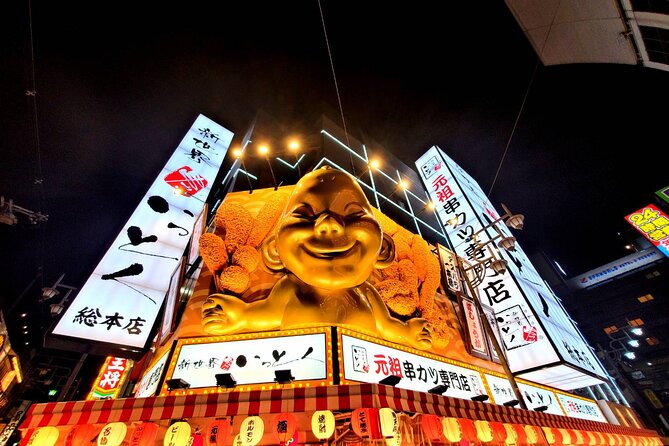
At $73.29 per person, this is not the cheapest way to eat in Osaka. You could buy individual street-food portions for less, especially if you stay with casual stalls and avoid drinks.
The value improves when you count what is included: at least 15 dishes, five establishments, three drinks, a local guide, neighborhood interpretation, and help navigating small eateries. You are also paying for the route design. Finding one takoyaki stand is easy. Finding a balanced evening that includes izakaya food, grilled skewers, noodles, oden, kushikatsu, dessert, and a bar is harder.
I would consider the price fair for a first night in Osaka, particularly if you want a full dinner and an introduction to Shinsekai without planning every stop yourself. It is less compelling for a serious food budget traveler who enjoys researching restaurants and ordering independently.
The tour also has practical value beyond the food. You can note places to revisit, learn what dishes to order, and gain enough neighborhood context to explore with more confidence later.
Who should book this Shinsekai food crawl?
I would recommend it to you if you want to taste many Osaka specialties in one evening, prefer local-scale restaurants to polished dining rooms, and enjoy a guide who mixes stories with jokes.
It is a good fit for first-time visitors, couples, families with older children, and solo visitors who like meeting a small group. It also suits picky eaters better than you might expect, since the range includes familiar choices such as fried chicken, grilled skewers, noodles, and dessert. Still, picky eaters should understand that the tour is built around trying the group’s planned selections.
You may want to skip it if you need strict dietary control, dislike alcohol-centered settings, have trouble with compact seating, or prefer to spend three hours at one restaurant. The pacing can vary by stop, and this is a moving meal rather than a relaxed reservation.
Free cancellation is available if you cancel at least 24 hours before the start time. Changes or cancellations inside that window are not accepted for a refund.
Should you book it?
Book this tour if you want a generous food sampler paired with Shinsekai stories, not just a checklist of Osaka snacks. The combination of 15 or more tastings, five different eateries, three drinks, and a group capped at nine gives you a lot for the price.
I would place it near the beginning of an Osaka stay. You will learn the local food vocabulary, see a district you might otherwise miss, and finish near a useful subway station. Just arrive hungry, wear comfortable shoes, and check the dietary limits before paying.
FAQ
How long does the Hungry Osaka Street Food Tour last?
The tour lasts approximately three hours.
Where does the tour begin?
The meeting point is Ebisucho Station at 5 Chome-13 Nipponbashi, Naniwa Ward, Osaka, 556-0005, Japan.
Where does the tour end?
The guide drops you at Dobutsuen-Mae Station at 1-chōme-6-12 Taishi, Nishinari Ward, Osaka, 557-0002, Japan. The station is served by the Midosuji and Sakaisuji subway lines.
How many food tastings are included?
You receive 15 or more dishes at five different eateries.
Which foods can I expect to try?
The included foods are listed as karaage, yakitori, takoyaki, udon, oden, kushikatsu, and dessert, along with other tastings.
Are drinks included?
Three drinks are included, and they may be alcoholic or nonalcoholic. Drinks outside the designated tour selections are not included.
Can the tour accommodate vegetarian, vegan, or gluten-free diets?
No. The operator says it cannot cater for gluten-free, vegan, or vegetarian diets.
How many people can join the tour?
The maximum group size is nine travelers.
Just added around Osaka
- Nara Day Trip from Osaka with a Licensed Guide★ 5.0 · 3 reviews
- Osaka Early Morning Osaka Castle Tour Avoid Crowds★ 5.0 · 3 reviews
- Guided Tour of Some Attractions in Osaka by Private Car★ 5.0 · 3 reviews
- Private Transfer Between Kyoto and Kansai Airport KIX★ 5.0 · 3 reviews
- Shared Arrival Transfer: Osaka Itami Airport to Osaka City★ 5.0 · 3 reviews
- Osaka: Sushi Making Class and Dotonbori Food Tour★ 4.7 · 3 reviews
- Osaka Night Photography Workshop★ 5.0 · 3 reviews
- Kyoto Full day Tour Kinkakuji, Kiyomizu-dera and Fushimi Inari★ 4.5 · 3 reviews
Osaka Street Food Tours, compared.

Shinsekai Food Tour with 13-15 Dishes at 5 Eateries
Read our review →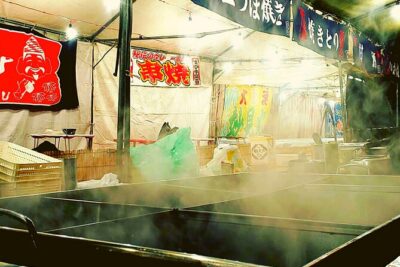
Osaka Food Tour: 13 Dishes at 5 Local Eateries
Read our review →
Osaka Local Foodie Walking Tour in Dotonbori and Shinsekai
Read our review →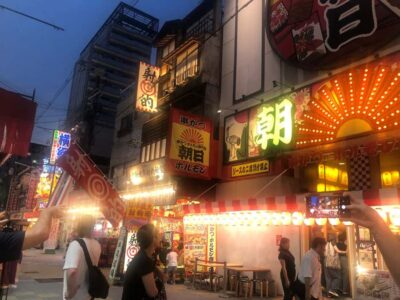
Hungry Osaka Street Food Tour: 15 Dishes & 3 Drinks
Read our review →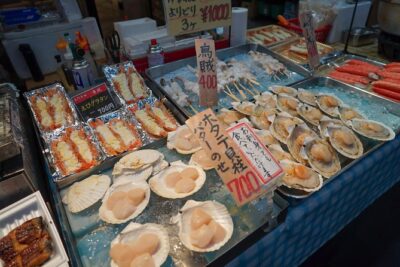
Kuromon Market Food Walking Tour in Osaka (6 stops, 6 tastes)
Read our review →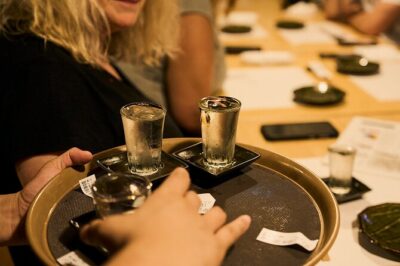
Guided Food Tour with 12 Dishes at 4 Local Eateries
Read our review →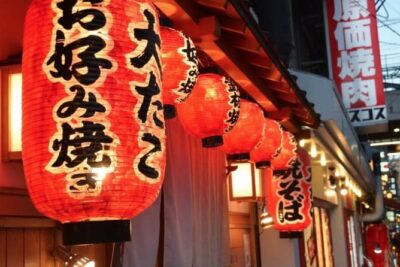
Kuromon Market Food Walking Tour (6 stops, 6 tastes)
Read our review →Browse the lists this tour appears in