
Reviewed · OSAKA HIGHLIGHTS & HIDDEN GEMS TOURS
Private Osaka Walking Tour: Highlights & Hidden Gems
Osaka is easiest to understand in layers: a quiet temple courtyard beside a train station, a tiny shrine tucked behind a shopping street, then a neon canal lined with food stalls. This private tour lets your local host shape the day around what you care about, instead of sending you through a fixed route at someone else’s pace.
I like the personal planning. After booking, you fill out a short questionnaire, then your host contacts you about interests and must-see places. I also like the chance to mix major sights with ordinary Osaka life, such as local shopping arcades, underground malls, neighborhood restaurants, and small shrines.
The main consideration is walking. A four-hour outing can mean 15,000 to 20,000 steps, depending on the route. Public transport or a taxi can help, but those costs are extra, and food, drinks, and attraction tickets are not included.
In This Review
- Key things to know before booking
- Why a private host changes the Osaka experience
- A flexible 2 to 8 hour plan
- Starting in Namba and finding the city’s local rhythm
- Shitennoji: a calm look at Osaka’s Buddhist past
- Namba Yasaka Shrine and the lion that eats evil
- Hozenji Yokocho and the water-covered Fudomyoo statue
- Dotonbori after dark, or in the middle of the day
- Amerikamura and Osaka’s youth culture
- Shopping from grand department stores to narrow arcades
- The island setting and early modern Osaka
- Osaka Castle, markets, and food choices
- How much walking and transport to expect
- Is $81.07 per person a fair price?
- Who should book this Osaka tour?
- Final verdict: book it for a personal first look at Osaka
- FAQ
- How long does the private Osaka walking tour last?
- Is hotel pickup included?
- Is transportation included?
- Are food, drinks, and attraction tickets included?
- Is the tour private?
- Can I cancel for a full refund?
Key things to know before booking
- Your route is built around your interests: Focus on temples, food, shopping, street life, history, or a blend of several.
- You can see old and new Osaka together: A typical plan may pair Shitennoji with Amerikamura, or Hozenji with Dotonbori.
- Hosts help with practical Osaka skills: Guides have assisted with ICOCA cards, subway travel, restaurant choices, and shopping.
- The tour works well for first-time visitors: Four hours can cover several districts and give you a useful sense of the city.
- Longer tours require stamina: Six to eight hours offer more range, but comfortable shoes are essential.
- The price is $81.07 per person: The value is strongest for couples, families, and small groups who want a private, flexible day.
Why a private host changes the Osaka experience
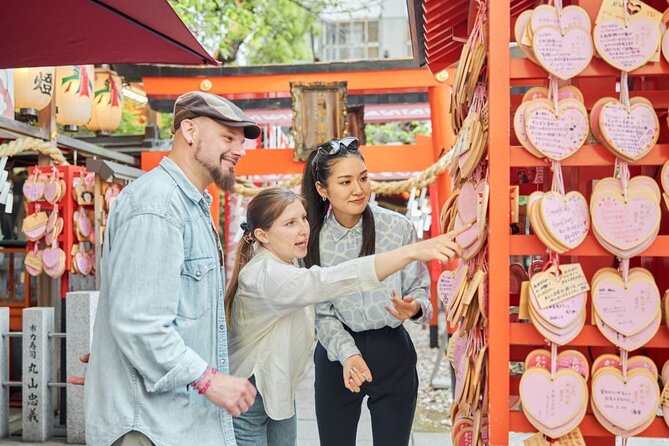
A standard sightseeing route can show you Osaka Castle, Dotonbori, and a famous market. That is useful, but Osaka’s character often appears in the spaces between those landmarks. A private host can point out a small shrine, explain a local custom, slow down for photos, or change the plan when a neighborhood catches your interest.
That flexibility matters in Osaka because the city shifts quickly from polished department stores to narrow lanes and small drinking spots. One part of the day may be about Buddhist history. The next may be about curry, kushikatsu, unusual sweets, or the best place to shop for souvenirs.
The guide names praised most often include Maria, Max, Taku, Ryan, Kai, Karim, Khalid, Loys, and Mayura. You should not assume a particular host will be available, but the repeated themes are useful: warm conversation, clear English from some hosts, local knowledge, help with transport, and a willingness to adjust the day.
Maria is especially suited to visitors who want a carefully planned route with cultural context. Max has helped people use public transport and find restaurants after the tour. Taku has taken visitors to places they would not have found alone. Kai has helped with ICOCA cards and explained Osaka’s past. Ryan is valued for his storytelling and long familiarity with the city.
More highlights and hidden gems tours:
- Osaka Kickstart: Hotspots & Hidden Gems Tour
★ 5.0 · 1,306 reviews - Ultimate Osaka Walking Tour: Castle, Dotonbori & Hidden Gems
★ 5.0 · 862 reviews - Osaka: Main Sights and Hidden Spots Guided Walking Tour
★ 4.9 · 702 reviews
A flexible 2 to 8 hour plan
The tour lasts approximately two to eight hours. That is a wide range, so the time you choose will shape the experience more than the advertised list of sights.
With two hours, aim for one compact area. Namba and Dotonbori work well together, as do Umeda and nearby shopping streets. A short plan is useful if Osaka is a stop between Kyoto and Tokyo, or if you want a quick introduction before exploring independently.
Four hours is the practical middle ground. It gives you time for several neighborhoods without turning the day into a march. You might see a major sight, walk through a shopping area, stop at a shrine, and use the subway to connect districts.
Six hours allows a fuller picture. You can combine Osaka Castle or Shitennoji with Namba, Amerikamura, a market, and a food stop. Eight hours is best for a group that wants a broad city tour and is comfortable taking breaks.
I would tell your host early if you have sore knees, limited mobility, children, or a strong preference for short walks. One booking adapted the route with public transport and Uber because of knee pain. That kind of adjustment is one of the clearest benefits of booking privately.
Starting in Namba and finding the city’s local rhythm
The stated meeting point is near DAISO at 2-chome-2-17 Nanbanaka in Naniwa Ward. Pickup is offered from centrally located hotels, so confirm your location after booking rather than assuming every hotel is covered.
Namba is a smart starting area because it gives you immediate access to shopping, food, entertainment, and several small cultural sites. It also connects well by rail and subway, which makes it possible to reach other districts without spending the entire tour on foot.
A host may take you through streets that look very different from one another. One lane may be lined with chain shops and bright signs. A turn later, you may find a quiet residential street, a local restaurant, or a small place of worship. That contrast is one of the best reasons to walk Osaka with someone who knows how the districts fit together.
Shitennoji: a calm look at Osaka’s Buddhist past
Shitennoji was founded in 593 and is described as Japan’s oldest official temple. Its importance is tied to the early introduction of Buddhism to Japan, giving your guide plenty of context to explain beyond the buildings themselves.
The temple offers a useful change of pace. Osaka is often associated with noise, shopping, and food, but Shitennoji gives you a quiet courtyard and a chance to think about the country’s religious traditions. It is also a good choice if you want your tour to include more than modern city life.
The tradeoff is time and distance. Shitennoji does not sit directly beside every Namba or Umeda attraction, so reaching it may require public transport. If your tour is only two hours, adding it could leave little time for markets or shopping.
More guided walks on foot:
- Deep Backstreet Osaka Tours (Option to add Dinner)
★ 5.0 · 1,290 reviews - Osaka Local Foodie Walking Tour in Dotonbori and Shinsekai
★ 5.0 · 985 reviews - Osaka: Deep Backstreets Walking Tour with Dinner Option
★ 4.9 · 902 reviews - Osaka Castle Walking Tour and Castle Tower Admission
★ 5.0 · 561 reviews
Namba Yasaka Shrine and the lion that eats evil
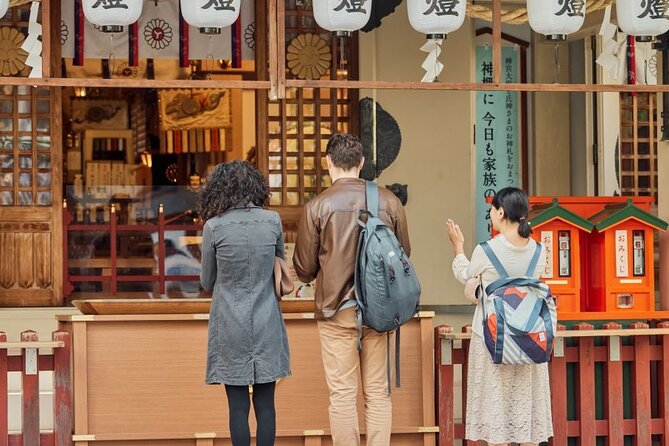
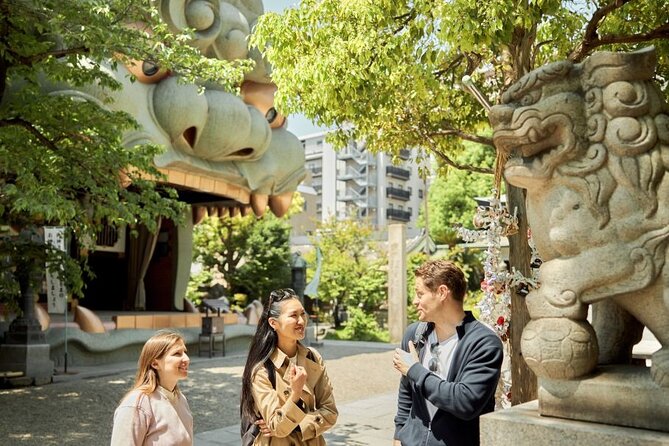
Namba Yasaka Shrine is one of Osaka’s most memorable small-scale sights because of its enormous lion-shaped structure. The lion is believed to swallow evil spirits and bring good luck, making this an easy place to appreciate even if you are not deeply interested in religious history.
The shrine is close to Namba’s entertainment district, so it fits naturally into a route that includes shopping, street food, and Dotonbori. It is also a good photo stop, though the structure can be much busier than the peaceful shrine setting suggests.
I would ask your host to explain how the shrine fits into local life rather than treating it as a quick photograph. The best part of a private tour is having someone explain what you are seeing and answer the small questions that guidebooks often skip.
Hozenji Yokocho and the water-covered Fudomyoo statue
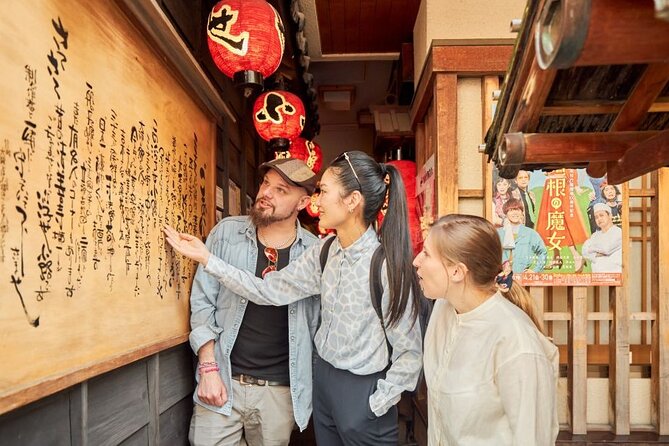
Hozenji Yokocho is a narrow, stone-paved lane with more than 60 traditional Japanese restaurants and bars. It feels much smaller and older than the main streets nearby, which makes it a strong contrast with Dotonbori’s neon and crowds.
At Hozenji Temple, visitors pour water over the moss-covered statue of Fudomyoo for blessings. Your host can show you how the ritual works and explain why this modest temple remains such a beloved stop in central Osaka.
This is a compact area, so it is especially useful on a short tour. The lane is also lined with places to eat, but meals are not included. If you want to stop for food, tell your host what you can eat, what you want to spend, and how much time you wish to set aside.
Dotonbori after dark, or in the middle of the day
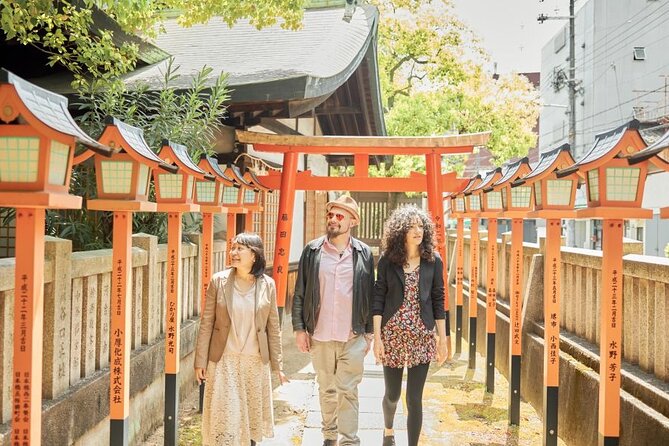
Dotonbori is Osaka’s famous canal district, filled with illuminated signs, arcades, restaurants, and entertainment. It is the loud, showy side of the city, and it deserves a place on a first visit even if you usually avoid major tourist areas.
The canal walk is best for getting a feel for Osaka’s food-and-fun identity. Your host may point out side streets and smaller businesses beyond the most photographed signs. You can also ask for help choosing local dishes, including kushikatsu, curry, or other specialties.
The drawback is crowds. Dotonbori can be packed, especially around the most famous photo points. If you dislike busy streets, ask your host to spend more time in Hozenji Yokocho or nearby neighborhoods and treat Dotonbori as a brief stop.
Amerikamura and Osaka’s youth culture
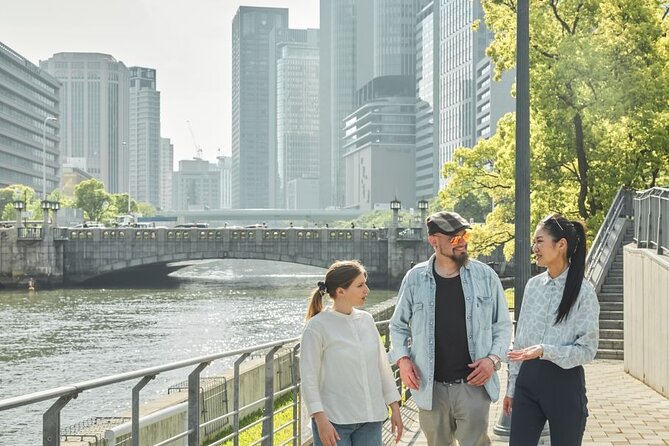
Amerikamura, often called Amemura, is the center of Osaka’s American-inspired youth culture. You can expect indie music references, unusual clothing, thrift shops, small galleries, and a creative street feel that differs sharply from the historic temple districts.
This area suits you if you enjoy fashion, music, design, or people-watching. It is less about checking off a monument and more about seeing how young Osaka expresses itself. A host can help you make sense of the area’s style and point out shops that are easy to miss.
Amerikamura is not the best match for every group. If your priority is traditional Japan, you may prefer more time at Shitennoji, Hozenji, or a market. The private format lets you make that choice without being stuck with someone else’s interests.
Shopping from grand department stores to narrow arcades
Osaka shopping can be surprisingly varied. A host may take you to one of the city’s large department stores, where several floors offer clothing, food, household goods, and unexpected finds. In Umeda, you might also explore White Umeda, a maze of underground shopping malls that can be confusing without help.
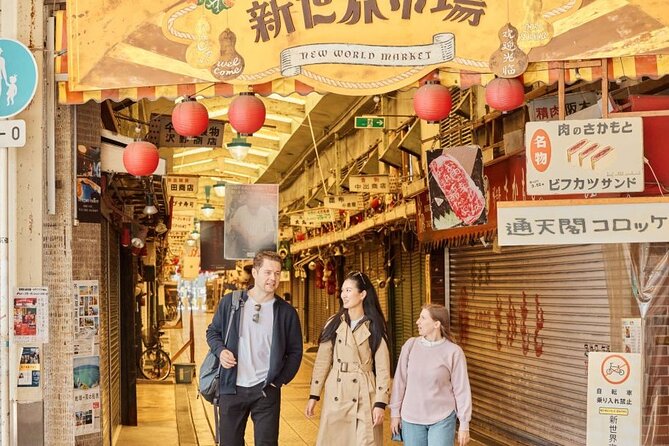
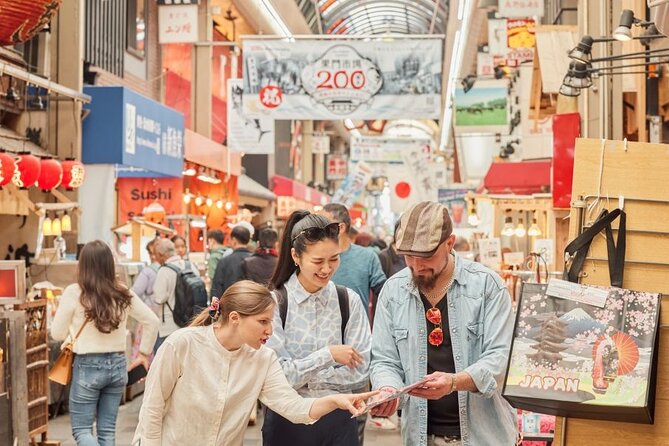
For a more local-feeling shopping walk, the tour can include Osaka’s major shopping arcade. These covered streets mix shops, cafés, restaurants, character goods, and souvenir stalls. They are practical places to buy gifts, and they also show how Osaka residents shop and eat during the day.
The key is to state your shopping goals. Tell your host if you want character goods, Japanese snacks, clothing, kitchen items, or unusual gifts. A past tour with Loys included shopping advice tailored to a family’s needs, which is exactly the sort of practical help that can save you time.
The island setting and early modern Osaka
One possible stop is a quiet island area with art museums, early 20th-century architecture, and a picturesque park. It offers a peaceful late-morning walk away from the louder commercial districts.
This choice is best for you if you enjoy art, buildings, and a slower pace. It gives the tour a different texture and can break up a day built around shopping and food. You should ask your host how much time the stop requires, since a calm island walk may not fit easily into a short route that also includes Namba or Osaka Castle.
The supplied itinerary uses shortened descriptions, so the exact island and museum access are not specified. Attraction entry fees are not included. Ask before the tour if you want to enter a museum rather than simply walk through the area.
Osaka Castle, markets, and food choices
Several tour experiences have included Osaka Castle and a fish market, though the route is personalized and these sights are not guaranteed in every booking. Osaka Castle is an obvious choice for first-time visitors who want a major landmark and a stronger sense of the city’s past.
A market stop can add the food side of Osaka, while local recommendations may lead you to curry, hot chocolate, kushikatsu, or other specialties. One four-hour outing included Osaka Castle, curry lunch, and hot chocolate. Another included kushikatsu and help finding a sukiyaki restaurant afterward.
Food and drinks are extra, which is actually useful if you have specific tastes or dietary needs. You pay only for what you choose, but you should budget for meals and snacks. Tell your host if you want a proper lunch, small tastings, dessert, or simply restaurant advice for later.
How much walking and transport to expect
This is a walking tour, not a private vehicle tour. Public transport or local taxis may be used if you request them, and the exact cost can be discussed with your host after the reservation is finalized.
Walking totals can vary sharply. One four-hour route covered about 15,000 steps, while another reached more than 20,000. That makes comfortable shoes a must, and it also makes the two-hour option appealing if you want a lighter introduction.
The private format helps families and mixed-pace groups. Your host can pause for photos, adjust the route, or explain how to use the subway. Max and Kai have been especially helpful with transport basics, including ICOCA cards and subway travel.
Is $81.07 per person a fair price?
At $81.07 per person, this tour is not the cheapest way to see Osaka. You are paying for a private host, advance planning, a custom route, and the ability to keep the day within your group.
The value improves when two or more people share the experience and when you use the host for more than sightseeing. Restaurant advice, subway help, neighborhood orientation, and shopping guidance can save time during the rest of your trip. Group discounts may also be available.
You still need to pay for transport, meals, drinks, and entrance fees. If you want only a short walk through Dotonbori, you can explore that area independently. If you want a first day that helps you understand how Osaka fits together, the private format is easier to justify.
The experience is rated 4.8 out of 5, with a 96 percent recommendation rate from 569 ratings. That is a strong record, though your experience will depend on the host, the route you request, and how clearly you explain your priorities.
Who should book this Osaka tour?
I would choose this for a first visit, especially if you want a quick orientation before exploring alone. It also suits families, couples, food-focused visitors, shoppers, and anyone who wants to avoid a fixed group schedule.
It is a good match for a short Osaka stop. A four-hour route can cover several districts and leave you with restaurant and shopping ideas for later. Visitors with sore knees or other mobility concerns should request shorter walks and more public transport in advance.
I would not choose it if you want a fully scripted historical lecture, a private car, or admission to several attractions included in the price. It is also a poor fit if you dislike walking or do not want to answer planning questions before the tour.
Final verdict: book it for a personal first look at Osaka
Book this tour if you want Osaka explained by a person who can adapt the day as you go. The strongest combination is a four to six-hour route that pairs one or two major sights with Hozenji, a shopping arcade, a market, or a lesser-known shrine.
Tell your host your must-sees, food interests, walking limits, and transport preferences. Request a compact route if your knees are not up to a 20,000-step day. At the current $81.07 per-person price, I see the best value for small groups who want local guidance, practical help, and a flexible introduction rather than a simple list of landmarks.
Free cancellation is available until 24 hours before the start time. After that cutoff, refunds and changes are not accepted.
FAQ
How long does the private Osaka walking tour last?
The tour lasts approximately 2 to 8 hours. You can choose a shorter route for a quick introduction or a longer day covering several districts and interests.
Is hotel pickup included?
Pickup is offered from centrally located hotels in Osaka. The stated meeting point is near DAISO at 2-chome-2-17 Nanbanaka, Naniwa Ward, Osaka.
Is transportation included?
No. This is a walking tour, and a private vehicle is not included. Public transportation or local taxis may be used if requested, but those costs are extra.
Are food, drinks, and attraction tickets included?
No. Food, drinks, attraction entry fees, and optional gratuities are not included in the price.
Is the tour private?
Yes. Only your group participates in the activity, and the itinerary is personalized around your interests and preferences.
Can I cancel for a full refund?
Yes. You can cancel at least 24 hours before the local start time for a full refund. Cancellations or changes made less than 24 hours before the start time are not accepted.
Just added around Osaka
- Nara Day Trip from Osaka with a Licensed Guide★ 5.0 · 3 reviews
- Osaka Early Morning Osaka Castle Tour Avoid Crowds★ 5.0 · 3 reviews
- Guided Tour of Some Attractions in Osaka by Private Car★ 5.0 · 3 reviews
- Private Transfer Between Kyoto and Kansai Airport KIX★ 5.0 · 3 reviews
- Shared Arrival Transfer: Osaka Itami Airport to Osaka City★ 5.0 · 3 reviews
- Osaka: Sushi Making Class and Dotonbori Food Tour★ 4.7 · 3 reviews
- Osaka Night Photography Workshop★ 5.0 · 3 reviews
- Kyoto Full day Tour Kinkakuji, Kiyomizu-dera and Fushimi Inari★ 4.5 · 3 reviews
Osaka Highlights & Hidden Gems Tours, compared.
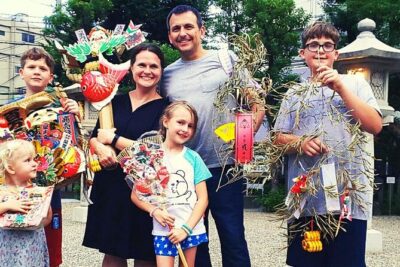

Ultimate Osaka Walking Tour: Castle, Dotonbori & Hidden Gems
Read our review →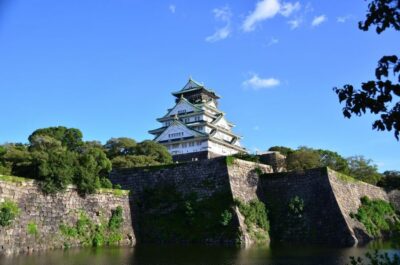
Main Sights and Hidden Spots Guided Walking Tour
Read our review →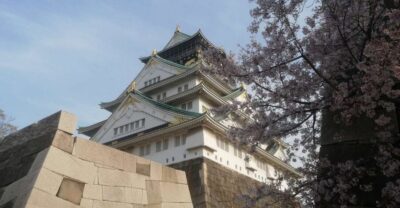
Five Must-See Highlights Walking Tour & Ramen Lunch
Read our review →
Ancient Capital Tour: Kyoto and Nara Highlights from Kyoto/Osaka
Read our review →
Walking Tour of Osaka’s 5 Must-See Sights, with Ramen for Lunch
Read our review →
Osaka Highlights: 4-Hour Walking Tour with Castle
Read our review →
Browse the lists this tour appears in