
Reviewed · KUROMON MARKET FOOD TOURS
Kuromon Market Food Walking Tour in Osaka (6 stops, 6 tastes)
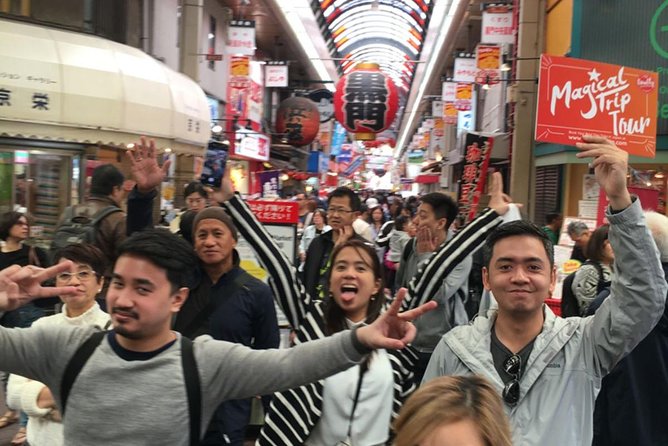
Kuromon Market is where this tour earns its keep: you get a guided introduction to Osaka’s famous food street instead of wandering past dozens of stalls wondering what to order. You may try takoyaki, sushi, yakitori, dumplings, sweets, or other market specialties, with your guide helping across language gaps.
I like the small group of no more than seven, which makes it easier to ask questions and adjust the pace. I also like the stop at Doguyasuji, where cooking knives, dishes, restaurant signs, and other kitchen goods give you a look at Osaka’s food culture beyond what ends up on your plate.
The main caution is food value. Some people have found the included tasting amount generous, while others felt hungry or had too little choice for the price. Ask your guide early what is included, and carry cash for extra snacks.
In This Review
- Key points to know before booking
- Why Kuromon Market works better with a guide
- Meeting near Nippon-bashi Station
- Stop one: tasting your way through Kuromon Market
- The market’s culture beyond the food
- Doguyasuji: Osaka’s street of kitchen supplies
- Passing Namba Grand Kagetsu and Namba
- The Dotonbori contrast
- How good is the food value at $50.41?
- Family suitability and walking conditions
- Dietary needs and ordering help
- The guide makes or breaks the walk
- Who should book it?
- Practical details before you go
- Should you book the Kuromon Market food walk?
- FAQ
- How long does the Kuromon Market food walking tour last?
- Where does the tour begin?
- Where does the tour end?
- How many people can join the tour?
- What foods might I try?
- Is food included in the tour price?
- Can I request vegetarian, vegan, or gluten-free food?
- Are children allowed on the tour?
- Can I cancel for a full refund?
Key points to know before booking
- Six tastes in about two hours: The format is built around sampling several Osaka foods while walking through Kuromon Market.
- A group capped at seven: This is small enough for personal questions and easier movement through narrow market lanes.
- Doguyasuji adds a useful second angle: You browse kitchenware and cooking equipment, not just food stalls.
- Guides make ordering easier: Guides such as Nina, Yuto, Rie, Niko, Aina, and Taku have been praised for friendly English and practical help.
- The route connects Osaka’s food districts: You pass Namba Grand Kagetsu, Namba, and Dotonbori before returning to the meeting point.
- Food restrictions need advance notice: Vegetarian, vegan, and gluten-free requests may be considered, but substitutions and allergy-free meals are not guaranteed.
Why Kuromon Market works better with a guide

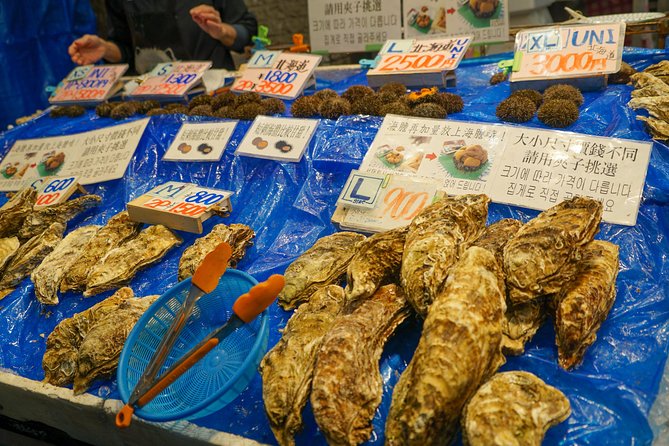
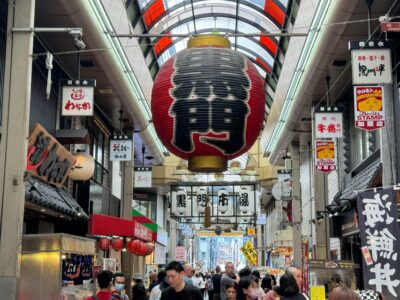
Kuromon Market is a shopping street in Minami, central Osaka. It is easy to reach, free to enter, and full of seafood, cooked snacks, produce, sweets, kitchen goods, and small food counters.
It is also easy to spend money without understanding what you are buying. A stall may display unfamiliar cuts of seafood, filled snacks, skewers, or sweets with little English explanation. A local guide can point out what is typical, help you order, and explain how the food fits into Osaka’s daily life.
That practical help matters most if this is your first visit to Japan. You can ask how to eat a dish, which sauces to use, or whether a food is sweet, savory, raw, fried, or spicy. You also avoid the awkward pause that comes with trying to order from a busy counter using gestures alone.
I would not book this tour simply because Kuromon Market is difficult to visit independently. It is not. You can walk through the market on your own. The reason to join is the added context, food selection, and company of a local who can shape the walk around your interests.
More eating your way through Kuromon Market:
- Osaka: Kuromon Market Food Walking Tour (6 stops, 6 tastes)
★ 4.6 · 272 reviews - Kuromon Market Tour: All inclusive 6~8 Dishes & 3~4 samplings
★ 5.0 · 103 reviews - PRIVATE 6hr, Food tour from Osaka Castle, Kuromon, Dotonbori.
★ 5.0 · 68 reviews
Meeting near Nippon-bashi Station
The tour begins in front of the SMBC ATM at Nippon-bashi 1chome, near Kintetsu Nippon-bashi Station. If you use Kintetsu Nippon-bashi Station, take Exit 10 and allow extra time to find the exact meeting point at the Picasso Nippon-Ichi Building, 1-17 Nipponbashi, Chuo Ward.
The start is in a busy part of Osaka, so do not cut your arrival too close. The activity begins on time, and arriving late can mean missing the group without a refund or rescheduling option.
The meeting point is useful for a wider Osaka visit. You are beginning near Kuromon Market, Namba, and Dotonbori, so you can continue exploring after the tour if you still have energy and appetite.
Stop one: tasting your way through Kuromon Market
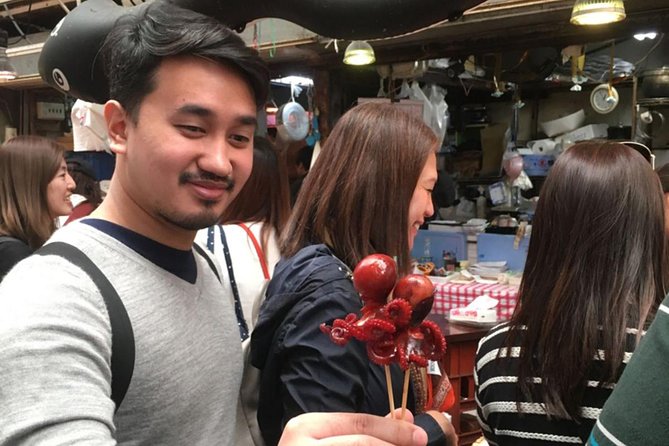
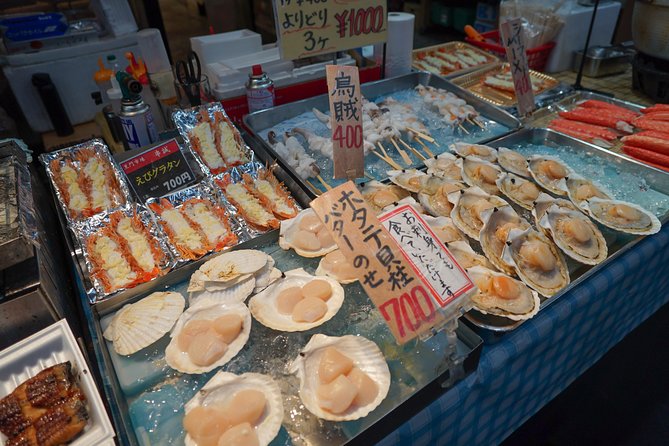
The main part of the tour takes place inside Kuromon Market. The official format is six stops and six tastes, though the exact food selection can change with the guide, market conditions, dietary needs, and your group’s preferences.
Foods reported during different versions of the experience include:
- Takoyaki
- Fresh sushi
- Yakitori
- Dumplings
- Gyoza
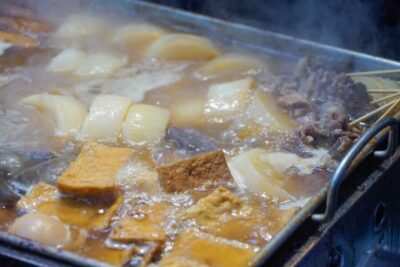
- Oden
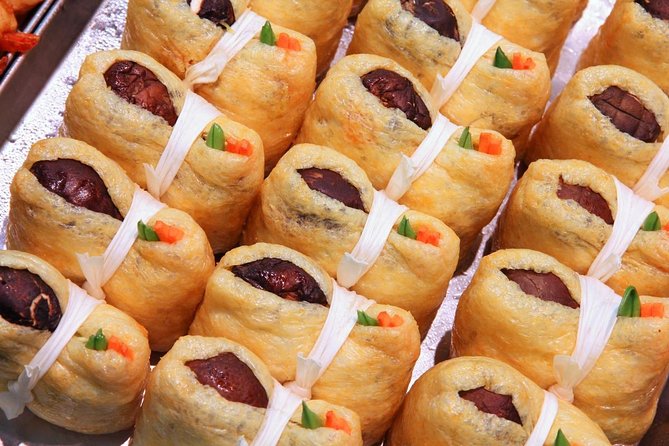
- Mushrooms
- Japanese sweets
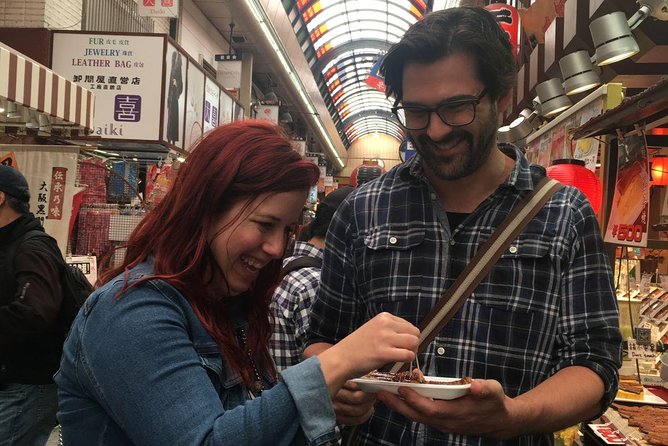
Takoyaki is the obvious Osaka classic: hot batter filled with octopus, usually finished with sauce, mayonnaise, and other toppings. It is worth trying with a guide because the inside can be much hotter than it looks. Your guide may also show you how locals handle the texture and toppings.
Fresh sushi gives the food walk a different feel from the fried snacks usually associated with Osaka. Yakitori and dumplings add familiar flavors in a compact form, while oden introduces a softer, broth-based style of Japanese comfort food. One particularly praised food combination included sushi, takoyaki, yakitori, and dumplings, with a mushroom skewer singled out as a favorite.
Do not expect a sit-down meal. This is a walking tour with small tastes, not an all-you-can-eat outing. The amount can feel satisfying when the group samples several items, but it may not replace lunch for a hungry adult.
That distinction is important because the price is about $50.41 per person. You are paying for the guide, explanations, ordering support, route planning, and the included food, not simply for six inexpensive bites. If your main goal is quantity, buying directly from market stalls will likely cost less.
One experience used a food budget of about 1,200 yen, which was not enough for some pairs to eat as much as they expected. Since the exact handling of food purchases can vary, ask at the start whether the six tastes are selected by the guide, covered within a set allowance, or chosen with your input.
The market’s culture beyond the food
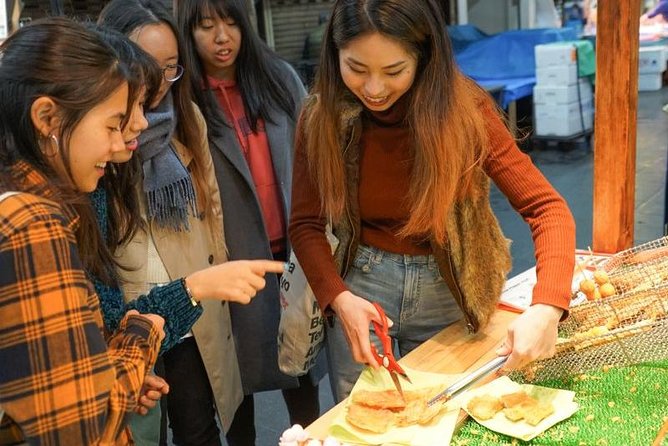
The tour’s better moments come when the market becomes more than a row of snack counters. Kuromon takes its name from the black gate of Enmyoji Temple, and the area offers a chance to connect Osaka’s food habits with its older neighborhood identity.
Your guide may explain local dishes, eating customs, and the way the market serves both residents and visitors. The quality of this part depends heavily on the person leading your group. Nina has been praised for answering children’s questions with patience and humor. Yuto has been described as friendly and flexible with dietary concerns, while Niko has been appreciated for adding stories about Japanese life and adjusting the route to group interests.
That range of guide personalities is a strength, but it also means the tour is not identical every day. Some guides may tell more stories without prompting. With others, you should ask questions directly if you want details about a stall, ingredient, or local custom.
A useful strategy is to tell your guide what you already tried in Osaka and what you want to find next. One particularly practical approach is to visit Kuromon briefly before the tour, note the stalls or foods that catch your eye, and then ask your guide to include them if possible.
More street food walks and tastings:
- Osaka: Shinsekai Food Tour with 13-15 Dishes at 5 Eateries
★ 4.8 · 2,204 reviews - Osaka Food Tour: 13 Dishes at 5 Local Eateries
★ 5.0 · 2,149 reviews - Hungry Osaka Street Food Tour:15 Tastings & 3 Drinks with a Local
★ 5.0 · 1,727 reviews - Osaka Local Foodie Walking Tour in Dotonbori and Shinsekai
★ 5.0 · 985 reviews
Doguyasuji: Osaka’s street of kitchen supplies
Doguyasuji is the tour’s most distinctive addition. Instead of spending the full two hours on tastings, you browse a street known for kitchenware, tableware, cooking tools, and restaurant equipment.
You might see dishes, knives, pans, plastic food displays, shop signs, and other supplies used by Japanese restaurants. This gives you a look at the working side of Osaka’s food culture. The city’s reputation for eating is supported by a whole retail world devoted to preparing and presenting food.
Doguyasuji is also a better souvenir stop than another generic shopping arcade. A small kitchen item can be useful at home, and browsing does not require you to buy anything. If you are considering a knife or fragile tableware, remember that you will need to pack and transport it carefully.
The street is especially useful for people who enjoy cooking, design, restaurant culture, or practical souvenirs. If your only interest is eating, this segment may feel like a detour. For me, that change of pace makes the tour feel more like an introduction to Osaka rather than a chain of samples.
Passing Namba Grand Kagetsu and Namba
The route passes Namba Grand Kagetsu, a comedy theater operated by Yoshimoto Kogyo. You may not go inside, but the stop adds local character to the walk. Osaka has a strong comedy tradition, and the theater sits in one of the city’s major entertainment areas.
You then pass through Namba, a large transport and shopping district. Namba Parks, restaurants, boutiques, and train connections make this a useful area to understand if you are staying in southern Osaka.
The tour does not provide a full guided visit to every attraction in Namba. Think of this portion as orientation. Your guide can help you understand how Kuromon fits into the surrounding district and may offer ideas for the rest of your Osaka stay.
That advice is one of the tour’s better values. Guides have suggested other foods, shops, historic spots, and places to visit after the walk. If you are early in your Osaka itinerary, take notes. A good recommendation on your first day can improve several later meals.
The Dotonbori contrast
The route also passes through Dotonbori, Osaka’s best-known entertainment zone. Huge three-dimensional signs, the Glico running figure, Kani Doraku’s crab sign, and the Shochikuza Theater create the familiar neon scene.
Dotonbori is worth seeing, but it can feel crowded, commercial, and designed for quick photographs. Kuromon has a different mood, with more focus on market counters and food shopping. Seeing both areas helps you understand the contrast between Osaka’s famous visitor corridor and its market-based food culture.
Do not confuse passing through Dotonbori with a full Dotonbori tour. If you want detailed information about the signs, theater, nightlife, or restaurant choices, ask your guide while you are there. The route’s focus remains Kuromon and food.
How good is the food value at $50.41?
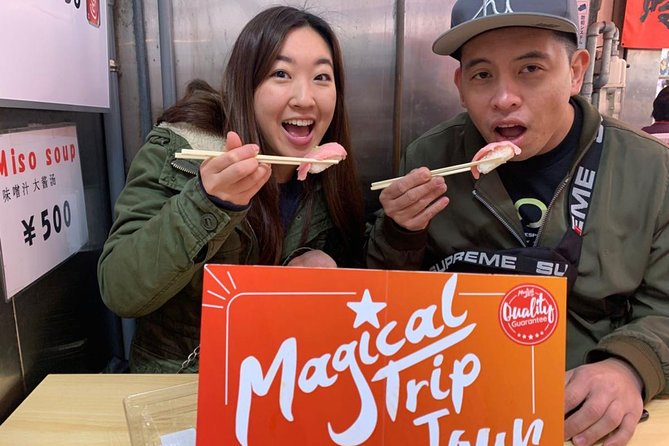
At roughly $50 per person, this is not the cheapest way to eat at Kuromon Market. You can buy individual snacks yourself, choose your own portion sizes, and stop whenever you like.
The tour makes better financial sense if you value several services at once:
- A local person chooses or recommends foods
- You receive help with ordering
- You get cultural and neighborhood context
- You can ask about food for the rest of your stay
- You avoid wasting money on dishes you do not understand
- You visit Doguyasuji as part of the same walk
- You stay in a small group rather than a large crowd
The food portion is the key question. Some versions have delivered a satisfying range of dishes, while other people found the allowance too limited and finished hungry. The title promises six tastes, but six tastes do not necessarily equal six full portions.
I recommend eating a light breakfast or early snack rather than arriving ravenous. Bring cash for extra food and drinks. You do not pay for the guide’s food or drinks, but the tour does not promise unlimited additional purchases.
Family suitability and walking conditions
All ages are welcome, and the small group format can work well for families. Nina has been especially praised for engaging children and answering their questions. Another family completed the route with an 18-month-old in a sling, with the practical warning that the area may be too crowded for a stroller.
The market and surrounding streets require walking and standing. Narrow lanes, food counters, and crowds can make movement slower, especially during busy periods. Wear comfortable shoes and keep your belongings close.
Osaka’s weather deserves planning. Summer temperatures can reach 40°C, while winter lows can fall to minus 5°C. Bring water and sun protection in hot weather, and dress for cold conditions in winter. Rain does not always end the experience, since much of the route can pass under cover, but wet weather can still make market walking less comfortable.
Dietary needs and ordering help
Vegetarian, vegan, and gluten-free requests may be considered if you provide them at least one day before the tour. Still, many Japanese restaurants and food counters are not fully prepared for these requirements, so choices may be limited.
The tour cannot guarantee allergy-free meals, substitutions, or full compliance with every dietary restriction. Food is prepared in kitchens the operator does not control. Requests made on the day cannot be accommodated.
If you have a serious allergy, carry a written explanation in Japanese and confirm the limits before booking. Do not assume that a request accepted in advance means every item will be safe.
For less serious preferences, the small group can help. Guides such as Mari have adjusted plans around preferences, and Yuto has been praised for making an effort with dietary concerns. Still, flexibility is not the same as a guarantee.
The guide makes or breaks the walk
The strongest part of the experience is the person leading it. Nina has been praised for warmth, humor, clear English, and patience with children. Rie has guided groups through different parts of Namba and its food. Niko has been appreciated for energy, local stories, and helping with train directions after the walk.
Aina has been praised for a comfortable pace and careful navigation. Taku has helped solo participants communicate with vendors, choose local foods, and take photographs. Anne has even carried hand wipes for messier foods, a small but useful touch on a snack-heavy walk.
These details matter because the market can be visually exciting but confusing. A guide who listens to your preferences gives the tour a personal feel. A guide who gives little explanation can leave you wondering why you paid for the walk instead of exploring independently.
Ask questions. Mention foods you dislike. Say if you want more history, more shopping, or more time at food stalls. You will get more value when you treat the tour as a conversation rather than a fixed parade of stops.
Who should book it?
I would recommend this tour to a first-time Osaka visitor who wants an easy introduction to local food and needs help ordering. It also suits families, solo visitors who want company, and people who prefer tasting several specialties without planning every stop.
It is a good first or second-day activity. You can use the guide’s suggestions for later meals, compare Kuromon with Dotonbori, and return to the market on your own after learning the layout.
I would be more cautious if you are a serious food hunter, a very hungry eater, or someone with strict dietary needs. You may prefer to explore independently, choose larger portions, and control every ingredient.
The tour receives a 4.9 rating from 551 reviews, with 98 percent recommending it. Those numbers point to a strong overall experience, but the food-budget concern is real enough to consider. The safest decision is to book if you want guidance and context, not simply cheap lunch.
Practical details before you go
The activity lasts about two hours and returns to the Nippon-bashi meeting point. A mobile ticket is available, and confirmation is provided when you book.
Free cancellation is available up to 24 hours before the start time. Cancellations or changes made later are not accepted, and arriving late can mean missing the tour without a refund.
The experience is operated by MagicalTrip Inc. Group discounts are available, and the maximum group size is seven. Bring cash for extra snacks and drinks, wear shoes suited to walking, and arrive early enough to find the SMBC ATM meeting point without a last-minute dash.
Should you book the Kuromon Market food walk?
Book it if you want a guided first taste of Osaka, help ordering, a small group, and useful advice for the rest of your visit. The Doguyasuji kitchenware stop and the contrast between Kuromon, Namba, and Dotonbori give the two-hour walk more substance than a simple snack crawl.
Skip it if you mainly want a large meal, have strict allergies, or feel comfortable choosing food on your own. In that case, spend the $50.41 on several market purchases and explore at your own pace.
For most first-time visitors, I would schedule it early in an Osaka stay, eat lightly beforehand, and ask clearly what the six included tastes cover. That one question helps you decide if the price matches what you want from the experience.
FAQ
How long does the Kuromon Market food walking tour last?
The tour lasts approximately two hours.
Where does the tour begin?
It begins in front of the SMBC ATM at Nippon-bashi 1chome, near Kintetsu Nippon-bashi Station. From the station, use Exit 10.
Where does the tour end?
The tour ends back at the meeting point.
How many people can join the tour?
The maximum group size is seven travelers.
What foods might I try?
The tour is designed around six tastes. Foods associated with the experience include takoyaki, sushi, yakitori, dumplings, gyoza, oden, mushrooms, and Japanese sweets. The exact selection can vary.
Is food included in the tour price?
The experience includes food tastings, but the details do not specify a full meal or unlimited food. Bring cash if you want to buy extra snacks or drinks.
Can I request vegetarian, vegan, or gluten-free food?
You can submit dietary requests at least one day before the tour. Options may be limited, and the operator cannot guarantee allergy-free meals, substitutions, or accommodation of every dietary restriction.
Are children allowed on the tour?
Yes. All ages are welcome. A child in a sling has been accommodated, but the busy market area may be difficult for a stroller.
Can I cancel for a full refund?
Yes, if you cancel at least 24 hours before the experience start time. Cancellations or changes made less than 24 hours in advance are not accepted.
More Guided Walks on Foot
- Deep Backstreet Osaka Tours (Option to add Dinner)
★ 5.0 · 1,290 reviews - Osaka: Deep Backstreets Walking Tour with Dinner Option
★ 4.9 · 902 reviews - Ultimate Osaka Walking Tour: Castle, Dotonbori & Hidden Gems
★ 5.0 · 862 reviews - Osaka: Main Sights and Hidden Spots Guided Walking Tour
★ 4.9 · 702 reviews
Just added around Osaka
- Nara Day Trip from Osaka with a Licensed Guide★ 5.0 · 3 reviews
- Osaka Early Morning Osaka Castle Tour Avoid Crowds★ 5.0 · 3 reviews
- Guided Tour of Some Attractions in Osaka by Private Car★ 5.0 · 3 reviews
- Private Transfer Between Kyoto and Kansai Airport KIX★ 5.0 · 3 reviews
- Shared Arrival Transfer: Osaka Itami Airport to Osaka City★ 5.0 · 3 reviews
- Osaka: Sushi Making Class and Dotonbori Food Tour★ 4.7 · 3 reviews
- Osaka Night Photography Workshop★ 5.0 · 3 reviews
- Kyoto Full day Tour Kinkakuji, Kiyomizu-dera and Fushimi Inari★ 4.5 · 3 reviews
Kuromon Market Food Tours, compared.
Kuromon Market Food Walking Tour (6 stops, 6 tastes)
Read our review →
Kuromon Market Tour: All inclusive 6~8 Dishes & 3~4 samplings
Read our review →
PRIVATE 6hr, Food tour from Osaka Castle, Kuromon, Dotonbori.
Read our review →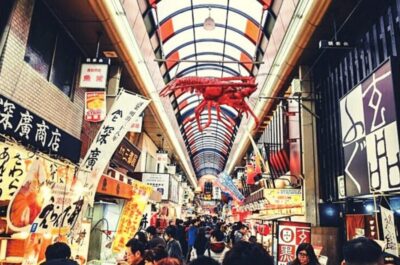
All Inclusive Kuromon Markets Tour: Flavors Of Osaka
Read our review →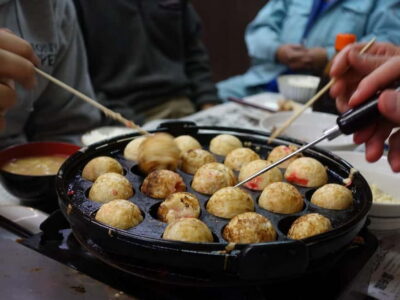
Kuromon Market 1.5-Hour Seafood & Street Food Tour
Read our review →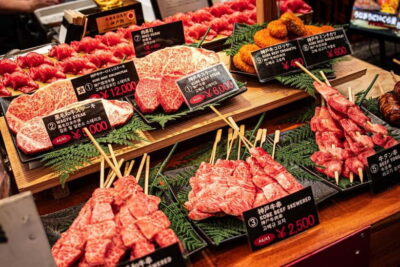
Kuromon Market Street Food Tour with Pro Local Guide
Read our review →
1.5 Hour Food Tour at the Kuromon Market in Osaka
Read our review →Browse the lists this tour appears in