
Reviewed · OSAKA WALKING TOURS
Deep Backstreet Osaka Tours (Option to add Dinner)
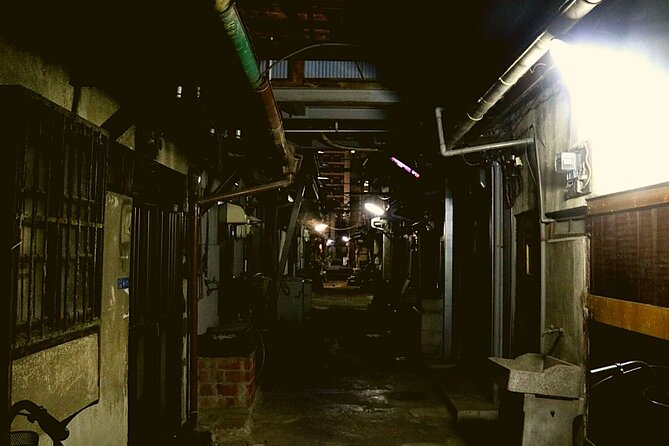
Osaka’s most revealing stories are not found under the neon signs of Dotonbori. This evening walk takes you through narrow backstreets, old homes, a former ghetto, and a historic red light district, using the city’s less polished corners to explain class, religion, homelessness, sex work, and organized crime.
I like two things right away: you get food from family-run stalls instead of only polished restaurants, and the small-group format, capped at 15 people, gives guides such as Mari, Knox, Joseph, and Bennett room to answer questions. The optional izakaya dinner adds local dishes such as tonpeiyaki, karaage, nikudofu, yakitori, and dessert.
The trade-off is clear. This is a little over three hours on foot, and the subject matter can be heavy. You may also spend time standing outdoors, including in areas with mosquitoes, so comfortable shoes and insect protection are sensible.
In This Review
- Key points to know before booking
- Why this Osaka walk feels different
- Meeting at Daikokucho Station at 5:30 pm
- Family stalls and Osaka’s food culture
- Retro Osaka, odd shops, and twisting lanes
- Abandoned houses and the weight of a family name
- A place of worship that most visitors miss
- The red light district and the former ghetto
- Homelessness, mental health, and the city’s unseen edge
- The optional izakaya dinner
- Is $53.06 good value?
- Who should book this walk?
- My call: book it for the questions, not just the sights
- FAQ
- Where does the Osaka backstreet tour start?
- What time does the tour begin?
- How long does the experience last?
- Where does the tour finish?
- How many people can join the tour?
- Is dinner included?
- Are drinks included with dinner?
- Can I cancel for a full refund?
Key points to know before booking
- Osaka beyond the postcard: Visit overlooked districts, twisting lanes, abandoned houses, unusual shops, and an important place of worship.
- A serious social-history tour: The route discusses class, mental health, homelessness, sex work, religion, gangs, and politics.
- Food is part of the story: Taste local snacks at two family-run stalls, with an optional full meal at an izakaya.
- Evening start: Meet at FamilyMart MYS Daikokucho Station at 5:30 pm for a walk lasting about three hours.
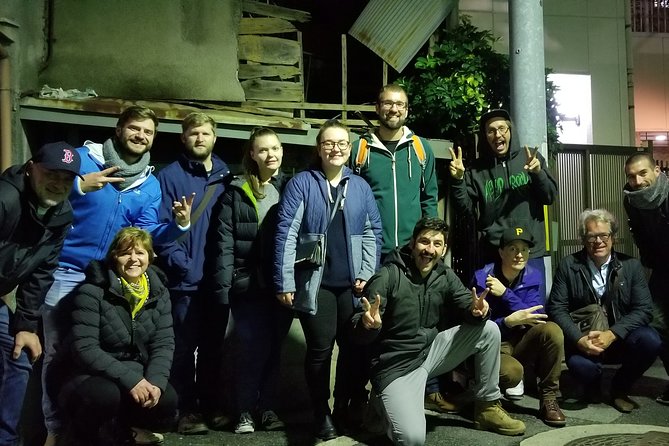
- Small-group setting: The maximum group size is 15, a useful balance between personal attention and meeting other people.
- Good value for curious visitors: At $53.06 per person, the price covers a guided cultural walk and food tasting, while dinner is an upgrade.
Why this Osaka walk feels different
Many Osaka outings stay with the city’s easy pleasures: bright signs, shopping arcades, famous food streets, and crowded entertainment quarters. This experience takes another route. It asks you to look at the people, customs, and old structures that are usually left out of a cheerful city introduction.
That means the evening has a different tone from a standard food walk. You will still eat, laugh, and meet people from other countries, but the guide also talks about the rules and pressures shaping local life. Topics include social class, family names, abandoned houses, mental health, homelessness, sex work, religion, and links between the red light district and organized crime.
I find this useful because it gives the city some depth without pretending that Japan is either perfect or mysterious. The guides are encouraged to explain difficult subjects plainly. Several guides are named in the tour material, including Mari, Knox, Joseph, Bennett, Mark, Josh, and Nox, so the experience may have a lively, personal feel even when the subject turns serious.
You should not book this expecting a quiet architectural walk or a soft-focus introduction to Osaka. The route is designed to show parts of the city that can be uncomfortable, strange, or socially complicated. That is its purpose.
More guided walks on foot:
- Osaka Local Foodie Walking Tour in Dotonbori and Shinsekai
★ 5.0 · 985 reviews - Osaka: Deep Backstreets Walking Tour with Dinner Option
★ 4.9 · 902 reviews - Ultimate Osaka Walking Tour: Castle, Dotonbori & Hidden Gems
★ 5.0 · 862 reviews
Meeting at Daikokucho Station at 5:30 pm
The meeting point is FamilyMart MYS Daikokucho Station, at 2-chōme-5-16 Shikitsuhigashi in Naniwa Ward. The location is near public transportation, and the published start time is 5:30 pm, which gives the walk an atmospheric evening setting as the city begins to change pace.
Allow time to find the convenience store and gather before the start. Since this is a walking activity rather than a bus tour, arrive ready to move. The tour ends back at the same meeting point, making it easier to continue your evening from a familiar station area.
The exact walking route can vary with local conditions and the guide leading your group. That flexibility is part of the appeal, since the point is to explore overlooked areas rather than tick off a fixed list of grand sights.
The group can include as many as 15 people. That is not an intimate private walk, but it is still far smaller than a large city tour. If you are traveling alone, the format also gives you a natural way to meet other people before the dinner or after-tour plans.
Family stalls and Osaka’s food culture
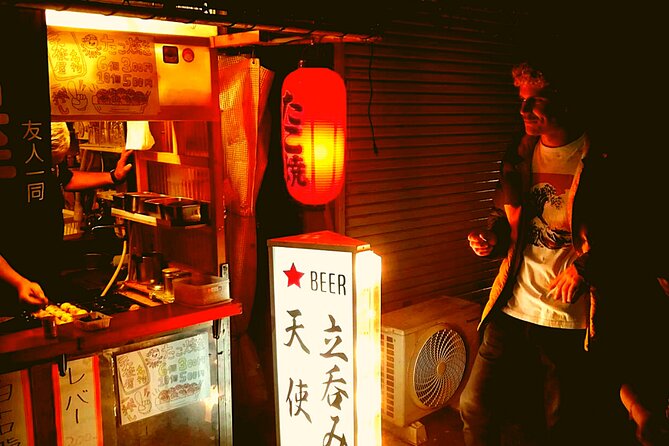
Food appears early enough to keep the walk from feeling like a lecture. You taste local fare at two street-run family stalls, and the guide uses these stops to connect ordinary eating habits with the character of Osaka.
The food is not presented as a formal tasting menu. It is more direct and local: a quick stop, a bite, and an explanation of what makes the dish part of everyday Osaka. That suits the backstreet setting. You are sampling food where people actually run small businesses, not simply stopping at a restaurant chosen for an international audience.
The included food-stall tasting is separate from the optional dinner. Alcohol is not included at the restaurant, although drinks are described as reasonably priced. Keep that distinction in mind when comparing the total cost of the basic tour with the dinner version.
Food portions and exact stall choices can depend on the evening. The published description promises tasting at family-run stalls, but it does not set out a fixed menu for this part of the walk. If you have dietary concerns, ask the operator before booking rather than assuming every stop will suit you.
Retro Osaka, odd shops, and twisting lanes
One of the lighter sections takes you into Osaka’s retro zone, where you might see unusual or outlandish shops that rarely appear on a first-time city route. These places help show the city’s sense of humor and its willingness to let old and strange businesses survive alongside newer development.
The route then moves through old, twisting alleys. This is where the experience becomes physical as well as historical. Narrow lanes can reveal small shrines, aging buildings, and daily life at a slower scale than the main roads, but they also mean you should watch your footing and stay close to the group.
You will walk for roughly three hours, though the pace includes breaks. That matters. The walk is not described as strenuous, yet standing and moving for that long can tire you, especially after a full day of sightseeing. Wear shoes you can comfortably use on pavement and uneven backstreets.
The less polished surroundings are not a flaw in this context. They are the point. You are not being shown Osaka as a collection of picture stops. You are being shown how layers of old housing, small trade, religion, entertainment, and redevelopment sit beside one another.
A few more Osaka tours and experiences worth a look
- Osaka Umeda: PICCADILLY DINNER SHOW & NIGHTCLUB with Tasting
★ 4.8 · 49 reviews - Osaka: PICCADILLY PREMIUM DINNER SHOW&NIGHTCLUB with Tasting
★ 5.0 · 26 reviews - Eat Our Favorites! Osaka’s Backstreet Dining
★ 4.9 · 19 reviews - Hidden Osaka Foodie Tour: Nishinari Backstreets & Local Dining
★ 5.0 · 13 reviews
Abandoned houses and the weight of a family name
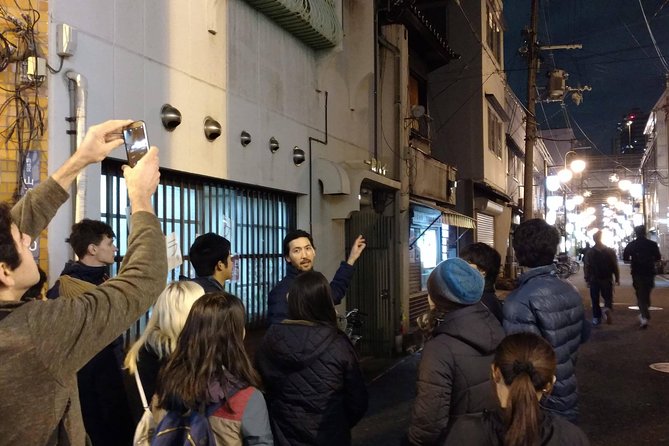
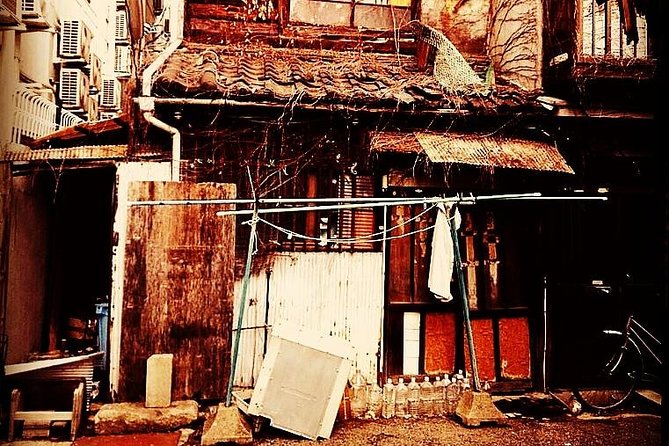
The abandoned-houses zone may be the most thought-provoking part of the route. The guide explains why homes can be left empty after generations of family life, including the way social class and family names can affect who is willing or able to take on a property.
This subject gives you a more useful way to think about empty buildings. They are not simply neglected structures waiting for a developer. They can carry family burdens, social associations, financial problems, and memories that make reuse difficult.
The tour does not treat these houses as spooky scenery. The stronger guides use them to explain how past decisions continue to shape present-day neighborhoods. That approach is valuable, though the material can feel sad. You are looking at real social consequences, not a theatrical haunted-house stop.
Photography also calls for common sense and respect. The description does not promise entry into private homes, and you should not treat occupied buildings or residents as attractions. Stay with the group and follow the guide’s instructions.
A place of worship that most visitors miss
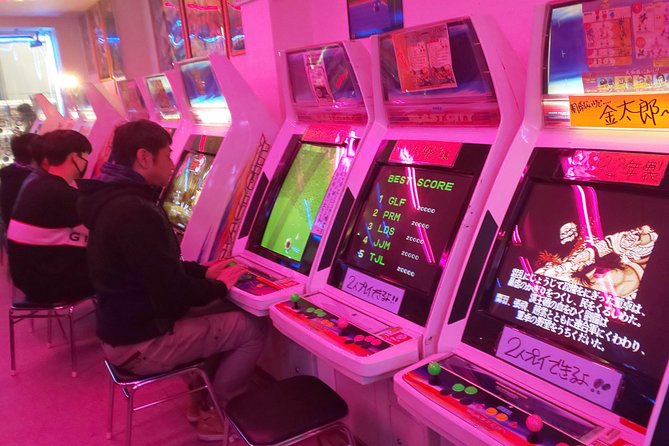
The walk includes an important but little-known place of worship. The stop adds balance to the evening because the route is not only about crime, poverty, or taboo subjects. It also looks at belief, tradition, and the role religious places continue to play in Osaka.
The guide explains what the site represents today, as well as how it fits into the surrounding neighborhood. This is a good chance to ask questions about Japanese religious practice without the pressure of a formal temple tour.
Because the activity takes place in an active local area, keep your voice low and observe any posted rules. The stop is meant to help you understand the place, not simply use it as a backdrop for photos.
The red light district and the former ghetto
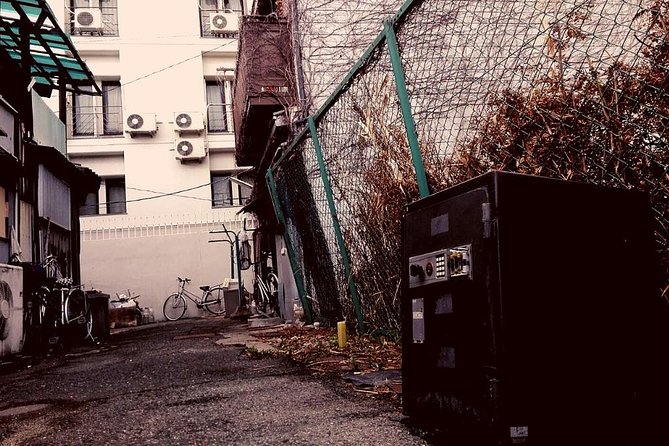
The red light district is one of the route’s more distinctive stops. Its history includes links to the yakuza, and the guide explains how the area developed and why it remains separate from the better-known entertainment zones.
This section is not presented as nightlife entertainment. It is a look at an industry and a district that many city introductions avoid. You may hear about sex work, social stigma, policing, and the way certain neighborhoods are marked by their past.
The former ghetto brings another difficult layer. The guide discusses its controversial background and the social structure that shaped the area. This can help you understand that poverty and exclusion in Japan are not absent simply because the country is known for order and public safety.
The route is described as safe, and the guide stays with the group. Even so, you should act with discretion. Avoid photographing workers, residents, or businesses without permission, and do not wander away for a closer look. The value of this stop comes from listening, not from treating a working district as a spectacle.
Homelessness, mental health, and the city’s unseen edge
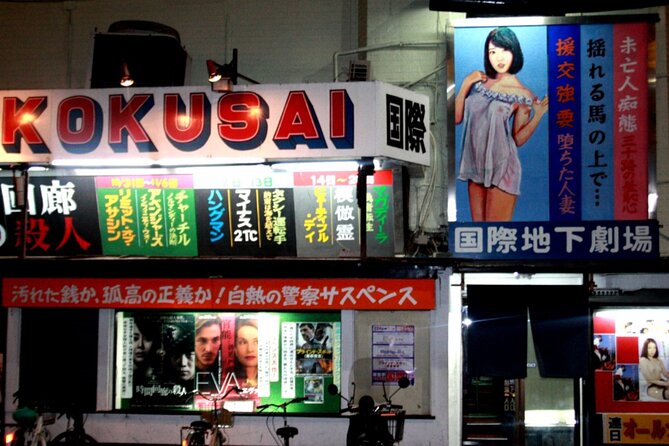
The discussion of homelessness is another reason this walk suits people who want more than bright signs and famous dishes. You learn about the local reasons people can become unhoused, rather than reducing the issue to a simple personal failure.
Mental health also enters the conversation. Together, these subjects show how social support, family expectations, work, and public attitudes can affect a person’s place in the city. The guide’s job here is important. A good explanation can be humane and clear, while a poor one could become sensational.
The strongest descriptions of the guides emphasize patience, humor, and direct answers. Mari is praised for taking time with questions, while Bennett is noted for a friendly, informative approach. Mark and Knox are described as engaging and able to make complex local stories easier to follow.
The tone may vary by guide, and that is worth remembering. Names and guide assignments are not guaranteed. Still, the range of guides associated with the experience suggests that personal storytelling is a major part of the evening.
The optional izakaya dinner
If you add dinner, the evening continues at an izakaya that the operator says is difficult to find through ordinary tours. The menu includes tonpeiyaki, karaage, nikudofu, yakitori, and desserts, with vegetarian-friendly choices available.
This is a useful upgrade if you want a complete night rather than a short food sample. After several hours of walking, sitting down for a proper meal gives the group time to talk and lets the food side of Osaka take center stage.
The dishes listed cover several familiar Japanese comfort-food styles. Tonpeiyaki is an egg-and-pork dish often cooked on a hot plate, karaage is Japanese fried chicken, nikudofu combines meat and tofu, and yakitori consists of grilled skewers. Exact dishes may depend on the dinner arrangement, so check current details if you have strict dietary needs.
Alcoholic drinks are not included. The drinks are described as reasonably priced, but they will add to your final bill. Vegetarian diners are specifically accommodated, which makes the dinner option more practical for mixed groups than many fixed local meals.
Dinner is not essential to understand the walking route. Choose it if you value the shared meal and want to try several Osaka-style dishes in one sitting. Skip it if you already have a reservation or prefer to choose your own restaurant afterward.
Is $53.06 good value?
At $53.06 per person, the basic price is reasonable for a three-hour guided walk with food tasting, provided you want the social and historical side of Osaka. You are paying for local interpretation and access to areas that are difficult to understand from a map, not for major ticketed attractions.
The value improves if you are new to Osaka and want help finding places you would probably miss alone. It is also useful for repeat visitors who have already covered Namba, Dotonbori, and the city’s standard sights.
The dinner upgrade changes the calculation. You get a traditional restaurant meal with several listed dishes and dessert, but drinks cost extra. Compare the upgrade with the price of a meal you would choose independently, then decide how much you value the convenience and group setting.
The tour has a 4.9 rating from 1,290 reviews and a 97 percent recommendation rate. Those numbers suggest strong satisfaction, especially with the guides, unusual route, explanations, and food, but they do not remove the need to match the experience to your interests.
Who should book this walk?
You should consider it if you:
- Want to understand Osaka’s social history, not just its food and shopping.
- Have already seen the major central sights.
- Enjoy walking through ordinary neighborhoods and asking questions.
- Can handle frank discussion of sex work, poverty, gangs, homelessness, and class.
- Like meeting other people in a small-group setting.
- Want the option of a local dinner after the walk.
This is less suitable if you want a gentle sightseeing loop, a polished food tour, or a route built around famous photo spots. It is also a poor match if you dislike walking for several hours or prefer to avoid difficult social subjects.
The experience is open to most participants, but good weather is required. If rain or poor conditions cause cancellation, you are offered another date or a full refund. Free cancellation is available up to 24 hours before the start time, with local time used for the cutoff.
My call: book it for the questions, not just the sights
I would book this tour early in an Osaka visit if I wanted a better sense of how the city works beneath its cheerful surface. The food stalls, unusual lanes, worship site, abandoned homes, red light district, and former ghetto create a broad picture that a standard sightseeing route cannot provide.
Choose the dinner option if you want to keep the evening together and try several local dishes. Skip dinner if you need more control over your meal or already have plans.
The key question is simple: do you want Osaka to entertain you, or do you also want it to explain itself? If you want the second, this walk earns its place on your schedule.
FAQ
Where does the Osaka backstreet tour start?
The tour starts at FamilyMart MYS Daikokucho Station, 2-chōme-5-16 Shikitsuhigashi, Naniwa Ward, Osaka, 556-0012, Japan.
What time does the tour begin?
The published start time is 5:30 pm.
How long does the experience last?
The walk lasts approximately three hours. It includes breaks, but you should still expect to walk and stand for much of the evening.
Where does the tour finish?
The activity ends back at the meeting point.
How many people can join the tour?
The maximum group size is 15 people.
Is dinner included?
Dinner is available as an option rather than as part of the basic experience. The dinner includes listed dishes such as tonpeiyaki, karaage, nikudofu, yakitori, and dessert.
Are drinks included with dinner?
Alcoholic beverages are not included. Drinks at the restaurant are described as reasonably priced.
Can I cancel for a full refund?
You can cancel at least 24 hours before the experience start time for a full refund. Cancellations or changes made less than 24 hours before the start are not accepted, and poor-weather cancellations offer another date or a full refund.
More Dining Experiences in Osaka
- SUSHI Making Experience at Restaurant
★ 5.0 · 8 reviews - Osaka: LGBTQ+ Tour with Dinner and Drinks
★ 5.0 · 8 reviews
Just added around Osaka
- Nara Day Trip from Osaka with a Licensed Guide★ 5.0 · 3 reviews
- Osaka Early Morning Osaka Castle Tour Avoid Crowds★ 5.0 · 3 reviews
- Guided Tour of Some Attractions in Osaka by Private Car★ 5.0 · 3 reviews
- Private Transfer Between Kyoto and Kansai Airport KIX★ 5.0 · 3 reviews
- Shared Arrival Transfer: Osaka Itami Airport to Osaka City★ 5.0 · 3 reviews
- Osaka: Sushi Making Class and Dotonbori Food Tour★ 4.7 · 3 reviews
- Osaka Night Photography Workshop★ 5.0 · 3 reviews
- Kyoto Full day Tour Kinkakuji, Kiyomizu-dera and Fushimi Inari★ 4.5 · 3 reviews
Osaka Walking Tours, compared.

Osaka Local Foodie Walking Tour in Dotonbori and Shinsekai
Read our review →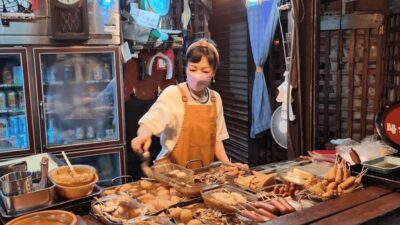
Deep Backstreets Walking Tour with Dinner Option
Read our review →
Ultimate Osaka Walking Tour: Castle, Dotonbori & Hidden Gems
Read our review →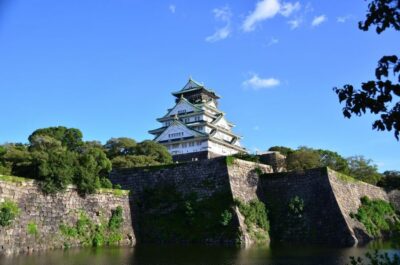
Main Sights and Hidden Spots Guided Walking Tour
Read our review →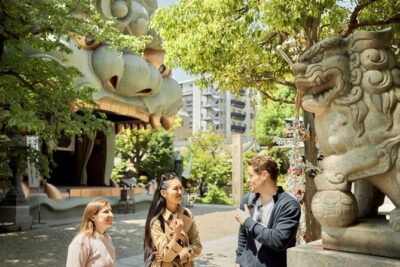
Private Osaka Walking Tour: Highlights & Hidden Gems
Read our review →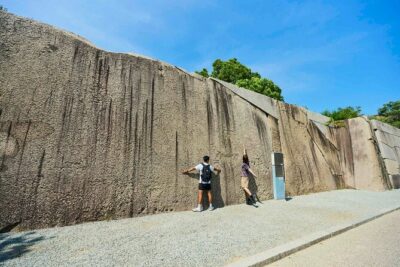
Osaka Castle Walking Tour and Castle Tower Admission
Read our review →
Kuromon Market Food Walking Tour in Osaka (6 stops, 6 tastes)
Read our review →
Five Must-See Highlights Walking Tour & Ramen Lunch
Read our review →Browse the lists this tour appears in