
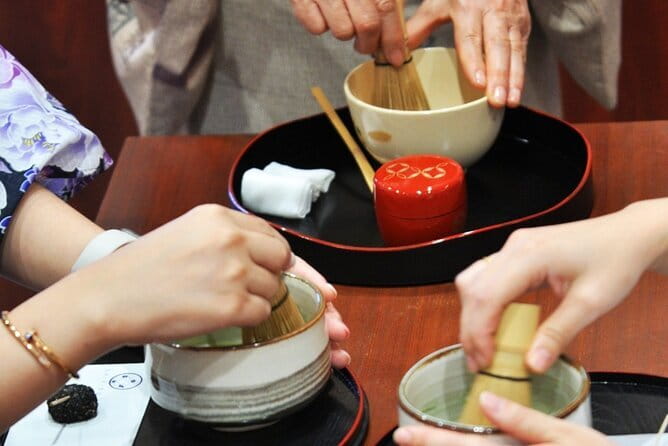
Reviewed · KYOTO DAY TRIPS FROM OSAKA
Nara Deer Park, Uji Matcha, & Hot Spring Full-Day Tour from Osaka
Nara’s bowing deer and Uji’s green-tea treats make this $49.84 day trip an appealing way to see three very different sides of Japan without sorting out regional trains. You’ll visit Nara Park, Todai-ji Temple, Uji’s matcha street, and Genji-no-Yu hot spring in about nine hours.
I like the easy round-trip transport from Osaka and the mix of culture, food, and bathing. I also like the final hour at the onsen, which gives the day a calm finish. The catch is that this is a shared tour with up to 40 people, and the amount of guiding can vary sharply. In a small group, your guide may also drive and offer only basic commentary.
In This Review
- Key points to know before booking
- What this Osaka day trip actually delivers
- Nara Park and the deer near Mt. Wakakusa
- Todai-ji and the Great Buddha
- Uji’s matcha street and Byodo-in
- Genji-no-Yu and the etiquette of the onsen
- Transport, group size, and guide style
- Is $49.84 a fair price?
- Who will enjoy this tour most?
- Practical advice for making the day easier
- Should you book it?
- FAQ
- Where does the tour start?
- How long does the tour last?
- Is transportation included?
- Are Todai-ji and the hot spring included in the price?
- Can I feed the deer at Nara Park?
- Are tattoos allowed at the hot spring?
- What languages does the guide speak?
Key points to know before booking
- Nara’s deer are the day’s most playful stop: Bring small bills for deer crackers, feed carefully, and keep moving if the animals become persistent.
- Todai-ji admission costs extra: Allow $5 per person, and remember that the temple visit involves walking from the vehicle.
- Uji is made for matcha fans: You’ll have time to browse matcha shops, try sweets, and explore Byodo-in Temple.
- Genji-no-Yu is a real Japanese bathing experience: Entry costs about $9, tattoos are generally not permitted, and bathing is done without clothing.
- Guide quality is not fixed: Etta, Leo, Joe, and Yao have received especially warm praise, while some visitors found explanations brief or hard to follow in English.
- The schedule is tight: Traffic or delays can reduce free time, and the fixed onsen shuttle schedule may affect the final stop.
What this Osaka day trip actually delivers
This tour is best understood as a convenient sightseeing circuit, not a slow, in-depth walking tour. You ride between Osaka, Nara, and Uji, then explore each place on foot before meeting the group again at a set time.
That distinction matters. Some guides offer history, jokes, food tips, and clear directions. Etta has been praised for her humor and practical advice, while Leo has earned credit for good navigation and useful temple suggestions. Joe is known for keeping the ride lively, and Yao has been praised for explaining Nara’s past.
Other departures may feel closer to a shared shuttle. Some English explanations can be brief, especially when the group is mainly Chinese-speaking. If you want long lectures at every monument, this may leave you wanting more. If you mainly want transport and a plan, the format can work well.
The advertised start time is 8:30 a.m., with the meeting instructions pointing to Nipponbashi Exit 2 at about 8:40 a.m. Arrive 15 minutes early and look for the guide holding a yellow Gogoday flag. Late arrivals and no-shows are not refunded, so this is not the morning to gamble on a last-minute coffee stop.
More day trips over to Nara:
- Ancient Capital Tour: Kyoto and Nara Highlights from Kyoto/Osaka
★ 4.5 · 332 reviews - Kyoto and Nara Day Trip from Osaka
★ 4.0 · 175 reviews - Discover Himeji, Kobe and Nara from Osaka
★ 5.0 · 101 reviews
Nara Park and the deer near Mt. Wakakusa
The first major stop is Nara Park, where deer roam freely around the temple grounds and wooded slopes near Mt. Wakakusa. You get about 90 minutes here, which is enough to see the animals, take photos, and begin walking toward Todai-ji.
The deer are accustomed to people and may bow when they expect food. That makes for a charming photo, but these are still strong, lively animals. Deer crackers are sold in the park, and once you buy them, you may attract several eager mouths. Feed one cracker at a time, keep your hands visible, and put the packet away when the food is gone.
The park is more than a quick animal encounter. The deer move among lanterns, temple paths, and autumn foliage, giving the stop a distinctly Nara feel. I like that the animals are part of the public setting rather than confined to a small enclosure.
The main limitation is time. The vehicle may stop some distance from the temple area, and the walk to Todai-ji takes a meaningful part of your visit. If you spend too long feeding deer at the entrance, you may have little time left for the temple interior.
Your guide may point out where to go, but you should pay close attention to the meeting time and route. One practical suggestion is to enjoy the deer early, then walk toward Todai-ji rather than treating the entire stop as a single photo session.
Todai-ji and the Great Buddha
Todai-ji is the day’s major architectural sight. This UNESCO World Heritage temple complex is home to the enormous Great Buddha statue, one of Japan’s best-known religious artworks.
The scale is the point. The wooden temple hall and massive bronze Buddha create the kind of visual impact that photographs struggle to capture. Even with a short visit, you get a clear sense of why Todai-ji is central to Nara’s cultural identity.
Admission is not included and costs about $5 per person. Bring cash, since some attractions and shops may not accept cards. The tour allows roughly 40 minutes at the temple, so plan to enter promptly if you want to see the Great Buddha rather than only the exterior.
This stop can feel rushed for anyone who wants to examine details, pray quietly, or explore the wider complex. The walking distance from the vehicle also matters for anyone who finds long stretches on foot tiring. The tour is designed to show you the essential sight, not give you an afternoon here.
If temple architecture is a top priority, you may prefer to return to Nara independently on another day. For a first look, though, Todai-ji adds serious cultural weight to a day that could otherwise be mostly deer and snacks.
Uji’s matcha street and Byodo-in
After Nara, the tour heads to Uji, a town closely associated with Japanese green tea. You get about 90 minutes to explore the matcha shopping street and nearby sights.
Byodo-in Omotesando is lined with shops selling matcha ice cream, cakes, drinks, and other sweets. You might also find savory items such as soba noodles colored and flavored with matcha. This is a good place to compare different expressions of green tea, from simple powder-based treats to more carefully prepared tea products.
I like this stop because it gives you freedom to choose your own pace. You can browse tea shops, buy edible souvenirs, or focus on Byodo-in Temple. The guide may recommend particular stores and help you orient yourself, but this is mainly independent exploration rather than a continuous walking tour.
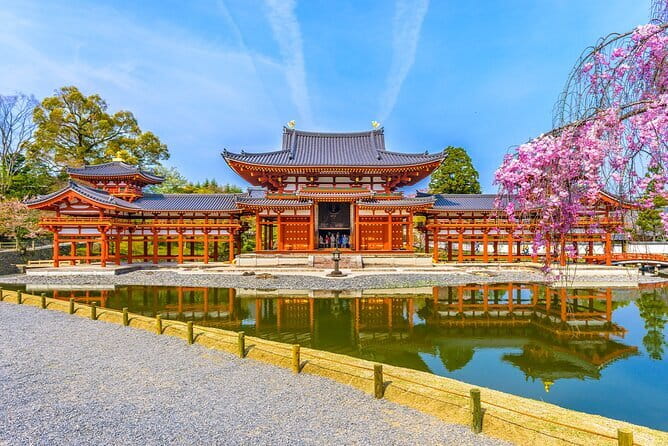
Byodo-in is a UNESCO World Heritage site and one of Uji’s signature sights. Its setting beside the water and its distinctive Phoenix Hall make it especially photogenic. The tour description places the temple within the Uji visit, but confirm on the day whether interior viewing is part of your schedule, since any separate admission or timed access is not included in the listed price.
This is also where the tight timetable becomes clear. Ninety minutes sounds generous until you account for lunch, shopping, temple admission, photos, and walking. If you want a sit-down meal and a detailed temple visit, you will need to make choices.
Lunch is not included. You can use Uji’s food shops and restaurants, but carry cash and watch the clock. A matcha snack may be easy to fit in, while a full meal could reduce your sightseeing time.
More day trips over to Kyoto:
- Osaka/Kyoto: Hiroshima Miyajima Bus Tour & Shinkansen Ticket
★ 4.7 · 919 reviews - Osaka/Kyoto: Amanohashidate & Miyama Tour with Boat & Lunch
★ 4.6 · 207 reviews - Sagano Romantic Train & Arashiyama, Kiyomizudera, Fushimi Inari Taisha Day Tour
★ 4.5 · 171 reviews - Volleyball in Osaka, Kobe & Kyoto with locals!
★ 4.8 · 131 reviews
Genji-no-Yu and the etiquette of the onsen
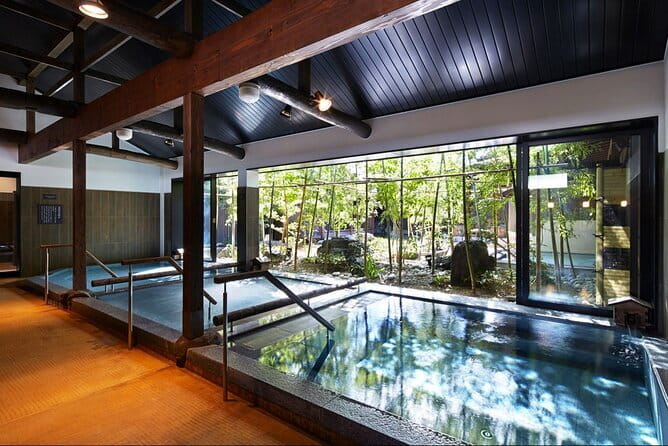
The day ends at Genji-no-Yu, described as Uji’s natural hot spring, with water rising from 1,111 meters underground. You get about one hour to relax in the traditional Japanese setting.
For many people, this is the tour’s most unusual feature. After a morning of walking and an afternoon of temples and food, a hot bath can feel like a sensible finish rather than one more monument to inspect. The experience is less about sightseeing and more about taking part in a familiar Japanese custom.
Entry costs about $9 per person and is not included. The bathing area is separated by gender, and bathing is done without clothing. You must wash before entering the shared baths.
Tattoos are generally not permitted in most Japanese hot springs, and the supplied information specifically warns tattooed visitors about this restriction. Check your situation before booking, since the tour does not promise an exception or cover tattoo concealment.
An important logistical point is the onsen shuttle bus. It runs on a fixed schedule, so a late arrival or an earlier delay can make the final transfer difficult. Traffic between Nara and Uji may also change the amount of time available. The tour advises avoiding evening plans after the excursion, and I would take that seriously.
One hour is enough for a bath and a little quiet time, but not for a long spa visit. Think of it as a refreshing introduction to onsen bathing, not a full wellness afternoon.
Transport, group size, and guide style
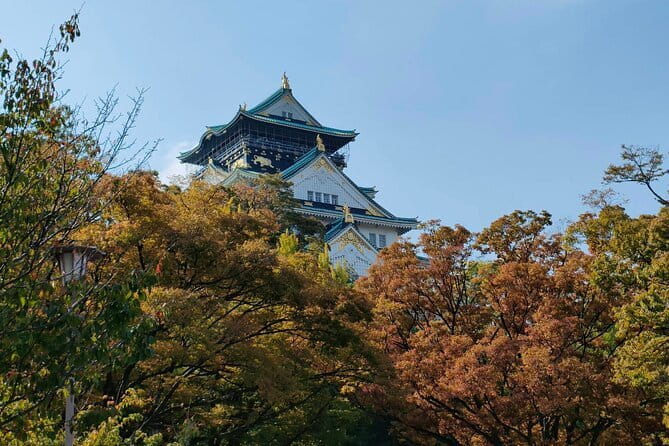
Round-trip transport in an air-conditioned vehicle is included, with pickup and return at the Nipponbashi meeting point in Osaka. Vehicle size varies from about 10 to 45 seats, and the maximum group size is 40.
That range tells you a lot about the experience. A larger coach gives you a simple way to cover the distance, but boarding, regrouping, and walking to landmarks can take time. A smaller group may move more quickly and feel friendlier.
If fewer than 13 people join, the guide may also drive. In that case, commentary is described as basic. With a larger group and a dedicated driver, the guide may have more freedom to speak during the ride and help people at each stop.
The strongest guide reports center on Etta, Leo, Joe, and Yao. Etta is described as lively, funny, helpful with deer-feeding technique, and good at offering Osaka suggestions. Leo has been praised for navigation and useful information about temples. Joe has been credited with making the bus ride entertaining, while Yao has been praised for sharing historical details.
Still, guide performance is not guaranteed. Multilingual explanations are provided in English, Japanese, and Traditional Chinese, but the balance can vary. Some English-speaking participants found the explanations hard to follow or felt that most of the talk was in Chinese. If clear English interpretation is essential to your trip, this is a real consideration.
Is $49.84 a fair price?
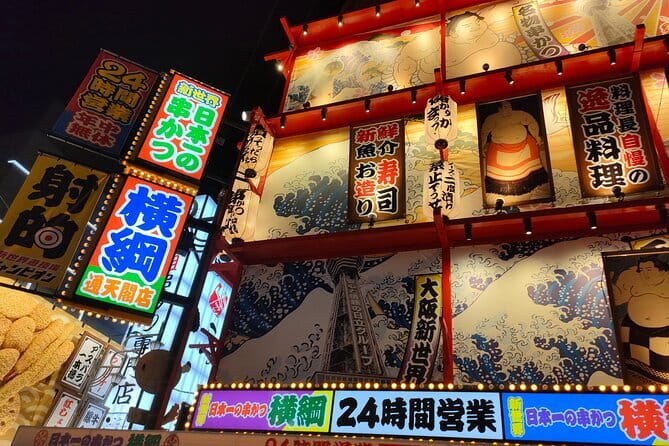
At $49.84 per person, the tour offers reasonable value if you want to combine Nara and Uji in one day. You get transportation, pickup and return at the Osaka meeting point, a professional guide, and access to a planned route that would take more effort to organize independently.
The price does not include lunch, the $5 Todai-ji admission, or the roughly $9 hot spring entry. Deer crackers, matcha food, drinks, and purchases in Uji are also extra. You should budget beyond the headline price, especially if you want to eat a proper lunch and try several matcha items.
The tour is less good value if you want long visits at each site. You are paying for coverage and convenience, not maximum time in Nara or Uji. Independent rail travel could give you more control, but you would need to arrange the route, understand the connections, keep track of temple hours, and return to Osaka yourself.
For a first Osaka visit, that tradeoff can be worthwhile. The tour removes much of the transport planning and gives you a broad taste of two important day-trip destinations.
Who will enjoy this tour most?
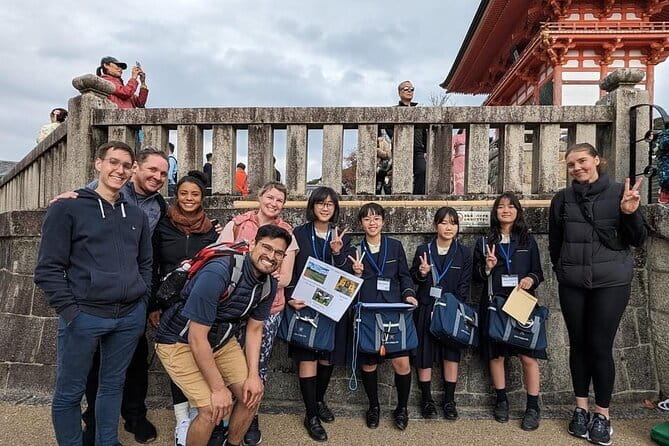
I would choose this excursion if you want variety. In one day, you see free-roaming deer, a major Buddhist temple, a famous Buddha, a tea-focused shopping street, a UNESCO site, and a Japanese hot spring.
It suits:
- First-time visitors with limited time in Osaka
- Families and mixed-age groups who want several types of activity
- Matcha fans who enjoy browsing and sampling
- People who prefer a planned vehicle tour to regional train connections
- Anyone curious about onsen etiquette but not ready to plan a dedicated spa visit
You may want a different plan if you need a slow pace, extensive English guiding, or a long temple visit. The walking between the vehicle and sights, fixed meeting times, and possible traffic delays make this a poor fit for an unhurried day.
The tour is also not ideal if you have a tattoo and want guaranteed hot spring access. The bathing restriction should be treated as a booking issue, not a minor footnote.
Practical advice for making the day easier
Bring cash. Todai-ji and Genji-no-Yu charge separately, and some food shops or attractions may not accept cards.
Wear comfortable shoes. The route involves walking around Nara Park, reaching Todai-ji from the vehicle, exploring Uji, and moving between meeting points.
Keep the guide’s contact details. An email is sent the evening before with driver and guide information. Save it before leaving your hotel.
Do not schedule an important dinner, show, or train immediately after the stated end time. The tour returns to the Osaka meeting point, but traffic, weather, and other delays can alter the plan.
Watch the final meeting time at every stop. The experience is shared with people from several countries, so regrouping is part of the day. The fixed shuttle schedule at the hot spring makes punctuality especially important.
For cancellation, you can receive a full refund if you cancel at least 24 hours before the local start time. Changes or cancellations inside that window are not refunded.
Should you book it?
Book this tour if you want a low-cost, high-variety day from Osaka and you are comfortable with a brisk shared schedule. The combination of Nara’s deer and Todai-ji, Uji’s matcha shops and Byodo-in, and a final hot spring visit is unusually broad for one excursion.
Go in with the right expectations. You may get an excellent guide such as Etta, Leo, Joe, or Yao, but the experience can also be light on commentary and heavy on meet-back times. I would book it for convenience, variety, and value, not as a substitute for a private cultural guide.
FAQ
Where does the tour start?
The meeting point is at 1-chōme-3-6 Nipponbashi, Chuo Ward, Osaka, near Nipponbashi Exit 2 in the Namba and Shinsaibashi area. The listed start time is 8:30 a.m., with meeting instructions indicating about 8:40 a.m.
How long does the tour last?
The experience lasts approximately nine hours and ends back at the Osaka meeting point.
Is transportation included?
Yes. Round-trip transportation in an air-conditioned vehicle and pickup from the designated Osaka meeting point are included.
Are Todai-ji and the hot spring included in the price?
No. Todai-ji admission costs about $5 per person, and Genji-no-Yu entry costs about $9 per person. Lunch and personal purchases are also separate.
Can I feed the deer at Nara Park?
Yes. Nara Park is home to freely roaming deer, and you can feed them deer crackers. Feed carefully, since some deer may be playful or persistent.
Are tattoos allowed at the hot spring?
The tour information warns that people with tattoos are not permitted in most Japanese hot springs. You should check this restriction before booking.
What languages does the guide speak?
The guide service is offered in English, Japanese, and Traditional Chinese. If fewer than 13 people join, the guide may also drive and provide only basic commentary.
More Onsen and Spa Afternoons
- From Osaka: Himeji Castle, Arima Onsen & Mt. Rokko Day Tour
★ 4.6 · 339 reviews - Osaka Temple Cool Foot Bath & Matcha Experience〈45min〉
★ 4.9 · 82 reviews - Osaka: Solaniwa Onsen Hot Spring Visit
★ 4.6 · 51 reviews - Osaka: Mind & Spirit Balance Temple Reiki Healing
★ 5.0 · 41 reviews
More Tea Ceremonies and Matcha Sessions
- Osaka: Tea Ceremony Experience
★ 4.9 · 1,426 reviews - Tea Ceremony Experience in Osaka Doutonbori
★ 5.0 · 754 reviews - Matcha Making Class in Osaka with Authentic Japanese Sweets Set
★ 5.0 · 509 reviews - Osaka: Matcha Making Experience with Japanese Sweets
★ 5.0 · 146 reviews
Just added around Osaka
- Nara Day Trip from Osaka with a Licensed Guide★ 5.0 · 3 reviews
- Osaka Early Morning Osaka Castle Tour Avoid Crowds★ 5.0 · 3 reviews
- Guided Tour of Some Attractions in Osaka by Private Car★ 5.0 · 3 reviews
- Private Transfer Between Kyoto and Kansai Airport KIX★ 5.0 · 3 reviews
- Shared Arrival Transfer: Osaka Itami Airport to Osaka City★ 5.0 · 3 reviews
- Osaka: Sushi Making Class and Dotonbori Food Tour★ 4.7 · 3 reviews
- Osaka Night Photography Workshop★ 5.0 · 3 reviews
- Kyoto Full day Tour Kinkakuji, Kiyomizu-dera and Fushimi Inari★ 4.5 · 3 reviews
Kyoto Day Trips from Osaka, compared.

Osaka/Kyoto: Hiroshima Miyajima Bus Tour & Shinkansen Ticket
Read our review →
Ancient Capital Tour: Kyoto and Nara Highlights from Kyoto/Osaka
Read our review →
Osaka/Kyoto: Amanohashidate & Miyama Tour with Boat & Lunch
Read our review →

Sagano Romantic Train & Arashiyama, Kiyomizudera, Fushimi Inari Taisha Day Tour
Read our review →
Full Day Tour of Kyoto with Private Transportation
Read our review →
Kyoto & Nara Private customized tour with English speaking Guide
Read our review →Full Day Kyoto Tour : Bamboo Forest, Golden Temple, Fushimi Inari
Read our review →Browse the lists this tour appears in