
Reviewed · KYOTO DAY TRIPS FROM OSAKA
Kyoto and Nara Day Trip from Osaka
Kyoto’s Golden Pavilion and Nara’s enormous Great Buddha are the headline sights, but the real trick here is fitting two former capitals into one long day from Osaka. You move by public transport and coach, with a guide handling the route, tickets, and historical context.
I like the sheer range of sights: a shogun’s castle, an imperial palace, a gold-covered temple, a lantern-filled shrine, and one of Japan’s most famous Buddhist halls. I also like the return by Kintetsu Railway to Osaka Namba, which leaves you in a useful central location rather than sending you back to the morning meeting point.
The catch is simple: this is a fast survey, not a leisurely tour. You get roughly 40 to 70 minutes at most stops, and the day can feel tiring, especially with a large group, crowded temples, and several changes between trains, buses, and meeting points.
In This Review
- Key points to know before booking
- A very full day from Osaka
- Nijo Castle, where the shogun kept watch
- Kinkaku-ji and the famous golden reflection
- Kyoto Imperial Palace and its backup sites
- Lunch choices and a useful pause
- Nara Park and the deer encounter
- Todai-ji and the Great Buddha
- Guides, group size, and how well the day works
- The return to Osaka Namba
- Is $198.15 good value?
- Who should book this day trip?
- Should you book it?
- FAQ
- What time does the tour start and finish?
- Is transportation included?
- Is lunch included?
- What happens if Kyoto Imperial Palace is closed?
- What happens if Nijo Castle is closed?
- Can children join the tour?
Key points to know before booking
- Nijo Castle, Kinkaku-ji, and Kyoto Imperial Palace give you a strong first look at Kyoto’s courtly and military past.
- Nara Park, Kasuga Shrine, and Todai-ji provide the day’s most memorable contrast, with sacred deer, stone lanterns, and the giant Great Buddha.
- Transport and admission fees are included, which removes much of the planning work on a complicated day.
- The pace is brisk, with little time for wandering, shopping, or lingering over photographs.
- Lunch is optional, and the included meal is not necessarily a traditional Japanese feast.
- The group may be large, with a maximum listed at 40, though one particularly crowded departure was reported as much larger.
A very full day from Osaka
The tour begins at 7:15am outside Hotel Granvia Osaka, beside Osaka Station. That early start is not just a formality. Kyoto and Nara are close to Osaka on a map, but moving a large group through two cities, several train stations, and busy historic sites takes time.
An English-speaking assistant helps you from the Osaka meeting point to the Sunrise Tours desk in Kyoto Avanti’s basement level. Depending on the departure and group size, the first leg may use a JR rapid or local train to Shin-Osaka, followed by the Shinkansen to Kyoto, or a bus may be used instead.
The rail plan is designed to save time, but you should understand the seating arrangement. Train seats are non-reserved, and a seat is not guaranteed. If you are traveling with family or want to sit together, arrive ready to board promptly and accept that the group may be spread through the carriage.
At Kyoto Station, you walk to the Sunrise Tours desk in Kyoto Avanti B1, where the main bus portion begins. This changeover is practical, but it does add another layer to the morning. Keep your ticket information and meeting instructions handy, and do not wander far from the desk.
More day trips over to Nara:
- Ancient Capital Tour: Kyoto and Nara Highlights from Kyoto/Osaka
★ 4.5 · 332 reviews - Discover Himeji, Kobe and Nara from Osaka
★ 5.0 · 101 reviews - Kyoto & Nara Private customized tour with English speaking Guide
★ 4.5 · 99 reviews
Nijo Castle, where the shogun kept watch
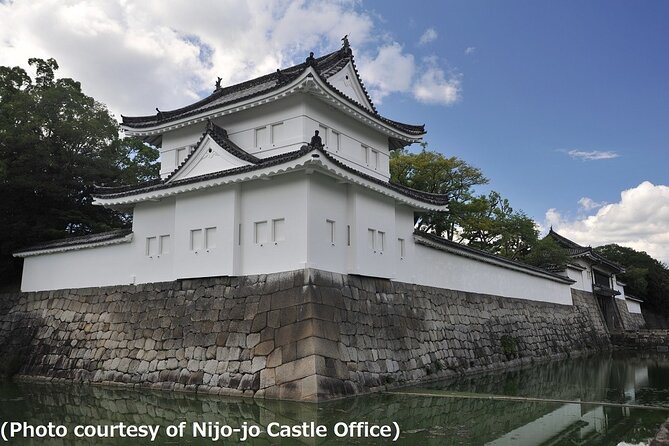
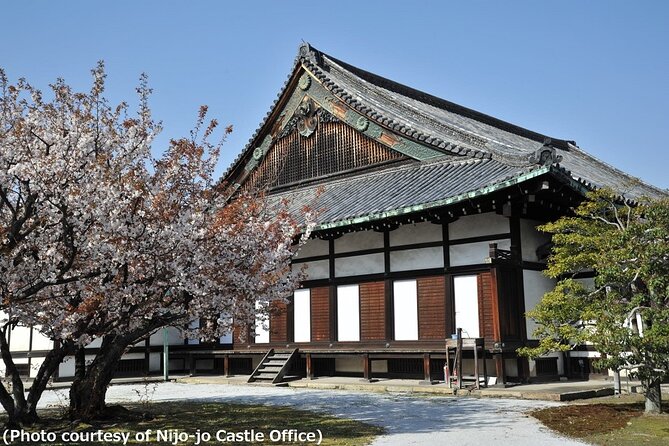
The first major stop is Nijo Castle, completed in 1626 for the Tokugawa shogun. It was both a residence and a show of power beside the Kyoto Imperial Palace.
You will see elaborate carvings and richly decorated interiors, then walk through the castle grounds. The visit is scheduled for about 50 minutes, so you get the essential rooms and gardens but not the luxury of a slow inspection.
The castle is especially useful early in the day because it gives you a political lens for Kyoto. The imperial court was here, but the military government held real power for much of the period. A guide can help connect the building’s grand style with that tension.
Expect plenty of walking and a fairly controlled route. The group needs to stay together, so this is not the place to stop for long photographs or return to a room that caught your eye.
Nijo Castle closes on certain Tuesdays in January, July, August, and December, with the following day used when Tuesday is a public holiday. If that happens, the itinerary substitutes Ryoan-ji Temple. No refund is offered for this change, so check the date carefully if the castle is a priority.
Kinkaku-ji and the famous golden reflection
Kinkaku-ji, better known as the Golden Pavilion, is the most instantly recognizable stop in Kyoto. Its wooden upper structure is covered in gold leaf and reflected in a pond surrounded by a carefully arranged garden.
The visit lasts about 45 minutes. That is enough to see the pavilion, follow the garden path, and take photographs, but it is short when the grounds are crowded. School groups can fill the approach to the pond, and you may need patience to get a clear view.
The pavilion is beautiful, but the experience is more about the overall composition than entering a quiet temple hall. You see the building from the garden rather than spending a long time inside it. Your guide’s explanation helps, though the noise and crowds can make it hard to hear every word.
Bring your camera, but do not count on a calm, reflective pause. This is a photo stop with a cultural explanation, not a long temple visit.
Kyoto Imperial Palace and its backup sites
The Kyoto Imperial Palace was the Emperor’s residence until about 150 years ago. Its style is more restrained than Kinkaku-ji’s, with broad grounds, simple lines, and an emphasis on form rather than glitter.
The scheduled visit is about 40 minutes. That gives you a useful introduction to the palace complex, but the short time limits how much you can absorb. You will follow the guide through the permitted areas and hear about imperial life and the court.
The palace is closed on Mondays, the following day when Monday is a holiday, and on dates affected by Imperial Household Agency events. On those days, the tour visits Kitano Tenmangu Shrine instead. If the closure falls on the 25th, the substitute is Nishi Hongan-ji Temple.
This flexibility keeps the tour running, but it matters if you are booking specifically for the palace. The replacement sites are significant in their own right, yet the tour company does not reduce the price when the original stop is replaced.
More day trips over to Kyoto:
- Osaka/Kyoto: Hiroshima Miyajima Bus Tour & Shinkansen Ticket
★ 4.7 · 919 reviews - Osaka/Kyoto: Amanohashidate & Miyama Tour with Boat & Lunch
★ 4.6 · 207 reviews - Sagano Romantic Train & Arashiyama, Kiyomizudera, Fushimi Inari Taisha Day Tour
★ 4.5 · 171 reviews - Volleyball in Osaka, Kobe & Kyoto with locals!
★ 4.8 · 131 reviews
Lunch choices and a useful pause
Lunch depends on the option you select. You can book without lunch, in which case you have free time to eat around Kyoto Station. You can also select a Western-style lunch or an Indian thali meal designed for vegetarians.
The Western meal has been described as a set menu in the booking details and as a buffet in some departures, so do not book this expecting a carefully planned traditional Japanese meal. Some meals have been found ordinary, with fried chicken and standard buffet fare drawing criticism.
The Indian thali includes three curries, vegetable pakora, yogurt, naan or roti, rice, salad, and a non-alcoholic drink. It is served in a separate dining area from the Western lunch, and you cannot switch between the two on the day.
Vegetarian requests must be made when you reserve. Halal, gluten-free, and other special meal requests are not available. If food matters to you, the no-lunch option gives you more control, though it also means arranging your own meal during a tightly timed day.
Nara Park and the deer encounter
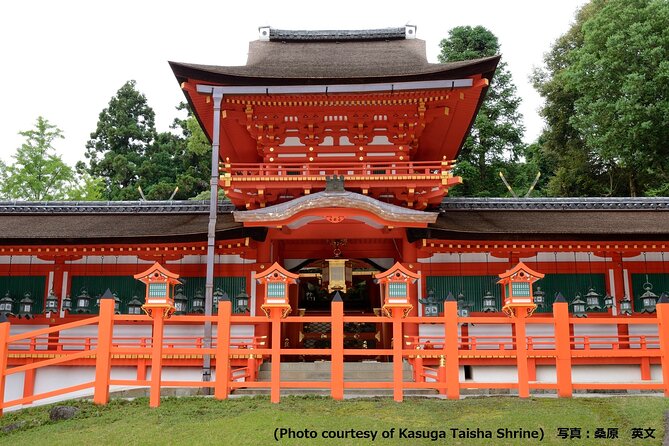
The afternoon shifts from Kyoto’s formal architecture to Nara’s open parkland and sacred sites. At Kasuga Grand Shrine, the deer of Nara are treated as messengers of the shrine. The shrine is known for its rows of stone and bronze lanterns, which give the approach a distinctive, almost storybook character.
The stop lasts about an hour and includes the Main Sanctuary special visit area when operating conditions allow. If that area cannot open because of an event or other operational issue, the tour visits the Kasuga Taisha Museum or Todaiji Museum instead.
The deer are friendly, but they are not tame pets. Deer crackers can be bought on site, and the animals may bow when asking for food. Once you start feeding, several may crowd around you, so hold your ground, feed them quickly, and keep paper and food wrappers out of reach.
This is one of the more relaxed parts of the day because Nara Park gives you room to spread out. It can still be crowded, particularly during school-trip season. Stay close to the guide, since the next stop follows on a firm schedule.
Todai-ji and the Great Buddha
Todai-ji Temple is the emotional high point for many people. Its enormous wooden main hall houses the bronze Great Buddha, an image large enough to make the building feel almost too small around it.
The temple dates from the Nara period and is one of the world’s largest wooden structures. The tour allows about 70 minutes here, longer than at the Kyoto palace or Golden Pavilion, which makes sense. You need time to cross the approach, see the hall, take in the Buddha, and listen to the explanation.
Todai-ji also holds important national treasures, and the scale of the hall gives the stop a different force from Kyoto’s more delicate buildings. You are not simply looking at decoration. You are seeing how religious power, engineering, and political ambition came together in early Japan.
The route is busy, and the group may move quickly from one point to the next. If you have older relatives, mobility limits, or young children, this is a day to pace yourself carefully. One complaint about the Nara portion involved a guide moving ahead before everyone had caught up, so stay alert at turns and regrouping points.
Guides, group size, and how well the day works
The tour uses a licensed English guide interpreter for the main sightseeing program, plus an English-speaking assistant for the Osaka to Kyoto transfer and the final train ride from Nara to Osaka. Guides such as Momo, KC, and Hatchi have been singled out for warm delivery, humor, historical explanations, and keeping the group moving.
That human guidance is the tour’s strongest feature. A good guide can turn a castle, shrine, or Buddha into a connected story rather than a string of famous names. The guides also explain the areas between Osaka, Kyoto, and Nara, which helps you understand how the cities fit together.
The weak point is sound. At crowded sites, a guide speaking while walking or facing away can be hard to hear. No individual headsets are listed, so stay near the guide whenever possible. If you are short, hard of hearing, or dislike following a moving crowd, this limitation may frustrate you.
The listed maximum is 40 people, but group size and transport arrangements can vary. Some departures may use several buses or involve a very large combined group. A big group is easier on the budget and simpler for the operator, but it is less personal and slower at station entrances, toilets, and meeting points.
The return to Osaka Namba
After Todai-ji, the group goes to Kintetsu Nara Station and returns to Osaka Namba by non-reserved train, usually arriving around 6:30pm. An assistant accompanies the group on this final leg.
Ending at Namba is convenient if you plan to eat or continue your evening in that part of Osaka. It is less convenient if your hotel is near Osaka Station or Hotel Granvia. There is no hotel drop-off, and Namba Station is large and partly underground, so plan your route back before the tour ends.
The finish also explains why this is not an easy day. You leave before breakfast time, travel between cities, walk through five major cultural sites, and finish after dark in many seasons. Comfortable shoes, water, and a small bag are sensible choices.
Is $198.15 good value?
At $198.15 per person, this is not a bargain sightseeing day. You are paying for the guide, admission fees, transport, coordination, and the ability to see Kyoto and Nara without planning every train and bus yourself.
The price makes more sense if you have only one free day in Osaka and want the famous sights with minimal decision-making. It makes less sense if you prefer slow visits, quiet temples, local restaurants, or the freedom to leave a site when you wish.
Lunch is not always included in the base price, so check the exact option before paying. The no-lunch choice may offer better value for people who want to choose their own food near Kyoto Station.
Who should book this day trip?
I would recommend it to a first-time Japan visitor with limited time, especially someone who wants a clear introduction to Kyoto and Nara without handling Japanese rail connections alone. Families and friends who value structure may also appreciate having transport and entry tickets arranged.
It suits confident walkers who can keep up with a group and accept brief visits. It is less suitable for anyone hoping to study temple details, browse gardens slowly, or take long breaks.
Older participants should think carefully about the early start, stairs, station transfers, crowds, and quick regrouping. The tour is also not ideal for very young children. Children five and under may join free, but they do not receive a bus seat or lunch unless booked at the child rate.
Should you book it?
Book this tour if your goal is to see the essentials of Kyoto and Nara in one demanding day. The combination of Nijo Castle, Kinkaku-ji, the palace area, Kasuga Shrine, and Todai-ji is hard to match independently in the same time.
Skip it if you have two or more days available, or if you care more about depth than coverage. For many people, the best use of this tour is as a first look: let the guide introduce the major sights, then return independently to the Kyoto or Nara site that deserves more time.
FAQ
What time does the tour start and finish?
The tour starts at 7:15am at Hotel Granvia Osaka. It ends at Osaka Namba Station at around 6:30pm, with no hotel drop-off.
Is transportation included?
Yes. Admission fees and transportation costs are included. Depending on the group and operating conditions, the tour may use JR trains, the Shinkansen, Kintetsu Railway, buses, or a combination. Train seats are non-reserved when public transportation is used.
Is lunch included?
Only if you select a lunch option when booking. Choices include no lunch, a Western-style meal, or an Indian thali lunch suitable for vegetarians. The no-lunch option gives you free time to eat around Kyoto Station.
What happens if Kyoto Imperial Palace is closed?
The tour visits Kitano Tenmangu Shrine instead on most closure days. If the closure falls on the 25th, the replacement is Nishi Hongan-ji Temple. No refund is provided for the substitute visit.
What happens if Nijo Castle is closed?
Ryoan-ji Temple is visited instead if Nijo Castle is closed on one of its scheduled closure days. No refund is provided for the alternative destination.
Can children join the tour?
Children up to five years old may join free, but they are not provided with bus seats or lunch. If either is needed, you must book the child rate. Anyone under 18 requires written parental permission, and participants under 15 or not yet enrolled in middle school must be accompanied by a parent or guardian.
More 1-Day Tours in Osaka
- Hiroshima & Miyajima 1 Day Bus Tour with Bullet Train Tickets
★ 4.5 · 105 reviews - From Osaka: Hiroshima and Miyajima Day Trip by Bullet Train
★ 4.6 · 83 reviews - Amanohashidate & Ine Funaya Sightseeing Full Day Trip from Kyoto
★ 4.5 · 62 reviews - Kyoto 1 Day Tour from Osaka
★ 4.0 · 54 reviews
Just added around Osaka
- Osaka Early Morning Osaka Castle Tour Avoid Crowds★ 5.0 · 3 reviews
- Guided Tour of Some Attractions in Osaka by Private Car★ 5.0 · 3 reviews
- Nara Day Trip from Osaka with a Licensed Guide★ 5.0 · 3 reviews
- Private Transfer Between Kyoto and Kansai Airport KIX★ 5.0 · 3 reviews
- Shared Arrival Transfer: Osaka Itami Airport to Osaka City★ 5.0 · 3 reviews
- Osaka: Sushi Making Class and Dotonbori Food Tour★ 4.7 · 3 reviews
- Osaka Night Photography Workshop★ 5.0 · 3 reviews
- Kyoto Full day Tour Kinkakuji, Kiyomizu-dera and Fushimi Inari★ 4.5 · 3 reviews
Kyoto Day Trips from Osaka, compared.

Osaka/Kyoto: Hiroshima Miyajima Bus Tour & Shinkansen Ticket
Read our review →
Ancient Capital Tour: Kyoto and Nara Highlights from Kyoto/Osaka
Read our review →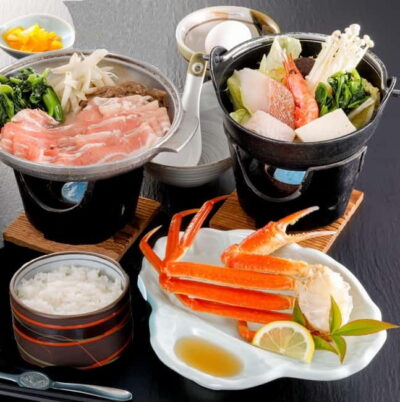
Osaka/Kyoto: Amanohashidate & Miyama Tour with Boat & Lunch
Read our review →
Sagano Romantic Train & Arashiyama, Kiyomizudera, Fushimi Inari Taisha Day Tour
Read our review →
Full Day Tour of Kyoto with Private Transportation
Read our review →
Kyoto & Nara Private customized tour with English speaking Guide
Read our review →Full Day Kyoto Tour : Bamboo Forest, Golden Temple, Fushimi Inari
Read our review →
Amanohashidate & Ine Funaya Sightseeing Full Day Trip from Kyoto
Read our review →Browse the lists this tour appears in