
Reviewed · KYOTO DAY TRIPS FROM OSAKA
Kyoto & Nara Private customized tour with English speaking Guide
Nara’s free-roaming deer and Kyoto’s famous red torii gates make this private day tour a useful way to cover two major destinations without wrestling with train connections. You can shape the day around your group, and guides such as Hamzah and Ali have been praised for safe driving, clear communication, and flexible plans. I especially like the private vehicle and the chance to adjust the pace. The drawback is just as clear: fitting Nara and Kyoto into one day means a lot of driving and only short visits at several sights.
The tour is priced at $549 per group of up to six, not per person. That can be good value for a family or group that wants door-to-door transport, but you need to clarify the exact pickup time, admission costs, lunch plan, and how much commentary your guide will provide.
In This Review
- Key points before you book
- Why a private vehicle helps on a Kyoto and Nara day
- Nara Park and the deer
- Tōdai-ji and the Great Buddha
- Arashiyama Bamboo Grove
- Tenryu-ji, Kyoto’s Zen temple
- Kinkaku-ji and its gold-covered exterior
- Fushimi Inari’s torii gate paths
- How much guiding should you expect?
- Lunch, special diets, and the long road between sights
- Is $549 good value for six people?
- Who should book this private day?
- Should you book it?
- FAQ
- How long does the tour last?
- Where does the tour start?
- Where does the tour end?
- How many people can join the private tour?
- Is transportation included?
- Is lunch included?
- Are entrance fees included?
- Can the itinerary be customized?
- Can I cancel for a full refund?
Key points before you book
- Nara and Kyoto in one long day: The route includes Nara Park, Tōdai-ji, Arashiyama, Tenryu-ji, Kinkaku-ji, and Fushimi Inari.
- Private transport for up to six people: You avoid changing trains and can stay together throughout the day.
- Flexible itinerary: You can ask to spend more time at a favorite stop or replace sights with places that better suit your group.
- Guide quality can vary: Hamzah, Hamza, Ali, Nomi, Sha, and Hamzi are praised in the feedback, but one poor experience described a guide who offered little commentary.
- Deer feeding needs care: The animals are accustomed to people, but male deer can be pushy, especially around food and small children.
- Admission fees need checking: The tour details say fees and taxes are not included, while the Kinkaku-ji description also says its ticket is included.
Why a private vehicle helps on a Kyoto and Nara day
Kyoto and Nara are close enough to combine on paper, but the sightseeing areas are spread out. A public-transport day requires planning train routes, walking to stations, finding the right exits, and managing a group at every change. This tour removes much of that work.
You ride in an air-conditioned vehicle with WiFi on board, and only your own group participates. That matters if you have children, older relatives, luggage, or several people who want different amounts of time at each temple.
The vehicle also gives you a place to regroup between stops. You can leave shopping bags inside, cool off between walks, and ask the driver-guide to adjust the order of the day. Some groups have used the flexibility to add a food stop, matcha, shopping, or a photo break.
There is a tradeoff. Kyoto traffic can be slow, and parking near major sights is not always simple. The vehicle does not magically remove crowds or road delays. At some stops, your driver may drop you near the entrance and arrange a nearby pickup, so agree on where and when you will meet again.
The listed duration is approximately 8 to 10 hours, with operating hours from 8 a.m. to 6 p.m. A full ten-hour day is the more realistic target if you want to see most of the named stops. You should not expect long, unhurried temple visits at every location.
More day trips over to Nara:
- Ancient Capital Tour: Kyoto and Nara Highlights from Kyoto/Osaka
★ 4.5 · 332 reviews - Kyoto and Nara Day Trip from Osaka
★ 4.0 · 175 reviews - Discover Himeji, Kobe and Nara from Osaka
★ 5.0 · 101 reviews
Nara Park and the deer
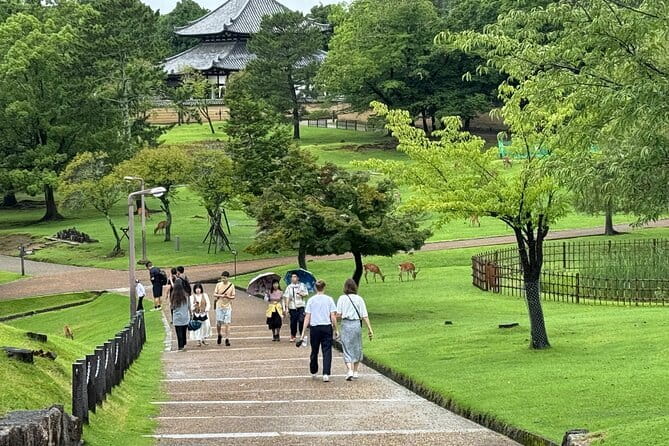
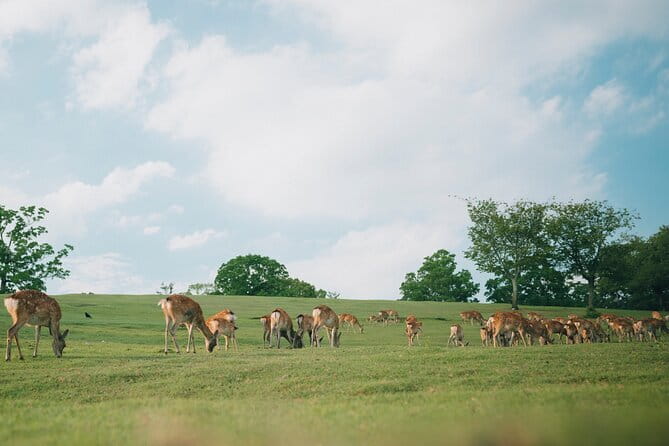
Nara Park is the most playful part of the day. Around 1,200 deer roam freely through the park, along paths and near the temples. You can buy deer crackers and offer them by holding your hands up once the food is gone.
The deer are used to people, but do not mistake that familiarity for perfect manners. A family should watch children closely, especially around larger male deer. Keep food hidden until you are ready, offer it calmly, and stop feeding once the crackers are gone.
The park itself is more than a deer stop. It provides the setting for Tōdai-ji, one of Japan’s most important Buddhist temples. The scheduled time here is about one hour, which is enough for a first look and some deer time, but it can feel rushed if your group wants to explore the temple grounds in detail.
Nara Park admission is listed as free, but the main temple has a separate admission charge. Since Tōdai-ji is one of the day’s central sights, budget for that ticket even though general park access costs nothing.
Tōdai-ji and the Great Buddha
Tōdai-ji dates from the Nara period and was founded in the early eighth century. Its main hall is famous for its immense bronze Buddha, and the wooden temple structure gives the visit a scale that photographs do not fully convey.
The itinerary allows another hour for Tōdai-ji. In practice, the Nara Park and Tōdai-ji visits may feel like one connected block, since the temple sits within the park. That is useful because you can see the deer, walk through the grounds, and enter the main hall without arranging another transfer.
Admission is not included in the stated inclusions, and the tour also says that all fees and taxes are not included. Confirm the current temple ticket arrangement before departure. The wording around Kinkaku-ji is inconsistent, so it is sensible to ask for a complete list of included admissions.
Tōdai-ji suits people who want a major cultural sight, not just a quick photo with deer. If your group is mainly interested in animals and shopping, you may prefer to shorten the temple visit and use the time elsewhere. That is one of the useful reasons to have a private itinerary.
Arashiyama Bamboo Grove
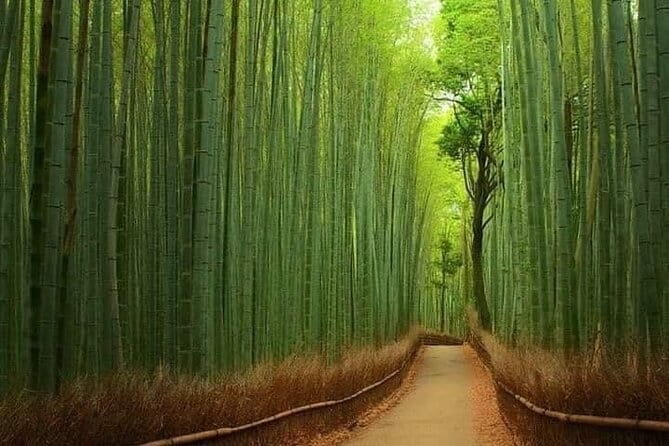
Arashiyama brings a different mood. The Bamboo Grove is a short walk through tall green stalks that create a narrow, striking path. The scheduled stop is one hour, with no general admission charge.
The grove is one of Kyoto’s most photographed places, so do not expect solitude. The path can be crowded, particularly at popular times of day. A private vehicle helps with the approach, but it cannot make the walkway private.
One hour gives you time to walk through part of the grove and take photographs. It leaves little room for a slow exploration of the wider Arashiyama area. If your group likes shops, gardens, or quiet temple grounds, tell your guide early. You may need to choose between more time in Arashiyama and the full list of stops.
Several groups have found it useful that the guide can park or drop them close to an entrance and help them find their way through the busy area. Some guides also take photographs, a small service that can be helpful when everyone wants to appear in the picture.
More day trips over to Kyoto:
- Osaka/Kyoto: Hiroshima Miyajima Bus Tour & Shinkansen Ticket
★ 4.7 · 919 reviews - Osaka/Kyoto: Amanohashidate & Miyama Tour with Boat & Lunch
★ 4.6 · 207 reviews - Sagano Romantic Train & Arashiyama, Kiyomizudera, Fushimi Inari Taisha Day Tour
★ 4.5 · 171 reviews - Volleyball in Osaka, Kobe & Kyoto with locals!
★ 4.8 · 131 reviews
Tenryu-ji, Kyoto’s Zen temple
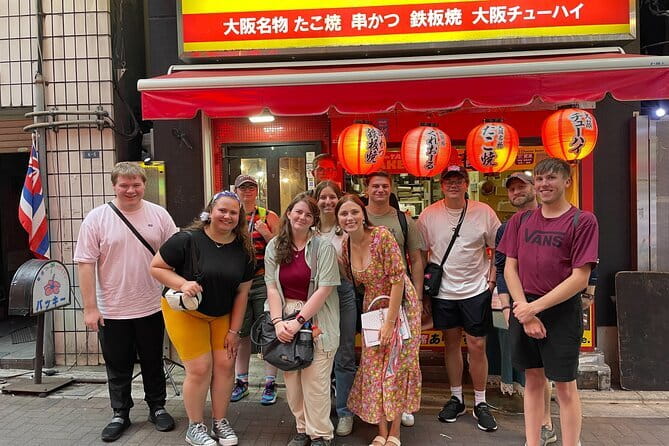
Tenryu-ji is scheduled for 30 minutes, making it the briefest temple stop. The temple is one of Kyoto’s five great Zen temples and a UNESCO World Heritage site dating from the 14th century.
Thirty minutes is enough for a quick look at the grounds and a sense of the temple’s layout. It is not enough for a leisurely visit if you want to sit in the buildings, study the gardens, and take your time with the details.
This is a good place to discuss priorities with your guide. If your group has already seen many Kyoto temples, you might prefer a short stop here. If Zen gardens and temple design are high on your list, you may want to reduce time elsewhere.
The itinerary treats Tenryu-ji as a separate stop from the Bamboo Grove, but the two are in the same Arashiyama area. That helps limit extra driving, although walking between sights still takes time.
Kinkaku-ji and its gold-covered exterior
Kinkaku-ji, the Golden Pavilion, is the quick visual knockout of the Kyoto portion. Its gold-covered exterior reflects over a pond, with gardens surrounding the route. The setting is designed for a steady walk and photographs rather than a long indoor visit.
The planned stop is about 40 minutes. That is generally enough to follow the sightseeing path and see the pavilion, but it may feel short if the grounds are crowded or if you want to linger for photographs.
The tour information gives mixed signals about the ticket. One part says the Kinkaku-ji ticket is included, while the inclusion list says all fees and taxes are not included and the itinerary marks admission as not included. Ask the provider to confirm this in writing before you book. Do not assume every temple ticket is covered by the $549 price.
Kinkaku-ji is worth keeping if this is your first Kyoto visit and you want one unmistakable landmark. If your group prefers fewer famous sights and more time in one neighborhood, this is a reasonable stop to trade for extra Arashiyama time.
Fushimi Inari’s torii gate paths
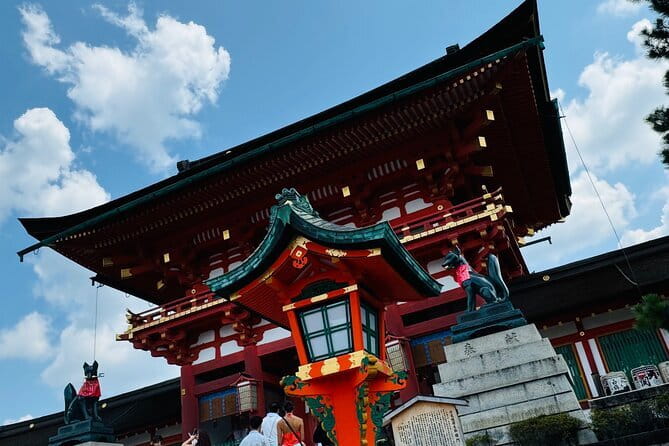
Fushimi Inari-taisha is the final major stop in the listed route, with about an hour to explore. The shrine is known for thousands of red torii gates that form tunnels up the hillside.
You do not need to walk the entire mountain route to understand the appeal. In an hour, you can pass through the lower gate-lined paths, take photographs, and get a strong sense of the shrine. A longer hike would require cutting something else from the day.
The shrine is an Important Cultural Property and remains an active Shinto site. Be respectful around worshippers, shrine buildings, and ritual areas. The red gates are the visual draw, but the place is also a functioning religious complex.
Fushimi Inari works well as a late stop because it can be visited on a flexible basis. You can walk for 20 minutes or use nearly the full hour. Tell your guide how far you plan to go so the pickup timing is clear.
How much guiding should you expect?
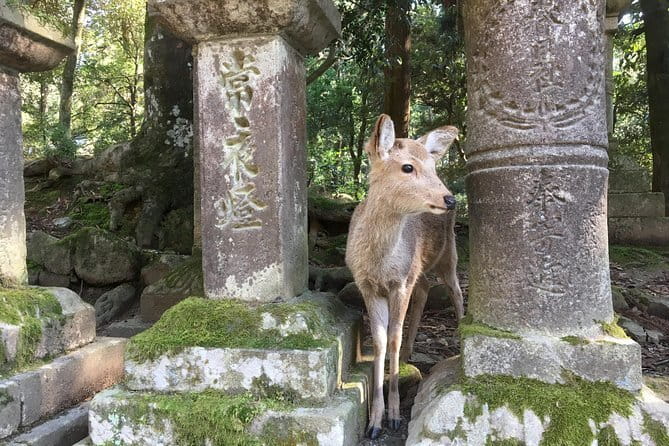
The tour is sold with an English-speaking guide, but the actual style can range from full sightseeing commentary to driver-led assistance. Hamzah and Hamza receive especially strong praise for fluent English, route planning, local suggestions, and personal attention. Ali is also praised several times for safe driving, polished English, flexibility, and getting groups back on time.
Nomi is described as courteous, easy to understand, and accommodating. Sha is praised for knowing the area and taking good care of the group. These names suggest that the company has several capable guides, but you may not know who is assigned until close to the tour date.
One low-rated experience reported very quiet speech, little commentary, unclear expectations, and poor communication. Another account described a driver who was useful mainly for transport rather than explanation. That contrast is important. If temple background and detailed cultural explanation matter to you, ask directly how much guiding is included and who will lead your day.
Confirming the pickup time also matters. Most feedback about communication is positive, but one complaint involved receiving the final time very late and finding the guide late at the hotel. The listed meeting point is Osaka Station, yet pickup is also offered from Osaka, Kyoto, or Nara. Get the exact location and time in advance.
Lunch, special diets, and the long road between sights
Lunch is not included, so you pay for your own meal. That gives you freedom, and guides have suggested local ramen, matcha stops, and places able to handle special dietary needs.
Do not treat lunch as an afterthought. With six major sights and long transfers, a poorly timed meal can make the final stops feel hurried. Tell the guide at the start if you need vegetarian, allergy-friendly, or other dietary options.
The route involves more driving than the short stop times may suggest. One group found the private van especially useful for covering Nara and Kyoto with children and older family members, while another advised thinking carefully about how much sightseeing you really want in one day.
Traffic can change the day. A guide who knows alternate routes may save time, but you should still set priorities. Ask your group to choose two or three must-see stops, then treat the rest as flexible. That is better than racing through every location.
Is $549 good value for six people?
At the maximum group size, the price works out to about $91.50 per person before food and any admission fees. For a family or group of six, that is a fair price for a private air-conditioned vehicle, a full day of transport, and the ability to change the plan.
For one or two people, the value is weaker. You pay the group price, not a per-person rate, so a small party should compare it with rail fares, taxis, and separate admission costs. The private option still buys convenience, but the savings are less obvious.
The best value comes when you care about time and ease. Door-to-door travel is especially helpful from Osaka, and cruise passengers can use a private vehicle to see more during a short port call. Still, a cruise group must leave a large time cushion for the return journey, since traffic between Kobe, Osaka, Kyoto, and Nara can be unpredictable.
The price includes the vehicle and onboard WiFi. It does not include lunch, and the general fee wording suggests you should budget for admissions. Confirm the Kinkaku-ji ticket before paying, as the supplied details conflict.
Who should book this private day?
I would consider this tour for a family, a group of friends, or a cruise party that wants to see both Nara and Kyoto without managing public transport. It also suits people who need a flexible pace, want help with restaurant choices, or have limited time in the Osaka area.
It is less suitable if you want a slow Kyoto visit. Six headline sights in 8 to 10 hours means short stops, traffic, and plenty of walking once you leave the vehicle. A dedicated Kyoto day would give you more time at each temple.
This option also depends on your guide. Most of the feedback praises flexibility, politeness, clear English, route knowledge, and safe driving. But the one serious complaint shows why you should state your expectations clearly: ask for commentary, confirm the pickup plan, and identify your must-see sights.
Free cancellation is available up to 24 hours before the start time. Changes or cancellations made inside that window are not accepted for a refund.
Should you book it?
Book this tour if your goal is to cover the major sights of Nara and Kyoto in one private day, especially with a group of four to six. The strongest reasons are the flexible route, comfortable transport, and guides such as Hamzah and Ali, who are repeatedly praised for helping groups make the most of a demanding schedule.
Skip it if you want deep, unhurried temple visits or a guaranteed lecture-style guide. Before booking, confirm the assigned guide, pickup details, admission fees, and your top priorities. With those points settled, this is a practical way to see a lot of Japan in one day, provided you accept the pace.
FAQ
How long does the tour last?
The tour lasts approximately 8 to 10 hours. Operating hours are listed as 8 a.m. to 6 p.m., Monday through Sunday.
Where does the tour start?
The listed meeting point is Osaka Station at 3-chōme-1-1 Umeda, Kita Ward, Osaka. Pickup is also offered from Kyoto, Osaka, or Nara, so confirm the exact pickup arrangement when booking.
Where does the tour end?
The activity ends back at the meeting point.
How many people can join the private tour?
The price covers one private group of up to six people. Only your group participates.
Is transportation included?
Yes. An air-conditioned vehicle and WiFi on board are included.
Is lunch included?
No. Lunch is not included, so you pay separately for your meal.
Are entrance fees included?
The general information says all fees and taxes are not included. Tōdai-ji and Tenryu-ji are listed with admission not included. The Kinkaku-ji details conflict, so confirm whether that ticket is covered before the tour.
Can the itinerary be customized?
Yes. The tour is designed so you can adjust the day to suit your group’s needs and priorities.
Can I cancel for a full refund?
You can cancel up to 24 hours before the experience start time for a full refund. Cancellations or changes made less than 24 hours before the start time are not accepted for a refund.
Just added around Osaka
- Nara Day Trip from Osaka with a Licensed Guide★ 5.0 · 3 reviews
- Osaka Early Morning Osaka Castle Tour Avoid Crowds★ 5.0 · 3 reviews
- Guided Tour of Some Attractions in Osaka by Private Car★ 5.0 · 3 reviews
- Private Transfer Between Kyoto and Kansai Airport KIX★ 5.0 · 3 reviews
- Shared Arrival Transfer: Osaka Itami Airport to Osaka City★ 5.0 · 3 reviews
- Osaka: Sushi Making Class and Dotonbori Food Tour★ 4.7 · 3 reviews
- Osaka Night Photography Workshop★ 5.0 · 3 reviews
- Kyoto Full day Tour Kinkakuji, Kiyomizu-dera and Fushimi Inari★ 4.5 · 3 reviews
Kyoto Day Trips from Osaka, compared.

Osaka/Kyoto: Hiroshima Miyajima Bus Tour & Shinkansen Ticket
Read our review →
Ancient Capital Tour: Kyoto and Nara Highlights from Kyoto/Osaka
Read our review →
Osaka/Kyoto: Amanohashidate & Miyama Tour with Boat & Lunch
Read our review →

Sagano Romantic Train & Arashiyama, Kiyomizudera, Fushimi Inari Taisha Day Tour
Read our review →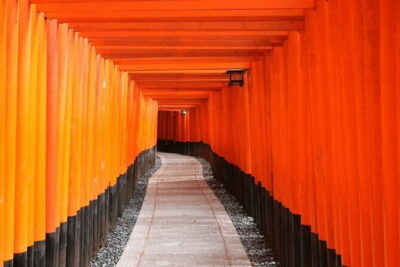
Full Day Tour of Kyoto with Private Transportation
Read our review →Full Day Kyoto Tour : Bamboo Forest, Golden Temple, Fushimi Inari
Read our review →
Amanohashidate & Ine Funaya Sightseeing Full Day Trip from Kyoto
Read our review →Browse the lists this tour appears in