
Reviewed · KYOTO DAY TRIPS FROM OSAKA
Osaka/Kyoto: Hiroshima Miyajima Bus Tour & Shinkansen Ticket
Hiroshima gives this day trip its emotional weight. You walk through Peace Memorial Park, see the Atomic Bomb Dome with its empty windows and damaged frame, then move on to Miyajima, where the sea, shrine, deer, and island streets offer a gentler finish.
I like two things here: the Shinkansen ride turns a long journey into part of the Japanese experience, and the bus-and-ferry connections remove a lot of transport guesswork. Guides such as Joe, Kane, Azusa, Hiro, and Chikako add history, personal stories, humor, and useful help along the way.
The catch is the clock. You get about an hour in the Peace Memorial Museum and roughly two hours around Miyajima, which is enough for an overview but not enough for a slow visit. This is also a full 12-hour day with plenty of walking.
In This Review
- Key Points
- Why This Osaka or Kyoto Day Trip Works
- The 90-Minute Shinkansen Ride From Osaka or Kyoto
- Hiroshima Castle and the Road to Peace Memorial Park
- Standing Before the Atomic Bomb Dome
- One Hour Inside the Hiroshima Peace Memorial Museum
- Hiroshima-Style Okonomiyaki for Lunch
- The Ferry Across to Miyajima
- Itsukushima Shrine and the Famous Torii Gate
- One Hour of Free Time on Miyajima
- The Return Trip to Osaka or Kyoto
- Guide Style and Group Experience
- Walking, Crowds, and Practical Limits
- Is $277 Good Value?
- Who Should Book This Hiroshima Tour?
- Final Verdict
- FAQ
- Where does the tour begin?
- How long is the experience?
- Is the Shinkansen ticket included?
- Is lunch included?
- Can the lunch accommodate dietary restrictions?
- What happens if the Peace Memorial Museum is closed?
- Is the tour suitable for wheelchair users?
Key Points
- The day begins with Japan’s bullet train: Round-trip Shinkansen tickets from Shin-Osaka or Kyoto Station are included.
- Hiroshima’s most important peace sites come first: Visit the Atomic Bomb Dome and spend about an hour at the Peace Memorial Museum.
- Lunch is a local specialty: Hiroshima-style okonomiyaki comes with pork, cabbage, bean sprouts, fish powder, noodles, and eggs, with several menu options for dietary needs.
- Miyajima provides a change of mood: A short ferry ride takes you to Itsukushima Shrine, the island’s famous sacred site, followed by free time.
- The logistics are handled for you: An air-conditioned bus links Hiroshima Station, the peace sites, restaurant, ferry, and return train.
- You need stamina for this one: The schedule is active, and the experience is not suitable for wheelchair users.
Why This Osaka or Kyoto Day Trip Works
Hiroshima and Miyajima are easy to combine on your own if you have time, patience, and a good grasp of Japanese train and ferry connections. In a single day, though, the route involves a long-distance train, city transport, a ferry, timed admissions, and a return journey.
This tour takes care of the moving parts. Your staff hands you the round-trip Shinkansen tickets at the morning meeting point, then a guide helps you get to the right train. In Hiroshima, you join the air-conditioned coach and spend the day with an English-speaking guide.
I see the value in that arrangement, especially if you are staying in Osaka or Kyoto and have only one open day. At $277 per person, it is not a cheap day out. But the price includes the Shinkansen, local bus, ferry, two admissions, lunch, and a guide. Buying the same transport and meals separately could be less convenient, even if an independent visit might cost less.
The tradeoff is freedom. You are part of a shared group rather than a private party, and the timetable dictates how long you stay at each place. Think of this as a well-organized first look, not a complete Hiroshima visit.
More Hiroshima and Miyajima day trips:
- Full Day Hiroshima and Miyajima Tour by Bullet Train from Osaka
★ 4.5 · 117 reviews - Hiroshima & Miyajima 1 Day Bus Tour with Bullet Train Tickets
★ 4.5 · 105 reviews - From Osaka: Hiroshima and Miyajima Day Trip by Bullet Train
★ 4.6 · 83 reviews
The 90-Minute Shinkansen Ride From Osaka or Kyoto
The trip begins at either Shin-Osaka Station or Kyoto Station. From there, the bullet train takes about an hour and a half to Hiroshima.
That journey matters for more than speed. The Shinkansen is one of Japan’s signature travel experiences, with reserved round-trip tickets included in the tour price. You can sit back instead of worrying about ticket machines, transfers, or finding the correct return train late in the day.
The meeting instructions and exact location can vary by the option you book, so read those details carefully. There is no hotel pickup. You need to reach the station on your own and arrive ready for a fixed departure.
The group meets its guide in Hiroshima, where you receive a short safety briefing before beginning the city portion. Some guides use earphone systems, which are genuinely useful when you are walking near a busy road or spread around a memorial site. Treat the equipment carefully and return it at the end. Loss or damage may cost up to 18,000 yen.
Hiroshima Castle and the Road to Peace Memorial Park
The bus passes Hiroshima Castle on the way through the city. This is a scenic drive rather than a castle visit, so you should not expect time to enter or explore the grounds.
That brief glimpse helps you see Hiroshima as more than a single historical event. The city has rebuilt, works as a modern regional center, and contains ordinary urban life alongside places connected to the atomic bombing.
The coach then brings you toward Peace Memorial Park. Having bus transport is especially useful here because it preserves time and keeps the group together. It also gives the guide a chance to explain the area while you ride.
Standing Before the Atomic Bomb Dome
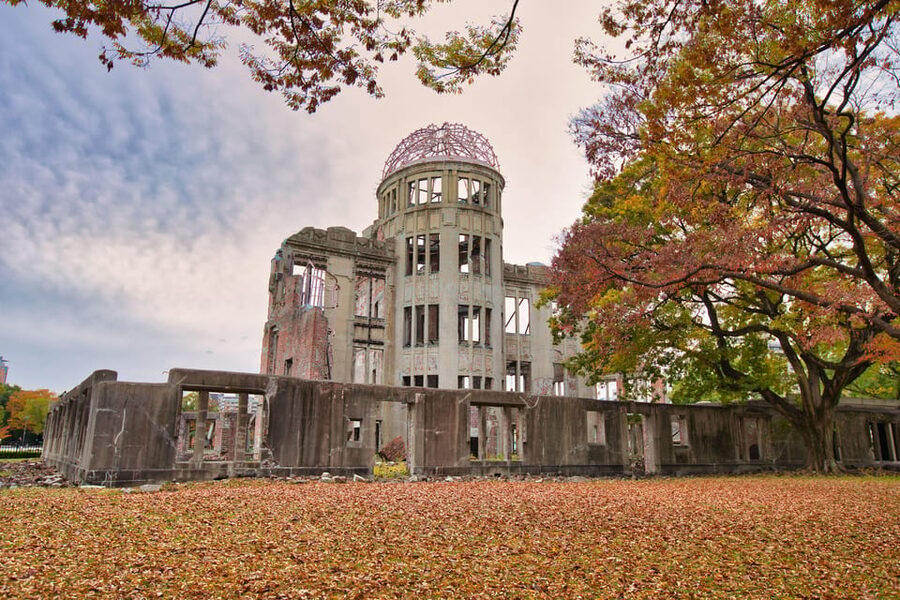
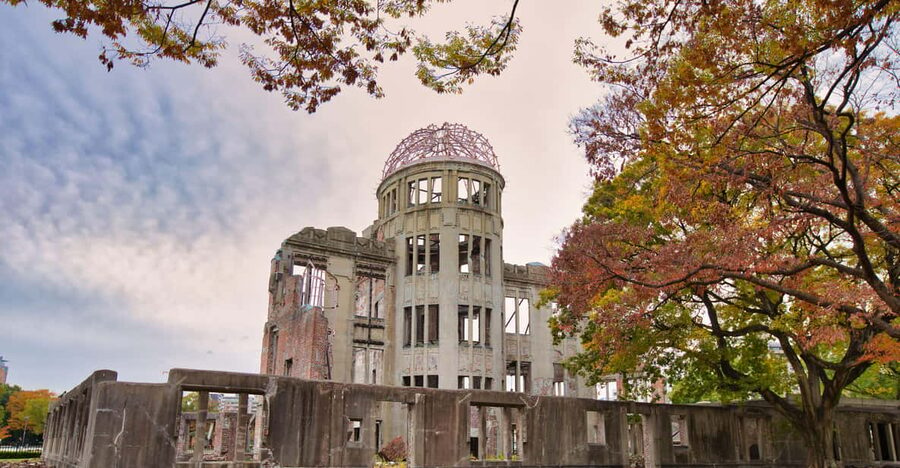
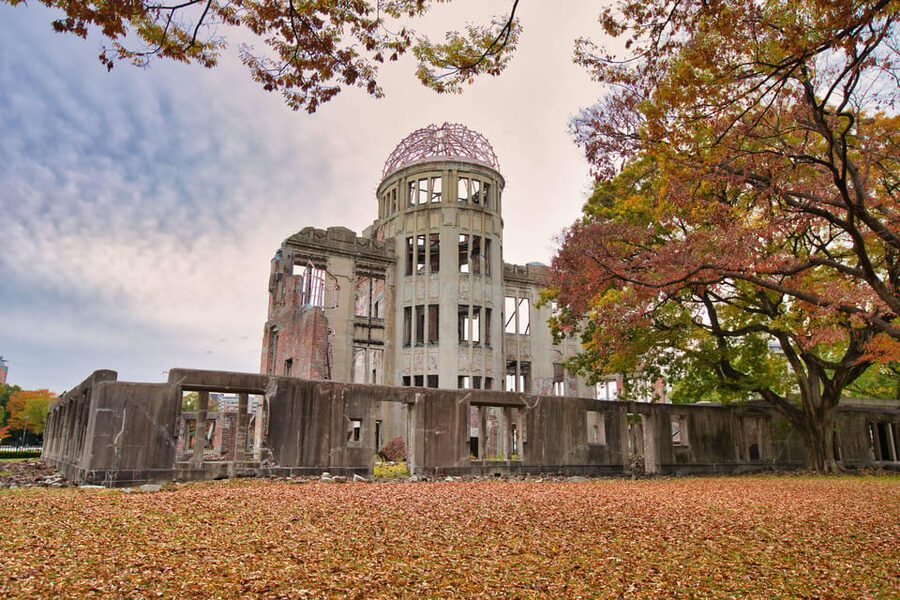
The Atomic Bomb Dome is the most immediate stop of the day. Its damaged structure, exposed interior, and blown-out windows make the bombing feel less like a distant textbook subject and more like a physical reality.
You have about 30 minutes here. That is enough to see the building from several angles, listen to the guide’s explanation, and take in the setting beside the river. It is not enough for a long, quiet examination of every nearby memorial.
This is a place for respectful attention rather than hurried sightseeing. The guide may share historical facts, local stories, and reflections on peace. Guides including Hiro, Joe, Kane, and Azusa have been singled out for explaining a difficult subject with both care and energy, though the actual guide varies by departure.
The order of the day is well judged. Hiroshima comes before Miyajima, so the day does not end on its heaviest subject. After the museum and memorial park, the island offers space to walk, eat, and think.
More day trips over to Kyoto:
- Ancient Capital Tour: Kyoto and Nara Highlights from Kyoto/Osaka
★ 4.5 · 332 reviews - Osaka/Kyoto: Amanohashidate & Miyama Tour with Boat & Lunch
★ 4.6 · 207 reviews - Kyoto and Nara Day Trip from Osaka
★ 4.0 · 175 reviews - Sagano Romantic Train & Arashiyama, Kiyomizudera, Fushimi Inari Taisha Day Tour
★ 4.5 · 171 reviews
One Hour Inside the Hiroshima Peace Memorial Museum
The Peace Memorial Museum is the emotional center of the tour. Its displays document the bombing and its effects on Hiroshima’s people. The visit is scheduled for about one hour.
I would treat that hour as an introduction, not a full museum visit. Crowding can make the galleries slower to navigate, and you may need to move at a steady pace to see the main displays before the group reconvenes. Several parts of the museum can be difficult to process, so the short visit may also feel intense rather than merely rushed.
Many people wish they had more time here. If the museum is closed, the tour substitutes the Hiroshima National Peace Memorial Hall for the Atomic Bomb Victims. The museum is normally closed December 30 to 31 and February 16 to 21.
You should plan your expectations carefully. If your main reason for visiting Hiroshima is a detailed museum study, spend a separate day in the city. If you want a meaningful first visit that combines the museum with the Dome and Peace Memorial Park, the scheduled hour gives you that foundation.
Hiroshima-Style Okonomiyaki for Lunch
Lunch brings a welcome change of pace. Hiroshima-style okonomiyaki is prepared with layers or portions built around cabbage, bean sprouts, noodles, pork, eggs, fish powder, and sauce.
It is different from the more mixed style associated with Osaka. Here, the noodles make the dish hearty, and watching it prepared in front of you adds a small food lesson to the day. Several people have especially appreciated the lunch because separate ingredients, sauce, and utensils could be arranged for allergies when requested in advance.
You can choose from three stated options:
- Regular okonomiyaki with the listed ingredients
- A pork-free version with eggs
- A pork-free, fish-powder-free, egg-free version
Tell the operator about allergies or dietary restrictions when you book. Menu changes cannot be made on the day, and you should not bring your own food or drinks into the restaurant.
Lunch lasts about 45 minutes. That is enough to eat and enjoy the dish, but not enough for a leisurely meal. Some departures may have a restaurant choice that includes other local food, but the stated meal is Hiroshima-style okonomiyaki.
The Ferry Across to Miyajima
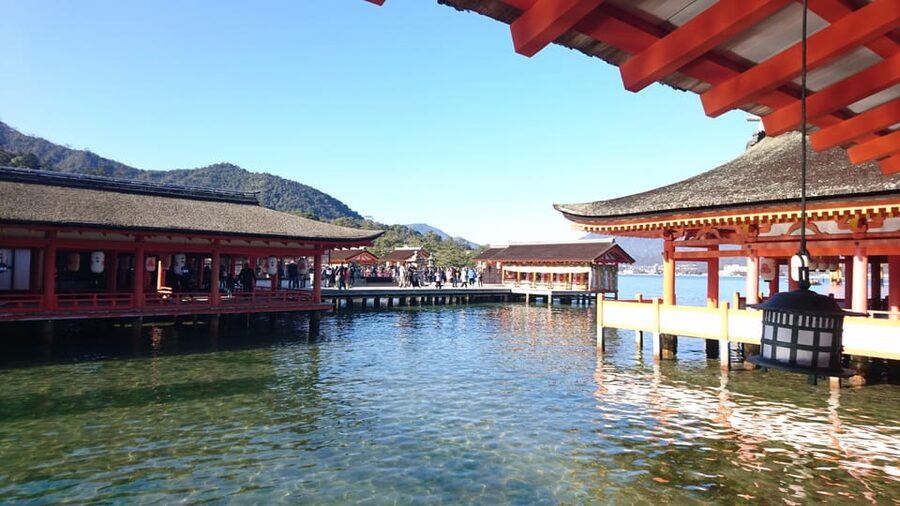
After lunch, the bus takes about 30 minutes toward the ferry. The crossing itself lasts roughly 10 minutes, making it a short but pleasant reset after the museum.
The ride gives you the first broad view of Miyajima from the water. The island is officially Itsukushima, while Miyajima means shrine island. The ferry is included in the tour, so you do not need to manage another ticket or find your own connection.
Weather and crowds can affect how peaceful the crossing feels. The island is a major destination, and the shrine area can be crowded, especially during popular travel periods. The tour’s staff keep the group moving and explain where to meet again, which helps when the waterfront streets are full.
Itsukushima Shrine and the Famous Torii Gate
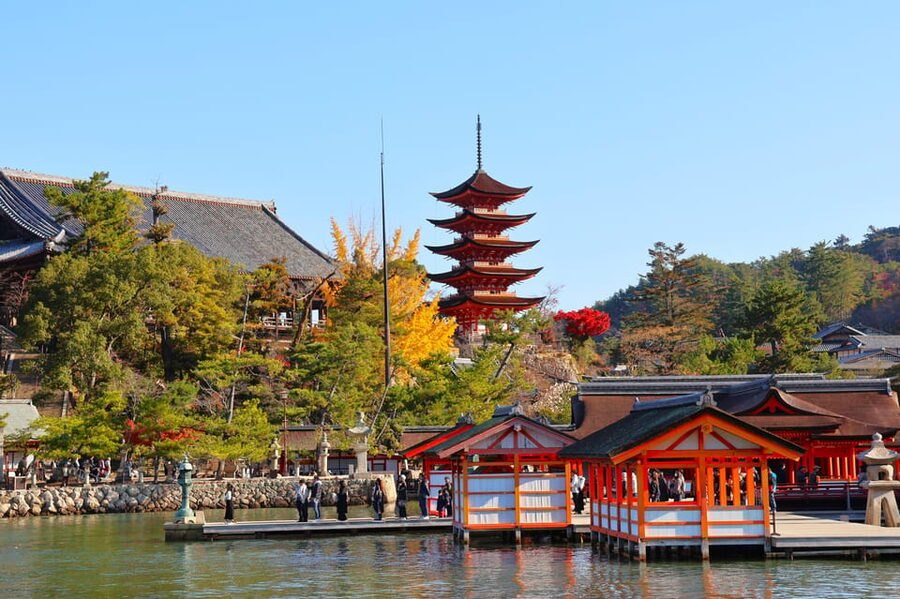
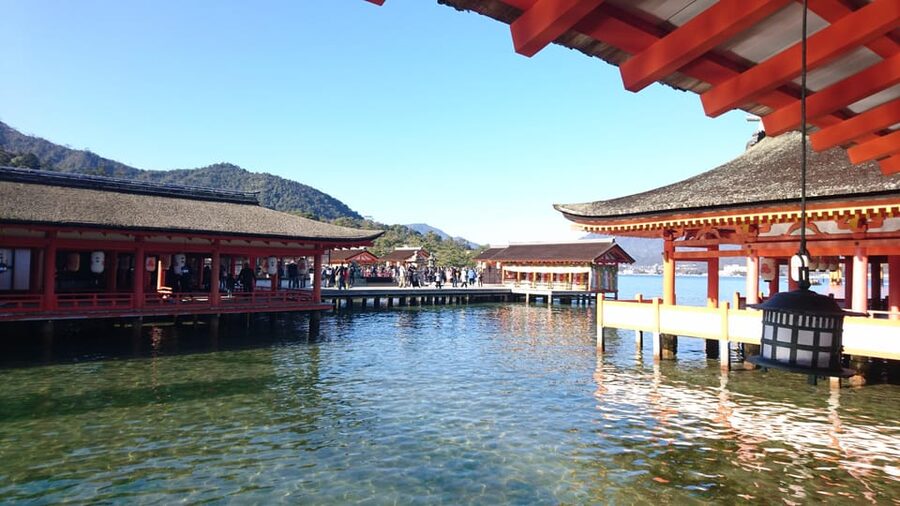
Itsukushima Shrine is the cultural high point after Hiroshima’s memorial sites. The shrine is associated with Shinto, a Japanese tradition often translated as the way of the gods, and its setting beside the water gives it a strong sense of place.
The entry ticket is included. You have about an hour for guided sightseeing at the shrine, including time to see the famous torii gate from the island side. The appearance of the gate depends on the tide, so the exact view can change. The tour information does not promise a particular tide level, and you should not book this trip solely for one specific torii photograph.
The shrine is not just a photo stop. Listen for the guide’s explanation of the island’s religious importance and how the buildings relate to the sea. This context makes the visit more rewarding than simply walking through a pretty complex.
The guide may also point out the friendly deer around the island. You can expect a mix of shrine architecture, waterfront views, small streets, food stalls, and shops in the area visited.
One Hour of Free Time on Miyajima
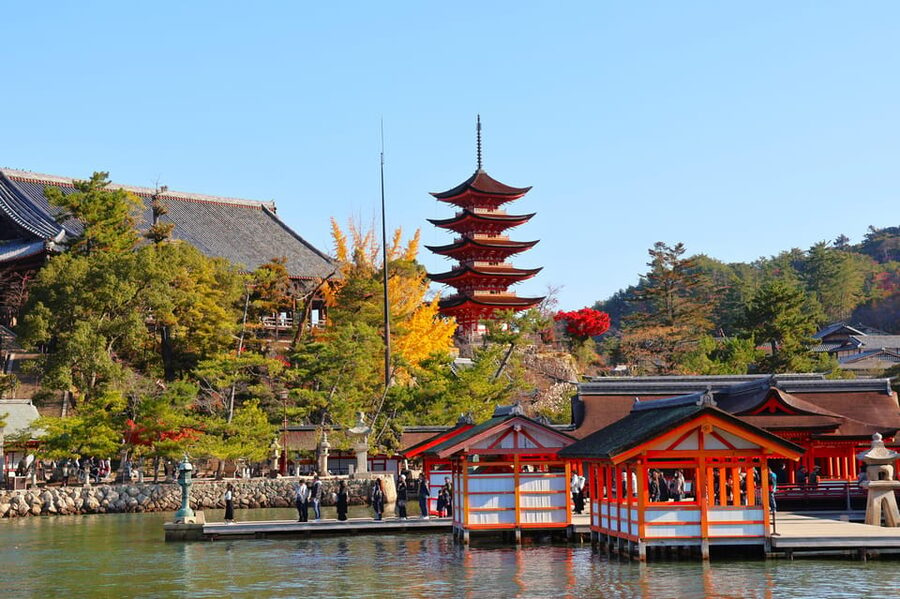
After the guided shrine visit, you get about an hour to explore independently. This is one of the tour’s best features because it lets you choose your own final experience.
You might browse the food street, try fried oysters, sample lemon beer, or pick up maple cakes. You might also walk toward pagodas and temples, as some people have done, though the available time and your walking speed will limit how far you can go.
The island is large enough to deserve a full day. You will not have time to cover every path or attraction on this schedule. Some people find the island portion slightly long compared with the museum, while others wish they had stayed longer. Your preference depends on whether you came mainly for Hiroshima’s wartime history or for Miyajima’s shrine and scenery.
I like having this free hour at the end. You can slow down after a structured day, buy a snack, or simply stand near the water before returning to the ferry.
The Return Trip to Osaka or Kyoto
The return ferry takes about 10 minutes, followed by a roughly 50-minute bus ride back toward Hiroshima Station. The bus passes through the city before you board the Shinkansen for the return trip.
The return train takes about an hour and a half. Guides and assistants help keep the group on track, and this is particularly useful if there are changes to the train arrangements. One guide helped a couple communicate a return-ticket change, while another used trivia and cultural explanations to keep the ride engaging.
Still, train schedules can be affected by delays. You should avoid booking a critical evening reservation immediately after the stated return time. This is a 12-hour activity, and a late return is possible on any long day involving several forms of transport.
Luggage can be stored in the bus compartment during the tour, which is handy if you are moving between accommodations. You still need to manage your belongings at the stations and meeting points.
Guide Style and Group Experience
This is not a private tour. You share the bus, train arrangements, and walking portions with other people, so expect a group pace and fixed meeting times.
The guides are one of the strongest parts of the experience. English-speaking leaders including Joe, Kane, Tom, Hiro, Azusa, Miyuki, Masako, and Chikako have received praise for combining facts with humor, personal stories, quizzes, and practical help. The guide names vary, so you should not book expecting one particular person.
The best guides do more than recite dates. They explain Japanese customs, answer questions, keep people out of the heat when possible, and make sure nobody misses the next bus or train. Assistants may also help count the group and check in with people during the day.
The earphones are a useful touch. You can hear the guide while walking without everyone having to cluster tightly around one person. That matters at the Dome, in the Peace Park, and around crowded Miyajima.
Walking, Crowds, and Practical Limits
You need to be comfortable walking for much of the day. The tour is not suitable for wheelchair users, and the supplied information specifically advises against booking if you have trouble walking.
Crowds are another practical issue. The Peace Memorial Museum can be very busy, and Miyajima can also feel packed around the shrine and shopping streets. The organized route helps you get between the main sites, but it cannot make the popular places quiet.
Summer heat may also make the day harder. One guide was praised for watching that the group did not remain under the hot sun too long. Even so, bring sensible footwear and prepare for a physically active schedule.
The tour is conducted in English, and the overall rating is 4.7 from 919 ratings. Transport receives especially strong marks, with 89 percent of ratings giving it a perfect score. That fits the main practical advantage here: the day is carefully connected from station to coach to ferry and back again.
Is $277 Good Value?
At $277, this is best judged as a convenience package rather than a budget excursion.
The price covers:
- Round-trip Shinkansen tickets from Kyoto or Osaka
- Air-conditioned bus transport in Hiroshima
- Round-trip Miyajima ferry tickets
- Hiroshima Peace Memorial Museum admission
- Itsukushima Shrine admission
- Hiroshima-style okonomiyaki lunch
- An English-speaking local guide
The biggest cost is the long-distance train. Add the local transport, admissions, ferry, and lunch, and the price becomes easier to understand. You are also paying for a guide who manages a complicated route and helps you make the most of a single day.
You could likely spend less by arranging the trip yourself, especially if you already understand Japan’s rail system and want to skip the bus or lunch. But independent planning would require more time and would leave you responsible for every connection.
For a first visit from Osaka or Kyoto, I consider the price reasonable if your priority is seeing both Hiroshima and Miyajima in one day. It is less attractive if you dislike group schedules or want several hours inside the museum.
Who Should Book This Hiroshima Tour?
Book it if you want a clear first look at Hiroshima and Miyajima without handling the train, bus, ferry, admissions, and restaurant arrangements yourself. It suits people with limited time in Japan, first-time visitors, and anyone who values historical explanation along with transport help.
It is also a good match if you want a local guide who can add cultural details that are easy to miss on a self-guided day. The mix of serious history, local food, shrine scenery, and free time gives the day a sensible emotional rhythm.
Choose a longer independent stay instead if the Peace Memorial Museum is your main purpose. You will want more than an hour there, and you may prefer to visit Miyajima at your own speed. The same applies if you want a mountain hike, a long shrine visit, or a slow meal.
Final Verdict
I would book this tour if I had one spare day from Osaka or Kyoto and wanted both Hiroshima and Miyajima on the same trip. The planning is strong, the Shinkansen adds pleasure rather than hassle, and the guides bring warmth to a difficult subject.
Just accept the limits: it is a long day, the museum time is short, crowds are likely, and the schedule leaves little room for wandering. If that sounds like a fair exchange for seeing the Atomic Bomb Dome, Peace Memorial Museum, Itsukushima Shrine, and Hiroshima okonomiyaki in one carefully linked outing, this is a solid choice.
FAQ
Where does the tour begin?
You can start at Shin-Osaka Station or Kyoto Station. The exact meeting point may vary according to the option booked.
How long is the experience?
The full day lasts about 12 hours, including the train journeys between Osaka or Kyoto and Hiroshima.
Is the Shinkansen ticket included?
Yes. The tour includes a round-trip Shinkansen ticket from either Kyoto or Osaka.
Is lunch included?
Yes. Lunch is Hiroshima-style okonomiyaki made with ingredients such as pork, cabbage, bean sprouts, fish powder, noodles, and eggs.
Can the lunch accommodate dietary restrictions?
Three stated choices are available: regular okonomiyaki, a pork-free version with eggs, and a pork-free, fish-powder-free, egg-free version. Tell the operator about allergies or dietary restrictions when booking, since changes cannot be made on the day.
What happens if the Peace Memorial Museum is closed?
The tour visits Hiroshima National Peace Memorial Hall for the Atomic Bomb Victims instead. The museum is listed as closed December 30 to 31 and February 16 to 21.
Is the tour suitable for wheelchair users?
No. The tour involves extensive walking and is not suitable for wheelchair users.
Just added around Osaka
- Nara Day Trip from Osaka with a Licensed Guide★ 5.0 · 3 reviews
- Osaka Early Morning Osaka Castle Tour Avoid Crowds★ 5.0 · 3 reviews
- Guided Tour of Some Attractions in Osaka by Private Car★ 5.0 · 3 reviews
- Private Transfer Between Kyoto and Kansai Airport KIX★ 5.0 · 3 reviews
- Shared Arrival Transfer: Osaka Itami Airport to Osaka City★ 5.0 · 3 reviews
- Osaka: Sushi Making Class and Dotonbori Food Tour★ 4.7 · 3 reviews
- Osaka Night Photography Workshop★ 5.0 · 3 reviews
- Kyoto Full day Tour Kinkakuji, Kiyomizu-dera and Fushimi Inari★ 4.5 · 3 reviews
Kyoto Day Trips from Osaka, compared.

Ancient Capital Tour: Kyoto and Nara Highlights from Kyoto/Osaka
Read our review →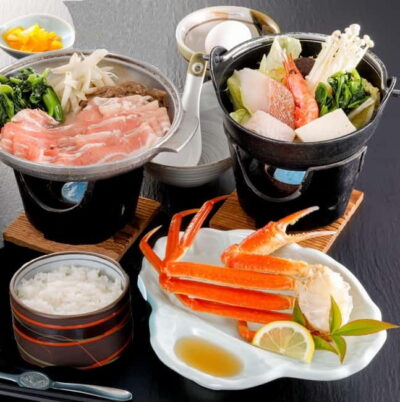
Osaka/Kyoto: Amanohashidate & Miyama Tour with Boat & Lunch
Read our review →

Sagano Romantic Train & Arashiyama, Kiyomizudera, Fushimi Inari Taisha Day Tour
Read our review →
Full Day Tour of Kyoto with Private Transportation
Read our review →
Kyoto & Nara Private customized tour with English speaking Guide
Read our review →Full Day Kyoto Tour : Bamboo Forest, Golden Temple, Fushimi Inari
Read our review →
Amanohashidate & Ine Funaya Sightseeing Full Day Trip from Kyoto
Read our review →Browse the lists this tour appears in