
Reviewed · KYOTO DAY TRIPS FROM OSAKA
Ancient Capital Tour: Kyoto and Nara Highlights from Kyoto/Osaka
Kyoto’s bamboo paths, the Golden Pavilion, Nara’s bowing deer, and Todaiji’s giant Buddha make a memorable cultural sampler in one long day. This Kyoto and Nara combination is built for you if time is short and public transport feels like one puzzle too many.
I like the easy bus connection between widely spaced sights, and I like the seasonal range: cherry blossoms in April, autumn color in November, and summer cormorant fishing around Arashiyama. Guides such as Yuki, Maria, Haru, and Hama have earned warm praise for keeping the day moving and helping with photos, maps, and local tips.
The tradeoff is clear: nine hours is not enough for a leisurely Kyoto and Nara visit. Some stops can feel rushed, especially if you want detailed temple history, long photo sessions, or time to browse and eat on your own.
In This Review
- Key points to know before booking
- What this Kyoto and Nara day trip is really offering
- Arashiyama gives you bamboo, river views, and a short taste of Kyoto
- The lunch choice affects your freedom
- Kinkaku-ji is beautiful, but the visit is brief
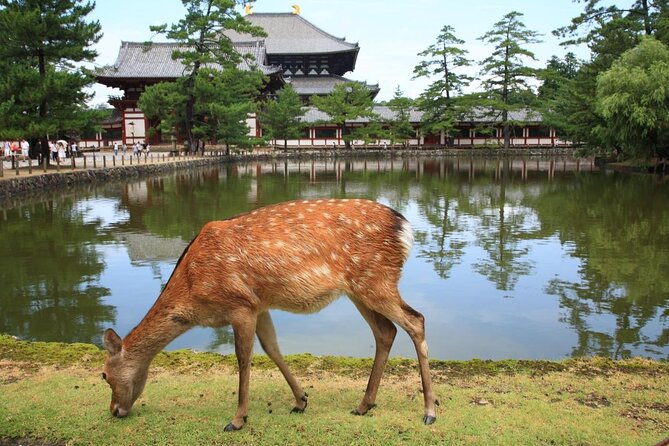
- Nara Park puts you close to free-roaming deer
- Todaiji’s Great Buddha is the day’s grandest interior
- Guides can shape the day more than the sights do
- Bus convenience saves time, not energy
- Is $90.75 good value?
- Who will get the most from this full day
- Should you book this Kyoto and Nara tour?
- FAQ
- How long does the tour last?
- Where can I join the tour?
- What time does the tour depart?
- Is hotel pickup included?
- What sights are included?
- Is lunch included?
- Can the tour provide vegan or halal meals?
- Are temple admission tickets included?
- Can I cancel for a full refund?
Key points to know before booking
- Four major sights in one day: Arashiyama, Kinkaku-ji, Nara Park, and Todaiji.
- Arashiyama gets about two hours: Enough for a taste of the bamboo forest and river area, but not a full neighborhood visit.
- Kinkaku-ji is a short stop: Plan on about 45 minutes for the pavilion, pond, and garden.
- Nara Park combines nature and culture: Feed the free-roaming deer, then see Todaiji’s Great Buddha.
- Transport is the main convenience: The air-conditioned bus has free Wi-Fi and removes several train and bus changes.
- Check the package details: Lunch and temple admissions can vary, especially with last-minute booking options.
What this Kyoto and Nara day trip is really offering
This is not a slow temple tour. It is a well-packed introduction to two of Japan’s most famous old capitals, designed to give you recognizable sights without asking you to work out every train, platform, and local bus.
You start from central Kyoto or Osaka, ride in a group bus, and spend the day moving between three areas. The route covers natural scenery in Arashiyama, royal-looking architecture at Kinkaku-ji, and the deer and Buddhist monuments of Nara.
That mix is the tour’s strongest idea. You are not seeing four versions of the same temple. Each stop has a different feel, and the day moves from river and bamboo scenery to formal gardens, then to open parkland and one of Japan’s most imposing religious buildings.
The group can be as large as 42 people, though some departures have been much smaller. A small group makes it easier to hear the guide and regroup quickly. A full bus requires more discipline, since one late arrival can affect everyone.
More day trips over to Nara:
- Kyoto and Nara Day Trip from Osaka
★ 4.0 · 175 reviews - Discover Himeji, Kobe and Nara from Osaka
★ 5.0 · 101 reviews - Kyoto & Nara Private customized tour with English speaking Guide
★ 4.5 · 99 reviews
Arashiyama gives you bamboo, river views, and a short taste of Kyoto
The first major stop is Arashiyama, on Kyoto’s western side. You have about two hours here, including lunch if you selected that package.
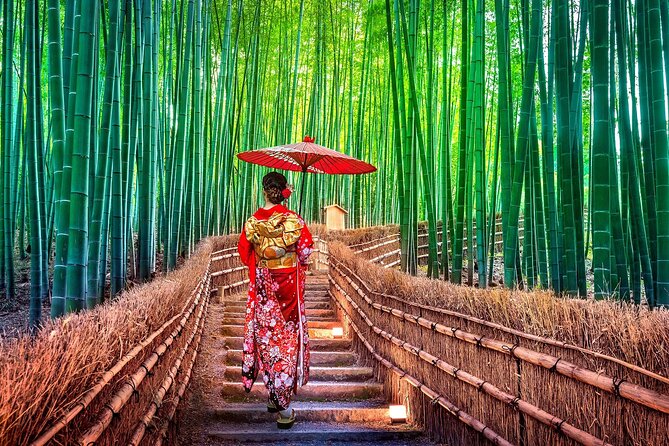
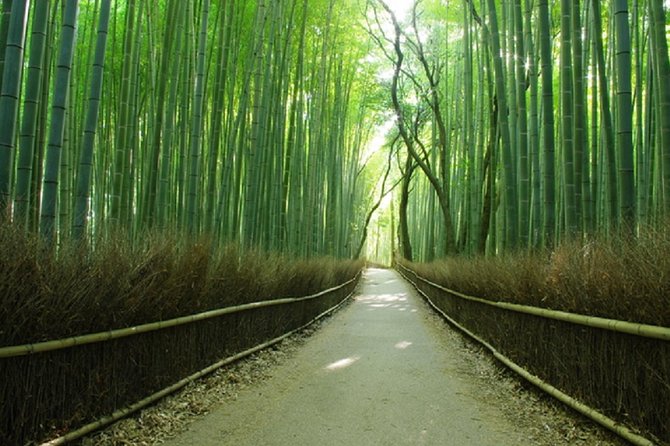
The famous Sagano Bamboo Forest is the obvious draw. The path is lined with tall bamboo, and the sound of the leaves moving overhead is part of the experience. The walk is attractive, but this is a popular place, so do not expect a private forest stroll. Your time is better spent staying aware of the route and meeting point rather than trying to cover every side path.
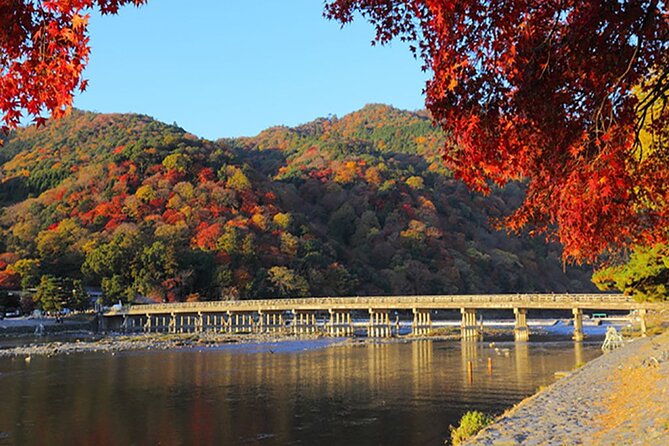
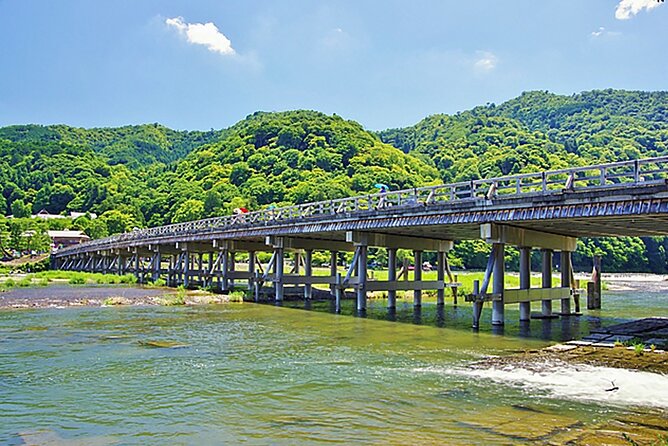
Arashiyama also gives you access to the Katsura River and Togetsukyo, the moon-crossing bridge. The river setting softens the visit after the busy ride from Osaka or Kyoto. You might find that the bridge and waterfront offer better breathing room than the narrowest part of the bamboo path.
The area changes sharply with the seasons. April brings cherry blossoms, November usually brings strong fall colors, and summer can include views of local cormorant fishing. These seasonal details matter because Arashiyama is as much about the setting as the individual sights.
If you want to walk near Tenryuji Temple and the edge of the bamboo forest, use your time carefully. The schedule leaves room for a useful introduction, a short walk, and photos, but not an unhurried exploration of all Arashiyama.
The lunch choice affects your freedom
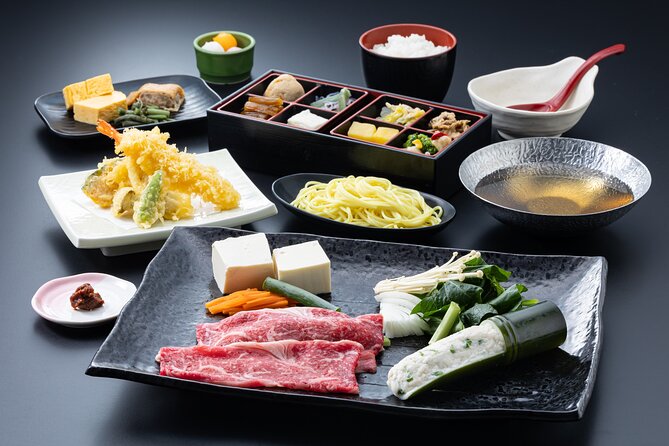
A traditional lunch of seasonal Kyoto specialties is available as an upgrade. It can be convenient, especially if you prefer to stay with the group and avoid spending part of your short stop looking for food.
Still, lunch is not an automatic win. Some people prefer the flexibility of eating around Arashiyama, where there are places along the main streets. One especially practical suggestion is to skip the included meal if you want more control over timing and food choices.
The operator cannot provide vegan or halal meals. If you need either, book the option without lunch. Vegetarian requests require direct contact at least three days before departure, so do not wait until the morning of the tour.
A meal option can also affect where you meet the group after exploring. Pay close attention to the instructions. A small restaurant sign or an unclear meeting point can turn a simple lunch break into a stressful scavenger hunt.
Kinkaku-ji is beautiful, but the visit is brief
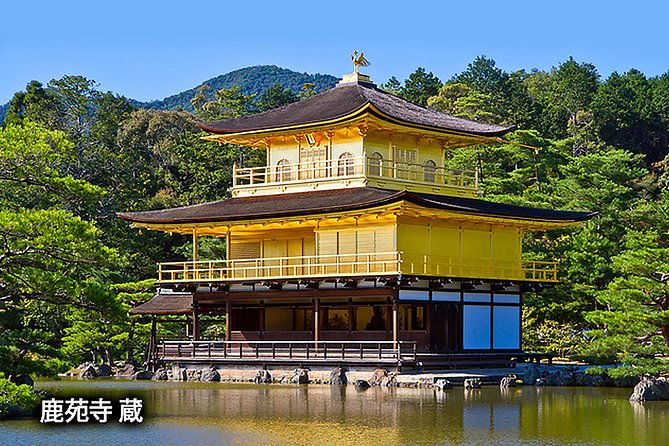
After Arashiyama, the bus continues through Kyoto to Kinkaku-ji, the Golden Pavilion. The building is covered in gold leaf and reflected in a pond, creating the classic Kyoto image that appears on countless postcards.
The 45-minute stop is enough to enter the grounds, see the pavilion from the main viewing area, and follow part of the garden route. The grounds retain the design of an older temple complex, with carefully arranged greenery and water views around the pavilion.
This is a photograph-first stop. You will have time to admire the setting, but not much time for a long visit or close study of the site’s history. If you enjoy reading every sign, wandering every garden path, or sitting quietly by the pond, you may want to visit Kinkaku-ji independently on another day.
The temple admission is included with most packages. The exception is important: last-minute options may exclude the Kinkaku-ji entry ticket. Check the exact booking choice before paying, since a lower-looking price may not include the same items.
The short stop also explains why the bus is useful. Kinkaku-ji is not simply next door to Arashiyama or Nara. Having a driver and guide manage the long connections lets you see more in one day, even though you give up time at each place.
More day trips over to Kyoto:
- Osaka/Kyoto: Hiroshima Miyajima Bus Tour & Shinkansen Ticket
★ 4.7 · 919 reviews - Osaka/Kyoto: Amanohashidate & Miyama Tour with Boat & Lunch
★ 4.6 · 207 reviews - Sagano Romantic Train & Arashiyama, Kiyomizudera, Fushimi Inari Taisha Day Tour
★ 4.5 · 171 reviews - Volleyball in Osaka, Kobe & Kyoto with locals!
★ 4.8 · 131 reviews
Nara Park puts you close to free-roaming deer
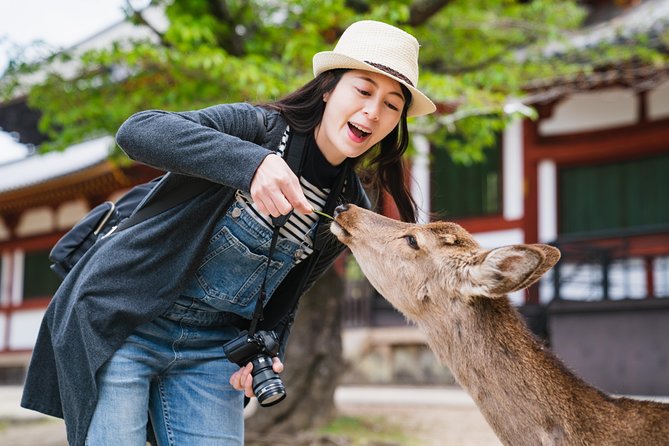
The Nara portion shifts the mood again. Nara Park is a large preserve where roughly 1,200 deer roam freely. They are accustomed to people and are famous for bowing, especially when they expect a snack.
You can buy shika-senbei, the special crackers sold for feeding the deer. Keep your supply under control and pay attention once the crackers are gone. The deer know exactly what they want, and an empty hand may not end the conversation as quickly as you hope.
The deer are the fun, informal part of the day. They also make Nara feel different from Kyoto’s temple grounds. You are not just looking at an old building. You are walking through an open park where animals move around you and create much of the atmosphere.
The scheduled Nara visit lasts about an hour and a half. That gives you time to see the deer and reach Todaiji, but it is still not a full Nara outing. If you want to explore other temples, gardens, or older streets, plan a separate visit.
Wear comfortable walking shoes. The group may walk farther than the headline attractions suggest, and the route includes park paths and temple grounds. The walking is manageable for most people, but it is not a sit-down sightseeing day.
Todaiji’s Great Buddha is the day’s grandest interior
Inside Todaiji Temple, you see one of Japan’s huge Great Buddha statues. The scale is the point. After the playful deer outside, the vast wooden temple and enormous Buddha create a more solemn finish to the Nara stop.
Admission to Todaiji is included with most package choices, but, as with Kinkaku-ji, last-minute options may exclude it. Confirm before booking if you want the simplest all-inclusive arrangement.
The time at Nara combines the park and temple, so do not assume the full 90 minutes will be spent inside Todaiji. You need time to walk from the meeting area, see the deer, enter the temple, and return to the bus. Stay aware of the guide’s instructions.
This is one place where a guide can add real value. A good explanation helps connect the building, statue, and Buddhist tradition rather than leaving you with only a large photograph. Guide quality can vary, but praised guides including Yuki, Maria, Haru, and Riku have been described as warm, clear, and helpful. Do not count on a particular guide unless the operator confirms one.
Guides can shape the day more than the sights do
The route is fixed, but the human side of the tour changes from departure to departure. Several guides have been praised for practical help as much as formal commentary.
Yuki has been noted for keeping the group on schedule, taking photos, and offering restaurant advice for later in the trip. Maria has been appreciated for showing images before arrival and handing out maps for each stop. Haru has received warm praise for being informative, kind, and attentive, while Hama has been singled out for making the Nara deer visit especially enjoyable.
Those details matter because a tight itinerary needs clear instructions. You want a guide who tells you where to go, when to return, and what not to miss. A guide who gives useful advice for the rest of your stay is a welcome bonus.
The less positive experiences point to the same issue: the tour can feel rushed if explanations are short or the schedule is not clearly managed. The operator uses English-speaking guides, but the amount of historical detail may differ. If your main goal is serious temple interpretation, a private guide or separate full-day visit would suit you better.
Bus convenience saves time, not energy
The air-conditioned vehicle has free Wi-Fi, which is useful for checking maps, messages, or dinner plans during the longer rides. You do not have to change trains between Kyoto’s western side, Kinkaku-ji, and Nara.
That convenience is the central value of the tour. You are paying not just for admission and commentary, but for someone else to organize a difficult route. From Osaka, especially, that can make this a practical first look at Kyoto and Nara.
The bus departs from Namba, OCAT 1F, near Daiso, at 8:50 a.m. The Kyoto departure meets at Kyoto Station’s Hachijo Exit in the tourist bus parking area at 9:05 a.m. Check in 10 minutes early.
Meeting points deserve care. Large buildings and broad station areas can make exact pickup locations hard to identify. Read the confirmation closely, check which side of the building or station area is specified, and allow extra time. The bus leaves on schedule, and late arrivals are not refundable.
The departure dates and buses differ between Kyoto and Osaka. Choose the starting city carefully, especially if your hotel is in one city and you are tempted by the other departure.
Is $90.75 good value?
At about $90.75 per person, the tour is fairly priced for a nine-hour guided day if you value convenience. The bus, English-speaking guide, and included temple admissions on most options cover the pieces that can add up when arranged separately.
The value drops if you already feel comfortable with Japanese trains and buses, want long visits, or plan to spend most of the day taking photographs. Independent travel gives you more control over lunch and lets you devote a whole morning to Arashiyama or a whole day to Nara.
The price also needs careful comparison. Lunch may be optional, and last-minute packages may exclude meals and admission tickets. Check what is included in the exact option you choose rather than assuming every departure has the same package.
For a first visit, the tour’s value comes from range. You get natural scenery, a famous temple, a deer park, and a major Buddha statue in one day. It is a sampler, not a replacement for returning to Kyoto and Nara with more time.
Who will get the most from this full day
I would choose this tour if you are staying in Osaka and want a straightforward first look at Kyoto and Nara. It also suits you if you have limited time, dislike navigating unfamiliar public transport, or want an English-speaking guide to handle the day’s structure.
Families and mixed-age groups may appreciate the variety. The deer add an easy point of interest, while the temples provide the cultural depth. Most people can participate, but you should be ready for considerable walking and a full schedule.
You may want another plan if you travel slowly, need a strict dietary option, or care more about detailed history than landmark coverage. The strongest criticism is not the destinations. It is the lack of time at them.
Free cancellation is available up to 24 hours before the start time for a full refund. Changes or cancellations inside that window are not accepted for a refund, so make your decision early.
Should you book this Kyoto and Nara tour?
Book it if your priority is seeing the headline sights efficiently, especially from Osaka. The route is sensible, the bus removes difficult connections, and the mix of bamboo, gardens, deer, and Buddhist art gives you a strong first taste of the region.
Do not book it expecting a relaxed day in either city. You will have enough time to see the key places, take photos, and get a useful introduction, but not enough to linger everywhere or hear a long lecture at each temple.
My practical choice would be a standard package with admissions included and no lunch unless you specifically want the arranged meal. Arrive early, wear good shoes, keep your meeting instructions handy, and treat the day as an overview. If Arashiyama or Nara captures your imagination, return later and give it the time it deserves.
FAQ
How long does the tour last?
The tour lasts approximately nine hours, including transportation between Kyoto and Nara sights.
Where can I join the tour?
You can depart from central Osaka or central Kyoto. The Osaka meeting point is Namba, OCAT 1F, near Daiso. The Kyoto meeting point is at Kyoto Station’s Hachijo Exit, in the tourist bus parking area.
What time does the tour depart?
The Osaka meeting time is 8:50 a.m. The Kyoto meeting time is 9:05 a.m. You should check in 10 minutes before your booked start time.
Is hotel pickup included?
No. The tour begins and ends at the listed meeting points, not at your hotel.
What sights are included?
The route includes Arashiyama, Kinkaku-ji Temple, Nara Park, and Todaiji Temple, including its Great Buddha statue.
Is lunch included?
Lunch is included only if you select a package with lunch. You can also book an option without lunch.
Can the tour provide vegan or halal meals?
No. The operator cannot provide vegan or halal meals, so you should book an option without lunch if you need either type of meal.
Are temple admission tickets included?
Kinkaku-ji and Todaiji admission tickets are included with most package options. Last-minute options may exclude entry tickets, so check the details of your selected package.
Can I cancel for a full refund?
Yes. You can cancel at least 24 hours before the experience start time for a full refund. Cancellations and changes made less than 24 hours before departure are not accepted for a refund.
More Highlights and Hidden Gems Tours
- Osaka Kickstart: Hotspots & Hidden Gems Tour
★ 5.0 · 1,306 reviews - Ultimate Osaka Walking Tour: Castle, Dotonbori & Hidden Gems
★ 5.0 · 862 reviews - Osaka: Main Sights and Hidden Spots Guided Walking Tour
★ 4.9 · 702 reviews - Private Osaka Walking Tour: Highlights & Hidden Gems
★ 5.0 · 569 reviews
Just added around Osaka
- Nara Day Trip from Osaka with a Licensed Guide★ 5.0 · 3 reviews
- Osaka Early Morning Osaka Castle Tour Avoid Crowds★ 5.0 · 3 reviews
- Guided Tour of Some Attractions in Osaka by Private Car★ 5.0 · 3 reviews
- Private Transfer Between Kyoto and Kansai Airport KIX★ 5.0 · 3 reviews
- Shared Arrival Transfer: Osaka Itami Airport to Osaka City★ 5.0 · 3 reviews
- Osaka: Sushi Making Class and Dotonbori Food Tour★ 4.7 · 3 reviews
- Osaka Night Photography Workshop★ 5.0 · 3 reviews
- Kyoto Full day Tour Kinkakuji, Kiyomizu-dera and Fushimi Inari★ 4.5 · 3 reviews
Kyoto Day Trips from Osaka, compared.

Osaka/Kyoto: Hiroshima Miyajima Bus Tour & Shinkansen Ticket
Read our review →
Osaka/Kyoto: Amanohashidate & Miyama Tour with Boat & Lunch
Read our review →

Sagano Romantic Train & Arashiyama, Kiyomizudera, Fushimi Inari Taisha Day Tour
Read our review →
Full Day Tour of Kyoto with Private Transportation
Read our review →
Kyoto & Nara Private customized tour with English speaking Guide
Read our review →Full Day Kyoto Tour : Bamboo Forest, Golden Temple, Fushimi Inari
Read our review →
Amanohashidate & Ine Funaya Sightseeing Full Day Trip from Kyoto
Read our review →Browse the lists this tour appears in