
Reviewed · DOTONBORI & NAMBA TOURS
Osaka: Food Tour Kuromon Market & Dotonbori with Guide
Osaka’s best introduction may be edible: a hot ball of takoyaki, a sweet skewer of dango, and a plate of okonomiyaki eaten as you walk through the city. This tour brings those bites together with Kuromon Market, Hozenji, and neon-lit Dotonbori, so you get food, streets, and famous sights in one outing.
I like the way the route mixes small tastings with major landmarks, especially the stop at Wanaka for takoyaki and the final photo at Ebisu Bridge. I also like that guides such as Paula and Angeles have brought strong energy and useful comments about Osaka as you walk. The main consideration is authenticity: the guide may be a fluent English or Spanish speaker from outside Japan, so you may get smoother communication than highly local food knowledge.
In This Review
- Key points to know before booking
- Why this Osaka food walk works
- Kuromon Market and the first taste of Osaka
- Three-color dango at Mitoya
- Hozenji brings a change of pace
- Okonomiyaki and kushikatsu near Gigo
- Egg tart for a sweet finish
- Dotonbori after dark and the Glico sign
- The guide makes the difference
- Who will get the most from this tour
- What the $84 price really covers
- Should you book the Kuromon and Dotonbori food tour?
- FAQ
- Where does the Osaka food tour start?
- How early should I arrive?
- Where does the tour end?
- Which languages are available?
- What foods are included?
- Does the price include drinks and extra meals?
- Is the tour suitable for wheelchair users?
- Are pets allowed?
- Can I cancel for a full refund?
Key points to know before booking
- Kuromon Market leads the food story: You begin among stalls selling fresh ingredients and local specialties, then try Osaka-style takoyaki at Wanaka.
- The tastings cover Osaka classics: Expect takoyaki, three-color dango, okonomiyaki, kushikatsu, and a custard tart.
- Hozenji adds a quieter street break: The route moves from market food into a historic neighborhood before reaching Dotonbori.
- Dotonbori supplies the big Osaka finish: Neon signs, busy streets, Gigo, and the famous Glico runner give you the city’s most recognizable scene.
- English and Spanish support is included: This suits you if you want help ordering and context while walking.
- You need to be ready for city walking: Comfortable shoes matter, and the tour is not suitable for wheelchair users.
Why this Osaka food walk works
This is a useful first taste of Osaka because it does not treat food as a separate activity from sightseeing. You eat while moving through the places that give the city its personality. The route begins at Hotel Royal Classic Osaka, outside the entrance, where your guide waits with an Amigo Tours sign. Arrive at least 10 minutes early so check-in is not a scramble.
The format is especially helpful if you have limited time in Osaka or feel unsure about ordering at busy food shops. You can follow the guide from one stop to the next, learn what each dish is, and leave with a short list of foods to seek out later.
The tour is priced at $84 per person. That is not a cheap meal, but the price includes several emblematic Osaka tastings, a bilingual guide, and a guided walk through some of the city’s most famous districts. You are paying for structure and interpretation as much as for food.
The value depends on how you like to eat. If you prefer to choose every dish yourself and eat a full meal at your own pace, this may feel expensive. If you want several classic bites, local orientation, and an easier way to handle a busy market, the price is more reasonable.
More eating your way through Kuromon Market:
- Kuromon Market Food Walking Tour in Osaka (6 stops, 6 tastes)
★ 5.0 · 550 reviews - Osaka: Kuromon Market Food Walking Tour (6 stops, 6 tastes)
★ 4.6 · 272 reviews - Kuromon Market Tour: All inclusive 6~8 Dishes & 3~4 samplings
★ 5.0 · 103 reviews
Kuromon Market and the first taste of Osaka
Kuromon Market is the natural opening stop. It is known for fresh ingredients and food stalls, giving you a look at the raw materials behind Osaka cooking as well as ready-to-eat snacks. The market setting makes the first part of the tour feel tied to daily food culture rather than only to tourist sights.
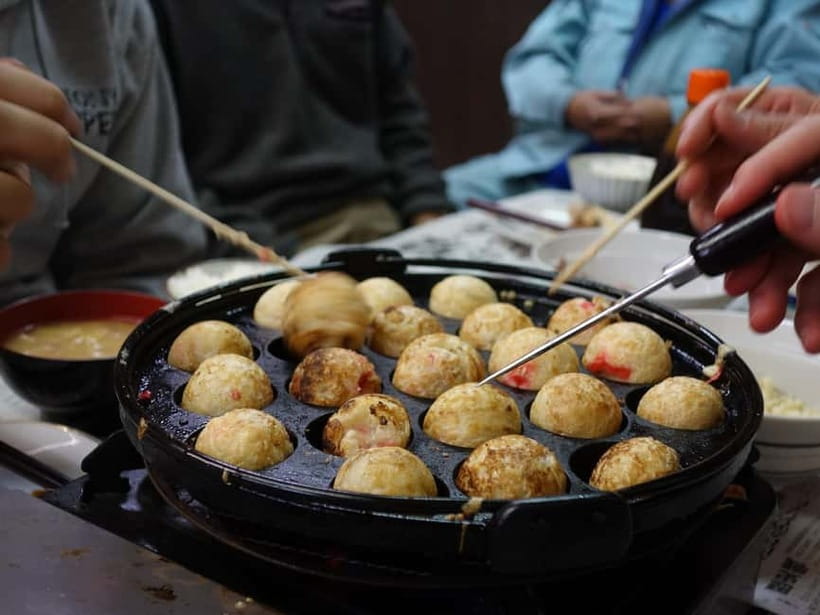
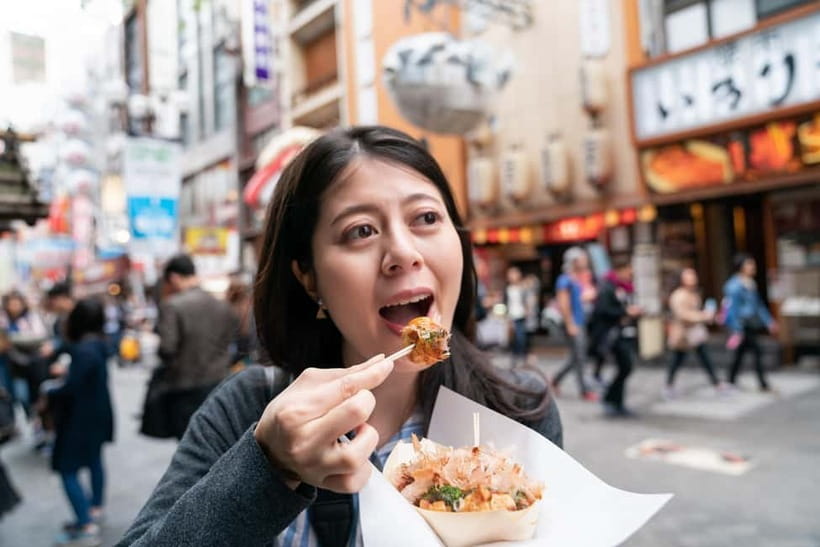
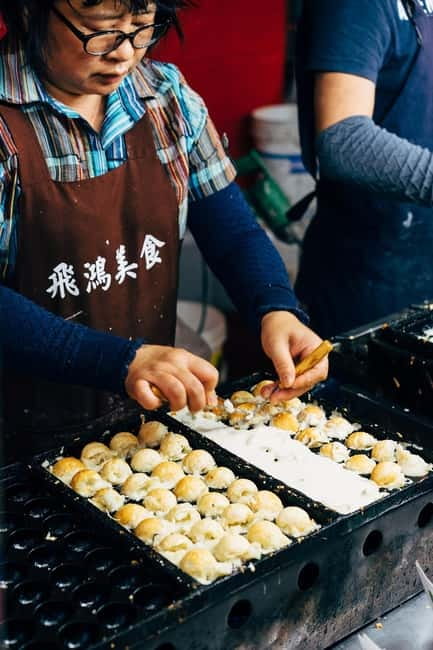
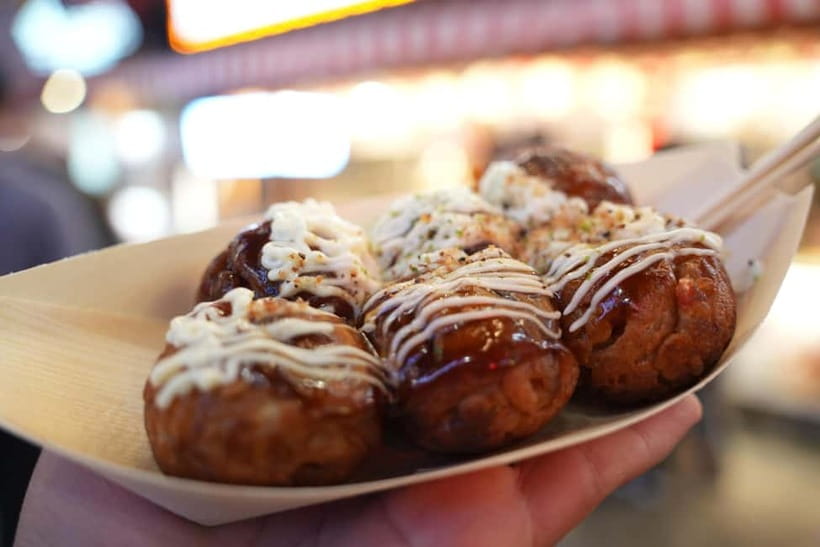
The itinerary includes a visit to Wanaka for takoyaki. These small octopus-filled balls are one of Osaka’s signature foods. The outside should be lightly crisp, while the inside stays soft and creamy. They are served hot, so take care with the first bite.
Takoyaki is simple in appearance but tricky to eat neatly. A guide can help you understand what you are trying and keep the stop moving in a crowded market. You should not expect a large serving that replaces lunch. Think of it as a tasting, with more food to come later.
I like this opening because it gives you a clear Osaka flavor right away. The market also creates a useful contrast with Dotonbori later. Kuromon is about ingredients, stalls, and food in close quarters. Dotonbori is about lights, signs, and the city’s public show.
Three-color dango at Mitoya
At Mitoya, you try three-color dango, a skewer of chewy rice-flour dumplings. The colors make it an appealing snack, but the texture is the main point. Dango is pleasantly springy and quite different from the creamy takoyaki you have just eaten.
This stop helps broaden the food experience. You are not simply collecting fried items. The route includes a traditional sweet with a simple format and a chewy bite. It is also a good reminder that Japanese snack food can be shaped as much by texture as by taste.
The information provided does not specify the colors or flavors of the dumplings, so you should treat this as a tasting rather than expect a particular combination. If you have strong food allergies or dietary restrictions, ask the guide before eating. The tour details do not promise allergy accommodations or special substitutions.
Hozenji brings a change of pace
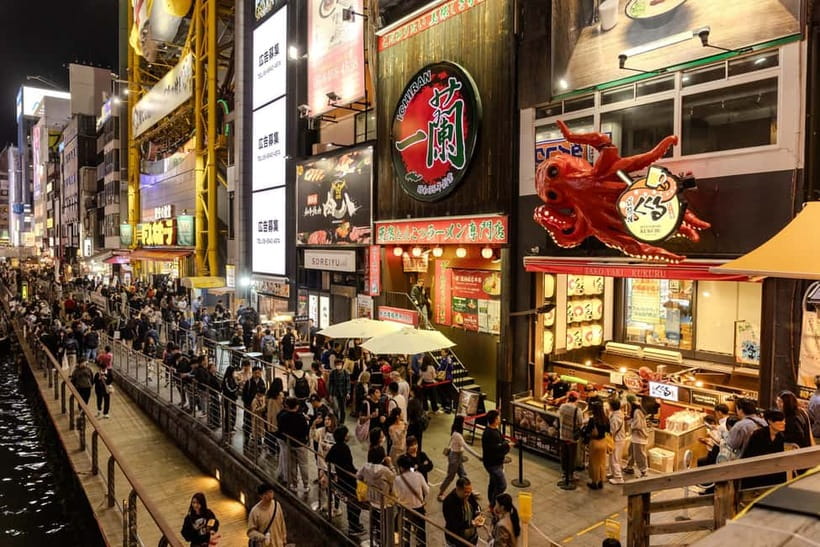
The walk continues through the Hozenji area. This part of the route gives you a break from the market and a chance to see a more traditional side of central Osaka before the neon of Dotonbori takes over.
Hozenji is included as a neighborhood walk, not as a separate attraction with an entrance ticket. The tour information does not list a paid admission stop, so you should not book this expecting a long museum visit or formal temple tour. Its value is in the streets and the change in atmosphere.
This is also where comfortable shoes become important. You will be walking between food stops and city districts, and the route includes lively streets rather than a single seated restaurant. Bring clothing suited to the season, sunscreen and sunglasses in hot weather, and an umbrella or raincoat when rain is possible.
More of Dotonbori and Namba after dark:
- Osaka Local Foodie Walking Tour in Dotonbori and Shinsekai
★ 5.0 · 985 reviews - Osaka: Dotonbori District River Cruise with Drink Discount
★ 4.2 · 876 reviews - Ultimate Osaka Walking Tour: Castle, Dotonbori & Hidden Gems
★ 5.0 · 862 reviews - Tea Ceremony Experience in Osaka Doutonbori
★ 5.0 · 754 reviews
Okonomiyaki and kushikatsu near Gigo
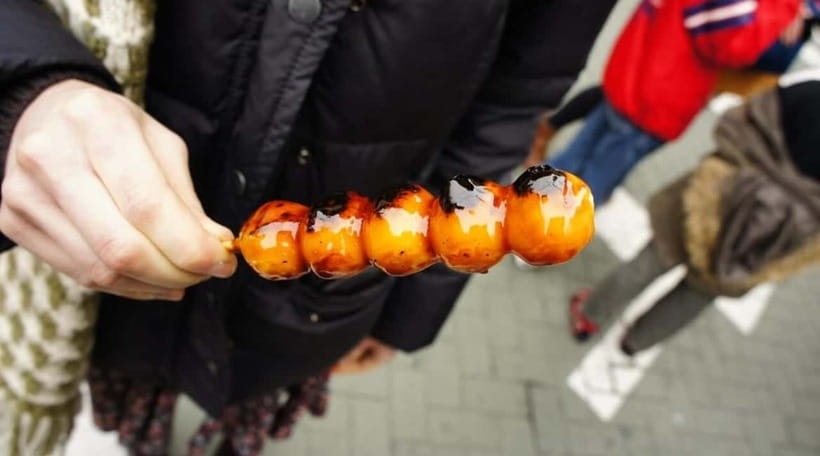
At Kushikatsu Yokozuna, located in front of Gigo, the food shifts to two more Osaka favorites: okonomiyaki and kushikatsu.
Okonomiyaki is a savory pancake packed with flavor. It is often described as Osaka soul food, though the exact ingredients and preparation can vary. Here, you get a tasting portion as part of the route, not necessarily a full restaurant meal. The appeal is trying a famous local dish without having to decide which restaurant to choose on your own.
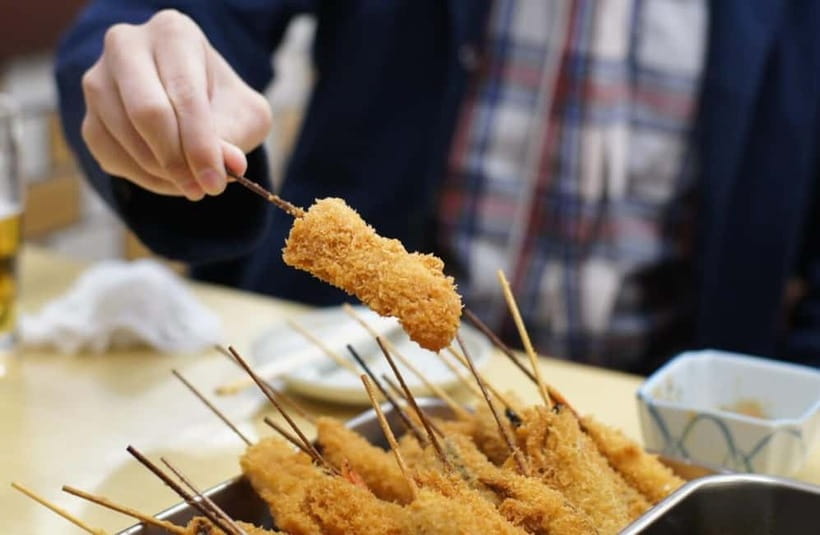
Kushikatsu consists of deep-fried skewers served with dipping sauce. The crisp coating makes a strong contrast with the soft takoyaki and chewy dango. It is also one of the foods most closely linked with Osaka’s casual eating culture.
You should pay attention to how the sauce is served and used. The tour description mentions a tasty dipping sauce but does not give specific serving rules, so follow the guide’s instructions at the stop. The food is fried, and several tastings together can feel filling even if no single portion is large.
This is probably the most substantial section of the food route. If you plan to eat a full dinner afterward, keep that in mind. The included dishes are described as tastings, but takoyaki, okonomiyaki, kushikatsu, and dessert add up quickly.
Egg tart for a sweet finish
The final food stop is Egg Tart, a dessert shop serving custard tarts with flaky pastry and a creamy filling. After several savory foods, the tart gives the tour a clear ending rather than leaving you with one more fried bite.
The combination is familiar enough for most palates, but the pastry and custard make it different from the dango. You get a crisp, delicate shell and a soft center. It is also an easy food to enjoy while continuing the walk.
Additional drinks and meals are not included unless specifically listed as part of the tastings. If you want coffee, alcohol, or a larger serving at any stop, plan to pay for it yourself. Personal expenses are separate from the $84 tour price.
Dotonbori after dark and the Glico sign
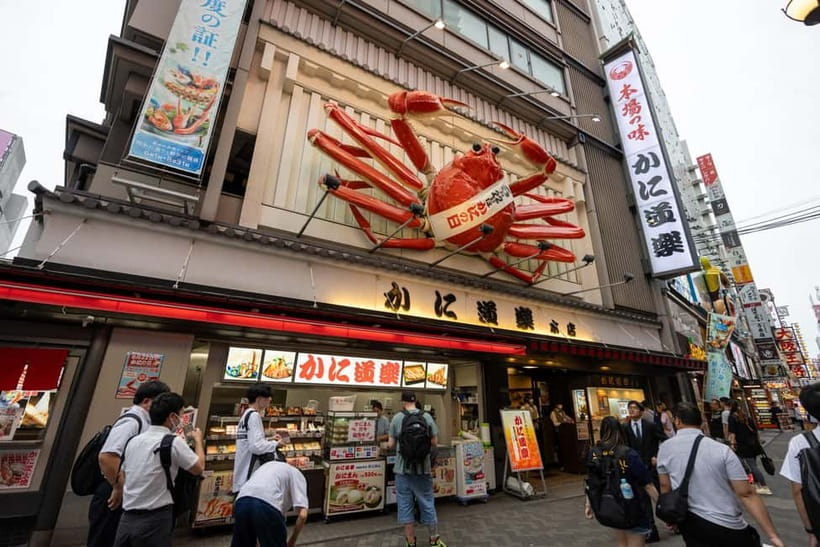
The route then reaches Dotonbori, Osaka’s famous entertainment district. This is the loud, bright part of the experience, with neon signs, large billboards, and busy streets. It is less about quiet observation and more about seeing Osaka at full volume.
The timing matters, though the exact departure time is not provided. Dotonbori is particularly atmospheric when its signs are glowing, but the same crowds and visual noise can make walking slower. Stay close to the guide and keep your belongings secure in crowded areas.
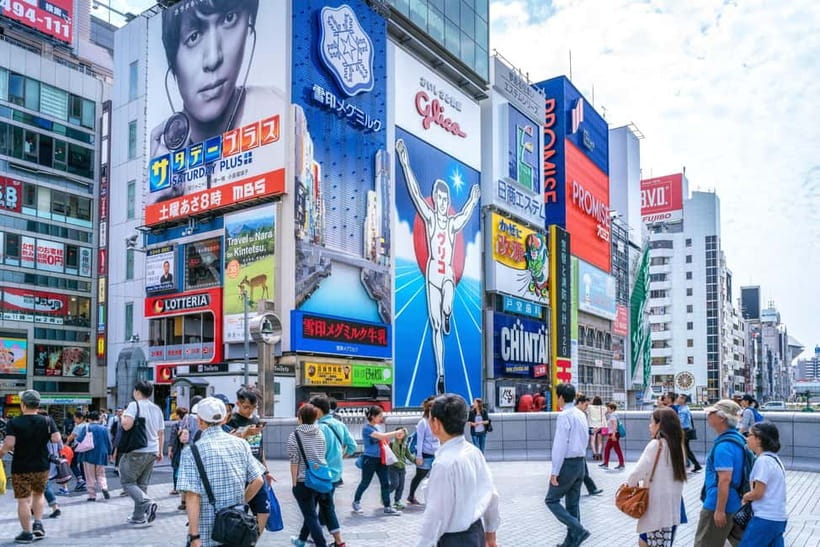
At Ebisu Bridge, you get the classic photo with the Glico sign. The running figure has become one of Osaka’s best-known visual symbols, and the bridge gives you the expected angle for a memorable picture.
This stop is not a hidden corner known only to locals. It is famous, busy, and very much part of Osaka’s public image. That is not a weakness if you want the city’s signature photograph. Just do not expect a peaceful riverside pause.
The route ends back at Hotel Royal Classic Osaka. Returning to the starting point is practical if you need to continue to another part of the city or do not want to find your way back after a food-heavy evening.
The guide makes the difference
The tour is offered in English and Spanish, which is useful if you want explanations in a familiar language while navigating food stalls and busy streets. Paula has been singled out for energy and useful comments about local attractions along the walk, and Angeles has also been praised for being an excellent guide.
That said, your guide may not be Japanese. One important consideration is the balance between language support and local culinary depth. A non-Japanese guide can still explain the route, keep the group organized, and make the evening more comfortable. But if your top priority is detailed knowledge of regional cooking, ingredients, restaurant customs, and Japanese food history, you may prefer a tour led by a local chef or Japanese food specialist.
There is also a basic reliability concern. One scheduled outing had a serious meeting problem, with six people waiting more than 30 minutes after the guide failed to appear. That appears to be an exception rather than the normal pattern, since other experiences with the guides were strongly positive, but it is still worth keeping the meeting instructions clear. Wait outside Hotel Royal Classic Osaka, look for the Amigo Tours sign, and arrive 10 minutes early.
Who will get the most from this tour
I would recommend this experience to a first-time Osaka visitor who wants a guided introduction to food and central neighborhoods. It is also a good fit if you are traveling alone, prefer not to order in unfamiliar places, or want a simple evening plan that ends where it began.
Families with older children may enjoy the range of textures and the bright Dotonbori finish, though the tour is not designed as a children’s meal program. Couples and friends will have several easy photo moments, especially at Ebisu Bridge.
You should think twice if you use a wheelchair, since the experience is listed as unsuitable for wheelchair users. You should also consider another option if you need a full sit-down dinner, specific dietary accommodations, or a strongly local Japanese culinary perspective.
Pets are not allowed. Seasonal clothing matters as well. In cold weather, bring warm layers and extra socks, especially if snow or wet conditions are possible. In hot weather, choose light, comfortable clothing and bring sun protection.
What the $84 price really covers
The $84 fee buys a guided route through several major Osaka areas plus tastings of the city’s well-known foods. It also removes some of the guesswork from a crowded market and entertainment district. You can focus on seeing the streets instead of constantly checking directions or deciding what to order next.
Still, the tour is not an all-you-can-eat event. The included food is presented as tastings, and extra meals or drinks cost more. If you are very hungry, you may want to eat lightly beforehand or plan another meal after the tour. If you already know Osaka well, the food alone may not justify the cost.
For a visitor who values convenience, language help, and a planned route, I consider the price fair but not a bargain. The strongest value comes from the combination of food and orientation. You see Kuromon Market, Hozenji, Dotonbori, and Ebisu Bridge in one organized experience rather than paying separately for unrelated activities.
The booking terms also give you some flexibility. You can reserve and pay later, and cancellation is allowed up to 24 hours before the tour for a full refund. That is useful when your Osaka plans may shift.
Should you book the Kuromon and Dotonbori food tour?
Book it if you want a friendly, food-focused introduction to Osaka with English or Spanish guidance, several small tastings, and the city’s most famous neon photo stop. The route is well suited to a first evening in town, when you want to get your bearings through food and see the center without planning every detail yourself.
Skip it if you want a deep culinary lesson from a Japanese specialist, a large full-course meal, or a quiet experience away from crowds. Also skip it if wheelchair access is essential.
For most able-bodied first-time visitors, this is a lively and practical way to sample Osaka. Go with comfortable shoes, arrive early at the hotel meeting point, keep room for several different foods, and treat the $84 price as payment for both the bites and the guided city walk.
FAQ
Where does the Osaka food tour start?
The tour starts outside Hotel Royal Classic Osaka. Your guide will wait with an Amigo Tours sign.
How early should I arrive?
Arrive at least 10 minutes before the departure time for check-in.
Where does the tour end?
The activity ends back at the meeting point outside Hotel Royal Classic Osaka.
Which languages are available?
The tour is offered in English and Spanish with a bilingual guide.
What foods are included?
The tastings include takoyaki at Wanaka, three-color dango at Mitoya, okonomiyaki, kushikatsu, and a custard tart from Egg Tart.
Does the price include drinks and extra meals?
No. Additional meals, drinks not mentioned in the itinerary, and personal expenses are not included.
Is the tour suitable for wheelchair users?
No. The experience is listed as not suitable for wheelchair users.
Are pets allowed?
No. Pets are not allowed on the tour.
Can I cancel for a full refund?
Yes. You can cancel up to 24 hours in advance for a full refund.
More Street Food Walks and Tastings
- Osaka: Shinsekai Food Tour with 13-15 Dishes at 5 Eateries
★ 4.8 · 2,204 reviews - Osaka Food Tour: 13 Dishes at 5 Local Eateries
★ 5.0 · 2,149 reviews - Hungry Osaka Street Food Tour:15 Tastings & 3 Drinks with a Local
★ 5.0 · 1,727 reviews - Hungry Osaka Street Food Tour: 15 Dishes & 3 Drinks
★ 4.9 · 694 reviews
Just added around Osaka
- Nara Day Trip from Osaka with a Licensed Guide★ 5.0 · 3 reviews
- Osaka Early Morning Osaka Castle Tour Avoid Crowds★ 5.0 · 3 reviews
- Guided Tour of Some Attractions in Osaka by Private Car★ 5.0 · 3 reviews
- Private Transfer Between Kyoto and Kansai Airport KIX★ 5.0 · 3 reviews
- Shared Arrival Transfer: Osaka Itami Airport to Osaka City★ 5.0 · 3 reviews
- Osaka: Sushi Making Class and Dotonbori Food Tour★ 4.7 · 3 reviews
- Osaka Night Photography Workshop★ 5.0 · 3 reviews
- Kyoto Full day Tour Kinkakuji, Kiyomizu-dera and Fushimi Inari★ 4.5 · 3 reviews
Dotonbori & Namba Tours, compared.

Osaka Local Foodie Walking Tour in Dotonbori and Shinsekai
Read our review →
Dotonbori District River Cruise with Drink Discount
Read our review →
Ultimate Osaka Walking Tour: Castle, Dotonbori & Hidden Gems
Read our review →


Dotonbori River Cruise with Glico Sign & Neon Views
Read our review →
Browse the lists this tour appears in