
Reviewed · OSAKA TEA CEREMONY & MATCHA EXPERIENCES
Osaka:Zen Tea Ceremony and Foot Bath Experience<45min>
The unusual part of this Osaka experience is the mix of matcha ritual and foot care inside a temple setting. In about 45 minutes, you move from worship and incense to kneaded incense, meditation, Japanese sweets, and a cooling foot bath with a light scrub massage. It is a compact cultural break rather than a long formal tea lesson.
I like the tiny group size, capped at three, because it leaves room for questions and personal attention. I also like the practical balance: you learn how to prepare matcha, then sit back with the tea and wagashi instead of spending the whole session watching an explanation. The staff also take photos with your smartphone, a useful touch when your hands are busy.
The main consideration is time. The core program is listed as 45 minutes, although the experience is described as about one hour, so this is an introduction, not an in-depth tea school. The foot bath is cooling rather than hot, and the meeting address is in a massage business called Japanese Massage 唯一無二, so check your booking details carefully before setting out.
In This Review
- Key points to know before booking
- A small temple break in central Osaka
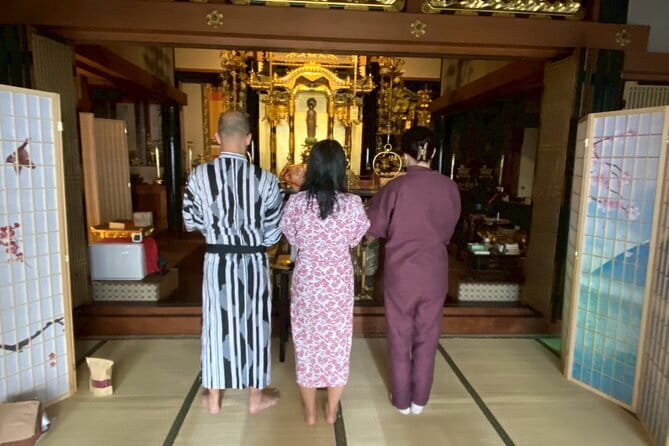
- Worship, incense, and a short lesson in temple manners
- Changing into a yukata before the tea
- Preparing matcha and eating wagashi
- A cooling foot bath with scrub massage
- How much value do you get for $42.35?
- Who will enjoy this experience most?
- Practical details that can shape your visit
- Should you book this Osaka tea and foot bath?
- FAQ
- How long does the experience last?
- Where does the experience start and finish?
- How many people can join?
- Is a mobile ticket available?
- What is included in the tea ceremony?
- What is the cancellation policy?
Key points to know before booking
- A 500-year-old temple setting: You receive an introduction to worship and matcha in a small temple environment, described in the experience feedback as roughly 500 years old.
- A rare two-part format: Matcha preparation is paired with a cooling foot bath and scrub massage.
- Very small groups: The maximum is three people, with the possibility of unusually personal attention if you are alone.
- Yukata may be part of the experience: One account describes changing into a yukata before the temple activities.
- Arisa is one named instructor: She is specifically associated with the massage and matcha session.
- Photos without hiring a photographer: Staff use your smartphone to capture moments during the visit.
A small temple break in central Osaka
Osaka is easy to enjoy at full speed. You can spend a morning around markets, shopping streets, and major sights, then find yourself ready for a quiet chair and a cup of tea. This experience is designed for that pause.
The meeting point is Tossa de coracao 1-chōme-6-19, Kitahorie, in Nishi Ward. The activity returns to the same place, and it is near public transportation. One useful detail is that the location has been described as close to a train station, making it a sensible rainy-day stop or a break between other Osaka plans.
Do not expect a grand temple complex with a long route through gardens. The setting is presented as a small or mini temple, but it carries a strong sense of place. The appeal comes from slowing down, sitting in a sacred environment, and learning what you are doing instead of simply drinking matcha for a photograph.
The business name at the meeting point is Japanese Massage 唯一無二, translated as The One & Only. That matters because the location may not look like a standard sightseeing attraction from the street. I would save the address, keep the mobile ticket ready, and allow enough time to find the entrance.
More tea ceremonies and matcha sessions:
- Osaka: Tea Ceremony Experience
★ 4.9 · 1,426 reviews - Tea Ceremony Experience in Osaka Doutonbori
★ 5.0 · 754 reviews - Matcha Making Class in Osaka with Authentic Japanese Sweets Set
★ 5.0 · 509 reviews
Worship, incense, and a short lesson in temple manners
The first part introduces the temple, its origins, and the basics of worship. Staff use guidebooks to explain how to behave and what the gestures mean. This is especially helpful if you have visited Japanese temples but have never felt certain about the correct order or purpose of the rituals.
You take part in worship and make an incense offering. The activity also includes applying kneaded incense, followed by meditation. These steps give the session more shape than a simple tea tasting. You are not only handed a bowl and told to copy someone’s movements. You receive a small amount of cultural context before moving into the quieter parts of the program.
The kneaded incense is an appealing detail because it involves scent and touch, not only listening. Meditation then provides a natural change of pace. You might find this section especially welcome after a crowded morning in Osaka, although anyone hoping for a long, formal meditation should keep expectations modest. The entire program is short.
The staff also explain the origins and traditions of matcha. That background helps you understand why preparation is deliberate, why the bowl is handled with care, and why the drink is treated as more than a quick caffeine stop. The lesson is intended for visitors with no prior experience, so you do not need to arrive knowing the rules.
Changing into a yukata before the tea
One especially appealing detail is the chance to change into a yukata. A yukata is a lighter, more casual Japanese garment than a formal kimono, and wearing one changes how the session feels. It gives the experience a visual connection to Japanese tradition without requiring you to book a full formal dressing appointment elsewhere.
The exact clothing arrangements are not spelled out in the available details, so you should check what is included when you book. Still, the yukata reference suggests that the experience can feel more ceremonial than an ordinary tea demonstration. It also explains why the smartphone photographs can be worthwhile.
You may want to wear comfortable clothing underneath and avoid bringing more than you need. That is practical advice rather than a stated rule, but it makes changing easier. Since the program is short, you do not want to spend a large part of your appointment sorting through bags or adjusting clothing.
Preparing matcha and eating wagashi
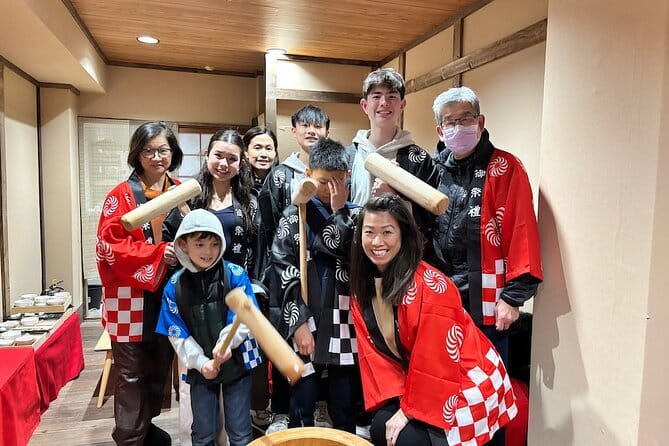
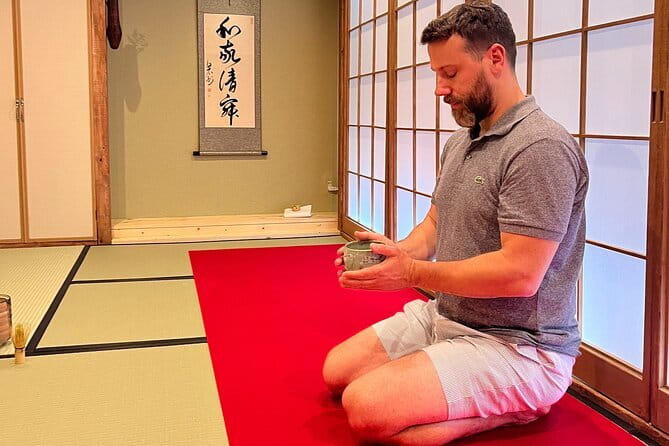
The matcha section is the cultural center of the visit. Staff explain the tea’s background and show you the traditional way to prepare it. You then taste the matcha in the calm temple setting, alongside Japanese wagashi.
Wagashi are traditional Japanese sweets, often served with tea to balance its bitter edge. Here, the sweet is not an afterthought. It helps you appreciate why tea service pairs a strong, grassy drink with a small confection. The experience information specifically includes wagashi, so you should expect a prepared sweet rather than a full snack or meal.
This is a hands-on introduction, not a long master class. If you want to study every movement, utensil, and school of tea in detail, 45 minutes will feel brief. If you want a clear first look at matcha and a chance to prepare and taste it in a temple atmosphere, the format makes good sense.
The tiny group is important here. With no more than three people, the staff can watch your technique and answer simple questions. A solo booking may be particularly personal. One account describes two staff members giving undivided attention to a single participant, which is a strong advantage if you prefer a calm, guided activity rather than a large demonstration.
Staff also take photos using your smartphone. That means you can keep a record of the tea, clothing, and temple setting without handing your phone to a stranger or arranging the whole session around pictures. Ask when the photos will be taken, since the timing is not specified, and keep your device charged.
More onsen and spa afternoons:
- From Osaka: Himeji Castle, Arima Onsen & Mt. Rokko Day Tour
★ 4.6 · 339 reviews - Osaka Temple Cool Foot Bath & Matcha Experience〈45min〉
★ 4.9 · 82 reviews - Osaka: Solaniwa Onsen Hot Spring Visit
★ 4.6 · 51 reviews - Osaka: Mind & Spirit Balance Temple Reiki Healing
★ 5.0 · 41 reviews
A cooling foot bath with scrub massage
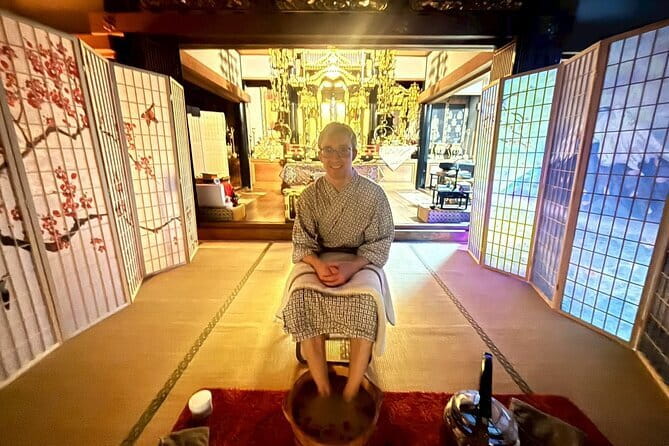
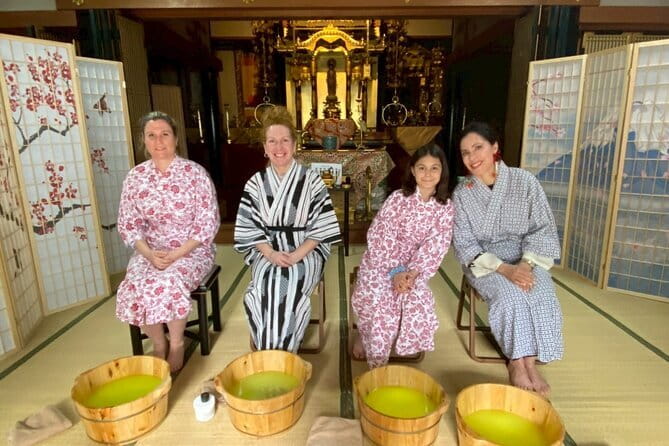
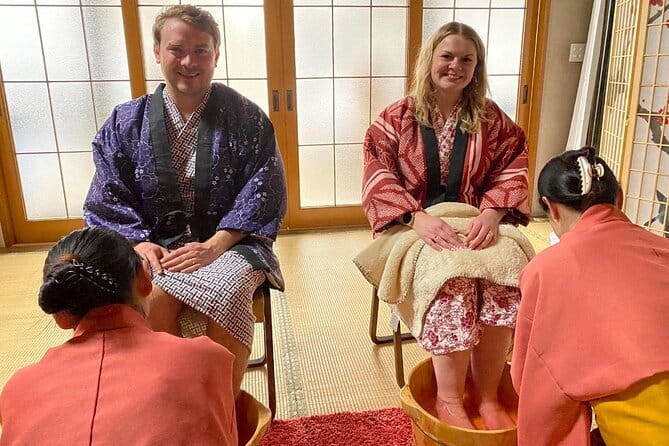
The foot bath gives this experience its unusual shape. After the temple and tea elements, you rest your feet in cooling water and receive a light scrub massage. The goal is refreshment, not a full therapeutic treatment.
Do note the wording: this is a cooling foot bath. If you are picturing steaming water after a long day of walking, you may be surprised. The cooling approach can feel refreshing in warm Osaka weather, and it gives the program a clean change from the warmth and aroma of tea. It may be less appealing if you specifically want a hot soak.
The scrub massage adds a physical element that many tea ceremonies do not offer. You are not sitting rigidly for the entire visit. Instead, you have a chance to relax while staff work lightly on your feet. Arisa is named in connection with both the massage and matcha ceremony, and one account specifically praises her gentle manner.
Keep your expectations in proportion to the price and duration. This is a light massage during a short cultural activity, not a long spa treatment. I see it as a pleasant bonus that makes the hour feel restorative, rather than the main reason to book.
How much value do you get for $42.35?
At $42.35 per person, this is more than the cost of a simple cup of matcha, but you are paying for several linked elements: temple instruction, worship, incense, meditation, matcha preparation, wagashi, a foot bath, a scrub massage, and staff attention.
The value is strongest if you would otherwise pay separately for a tea ceremony and a short foot treatment. It is also helped by the maximum group size of three. A small session can feel far more personal than a large cultural demonstration, especially when you want explanations and photos.
The value is weaker if your only goal is to drink matcha cheaply or receive a long massage. You could find less expensive tea in Osaka, and this foot treatment is brief. You are paying for the combination and the setting.
I would also factor in the convenience. The activity ends where it begins, public transportation is nearby, and the program can fill a rainy afternoon without taking half a day. That makes the price easier to justify for a first visit to Osaka, particularly when you want a structured cultural activity but do not want another major sightseeing commitment.
The experience is often booked about 32 days ahead. That does not guarantee that every date sells out, but it is a useful planning signal. If your Osaka schedule is tight, reserve early rather than hoping to fit it in at the last minute.
Who will enjoy this experience most?
I would recommend it to you if you want a gentle first introduction to Japanese tea customs, especially if formal etiquette feels intimidating. The guidebooks, explanations, and small group make it approachable.
It also suits couples, close friends, and solo visitors. A group of three friends can share the setting while still receiving more attention than they would in a large class. A solo booking may be particularly quiet and personal.
This is a good rainy-day choice. The indoor temple setting offers a place to pause near public transportation, and the foot bath gives you a physical break from wet streets and long walks. Just remember that the bath is cooling, not necessarily warm.
Families may need to consider the short, quiet format. The provided details do not state a minimum age or child policy, so confirm that directly before booking if you are traveling with children. Service animals are allowed, which is useful information for visitors who need that accommodation.
You may want to skip it if you are seeking a large, historic temple tour, a full tea-school lesson, or a substantial spa session. The experience gives you a taste of each element. Its strength is the combination, not depth in one subject.
Practical details that can shape your visit
The listed duration is about one hour, while the named tea ceremony and foot bath portion is 45 minutes. Allow the full hour, and avoid booking a train, meal, or timed attraction immediately afterward.
Your mobile ticket is accepted, and confirmation arrives at booking. The activity starts and ends at Tossa de coracao 1-chōme-6-19, Kitahorie. Since the address is connected with a massage business rather than a famous temple name, I would confirm the exact entrance and keep the provider name, Japanese Massage 唯一無二-the one & only-, visible on your phone.
The program has a maximum of three participants. That is a major part of the experience, not just a line in the booking details. It means the staff can adjust explanations, help with matcha preparation, and take photos without managing a crowd.
Free cancellation is available if you cancel at least 24 hours before the local start time. Within 24 hours, you receive no refund, and late changes are not accepted. Osaka plans can shift quickly, so check the date and start time before committing.
Should you book this Osaka tea and foot bath?
Book it if you want a quiet cultural reset with more personality than a basic tea tasting. The combination of temple worship, incense, meditation, yukata clothing, matcha, wagashi, and a cooling foot bath is unusual, and the three-person limit gives the staff room to look after you.
The best match is a solo visitor, couple, or small group that values calm instruction and a personal atmosphere. At $42.35, the price is fair when you treat it as a compact tea lesson plus a short wellness treatment, with photos included through your own smartphone.
Skip it if you want a long formal ceremony, hot bathing, or serious massage work. For everyone else, this is a smart one-hour pause in Osaka, especially on a rainy day or after too much time on your feet.
FAQ
How long does the experience last?
The activity is described as about one hour, while the tea ceremony and foot bath portion is listed as 45 minutes. Plan for roughly an hour.
Where does the experience start and finish?
It starts at Tossa de coracao 1-chōme-6-19, Kitahorie, Nishi Ward, Osaka, 550-0014, Japan. It ends back at the meeting point.
How many people can join?
The maximum group size is three participants.
Is a mobile ticket available?
Yes. The experience includes a mobile ticket, and confirmation is received at the time of booking.
What is included in the tea ceremony?
The experience includes an explanation of matcha traditions, matcha preparation and tasting, and Japanese wagashi.
What is the cancellation policy?
You can cancel for a full refund up to 24 hours before the local start time. Cancellations or changes made within 24 hours are not accepted, and no refund is provided.
Just added around Osaka
- Nara Day Trip from Osaka with a Licensed Guide★ 5.0 · 3 reviews
- Osaka Early Morning Osaka Castle Tour Avoid Crowds★ 5.0 · 3 reviews
- Guided Tour of Some Attractions in Osaka by Private Car★ 5.0 · 3 reviews
- Shared Arrival Transfer: Osaka Itami Airport to Osaka City★ 5.0 · 3 reviews
- Private Transfer Between Kyoto and Kansai Airport KIX★ 5.0 · 3 reviews
- Osaka: Sushi Making Class and Dotonbori Food Tour★ 4.7 · 3 reviews
- Osaka Night Photography Workshop★ 5.0 · 3 reviews
- Kyoto Full day Tour Kinkakuji, Kiyomizu-dera and Fushimi Inari★ 4.5 · 3 reviews
Osaka Tea Ceremony & Matcha Experiences, compared.

Matcha Making Class in Osaka with Authentic Japanese Sweets Set
Read our review →
Japanese Traditional Sweets Making and Tea Ceremony
Read our review →
Osaka Temple Cool Foot Bath & Matcha Experience〈45min〉
Read our review →
Samurai Show, Tea Ceremony, Japanese Traditional Activities
Read our review →
Browse the lists this tour appears in