
Reviewed · OSAKA TEA CEREMONY & MATCHA EXPERIENCES
Osaka: Traditional Tea Ceremony Experience
A matcha lesson in Osaka does not need to take half a day. This 30-minute tea ceremony lets you prepare your own cup after a short explanation, then enjoy it with a traditional Japanese sweet called ohigashi. The matcha is single-origin, which gives the inexpensive session a little more substance than a quick tourist photo stop.
I like the $7 price, especially for a short break between Osaka sights. I also like the easy central location, only a minute from Higobashi Station, and the chance to make the tea yourself instead of simply watching someone else do it. The main consideration is language: the instructor teaches in Japanese, with English translation provided as much as possible if requested in advance.
In This Review
- Key points
- A short tea break with a hands-on finish
- What the matcha preparation adds
- Ohigashi gives the tasting a Japanese touch
- The 30-minute schedule, step by step
- A strong location for an Osaka itinerary
- Japanese instruction and English support
- Who gets the best value from the $7 price
- What I like most, and what gives me pause
- Booking and cancellation details worth knowing
- Is this Osaka tea ceremony worth booking?
- FAQ
- How long does the Osaka tea ceremony experience last?
- How much does the experience cost?
- Is matcha included?
- Does the experience include Japanese sweets?
- What language is the tea ceremony conducted in?
- How do I reach the meeting point by train?
- Is the venue accessible by elevator?
Key points
- Make your own matcha: A short lesson leads into hands-on tea preparation.
- Single-origin matcha: The tea used is described as special, single-origin matcha.
- Ohigashi included: Your drink comes with a traditional Japanese dry sweet.
- Only 30 minutes: This fits neatly into a sightseeing day in central Osaka.
- Easy train access: Higobashi Station is about a one-minute walk away.
- Japanese-led instruction: English help is possible, but you should request it ahead of time.
A short tea break with a hands-on finish
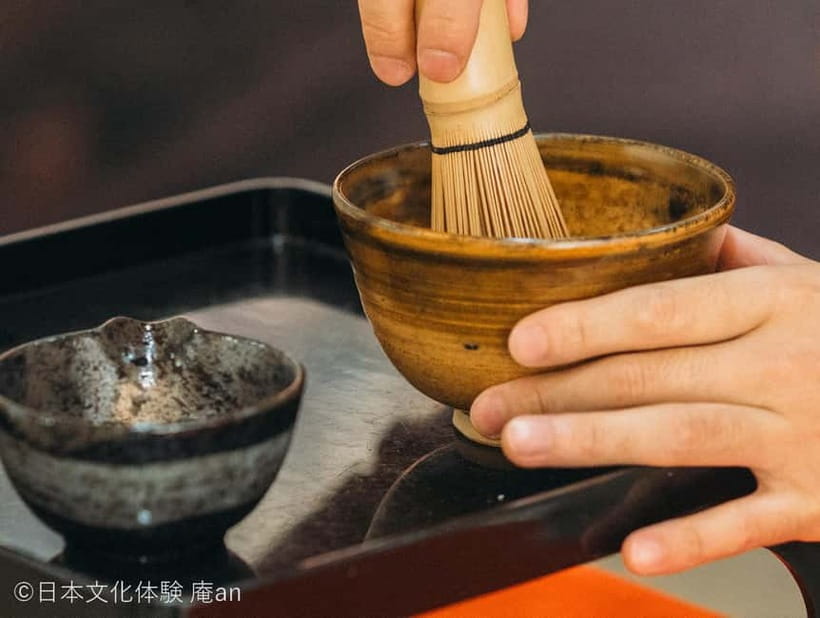
This activity is best understood as an introduction, not a formal study of the Japanese tea ceremony. You receive a brief explanation of tea, watch a matcha grinding demonstration, take part in the ceremony, and then have time to eat and drink before leaving.
That compact format is useful in Osaka. You can fit the session between visits to Nakanoshima, Umeda, or the city center without giving up a full afternoon. I would choose it for a first taste of matcha culture, particularly if you want something quieter than another shopping street or food hall.
The session begins at the start time listed with your booking. After the opening explanation, the instructor demonstrates how matcha is ground. You then prepare your own matcha and enjoy it with ohigashi. Picture time follows, with the activity ending at about 20 minutes before the remaining eating and drinking period brings the full visit to 30 minutes.
The schedule is simple, but it gives you more to do than a standard tea tasting. You are not only handed a bowl and told to drink. You see part of the preparation, try the process yourself, and learn the basic manners of enjoying the tea.
More tea ceremonies and matcha sessions:
- Osaka: Tea Ceremony Experience
★ 4.9 · 1,426 reviews - Tea Ceremony Experience in Osaka Doutonbori
★ 5.0 · 754 reviews - Matcha Making Class in Osaka with Authentic Japanese Sweets Set
★ 5.0 · 509 reviews
What the matcha preparation adds
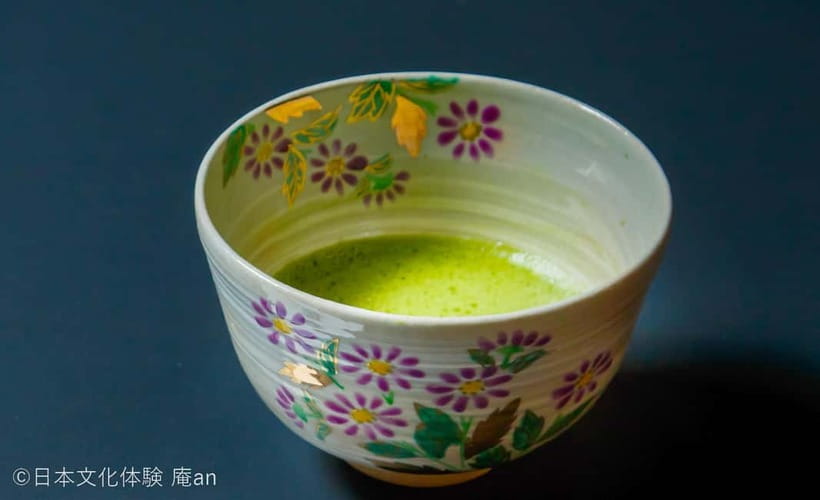
Matcha is powdered green tea, so the preparation differs from an ordinary cup of steeped tea. The powder is mixed directly into water, creating the familiar green drink with its fine texture and strong flavor.
Here, the session includes a grinding demonstration before you make your own matcha. The supplied information does not specify how much of the grinding you personally perform, so you should expect a demonstration as a definite part of the schedule, followed by hands-on preparation of your cup.
That small practical step matters. You leave with a clearer idea of how matcha becomes a drink, rather than treating it as a mysterious green beverage served in a bowl. If you already enjoy matcha, the single-origin tea may be an appealing detail. If you are new to it, the relaxed setting gives you room to try it without the formality of a long traditional ceremony.
The activity is described as casual, and that is important. Traditional tea ceremony can involve exact movements, prescribed manners, and a quiet atmosphere that some people find intimidating. This version offers a brief explanation and lets you enjoy the tea without requiring an advanced understanding of Japanese customs.
Ohigashi gives the tasting a Japanese touch
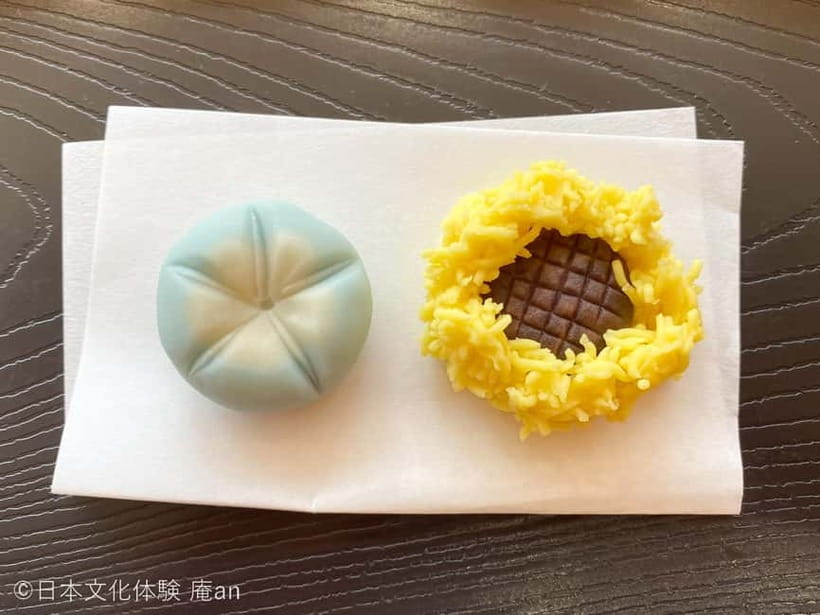
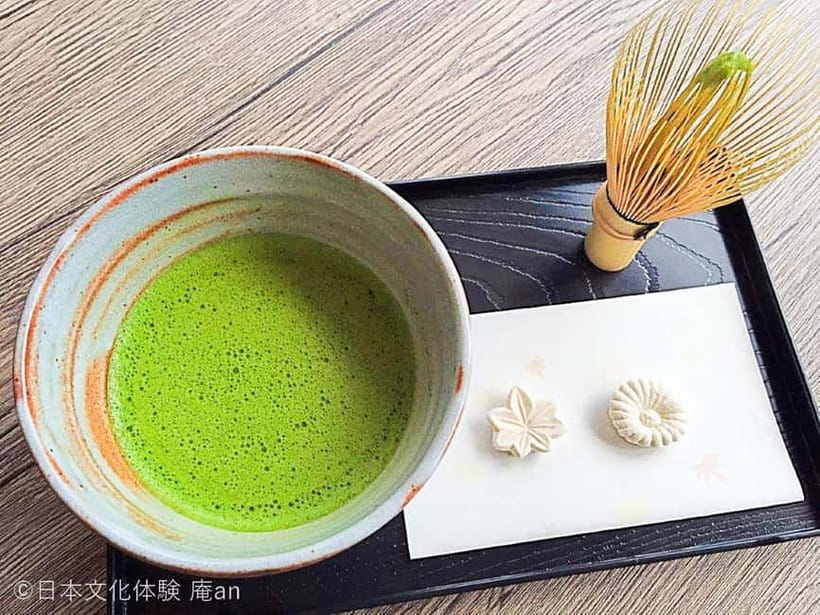
The matcha comes with ohigashi, a traditional Japanese dry sweet. Its role is not just decorative. Sweets are commonly paired with bitter matcha, giving you something pleasant to eat alongside the tea and helping balance the drink’s flavor.
The supplied information does not identify the exact type or flavor of ohigashi served, so do not book this expecting a particular sweet. You can count on a Japanese sweet being included, but the precise item may vary.
I like this pairing because it makes the session feel more complete. For $7, you receive a short cultural activity, a cup of single-origin matcha, and a sweet rather than paying for tea alone. It is still a small experience, but the food detail gives it a clearer sense of place.
The 30-minute schedule, step by step
The first stage is an explanation of tea. This gives you the basic setting for what follows and prepares you for the practical part of the class. Since the instructor is Japanese and the main language is Japanese, ask ahead of time for English translation if you need it.
Next comes the matcha grinding demonstration. This is the visual center of the opening section, showing how the tea is prepared before you make your own. The activity does not provide a full timetable for each individual step, so the pace may depend on the group.
The tea ceremony experience follows. You prepare your own matcha after the short lecture. This is the part I would value most, since it turns a cultural explanation into something you can actually do.
Picture time comes near the end of the formal portion. You then have eating and drinking time, bringing the total visit to about 30 minutes. The schedule lists the main activity ending at around 20 minutes, followed by the final ten minutes for enjoying the tea and sweet.
Because the whole session is short, arriving on time matters. The venue cannot hold the event for delayed arrivals. I would plan to reach the building early, especially if you are walking from Osaka Station or transferring between train lines.
A completely different way to spend a day in Osaka:
- Osaka Go Karting Tour with Funny Costume
★ 5.0 · 2,658 reviews - Osaka Castle: Museum and Tower Entry Ticket
★ 4.5 · 2,380 reviews - Osaka: Shinsekai Food Tour with 13-15 Dishes at 5 Eateries
★ 4.8 · 2,204 reviews - Osaka Food Tour: 13 Dishes at 5 Local Eateries
★ 5.0 · 2,149 reviews
A strong location for an Osaka itinerary
The meeting point is in central Osaka, close to several rail stations. Higobashi Station on the Osaka Metro Yotsubashi Line is the easiest option, with Exit 10 about one minute away.
You can also walk from:
- Watanabebashi Station on the Keihan Nakanoshima Line, about five minutes from Exit 7
- Yodoyabashi Station on the Osaka Metro or Keihan lines, about seven minutes from Exit 10
- Kitashinchi Station on the JR Tozai Line, about ten minutes from Exit 11-5
- Osaka Station, about 15 minutes from the South Central Gate
This choice of stations makes the tea session easy to add to a day around Umeda and Nakanoshima. If you are already near Osaka Station, the 15-minute walk is reasonable, but Higobashi is the better choice when you want the least fuss.
Drivers should use nearby coin parking. No dedicated parking is listed, so public transport is the simpler plan.
The building has no elevator, and you must use stairs to reach the venue. That is an important practical detail for anyone carrying luggage or managing mobility concerns. The activity information does not specify the number of stairs or the venue floor, so contact the operator if that detail affects your booking.
Japanese instruction and English support
The listed activity language is Japanese. English translation will be provided as much as possible if you contact the operator and request it.
That wording suggests useful support, but not necessarily a fully English-led lesson. One English-speaking participant described receiving explanations in English, while another had a good time even though the session was conducted in Japanese. The safe advice is to request English assistance before arrival rather than assume it will be automatic.
The short format may help if your Japanese is limited. The experience follows a clear sequence, and the activity is hands-on, so you can learn by watching as well as listening. Still, if you want a detailed explanation of tea history, ceremony rules, or Japanese vocabulary, 30 minutes may feel too brief.
The instructor is Japanese, and no individual instructor name is provided. You should expect a local Japanese-led session, with translation help arranged when possible.
Who gets the best value from the $7 price
At $7 per person, this is one of the easier cultural activities to add to an Osaka schedule. The value is strongest if you want a short, affordable introduction rather than a long or highly formal ceremony.
I would recommend it for:
- First-time matcha drinkers
- Visitors with a spare 30 minutes between attractions
- Solo visitors who want an easy activity
- Couples looking for a simple cultural stop
- Groups that want everyone to take part
- Families with children old enough to sit through a short session
Children under two who sit on a parent’s lap are free. Other children require the applicable booking arrangement. Anyone who does not participate cannot enter, so do not plan to bring a nonparticipating companion into the venue.
The value is less clear for someone seeking a full ceremonial performance with extended etiquette instruction. This activity is intentionally casual and brief. You pay for a taste of the practice, a chance to prepare matcha, and a sweet, not an in-depth course.
What I like most, and what gives me pause
The best part is the balance between explanation and participation. You get a brief lesson, see the grinding process, and then make your own tea. That is enough structure to feel like an activity, but not so much that it takes over your day.
I also like the small-group potential. The experience is available for one person or a group, so you do not need to assemble a large party. A small class can make it easier to follow the steps and ask for help, though the maximum group size is not specified.
The main weakness is the limited language information. Japanese instruction can be part of the charm, but it may also leave you with less context if English translation is not available at the level you hoped for. Contact the operator before booking if clear English explanation is important to you.
The no-elevator access is another consideration. It will not matter to many people, but it should be part of your decision if stairs are difficult.
Finally, the schedule leaves little room for delays. The operator will not hold the event, and travel costs are not compensated if cancellation occurs because you cannot reach the venue in time. Give yourself a buffer.
Booking and cancellation details worth knowing
Operating hours are 10:00 to 17:00. Reservations received after 17:00 are processed the next day, so late evening requests may not receive an immediate response.
You can cancel up to 24 hours before the activity for a full refund. Reserve-now, pay-later booking is available, which helps if your Osaka plans are still shifting.
The experience completion certificate is not included. If you want one, it costs 300 Japanese yen. For most people, the certificate is optional and adds little to the value of the tea session, but it may appeal to children or anyone collecting small mementos from Japanese cultural activities.
Is this Osaka tea ceremony worth booking?
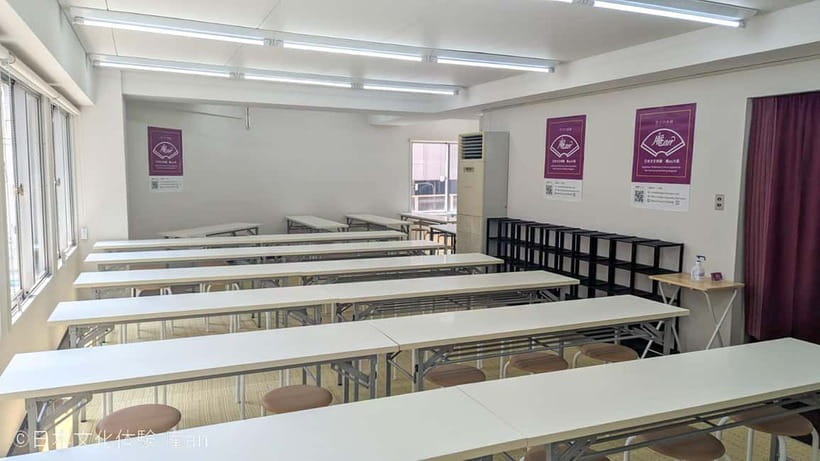
Book it if you want a low-cost, well-located introduction to matcha that fits into a busy Osaka day. The 30-minute length, single-origin tea, included ohigashi, and hands-on preparation make it more engaging than a simple drink purchase.
I would especially choose it when staying near central Osaka, when traveling with a mixed-age group, or when you want a calm pause between sightseeing stops. Request English translation in advance, arrive early for the stairs and station walk, and keep your expectations focused on a friendly introduction rather than a full formal ceremony.
Skip it if you need a fully English-language class, have difficulty with stairs, or want a long lesson in ceremonial technique. For everyone else, $7 is a modest price for a pleasant cultural break with something to taste, prepare, and remember.
FAQ
How long does the Osaka tea ceremony experience last?
The full experience lasts 30 minutes. The formal tea portion ends at about 20 minutes, followed by eating and drinking time before departure.
How much does the experience cost?
The listed price is $7 per person.
Is matcha included?
Yes. The experience includes a set of OTE-MAE, or Japanese tea ceremony, with matcha preparation and drinking.
Does the experience include Japanese sweets?
Yes. The matcha comes with ohigashi, a traditional Japanese dry sweet.
What language is the tea ceremony conducted in?
The instructor is Japanese, and the listed language is Japanese. English translation can be provided as much as possible if you contact the operator and request it.
How do I reach the meeting point by train?
The closest route is Osaka Metro Yotsubashi Line Higobashi Station, Exit 10, about a one-minute walk away. Watanabebashi, Yodoyabashi, Kitashinchi, and Osaka Station are also within walking distance.
Is the venue accessible by elevator?
No. The building has no elevator, and you must use stairs to reach the venue.
Just added around Osaka
- Nara Day Trip from Osaka with a Licensed Guide★ 5.0 · 3 reviews
- Osaka Early Morning Osaka Castle Tour Avoid Crowds★ 5.0 · 3 reviews
- Guided Tour of Some Attractions in Osaka by Private Car★ 5.0 · 3 reviews
- Shared Arrival Transfer: Osaka Itami Airport to Osaka City★ 5.0 · 3 reviews
- Private Transfer Between Kyoto and Kansai Airport KIX★ 5.0 · 3 reviews
- Osaka: Sushi Making Class and Dotonbori Food Tour★ 4.7 · 3 reviews
- Osaka Night Photography Workshop★ 5.0 · 3 reviews
- Kyoto Full day Tour Kinkakuji, Kiyomizu-dera and Fushimi Inari★ 4.5 · 3 reviews
Osaka Tea Ceremony & Matcha Experiences, compared.
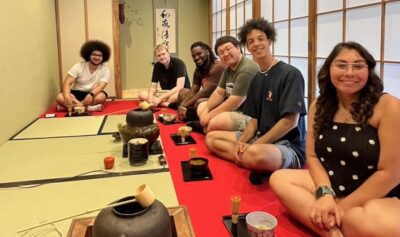

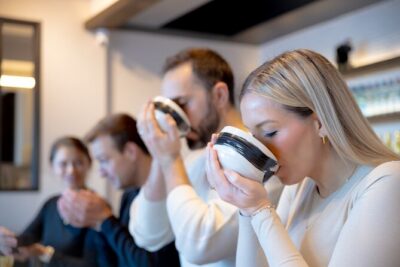
Matcha Making Class in Osaka with Authentic Japanese Sweets Set
Read our review →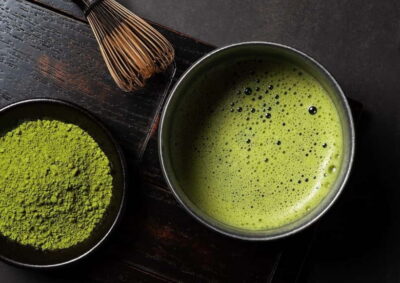
Japanese Traditional Sweets Making and Tea Ceremony
Read our review →
Osaka Temple Cool Foot Bath & Matcha Experience〈45min〉
Read our review →
Samurai Show, Tea Ceremony, Japanese Traditional Activities
Read our review →
Browse the lists this tour appears in