
Reviewed · OSAKA SUSHI MAKING CLASSES
Osaka Sushimaking Experience
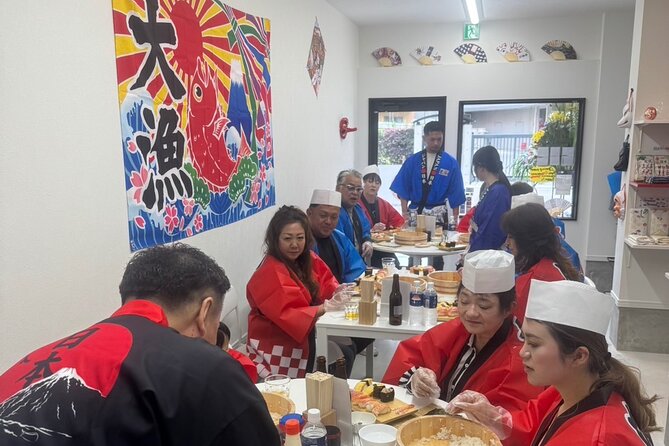
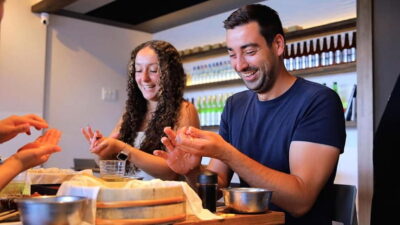
The best part of this Osaka activity is that you do not simply watch a chef work. You put on a happi coat, stand at a sushi counter, and learn how rice and toppings become the neat pieces served in Japan. The class is built around hands-on practice, with a video introduction in English followed by a patient chef demonstration.
I like the clear teaching style and the generous amount of sushi included in the meal. I also like that the 90-minute session has a playful side, with costume photos and a souvenir corner. The main drawback is its short format: this is an enjoyable introduction, not a full course in professional sushi technique, and drinks cost extra.
In This Review
- Key points at a glance
- Making sushi instead of just eating it
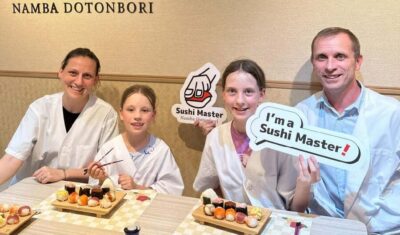
- The happi coat adds more than a photo opportunity
- A 90-minute session with a clear rhythm
- What the chef-led teaching is really like
- Eating what you make
- Is $22.80 a fair price?
- Reaching Shin-Imamiya and planning your visit
- Who will enjoy this class most?
- The small details that make the activity work
- Should you book Osaka Sushimaking Experience?
- FAQ
- How long does the Osaka Sushimaking Experience last?
- Where does the sushi-making class meet?
- Does the activity end at the meeting point?
- Is food included in the price?
- Are happi coats and masks provided?
- Can children participate in the sushi-making experience?
Key points at a glance
- English-subtitled introduction: Start with a simple video that explains the process before you handle the ingredients.
- Chef-led preparation: Learn steps such as preparing rice and shaping sushi from a local sushi master.
- Happi coat and mask included: Dress for the part and take photos that feel more special than a standard cooking class snapshot.
- Family-friendly instruction: The teaching is slow and clear enough for children, including a four-year-old in one reported booking.
- Short, easy-to-fit schedule: The activity lasts about 90 minutes and begins and ends at 3-chōme-15-8 Ebisunishi.
- Small maximum group: The class accepts up to 16 people, which gives it a more personal feel than a large demonstration.
Making sushi instead of just eating it
Osaka is a good place to try a food activity because the city takes eating seriously, but you do not need to be a skilled cook to enjoy this one. Sushi Making Ato focuses on the basic movements and lets you work at a relaxed pace.
The class begins with an introduction to sushi-making. An English-subtitled video helps explain the process before the chef takes over with a live demonstration. This is useful if you have never made sushi before, since the finished pieces can look simple while the rice, hand position, and pressure take practice.
You then follow the chef through the main steps. The available details specifically include preparing the rice and forming the sushi, so expect an activity centered on technique rather than a long lecture about Japanese food. The chef shows you how to proceed, then the staff helps you copy the motions.
That balance matters. A video gives you a quick visual overview, while the live demonstration lets you slow down and watch the details. If your first piece looks more like a rice sculpture than restaurant sushi, staff can guide you gently and show you how to improve it.
More sushi making classes:
- Sushi Making Osaka Roll and Authentic Japanese Sushi Class
★ 5.0 · 1,220 reviews - Osaka Sushi Making Experience
★ 5.0 · 400 reviews - Osaka: Roll and Authentic Sushi Making Class in Dotonbori
★ 4.9 · 239 reviews
The happi coat adds more than a photo opportunity
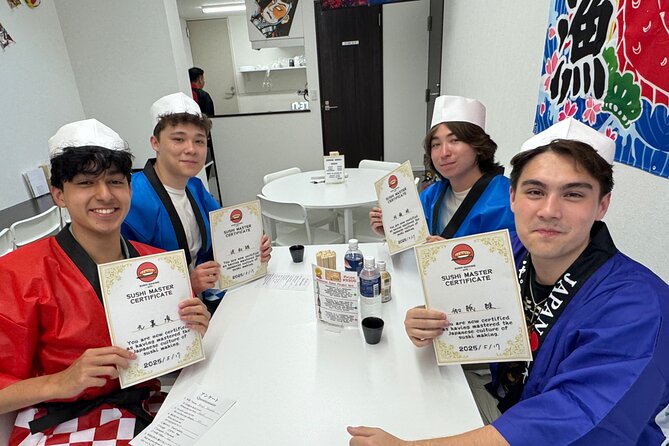
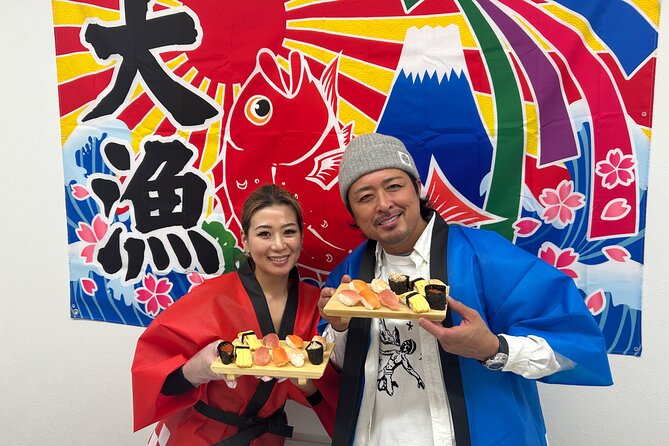
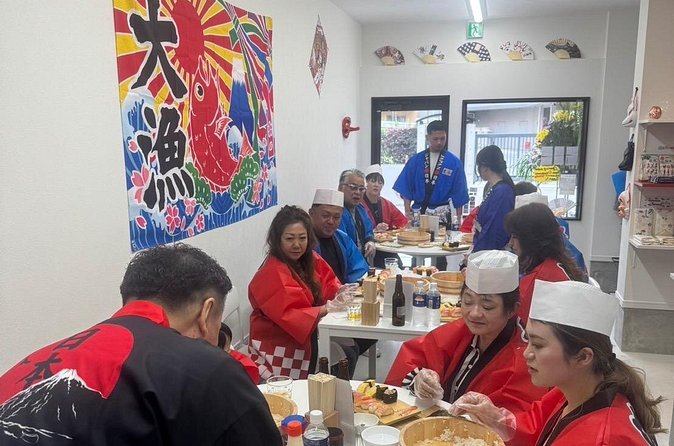
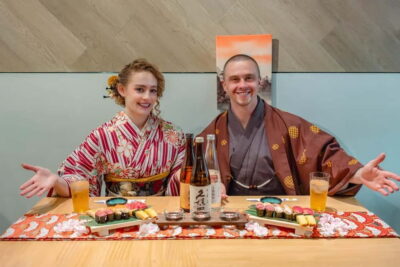
The included happi coat and mask give the session a festive restaurant feel. You can put on the traditional-style clothing before making sushi and take photos during the activity.
I like this touch because it gives children and first-time cooks something to enjoy before they even taste the food. It also helps turn a short class into a clear holiday memory. You are not just sitting at a table with ingredients. You are taking part in a small piece of Japanese food culture.
The photos may be one of the best reasons to choose this class over an ordinary cooking lesson. The experience has been designed to feel like a real sushi shop, and the clothing helps create that mood. Still, keep your expectations sensible. The main value is learning and eating, while the costume is an added feature rather than a full cultural performance.
A souvenir corner is also available. The supplied information does not specify what is sold there, so I would treat it as a pleasant extra rather than plan your visit around shopping.
A 90-minute session with a clear rhythm
The short duration is one of this activity’s strengths. At about one hour and 30 minutes, it fits neatly into a day of sightseeing in Osaka. You can schedule it between visits to nearby attractions without giving up half a day.
A typical rhythm should look like this:
- Arrive at the meeting point in Shin-Imamiya, at 3-chōme-15-8 Ebisunishi, Naniwa Ward.
- Put on the provided happi coat and mask.
- Watch the introductory video with English subtitles.
- Observe the sushi chef demonstrate the basic steps.
- Prepare and shape your sushi with help from the staff.
- Take photos and enjoy the meal you made.
- Browse the souvenir corner if you wish.
- Finish back at the same meeting point.
The precise order may vary, but the activity is clearly designed as a complete loop. There is no separate drop-off, transfer, or second location to manage. That makes it easy to understand and reduces the chance of losing time between stages.
The trade-off is that 90 minutes leaves little room for extended conversation or advanced work. You should not expect to learn every kind of sushi or spend the afternoon practicing knife skills. This is a compact first lesson that gives you the satisfaction of making and eating your own sushi.
What the chef-led teaching is really like
The strongest feature here is the personal guidance. The chef demonstrates the process, while staff members help you work through it slowly. That matters more than flashy presentation. Sushi depends on small details, and a calm correction at the right moment can make the difference between a loose piece and one that holds together.
The teaching is also designed to work across language levels. The English-subtitled video gives you a starting point, and the visual demonstration does much of the rest. You do not need to understand a long spoken explanation to see how the chef handles the rice and forms the sushi.
The class appears suited to beginners. You can ask for help, and the staff are described as kind and careful in their instruction. That is particularly useful for families. A four-year-old was able to take part with a parent, and the teaching is described as understandable even for children.
You should still expect young children to need adult help. Sushi-making involves food handling and small, careful movements. The activity welcomes children, but it is not a free-play session. Parents should plan to stay involved.
A completely different way to spend a day in Osaka:
- Osaka Go Karting Tour with Funny Costume
★ 5.0 · 2,658 reviews - Osaka Castle: Museum and Tower Entry Ticket
★ 4.5 · 2,380 reviews - Osaka: Shinsekai Food Tour with 13-15 Dishes at 5 Eateries
★ 4.8 · 2,204 reviews - Osaka Food Tour: 13 Dishes at 5 Local Eateries
★ 5.0 · 2,149 reviews
Eating what you make
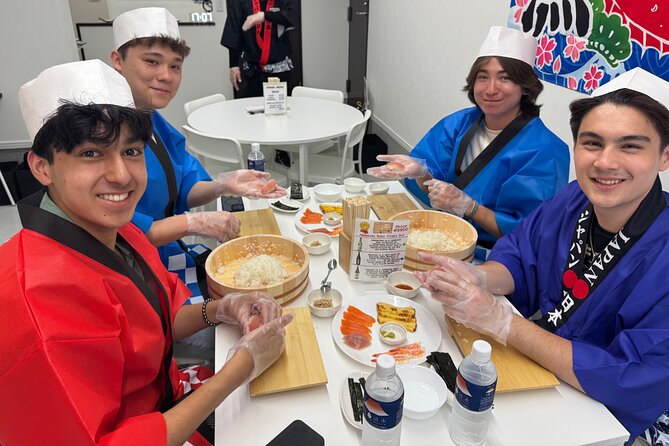
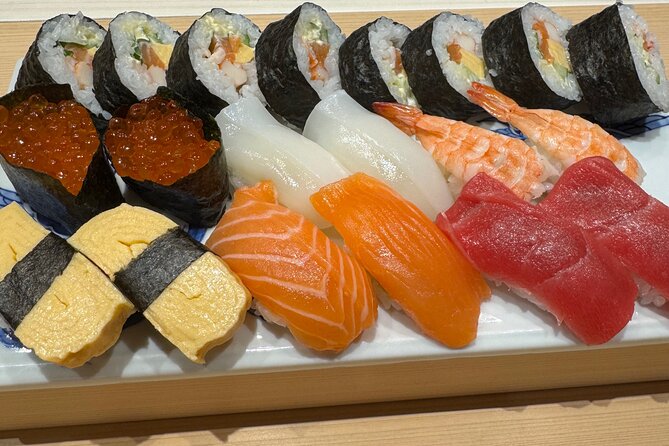
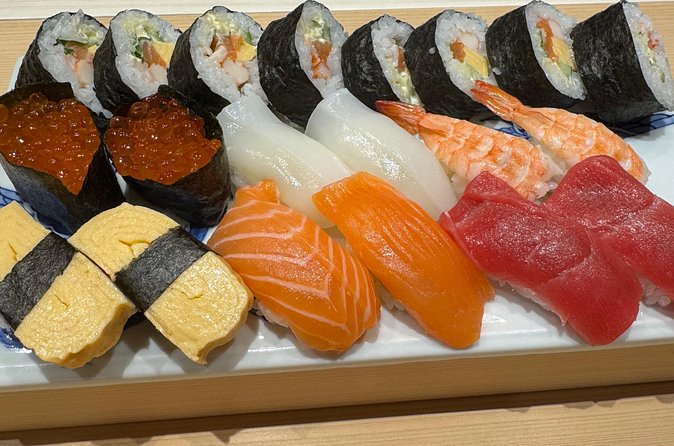
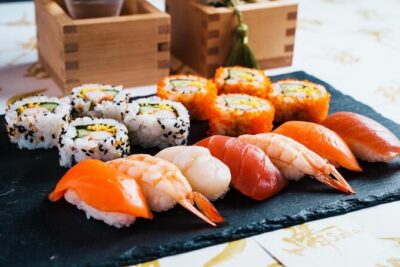
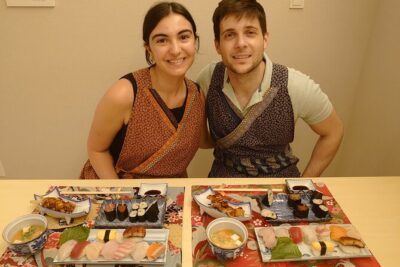
The meal is included, and the amount of sushi may be more than you expect from a short class. That improves the value considerably. You are not paying only for a demonstration or a tiny tasting. You are learning a skill, producing food, and then sitting down to enjoy it.
The taste is also part of the lesson. Homemade sushi rarely looks as tidy as a chef’s version, but that is part of the fun. You become more aware of how the rice holds together, how much topping is needed, and why experienced sushi chefs make the work look easy.
I would not judge your finished pieces by appearance alone. The point is not to produce a perfect restaurant plate on your first try. The point is to understand the basic process and enjoy the result. Even simple pieces can taste better when you have made them yourself.
Drinks are not included. Bottled water, soda, and alcohol must be purchased separately if available. This is a small extra cost, but it is worth remembering if you want something to drink with the meal. The included food is the central offering, not a full beverage package.
Is $22.80 a fair price?
At $22.80 per person, this is priced as an accessible activity rather than a luxury cooking class. The value comes from several parts working together: admission, instruction, the meal, happi coats, masks, and access to the shop’s setting.
The price looks especially fair if you want more than a meal. A sushi dinner can cost more than this without giving you any sense of how the food is made. Here, you get a cultural activity, a guided lesson, food to eat, and photos to remember it by.
I would compare it with other paid attractions in Osaka by asking what kind of memory you want. If you only want the cheapest way to eat sushi, this is not the right comparison. If you want an activity that works for a family, a first visit to Japan, or a rainy afternoon, the cost is easier to justify.
The class is limited to a maximum of 16 people. That is not a private lesson, but it is small enough to avoid the feel of a huge tour group. Staff assistance should be more practical in a group of this size, especially when everyone is trying to shape sushi at the same time.
The activity is often booked about seven days ahead. That is a useful planning clue. You may find a spot closer to the date, but booking roughly a week ahead is sensible if your Osaka schedule is fixed.
Reaching Shin-Imamiya and planning your visit
The meeting point is in the Shin-Imamiya area of Osaka, at 3-chōme-15-8 Ebisunishi, Naniwa Ward, postal code 556-0003. The activity is near public transportation, so you can reach it without arranging a private transfer.
Your ticket is mobile, which is handy for a short activity. Keep the booking available on your phone and allow enough time to find the exact address. The class begins and ends at the same point, so you do not need to arrange a meeting with a guide elsewhere in the city.
This is a good activity to place on a day when you are already visiting southern Osaka. Since it lasts only about 90 minutes, it does not force you to build your whole schedule around it. You can also use it as a family break between sightseeing stops.
The fixed meeting point means you are responsible for getting there. The activity does not include bottled water, soft drinks, alcohol, or transportation. Those limits are simple, but knowing them ahead of time helps you arrive prepared.
Who will enjoy this class most?
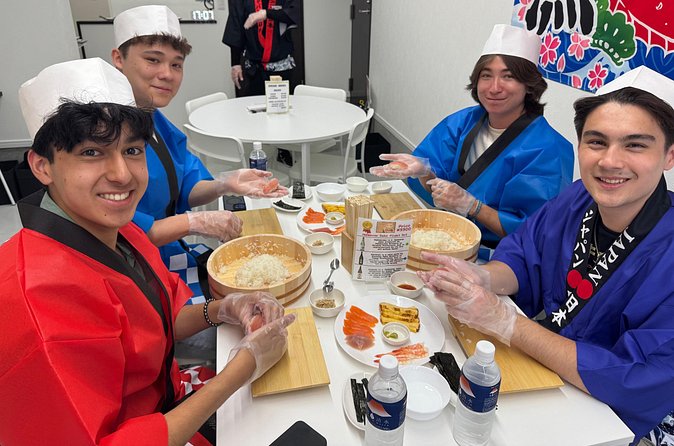
I would recommend it most strongly to first-time sushi makers, families, couples, and anyone who wants an activity with a clear beginning and end. Children can take part, and the slow instruction makes the lesson less intimidating for beginners.
It is also a good choice if you want photos that show you doing something rather than simply standing in front of a landmark. The happi coat gives the visit a light, traditional flavor without requiring you to commit to a long cultural program.
The class may suit you less if you already make sushi regularly or want advanced instruction. There is no indication of a long knife-skills lesson, a market visit, or an in-depth study of fish selection. The focus is on preparing rice, forming sushi, and enjoying a manageable introduction.
People with service animals can participate, and most people can take part. The maximum group size is 16. Confirmation is provided when you book, and free cancellation is available up to 24 hours before the start time. Changes or cancellations inside that 24-hour window are not accepted for a refund.
The small details that make the activity work
Several modest features add up to a better class. The English subtitles reduce language stress. The chef demonstration gives you a visual model. The staff guidance keeps the hands-on part from becoming frustrating.
The costume and photos make the class feel like an event, while the included meal gives you a proper reward at the end. The souvenir corner adds a final browsing stop, though it should not be the main reason you choose the activity.
I also appreciate that the teaching seems to allow different ages and skill levels. A child can participate, but an adult who has never handled sushi rice can also follow along. That broad appeal is useful when a family or mixed-age group needs one activity everyone can share.
The shop is described as cute and clean, which matters in a food class. Clean surroundings are not an exciting headline, but they make a real difference when you are handling rice and eating what you prepare.
Should you book Osaka Sushimaking Experience?
Book it if you want a friendly, beginner-level food activity that fits into a busy Osaka itinerary. The $22.80 price is reasonable for a 90-minute session that includes instruction, food, happi coats, masks, and a chance to make your own sushi.
I would be especially happy to recommend it to families and first-time visitors who want a hands-on memory rather than another restaurant meal. The English-subtitled video, patient guidance, small maximum group, and included food make the class easy to approach.
Skip it if you are searching for advanced culinary training, a long chef’s course, or an activity with drinks and transportation included. For everyone else, this is a simple and cheerful way to understand sushi from the inside, then eat the results.
FAQ
How long does the Osaka Sushimaking Experience last?
The activity lasts approximately one hour and 30 minutes.
Where does the sushi-making class meet?
It begins at 3-chōme-15-8 Ebisunishi, Naniwa Ward, Osaka, 556-0003, Japan.
Does the activity end at the meeting point?
Yes. The activity ends back at the same meeting point.
Is food included in the price?
Yes. Meals are included. Bottled water, soda, and alcoholic beverages are not included.
Are happi coats and masks provided?
Yes. Happi coats and masks are included in the activity.
Can children participate in the sushi-making experience?
Yes. Most people can participate, and the activity allows children to take part. Service animals are also allowed.
Just added around Osaka
- Nara Day Trip from Osaka with a Licensed Guide★ 5.0 · 3 reviews
- Osaka Early Morning Osaka Castle Tour Avoid Crowds★ 5.0 · 3 reviews
- Guided Tour of Some Attractions in Osaka by Private Car★ 5.0 · 3 reviews
- Private Transfer Between Kyoto and Kansai Airport KIX★ 5.0 · 3 reviews
- Shared Arrival Transfer: Osaka Itami Airport to Osaka City★ 5.0 · 3 reviews
- Osaka: Sushi Making Class and Dotonbori Food Tour★ 4.7 · 3 reviews
- Osaka Night Photography Workshop★ 5.0 · 3 reviews
- Kyoto Full day Tour Kinkakuji, Kiyomizu-dera and Fushimi Inari★ 4.5 · 3 reviews
Osaka Sushi Making Classes, compared.
Sushi Making Osaka Roll and Authentic Japanese Sushi Class
Read our review →
Roll and Authentic Sushi Making Class in Dotonbori
Read our review →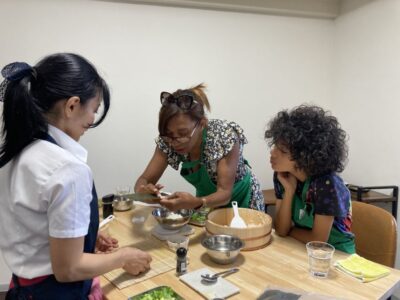
Browse the lists this tour appears in