
Reviewed · OSAKA TEA CEREMONY & MATCHA EXPERIENCES
Osaka: Private Tea Ceremony Experience
The best part of this Osaka tea ceremony is that you do not just watch. You choose a tea bowl, learn the steps, then whisk your own matcha in a quiet private setting. I like the personal pace, especially for families, and I like the two chances to enjoy Japanese sweets alongside the tea. One possible drawback is the one-hour limit, which gives you a pleasant introduction rather than a long study of tea culture.
The studio sits in Namba, near Shinsaibashi-suji shopping street, so this is easy to fit between shopping, sightseeing, and dinner. The meeting point can take a little care to find: go to the entrance of New Osaka Hotel Shinsaibashi, then walk west for about 30 seconds and look for a blue vending machine. The staff wait outside in kimono five minutes before your booking.
In This Review
- Key points at a glance
- A quiet hour in the middle of Namba
- Finding the studio near Shinsaibashi
- Choosing a bowl and learning the tea
- Making your own matcha
- Two servings of sweets with the tea
- Why private instruction changes the experience
- What the one-hour schedule feels like
- Who should book this Osaka tea ceremony?
- Booking flexibility and practical value
- Should you book it?
- FAQ
- Where does the Osaka tea ceremony meet?
- How early should I arrive?
- How will I recognize the instructor?
- How long does the tea ceremony last?
- Is the experience private?
- Is the activity available in English?
- Are matcha and Japanese sweets included?
- What should I bring, and is the activity wheelchair accessible?
Key points at a glance
- Private group setting: Your party has the instructor’s full attention, with time for photos and requests about pace.
- Make your own matcha: You first learn the method, then prepare the tea yourself.
- Choose a tea bowl: Pick the bowl that best matches how you feel that day.
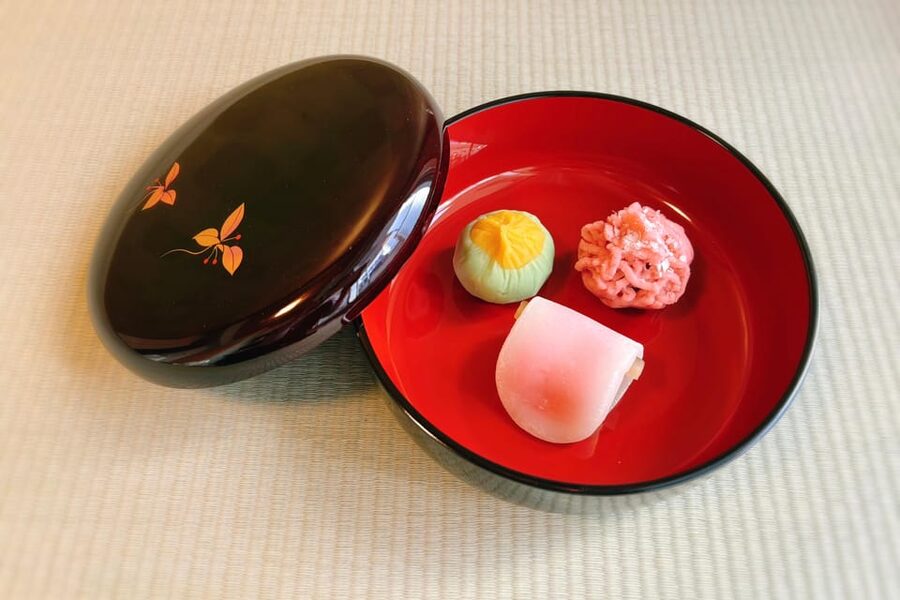
- Japanese sweets twice: Matcha is served with different sweets during two parts of the ceremony.
- Central Namba location: The studio is close to Shinsaibashi-suji shopping street.
- English or Japanese instruction: Beginners are welcome, and the lesson is guided step by step.
A quiet hour in the middle of Namba
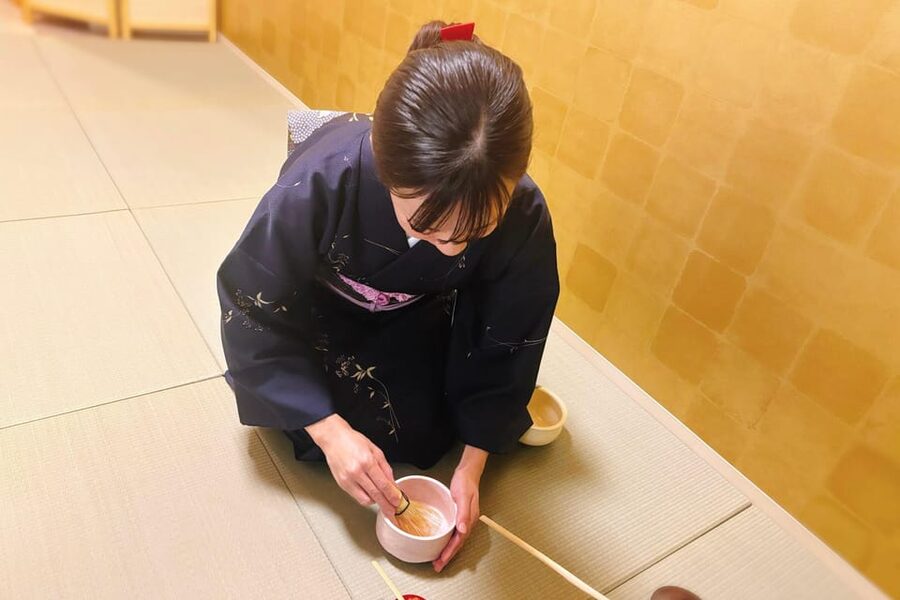
Namba is one of Osaka’s busiest visitor areas, full of shops, restaurants, and bright streets. This tea ceremony offers a useful change of speed. For one hour, you leave the rush outside and focus on a small set of actions: selecting a bowl, learning how matcha is prepared, tasting tea, and making it yourself.
That private format matters. You are not sharing the room with a large class, and the instructor can adjust the experience for your group. You can ask for plenty of photos, request a slower pace for a child, or take more time with the preparation. Those small choices make the activity feel less like a fixed demonstration and more like a cultural lesson arranged for you.
The activity costs $38 per person and lasts one hour. I see that as fair value if you want a hands-on Japanese cultural activity in a central part of Osaka. You are paying for an instructor, matcha, sweets, and a private group rather than an admission ticket to a large attraction.
The value is strongest for couples, families, and small groups who want a shared activity without a crowded class. If you are looking for a full tea-school lesson, a formal historical lecture, or a longer ceremony, this will feel brief. If you want a calm and practical first introduction, the length works well.
More tea ceremonies and matcha sessions:
- Osaka: Tea Ceremony Experience
★ 4.9 · 1,426 reviews - Tea Ceremony Experience in Osaka Doutonbori
★ 5.0 · 754 reviews - Matcha Making Class in Osaka with Authentic Japanese Sweets Set
★ 5.0 · 509 reviews
Finding the studio near Shinsaibashi
The meeting point is outside the main entrance of New Osaka Hotel Shinsaibashi. From that entrance, continue west for roughly 30 seconds and look for a blue vending machine. The instructor waits there five minutes before the scheduled start and wears a kimono, which should make the meeting easier.
I would not leave this part to chance. Namba has many shops, signs, and side streets, and hotel names can be easy to mix up. Give yourself enough time to reach the hotel and pause at the entrance rather than walking past while searching on your phone.
The location is practical for a day built around central Osaka. You can visit Shinsaibashi-suji shopping street before or after the ceremony, then continue through the Namba area. Since the activity lasts only an hour, it can fit into a busy schedule more easily than a half-day cultural program.
You should bring socks. Smoking is not allowed, and the activity is not suitable for wheelchair users. These are simple points, but they are worth checking before you reserve.
Choosing a bowl and learning the tea
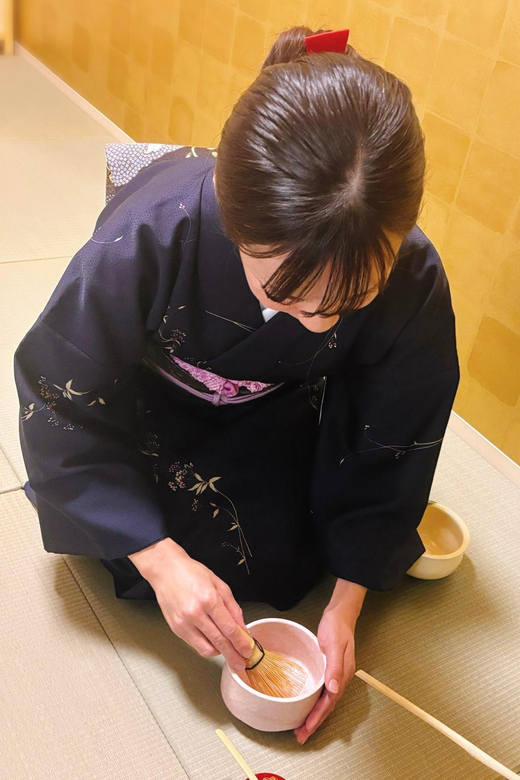
The lesson begins with an introduction to making matcha. The instructor explains the process, then guides you through it so you can try the preparation yourself. You do not need prior experience. The structure is meant to keep the ceremony relaxed and approachable for first-time participants.
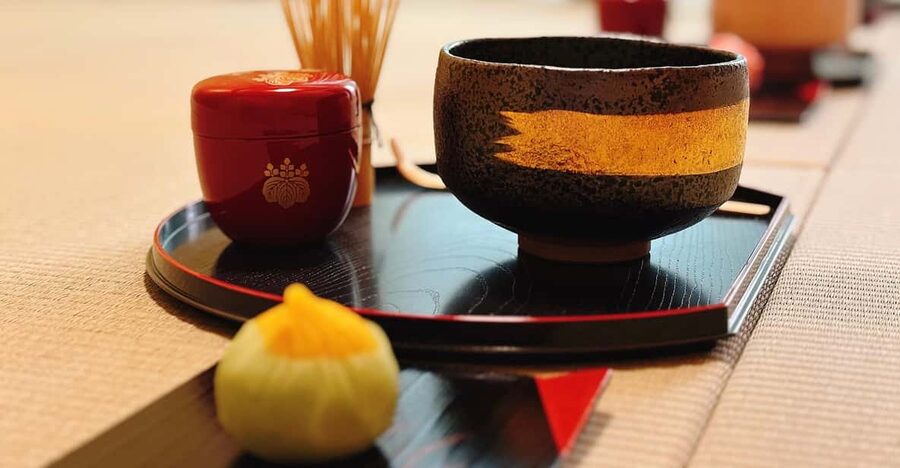
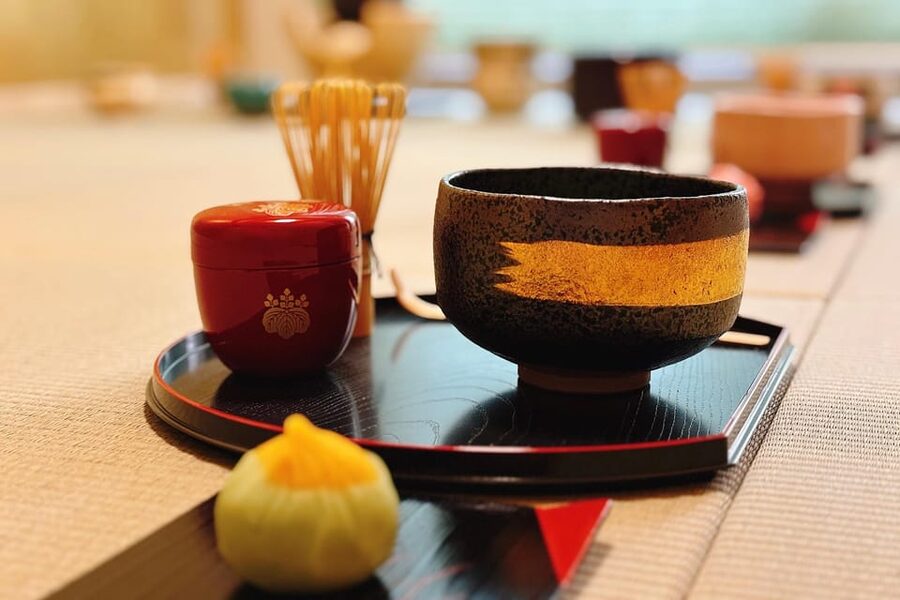
One appealing detail is the choice of tea bowl. Instead of handing everyone the same cup, the experience lets you select one from several attractive bowls. You are encouraged to choose the one that expresses your feelings that day.
That choice adds a personal touch without making the activity difficult. You do not need to know the names of Japanese ceramics or understand formal tea-school rules. You simply look at the bowls, choose one that appeals to you, and use it during the lesson.
The bowl also gives you something concrete to remember after the activity. Many cultural demonstrations can blur together when you only sit and watch. Here, you make a choice, handle the bowl, and take part in the process.
The instructor provides the guidance in Japanese or English. The available information does not name the individual instructors, but it does specify friendly instruction in both languages. If someone in your group is nervous about trying matcha for the first time, the step-by-step format should help.
Making your own matcha
The hands-on part is the heart of the experience. You first watch the method, then prepare matcha yourself. That change from seeing to doing is important because it helps you understand the care involved in a tea ceremony without requiring a long formal course.
Matcha has a distinct taste that some first-time drinkers find strong or unfamiliar. The sweets are served with the tea to give the tasting a more balanced shape. You can pay attention to the tea itself, then notice how the sweetness changes the experience.
The private setting gives you room to ask questions and repeat a step if needed. It also means you are not trying to keep up with a room full of strangers. For a family, that can be especially useful. One child may want to move slowly, while another may be eager to try the whisking right away.
The activity information specifically allows requests such as taking many photos or adjusting the pace for a child. I would make those requests at the start. A private booking is most useful when you tell the instructor what your group needs.
You should not expect to master matcha preparation in one hour. The point is to learn the basic method, experience the tools and rhythm, and make a cup with guidance. That makes it a good cultural sampler rather than professional training.
A few more Osaka tours and experiences worth a look
- Private Osaka Walking Tour: Highlights & Hidden Gems
★ 5.0 · 569 reviews - 3/4/5 Hours Private Tour in Osaka with Local Guide
★ 5.0 · 189 reviews - Osaka’s Best and Brightest: Private Full-Day Tour by Vehicle
★ 5.0 · 147 reviews - Full Day Tour of Kyoto with Private Transportation
★ 5.0 · 130 reviews
Two servings of sweets with the tea
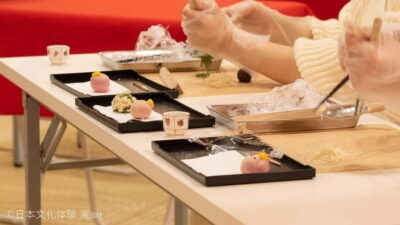
Japanese sweets are an important part of the ceremony, not just an extra snack. You can enjoy different types of sweets twice during the activity, alongside the matcha. The exact varieties can change, so you should treat the sweets as part of the tasting rather than expect a particular dessert.
This works well for visitors who are unsure about matcha. The sweets give you a chance to compare flavors and notice how the tea tastes with something sweet. A German participant specifically appreciated the tasty sweets and cookies, along with the clear explanations and chance to make the tea.
For children, the sweets may be one of the easiest ways into the activity. The tea itself can be an acquired taste, while the sweets provide a familiar point of enjoyment. Families can also use the two servings as natural pauses during the lesson.
I like that the activity does not reduce tea culture to a single cup and a quick photo. The combination of bowl selection, preparation, matcha, and sweets gives the hour a clear shape. You get enough variety to stay involved, but not so much that the ceremony feels rushed.
Why private instruction changes the experience
A private group is the main difference between this activity and a larger cultural class. Your group receives close attention from the instructor, and you can take photos at any time. You can also ask the instructor to slow down or make adjustments to suit your party.
That flexibility is valuable for families with young children. A formal group lesson may require everyone to sit at the same pace. Here, the instructor can respond to your group instead. The experience was specifically described as fitting a family of four well, which gives me confidence that the format suits a small household.
It also suits couples who want a calm shared activity. You can focus on each other and the lesson instead of worrying about strangers watching every move. Small groups of friends may appreciate the same privacy, especially if they want photos in kimono and tea-ceremony surroundings.
There is a tradeoff. Private activities often cost more per person than a basic group demonstration. At $38 per person, this one remains fairly accessible, but the price makes the most sense when you value personal attention. If you only want to see a tea ceremony once and do not care about making matcha, a shorter public demonstration might be enough.
What the one-hour schedule feels like
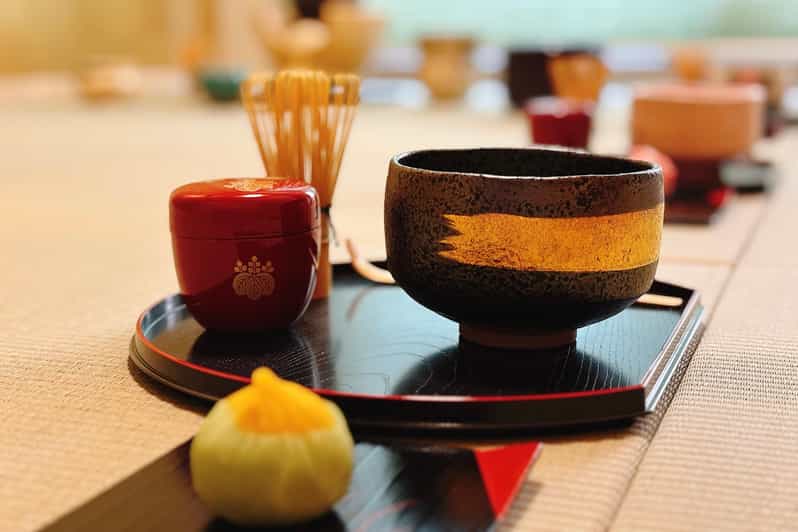
The schedule can be adjusted on request, but the typical structure follows a sensible order:
- Meet the instructor outside the hotel and walk to the studio.
- Learn how matcha is prepared.
- Choose a tea bowl from several options.
- Taste matcha with Japanese sweets.
- Prepare your own matcha with guidance.
- Enjoy different Japanese sweets during the ceremony.
The exact timing of each part is not fixed, so you should not expect a minute-by-minute program. That is a strength for a private booking. Your instructor can give more time to the practical lesson, answer questions, or slow down for children.
The hour should feel focused rather than packed. You will not be visiting several locations or moving between attractions. The activity is built around one setting and one Japanese tradition, which helps create a calm mood despite the central Osaka location.
If your schedule is tight, allow extra time for meeting the instructor. The ceremony itself lasts one hour, but you should not cut your arrival too close. The meeting instructions are clear once you know to look for the blue vending machine and kimono-clad staff.
Who should book this Osaka tea ceremony?
I would recommend it most strongly to first-time visitors who want a gentle introduction to matcha. You do not need special knowledge, and you are not expected to perform a formal ceremony without help.
Families are another strong match. The private format, adjustable pace, and hands-on activity give children something to do. A family of four found the lesson well suited to its group, and the option to request extra photos or a slower pace adds useful flexibility.
Couples and small groups of friends should also consider it if they prefer a quiet cultural hour over a crowded attraction. The activity gives you shared memories without taking half a day from Osaka’s other sights.
It may not suit you if you use a wheelchair, since the activity is specifically not suitable for wheelchair users. It may also disappoint if you want calligraphy included. Japanese calligraphy is not part of this plan, though a separate tea ceremony and calligraphy option is available.
Finally, consider your interest in sweets and tea. Matcha has a distinctive flavor, and this activity is designed for people willing to try it. The Japanese sweets help, but they do not turn the lesson into a standard dessert tasting.
Booking flexibility and practical value
You can cancel up to 24 hours before the activity for a full refund. You can also reserve now and pay later, which helps if your Osaka schedule is still changing.
The activity is offered in Japanese and English. Since the lesson depends on explanation and demonstration, language access matters. English instruction should make the basic process easy to follow for international visitors, while Japanese speakers can take part without a language barrier.
All fees and taxes are included, along with matcha, the Japanese sweets, the instructor, and the matcha-making activity. Japanese calligraphy is not included. You will need to reserve the combined tea ceremony and calligraphy plan if you want both.
The price does not include transportation, but that is less of a concern here because the studio is in central Namba. You can reach it from the Shinsaibashi-suji shopping area, making it a practical add-on to a day in the city center.
Should you book it?
Book this Osaka tea ceremony if you want to do more than take a photo in a kimono or watch someone else prepare tea. The chance to choose a bowl, make your own matcha, taste sweets twice, and set the pace for your private group gives the hour real substance.
I would be especially comfortable recommending it to a family of four, a couple, or a small group with no previous tea-ceremony experience. The main reasons to hesitate are the wheelchair restriction, the short one-hour format, and the fact that calligraphy is not included.
At $38 per person, this is a sensible cultural activity in a very convenient part of Osaka. It will not teach every detail of Japanese tea practice, but it gives you a calm, hands-on encounter with matcha that fits neatly into a busy Namba day.
FAQ
Where does the Osaka tea ceremony meet?
Meet outside the main entrance of New Osaka Hotel Shinsaibashi. Walk west for about 30 seconds and look for a blue vending machine near the entrance.
How early should I arrive?
The instructor waits outside in front of the main entrance five minutes before your scheduled booking time.
How will I recognize the instructor?
The instructor will be wearing a kimono.
How long does the tea ceremony last?
The activity lasts one hour. Starting times depend on availability.
Is the experience private?
Yes. It is offered as a private group experience, with close attention from the instructor.
Is the activity available in English?
Yes. Instruction is available in English and Japanese.
Are matcha and Japanese sweets included?
Yes. Matcha and various Japanese sweets are included, along with the matcha-making activity.
What should I bring, and is the activity wheelchair accessible?
Bring socks. Smoking is not allowed, and the activity is not suitable for wheelchair users.
Just added around Osaka
- Nara Day Trip from Osaka with a Licensed Guide★ 5.0 · 3 reviews
- Osaka Early Morning Osaka Castle Tour Avoid Crowds★ 5.0 · 3 reviews
- Guided Tour of Some Attractions in Osaka by Private Car★ 5.0 · 3 reviews
- Private Transfer Between Kyoto and Kansai Airport KIX★ 5.0 · 3 reviews
- Shared Arrival Transfer: Osaka Itami Airport to Osaka City★ 5.0 · 3 reviews
- Osaka: Sushi Making Class and Dotonbori Food Tour★ 4.7 · 3 reviews
- Osaka Night Photography Workshop★ 5.0 · 3 reviews
- Kyoto Full day Tour Kinkakuji, Kiyomizu-dera and Fushimi Inari★ 4.5 · 3 reviews
Osaka Tea Ceremony & Matcha Experiences, compared.
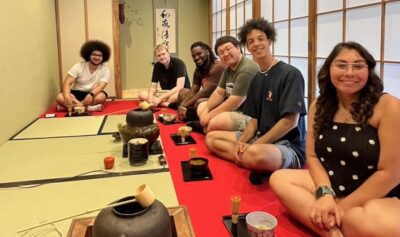

Matcha Making Class in Osaka with Authentic Japanese Sweets Set
Read our review →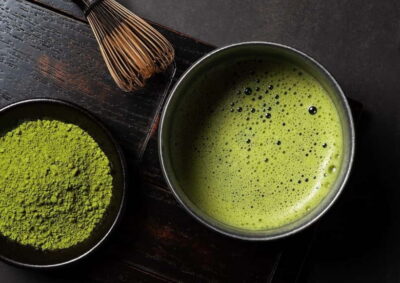
Japanese Traditional Sweets Making and Tea Ceremony
Read our review →
Osaka Temple Cool Foot Bath & Matcha Experience〈45min〉
Read our review →
Samurai Show, Tea Ceremony, Japanese Traditional Activities
Read our review →
Browse the lists this tour appears in