
Reviewed · OSAKA COOKING CLASSES
Japanese Traditional Sweets “Nerikiri” making
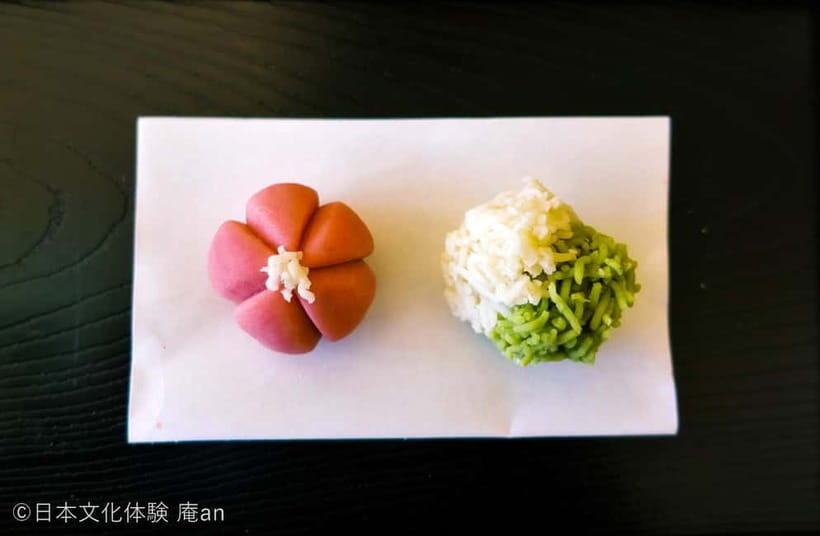
The best part of this Osaka activity is that you do not simply watch a confectioner work. You shape two seasonal nerikiri sweets yourself, using white and red bean paste made by long-established shops in Kyoto. These small sweets are designed to look like seasonal flowers and natural forms, so your finished plate becomes a little edible artwork.
I like the low $11 price, which makes this an easy add-on to a day in Osaka. I also like the sensible one-hour format and the chance to eat your sweets on the spot rather than carry them around all afternoon. The main consideration is language: the instructor is Japanese, and English translation is provided as much as possible, so you should be comfortable with visual demonstrations and simple guidance.
In This Review
- Key points to know before booking
- Making Kyoto-style sweets in central Osaka
- What happens during the 65-minute session
- 1. Introduction to Japanese sweets
- 2. Flower-shaped nerikiri
- 3. Kinton nerikiri
- 4. Picture time and eating time
- Why the $11 price is good value
- Getting to Higobashi without a taxi
- Who will enjoy this activity most
- Useful booking and timing advice
- The authentic appeal of making, not just tasting
- Should you book Japanese Traditional Sweets Nerikiri Making?
- FAQ
- How long does the nerikiri-making activity last?
- How many Japanese sweets will I make?
- Can I eat the sweets at the venue?
- What ingredients are used?
- Is the instructor English-speaking?
- How much does the activity cost?
- Can I take the sweets away?
- Where is the meeting point?
- Is the venue accessible by elevator?
- What is the cancellation policy?
Key points to know before booking
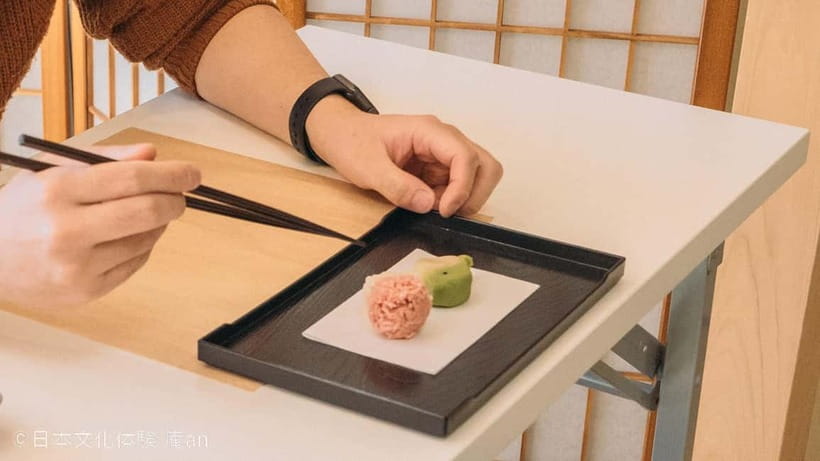
- Two sweets in 65 minutes: You make one flower-shaped nerikiri and one kinton nerikiri, then have time to eat them.
- Kyoto-made bean paste: The white and red bean paste comes from long-established Kyoto shops, giving the class a genuine ingredient connection.
- Central Osaka location: The venue is one minute from Exit 10 of Higobashi Station and within walking distance of Osaka Station.
- Japanese-led instruction: English help is available, but it is not listed as a full English-language class.
- Small extra costs: A take-out box costs 100 JPY, and a completion certificate costs 300 JPY.
- Easy cancellation terms: You can cancel up to 24 hours ahead for a full refund, subject to the stated policy.
Making Kyoto-style sweets in central Osaka
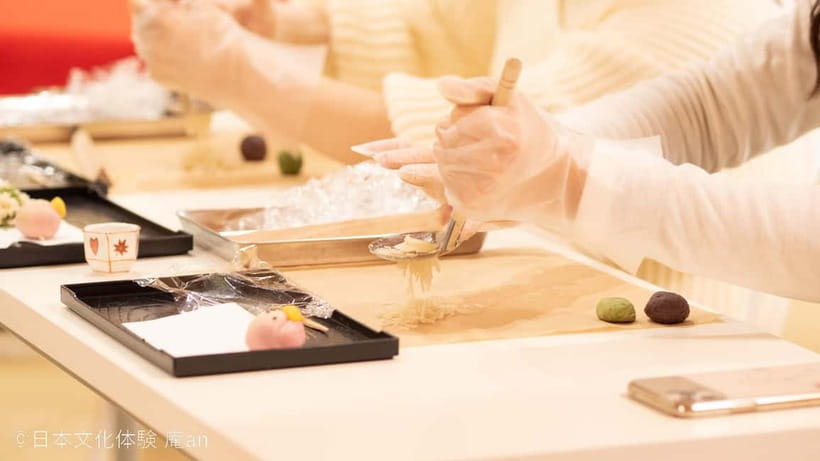
Nerikiri is a Japanese traditional sweet made for the eye as much as for the palate. The soft bean-paste dough can be shaped into flowers and other seasonal designs, then finished with careful colors and textures. You are not buying a finished sweet from a shop. You are learning the basic handwork needed to form one.
That makes this activity a good choice if you want a short cultural experience with something to eat at the end. It also suits a rainy afternoon, a free hour between sightseeing stops, or a family day when you want to slow the pace for a while.
The ingredients matter here. You use white and red bean paste produced by long-established Kyoto shops, rather than a generic craft material made only for demonstration. That does not turn the class into a full confectionery course, but it gives you a real taste of the ingredient at the heart of many Japanese sweets.
The setting is in Osaka, not Kyoto, which is useful if Osaka is your base. You can reach it without spending half a day crossing the region. The activity provider is B.B.Advisors Inc. AN OSAKA.
More Japanese home cooking classes:
- Osaka: Ramen and Gyoza Cooking Class in Dotonbori
★ 5.0 · 378 reviews - Osaka: Sumo Stage Show with Bento or Snack + Fight & Photo
★ 4.3 · 364 reviews - Osaka: Traditional Mochi Pounding Experience with Tasting
★ 4.9 · 306 reviews
What happens during the 65-minute session
The schedule is compact and clear. The first part covers an explanation of Japanese traditional sweets, followed by two hands-on creations. A picture session comes before the final eating time.
1. Introduction to Japanese sweets
At the start, the instructor explains the traditional sweets you will be making. This gives you some context before the paste reaches your hands, although the supplied details do not promise a long lecture on Japanese confectionery.
Expect the teaching to be practical. The instructor is Japanese, and English translation is provided as much as possible if requested. A recent participant specifically found that the instructor spoke enough English to make the process manageable and took time to explain. Another praised the instructor’s English and even enjoyed some football chat during the class.
That is useful to know. You should not book this expecting a fully narrated English tour, but you should have enough support to follow the process, especially when the instructor demonstrates each stage. If you want extra English assistance, contact the provider before the session.
2. Flower-shaped nerikiri
Your first project is a flower-shaped nerikiri. The seasonal design is one of the most appealing parts of the activity because it gives the sweet a clear visual purpose. You are not just rolling paste into a ball. You are working toward a form connected to the season.
The exact flower design can change with the time of year. That gives the activity a little freshness for repeat visitors, though you should not expect to choose from a long menu of designs. The focus is on completing the planned seasonal sweet within the one-hour session.
The process also gives you a gentle introduction to nerikiri technique. You learn how the paste responds to your hands and how small changes in shaping affect the final appearance. Since these sweets are delicate, the instructor’s demonstration matters more than a long written explanation.
A few more Osaka tours and experiences worth a look
- Matcha Making Class in Osaka with Authentic Japanese Sweets Set
★ 5.0 · 509 reviews - Osaka: Matcha Making Experience with Japanese Sweets
★ 5.0 · 146 reviews - Osaka: Japanese Traditional Sweets Making and Tea Ceremony
★ 4.7 · 118 reviews
3. Kinton nerikiri
The second sweet is kinton nerikiri. The supplied schedule names the style but does not give a detailed description of the exact design or shaping method. You can expect it to differ visually from the first flower-shaped sweet, giving you two related but distinct pieces to make.
This second project is important for value. At $11, you are not paying for a single quick demonstration. You get two sweets, two chances to practice, and enough time to compare the finished results.
The activity is also forgiving in spirit. The description emphasizes that the possibilities are endless and that making the sweets yourself turns the plate into artwork. That does not mean every piece will look like a professional confectioner’s work. It means the point is the process, and small imperfections are part of your personal result.
4. Picture time and eating time
After making both sweets, you have picture time. Use it. Nerikiri is fragile, and the colors and shapes are easiest to appreciate before you eat them.
The eating time comes near the end, with departure at the 65-minute mark. You can try your handmade sweets on the spot, so there is no need to buy extra food or arrange a separate tasting.
If you want to take the sweets away, a box is available for 100 JPY. That is a small but useful extra, especially if you are not ready to eat them immediately. The activity does not include the box automatically, so bring a little extra money if you want that option.
Why the $11 price is good value
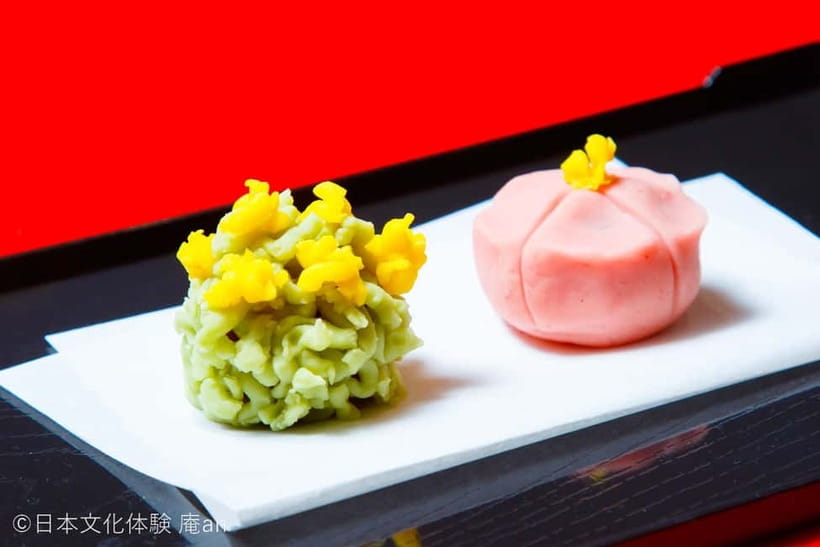
At $11 per person, this is one of the easier Osaka activities to fit into a sightseeing budget. You receive the nerikiri-making experience, ingredients, instruction, two sweets, picture time, and eating time. The price is especially fair for solo visitors, since the activity is designed to work for individuals as well as groups.
The value is not only in the food. You also get an activity with a clear beginning, middle, and end. Many short cultural stops amount to watching someone else demonstrate a craft. Here, your hands do the work, and your finished sweets give you something concrete to remember.
The price does not include a 100 JPY take-out box or a 300 JPY completion certificate. Neither is essential. I would consider the box if you want to save the sweets for later, but the certificate is mainly for people who like a physical souvenir of the class.
The rating is 4.2 from five reviews, with the strongest praise focused on value, friendly instruction, and enough English to complete the task. With such a small review sample, I would treat that score as useful but not definitive. The practical takeaway is that the experience has been well received for what it is: a short, affordable, hands-on activity.
Getting to Higobashi without a taxi
The venue is particularly convenient if you are already in central Osaka.
- Higobashi Station on the Osaka Metro Yotsubashi Line is the closest stop, about a one-minute walk from Exit 10.
- Watanabebashi Station on the Keihan Nakanoshima Line is about five minutes away from Exit 7.
- Yodoyabashi Station, served by Osaka Metro and Keihan lines, is about seven minutes away from Exit 10.
- Kitashinchi Station on the JR Tozai Line is about ten minutes away from Exit 11-5.
- Osaka Station is about a 15-minute walk from the South Central Gate.
For most people, Higobashi is the simplest arrival point. Still, check the exit carefully. Osaka station areas can be confusing, and a one-minute walk from the correct exit can become much longer if you come out on the wrong side.
If you drive, use nearby coin parking. Parking is not included, so public transportation is the more straightforward choice.
The building has no elevator, and you need to use stairs to reach the venue. That is an important detail for anyone carrying a stroller, using mobility equipment, or avoiding stairs. Children under two who sit on a parent’s lap are free, but the activity does not provide a general statement about other child pricing.
Who will enjoy this activity most
I would recommend this for visitors who want a short, creative taste of Japanese culture rather than a long formal workshop. You get to make something with your own hands, learn a little about seasonal sweets, and eat the result before moving on.
It is a good match for:
- Solo visitors looking for a simple activity that does not require a group
- Couples who want a shared craft experience
- Families with children who can follow a hands-on demonstration
- Food lovers interested in Japanese sweets
- Visitors staying near Osaka, Umeda, Higobashi, or Nakanoshima
- Anyone needing a one-hour indoor plan
It may be less suitable if you want a fully English-speaking instructor, advanced confectionery training, or a long cultural lecture. The class is guided in Japanese, with English translation provided as much as possible. You should also allow time to arrive early enough for the start, because the event cannot be held for late arrivals.
The activity is not open to people who do not participate. In other words, someone who plans only to watch is not allowed to enter. Book a place for each person who wants to be in the venue, apart from children under two sitting on a parent’s lap.
Useful booking and timing advice
The operating hours are 10:00 to 17:00. Reservations received after 17:00 are processed the next day, so do not expect an evening booking request to receive an immediate response.
The scheduled duration is 65 minutes, but you should also count the time needed to reach the venue from your station exit. The class itself is short enough to pair with sightseeing, yet you should not place it directly before a train departure or timed attraction. Late arrivals cannot be accommodated, regardless of the reason.
Cancellation is free up to 24 hours in advance for a full refund. Once a cancellation fee applies, changing the date or time can also bring a specified fee. The provider does not compensate you for travel expenses if you cancel, so check your plans before making a same-day journey across Osaka.
If English support is important to you, contact the provider in advance rather than relying only on help at the door. The class can be followed with demonstration and basic explanation, but advance notice gives the instructor a better chance to prepare.
The authentic appeal of making, not just tasting
Japanese sweets are often admired for their shape, color, and seasonal meaning before anyone takes a bite. This activity lets you see that visual side from the inside. You handle the paste, try to create the form, and then taste the result with a better sense of the work involved.
That personal effort changes the experience. A shop-bought nerikiri is polished and precise. Your own sweet may be a little uneven, but you will remember the decisions that shaped it. The activity turns a small snack into a souvenir you make yourself.
I also appreciate the balance between guidance and freedom. The session gives you two set projects, so you are not left wondering what to do. At the same time, the finished plate reflects your own hands rather than being identical to a pre-made sample.
The use of Kyoto-produced white and red bean paste adds substance to the lesson. You are working with an ingredient connected to established Japanese confectionery makers, while enjoying the class in a convenient Osaka location.
Should you book Japanese Traditional Sweets Nerikiri Making?
Book it if you want an affordable, central Osaka activity with real hands-on work and a sweet reward at the end. The two seasonal designs, Kyoto bean paste, short duration, and $11 cost make this a sensible choice for a spare hour.
I would especially choose it for a rainy day, a family itinerary, or a first visit when you want more than sightseeing but less than a full cooking course. Be realistic about the Japanese-led instruction, arrive on time, and remember that stairs are required.
Skip it if you need a fully English-language class, cannot use stairs, or want to take part only as an observer. For everyone else, this is a modest but memorable way to make two delicate Japanese sweets in the middle of Osaka.
FAQ
How long does the nerikiri-making activity last?
The full experience lasts 65 minutes. It includes the introduction, two sweet-making sessions, picture time, eating time, and departure.
How many Japanese sweets will I make?
You will make two seasonal nerikiri sweets. The planned designs are a flower-shaped nerikiri and a kinton nerikiri.
Can I eat the sweets at the venue?
Yes. Eating time is included near the end of the activity, and you can try your handmade sweets on the spot.
What ingredients are used?
The activity uses white and red bean paste produced by long-established shops in Kyoto.
Is the instructor English-speaking?
The instructor is Japanese. English translation is provided as much as possible, and you can contact the provider if you would like English assistance.
How much does the activity cost?
The listed price is $11 per person. A take-out box costs an additional 100 JPY, and a completion certificate costs an additional 300 JPY.
Can I take the sweets away?
Yes, a sweets take-out box is available for 100 JPY. The box is not included in the activity price.
Where is the meeting point?
The venue is in central Osaka. It is one minute from Exit 10 of Higobashi Station, five minutes from Watanabebashi Station, seven minutes from Yodoyabashi Station, ten minutes from Kitashinchi Station, and 15 minutes from Osaka Station.
Is the venue accessible by elevator?
No. The building has no elevator, and you must use stairs to reach the venue.
What is the cancellation policy?
You can cancel up to 24 hours in advance for a full refund. Cancellation fees apply after that point, and changing the date or time after a fee has been incurred may also involve a specified charge.
Just added around Osaka
- Nara Day Trip from Osaka with a Licensed Guide★ 5.0 · 3 reviews
- Osaka Early Morning Osaka Castle Tour Avoid Crowds★ 5.0 · 3 reviews
- Guided Tour of Some Attractions in Osaka by Private Car★ 5.0 · 3 reviews
- Private Transfer Between Kyoto and Kansai Airport KIX★ 5.0 · 3 reviews
- Shared Arrival Transfer: Osaka Itami Airport to Osaka City★ 5.0 · 3 reviews
- Osaka: Sushi Making Class and Dotonbori Food Tour★ 4.7 · 3 reviews
- Osaka Night Photography Workshop★ 5.0 · 3 reviews
- Kyoto Full day Tour Kinkakuji, Kiyomizu-dera and Fushimi Inari★ 4.5 · 3 reviews
Osaka Cooking Classes, compared.


Sumo Stage Show with Bento or Snack + Fight & Photo
Read our review →
Traditional Mochi Pounding Experience with Tasting
Read our review →
Osaka Cooking Class: Okonomiyaki &Japanese cuisines experience
Read our review →


Osaka Sake Tasting & Takoyaki Cooking Experience
Read our review →
Cooking Ramen&Gyoza/KatsuCurry/Bento/Okonomiyaki+Store Tour@Osaka
Read our review →Browse the lists this tour appears in