
Reviewed · OSAKA TEA CEREMONY & MATCHA EXPERIENCES
Tea ceremony experience in Osaka with a small group
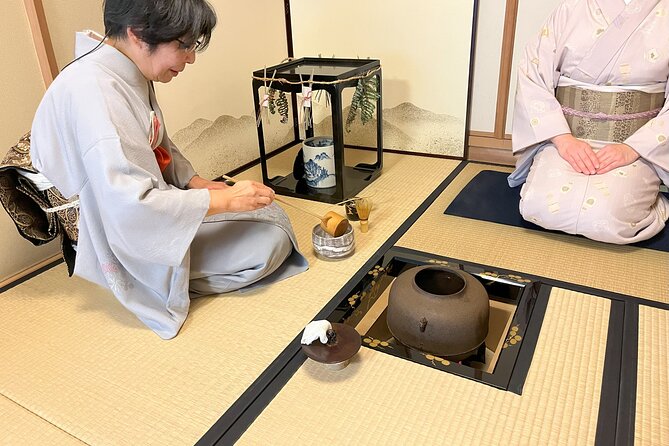
The best part of this Osaka tea ceremony is that you do not just watch. A Japanese tea master first explains how to enter a tatami room and prepares matcha with traditional sweets, then shows you how to make the tea yourself. The session is private, with no more than four people.
I like the small-group setting, which gives the teacher time to explain unfamiliar customs without rushing. I also like the practical finish: after seeing the formal ceremony, you prepare your own matcha in the easier Ryurei table style.
The main thing to consider is the location. You’ll walk about 10 to 15 minutes from Ibaraki-shi Station, and travel costs are not included. The meeting address and phone number are sent after booking, so this takes a little more planning than a tea activity in central Osaka.
In This Review
- Key points to know before booking
- A real tea ceremony, not just a cup of matcha
- Arriving near Ibaraki-shi Station
- Entering the tatami room
- Watching the matcha demonstration
- Making your own tea in Ryurei style
- Why the four-person limit matters
- The $67.11 price and what you receive
- Fitting the ceremony into an Osaka or Kyoto day
- Who will enjoy this most
- Practical planning details
- Should you book this Osaka tea ceremony?
- FAQ
- Where does the tea ceremony take place?
- How do I reach the meeting point?
- How long does the activity last?
- Is this a private activity?
- Is the experience suitable for beginners?
- What happens during the ceremony?
- Are tea and sweets included?
- Are transportation costs included?
- Can I cancel for a full refund?
Key points to know before booking
- Private group of up to four: You share the session only with your own party, making it a good fit for couples, families, and friends.
- Tatami-room etiquette included: You learn how to enter and behave in a Japanese-style room before the ceremony begins.
- Watch, then make matcha: The teacher demonstrates the formal process, followed by your own tea preparation in Ryurei table style.
- Traditional sweets are part of the experience: Matcha and Japanese sweets are included, so there is no separate food charge during the session.
- Conveniently placed between Osaka and Kyoto: The Ibaraki area lets you add the activity to a day split between the two cities.
- Allow 60 to 90 minutes: The session is short enough to fit into a wider itinerary, but it is not a rushed photo stop.
A real tea ceremony, not just a cup of matcha
Japanese tea ceremony can seem formal from the outside. There are set movements, careful handling of utensils, and rules about entering the tatami room. For a first-time visitor, it is easy to watch politely without understanding what any of it means.
This experience helps with that problem. The tea master explains the basic customs before the demonstration, including how to enter the Japanese-style room. That context matters because the ceremony is not simply about drinking powdered green tea. The movements, room, sweets, and manners all work together.
You do not need prior knowledge of Japanese culture. The activity is designed for first-time participants, including people who mainly want a pleasant hour with tea and sweets. That broad appeal is one of its strengths. You can treat the ceremony as a cultural lesson, a hands-on food experience, or a quiet break from Osaka sightseeing.
I would not expect a full academic study of tea culture in 90 minutes. Instead, you get a clear introduction with enough explanation to make the ceremony understandable and enough practice to give you a personal connection to it.
More tea ceremonies and matcha sessions:
- Osaka: Tea Ceremony Experience
★ 4.9 · 1,426 reviews - Tea Ceremony Experience in Osaka Doutonbori
★ 5.0 · 754 reviews - Matcha Making Class in Osaka with Authentic Japanese Sweets Set
★ 5.0 · 509 reviews
Arriving near Ibaraki-shi Station
The meeting point is Repark Ibaraki Oike, at 1-chome-14-46 Oike in Ibaraki, Osaka. The nearest station is Ibaraki-shi on the Hankyu Kyoto Line, followed by a walk of about 10 to 15 minutes.
That walk is worth noting when planning your day. Ibaraki-shi is not the same as Osaka’s main sightseeing districts, so you should allow time to leave the train, find your bearings, and reach the meeting point. The activity provider sends the exact address and phone number after your booking confirmation, subject to availability.
When you arrive, you call the provided number. Someone comes to meet you and guide you to the activity space. If you are delayed or lose your way, you are asked to call rather than simply arriving late and hoping to find the room.
I like this arrangement for one reason: you are not left guessing at the final meeting point. Still, it means you should save the phone number and address before leaving your hotel. Travel expenses are not part of the price, and the meeting point is not described as a major station entrance with obvious signs.
Entering the tatami room
The session begins with an introduction to entering a tatami room. This may sound like a small detail, but it helps you feel more comfortable once the formal demonstration starts.
Tatami rooms have their own visual and physical rules. You may need to change how you step, where you sit, and how you handle the space. The teacher’s explanation gives you a simple guide before you are expected to take part.
This is also where the activity feels different from a standard matcha tasting. You are not only learning what is in the cup. You are being shown how the setting shapes the experience. A tea ceremony takes place in a Japanese-style room, and the room itself is part of the lesson.
The tone appears to be calm and welcoming. One participant described the teacher and assistant as attentive, with clear instruction that allowed the group to perform the ceremony themselves. That is the kind of help you want here. Formal customs can feel intimidating if nobody explains them, but a small group gives the teacher room to correct or guide you gently.
You should still expect some sitting and movement on tatami. The supplied information does not specify seating arrangements or accessibility details, so anyone with mobility concerns should contact the provider before booking.
Watching the matcha demonstration
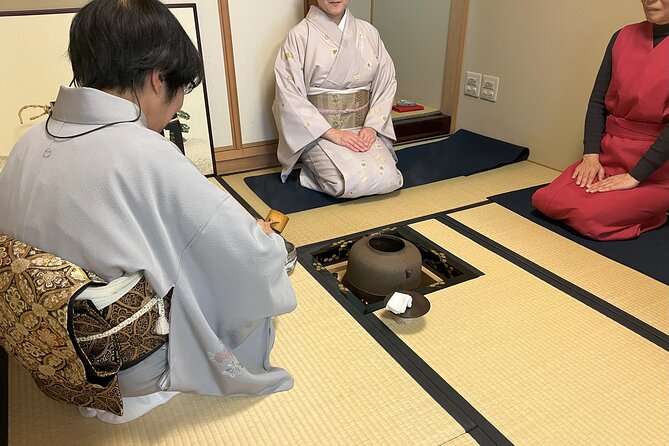
After the room introduction, the tea master demonstrates the tea ceremony using matcha and Japanese traditional sweets. This is the part to watch closely before you try anything yourself.
The demonstration gives you a chance to see the rhythm of the ceremony without having to remember every step at once. Pay attention to the order of actions, how the tea is handled, and how the sweet fits into the experience. The teacher also provides detailed explanations, so you can ask questions through the process rather than trying to copy movements in silence.
The formal demonstration is likely to be the most traditional portion of the session. It gives you a look at the discipline and courtesy associated with tea ceremony. At the same time, the activity is presented for beginners, not for people already trained in a tea school.
The sweets are included with the tea. In Japanese tea ceremony, a sweet is not just an extra snack. It gives your palate a contrast to the bitter, grassy flavor of matcha. Here, the sweet also makes the experience more approachable for people who do not usually drink green tea.
If you are visiting with children, the hands-on portion may hold their attention better than a demonstration alone. The description does not state a minimum age, so confirm age requirements before reserving for young children.
A completely different way to spend a day in Osaka Prefecture:
- Full Day Tour of Kyoto with Private Transportation
★ 5.0 · 130 reviews - Sakai – Knife Factory and Craft Walking Tour
★ 5.0 · 44 reviews - Kyoto private tour (Shore excursion available from Osaka or Kobe port)
★ 5.0 · 39 reviews - Private arrival Transfer from Kansai airport to Osaka city
★ 4.5 · 36 reviews
Making your own tea in Ryurei style
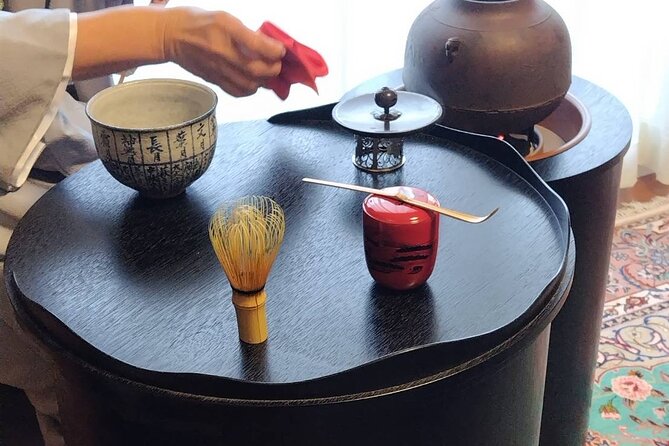
The most useful part comes after the demonstration. You are introduced to Ryurei style, a table-based form of tea ceremony, and shown how to prepare matcha yourself.
This change from tatami-room ceremony to table style is practical. It lets you experience the gestures and preparation without requiring every participant to remain in a highly formal posture. You get a taste of the tradition, then a simpler format in which you can take part directly.
You prepare your own matcha and drink it with Japanese traditional sweets. That makes the session more than a performance. You leave having handled the tools, followed the sequence, and made the drink yourself.
Do not expect to become a tea master in one visit. The value is in learning the basic process and gaining respect for the care behind an everyday-looking bowl of tea. You will also better understand why matcha preparation is often described as a practice of attention and courtesy, even if this short activity does not attempt to cover every school or historical detail.
The included tools and materials keep things simple. You do not need to bring tea equipment, matcha, or sweets. Since all of this is part of the activity, the listed price is easier to judge than a ticket that covers only a demonstration.
Why the four-person limit matters
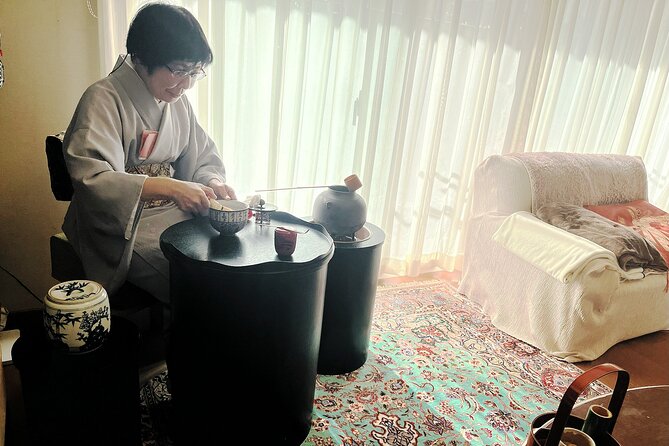
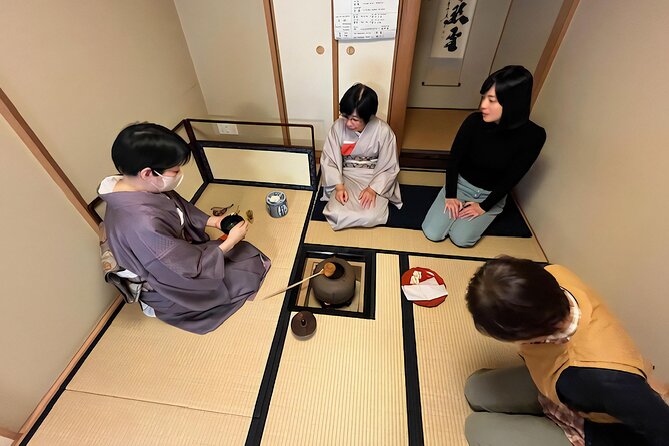
The private format is one of the strongest reasons to choose this activity. Only your own group takes part, and the maximum group size is four people.
That limit changes the mood. In a large class, you might watch a demonstration from the back, wait for a turn, or hesitate to ask a basic question. With up to four participants, the teacher can give more attention to each person as you learn the steps.
It also suits different kinds of visitors. A couple can enjoy a quiet cultural activity without being placed in a large tour. A family or group of friends can share the same experience and make matcha together. Solo visitors should note that the activity is private, so the booking arrangement may be different from joining a public class.
The small group does not mean the session is completely informal. Tea ceremony has a deliberate pace, and the teacher will still guide you through the proper steps. Think of it as personal instruction within a traditional setting.
The $67.11 price and what you receive
At $67.11 per person, this is not the cheapest way to drink matcha in Osaka. You can find tea and sweets at cafés for far less. The comparison is not really cup against cup, though.
Your fee covers the tea master’s instruction, the tools and materials, Japanese sweets, matcha, and a private session lasting about 60 to 90 minutes. You are paying for an explanation of tea ceremony, a demonstration, and hands-on practice in a tatami room and at a table.
That makes the price reasonable for someone who wants more than a snack break. The value is strongest when you care about cultural context and personal instruction. If you only want to taste matcha, a café will be a better bargain.
The location also affects the calculation. You must pay your own train fare and spend time reaching Ibaraki. On the other hand, the area sits between Osaka and Kyoto, so you can fit the activity into a day that includes either city rather than treating it as an isolated trip.
Group discounts are available, which may improve the value for a party traveling together. Since the activity is often booked about 37 days ahead, reserve early if your Osaka or Kyoto schedule is fixed. Confirmation arrives within 48 hours, subject to availability.
Fitting the ceremony into an Osaka or Kyoto day
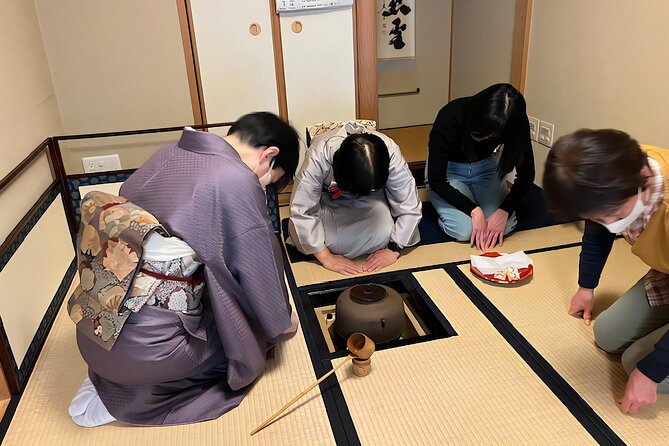
The activity takes about an hour and a half at most, with the active session itself described as 60 to 90 minutes. That is compact enough to combine with other plans.
You might place it on a day when you are moving between Osaka and Kyoto, since Ibaraki lies between the two cities. The supplied information does not give exact train times or a recommended route from central Osaka or Kyoto, so check your own rail connection and leave a buffer for the walk.
Do not schedule the ceremony so tightly that a small train delay makes you late. The provider specifically asks you to arrive on time and call if you are delayed or lost. The formal setting depends on a calm start, and rushing from the station would work against that.
You should also remember that the meeting point is a parking location rather than a named tourist attraction. Keep the address and telephone number available on your phone. The final location details are sent after booking, so do not assume you can simply search for a public tea house by name.
Who will enjoy this most
I would recommend this for first-time visitors who want an introduction to Japanese culture without committing to a long formal course. The explanations are designed to be easy to understand, while the hands-on portion gives you something concrete to remember.
It is also a good choice if you enjoy quiet activities. The ceremony offers a slower contrast to Osaka’s food streets, shopping areas, and busy train stations. The small group and private format make it especially suitable for people who prefer personal attention.
Families and friend groups can benefit from the group limit and group discount. Everyone gets a chance to see the demonstration and make tea, rather than watching one person do all the work.
You may want to skip it if you are looking only for a quick, central Osaka attraction, dislike sitting on tatami, or have no interest in the customs around tea preparation. The walk from the station and the separate travel cost also make it less convenient than an activity located beside a major sightseeing area.
Practical planning details
Wear something that lets you sit and move comfortably. The information does not provide a dress code, but a tatami-room activity is better suited to practical clothing than to anything restrictive.
Arrive on time at the designated meeting point. Call the supplied number when you arrive, and use it if you are lost or delayed. Because the exact address and phone number are sent after booking, check your messages before setting out.
Tools, materials, matcha, and traditional sweets are included. Transportation is not. The activity ends back at the meeting point, so plan your next train journey from there.
Free cancellation is available if you cancel at least 24 hours before the start time. Cancellations made less than 24 hours before the activity, as well as late changes, are not refunded or accepted. The cut-off follows local time.
Should you book this Osaka tea ceremony?
Book it if you want a private, beginner-friendly introduction that lets you do more than watch. The strongest features are the four-person limit, the clear explanation of tatami etiquette, and the chance to prepare your own matcha after the demonstration.
The $67.11 cost is fair for instruction, tea, sweets, equipment, and a 60 to 90 minute private session, but it is not a bargain for a simple drink. Include train fare and the 10 to 15 minute walk in your budget.
For visitors splitting time between Osaka and Kyoto, the Ibaraki location can work well. If you want a central city stop with no extra planning, it may feel inconvenient. For everyone else, this is a thoughtful way to slow down, learn the basics, and take part in one of Japan’s most recognizable cultural traditions.
FAQ
Where does the tea ceremony take place?
The meeting point is Repark Ibaraki Oike, 1-chome-14-46 Oike, Ibaraki, Osaka 567-0826, Japan. The provider sends detailed address information and a phone number after booking confirmation.
How do I reach the meeting point?
The nearest station is Ibaraki-shi Station on the Hankyu Kyoto Line. From the station, the walk takes about 10 to 15 minutes.
How long does the activity last?
The session takes approximately 60 to 90 minutes, or about 1 hour 30 minutes at most.
Is this a private activity?
Yes. Only your own group participates, with a maximum of four people.
Is the experience suitable for beginners?
Yes. The tea master explains the ceremony in an easy-to-understand way, and no previous knowledge of Japanese culture is required.
What happens during the ceremony?
You learn how to enter a tatami room, watch a demonstration with matcha and traditional sweets, learn about Ryurei table-style tea ceremony, and make your own matcha.
Are tea and sweets included?
Yes. Japanese traditional sweets and matcha green tea are included, along with the tools and materials needed for the activity.
Are transportation costs included?
No. Travel expenses are not included in the price.
Can I cancel for a full refund?
Yes, if you cancel at least 24 hours before the experience start time. Cancellations or changes made less than 24 hours before the start time are not accepted, and the amount paid is not refunded.
Just added around Osaka Prefecture
- Shared Arrival Transfer: Osaka Itami Airport to Osaka City★ 5.0 · 3 reviews
- Private Transfer Between Kyoto and Kansai Airport KIX★ 5.0 · 3 reviews
- Osaka Sushi Cooking Class★ 5.0 · 3 reviews
- Private Day Tour in Osaka and Kyoto with charter car★ 5.0 · 3 reviews
- Osaka : Cycling Tour Private Seaside Ride Near Kansai Airport★ 5.0 · 3 reviews
- Cup Noodles Museum Guided Tour in Osaka★ 4.5 · 4 reviews
- Cook Homestyle Ramen and Gyoza from scratch★ 5.0 · 4 reviews
- Kyoto Highlights Private Tour with Pick and Drop★ 4.0 · 5 reviews
Osaka Tea Ceremony & Matcha Experiences, compared.
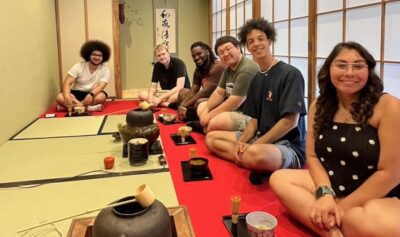


Matcha Making Class in Osaka with Authentic Japanese Sweets Set
Read our review →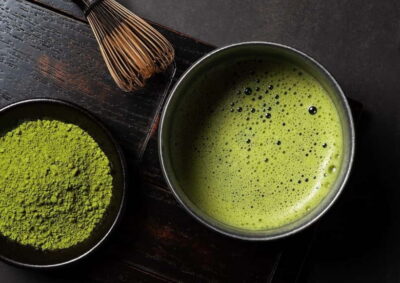
Japanese Traditional Sweets Making and Tea Ceremony
Read our review →
Osaka Temple Cool Foot Bath & Matcha Experience〈45min〉
Read our review →
Samurai Show, Tea Ceremony, Japanese Traditional Activities
Read our review →
Browse the lists this tour appears in