
Reviewed · OSAKA CRAFT WORKSHOPS
Sakai – Knife Factory and Craft Walking Tour
Sakai’s knife craft is the heart of this small-group walk. You enter a real family-run factory with more than 100 years of history, watch blades arrive from a blacksmith, and see them turned into working kitchen knives. The best part is the sharpening lesson, where a professional shows you how much care goes into a tool most of us treat as a drawer item.
I like the mix of hands-on craft and local flavor. The cinnamon mochi stop gives the morning a sweet, distinctly Sakai touch, while the chance to order a custom knife made before your eyes gives the tour a lasting souvenir. The main caution is that some history and shopping stops can be done independently, so the value depends heavily on how much you want factory access, guided context, and help choosing a knife.
In This Review
- Key points to know before you book
- Why Sakai is the right place for a knife tour
- Starting at 9:00 am near Ebisujimacho
- Cinnamon mochi and a 400-year-old Sakai tradition
- Inside a family knife factory
- Learning the traditional sharpening method
- Sakai Traditional Crafts Museum and knife shop
- What the $66.05 price really buys
- Who will get the most from this experience
- Timing, cancellations, and seasonal limits
- Is the Sakai knife tour worth booking?
- FAQ
- Where does the Sakai knife tour start?
- How long does the experience last?
- Is the knife factory visit included?
- Is a sharpening lesson included?
- Can I buy or customize a knife?
- Is a French-speaking guide guaranteed?
Key points to know before you book
- You enter a working knife factory: See the sharpening station and main office, not just finished products in a display case.
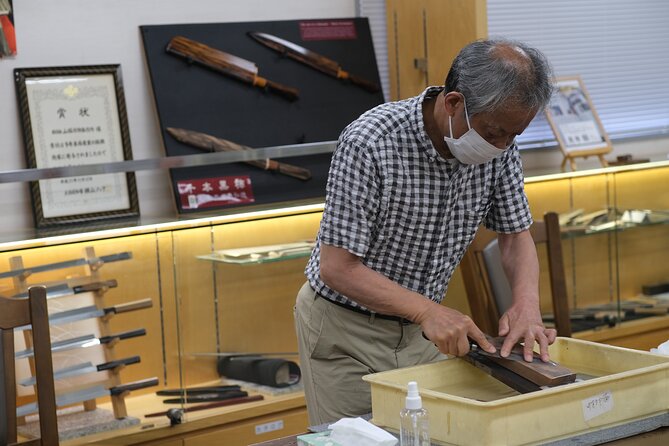
- The sharpening lesson is practical: A professional demonstrates traditional techniques and lets you practice.
- A custom knife may be made for you: You can place an order and watch the process unfold.
- The morning includes Sakai culture beyond knives: Taste traditional cinnamon mochi and visit the Sakai Traditional Crafts Museum.
- Small groups keep the visit personal: The maximum is 10 people, with a 3 to 4-hour schedule.
- The 2026 spring dates have a special restriction: From March 6 through April 6, only the blacksmith portion is available on Tuesdays, Wednesdays, and Thursdays.
Why Sakai is the right place for a knife tour
Sakai is in Osaka Prefecture, but it feels like a worthwhile change of pace from the city’s food streets and big attractions. This tour uses the town’s craft traditions as its subject, with knives as the main thread.
The local knife industry is not presented as a quick shop visit. You see raw blades arrive from a blacksmith, then follow part of the work needed to turn those blades into proper handmade cooking knives. That matters because the finished knife hides most of its labor. The cutting edge may look simple, but the sharpening, balance, and finishing require steady hands and patience.
I also like that the tour connects knife making with other parts of Sakai. The museum covers local handmade crafts and products, including bicycles and Shimano, a brand first created in Sakai. You get a broader sense of the town as a place of making, rather than visiting only one store and calling it a cultural experience.
The group size is capped at 10. That is small enough to make questions and demonstrations easier to follow, though the experience will still depend on the guide assigned to your date. Guides named in past tour descriptions include Scott, Jean-yves, and Rémi. Rémi has guided in French, English, and Japanese, but French service is not guaranteed on a shared tour.
More traditional craft workshops:
- 1.5〜2 Hours Traditional Kintsugi Work Shop in Namba Osaka
★ 5.0 · 75 reviews - Osaka: Private Japanese Calligraphy Experience
★ 5.0 · 66 reviews - From Osaka: Sakai Knife Maker or Blacksmith Walking Tour
★ 4.9 · 64 reviews
Starting at 9:00 am near Ebisujimacho
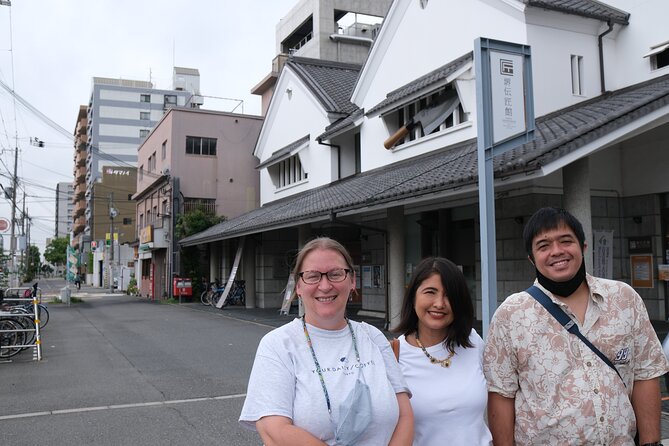
The tour begins at 9:00 am at 3-chōme-22 Ebisujimachō, Sakai Ward, Sakai, Osaka 590-0985. It returns to the same meeting point, which makes the morning easy to plan around.
The total time is about three to four hours. That is long enough to give the factory visit proper attention without consuming an entire day in Osaka. I would allow extra time before the start if you are unfamiliar with Sakai, since arriving at the correct meeting point is your responsibility.
The experience is near public transportation, and most people can take part. The activity uses a mobile ticket, so you can keep the booking confirmation on your phone rather than carrying a printed voucher.
One practical point deserves attention: the tour needs at least two people to operate. A solo booking is allowed, but if you are the only person booked, the session may be canceled. You will then be offered another date or experience, or a full refund. If your schedule is tight, this minimum is worth considering before you build a full day around the tour.
Cinnamon mochi and a 400-year-old Sakai tradition
The first stop is 八百源来弘堂本店, where you learn about the 400-year-old origin story of traditional Japanese cinnamon mochi. One sweet is included for each person, and you can buy more if you like it.
This is a short 15-minute stop, but it gives the morning a useful local start. The snack is not random filler. It introduces a Sakai specialty and shows that the town’s traditions extend beyond metalwork and blades.
I would treat this as a tasting and cultural introduction, not a full food tour. Extra food is not included, and the tour does not promise a series of tastings. Still, a small sweet before a hands-on craft lesson is a pleasant way to begin, especially if you want more than a factory visit.
The stop may also help you get your bearings in Sakai. A local product gives the guide a simple way to explain the town’s past before the group moves into the more technical part of the morning.
Inside a family knife factory
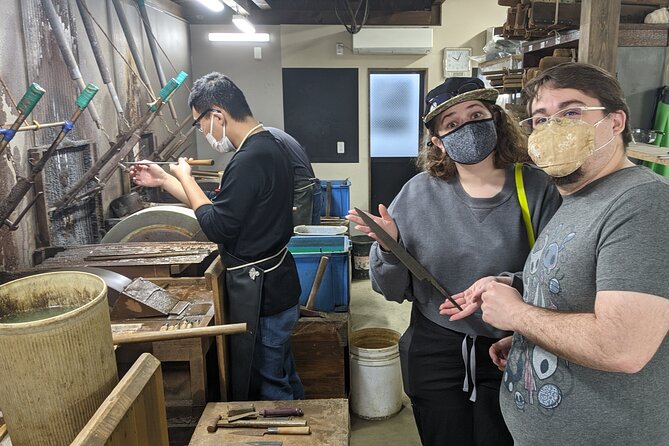
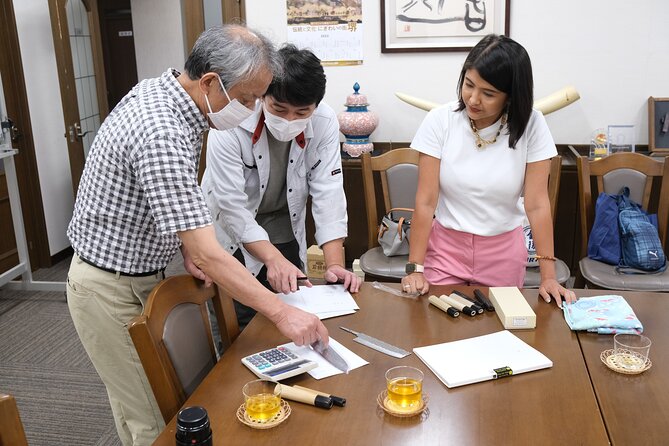
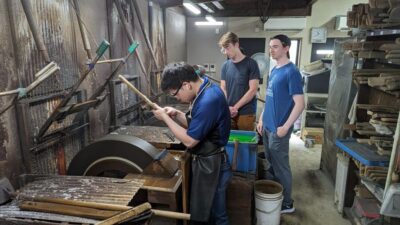
The factory is the reason most people will book. You go inside a traditional Japanese knife factory with more than a century of family history, visiting the sharpening station and main office as part of the process.
The most useful detail is that the blades arrive directly from the blacksmith. You are not simply looking at knives after all the work is finished. You can watch professionals shape and sharpen the blades into handmade cooking tools.
The factory visit lasts about one hour. That is a meaningful amount of time for a working craft demonstration, though it is not a full blacksmithing course. The information provided focuses on sharpening and finishing, so you should not expect to forge an entire knife yourself.
I appreciate the access here. A retail shop can show you dozens of attractive knives, but it cannot always explain what happens before the knife reaches the counter. At the factory, you see the skill and precision behind the object. That makes it easier to understand why a handmade Japanese kitchen knife costs more than a mass-produced model.
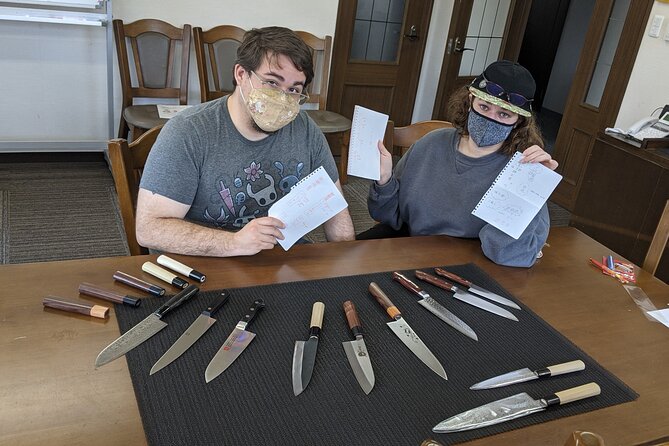
There is also a practical shopping benefit. You may order a customizable knife and watch it being made in front of you. The tour does not include the cost of that knife, and buying one is optional. There is no stated requirement to purchase, so you can focus on the demonstration without treating the stop as a sales appointment.
Still, the shopping access is a major part of the value. If you are already hoping to buy a Sakai knife, the factory connection can save you from wandering among shops without knowing what to ask for. If you have no interest in knives, the factory may feel like a long stop built around a specialized subject.
More guided walks on foot:
- Best Private Osaka Walking Tour With A Guide 100% Personalised
★ 4.5 · 12 reviews - Deep Backstreet Osaka Tours (Option to add Dinner)
★ 5.0 · 1,290 reviews - Osaka Local Foodie Walking Tour in Dotonbori and Shinsekai
★ 5.0 · 985 reviews - Osaka: Deep Backstreets Walking Tour with Dinner Option
★ 4.9 · 902 reviews
Learning the traditional sharpening method
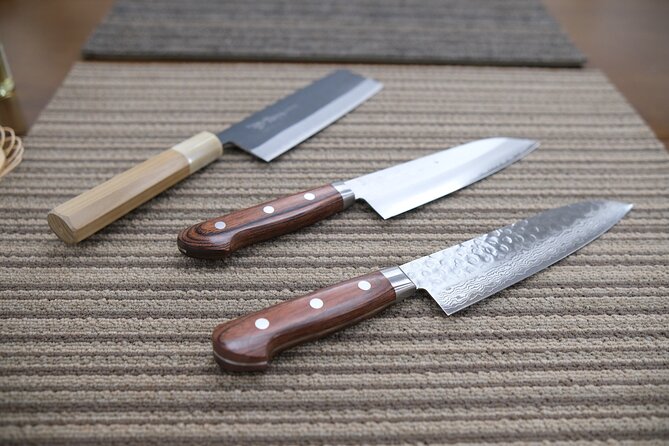
The sharpening lesson is included in the tour price. A professional teaches traditional sharpening techniques, and you get the chance to practice them.
This hands-on element makes the visit more useful than a simple explanation. You begin to understand that sharpening is not just rubbing a blade against a stone until it feels better. The lesson gives you direct contact with the care required to maintain a knife.
I would pay close attention here, even if you do not plan to buy a knife. The skill applies to the tools you already own, at least in principle, and it may change how you think about knife maintenance at home. The supplied details do not specify the exact equipment, lesson length, or whether you take home a sharpening tool, so you should view this as an introductory practice session rather than professional training.
This is also where the guide’s role matters most. Past guides have included Scott, Jean-yves, and Rémi. Scott was praised for making the conversation easy and explaining the history, while Jean-yves was noted for kindness and helpful lunch and mochi suggestions. Rémi has been described as especially strong with the knife-making process and Sakai’s culture.
At the same time, you should keep expectations realistic. One account found the historical presentation too centered on a European viewpoint and felt the guide lacked enough knife expertise. That criticism is important because the tour is strongest when the explanations are clear, accurate, and connected to the work happening in front of you. Guide quality can vary by date.
Sakai Traditional Crafts Museum and knife shop
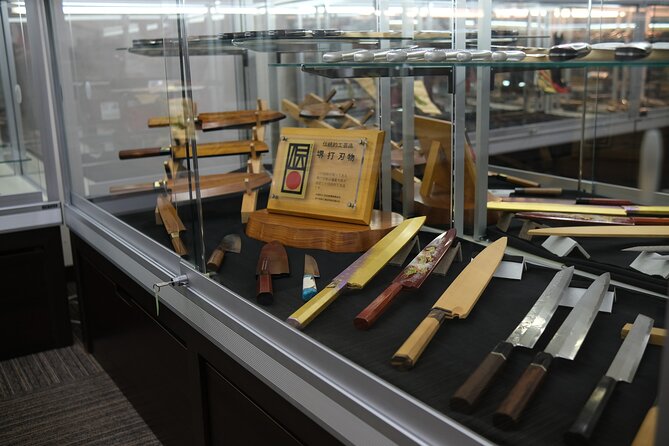
The final listed stop is the Sakai Traditional Crafts Museum and Knife Shop, with about 30 minutes set aside. The museum introduces local crafts, products, and the city’s manufacturing identity.
The bicycle section is a useful surprise. Sakai is linked to Shimano, which began there, so the museum gives you another way to see the city’s working traditions. You may also find local products and handmade goods beyond kitchen knives.
The knife shop is especially useful if you are still deciding what to buy. After seeing sharpening and blade finishing at the factory, you can look at finished knives with more context. You will have a better sense of the difference between a souvenir and a tool you might use every day.
The limitation is time. Thirty minutes is enough for a focused look, but not a long museum visit. If you enjoy reading every display, comparing many products, or shopping slowly, you may want to return on your own.
The museum can also have an operational issue. On the third Tuesday of each month, it may close for inventory without notice. If that happens, the guide takes the group directly to The Craftsman location instead. Check this point when choosing a date, particularly if the museum is important to you.
What the $66.05 price really buys
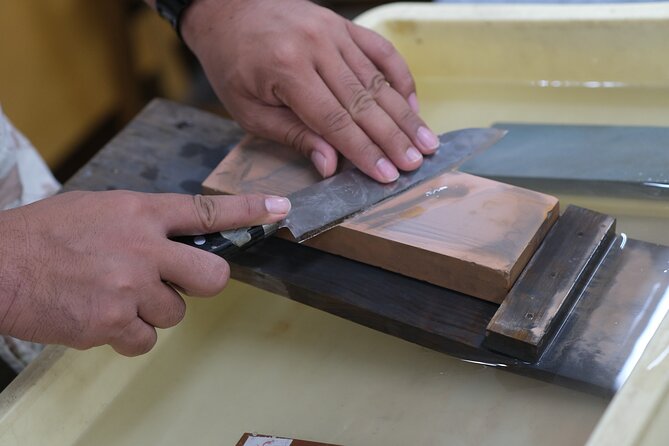
At $66.05 per person, the tour is not the cheapest way to walk around Sakai. The mochi, museum, and general town orientation are modest inclusions. You could likely see some public parts of Sakai independently.
The price makes more sense if you place value on access to the factory and the sharpening lesson. Entering a working production space, seeing blades arrive from a blacksmith, learning from a professional, and getting help with a custom order are the parts that are harder to arrange on your own.
All fees and taxes are included, as is one sweet per person and a bilingual guide. Extra food and shopping are not included. The real cost can rise if you order a custom knife, so set a budget before you arrive. The supplied information does not give knife prices, and the cost will depend on the customization you choose.
I also see value in having someone connect the separate pieces. Without a guide, you might visit the museum, find a knife shop, and taste a local sweet. With the tour, those stops are tied to a story about Sakai as a craft city.
For a person who wants to buy a serious Japanese kitchen knife, $66.05 may be a fair fee for access and guidance. For someone who only wants a general half-day walk, it may feel less efficient.
Who will get the most from this experience
I would recommend this tour to you if you cook, collect kitchen tools, or want a souvenir with a direct connection to Japanese craft. It also suits anyone who prefers seeing work happen rather than viewing finished goods behind glass.
The tour works well for a small group of friends or family members with mixed interest. The mochi, museum, and Sakai background give non-cooks something to enjoy, while the factory and lesson provide the main event for the knife enthusiast.
You should think twice if you dislike shopping or have little interest in how knives are made. One useful criticism is that much of the broader walking route can be done independently. The factory access is the main feature you cannot casually reproduce.
I would also avoid booking it solely because you want a guaranteed French-language guide. French-speaking guidance is possible, and Rémi has guided in French, English, and Japanese, but the operator does not guarantee French on shared departures.
Timing, cancellations, and seasonal limits
The scheduled start is 9:00 am, and the tour lasts around three to four hours. It ends back at the meeting point, so you can plan lunch afterward in Sakai or continue elsewhere in Osaka.
Free cancellation is available if you cancel at least 24 hours before the local start time. Changes or cancellations inside that window are not accepted for a refund. The minimum two-person rule also matters: if the operator cancels because too few people booked, you will be offered another date or experience, or a full refund.
Pay close attention to the special 2026 restriction. From March 6 through April 6, 2026, the blacksmith is only available on Tuesdays, Wednesdays, and Thursdays, and the dates during this period are limited to the blacksmith portion. Confirm exactly what will be included before you book one of those dates.
The maximum group size is 10. That is a good ceiling for a demonstration, though a smaller departure should feel easier for questions and practice.
Is the Sakai knife tour worth booking?
I would book it if you want direct access to a century-old knife factory, a real sharpening lesson, and help choosing or ordering a handmade blade. The strongest moments come from watching the craft at close range and then seeing finished products with a clearer understanding of the work behind them.
I would skip it if you only want a general Sakai sightseeing walk. Some stops are short, and the museum and town can be explored independently. The tour earns its price through factory access, guided interpretation, and the chance to order a custom knife.
Before confirming, check the guide language, the two-person minimum, the third-Tuesday museum issue, and the special March 6 to April 6, 2026 schedule. If those details suit you, this is a focused and memorable morning for anyone who wants to bring home a Japanese kitchen tool with a story behind it.
FAQ
Where does the Sakai knife tour start?
The tour starts at 3-chōme-22 Ebisujimachō, Sakai Ward, Sakai, Osaka 590-0985, Japan, at 9:00 am.
How long does the experience last?
The tour lasts approximately three to four hours and ends back at the meeting point.
Is the knife factory visit included?
Yes. The tour includes a visit to the traditional knife factory, including the sharpening station and main office.
Is a sharpening lesson included?
Yes. A professional teaches traditional sharpening techniques, and you have the opportunity to practice.
Can I buy or customize a knife?
You can order a customizable knife and may watch it being made. The cost of shopping and souvenirs is not included in the tour price.
Is a French-speaking guide guaranteed?
No. French-speaking guides may be available, but French is not guaranteed for a shared tour.
Just added around Osaka Prefecture
- Shared Arrival Transfer: Osaka Itami Airport to Osaka City★ 5.0 · 3 reviews
- Private Transfer Between Kyoto and Kansai Airport KIX★ 5.0 · 3 reviews
- Osaka Sushi Cooking Class★ 5.0 · 3 reviews
- Private Day Tour in Osaka and Kyoto with charter car★ 5.0 · 3 reviews
- Osaka : Cycling Tour Private Seaside Ride Near Kansai Airport★ 5.0 · 3 reviews
- Cup Noodles Museum Guided Tour in Osaka★ 4.5 · 4 reviews
- Cook Homestyle Ramen and Gyoza from scratch★ 5.0 · 4 reviews
- Kyoto Highlights Private Tour with Pick and Drop★ 4.0 · 5 reviews
Osaka Craft Workshops, compared.
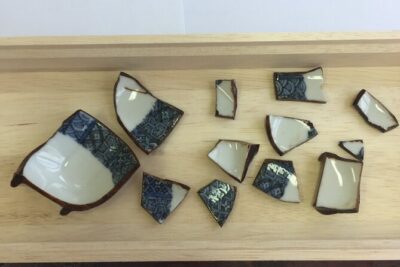
1.5〜2 Hours Traditional Kintsugi Work Shop in Namba Osaka
Read our review →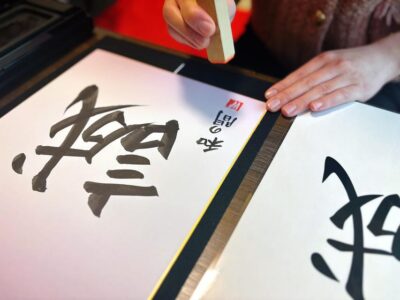
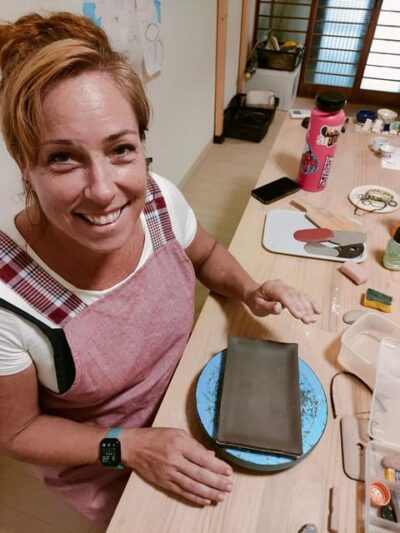
Traditional Japanese Ceramics Private Experience
Read our review →

Learning Zen of Japanese Calligraphy in kimono near Osaka Castle
Read our review →
Osaka Daruma Workshop — Paint Your Own Good-Luck Daruma
Read our review →Browse the lists this tour appears in