

Reviewed · OSAKA SUSHI MAKING CLASSES
Osaka Sushi Cooking Class
Osaka’s sushi lesson gives you something better than a quick tasting: you make the meal yourself. In about 90 minutes, chef Kazuki Harada walks you through rice, seaweed, fillings, nigiri, maki, and the small touches that make sushi taste right.
I like the small maximum group of eight, which should leave room for hands-on help. I also like that the ingredients, equipment, water, and green tea are included, so the $78.04 price is easier to judge as a complete activity rather than a bare cooking demonstration.
The main drawback is the short format. You will learn the basics and enjoy your own plate, but this is not a full professional sushi course. The class also takes place in Suita, not central Osaka, so check your route before booking.
In This Review
- Key points at a glance
- Making sushi in a 90-minute Osaka class
- Starting with rice, seaweed, and fillings
- Shaping your first nigiri
- Rolling maki with your own fillings
- Soy sauce, wasabi, and pickled ginger
- Eating the sushi you made
- What the $78.04 price really covers
- Getting to Tarumicho in Suita
- Who should book this sushi class
- Booking, cancellation, and useful planning notes
- Should you book the Osaka Sushi Cooking Class?
- FAQ
- Where does the sushi class take place?
- How long does the activity last?
- What types of sushi will I make?
- Who teaches the class?
- Is the class suitable for beginners?
- What is included in the price?
- Are alcoholic drinks included?
- Where does the activity finish?
- How many people can join the class?
- Can I cancel for a refund?
Key points at a glance
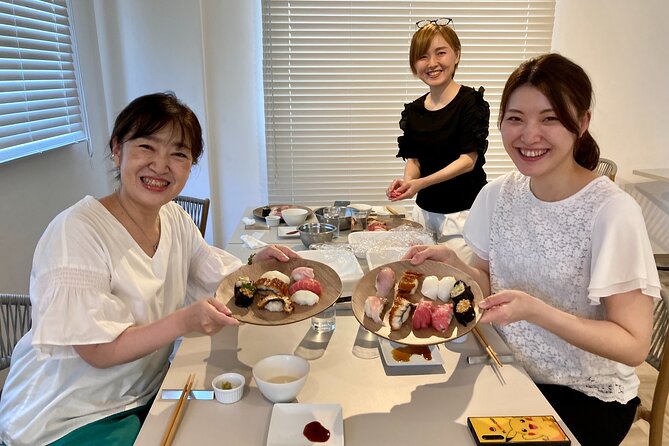
- Chef Kazuki Harada leads the class: You receive direct guidance from an instructor praised for his friendly manner and professional teaching.
- You make both nigiri and maki: The class covers shaped rice topped with ingredients and rolled sushi with fillings.
- The group is capped at eight people: That is a useful size for asking questions and getting help with technique.
- The session lasts about 90 minutes: It fits neatly into a busy Osaka day, though it leaves little time for advanced practice.
- Ingredients and equipment are included: Water and green tea are provided, while alcoholic drinks cost extra.
- You finish by eating your own work: The final tasting turns the lesson into a complete food experience.
Making sushi in a 90-minute Osaka class
This is a compact, practical lesson built around doing rather than watching. You start with a welcome and a quick explanation of the plan, then move into the ingredients and methods that make sushi work.
For a first-time cook, that structure matters. Sushi can look simple on a restaurant plate, but the balance depends on several parts: rice, seaweed, fillings, toppings, and condiments. The class gives each one a place without stretching the lesson into an all-day course.
You should arrive ready to take part from the start. The point is not simply to watch Kazuki Harada prepare sushi while you take notes. You will practice shaping rice, placing toppings, and rolling your own maki.
The small group limit of eight is one of the strongest practical features. In a large class, a cooking lesson can turn into a presentation from the back of the room. With fewer people, you have a better chance to see the demonstration clearly and ask for help when your roll refuses to cooperate.
That last part is worth remembering. Sushi making rewards calm hands, but a first roll may not look like the neat pieces you see at a sushi counter. A teacher who can correct your grip or show you how to handle the ingredients makes the experience more useful.
More sushi making classes:
- Sushi Making Osaka Roll and Authentic Japanese Sushi Class
★ 5.0 · 1,220 reviews - Osaka Sushi Making Experience
★ 5.0 · 400 reviews - Osaka: Roll and Authentic Sushi Making Class in Dotonbori
★ 4.9 · 239 reviews
Starting with rice, seaweed, and fillings
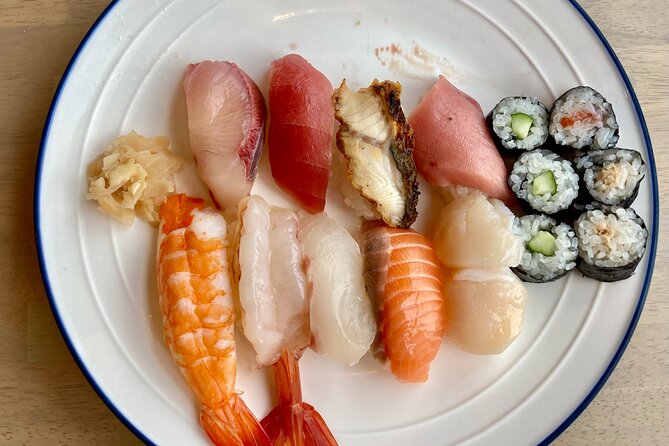
The opening lesson covers the basic building blocks of sushi: rice, seaweed, fillings, and condiments. The value here is not just learning the names of ingredients. You get a simple explanation of why each one matters in the finished bite.
Rice is the base for nigiri and an important part of maki. Seaweed gives a roll structure and adds its own flavor. Fillings provide contrast, while soy sauce, wasabi, and pickled ginger affect how the final taste comes together.
The provided details do not specify every ingredient or topping used in the class, so you should not book expecting a particular fish, vegetable, or recipe. What is clear is that the lesson includes the supplies needed to make the featured sushi styles.
This approach suits beginners well. You do not need to arrive with knife skills or previous sushi experience. The class is also a nice fit if you already enjoy sushi and want to understand the mechanics behind the pieces you order.
The lesson’s short length keeps the pace moving. That is good for anyone who wants a focused activity, but it also means you may not spend a long time on each ingredient. Think of this as a first working lesson, not a detailed study of Japanese food culture.
Shaping your first nigiri
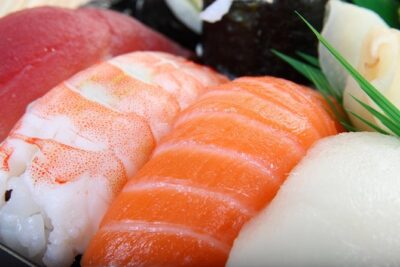
Nigiri is the clean, direct sushi form: shaped rice with a topping placed on top. Here, Kazuki shows you how to form the rice and position the topping so the piece holds together.
This is likely the moment when the difference between restaurant sushi and homemade sushi becomes clear. The rice needs enough shape to stay intact, but not so much pressure that it becomes dense. The topping needs to sit neatly without sliding away.
You will work with the technique under guidance rather than simply receive a finished piece. That hands-on practice is the main reason to choose a cooking class instead of a standard Osaka food tasting.
Nigiri also gives you a quick sense of progress. Even if your pieces are not identical, you can see what changes when you use too much rice or press too firmly. A teacher can point out those small corrections while you are still working.
The supplied information does not promise a certain number of pieces, nor does it state the exact toppings. Keep your expectations centered on learning the method and tasting your finished sushi, not on receiving a large meal.
That distinction affects the value. At $78.04 per person, you are paying for instruction, ingredients, equipment, and a guided activity. You are not simply paying for the amount of food on the plate.
Rolling maki with your own fillings
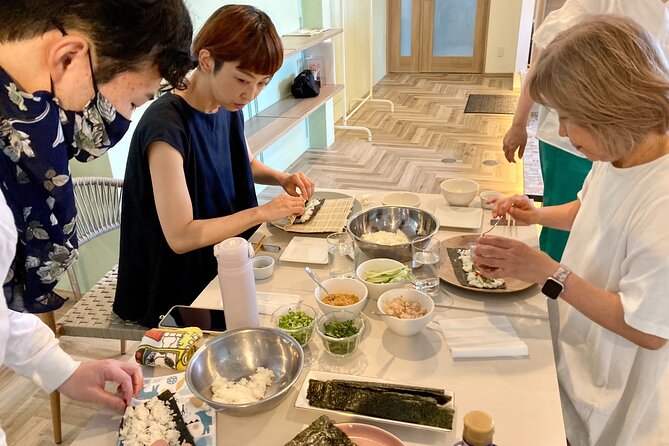
The class then moves to maki, the rolled sushi style made with seaweed and fillings. Kazuki guides you through the rolling process, where even pressure and a steady hand help create a firm cylinder.
Maki is often the most playful part of the lesson. You can see how the same basic method changes with different fillings, though the exact choices offered here are not stated. The class presents rolling as a place for creativity, but the technique still comes first.
You will likely learn by following a demonstration and then repeating the steps yourself. Pay attention to how the ingredients are placed before the roll is closed. Too much filling can make the roll difficult to seal, while too little may leave the finished piece thin and uneven.
A short lesson cannot turn every beginner into a polished sushi chef. It can, however, give you enough working knowledge to understand the basic sequence and try again at home. One especially useful outcome is confidence. After you have made a roll once, sushi feels less mysterious.
The class is suitable for both beginners and sushi fans, but the benefit will differ. Beginners get an approachable introduction. Experienced home cooks may enjoy the chance to refine their rolling technique, though anyone seeking advanced professional instruction should choose a longer course.
More Japanese home cooking classes:
- Cook Homestyle Ramen and Gyoza from scratch
★ 5.0 · 4 reviews - Osaka: Ramen and Gyoza Cooking Class in Dotonbori
★ 5.0 · 378 reviews - Osaka: Sumo Stage Show with Bento or Snack + Fight & Photo
★ 4.3 · 364 reviews - Osaka: Traditional Mochi Pounding Experience with Tasting
★ 4.9 · 306 reviews
Soy sauce, wasabi, and pickled ginger
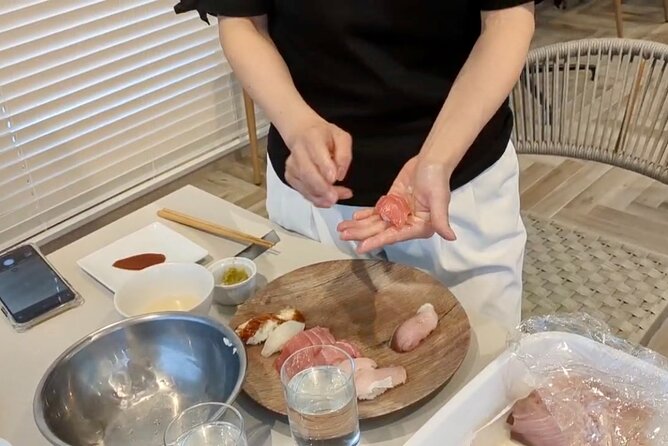
After making the sushi, you learn how flavor additions change the meal. Wasabi, soy sauce, and pickled ginger are presented as important parts of the tasting experience, not random extras placed beside the plate.
This is a small part of the schedule, yet it helps connect the cooking work with the way sushi is eaten. Too much soy sauce can cover the taste of the rice and topping. Wasabi brings heat, while pickled ginger refreshes your palate between bites.
The class description does not give a formal tasting menu or detailed pairing plan. You should expect practical guidance on these familiar condiments rather than a long lecture on regional sushi traditions.
I like this section because it helps you make better choices after the class. A person who knows how to roll maki can make a decent-looking plate. A person who understands how to use the condiments can enjoy it with more balance.
Water and green tea are included. Alcohol is not. Japanese sake, beer, and other alcoholic drinks are specifically excluded, so add those only if the provider offers them separately. Do not assume they are part of the $78.04 price.
Eating the sushi you made
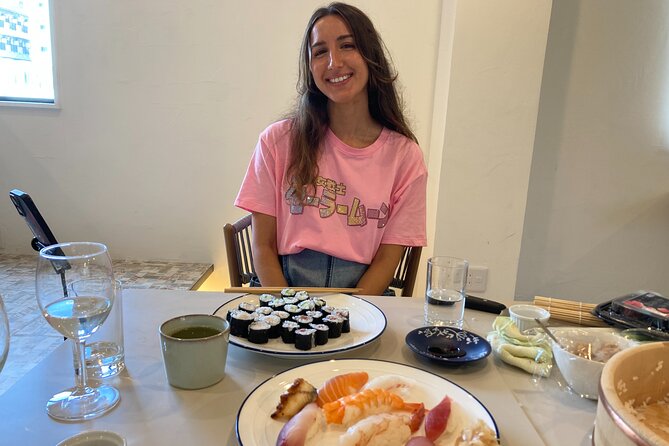
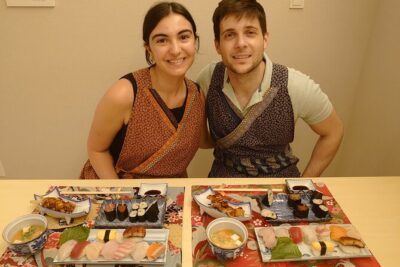
The final stage is tasting and sharing your creations. You sample the nigiri and maki you prepared, then reflect on the process and the results.
That finish gives the class a satisfying shape. You begin with ingredients and technique, practice two sushi styles, learn about condiments, and then eat the result. The food is both the lesson and the reward.
The tasting is also a useful reality check. Your sushi may not have the polish of a trained chef’s work, but you can judge the rice, the roll, the balance of fillings, and the effect of the condiments. Those observations make the technique easier to remember.
Green tea is available during the experience, along with water. The information provided does not state how much food is served, so I would treat the tasting as a light meal or substantial snack rather than plan your entire day around it.
If you have a full dinner booked afterward, the 90-minute duration makes that easy to arrange. If you hope the class itself will replace a large meal, the lack of a stated serving size is worth keeping in mind.
What the $78.04 price really covers
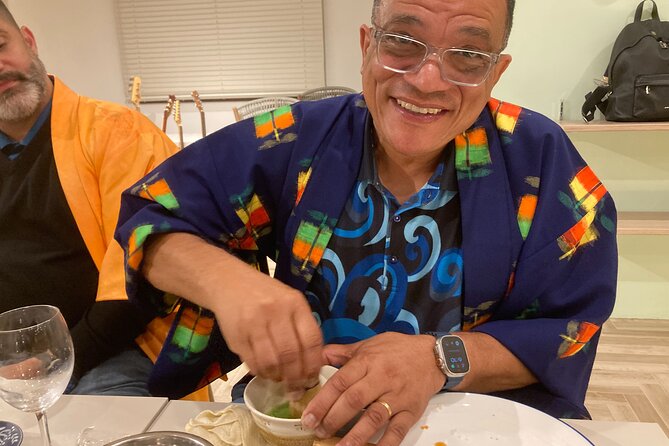
At $78.04 per person, this class is not the cheapest way to eat sushi in Osaka. That is not the right comparison. A restaurant meal gives you prepared food, while this experience adds instruction, practice, equipment, and the chance to make your own plate.
The price makes more sense if you value the activity itself. You receive the ingredients and tools needed for the lesson, plus water and green tea. You also have a chef guiding the process and a small group limit that should support personal attention.
The value is strongest for someone who wants a memory and a skill, not just lunch. If you are curious about how nigiri and maki are made, the class offers more than a plate ordered from a menu.
It is less compelling for a person who wants a long, technical cooking course or a large quantity of sushi. The session lasts about an hour and a half, and the available information does not promise advanced knife work, a wide menu, or an extended cultural presentation.
One positive detail is the direct teaching. A past participant specifically praised Kazuki Harada’s personality and professional approach, and found the lesson useful enough to take the skill home for family and friends. That is the kind of result you should hope for here: a clear first step, not mastery in one sitting.
Getting to Tarumicho in Suita
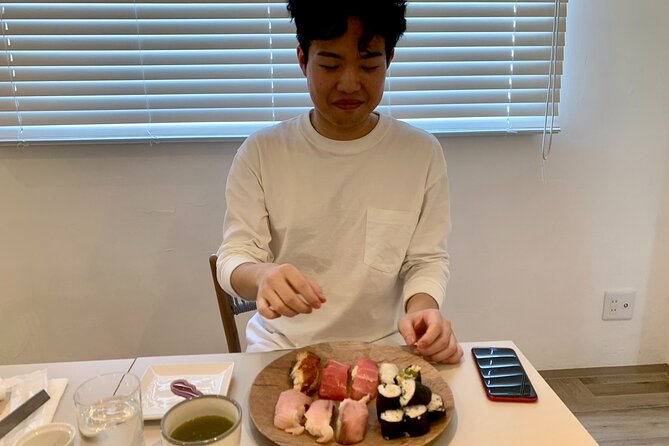
The meeting point is 3-chōme-35-5 Tarumichō, Suita, Osaka 564-0062, Japan. The activity is near public transportation, which helps, but the location is in Suita, so you should check the route from your accommodation before setting out.
The class ends back at the meeting point. That makes planning easier because you do not need to arrange a separate return location or wonder where the cooking session finishes.
Because the class is short, late arrival could cost you a meaningful part of the lesson. The timetable includes several stages, from introduction to tasting, and each one supports the next. Give yourself enough time to reach the address and get settled.
A mobile ticket is provided. Keep it available on your phone when you arrive, and make sure your booking details are easy to access.
The provider is MatchaExperience Osaka. Confirmation is received at the time of booking, and the maximum group size is eight people.
Who should book this sushi class
I would choose this for a first visit to Osaka when you want a hands-on food activity that fits between larger plans. The 90-minute format is easy to combine with sightseeing, shopping, or a separate meal.
It also suits families and friends who want to do something together rather than sit quietly through a tasting. The work is simple enough for beginners, and the final plate gives everyone a clear shared goal.
Sushi fans may enjoy the chance to practice two classic forms in one sitting. The class is especially useful if you have wondered how rice is shaped for nigiri or how a maki roll stays together.
I would hesitate if your priority is alcohol, because sake and beer are not included. I would also hesitate if you want a long culinary course, a guaranteed selection of specific seafood, or a full dinner with a stated serving size.
The high rating of 5 from three reviews is encouraging, though the sample is small. The clearest praise centers on Kazuki Harada as an excellent instructor with a friendly personality and professional manner. That is the feature I would place most weight on when deciding.
Booking, cancellation, and useful planning notes
You can cancel for a full refund if you do so at least 24 hours before the scheduled start time. Cancellations made less than 24 hours before the start are not refunded, and changes within that same period are not accepted.
The cut-off follows local time in Osaka. Keep that in mind if you are booking from another time zone or adjusting plans close to the class.
Confirmation arrives when you book. Since availability is limited by the eight-person maximum, reserving ahead is sensible if this is a fixed part of your Osaka plans.
The supplied information does not specify accessibility details, dietary substitutions, exact ingredient choices, or the number of sushi pieces. If any of those points matter to you, ask MatchaExperience Osaka before paying.
Should you book the Osaka Sushi Cooking Class?
Book it if you want a short, friendly, hands-on introduction to sushi and like the idea of eating what you make. The strongest reasons are the small group, direct instruction from Kazuki Harada, and the complete setup with ingredients, equipment, water, and green tea included.
Skip it if you mainly want a large sushi meal, alcoholic drinks, or advanced chef training. At $78.04, the price is fair when you count the lesson and activity, but less attractive if you judge it only by the food.
For most beginners, this is a practical way to add a personal food experience to an Osaka visit. You leave with a better sense of how nigiri and maki come together, plus a skill you can try on family and friends later.
FAQ
Where does the sushi class take place?
The meeting point is 3-chōme-35-5 Tarumichō, Suita, Osaka 564-0062, Japan.
How long does the activity last?
The class lasts approximately 1 hour and 30 minutes.
What types of sushi will I make?
You will learn to make nigiri sushi and maki rolls.
Who teaches the class?
Chef Kazuki Harada guides the lesson.
Is the class suitable for beginners?
Yes. The class is designed for all levels, including beginners and people who already enjoy sushi.
What is included in the price?
Ingredients, equipment, water, and green tea are included.
Are alcoholic drinks included?
No. Alcoholic beverages such as Japanese sake and beer are not included.
Where does the activity finish?
The class ends back at the meeting point in Tarumichō.
How many people can join the class?
The activity has a maximum of eight participants.
Can I cancel for a refund?
Yes. You can receive a full refund if you cancel at least 24 hours before the experience start time.
Just added around Osaka Prefecture
- Private Transfer Between Kyoto and Kansai Airport KIX★ 5.0 · 3 reviews
- Shared Arrival Transfer: Osaka Itami Airport to Osaka City★ 5.0 · 3 reviews
- Private Day Tour in Osaka and Kyoto with charter car★ 5.0 · 3 reviews
- Osaka : Cycling Tour Private Seaside Ride Near Kansai Airport★ 5.0 · 3 reviews
- Cup Noodles Museum Guided Tour in Osaka★ 4.5 · 4 reviews
- Cook Homestyle Ramen and Gyoza from scratch★ 5.0 · 4 reviews
- Kyoto Highlights Private Tour with Pick and Drop★ 4.0 · 5 reviews
- Osaka Private Tour with English-Speaking Driver★ 4.5 · 7 reviews
Osaka Sushi Making Classes, compared.
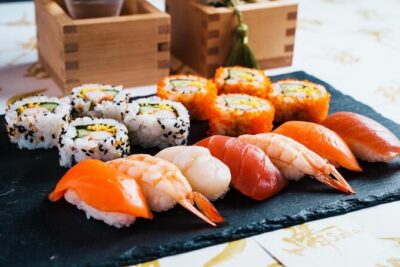
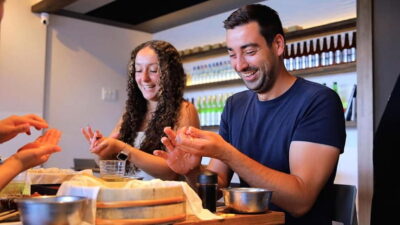
Sushi Making Osaka Roll and Authentic Japanese Sushi Class
Read our review →
Roll and Authentic Sushi Making Class in Dotonbori
Read our review →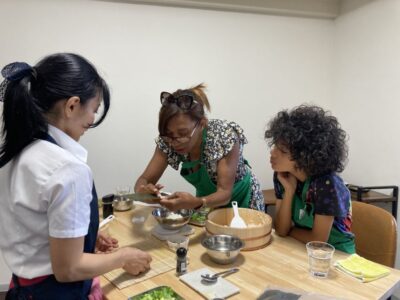
Browse the lists this tour appears in