
Reviewed · DOTONBORI & NAMBA TOURS
Osaka: 2-Hour Local Street Food Tour – Dotonbori & Namba
Osaka’s best introduction may be a hot takoyaki eaten while you walk beneath the neon of Dotonbori. This tour pairs the famous food with quieter corners, including Ukiyo-Koji and Hozenji Temple, so you get more than a quick run through the main signs and crowds.
I like the local food focus and the way guides such as Kaito, Hina, Hiro, and Fuka adjust the stops to your tastes. I also like that the tour teaches small bits of Japanese and helps you order dishes that may look baffling at first.
The catch is simple: food costs are extra, and two hours passes quickly. The formal information also says vegan and gluten-free requests cannot be accommodated, so anyone with a strict dietary need should ask before booking rather than count on a guide’s goodwill.
In This Review
- Key points at a glance
- Why this short tour works in Dotonbori and Namba
- Meeting beneath the Glico Man sign
- Takoyaki, takosen, and the first food stops
- Ukiyo-Koji and Hozenji Temple
- Namba food and the choice between sweet and savory
- The final Dotonbori stop and a quick return
- What the guide adds to the food
- Dietary needs and food expectations
- Who gets the best value from $51
- Booking details that matter
- Should you book this Osaka street food tour?
- FAQ
- How long does the Osaka street food tour last?
- Where does the tour meet?
- What languages are available?
- Is food included in the tour price?
- Which foods can I expect to try?
- Can the tour accommodate vegan or gluten-free diets?
- Is the tour wheelchair accessible?
Key points at a glance
- Glico Man photo stop: Begin with Osaka’s famous running-man sign, a useful first picture and easy way to get your bearings.
- Classic Osaka bites: Expect chances to try takoyaki, takosen, taiyaki, apple candy, pork buns, okonomiyaki, kushikatsu, or doteyaki.
- Hozenji Temple break: Step from bright commercial streets into a small, quiet Buddhist temple site.
- Guides shape the evening: Previous guides including Kaito, Hina, Hiro, Kanako, and Aki have helped guests choose food, find less obvious shops, and learn local phrases.
- Two hours, modest walking: The route covers Dotonbori and Namba without turning into a long city hike.
- Bring a food budget: The $51 tour fee covers the English-speaking guide, not the dishes and drinks you order.
Why this short tour works in Dotonbori and Namba
Dotonbori is Osaka at full volume: glowing signs, canal views, restaurant fronts, and food stalls packed into a small area. Namba adds more shopping streets, narrow lanes, and places where locals eat between errands. If you explore alone, you can certainly find food, but choosing from unfamiliar menus can slow you down.
That is the useful role of this tour. Your guide does not just point at a sign and name a dish. Guides have helped visitors order, explained food customs, taught key Japanese phrases, and adjusted the pace for different groups. Kaito was especially praised for his English, local knowledge, and easy conversation, while Hina and Hiro were often singled out for listening carefully to food preferences.
The tour is also a good first-night activity. You get a quick introduction to Osaka’s eating habits, learn what the names on menus mean, and receive ideas for places to return to later. Repeat visitors can use it differently, asking for dishes they missed on an earlier trip or requesting a route that avoids places they have already seen.
At $51 per person, the value depends on how much help you want. You are paying for access to a local guide and a planned two-hour route, not an all-inclusive meal. Since food and drinks are separate, the final cost rises with every stop. Still, for a first visit, guidance with ordering and neighborhood orientation can make the fee worthwhile.
More of Dotonbori and Namba after dark:
- Osaka Local Foodie Walking Tour in Dotonbori and Shinsekai
★ 5.0 · 985 reviews - Osaka: Dotonbori District River Cruise with Drink Discount
★ 4.2 · 876 reviews - Ultimate Osaka Walking Tour: Castle, Dotonbori & Hidden Gems
★ 5.0 · 862 reviews
Meeting beneath the Glico Man sign
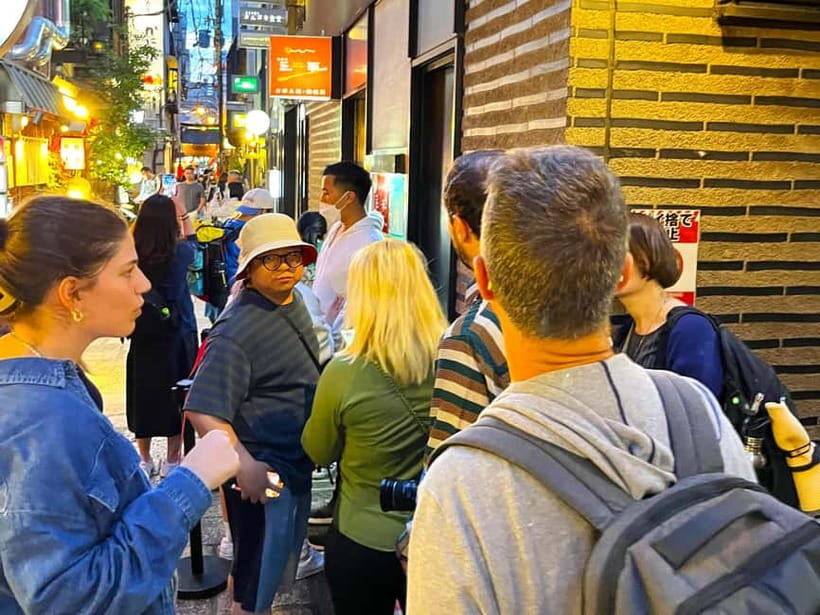
The meeting point is in front of Starbucks Coffee TSUTAYA EBISUBASHI, outside the building. Look for a guide holding a yellow DeepExperience sign. This is worth taking seriously because Dotonbori has crowds, bright storefronts, and several nearby entrances that can look alike.
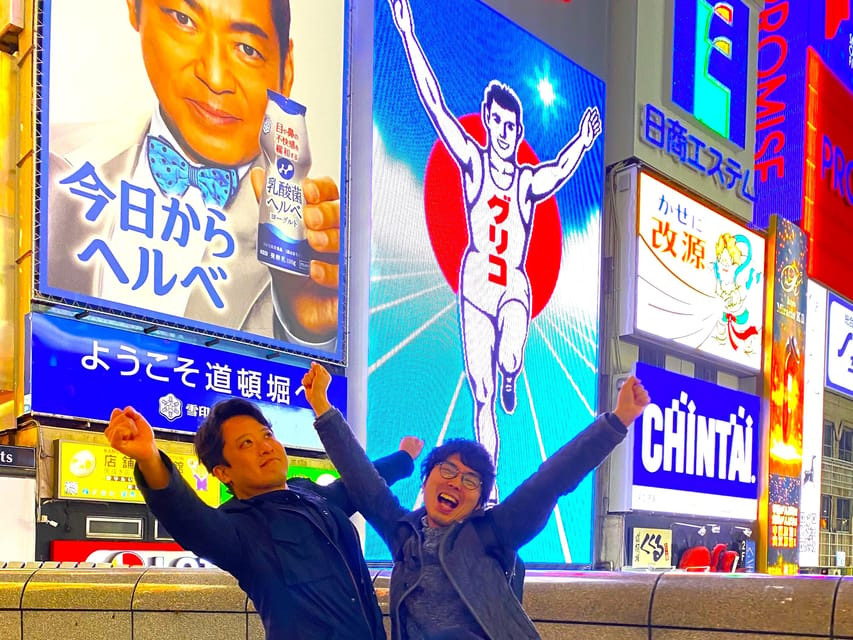
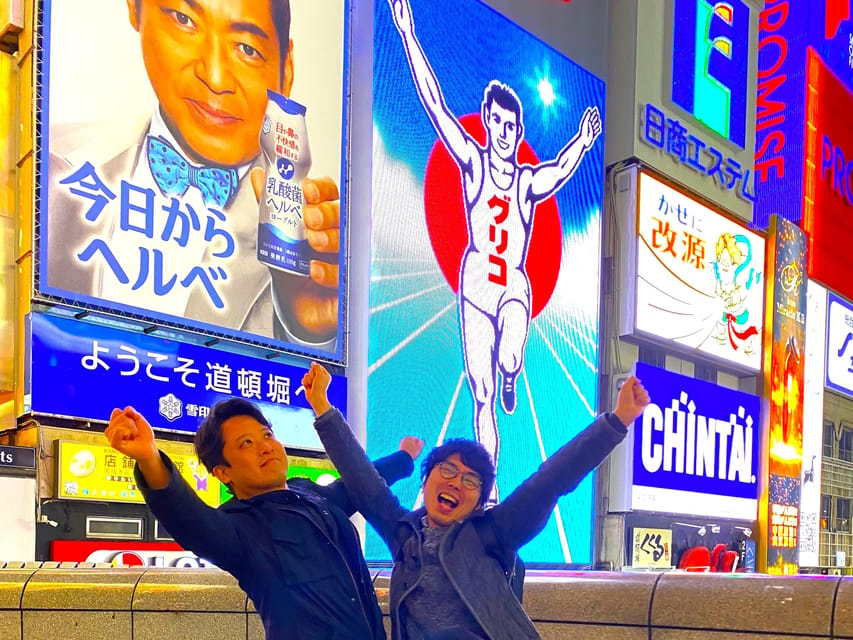
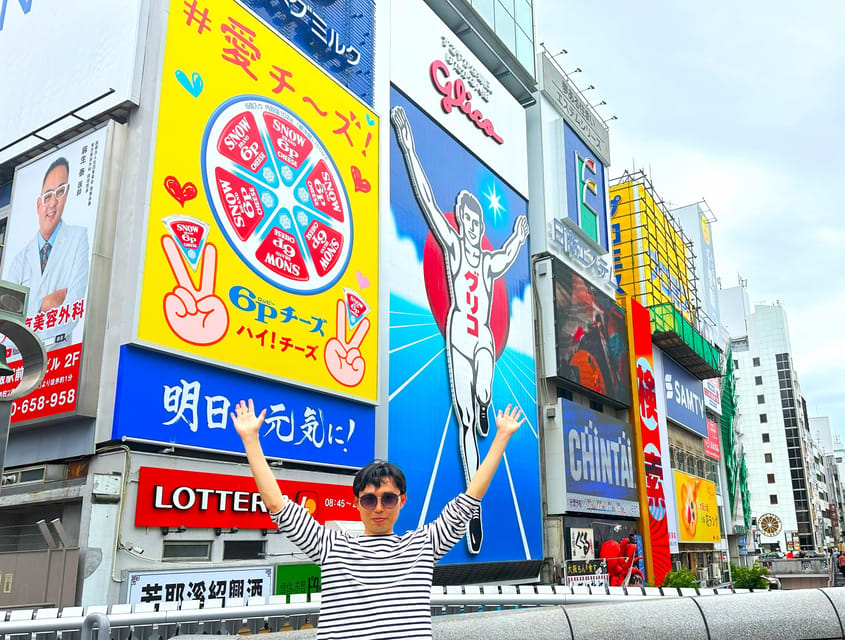
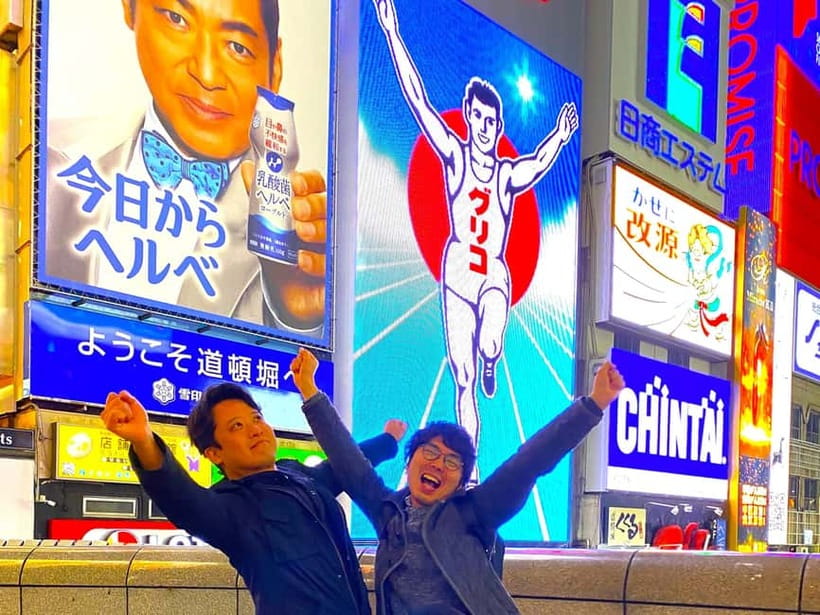
The first scheduled stop is the Glico Man sign, Osaka’s familiar running figure above the canal. You get about 20 minutes for a visit, guided explanation, and photographs. It is a tourist image, but it is also a practical opening: the sign gives you the classic Osaka picture and places you right in the middle of the city’s most famous food district.
I would arrive early enough to identify the Starbucks and check your phone connection before the start time. If you are coming from another part of Osaka, allow extra time for the Namba area’s busy station passages.
Takoyaki, takosen, and the first food stops
The Dotonbori portion allows about 30 minutes for street food and tasting. The most likely stars are takoyaki, takosen, and taiyaki.
Takoyaki are small, hot batter balls usually associated with octopus and Osaka. They are soft inside and can be very hot, so taking a careful first bite is wise. Takosen combines takoyaki with a crisp shrimp cracker, giving you a different texture and a more portable snack.
Taiyaki is a fish-shaped cake that may contain custard or another sweet filling. Apple candy adds another sugary option, while pork buns offer something soft and filling. The point is not to rush through every named item. Your guide may select among them based on what you want and how hungry you are.
Food stalls are part of the appeal, but they also bring practical limits. Portions and availability can vary, and some foods are easier to eat standing than others. Keep one hand free for a phone or camera, and do not expect every dish to appear on every departure.
The price of individual food is not stated, so you should treat the $51 as the guiding fee and carry extra yen or a payment method accepted by the stops. Ask your guide at the beginning how many paid tastings are planned. That will help you control both spending and appetite.
Ukiyo-Koji and Hozenji Temple
A short walk through Ukiyo-Koji changes the mood. This narrow passage offers a more intimate look at the district than the broad main street, with traditional visual touches tucked among modern businesses. It is a brief stop, not a long historical walk, but it helps you see how old lanes and modern Osaka share the same small area.
Hozenji Temple follows, with about 15 minutes for a visit and guide commentary. The temple is a quiet pause in the middle of Namba’s commercial rush. That contrast is the reason this stop earns its place: you can move from flashing signs and food queues to a small religious site where the atmosphere is much calmer.
I would not book this tour expecting a major temple visit. Hozenji is compact, and the time there is short. Instead, think of it as a reset between food stops and a chance to ask your guide about local customs, neighborhood life, or the role of temples in an urban setting.
Several guides have added cultural background along the way. Naoko, for example, was praised for including the temple and lesser-seen streets, while other guides have explained food history and everyday Japanese customs. The quality of that commentary can vary with the individual guide, but the route gives you good opportunities to ask questions.
More street food walks and tastings:
- Osaka: Shinsekai Food Tour with 13-15 Dishes at 5 Eateries
★ 4.8 · 2,204 reviews - Osaka Food Tour: 13 Dishes at 5 Local Eateries
★ 5.0 · 2,149 reviews - Hungry Osaka Street Food Tour:15 Tastings & 3 Drinks with a Local
★ 5.0 · 1,727 reviews - Hungry Osaka Street Food Tour: 15 Dishes & 3 Drinks
★ 4.9 · 694 reviews
Namba food and the choice between sweet and savory
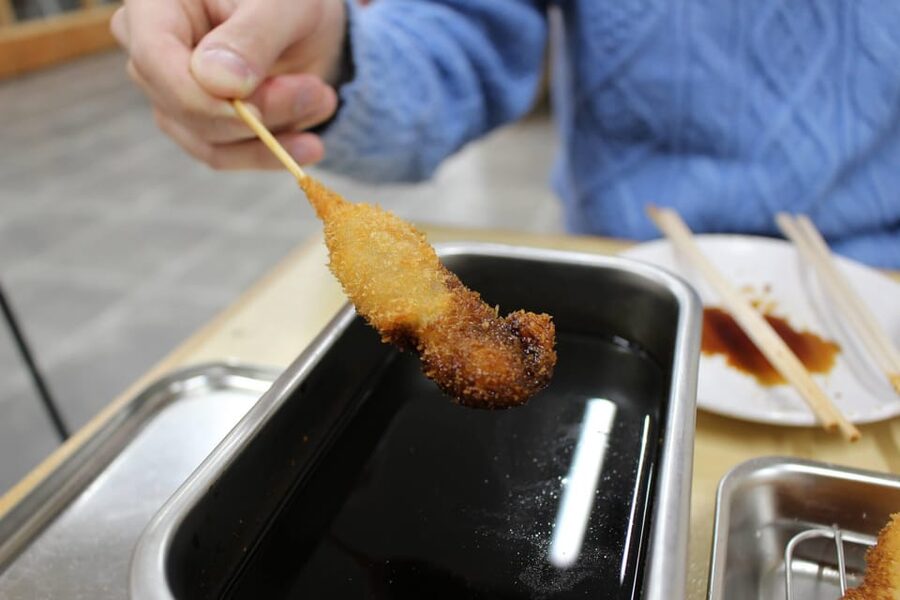
The Namba segment allows another 30 minutes of tasting. This is where the tour can become more personal. Depending on your preferences, your guide may steer you toward okonomiyaki, kushikatsu, doteyaki, dumplings, tempura, sushi, udon, ramen, onigiri, beef, or other local dishes.
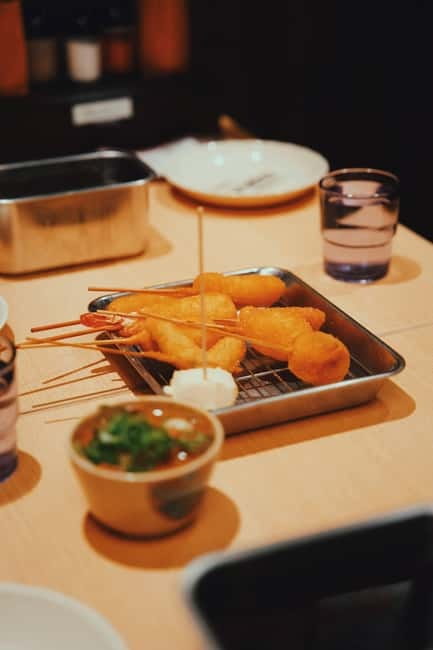
Okonomiyaki is a savory pancake cooked with a mixture of ingredients. Kushikatsu is food served on skewers, often fried. Doteyaki is a slow-cooked beef dish associated with Osaka. These are not just snacks for a photograph. They show how Osaka food ranges from quick street bites to hearty dishes served in small restaurants.
The supplied food choices also include sushi, udon, ramen, Japanese barbecue, and Kobe beef. Do not assume every tour includes all of them. The actual sequence depends on your guide, the group’s preferences, opening hours, and what you have already eaten.
This flexibility is one of the strongest reasons to book. Aki helped guests avoid long lines and offered several food choices. Kanako adjusted stops to requests, and other guides asked what the group wanted before choosing where to eat. If you dislike seafood, prefer sweets, or want to try dishes beyond takoyaki, tell your guide at the start.
Food can also be inexpensive at individual stops. One person specifically praised a restaurant meal for being tasty and good value. That does not mean the entire food bill will be low, but it suggests the tour is not built only around expensive dining rooms.
The final Dotonbori stop and a quick return
The route returns to Dotonbori for another 30-minute food tasting, followed by a final 10-minute photo and guided stop. This gives you a second chance to try a snack you missed earlier or finish with something sweet such as taiyaki or apple candy.
The return to Starbucks TSUTAYA EBISUBASHI keeps the tour easy to follow. You are not dropped in an unfamiliar neighborhood at the end. That matters if you plan to continue shopping, visit another restaurant, or head back to your hotel using the nearby Namba area.
The route is not described as strenuous, and one food tour experience was specifically praised for involving little walking and leaving more time for eating. Still, Dotonbori streets can be crowded, and you will be on your feet for much of the two hours. Comfortable shoes are sensible.
What the guide adds to the food
The guide is the main reason this experience is more useful than simply walking into a restaurant. English and Japanese are available, and many of the named guides received praise for clear communication and friendly conversation.
Kaito appears repeatedly as a strong choice for English-speaking groups. He has helped late arrivals find the meeting point, taught useful Japanese phrases, explained local dishes, and taken groups to places they would not have found alone. Guests also appreciated his experience living outside Japan, which helped him explain cultural differences in a way that felt accessible.
Hina has been praised for choosing local places, offering good English, and researching food options for particular needs. Hiro has helped groups set a comfortable pace and select dishes around what they could and could not eat. Fuka was described as funny, friendly, and easy to understand.
You cannot usually select a particular guide unless the booking process allows it, so treat these names as examples of the range of guiding styles rather than a guarantee. The consistent pattern is more important: the best part of the tour is the conversation, ordering help, and personal adjustments.
Some groups have also used the tour for teenagers, while one person felt it was not especially suited to children. I would place it in the best category for adults, couples, friends, and families with older children who enjoy trying unfamiliar food and listening while they walk.
Dietary needs and food expectations
This is the area where you should be careful. The formal tour information says vegan and gluten-free requests cannot be accommodated. That means you should not book assuming the route will safely meet a strict allergy, intolerance, or ethical diet.
Some guides have nevertheless helped guests find vegetarian or gluten-free choices, including Hina researching options for a group. That is encouraging, but it does not override the official warning. If cross-contamination or ingredients are a serious concern, contact the provider before booking and explain exactly what you need.
For ordinary preferences, the tour appears more flexible. You can tell the guide what you want to try, what you have already eaten, and how adventurous you feel. The more clearly you explain your preferences at the beginning, the more useful the next two hours should be.
Who gets the best value from $51
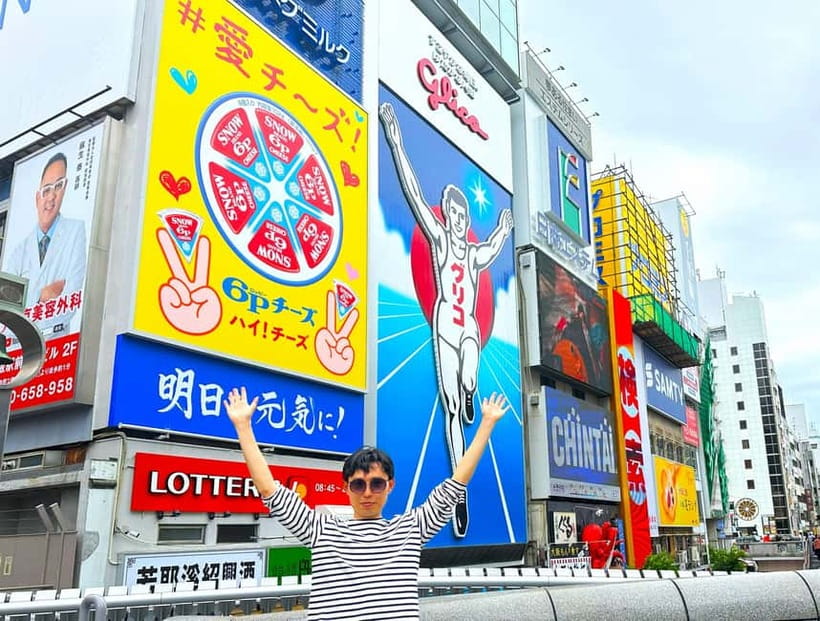
I think the $51 price is easiest to justify if you are new to Osaka, unsure how to order, or eager to try several foods without spending your first evening guessing. The guide’s help can save time, especially in crowded streets where menus may offer little English.
It is also worthwhile for repeat visitors who want a more personal route. You can ask to skip the Glico Man photo if you have already done it, though the listed route includes that stop, and focus your questions on food, neighborhoods, or Japanese phrases.
The value is weaker if you already know Dotonbori well, are comfortable ordering alone, or mainly want a full restaurant meal. Since food and drink are not included, you will still pay for what you eat. The tour is an introduction and a social food walk, not a fixed tasting menu.
Private or small-group options are available. A smaller group should make it easier to ask questions and shape the food choices, while a shared group may offer more conversation. The exact group arrangement should be checked when you book.
The tour is wheelchair accessible, which broadens its usefulness, though the streets and crowd levels can still affect how comfortable movement feels. Ask the provider about your specific needs before departure.
Booking details that matter
The experience lasts two hours, with start times shown according to availability. English and Japanese-speaking guides are offered. You meet outside Starbucks Coffee TSUTAYA EBISUBASHI, where the guide holds a yellow DeepExperience sign.
Cancellation is free up to 24 hours before the tour for a full refund. You can also reserve and pay later, which helps if your Osaka schedule is still changing. These policies are useful, but the more important planning issue is your food budget and dietary needs.
I would book this early in your Osaka stay if you want the guide’s restaurant suggestions to shape later meals. Bring a phone for the Glico Man photo, comfortable shoes, and enough money for food and drinks. If you are hoping for a specific dish such as Kobe beef, sushi, or ramen, mention it before the route begins rather than assuming it is included.
Should you book this Osaka street food tour?
Book it if you want a friendly introduction to Dotonbori and Namba, enjoy sampling several small dishes, and value a guide who can explain menus and local customs. The combination of takoyaki, taiyaki, narrow lanes, Hozenji Temple, and the Glico Man sign gives you a compact but varied first look at Osaka.
Skip it if you need guaranteed vegan or gluten-free food, want all costs included, or prefer to spend two hours seated at one restaurant. For most first-time visitors who want help finding local food and a few places to return to later, $51 plus the food bill is a fair price for an easy start.
FAQ
How long does the Osaka street food tour last?
The tour lasts two hours, with available starting times shown when you check the booking options.
Where does the tour meet?
Meet your guide outside Starbucks Coffee TSUTAYA EBISUBASHI. The guide will hold a yellow sign with the DeepExperience logo.
What languages are available?
Live guides are available in English and Japanese.
Is food included in the tour price?
No. The $51 per-person price includes the English-speaking guide, while food and drinks are paid separately.
Which foods can I expect to try?
Possible foods include takoyaki, takosen, taiyaki, apple candy, pork buns, okonomiyaki, kushikatsu, and doteyaki. Other stops may include sushi, udon, ramen, dumplings, tempura, onigiri, beef, or Japanese barbecue, depending on the route and your preferences.
Can the tour accommodate vegan or gluten-free diets?
The formal information says vegan and gluten-free requests cannot be accommodated. Some guides have helped guests locate vegetarian or gluten-free choices, but you should contact the provider before booking if you have a strict dietary requirement.
Is the tour wheelchair accessible?
Yes, the activity is listed as wheelchair accessible. Private or small-group options are also available.
More 2-Hour Experiences in Osaka
- Osaka: 2-Hour Nightlife District Walking & Local Food Culture
★ 5.0 · 199 reviews - 1.5〜2 Hours Traditional Kintsugi Work Shop in Namba Osaka
★ 5.0 · 75 reviews - Osaka 2-Hour Genuine Kendo / Samurai Experience In Japan
★ 5.0 · 65 reviews
Just added around Osaka
- Nara Day Trip from Osaka with a Licensed Guide★ 5.0 · 3 reviews
- Osaka Early Morning Osaka Castle Tour Avoid Crowds★ 5.0 · 3 reviews
- Guided Tour of Some Attractions in Osaka by Private Car★ 5.0 · 3 reviews
- Private Transfer Between Kyoto and Kansai Airport KIX★ 5.0 · 3 reviews
- Shared Arrival Transfer: Osaka Itami Airport to Osaka City★ 5.0 · 3 reviews
- Osaka: Sushi Making Class and Dotonbori Food Tour★ 4.7 · 3 reviews
- Osaka Night Photography Workshop★ 5.0 · 3 reviews
- Kyoto Full day Tour Kinkakuji, Kiyomizu-dera and Fushimi Inari★ 4.5 · 3 reviews
Dotonbori & Namba Tours, compared.

Osaka Local Foodie Walking Tour in Dotonbori and Shinsekai
Read our review →
Dotonbori District River Cruise with Drink Discount
Read our review →
Ultimate Osaka Walking Tour: Castle, Dotonbori & Hidden Gems
Read our review →


Dotonbori River Cruise with Glico Sign & Neon Views
Read our review →
Browse the lists this tour appears in