
Reviewed · OSAKA BAR HOPPING & NIGHTLIFE
Osaka: 2-Hour Nightlife District Walking & Local Food Culture
Osaka’s best introduction may be a walk through Namba’s food streets, where neon signs, tiny shrines, professional kitchen tools, and market stalls all sit within a short route. This two-hour outing connects the famous Glico Sign and Kuromon Market with less obvious stops such as Hozenji Temple and Sennichimae Doguyasuji.
I like the tour’s small-group limit of 15, which gives you a better chance to ask about dishes, restaurants, and local customs. I also like its practical mix of sightseeing and food culture, with guides such as Kaz, Nako, and Sayaka helping guests find their bearings. The main catch is simple: food and drinks are not included, and the tour does not stop for a sit-down meal.
In This Review
- Key points at a glance
- Why this two-hour Osaka walk works
- Meeting the guide near Dotonbori
- Dotonbori and the Glico Sign
- Hozenji Temple and the Fudo Myo-o statue
- Doguyasuji, Osaka’s street of cooking tools
- Kuromon Market, Osaka’s food center
- What the guides add
- Food costs and the value of the experience
- Who should book this Namba walk
- Should you book this Osaka food walk?
- FAQ
- How long does the Osaka nightlife and food walk last?
- Where does the tour start?
- Where does the tour end?
- Is food included in the tour price?
- What places are included on the route?
- How large can the group be?
Key points at a glance
- Four compact Osaka stops: Connect Dotonbori, Hozenji Temple, Doguyasuji, and Kuromon Market in one walk.
- Street food guidance: Learn about takoyaki, gyoza, seafood, sushi, fruit, and other local specialties, but pay vendors separately.
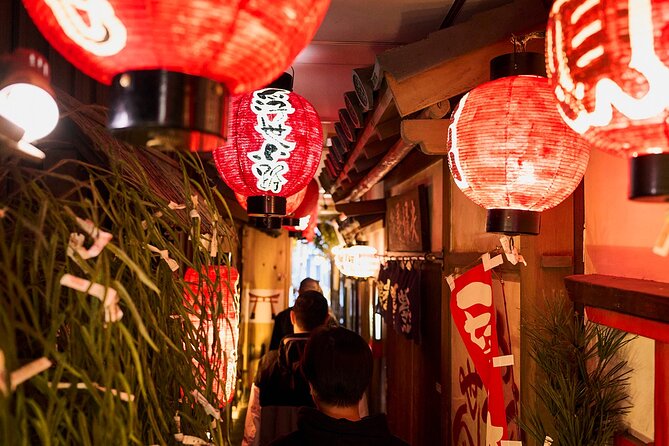
- A quieter side of Namba: Hozenji Yokocho and its moss-covered Fudo Myo-o statue offer a calm break from the bright main streets.
- Useful shopping context: Doguyasuji shows where restaurants buy professional knives, pans, dishes, and cooking tools.
- Local restaurant advice: Use the guide’s recommendations to plan meals for the rest of your Osaka stay.
- Easy two-hour format: The route works well as a first look at Namba or a short evening activity before dinner.
Why this two-hour Osaka walk works
This is not simply a march from one famous photo stop to another. The route gives you four different views of Osaka’s relationship with food.
You begin in Dotonbori, the city’s loud, bright entertainment center. Then you turn into Hozenji Yokocho, where narrow lanes and a small temple offer a change of pace. Doguyasuji shifts the focus from eating to cooking, and Kuromon Market brings you back to ingredients, seafood, meat, fruit, and ready-to-eat dishes.
That sequence matters. You do not just taste or look at food. You see the places, tools, ingredients, and habits that support Osaka’s food culture.
The tour costs $31.84 per person, before anything you buy from food stalls. I consider that a fair price for a guided introduction, particularly if you are visiting Osaka for the first time and want more than a list of places pinned on a map. The value comes from the route and the questions you can ask, not from included meals.
If you already know Namba well, or if you prefer to spend two hours sitting down for a full meal, this may feel too quick. It is a sampler and orientation walk, not a formal tasting menu.
More bar hopping and izakaya nights:
- Osaka: Dotonbori District River Cruise with Drink Discount
★ 4.2 · 876 reviews - Osaka: Namba Pub Bar Crawl with a Local Guide
★ 4.9 · 424 reviews - Osaka: Izakaya Bars Guided Walking Tour
★ 4.9 · 385 reviews
Meeting the guide near Dotonbori
The meeting point is outside Don Quijote Dotonbori Midosuji at 2-chome-5-9 Nishishinsaibashi, in Chuo Ward. The activity ends back at the same meeting point, which makes planning easier if you have dinner, a train, or another booking afterward.
The guide speaks English. Names connected with this experience include Kaz, Nako, and Sayaka. The quality of a short food walk often depends on the person leading it, and the available feedback gives these guides particular attention for friendly explanations, local direction, and a good feel for Namba.
Because the route is limited to about two hours, arrive ready to walk and keep your plans nearby. You will be moving through shopping streets, temple lanes, and market areas rather than staying in one place.
The group can have up to 15 people. That is still a group, but it is more manageable than a large coach-style outing. A smaller party also makes it easier to ask what a dish is, how to order it, or where to eat later.
Dotonbori and the Glico Sign
The first stop is the Glico Sign, one of Osaka’s most familiar landmarks. You get about 30 minutes here, with time to take in the Dotonbori scene and begin looking at Osaka’s street food.
The useful part of this stop is not just the photograph. Dotonbori gives you a quick lesson in the city’s visual food language: oversized signs, restaurant displays, cooking smells, and compact shops competing for attention. A guide can help separate the tourist-facing spectacle from the dishes that fit your tastes.
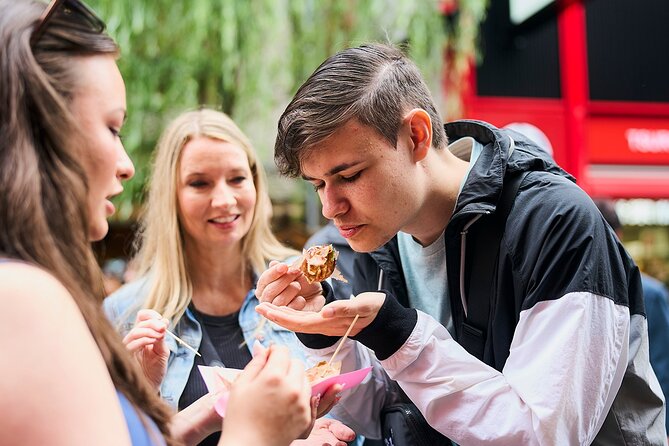
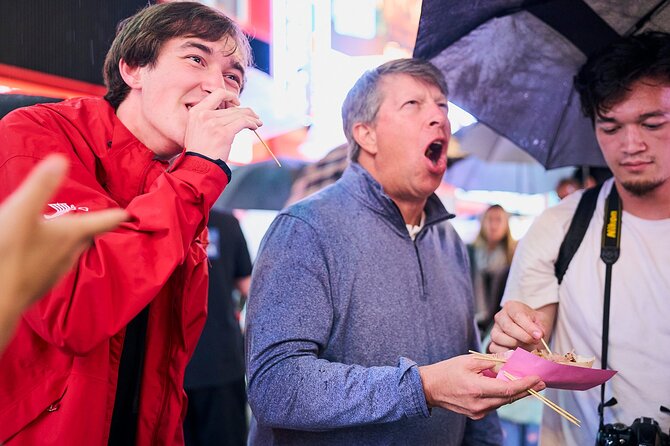
Takoyaki and gyoza are specifically part of the food focus. Takoyaki are hot batter balls cooked around pieces of octopus, while gyoza are filled dumplings commonly prepared on a hot plate. You should expect to buy these yourself if you want to eat them. The tour price does not cover vendor purchases.
That arrangement gives you freedom. You can spend a little or a lot, skip a dish, or save your appetite for Kuromon Market. The tradeoff is that the experience does not provide a set number of tastings, so your final food bill depends on your choices.
Hozenji Temple and the Fudo Myo-o statue
A short walk brings you to Hozenji Yokocho and Hozenji Temple. The stop lasts about 20 minutes, but it adds an important pause to the route.
The temple is known for its moss-covered statue of Fudo Myo-o. Visitors traditionally splash water over the statue while making a wish, which explains its unusual green appearance. In the middle of busy Namba, the temple’s scale and mood feel strikingly different from Dotonbori.
I especially like this stop because it gives the walk some balance. Without it, the outing could become a string of signs and food stalls. Here, your guide can explain a small local custom, and you get a quieter place to notice how old religious sites remain part of a modern commercial district.
Keep your expectations in check. Hozenji is a small temple, not a sprawling temple complex with a long sightseeing program. Its appeal comes from atmosphere, location, and the statue’s distinctive surface. If you want a major historical site, this stop will be brief. If you want a calm corner tucked into a busy neighborhood, it earns its place.
More guided walks on foot:
- Deep Backstreet Osaka Tours (Option to add Dinner)
★ 5.0 · 1,290 reviews - Osaka Local Foodie Walking Tour in Dotonbori and Shinsekai
★ 5.0 · 985 reviews - Osaka: Deep Backstreets Walking Tour with Dinner Option
★ 4.9 · 902 reviews - Ultimate Osaka Walking Tour: Castle, Dotonbori & Hidden Gems
★ 5.0 · 862 reviews
Doguyasuji, Osaka’s street of cooking tools
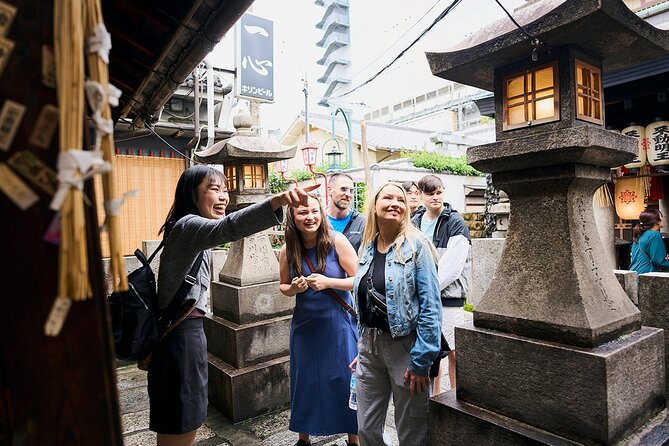
Sennichimae Doguyasuji Shopping Street is one of the most useful stops for understanding Osaka’s restaurants. The focus here is on kitchen tools used by professionals.
You might see shops selling knives, pans, dishes, utensils, restaurant signs, and other equipment associated with Japanese cooking. Even if you do not plan to buy anything, the street explains how much of a restaurant’s identity comes from its tools and presentation.
This is also a good place to ask practical questions. You can find out what a particular knife is for, which items make sensible souvenirs, or why Japanese restaurants use certain serving pieces. The guide’s presence helps turn a shopping street into a lesson in the work behind the meal.
The stop lasts about 20 minutes, so do not plan on a long shopping session. It is enough time to browse and learn, but perhaps not enough to compare every knife or cookware set. If you are serious about buying a kitchen item, note the shop you like and return later with more time.
For many people, this will be the most distinctive part of the route. Dotonbori is famous, and Kuromon is well known, but Doguyasuji shows a side of Osaka that you could easily miss if you only followed restaurant recommendations.
Kuromon Market, Osaka’s food center
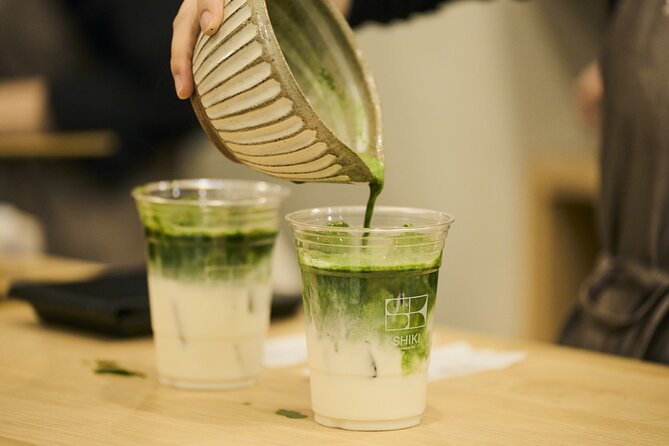
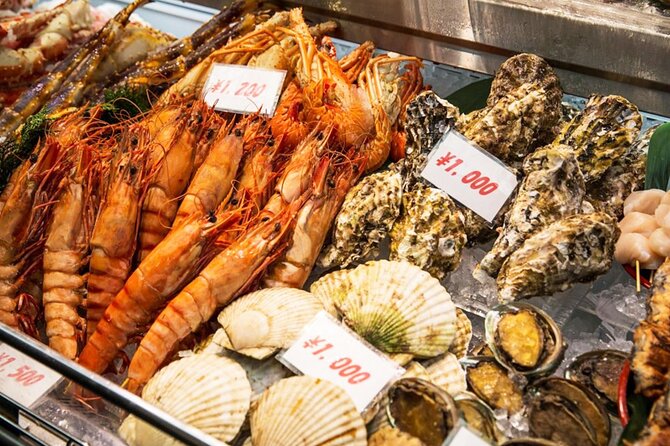
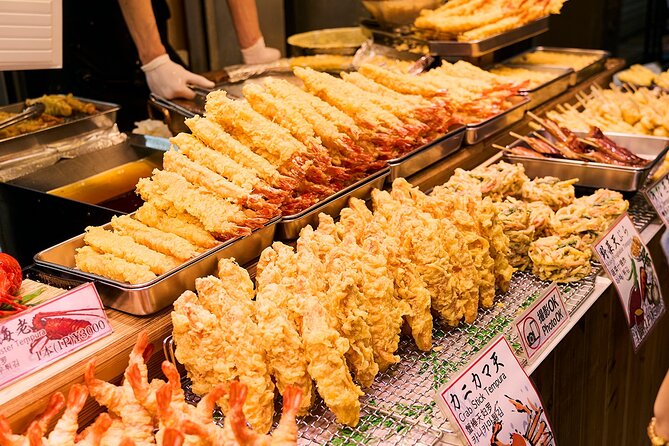
The final major stop is Kuromon Market, often called Osaka’s Kitchen. You get around 30 minutes to see a market filled with seafood, wagyu beef, fruit, sushi, and other foods.
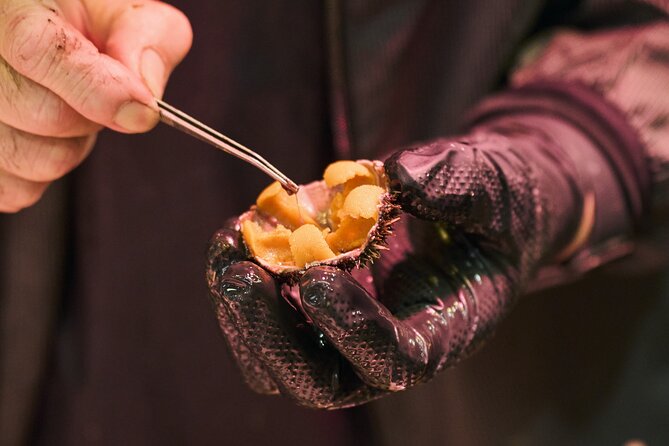
This is the place to watch ingredients become an immediate meal. Seafood displays, prepared portions, and market snacks make it easy to compare what looks appealing. Your guide can help you understand what you are seeing and point out foods worth considering.
Again, food is not included. The tour does not stop for a sit-down meal, so treat Kuromon as a chance to sample or browse, not as dinner. Bring some Japanese yen or another accepted payment method for purchases, though the supplied information does not specify which payment methods each vendor takes.
The 30-minute visit is enough for a first look, but the market can reward a slower pace. If you find something you want to try, you may need to choose between eating it and keeping up with the group. A smart plan is to use the guided visit to identify what interests you, then return independently if your schedule allows.
Kuromon can also feel more commercial than a neighborhood market, with food prepared for quick sampling. That does not make it unhelpful. It simply means you should view it as a lively food stop and shopping area rather than a quiet place to watch daily grocery buying.
What the guides add
The guide is the main reason to book this instead of walking the same route alone. You can find the Glico Sign, Hozenji Temple, Doguyasuji, and Kuromon Market without assistance. What you cannot easily find is the connection between them, or the best questions to ask while you are there.
Kaz is praised for showing both classic and less obvious food spots. Nako is associated with a friendly walk around Namba, the markets, and nearby sights. Sayaka has led an outing that included food, local sights, history, sake, and even a stop involving pachinko. Those details suggest that the conversation can extend beyond a fixed checklist, though the exact route and emphasis may depend on your guide and group.
Ask direct questions. What should you order if you dislike octopus? Which Osaka foods are best for a quick snack? Where should you eat after the tour? Is a kitchen knife practical to take home? The answer to these questions may be more useful than another general explanation of Osaka.
The tour has a 4.9 rating from 199 ratings and a 97 percent recommendation rate. Those figures point to consistently strong satisfaction, especially with the guides and the introduction to Namba. They do not change the basic limits: this is short, food is extra, and the group may include up to 15 people.
Food costs and the value of the experience
At $31.84, this is not a cheap meal, because it is not a meal. You are paying for an English-speaking guide, a planned route, and local context. Your own food and drink purchases come on top.
I would budget the tour price separately from your snack money. If you want takoyaki, gyoza, seafood, or another market item, decide in advance how much you want to spend. The guide can help you choose, but you are not locked into a tasting package.
The strongest value comes early in an Osaka visit. Use the walk to learn the layout of Namba, collect restaurant ideas, and notice dishes you can seek out later. If the guide gives you a restaurant recommendation that saves you from a poor meal, the price may feel well spent.
The value is weaker for someone who has already explored Dotonbori and Kuromon Market, or who wants a long, seated food experience. In that case, spending the money directly on a meal may suit you better.
Who should book this Namba walk
I would recommend this experience to first-time visitors who want a short introduction to Osaka’s food culture without committing to a full-day tour. It also suits solo visitors and couples who like asking questions while walking.
It is a good choice if you want:
- A first look at Namba with an English-speaking guide
- Street food ideas without a fixed tasting menu
- A mix of famous sights and practical local details
- Advice about restaurants for later in your trip
- A compact activity that ends where it starts
Families and mixed-interest groups may also find the route useful because it includes more than food. One person can enjoy the signs and market, another can focus on kitchen tools, and another can appreciate the temple stop.
I would think twice if you need a full dinner, dislike walking through crowded shopping areas, or want every food cost included in the booking price. The tour has no stated meal package and no sit-down dining stop.
Confirmation arrives at booking, the activity is near public transportation, and most people can participate. Free cancellation is available when you cancel at least 24 hours before the start time. Cancellations within 24 hours are not refunded, and changes in that period are not accepted.
Should you book this Osaka food walk?
Book it if you want orientation, local food advice, and a manageable route through Namba. The combination of Dotonbori, Hozenji, Doguyasuji, and Kuromon gives you more range than a simple street-snack outing.
The best time to take it is near the start of your Osaka stay. You will still have time to use the guide’s restaurant suggestions, revisit Kuromon, or return to Doguyasuji if you spot something worth buying.
Skip it if you want a generous number of included tastings or a relaxed dinner. For everyone else, $31.84 is a sensible price for two hours of context, especially when the guide helps you see how Osaka eats, cooks, shops, and worships within a compact part of the city.
FAQ
How long does the Osaka nightlife and food walk last?
The experience lasts approximately two hours.
Where does the tour start?
It starts at Don Quijote Dotonbori Midosuji, located at 2-chome-5-9 Nishishinsaibashi, Chuo Ward, Osaka, 542-0086, Japan.
Where does the tour end?
The activity ends back at the meeting point.
Is food included in the tour price?
No. Food and drinks from street vendors are not included, and the tour does not stop for a sit-down meal.
What places are included on the route?
The route includes the Dotonbori Glico Sign, Hozenji Yokocho and Hozenji Temple, Sennichimae Doguyasuji Shopping Street, and Kuromon Market.
How large can the group be?
The tour has a maximum of 15 participants.
More 2-Hour Experiences in Osaka
- Osaka: 2-Hour Local Street Food Tour – Dotonbori & Namba
★ 4.6 · 95 reviews - 1.5〜2 Hours Traditional Kintsugi Work Shop in Namba Osaka
★ 5.0 · 75 reviews - Osaka 2-Hour Genuine Kendo / Samurai Experience In Japan
★ 5.0 · 65 reviews
Just added around Osaka
- Nara Day Trip from Osaka with a Licensed Guide★ 5.0 · 3 reviews
- Osaka Early Morning Osaka Castle Tour Avoid Crowds★ 5.0 · 3 reviews
- Guided Tour of Some Attractions in Osaka by Private Car★ 5.0 · 3 reviews
- Private Transfer Between Kyoto and Kansai Airport KIX★ 5.0 · 3 reviews
- Shared Arrival Transfer: Osaka Itami Airport to Osaka City★ 5.0 · 3 reviews
- Osaka: Sushi Making Class and Dotonbori Food Tour★ 4.7 · 3 reviews
- Osaka Night Photography Workshop★ 5.0 · 3 reviews
- Kyoto Full day Tour Kinkakuji, Kiyomizu-dera and Fushimi Inari★ 4.5 · 3 reviews
Osaka Bar Hopping & Nightlife, compared.

Dotonbori District River Cruise with Drink Discount
Read our review →
Meet Osaka local Friend & Fun Chat All We Can Drink Party Ticket
Read our review →
Osaka Local Bar Crawl in Dotombori & Uranamba Area
Read our review →
3Hour Osaka Pub Crawl Bar Hopping Nightlife Guided Tour in Namba
Read our review →Browse the lists this tour appears in