
Reviewed · DOTONBORI & NAMBA TOURS
Nostalgic Osaka walk, totally different from Dotonbori
Osaka’s most revealing streets may be the quiet ones. This two-hour walk with Chieko takes you through Karahori, an old neighborhood within walking distance of central Osaka, where tatami makers, small food shops, narrow lanes, and century-old machiya houses still shape daily life.
I like two things right away: the small maximum of six people, which gives you room to ask questions, and the mix of history with ordinary neighborhood life. You are not simply looking at old buildings from the outside. You can see a tatami workshop, browse local shops, and trace remnants of Osaka’s old defenses.
The main drawback is physical rather than cultural. You will walk for most of the two hours, sometimes uphill or downhill, and the route includes narrow paths beside homes. Come prepared to walk steadily and quietly, especially where older residents still live.
In This Review
- Key points to know before you book
- Why Karahori makes a better history lesson than another neon street
- Starting with tatami at Inoue Seijosho
- One hour on Karahori Shopping Street
- A renovated house at クーデリーカフェ
- Bonito, chocolate, and the pleasure of small shops
- Len Karahori and the new life of old houses
- An alley café beside an old Osaka castle wall
- What Chieko adds to the walk
- Price, pace, and practical value
- Who will get the most from this Osaka walk
- Should you book the Karahori walk?
- FAQ
- How long does the Nostalgic Osaka walk last?
- Is the tour offered in the morning and afternoon?
- Where does the tour start?
- Where does the tour end?
- How many people can join the tour?
- What is included in the price?
- Are meals, coffee, and tea included?
- Can I cancel for a full refund?
- What happens if the weather is poor?
Key points to know before you book
- Karahori instead of Dotonbori: See a quieter, older side of Osaka close to the city center.
- Chieko’s personal touch: Your guide shares neighborhood history, daily customs, local shops, and practical Osaka suggestions.
- Six people maximum: The small group suits anyone who prefers conversation over a large, scripted tour.
- A useful shopping route: Find local food, crafts, sweets, and gifts that differ from the usual airport or chain-store purchases.
- Two hours on foot: The route includes slight slopes, alleys, and plenty of standing and walking.
- Morning or afternoon departures: You can fit the walk around other Osaka plans.
Why Karahori makes a better history lesson than another neon street
Dotonbori is fun, but it gives you Osaka at full volume: bright signs, packed lanes, restaurant queues, and constant motion. Karahori offers a slower look at how the city changed while retaining pieces of its older shape.
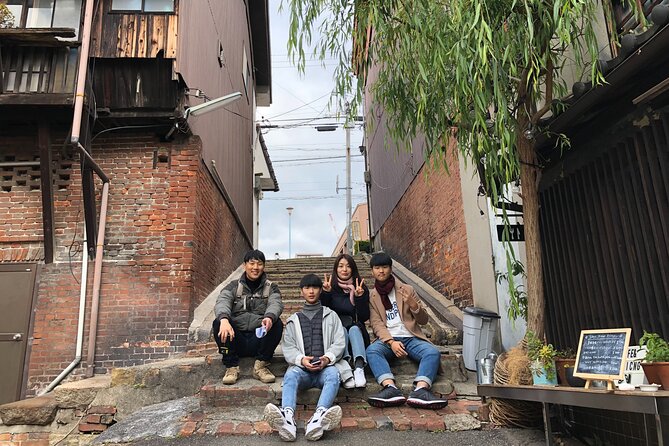
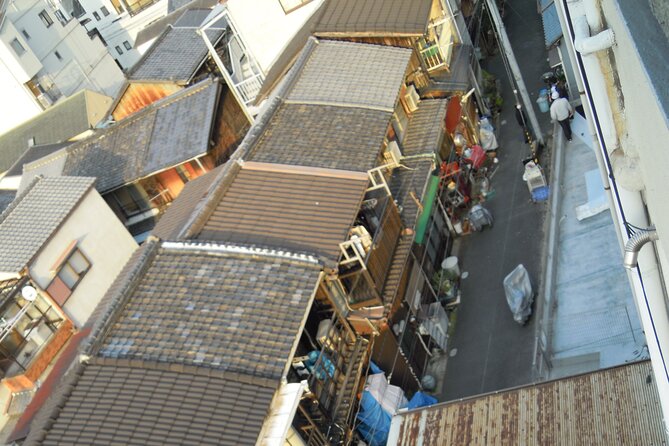
The neighborhood is described as nostalgic and historic, and that is most apparent in the old machiya houses. Some are more than 100 years old. Others have been repaired or converted into cafés, shops, and small commercial spaces. You get to see both sides of preservation: buildings that still serve local families and old structures given new use.
Chieko’s role matters here. An independent walk through Karahori could show you attractive streets, but it would not necessarily explain why a lane bends, where an old moat once ran, or which shops are worth entering. Her connection with local shopkeepers also helps the route feel like an introduction to a neighborhood rather than a sightseeing checklist.
The group size, capped at six, is a real advantage. You can ask about Japanese homes, food, local customs, and everyday Osaka without trying to be heard over a crowd. Past participants also used the time to practice Japanese and talk about ordinary life in Japan, which tells you what kind of tour this is: social, conversational, and personal.
More of retro Shinsekai and the backstreets:
- Osaka: Shinsekai Food Tour with 13-15 Dishes at 5 Eateries
★ 4.8 · 2,204 reviews - Osaka Local Foodie Walking Tour in Dotonbori and Shinsekai
★ 5.0 · 985 reviews - Osaka: Tsutenkaku Tower Entry Ticket
★ 3.8 · 125 reviews
Starting with tatami at Inoue Seijosho
The first stop is Inoue Seijosho, a tatami shop where the master shows you the materials and the machine used to make traditional Japanese floor mats. The visit lasts about 10 minutes and has no admission charge.
Tatami is one of those Japanese details you may notice in temples, inns, restaurants, or homes without knowing how it is made. Seeing the materials and equipment gives the object a practical context. It is not just a decorative symbol of Japan. It is a working craft with tools, materials, and a place in modern homes.
This stop is short, so do not expect a full workshop lesson or a long demonstration. Its value comes from seeing a real neighborhood trade at close range. For anyone interested in architecture, interiors, Japanese craftsmanship, or traditional homes, it is a smart opening to the walk.
One hour on Karahori Shopping Street
Karahori Shopping Street is the main part of the experience, with about an hour spent around the local shopping street and nearby lanes. This is where you see daily commerce rather than a polished tourist district.
Small food retailers and neighborhood shops give the area its working character. You may browse for something to eat or take home, but purchases are your responsibility. Meals, coffee, and tea are not included, so carry some yen if you want to stop and buy something.
The surrounding lanes contain old machiya houses, some more than a century old. Chieko points out the way the neighborhood’s terrain connects to its past, including places where an old moat once ran and sections of historic wall that remain. That kind of explanation is useful because Osaka’s history is not always presented in one grand monument. It often survives in property lines, slopes, walls, and buildings people still use.
The street can also be a good place to choose gifts. The route favors small local businesses, and the shopping has a more personal feel than buying standard souvenirs at a large chain. You might find food, handmade items, or small objects that do not appear in airport shops, Hands, or LOFT.
There is a tradeoff. A local shopping street does not operate like a museum with fixed displays and guaranteed demonstrations. Shops may have their own opening patterns, and the experience depends partly on what is available that day. That uncertainty is part of the neighborhood character, but shoppers expecting a set retail program should keep it in mind.
A renovated house at クーデリーカフェ
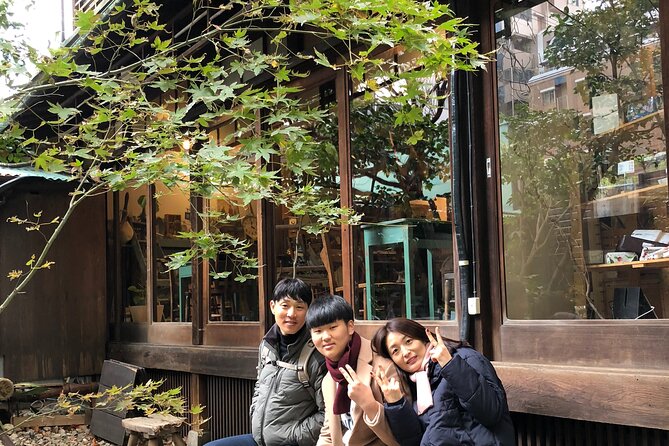
The next stop is クーデリーカフェ, a café in a renovated old house. The visit lasts around 15 minutes and has no admission charge.
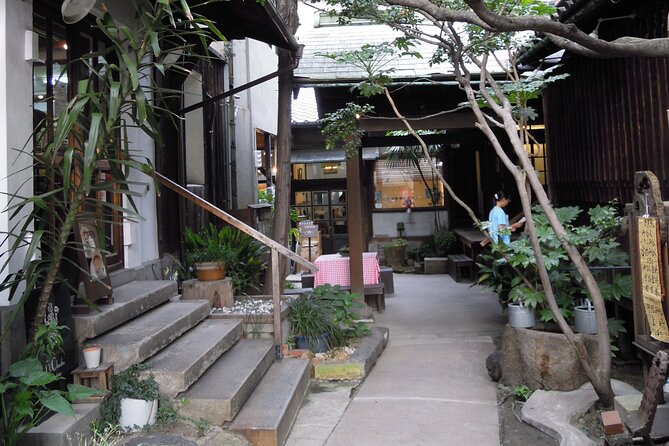
The interesting part is the building as much as the café itself. Renovated traditional houses show how Karahori keeps older structures in use instead of treating them only as historic relics. The café also offers a chance to browse items that are less predictable than standard Osaka souvenirs.
Coffee and tea are not included. You can buy them yourself if you want one, but the schedule is short, so this is not necessarily a long café break. Think of it as a compact stop in a reused traditional building, with the option to shop or purchase a drink.
If you like small design shops, local crafts, or gifts with a sense of place, this stop may be one of the most useful. If you prefer a long sit-down break during a walking tour, the 15-minute timing may feel brief.
More of Dotonbori and Namba after dark:
- Osaka: Dotonbori District River Cruise with Drink Discount
★ 4.2 · 876 reviews - Ultimate Osaka Walking Tour: Castle, Dotonbori & Hidden Gems
★ 5.0 · 862 reviews - Tea Ceremony Experience in Osaka Doutonbori
★ 5.0 · 754 reviews - Osaka: Namba Pub Bar Crawl with a Local Guide
★ 4.9 · 424 reviews
Bonito, chocolate, and the pleasure of small shops
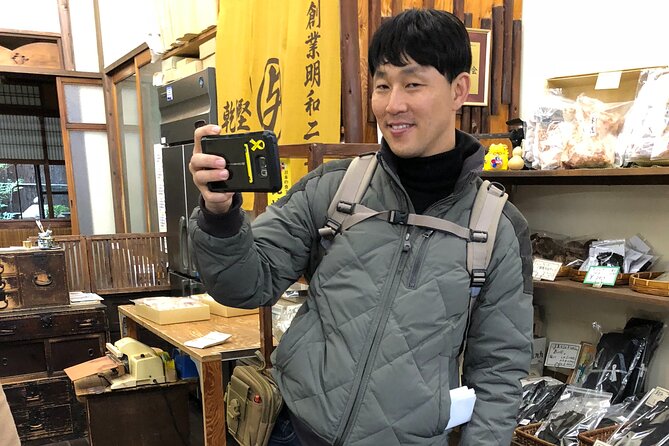
Maruyo-shoten is a bonito shop said to have been established in 1765, with more than 250 years of history. The stop lasts only about five minutes, but it introduces a food with an important place in Japanese cooking.
Chieko explains what authentic bonito is, giving you context for a product that can otherwise seem like just another packaged food item. Because the stop is so brief, it works best as a focused introduction. You may want to purchase something, but the tour does not include food or tasting.
Next comes chocolatier Ek Chuah at its Karahori Kura main shop. This is another five-minute stop, and it adds a modern craft business to the older shopping street. The contrast is appealing: one shop connects to a long-established food tradition, while the chocolatier offers a more contemporary specialty.
You do not need to be a serious shopper to enjoy this part. The stops show how local commerce can combine old foodways, newer businesses, and neighborhood buildings. The short visits also keep the walk moving, though anyone hoping for a full tasting session should plan to buy independently and ask Chieko how much time is available.
Len Karahori and the new life of old houses
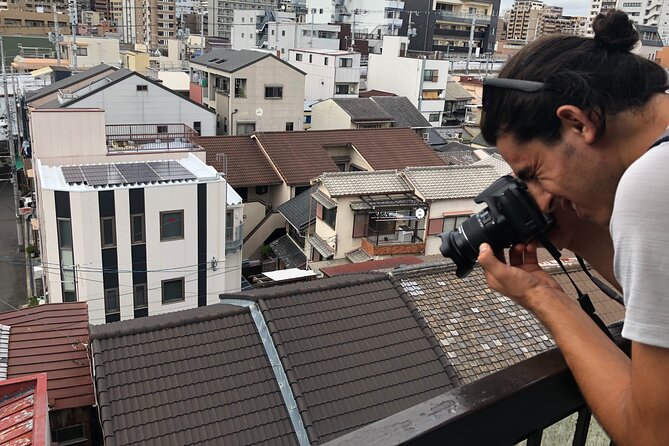
Len Karahori is a refurbished commercial complex in a traditional house. The visit lasts about 10 minutes and offers more opportunities to find unusual souvenirs.
This stop helps explain the neighborhood’s current appeal. Karahori is not frozen in the past. Old houses have been adapted for shops and small businesses, allowing you to see how preservation and new use can work together.
The word refurbished is important. You are not only looking at untouched architecture. You are seeing buildings altered for modern commerce while retaining a traditional feel. That makes this stop especially useful if you want to understand how Osaka handles older neighborhoods in everyday life.
Shopping is optional, and the route does not promise a particular item. Still, Chieko can point you toward places that fit your interests. One participant who loved cats received a more tailored route with cat-related information, which suggests that the walk can adjust in small ways when the group shares a particular interest.
An alley café beside an old Osaka castle wall
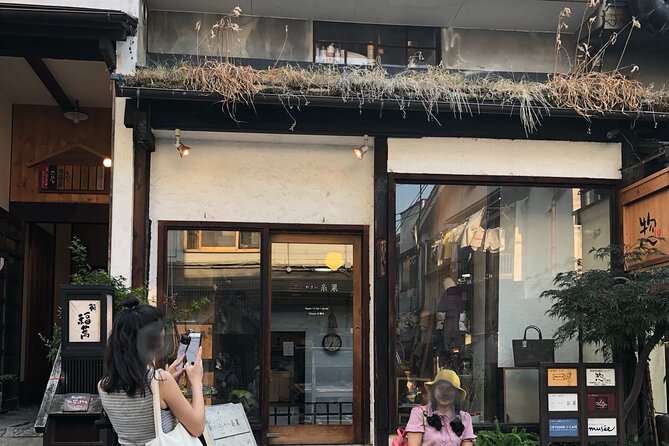
The final listed stop is an unmarked café in an alley, beside an original Osaka castle moat wall believed to date from the 15th century. The itinerary does not give a duration for this stop, but its setting may be the most striking historical detail on the route.
A wall beside a café and residential lane is exactly the kind of thing you might miss without local guidance. It does not announce itself like a major castle attraction. Chieko connects the surviving masonry to Osaka’s older defensive past, helping you see the neighborhood as part of a much larger city story.
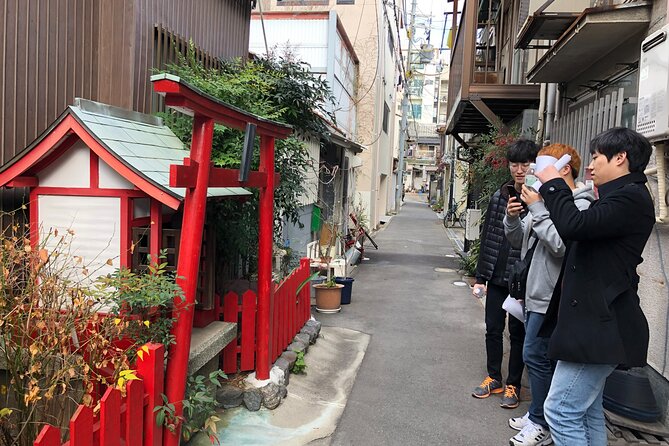
The route note asks visitors not to disturb residents while walking through hidden paths. Take that seriously. These are living lanes, not an open-air attraction, and older people still live nearby. Keep voices low, do not photograph private homes casually, and follow Chieko’s lead.
This final section also explains why the tour feels different from a standard city walk. You are not just moving between public monuments. You are being shown the small traces that remain among homes, shops, cafés, and alleyways.
What Chieko adds to the walk
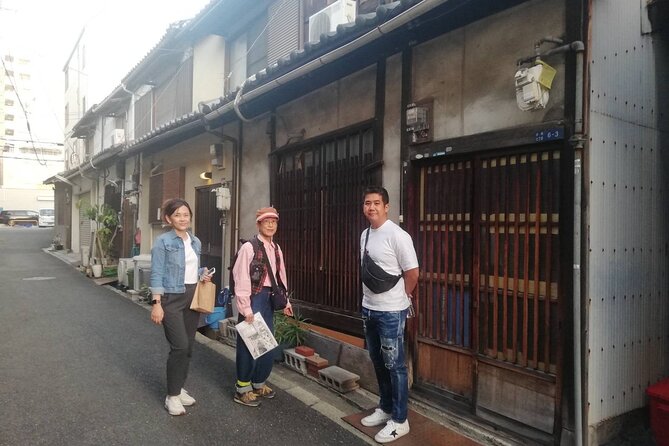
The guide can make or break a neighborhood tour, and Chieko is central to this one. Her approach combines local history with simple conversation about Japanese culture and everyday life.
You can ask questions about the places you pass, the food in the shops, traditional houses, or daily customs. The route also leaves room for recommendations, so you can ask what else to see, where to shop, or which nearby interests suit your remaining time in Osaka.
Her relationships with local shopkeepers are another useful feature. Introductions can make a small shop feel less intimidating, especially if you do not speak much Japanese. The experience is not presented as a formal lecture. It is closer to being shown around a neighborhood by someone who cares about its future as well as its past.
That personal style also means the tour may suit some people more than others. If you want a tightly timed list of famous attractions, this is not the right choice. If you want context, conversation, and details you would probably walk past alone, it is a stronger fit.
Price, pace, and practical value
At $36.13 per person, the price is reasonable for a two-hour, small-group walk in central Osaka. You are paying mainly for access to local context and efficient navigation, not for entrance tickets. The stops are free, bottled water is included, and food, drinks, and purchases are extra.
The value improves if you plan to shop or eat locally after the tour. Chieko can help you understand what you are seeing and offer recommendations, giving you more confidence to continue exploring Karahori on your own.
The tour is offered in the morning or afternoon, which makes it easy to place before or after other Osaka plans. The meeting point is 6-chōme-2-24 Tanimachi, Chuo Ward, and the activity returns there at the end. A mobile ticket is provided, and confirmation arrives when you book.
Plan for a full two hours on your feet. The route includes slight uphill and downhill sections, narrow alleys, and repeated stops where you stand while listening or browsing. Most people can participate, and service animals are allowed, but the walking conditions are worth considering if you have limited mobility.
Arrive on time. If you are more than 15 minutes late, you cannot join, since the group is kept on schedule for the other participants. The experience requires good weather, and if poor weather cancels it, you can choose another date or receive a full refund. Free cancellation is available up to 24 hours before the start time. A cancellation inside that period is not refundable.
Who will get the most from this Osaka walk
I would choose this experience for a first or second visit to Osaka when you have already seen, or plan to see, the major entertainment districts. It also suits repeat visitors who want a neighborhood with more texture than the usual sightseeing circuit.
History fans will appreciate the moat wall, old terrain, and machiya houses. Food lovers can browse bonito and chocolate shops, though they should budget separately for purchases. Shoppers looking for distinctive gifts may prefer these small businesses to chain stores.
The walk also suits families with older children, couples, solo visitors, and anyone who enjoys asking questions. The maximum of six makes conversation easier, and the morning or afternoon choice helps you fit it into a busy itinerary.
I would hesitate to recommend it to anyone who dislikes walking, slopes, small lanes, or stops in residential areas. It is also not a food tour with included tastings. You should see it as a guided neighborhood walk with optional shopping and café purchases.
Should you book the Karahori walk?
Book it if you want Osaka to feel like a lived-in city rather than only a collection of famous attractions. The best parts are the ordinary ones: a working tatami shop, a local shopping street, old houses reused as businesses, and a medieval wall surviving beside an alley café.
The $36.13 price makes sense for a small group and a guide who can explain details you would likely miss alone. Just wear comfortable shoes, arrive early, keep your voice down in residential lanes, and bring money for any food, drinks, or gifts.
Skip it if your ideal Osaka tour is all about major landmarks, nightlife, or a formal museum-style presentation. For a quieter, more personal look at old Osaka, this is a very good choice.
FAQ
How long does the Nostalgic Osaka walk last?
The walk lasts approximately two hours.
Is the tour offered in the morning and afternoon?
Yes. You can choose a morning or afternoon departure.
Where does the tour start?
It starts at 6-chōme-2-24 Tanimachi, Chuo Ward, Osaka, 542-0012, Japan.
Where does the tour end?
The activity ends back at the meeting point.
How many people can join the tour?
The tour has a maximum of six participants.
What is included in the price?
Bottled water is included.
Are meals, coffee, and tea included?
No. You pay separately for any meals, coffee, or tea you choose to buy during the walk.
Can I cancel for a full refund?
You can cancel at least 24 hours before the experience start time for a full refund. Cancellations or changes made less than 24 hours before the start time are not accepted for a refund.
What happens if the weather is poor?
The experience requires good weather. If it is canceled because of poor weather, you can receive a full refund or choose a different date.
More Guided Walks on Foot
- Deep Backstreet Osaka Tours (Option to add Dinner)
★ 5.0 · 1,290 reviews - Osaka: Deep Backstreets Walking Tour with Dinner Option
★ 4.9 · 902 reviews - Osaka: Main Sights and Hidden Spots Guided Walking Tour
★ 4.9 · 702 reviews - Private Osaka Walking Tour: Highlights & Hidden Gems
★ 5.0 · 569 reviews
Just added around Osaka
- Nara Day Trip from Osaka with a Licensed Guide★ 5.0 · 3 reviews
- Osaka Early Morning Osaka Castle Tour Avoid Crowds★ 5.0 · 3 reviews
- Guided Tour of Some Attractions in Osaka by Private Car★ 5.0 · 3 reviews
- Private Transfer Between Kyoto and Kansai Airport KIX★ 5.0 · 3 reviews
- Shared Arrival Transfer: Osaka Itami Airport to Osaka City★ 5.0 · 3 reviews
- Osaka: Sushi Making Class and Dotonbori Food Tour★ 4.7 · 3 reviews
- Osaka Night Photography Workshop★ 5.0 · 3 reviews
- Kyoto Full day Tour Kinkakuji, Kiyomizu-dera and Fushimi Inari★ 4.5 · 3 reviews
Dotonbori & Namba Tours, compared.

Osaka Local Foodie Walking Tour in Dotonbori and Shinsekai
Read our review →
Dotonbori District River Cruise with Drink Discount
Read our review →
Ultimate Osaka Walking Tour: Castle, Dotonbori & Hidden Gems
Read our review →


Dotonbori River Cruise with Glico Sign & Neon Views
Read our review →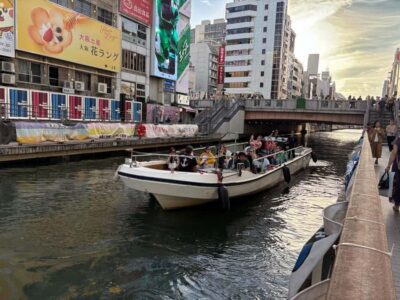
Browse the lists this tour appears in