
Reviewed · DOTONBORI & NAMBA TOURS
Nostalgic Osaka, walk in totally different from Dotonbori
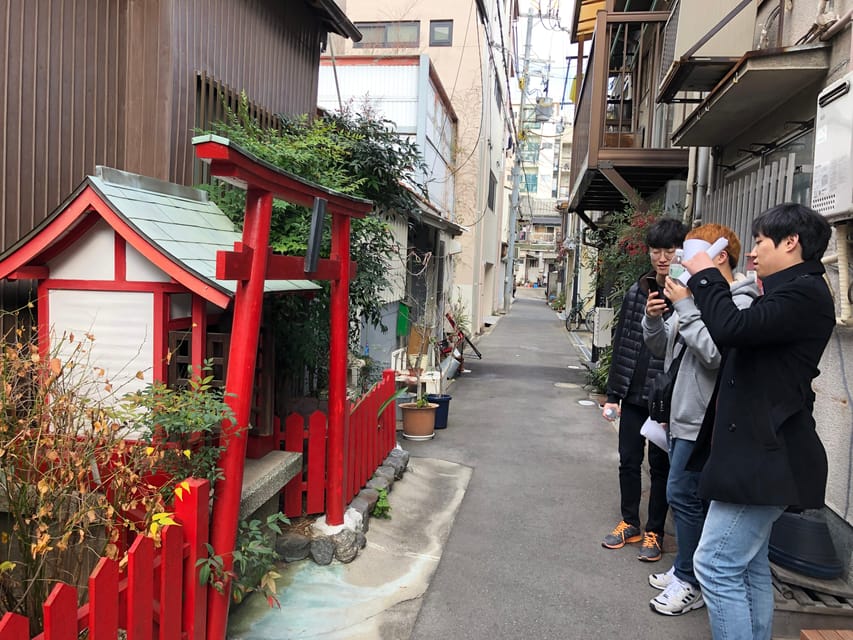
Three stations from Namba, Karahori feels like another Osaka. Instead of neon signs and packed streets, you walk past 100 to 200-year-old mercantile houses, quiet lanes, tiny shrines, and homes where older residents still live. I like that the route shows Osaka as a lived-in neighborhood, not just a sightseeing district.
I especially like the small group of six or fewer, which makes narrow alleys and local shops easier to handle, and the guide’s close knowledge of which lanes are open to the public. The main consideration is that this is a walking tour through residential streets, so you need to stay quiet, respect private homes, and arrive on time. A delay of more than 15 minutes can make it difficult to join.
In This Review
- Key points about the Karahori walk
- Why Karahori feels so different from Dotonbori
- Meeting at Tanimachi 6-chome Station
- The first 15 minutes: a gentle introduction to local streets
- One hour through the market street and old alleys
- The tatami shop and the value of ordinary crafts
- A waterless Osaka Castle moat in a quiet lane
- The final 15-minute break and shop stop
- What the guide adds to the experience
- How much value do you get for $35?
- Who should book this walk?
- Should you book the Karahori tour?
- FAQ
- Where does the tour meet?
- How long does the tour last?
- What does the price include?
- What languages are available?
- How many people can join?
- Can I cancel the booking?
- Can people under 18 participate?
Key points about the Karahori walk
- Old Osaka near Namba: Reach Karahori in about three stations from Osaka’s major downtown area, then enter a much quieter neighborhood.
- Maze-like local lanes: Your guide leads you through alleys that are not usually found in standard guidebooks.
- Traditional mercantile houses: Some old wooden buildings remain homes, while others now hold cafés and small shops.
- Osaka Castle moat remains: See a waterless ruin of an old castle moat tucked into the neighborhood.
- Local daily life: The route passes residents’ homes, small shrines, markets, and working shops.
- Practical small-group format: The tour lasts two hours, includes water and a small snack, and is offered in English or Korean.
Why Karahori feels so different from Dotonbori
Dotonbori gives you Osaka at full volume: bright signs, restaurant streets, crowds, and a strong entertainment focus. Karahori offers the quieter side of the city, where the interest comes from small details rather than grand sights.
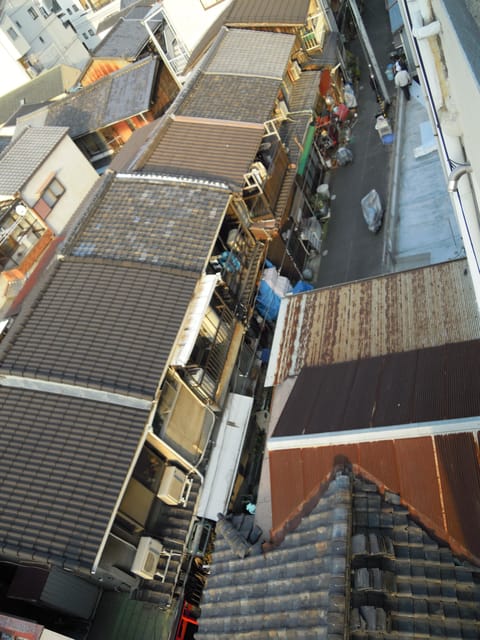
The area survived the fires and destruction that affected much of Osaka during World War II. That survival helps explain the older buildings and narrow street plan you see today. The neighborhood still contains traditional mercantile houses, known in Japanese as machiya, along with lanes that twist between them.
I like the contrast. You can spend the morning around Namba and then reach Karahori without a long ride, yet the mood changes quickly. There is no need to travel to a distant village to see older homes and local routines.
This is not a polished historic district with every building turned into a museum. Some houses are occupied. Some are private. Others have been repaired and converted into cafés or select shops. That mix gives the walk its character, but it also means you must treat the area as a neighborhood first and a sightseeing stop second.
More of retro Shinsekai and the backstreets:
- Osaka: Shinsekai Food Tour with 13-15 Dishes at 5 Eateries
★ 4.8 · 2,204 reviews - Osaka Local Foodie Walking Tour in Dotonbori and Shinsekai
★ 5.0 · 985 reviews - Osaka: Tsutenkaku Tower Entry Ticket
★ 3.8 · 125 reviews
Meeting at Tanimachi 6-chome Station
The tour begins at Osaka Metro Tanimachi 6-chome Station, Exit 3, at street level. Exit 3 is on the Tanimachi Line side of this crossing station, so check the line and exit carefully before coming up.
The starting address is 6-chōme-9-1 Tanimachi, and the walk returns to the same location. That makes the tour easy to fit into a day in central Osaka. You do not need to arrange a separate pickup or find your way back from an unfamiliar part of town.
Arrive early. The operator says that being more than 15 minutes late can prevent you from joining because the guide needs to keep the small group moving. That rule is reasonable on a two-hour walk, but it makes the meeting instructions worth checking before you leave your hotel.
The tour begins with a welcome refreshment. You also receive a bottle of water and a small snack. These are useful extras, but they are not a substitute for lunch. If you stop at a café, restaurant, or shop, you pay for your own food, drinks, and purchases.
The first 15 minutes: a gentle introduction to local streets
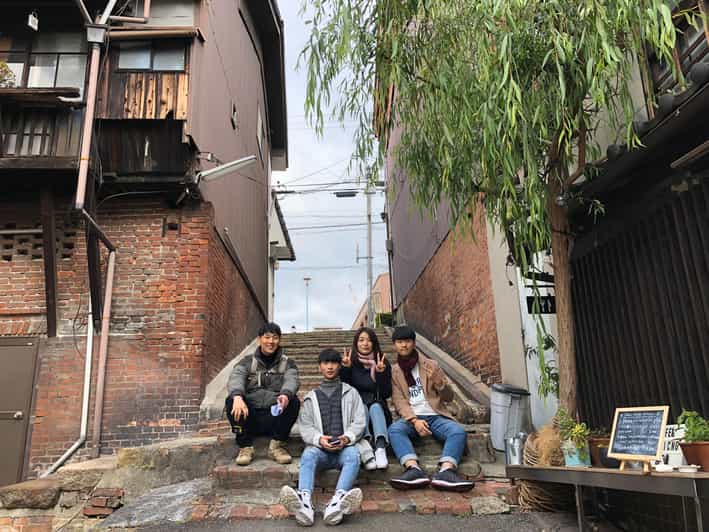
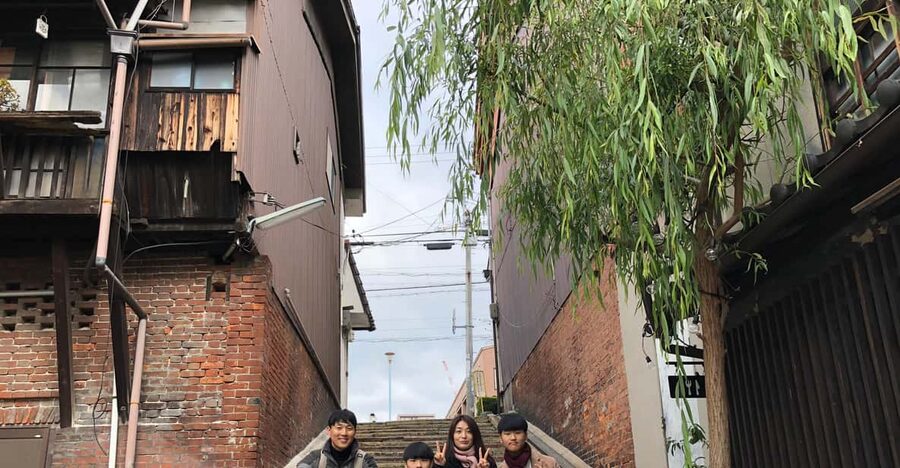
The opening part of the walk takes about 15 minutes and includes guided sightseeing and a photo stop. This gives you time to get used to the neighborhood and hear how Karahori differs from the main Osaka downtown area.
The route moves toward local streets rather than a single headline attraction. That is important here. Karahori is best understood through its scale, building fronts, lanes, and everyday activity.
You might see an old mercantile house beside a newer storefront, or a small shrine tucked into a space that would be easy to miss on your own. The guide’s role is useful because these small details do not always announce themselves. Without local direction, you could walk through the area and see only ordinary streets.
The guide also knows which narrow lanes can be entered. Some alleys are private even if there is no obvious sign. Staying with the guide helps you avoid wandering into someone’s home street by mistake.
One hour through the market street and old alleys
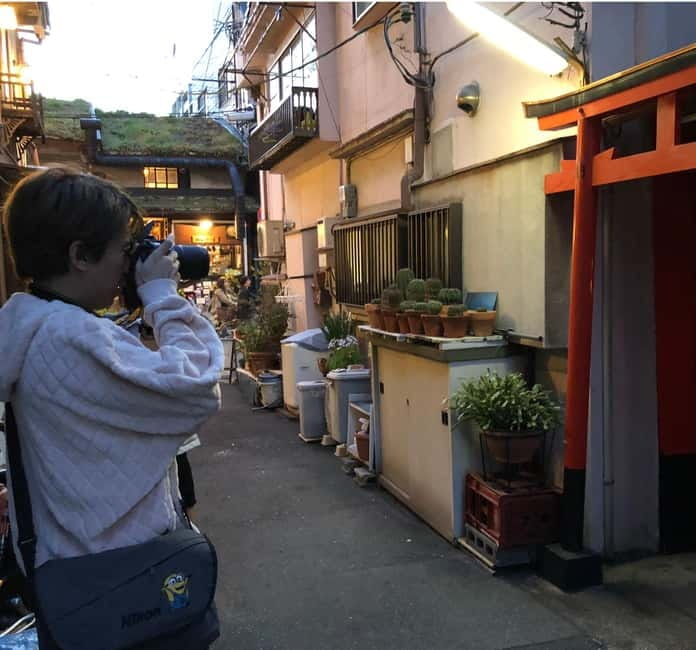
The longest section lasts about an hour and forms the heart of the tour. You go through a local market street, follow off-the-beaten-path lanes, and visit selected small shops.
A market street is a good place to see how the neighborhood functions. It is not simply a photo backdrop. You may notice the practical rhythm of local shopping and the way older commercial streets connect to residential lanes.
From there, the guide leads you into alleys that are less likely to appear in a general Osaka guidebook. The word hidden can be overused, but here it has a clear meaning: the lanes are tucked behind more obvious streets, and some are narrow enough that you would probably not choose them without guidance.
The old houses are a major reason to book. Traditional mercantile buildings can be 100 to 200 years old, and their narrow fronts reflect the way merchants once used compact urban plots. Some still serve as residences. Others have been remodeled into cafés, cute shops, or select stores.
That changing use gives Karahori a pleasant sense of surprise. A quiet stretch of old homes can suddenly open onto a small shop or café. You are not promised a fixed list of purchases, and the specific shops may vary, but the route includes time for browsing.
The guide can also point out places to rest or eat. Food is not included, so consider this a chance to choose something that suits you rather than a built-in meal stop. If you are hoping for a full food tour, this may feel too light. If you want a neighborhood walk with the option of a snack or café stop, it fits well.
More of Dotonbori and Namba after dark:
- Osaka: Dotonbori District River Cruise with Drink Discount
★ 4.2 · 876 reviews - Ultimate Osaka Walking Tour: Castle, Dotonbori & Hidden Gems
★ 5.0 · 862 reviews - Tea Ceremony Experience in Osaka Doutonbori
★ 5.0 · 754 reviews - Osaka: Namba Pub Bar Crawl with a Local Guide
★ 4.9 · 424 reviews
The tatami shop and the value of ordinary crafts
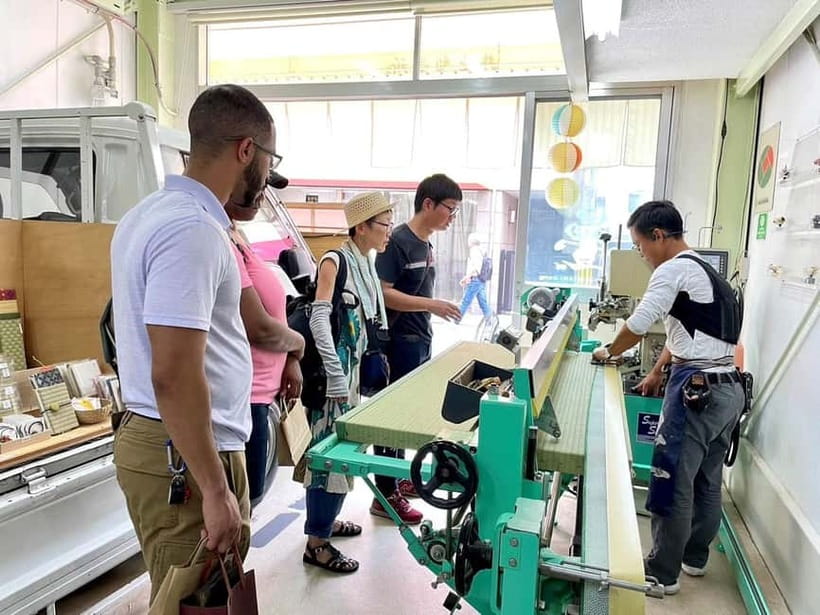
One stop is a Japanese tatami mat shop. This adds a useful layer to the walk because it connects the old houses with traditional Japanese interiors.
Tatami mats are familiar to many visitors as a visual part of Japan, but a working shop makes the subject more concrete. You can see the kind of traditional craft associated with older homes rather than only viewing a finished room in a temple or museum.
The stop is also a reminder that Karahori is not preserved only for sightseeing. Traditional work and local businesses remain part of the district. That is the sort of detail I value in a walking tour because it gives the old buildings a present-day purpose.
Shopping is optional and at your own expense. The tour includes visits to selected shops, but it does not include purchases.
A waterless Osaka Castle moat in a quiet lane
Another unusual feature is a ruin of an Osaka Castle moat without water, identified in the tour information as a 15D moat ruin. It is tucked away in the neighborhood rather than presented as a large formal attraction.
This kind of stop works best when you enjoy history in small pieces. You do not come here for a grand castle view or a reconstructed fortification. Instead, the guide helps you notice how Osaka Castle’s former defensive system once reached into the surrounding city.
The moat remains are paired with tiny shrines and other small sights during roughly 30 minutes of guided walking and photo stops. The combination keeps the route varied. You move from neighborhood architecture to an old defensive remnant, then to religious sites and quiet corners.
Do not expect every stop to be clearly marked or museum-like. Part of the value comes from having someone explain what you are seeing and where to look. Without that context, a small stone remnant or tucked-away shrine could pass unnoticed.
The final 15-minute break and shop stop
The last scheduled section allows about 15 minutes for a break, photo stop, and shopping. You might use it to sit at a cozy café, look around a small shop, or simply pause after the alley walking.
This short break matters because two hours on foot can feel more demanding than the distance suggests. Narrow lanes require attention, and the route includes repeated stops and starts. The break also gives you a chance to ask the guide about places to eat after the tour.
The operator mentions cozy cafés and good restaurants in the area, but your meal is not included. Plan to pay directly for anything you order. The tour returns to the original meeting point, so you can continue exploring Karahori or ride back toward Namba afterward.
What the guide adds to the experience
The guide is a local who knows the area map and can distinguish public lanes from private ones. That is more important here than it would be on a simple main-street walk.
Karahori’s appeal is partly its confusing layout. A guide helps you spend your limited time in the lanes that can actually be visited, rather than testing doors or making residents uncomfortable. The guide also provides the neighborhood context that turns old buildings and small shrines into meaningful stops.
The tour is available in English and Korean. With a maximum of six participants, it should be easier to ask questions and hear explanations than on a large city tour. The small format also suits alleys and shops where a bigger crowd would feel awkward.
The available feedback gives particular weight to the guide’s local understanding and the educational side of the walk. That matches the design of the route: this is less about collecting famous sights and more about learning how one old Osaka district works.
How much value do you get for $35?
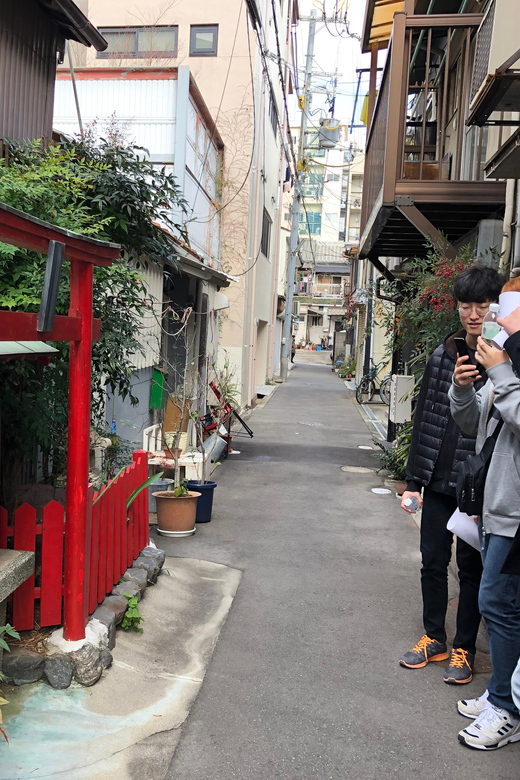
At $35 per person, the tour costs a little less than many longer guided city outings, but the real value comes from access and orientation rather than included food or tickets.
You receive two hours with a local guide, a small-group setting limited to six, a bottle of water, and a small snack. There are no attraction admission fees listed because the route focuses on streets, shops, shrines, old buildings, and the moat remains.
I consider the price fair if you want a focused introduction to Karahori and would otherwise have trouble finding the permitted lanes. It is less compelling if you mainly want a meal, extensive shopping time, or major Osaka landmarks.
The option to reserve now and pay later also helps if your Osaka schedule is still changing. Free cancellation is available up to 24 hours before the tour for a full refund. Check the current start times when booking, since the duration is fixed at two hours but the departure time can vary.
Who should book this walk?
I would choose this tour for someone who has already seen, or plans to see, Osaka’s famous downtown streets and wants a different side of the city. It is also a good first activity if you prefer to get your bearings through a neighborhood rather than a large landmark.
The tour suits you best if you enjoy:
- Older homes and local architecture
- Small shops and market streets
- Quiet residential lanes
- Short historical stops
- A guide-led walk with plenty of explanation
- A small group instead of a large crowd
It may not suit you if you want a fast list of famous attractions, a dedicated food tour, or a long shopping session. The route is also not a license to explore private alleys on your own. You need to follow the guide’s directions and avoid noise, smoking indoors, drones, skateboards, feeding animals, and other listed restrictions.
The age information needs attention. The tour states that participation by people under 18 is not permitted, while another note refers to joining with a guardian. If you are booking for anyone under 18, confirm the rule with the operator before paying.
Should you book the Karahori tour?
Book it if you want old Osaka at neighborhood scale. The strongest reasons are the local guide, the small group, the traditional houses, and the chance to enter public lanes you might miss alone.
At $35, you are paying for interpretation and local access rather than a major ticketed sight. That is a good trade if you like daily life, old buildings, market streets, and small historical traces. If your ideal Osaka day is all food, nightlife, and famous views, spend your money elsewhere.
For the best experience, wear comfortable shoes, arrive before the meeting time, keep your voice low in residential lanes, and bring extra money for a café, restaurant, or shop. Karahori rewards patience and respect. The district is not a stage set. It is a place where people still live.
FAQ
Where does the tour meet?
The meeting point is Osaka Metro Tanimachi 6-chome Station, Exit 3, at street level. Exit 3 is on the Tanimachi Line side of the station.
How long does the tour last?
The walking tour lasts two hours and returns to 6-chōme-9-1 Tanimachi.
What does the price include?
The $35 price includes the guided walk, a bottle of water, and a small snack. Food, drinks, and purchases at shops and cafés are not included.
What languages are available?
The tour is offered with a live guide in English or Korean.
How many people can join?
The group is limited to six participants.
Can I cancel the booking?
You can cancel up to 24 hours in advance for a full refund. Reserve now and pay later is also available.
Can people under 18 participate?
The tour information states that participation by people under 18 is not permitted. If this applies to your group, confirm the rule with the operator before booking.
More Guided Walks on Foot
- Deep Backstreet Osaka Tours (Option to add Dinner)
★ 5.0 · 1,290 reviews - Osaka: Deep Backstreets Walking Tour with Dinner Option
★ 4.9 · 902 reviews - Osaka: Main Sights and Hidden Spots Guided Walking Tour
★ 4.9 · 702 reviews - Private Osaka Walking Tour: Highlights & Hidden Gems
★ 5.0 · 569 reviews
Just added around Osaka
- Osaka Early Morning Osaka Castle Tour Avoid Crowds★ 5.0 · 3 reviews
- Guided Tour of Some Attractions in Osaka by Private Car★ 5.0 · 3 reviews
- Nara Day Trip from Osaka with a Licensed Guide★ 5.0 · 3 reviews
- Private Transfer Between Kyoto and Kansai Airport KIX★ 5.0 · 3 reviews
- Shared Arrival Transfer: Osaka Itami Airport to Osaka City★ 5.0 · 3 reviews
- Osaka: Sushi Making Class and Dotonbori Food Tour★ 4.7 · 3 reviews
- Osaka Night Photography Workshop★ 5.0 · 3 reviews
- Kyoto Full day Tour Kinkakuji, Kiyomizu-dera and Fushimi Inari★ 4.5 · 3 reviews
Dotonbori & Namba Tours, compared.

Osaka Local Foodie Walking Tour in Dotonbori and Shinsekai
Read our review →
Dotonbori District River Cruise with Drink Discount
Read our review →
Ultimate Osaka Walking Tour: Castle, Dotonbori & Hidden Gems
Read our review →


Dotonbori River Cruise with Glico Sign & Neon Views
Read our review →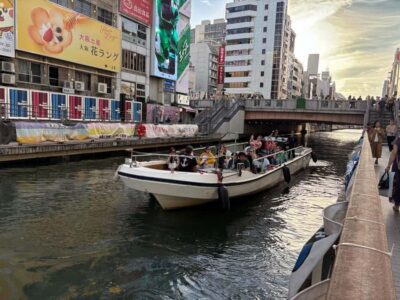
Browse the lists this tour appears in