
Reviewed · SHINSEKAI & RETRO OSAKA TOURS
Hidden Osaka Foodie Tour: Nishinari Backstreets & Local Dining
Osaka’s Nishinari backstreets offer a side of the city that feels far removed from the bright signs and packed lanes around Dotonbori. This small-group walk links local food with the story of Kamagasaki, street art, old pilgrimage routes, and the daily life of a neighborhood shaped by change.
I like the maximum group size of five, which should make it easier to hear the guide and ask direct questions. I also like the way each food stop supports family-run businesses during quieter hours. The main consideration is that the tour takes you through an area with a complicated social history, so it suits curious, open-minded visitors more than anyone looking only for a polished sightseeing stroll.
In This Review
- Key points to know before booking
- Why Nishinari makes a memorable food tour setting
- Meeting at Haginochaya and getting your bearings
- Walking Kamagasaki through layers of Osaka history
- What the restaurant stops add to the walk
- Street art, retro lanes, and the creative side of Nishinari
- Guide Jaymie and the value of a small group
- Duration, walking demands, and the finish at Tengachaya
- Who will get the most from this Osaka tour
- Should you book Hidden Osaka Foodie Tour?
- FAQ
- Where does the Hidden Osaka Foodie Tour begin?
- Where does the tour end?
- How long does the tour last?
- How many people can join the tour?
- Is food included?
- Can I cancel for a full refund?
Key points to know before booking
- Nishinari rather than central Osaka: You explore Kamagasaki and Dobutsuen-mae, an area known locally as Deep Osaka.
- Food with a drink at each stop: The experience is built around hand-picked neighborhood restaurants, not a single formal meal.
- A tiny group of up to five: This allows for a more personal walk and easier conversation with your guide.
- History between the bites: The route connects Edo-period samurai stories, urban growth, social unrest, and present-day community life.
- Street art and retro lanes: You may see colorful graffiti work while walking through older residential and commercial streets.
- Easy finish at Tengachaya: The tour ends at a station served by Osaka Metro and the Nankai Line, with a taxi stand outside.
Why Nishinari makes a memorable food tour setting
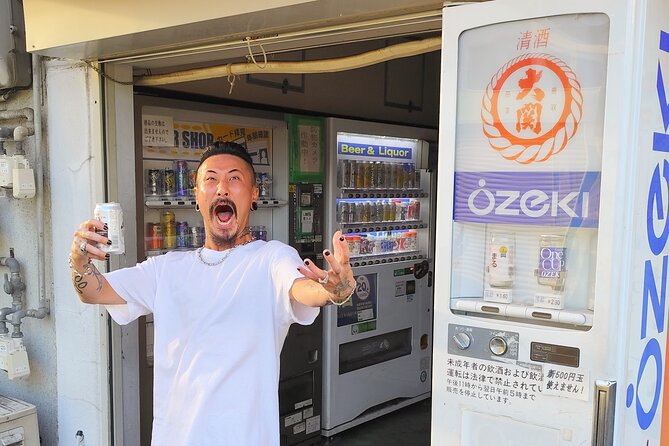
Many first-time visitors see Osaka through its famous food districts. Those areas have plenty to offer, but they can also make the city feel like one long row of restaurants and neon signs. This tour takes a different approach. Food gives you a reason to enter Nishinari, while the walk explains the people and forces that shaped it.
The route passes through the Kamagasaki area, often referred to by locals as Deep Osaka. That name points to more than geography. It reflects a part of Osaka with a strong working-class identity, a long record of hardship, and a reputation formed by social problems and urban change.
You are not simply walking past old buildings while someone recites dates. The guide connects the area’s past with the way local communities survive and adapt. That makes the tour useful if you want context for what you see, rather than a string of unrelated food samples.
The setting may also challenge your expectations. This is not presented as a glossy food quarter designed mainly for sightseeing. Some streets may feel worn, quiet, or stark compared with Osaka’s headline attractions. For me, that is part of the point, but it also means you should arrive with respect and avoid treating the neighborhood as a curiosity.
More of retro Shinsekai and the backstreets:
- Osaka: Shinsekai Food Tour with 13-15 Dishes at 5 Eateries
★ 4.8 · 2,204 reviews - Osaka Local Foodie Walking Tour in Dotonbori and Shinsekai
★ 5.0 · 985 reviews - Osaka: Tsutenkaku Tower Entry Ticket
★ 3.8 · 125 reviews
Meeting at Haginochaya and getting your bearings
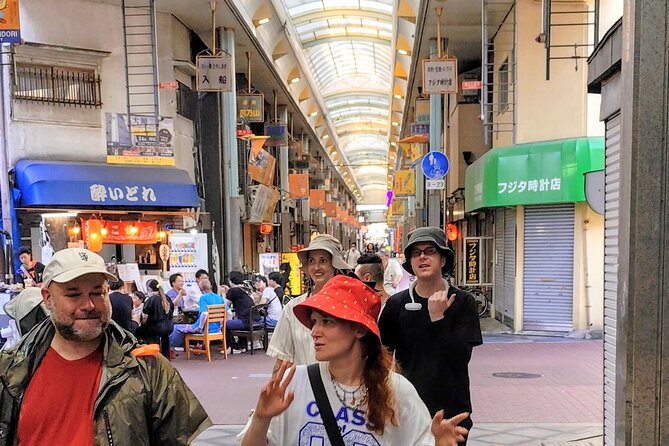
The tour begins at the LAWSON Haginochaya 1 Chome Store, at 1-chome-6-20 Haginochaya in Nishinari Ward. Having a convenience store as the meeting point is practical, especially if you need water or a quick snack before the walk.
The starting area is near public transportation, though the information provided does not specify a particular rail station for the beginning. Give yourself enough time to locate the exact LAWSON branch, since convenience stores with similar names can appear in Japanese neighborhoods.
From there, the tour heads toward the backstreets around Nishinari Dobutsuen-mae. The first section is the main neighborhood exploration and is listed as taking about two hours. Since the full experience lasts roughly three to four hours, the remaining time is used for food stops, drinks, conversation, and the walk toward Tengachaya.
A mobile ticket makes arrival simple. Confirmation is provided at booking, so keep the booking details available on your phone. The group limit of five is one of the strongest practical features here. You are less likely to get separated from the guide, and the pace can feel more conversational than a large walking tour.
Walking Kamagasaki through layers of Osaka history
The Kamagasaki portion is the heart of the experience. Your guide leads you through back streets while explaining a story that reaches from Edo-period samurai routes to modern urban development and social unrest.
The reference to an old samurai pilgrim route adds an unusual layer. You are not only looking at the present-day neighborhood. You are also following part of a route that once connected people, religious destinations, and regional travel. That contrast can help you see ordinary streets in a new way.
The historical story is not limited to one era. The tour moves through several stages:
- Edo-period movement and samurai-related routes
- Modern urbanization
- Social unrest and hardship
- Local efforts to survive and build community
- The creative life visible in the streets today
That range matters. A neighborhood cannot be understood through one label, and this walk appears designed to avoid doing that. You hear about difficult conditions, but also about resilience, creativity, and everyday routines.
Still, the tour may not suit everyone. Some people want their Osaka food experience to stay light and cheerful. Here, the guide may discuss uncomfortable subjects connected to poverty, unrest, and the struggle of local communities. If you prefer food tours with little social or historical discussion, this may feel heavier than expected.
For everyone else, that honesty can make the meal more meaningful. You begin to understand that a family-run restaurant is not just a convenient place to eat. It is part of a local economy and a community that has had to adjust over time.
What the restaurant stops add to the walk
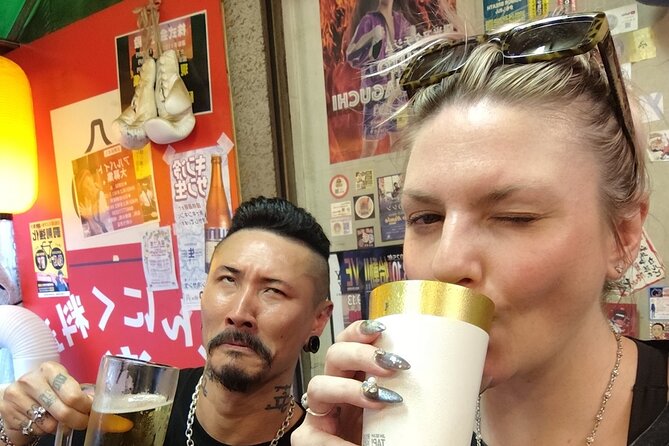
The food component is spread across hand-picked neighborhood restaurants. At each stop, you receive a local dish and a drink. The supplied details do not name the dishes or restaurants, so I would not book this expecting a specific Osaka specialty or a fixed tasting menu.
That lack of a published dish list has two sides. On the positive side, it leaves room for the guide to choose places that fit the day and support businesses that may not be set up for large sightseeing groups. It can also make the meal feel more connected to the neighborhood than a standard restaurant reservation.
On the practical side, you cannot judge the tour by a menu in advance. If you have strong dietary restrictions, ask before booking. The available information confirms that service animals are allowed and that most people can participate, but it does not give details about vegetarian choices, allergies, religious diets, or exact portion sizes.
The price is $84.92 per person. That is not a bargain if you compare it with simply buying snacks from a market. But this is not only a food purchase. The cost covers a three to four hour guided experience, several food-and-drink stops, neighborhood interpretation, and the convenience of a very small group.
Value will depend on what you want from a food tour. If you mainly want the largest possible number of samples, a market crawl may serve you better. If you want a local meal tied to place, history, and personal conversation, the price is easier to justify.
The tour is also scheduled during quieter hours to support family-run businesses. That detail matters. You are helping direct spending to smaller neighborhood restaurants rather than only to Osaka’s most famous dining streets. It gives the food stops a local purpose beyond feeding the group.
More street food walks and tastings:
- Osaka Food Tour: 13 Dishes at 5 Local Eateries
★ 5.0 · 2,149 reviews - Hungry Osaka Street Food Tour:15 Tastings & 3 Drinks with a Local
★ 5.0 · 1,727 reviews - Hungry Osaka Street Food Tour: 15 Dishes & 3 Drinks
★ 4.9 · 694 reviews - Kuromon Market Food Walking Tour in Osaka (6 stops, 6 tastes)
★ 5.0 · 550 reviews
Street art, retro lanes, and the creative side of Nishinari
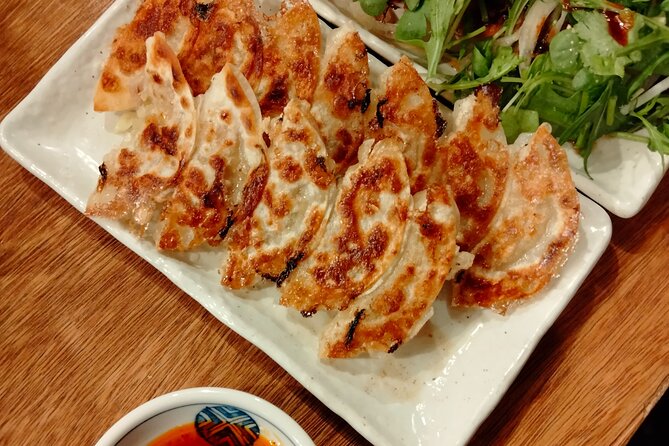
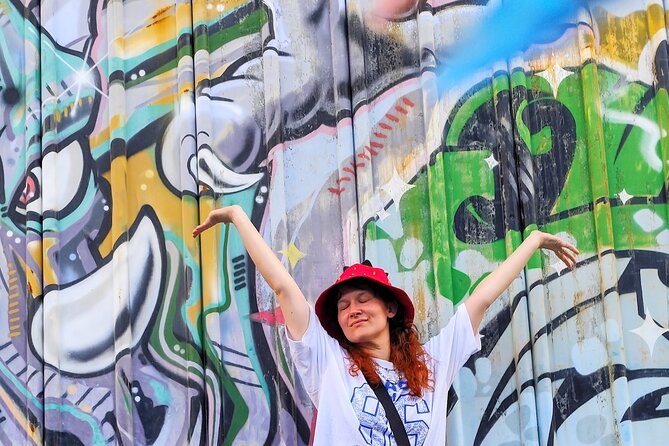
One of the more distinctive details is the street art. The route includes colorful graffiti works, and a past participant specifically highlighted seeing graffiti artists’ work along with the food and history.
That combination gives the walk a visual change of pace. You may move from a discussion of urban hardship to a wall covered in bold color, then into a small restaurant for a dish and drink. The tour appears to treat the art as part of the neighborhood’s current voice, not as decoration added for visitors.
The phrase retro backstreets is useful here, but do not read it as a promise of a preserved historic district. The streets are presented as a mix of old buildings, modern urban life, art, and signs of change. Their interest comes from the combination.
You should also be considerate with photography. The information does not set out specific photo rules, but you will be walking through lived-in streets. Ask before photographing people, businesses, or private homes. A good neighborhood walk depends on visitors acting like temporary neighbors, not spectators at a show.
Guide Jaymie and the value of a small group

Jaymie is the guide named in the available information, and the strongest praise centers on the way the guide combines history, food, and the area’s street art. That blend is important because the neighborhood requires explanation. Without a guide, you could walk through the same streets and miss the connections between the buildings, the past, and the present.
A group of no more than five helps Jaymie tailor the conversation. You can ask why a particular street matters, how the old route fits into Osaka’s history, or what makes the local restaurants worth supporting. In a larger group, those questions can be harder to ask and even harder to hear.
Small groups also make restaurant visits easier. Family-run places often have limited space, and five participants plus a guide is less intrusive than a coach-sized tour. The experience can retain a sense of ordinary dining rather than becoming a performance for a large party.
The published rating is 5 out of 5 from 13 reviews, with 100 percent recommending the experience. That is a very positive record, though the sample is small. I would treat it as encouraging evidence that the format works well, not as proof that every food preference or personality will be a perfect match.
Duration, walking demands, and the finish at Tengachaya
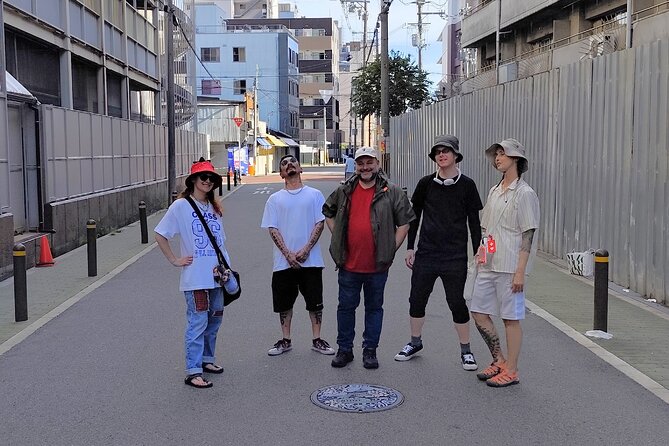
Plan for three to four hours. The neighborhood walk itself is listed at about two hours, with food stops and the remaining route filling out the experience. The exact length may depend on the pace of the group and how much time is spent eating and talking.
You should be comfortable walking through back streets for several hours. The supplied information says most people can participate, but it does not provide a detailed accessibility description, distance, seating information, or step-free route. If you have mobility needs, contact the provider before booking rather than assuming every lane and restaurant will be easy to manage.
The tour ends at Tengachaya Station, at 1-chome-1 Kishinosato in Nishinari Ward. This is a useful finish because you do not have to retrace the route to the starting point. Tengachaya has access to Osaka Metro lines and the Nankai Line, and a taxi stand is located in front of the station.
That ending also gives you flexibility. You can continue to another part of Osaka by train or return to your accommodation by taxi. Since the walk ends in the early part of your day or evening, you can pair it with other plans, but leave some breathing room rather than booking a tight timed attraction immediately afterward.
Who will get the most from this Osaka tour
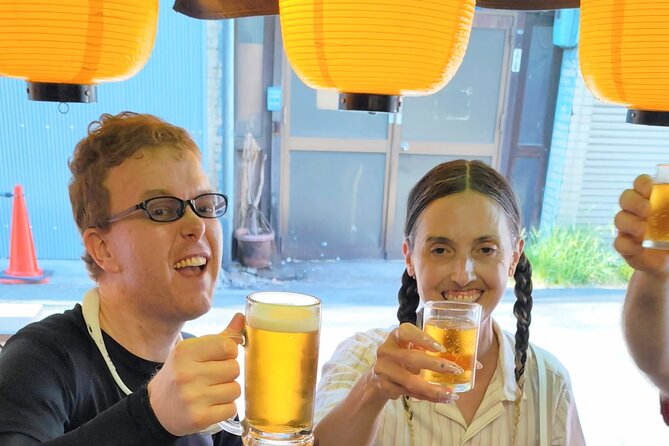
I would recommend this experience to you if you want to understand Osaka beyond its headline attractions. It suits people who enjoy small restaurants, neighborhood walks, social history, street art, and food with a story attached.
It is especially useful early in an Osaka visit. The guide can give you a sense of how different parts of the city fit together, and the route may help you notice working neighborhoods that you would otherwise pass without understanding.
You are also likely to enjoy it if you prefer conversation over a scripted presentation. With only five people, the walk should feel more personal, though the actual quality of the experience will still depend on the guide and the group’s shared interests.
I would hesitate to recommend it if you want a polished, predictable menu. The dishes are not listed, and the setting is not presented as a luxury dining experience. I would also think twice if discussions of poverty and social unrest are not what you want from a holiday afternoon.
The experience is available with free cancellation up to 24 hours before the start time. Cancellations made less than 24 hours in advance are not refunded, and changes within that window are not accepted. The cut-off uses local Osaka time, so check the clock carefully if you are booking from abroad.
Should you book Hidden Osaka Foodie Tour?
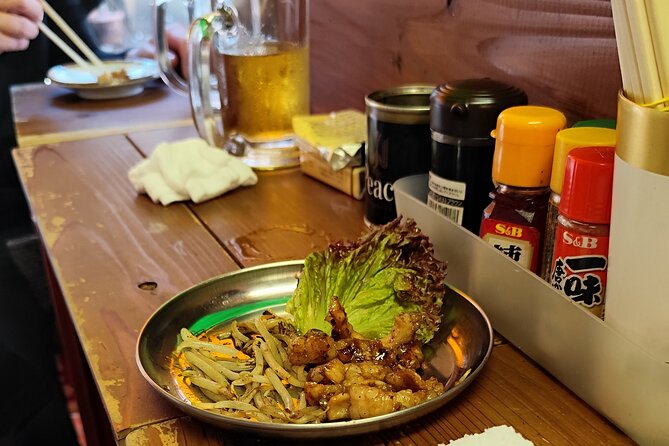
Book it if your idea of a good Osaka food tour includes context, small local restaurants, and streets that do not appear on every first-time itinerary. The combination of a maximum five-person group, a dish and drink at each stop, street art, and the old samurai pilgrim route gives the experience a clear identity.
Skip it if you want a menu you can study in advance, a famous restaurant checklist, or a purely cheerful tasting walk. Nishinari is presented with its difficulties as well as its creativity, and that honest look at local life is central to the experience.
At $84.92, I see the best value for curious visitors who would otherwise spend hours looking at Osaka without understanding the neighborhood beneath the surface. The excellent 5 out of 5 rating from 13 reviews and the full recommendation rate are promising, while the small sample means you should still match the tour to your own interests.
FAQ
Where does the Hidden Osaka Foodie Tour begin?
The tour begins at the LAWSON Haginochaya 1 Chome Store, located at 1-chome-6-20 Haginochaya, Nishinari Ward, Osaka.
Where does the tour end?
The experience ends at Tengachaya Station, at 1-chome-1 Kishinosato in Nishinari Ward. The station has access to Osaka Metro lines and the Nankai Line, and there is a taxi stand in front.
How long does the tour last?
The tour lasts approximately three to four hours. The Nishinari backstreet exploration is listed as taking about two hours, with the food stops and the rest of the route making up the remaining time.
How many people can join the tour?
The tour has a maximum of five participants, making it a small-group walking experience.
Is food included?
Yes. You receive a local dish and a drink at each hand-picked neighborhood restaurant stop. Specific dishes and restaurant names are not provided in advance.
Can I cancel for a full refund?
Yes, if you cancel at least 24 hours before the experience begins. Cancellations or changes made less than 24 hours before the start time are not accepted, and the amount paid is not refunded.
More Dinner Experiences in Osaka
- Osaka Umeda: PICCADILLY DINNER SHOW & NIGHTCLUB with Tasting
★ 4.8 · 49 reviews - Osaka: PICCADILLY PREMIUM DINNER SHOW&NIGHTCLUB with Tasting
★ 5.0 · 26 reviews - Eat Our Favorites! Osaka’s Backstreet Dining
★ 4.9 · 19 reviews - Osaka: LGBTQ+ Tour with Dinner and Drinks
★ 5.0 · 8 reviews
More Guided Walks on Foot
- Deep Backstreet Osaka Tours (Option to add Dinner)
★ 5.0 · 1,290 reviews - Osaka: Deep Backstreets Walking Tour with Dinner Option
★ 4.9 · 902 reviews - Ultimate Osaka Walking Tour: Castle, Dotonbori & Hidden Gems
★ 5.0 · 862 reviews - Osaka: Main Sights and Hidden Spots Guided Walking Tour
★ 4.9 · 702 reviews
Just added around Osaka
- Osaka Early Morning Osaka Castle Tour Avoid Crowds★ 5.0 · 3 reviews
- Guided Tour of Some Attractions in Osaka by Private Car★ 5.0 · 3 reviews
- Nara Day Trip from Osaka with a Licensed Guide★ 5.0 · 3 reviews
- Private Transfer Between Kyoto and Kansai Airport KIX★ 5.0 · 3 reviews
- Shared Arrival Transfer: Osaka Itami Airport to Osaka City★ 5.0 · 3 reviews
- Osaka: Sushi Making Class and Dotonbori Food Tour★ 4.7 · 3 reviews
- Osaka Night Photography Workshop★ 5.0 · 3 reviews
- Kyoto Full day Tour Kinkakuji, Kiyomizu-dera and Fushimi Inari★ 4.5 · 3 reviews
Shinsekai & Retro Osaka Tours, compared.
Shinsekai Food Tour with 13-15 Dishes at 5 Eateries
Read our review →
Osaka Local Foodie Walking Tour in Dotonbori and Shinsekai
Read our review →

Shinsekai Food Tour – 13 Dishes at 5 Local Eateries
Read our review →
Night Soul Food Tour in Shinsekai with a local guide
Read our review →
Osaka Morning Tour: Shitennoji Temple, Shinsekai &Doutonbori
Read our review →Browse the lists this tour appears in