
Reviewed · OSAKA CRAFT WORKSHOPS
Tsumami Zaiku (Kanzashi) making Workshop in Abeno Osaka
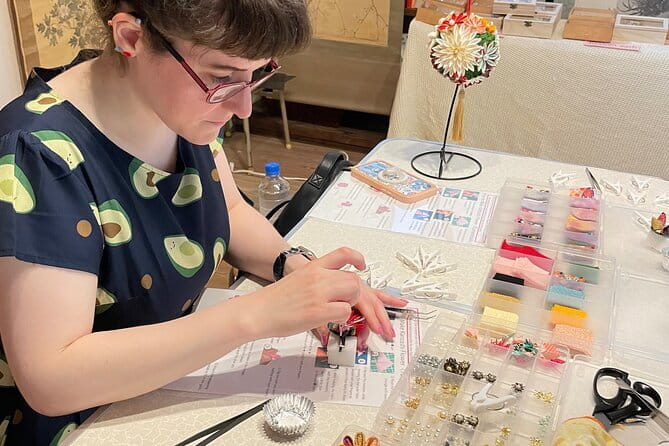
The best part of this Osaka workshop is its setting: you make a Japanese hair ornament inside a 100-year-old traditional house with an unusual mix of eastern-style interiors. This feels far more personal than buying a finished souvenir in a shop.
I like the choice between an easier traditional kanzashi and the more detailed Sakura design. I also like that the materials are ready to use, the class is capped at six people, and matcha with Japanese sweets fills the waiting time while your work dries.
The main thing to consider is the staircase. The house has a steep set of steps, so this is not a good fit if you have mobility problems. Children must be at least eight, and parents remain responsible for supervising them.
In This Review
- Key points at a glance
- Making kanzashi in an old Abeno house
- Choosing between the traditional and Sakura designs
- Selecting fabric and accessories for your own design
- A guided craft that suits beginners
- Matcha and sweets while the glue dries
- Taking home a boxed handmade souvenir
- Is the $35.83 price good value?
- Who will enjoy this Osaka experience most?
- Practical tips before you book
- Should you book the Tsumami Zaiku workshop?
- FAQ
- Where does the workshop begin?
- Where does the activity end?
- How long does the experience last?
- What designs can I make?
- Are the materials included?
- Is food or drink included?
- Can children join the workshop?
Key points at a glance
- A 100-year-old workshop setting: Craft your kanzashi in a traditional Japanese house in Abeno, rather than in a large commercial studio.
- Two designs to choose from: Pick the easier traditional style or the more involved Sakura cherry-blossom version.
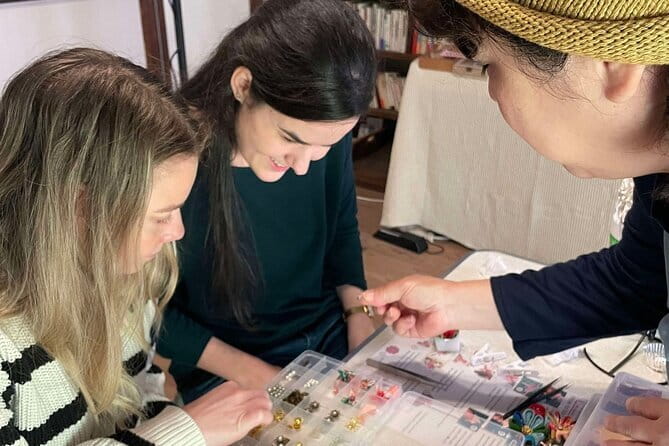
- Small class size: A maximum of six people means you can ask questions and receive step-by-step help.
- Everything is supplied: Cloth, pin sets, accessories, a box, and pre-cut components are provided.
- Matcha break included: Tea and Japanese sweets make practical use of the drying time.
- A handmade souvenir: Your finished kanzashi is wrapped and boxed for you to take home.
Making kanzashi in an old Abeno house

Tsumami zaiku is a Japanese cloth-folding craft used to make kanzashi, the decorative hair ornaments traditionally associated with kimono hairstyles. The process turns small pieces of fabric into petals and other decorative forms.
That background matters because you are not simply assembling a generic craft kit. You are learning a small piece of Japanese decorative culture and leaving with an object you made yourself. The finished piece may not look exactly like the instructor’s example, and that is part of its charm.
The meeting point is Nishitanabe Station at 1-chōme-1-25 Nishitanabechō in Abeno Ward. The workshop ends at the same meeting point. Since the activity is near public transportation, it fits neatly into a day exploring southern Osaka, though you should allow time to find the house and get settled before the class begins.
Inside, the old house provides a very different mood from Osaka’s busy shopping streets and modern attractions. The mixed eastern-style interior gives the workshop a sense of place without requiring a long trip outside the city. You are still in Osaka, but the setting slows the pace.
The class lasts about 90 minutes. That is long enough to learn the basic method, make a complete ornament, enjoy the tea break, and collect your finished work without giving up an entire afternoon.
More traditional craft workshops:
- 1.5〜2 Hours Traditional Kintsugi Work Shop in Namba Osaka
★ 5.0 · 75 reviews - Osaka: Private Japanese Calligraphy Experience
★ 5.0 · 66 reviews - From Osaka: Sakai Knife Maker or Blacksmith Walking Tour
★ 4.9 · 64 reviews
Choosing between the traditional and Sakura designs
The workshop begins with a short introduction to the history of tsumami zaiku. You then see the two available options:
- The traditional kanzashi
- The Sakura, or cherry-blossom, kanzashi
The traditional design is the easier choice. I would recommend it if you want a relaxed first attempt, especially if you have limited time or prefer a simple project. It should also suit younger participants who meet the minimum age requirement.
The Sakura design is more difficult and may take longer. Cherry-blossom petals require more care, so you will likely spend more time shaping and arranging the parts. The instructor guides you through the process, but you should choose this option because you enjoy careful handwork, not simply because the design looks attractive.
You do not need to arrive with craft experience. The components are prepared in advance, with the exception of the kanzashi petals. This removes much of the slow preparation and lets you focus on folding, arranging, and decorating.
That preparation is a real benefit in a 90-minute session. You get the satisfying parts of the craft without spending most of the class cutting tiny pieces of fabric. At the same time, the work is not completely done for you. The petals still require your attention, and your choices shape the final ornament.
Selecting fabric and accessories for your own design
After choosing a style, you select from patterned cloth and accessories. This is where two people taking the same class can produce quite different results.
The supplied materials include cloth, pin sets, and decorative accessories. Because the fabric patterns are part of the design, look at the available combinations before you begin attaching anything. A bold pattern may create a lively ornament, while a quieter pattern may suit someone who wants a more understated souvenir.
You should also think about how the pieces will work together. The cloth, petals, central decoration, and pin need to look like one finished object rather than a collection of separate parts. The instructor can help if you are unsure.
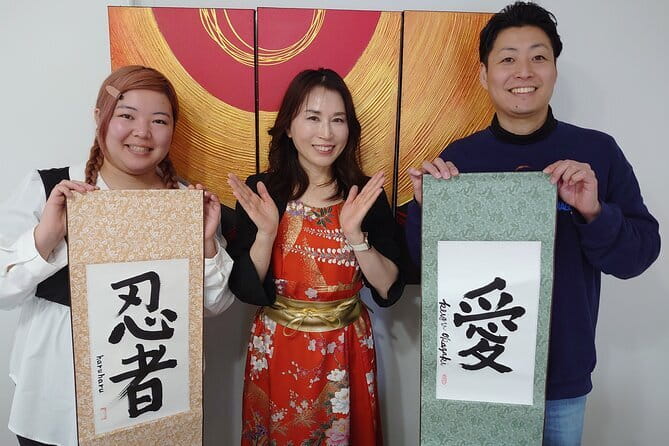
Misa-sensei leads the instruction, with Jun and Ami also helping create a friendly, supportive class. The teaching is step by step, and you are encouraged to ask questions during the process. That is important for a small craft where a minor adjustment to a petal can change the whole shape.
Do not worry about producing a perfect copy of the sample. Tsumami zaiku is a handcraft, and small differences give your ornament its personal character. If you make a mistake, ask for help rather than trying to fix it quickly with more glue.
A guided craft that suits beginners
The class is structured for first-timers. The instructor demonstrates the process, then guides you as you work. All the main materials are supplied, and the prepared parts help keep the project manageable.
I especially like the small group limit of six people. A large class would make a detailed craft frustrating because you might spend too much time waiting for help. Here, you have a better chance to show the instructor a petal, ask about placement, or check the next step before continuing.
The class also works well for couples, friends, and families with older children. Children from age eight can take part, but an adult must take responsibility for looking after them during the workshop. That means you should not expect the instructor to provide childcare.
The activity is not recommended for people with infectious illnesses such as flu or COVID. That is a sensible condition for a small indoor class where participants work close together.
The steep staircase is the main practical limitation. Anyone with mobility difficulties should consider this carefully before booking. The experience is not described as wheelchair accessible, and the stairs may be difficult even if you can manage most walking during a day in Osaka.
A completely different way to spend a day in Osaka:
- Osaka Go Karting Tour with Funny Costume
★ 5.0 · 2,658 reviews - Osaka Castle: Museum and Tower Entry Ticket
★ 4.5 · 2,380 reviews - Osaka: Shinsekai Food Tour with 13-15 Dishes at 5 Eateries
★ 4.8 · 2,204 reviews - Osaka Food Tour: 13 Dishes at 5 Local Eateries
★ 5.0 · 2,149 reviews
Matcha and sweets while the glue dries
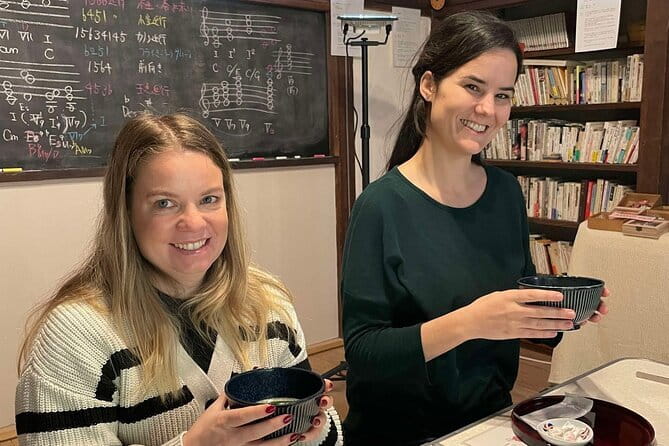
Once the kanzashi is assembled, the glue needs time to dry. Instead of ending the class at that point, the workshop includes a break with matcha and Japanese sweets.
This pause serves two purposes. Practically, it protects your work while the adhesive sets. It also gives you time to enjoy a small Japanese tea experience in the old house, rather than rushing straight from the final step to the exit.
The snack is included in the price, so you do not need to budget separately for it. It is not a full meal, and you should plan lunch or dinner elsewhere. Think of it as a calm interlude and a traditional touch that fits the craft.
During the break, you can also look at kanzashi made by the instructor. Handmade pieces are available for purchase if you want a more polished ornament in addition to the one you make yourself. Buying one is optional, so the workshop remains worthwhile even if you only want to take home your own creation.
The tea break also gives you a chance to appreciate the difference between a beginner’s handmade piece and an instructor’s finished work. It can help you understand how much precision goes into the craft without turning the class into a sales presentation.
Taking home a boxed handmade souvenir
After the drying period, the finished kanzashi is wrapped and placed in a box for you. The box is included with the materials, which is useful because small fabric ornaments can be crushed or lost in luggage.
This is a better souvenir than a mass-produced trinket if you value a story attached to what you bring home. You can remember the house, the fabric you chose, the design you attempted, and the time spent learning the technique.
Handle the finished ornament with care. The workshop allows the glue time to dry, but a delicate handmade item still deserves protection when packed. Keeping it in the supplied box is the obvious choice.
You may use the kanzashi as a hair ornament, display it, or give it as a gift. The activity information does not specify a particular size or wearing method, so you should think of it mainly as a decorative keepsake unless the instructor explains a specific use during the class.
Is the $35.83 price good value?
At $35.83 per person, this is a fair price for a 90-minute, small-group craft class in Osaka. The fee includes instruction, all cloth and accessories, the pin set, a storage box, matcha, and Japanese sweets.
The value is strongest if you want an activity rather than another sightseeing stop. You are paying for the setting, the guidance, the materials, and the chance to make something personal. A souvenir bought in a shop might cost less, but it would not include the learning experience or the memory of making it.
The six-person maximum also matters. Small classes generally offer better access to the instructor, and that is especially useful here because the petals and glue work require careful handling.
The price is less attractive if you have no interest in crafts or if you only want to see a traditional Japanese house. The workshop centers on making the kanzashi, so you should be ready to spend most of the 90 minutes working with fabric and accessories.
The free cancellation policy adds some booking flexibility. You can cancel at least 24 hours before the start time for a full refund. Changes or cancellations made less than 24 hours before the start time are not accepted for a refund. The activity also requires good weather, and if poor weather causes cancellation, you are offered another date or a full refund.
Who will enjoy this Osaka experience most?

I would recommend this workshop to anyone who wants a quiet, hands-on break from Osaka’s major sights. It suits you particularly well if you enjoy crafts, Japanese textiles, small-group activities, or souvenirs with a personal connection.
It is also a good choice for families with children aged eight or older, provided an adult stays responsible for the children. The traditional design may be the better family option because it is easier, while older children or patient beginners may enjoy the more demanding Sakura version.
Couples and friends can make the activity more memorable by choosing different fabrics or designs. You can compare the finished ornaments afterward without turning the class into a competition.
This is not the best choice if you have limited hand dexterity, dislike detailed work, or need step-free access. The steep staircase is a genuine concern, and the activity takes place indoors in a traditional house rather than in a modern accessible facility.
Because the class is small and the average booking time is about 50 days ahead, it is wise to reserve early if your Osaka dates are fixed. That lead time suggests the limited six-person capacity can matter, especially during popular travel periods.
Practical tips before you book
Choose your design with the time limit in mind. The traditional kanzashi is the safer option if you want a straightforward project, while Sakura offers more detail and may require extra time.
Wear something comfortable and be prepared to work carefully with glue and small fabric pieces. The materials are provided and prepared, so you do not need to bring craft supplies.
Arrive at Nishitanabe Station with the meeting address ready on your phone. The experience includes a mobile ticket, pickup is offered, and the activity ends where it begins. Since the supplied information does not describe the exact pickup arrangement, confirm the details at booking if you need pickup rather than meeting at the station.
Bring patience rather than craft confidence. Misa-sensei and the team, including Jun and Ami, guide you through the process, and questions are encouraged. The point is to enjoy making the ornament, not to match a professional maker’s result.
Should you book the Tsumami Zaiku workshop?
Book it if you want a personal souvenir, a small class, and a gentle introduction to a traditional Japanese craft. The old house, matcha break, choice of two designs, and boxed finished piece give the 90 minutes a clear sense of purpose.
Choose the traditional style for an easier session, or pick Sakura if you like careful, detailed work and can accept that it may take longer. I would skip this activity if stairs are a problem, if you need a fully accessible venue, or if a craft class sounds like work rather than fun.
For the right person, $35.83 buys more than materials. You get a calm change of pace in Abeno, direct instruction from Misa-sensei, Jun, and Ami, and a keepsake that carries your own fingerprints.
FAQ
Where does the workshop begin?
The meeting point is Nishitanabe Station at 1-chōme-1-25 Nishitanabechō, Abeno Ward, Osaka, 545-0011, Japan.
Where does the activity end?
The workshop ends back at the meeting point.
How long does the experience last?
The workshop lasts approximately 1 hour and 30 minutes.
What designs can I make?
You can choose between a traditional kanzashi and a Sakura, or cherry-blossom, kanzashi. The Sakura option is a little more difficult and may take longer.
Are the materials included?
Yes. Cloth, pin sets, kanzashi accessories, and a box are included. The prepared materials are already cut and made, except for the kanzashi petals.
Is food or drink included?
Yes. Matcha and Japanese sweets are provided during the break while the glue dries.
Can children join the workshop?
Only children aged eight and above can participate. Adults bringing children are responsible for taking care of them during the workshop.
Just added around Osaka
- Nara Day Trip from Osaka with a Licensed Guide★ 5.0 · 3 reviews
- Osaka Early Morning Osaka Castle Tour Avoid Crowds★ 5.0 · 3 reviews
- Guided Tour of Some Attractions in Osaka by Private Car★ 5.0 · 3 reviews
- Private Transfer Between Kyoto and Kansai Airport KIX★ 5.0 · 3 reviews
- Shared Arrival Transfer: Osaka Itami Airport to Osaka City★ 5.0 · 3 reviews
- Osaka: Sushi Making Class and Dotonbori Food Tour★ 4.7 · 3 reviews
- Osaka Night Photography Workshop★ 5.0 · 3 reviews
- Kyoto Full day Tour Kinkakuji, Kiyomizu-dera and Fushimi Inari★ 4.5 · 3 reviews
Osaka Craft Workshops, compared.
1.5〜2 Hours Traditional Kintsugi Work Shop in Namba Osaka
Read our review →
Traditional Japanese Ceramics Private Experience
Read our review →

Learning Zen of Japanese Calligraphy in kimono near Osaka Castle
Read our review →
Osaka Daruma Workshop — Paint Your Own Good-Luck Daruma
Read our review →Browse the lists this tour appears in